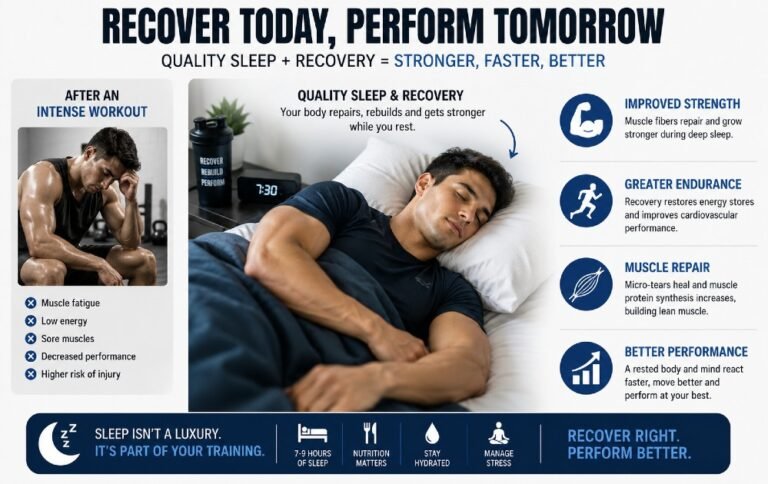

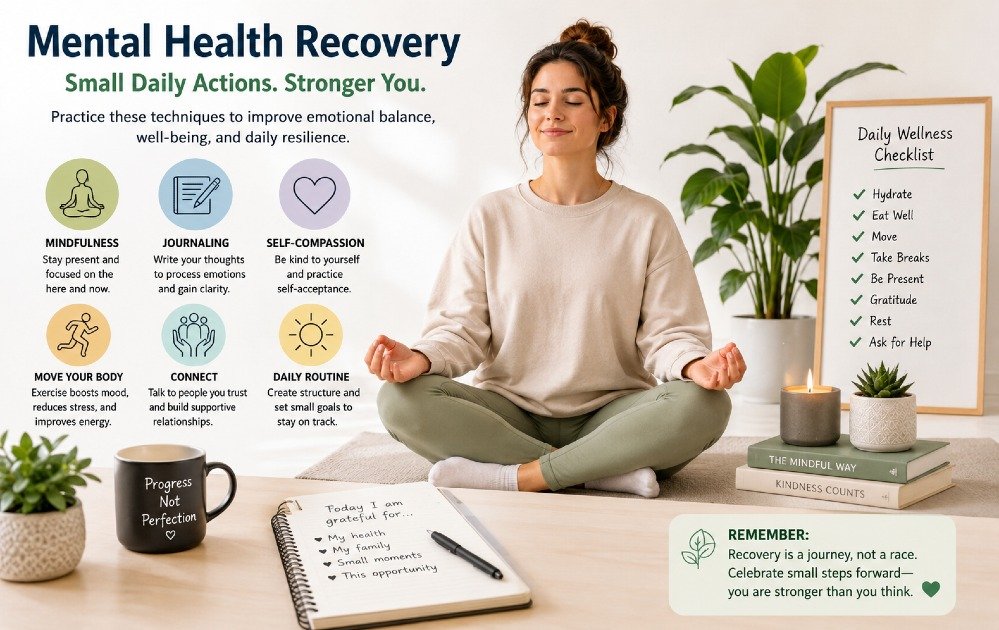
Still struggling with stress, emotional exhaustion, or feeling mentally overwhelmed?
Restorative sleep and recovery do more than recharge your body—explore how they strengthen emotional balance, stress regulation, focus, and resilience in our Sleep and Recovery Guide.
This guide reveals how intentional recovery practices can build resilience, stabilize mood, reduce stress, and restore mind-body balance for lasting well-being.
Understanding the Link Between Recovery and Mental Health
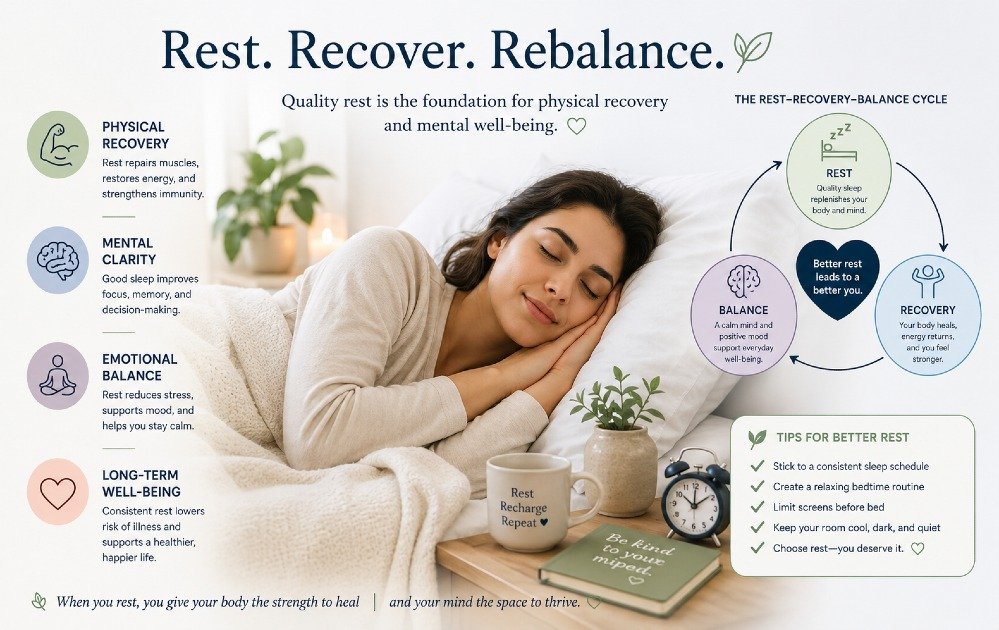
Prioritizing recovery reduces stress, strengthens emotional resilience, and supports better mood, focus, and long-term mental well-being.
NIH highlights that chronic stress without intentional recovery can impair emotional balance, memory, and decision-making, making true brain recovery essential.
Why it matters:
Your brain needs recovery to restore focus, balance emotions, reduce stress, and build resilience against daily challenges.
What works for me:
Understanding the recovery–mental health connection helps build habits that restore energy, improve emotional balance, and strengthen overall well-being.
How to start:
- Prioritize consistent sleep schedules
- Reduce late-night mental stimulation (screens, stress conversations)
- Create a calming pre-sleep routine
- Practice 10–15 minutes of deep breathing or journaling
- Avoid caffeine late in the day
5 Ways Mental Health Spports Overall Wellness
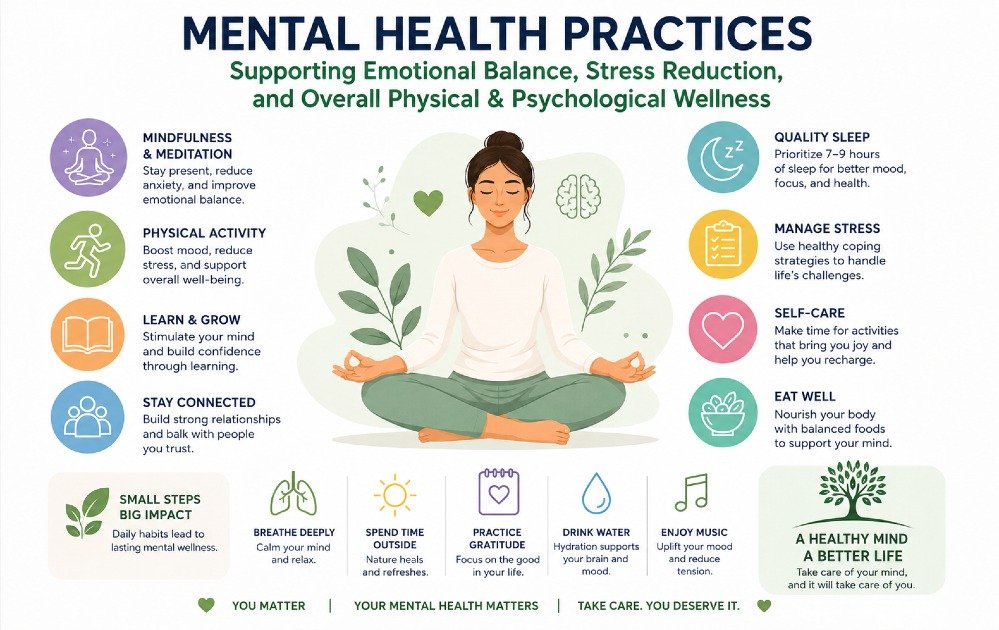
Could your low energy, stress, and unhealthy habits stem from an overlooked connection between mental health and overall wellness?
Mental health drives overall wellness by shaping emotions, habits, relationships, resilience, stress management, and long-term well-being.
Discover five ways to boost emotional well-being, build resilience, develop healthier habits, and improve your quality of life.
1. Sleep Quality as the Foundation of Mental Recovery
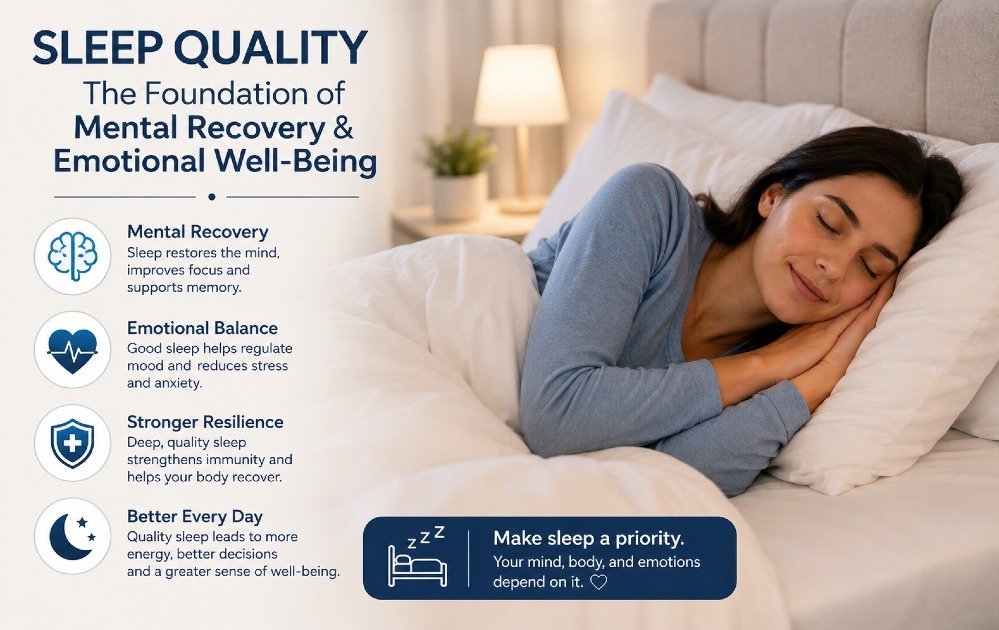
Quality sleep restores the mind by regulating emotions, strengthening memory, improving focus, and supporting lasting mental clarity and emotional balance.
Why it matters:
Quality sleep fuels brain repair, clears toxins, regulates emotions, and protects mental health by improving focus, mood, and emotional balance.
What works for me:
I prioritize quality sleep to sharpen focus, balance emotions, and restore my overall well-being.
How to start:
- Keep your bedroom cool, dark, and quiet
- Limit blue light exposure 1 hour before bed
- Use a consistent bedtime and wake-up time
- Avoid heavy meals late at night
- Try calming teas like chamomile
2. Emotional Recovery and Stress Reset for Mental Stability

Emotional recovery helps release daily stress, build resilience, and maintain balance through practices like journaling, meditation, and meaningful connections.
Why it matters:
Unprocessed stress can build up in the nervous system, impacting emotional balance, patience, and mental clarity.
What works for me:
I use emotional recovery and stress resets to restore balance, build resilience, and create lasting inner strength.
How to start:
- Journal your thoughts for 5–10 minutes daily
- Talk to a trusted friend or mentor
- Practice mindfulness meditation
- Take short breaks during stressful tasks
- Spend time in nature for emotional grounding
3. Nervous System Recovery and Its Impact on Mental Health

An overstimulated nervous system can increase stress, restlessness, and exhaustion, while calming practices like deep breathing and relaxation help restore balance, resilience, and overall well-being.
Why it matters:
An overstimulated nervous system can disrupt stress responses, leaving you feeling anxious, restless, and emotionally drained.
What works for me:
I support nervous system recovery to enhance emotional balance, sharpen focus, and strengthen overall well-being.
How to start:
- Practice deep diaphragmatic breathing (4-7-8 method)
- Stretch your body before bed
- Try yoga or gentle movement
- Reduce overstimulation from digital devices
- Use grounding techniques (barefoot walking, slow breathing)
4. Brain Recovery and Cognitive Clarity
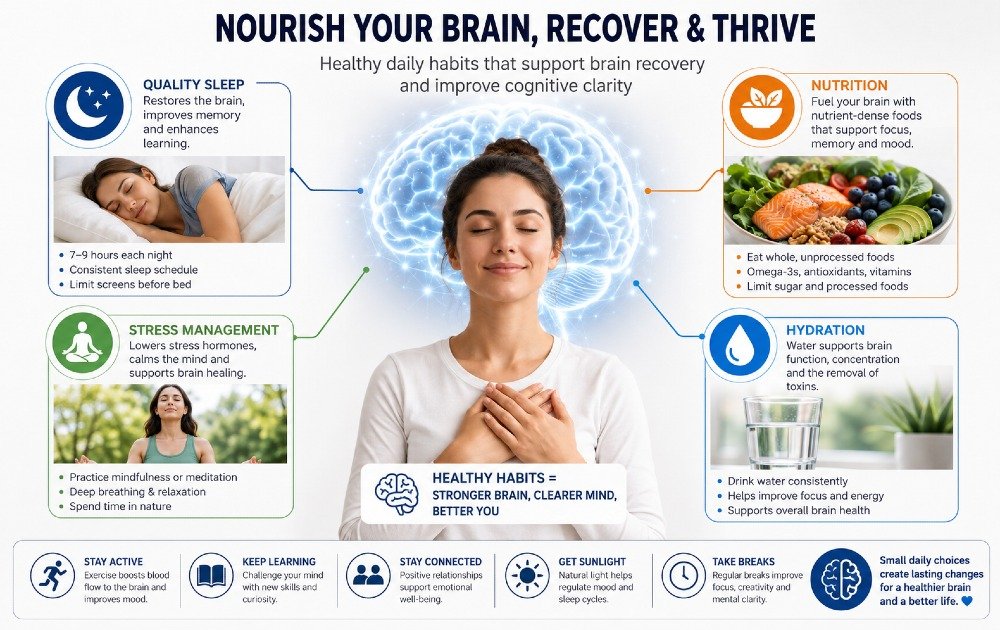
A well-rested brain improves focus, memory, decision-making, and productivity by reducing fatigue and supporting better daily performance.
Why it matters:
Your brain needs downtime to recharge, process information, and protect memory, focus, and productivity.
What works for me:
I support brain recovery and cognitive clarity by sharpening focus, restoring energy, and optimizing performance.
How to start:
- Use the Pomodoro technique (25–50 min focus blocks)
- Take screen-free breaks
- Avoid multitasking
- Prioritize deep work over busy work
- Get natural sunlight exposure during the day
5. Lifestyle Recovery Habits That Support Mental Health
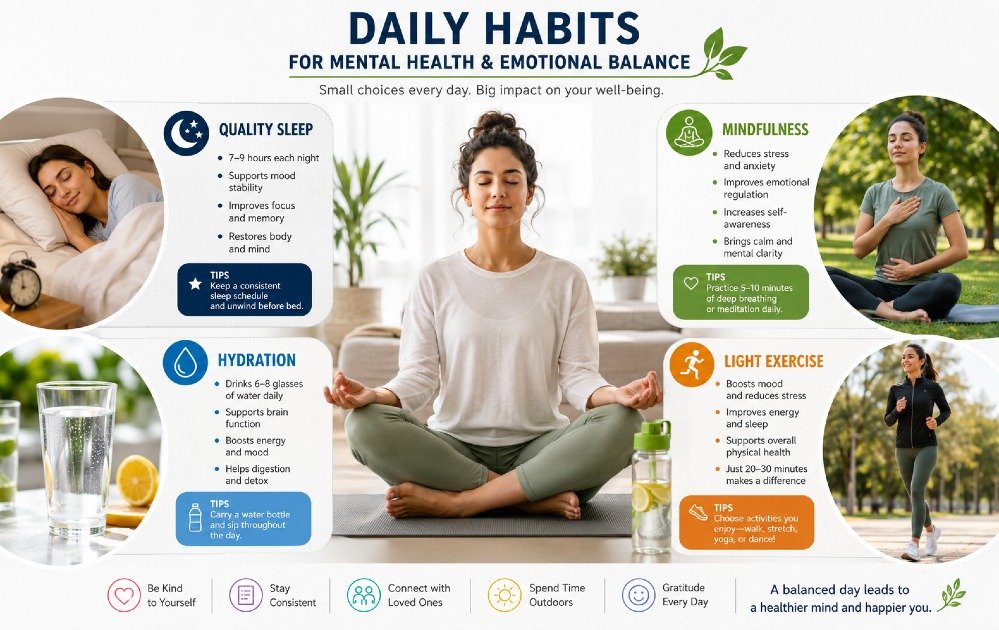
Consistent recovery habits like nourishing foods, movement, hydration, and quality sleep help manage stress, boost energy, and build lasting resilience for overall well-being.
Why it matters:
Daily habits—not just sleep—play a key role in how well your brain heals, restores, and resets.
What works for me:
I build recovery habits that restore balance, boost resilience, and keep me healthier and more energized daily.
How to start:
- Stay hydrated throughout the day
- Eat nutrient-rich meals (omega-3s, leafy greens)
- Move your body regularly (walks, light exercise)
- Reduce alcohol and processed foods
- Maintain social connection
Chronic Stress and Emotional Resilience
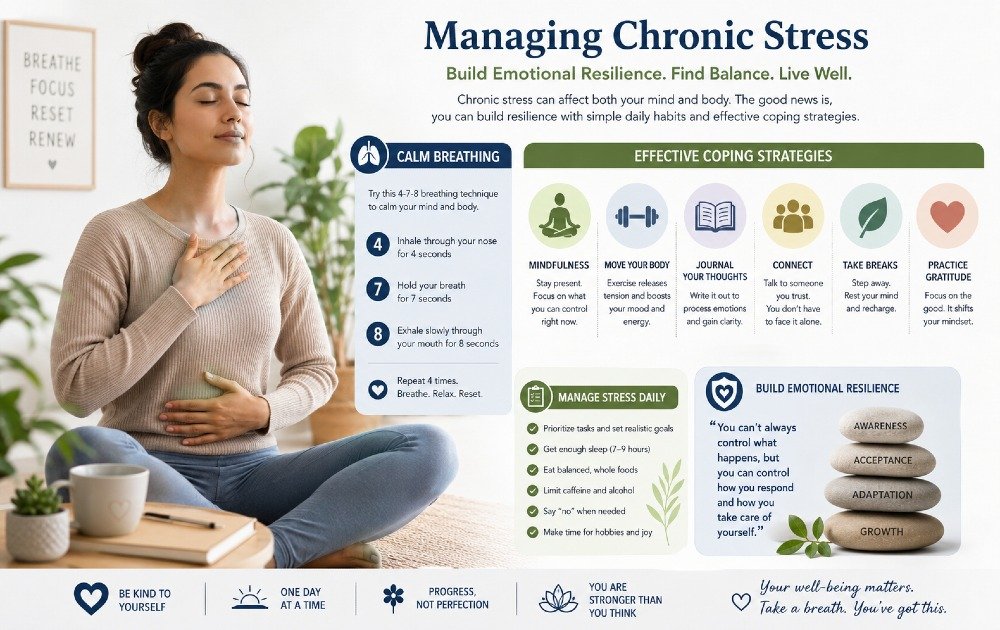
Chronic stress can drain your well-being, disrupt focus, sleep, and relationships, but building resilience helps you recover, adapt, and regain control.
Common signs include:
- Feeling overwhelmed by daily responsibilities
- Increased irritability
- Difficulty concentrating
- Persistent fatigue
- Reduced ability to cope with setbacks
Effective strategies include:
- Prioritizing quality sleep and recovery
- Practicing deep breathing and relaxation techniques
- Focusing on controllable factors
- Using healthy coping mechanisms
- Maintaining supportive relationships
- Setting realistic expectations
Burnout Prevention

Unchecked stress and poor recovery can fuel burnout, draining motivation, performance, and well-being—spot early signs and build healthy boundaries before exhaustion takes over.
Common symptoms include:
- Ongoing fatigue
- Loss of motivation
- Emotional exhaustion
- Reduced productivity
- Difficulty concentrating
- Increased negativity
Effective strategies include:
- Taking scheduled breaks throughout the day
- Setting limits on workload and commitments
- Prioritizing rest after demanding periods
- Making time for enjoyable activities
- Learning to say no when necessary
- Protecting sleep quality
Mood and Emotional Stability

Mood shapes your thoughts, reactions, and relationships, while healthy daily habits help maintain emotional balance despite stress, poor sleep, and life challenges.
Common signs include:
- Irritability
- Emotional overreactions
- Low patience
- Mental exhaustion
- Difficulty maintaining a positive outlook
Effective strategies include:
- Maintaining a consistent sleep schedule
- Exercising regularly
- Eating nutritious foods
- Limiting excessive caffeine and alcohol
- Practicing gratitude
- Staying connected with supportive people
Mindfulness and Emotional Wellness

Constant distractions can leave you disconnected from your thoughts and emotions, but mindfulness helps you recognize stress early, stay present, and respond with greater clarity.
Common challenges include:
- Mental overload
- Difficulty relaxing
- Increased anxiety
- Emotional disconnection
- Trouble staying present
Effective strategies include:
- Deep breathing exercises
- Meditation
- Mindful walking
- Journaling
- Spending time in nature
- Daily gratitude practices
Frequently Asked Questions
How does recovery improve mental health?
Recovery helps your brain and body reset through quality sleep, stress management, and healthy habits that boost focus, emotional balance, resilience, and energy.
Can poor recovery affect emotional well-being?
Poor recovery can fuel stress, irritability, anxiety, and emotional exhaustion, making daily challenges harder to handle.
How long does it take to see mental health benefits from better recovery?
Many people feel improved energy, mood, and focus within days, while consistent recovery habits build lasting resilience and well-being over time.
Which recovery habits have the greatest impact on mental health?
Build lasting well-being with proven habits like quality sleep, regular exercise, stress management, mindfulness, social connection, and intentional recovery time.
Is recovery important even when stress levels seem low?
Recovery strengthens mental clarity, emotional balance, and long-term wellness while protecting performance before stress takes over.
Related Articles
Recap: Better Recovery Builds Better Mental Health
Build stronger mental health through intentional recovery habits that recharge your mind, stabilize emotions, and create lasting inner calm.
Prioritize sleep and stress management to boost mood, focus, and resilience that create lasting improvements in mental well-being.
Your mental health journey does not need more pressure—it needs recovery to enhance relaxation and mental clarity.
Ready to Break the Cycle of Stress and Mental Fatigue?
Still feeling trapped, mental fatigue, and caught in a cycle of stress that never seems to end?
Discover how this guided meditation platform creates a consistent recovery routine by reducing stress, improving clarity, and supporting lasting emotional balance.