

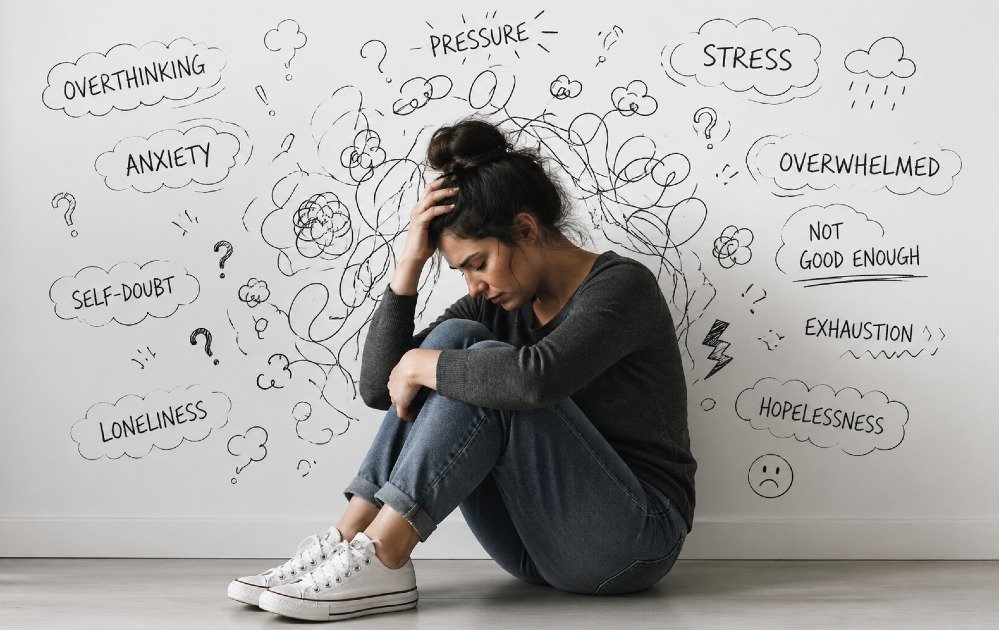
You wake up already drained even before the dawn of the day. That’s often how mental health challenges quietly show up—not dramatically, but consistently.
Stress builds up, focus drops, and small tasks feel overwhelming. Understanding the root cause makes mental health challenges easier to manage.
This guide explains common mental health challenges, why they happen, and practical ways to start improving them right away.
9 Proven Mental Health Challenges and How to Regain Balance
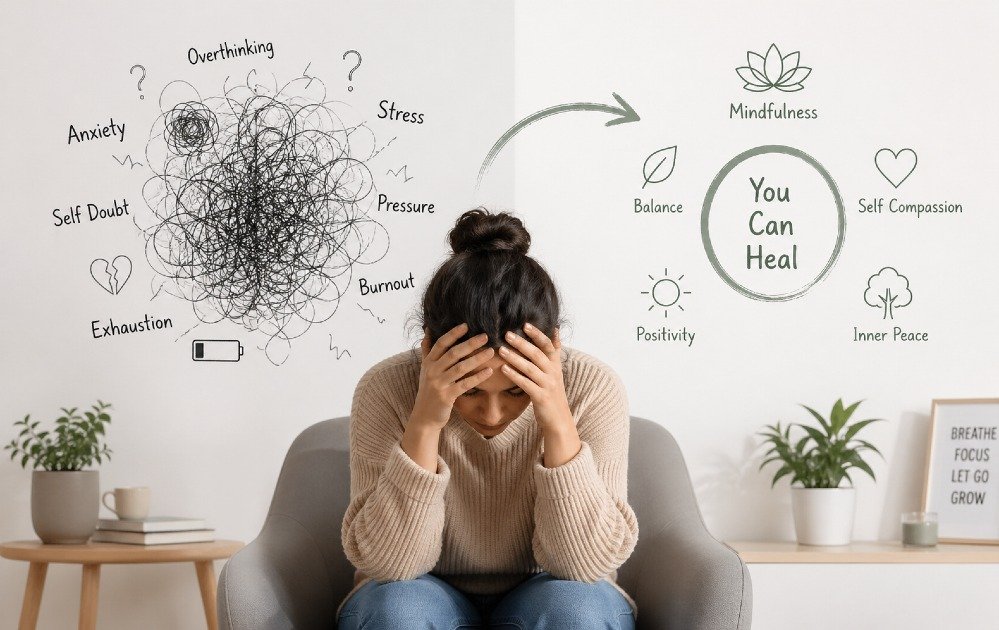
Mental health depends on daily habits, stress levels, thought patterns, and the brain’s ability to recover from constant pressure.
Mental health issues often build slowly through chronic stress, poor recovery, and negative thinking that weaken focus, relationships, and overall well-being.
Discover nine mental health challenges with early warning signs, root causes, and simple strategies for clearer thinking, emotional balance, and lasting resilience.
1. Chronic Stress: When The Body is in a Persistent Alert State
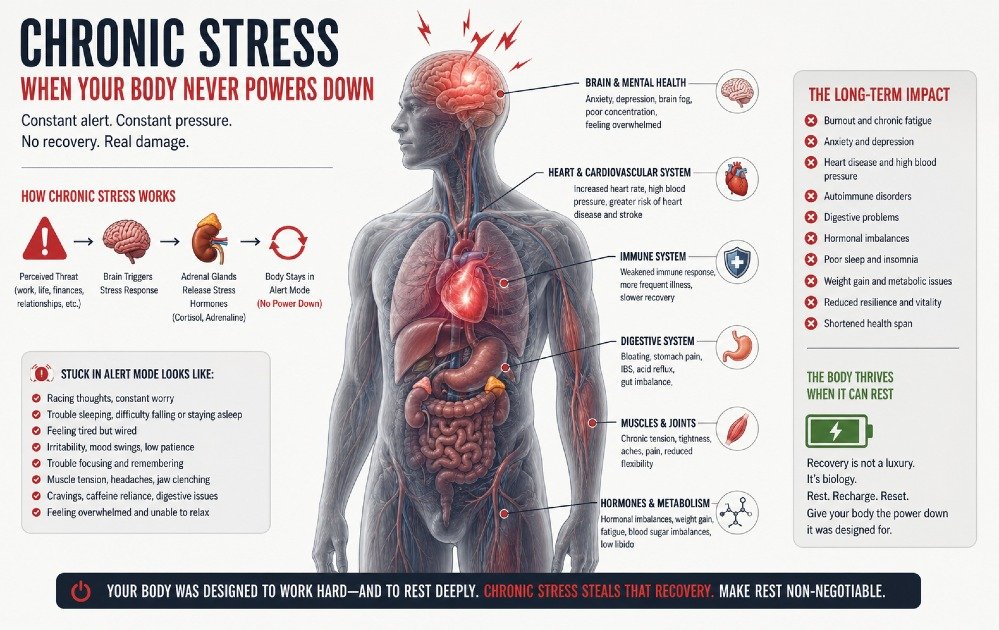
Stress becomes harmful when it doesn’t stop. Your mind remains on high alert even when there is no real urgency.
Do this:
- Take short, intentional breaks during the day
- Practice deep breathing (slow inhale, longer exhale)
- Set clear boundaries around work and rest
- Reduce constant digital interruptions
Core advantage:
You reclaim mental clearer thinking, better sleep, emotional balance
2. Anxiety: The Loop of “What If” Thinking
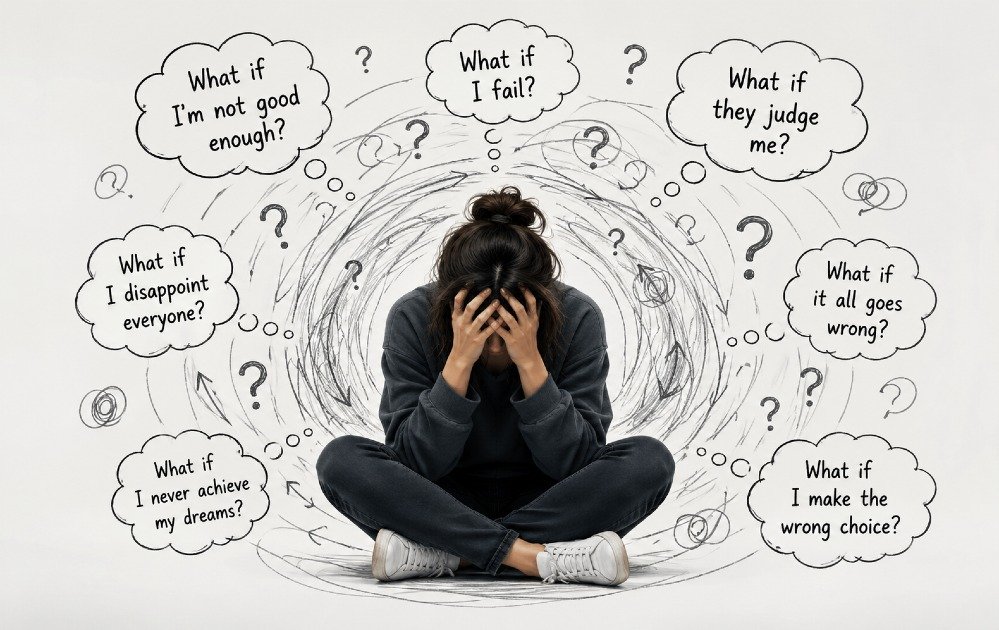
Anxiety keeps your mind locked in fears that is inconceivable
Do this:
- Use the 5-4-3-2-1 sensory technique
- Cut back on caffeine and stimulants
- Write down anxious thoughts to externalize them
- Practice slow breathing when overwhelmed
Core advantage:
You are more grounded, steady, and levelheaded.
3. Depression: Losing Drive, Interest, and Energy

Depression reduces motivation, making even basic tasks feel heavy.
Do this:
- Focus on one achievable task per day
- Maintain a consistent sleep routine
- Take short walks or light movement breaks
- Reach out for support instead of isolating
Core advantage:
You gradually rebuild energy, structure, and emotional strength.
4. Burnout: Exhaustion That Rest Alone Doesn’t Fix
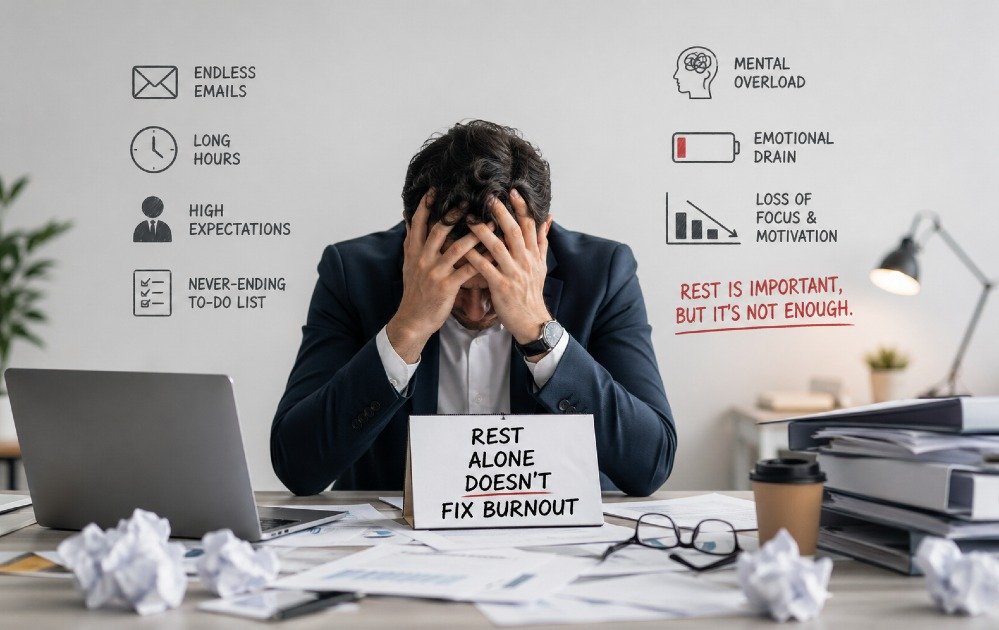
Burnout is more than fatigue, it is emotional exhaustion from sustained pressure.
Do this:
- Reduce unnecessary commitments
- Take real breaks (not scrolling breaks)
- Reassess priorities and workload
- Reconnect with activities that feel meaningful
Core advantage:
You restore motivation, creativity, and long-term productivity.
5. Social Isolation: Feeling Disconnected Even in Crowds

Isolation increases emotional distress and reduces resilience.
Do this:
- Stay in regular contact with people you trust
- Join communities based on shared interests
- Engage in real conversations, not just online interaction
- Limit passive social media consumption
Core advantage:
You feel emotionally supported and more grounded.
6. Low Self-Esteem: The Inner Voice That Undermines You

Negative self-talk weakens confidence and decision-making over time.
Do this:
- Challenge negative thoughts with facts
- Practice self-compassion intentionally
- Set small, realistic goals
- Acknowledge daily wins—no matter how small
Core advantage:
You build confidence, resilience, and self-trust.
7. Sleep Disruption: The Foundation Most People Ignore

Poor sleep worsens nearly every mental health issue.
Do this:
- Keep a consistent sleep schedule
- Avoid screens before bedtime
- Create a calming nighttime routine
- Keep your sleep environment quiet and dark
Core advantage:
You improve mood stability, focus, and emotional control.
NCBI highlights how sleep disruption diminish quality of life.
8. Emotional Overload: When Feelings Become Too Intense

You feel fervor that are overwhelming.
Do this:
- Pause before reacting
- Name your emotions clearly (“I feel overwhelmed”)
- Use journaling to release mental pressure
- Practice mindfulness during emotional spikes
Core advantage:
You develop emotional control and inner stability.
9. Digital Overload: A Ceaseless Mind Flow

Too much screen time reduces attention span and increases stress.
Do this:
- Turn off non-essential notifications
- Set screen-free time blocks daily
- Avoid constant content consumption
- Be intentional with what you scroll
Core advantage:
You regain focus, mental space, and calmness.
Anxiety and Stress Management: How to Regain Control
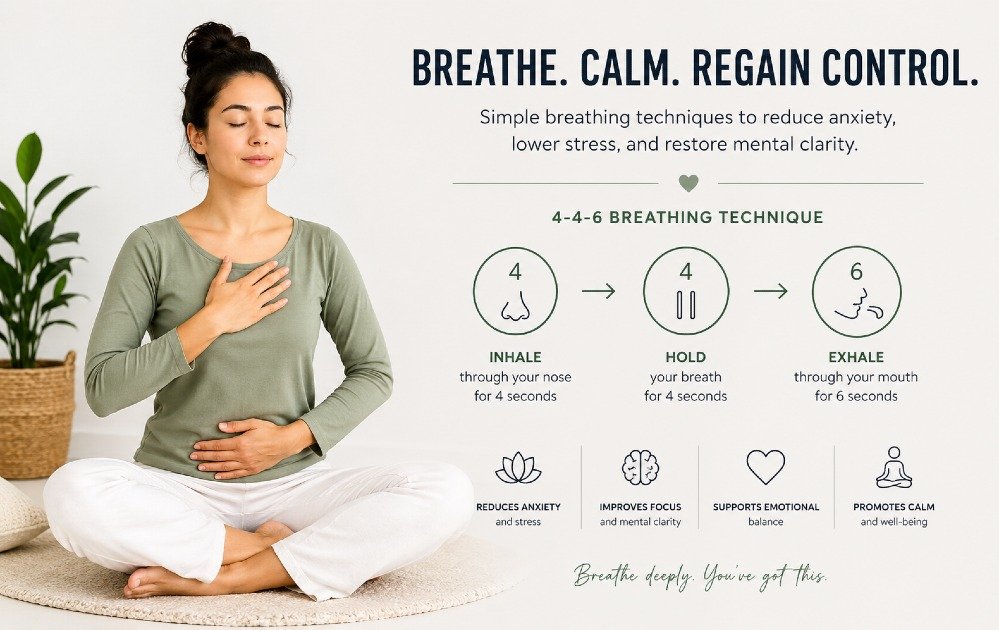
Anxiety and stress often reinforce each other. Your mind stays engaged while your body is depleted.
Common signs include:
- Persistent “what if” thinking
- Racing thoughts at night
- Physical tension or restlessness
- Poor focus and mental fatigue
Left unmanaged, this cycle reduces clarity and drains energy.
Effective anxiety and stress management relies on simple, consistent habits.
Focus on what you can control:
- Practice slow breathing (inhale 4 seconds, exhale 6–8 seconds)
- Break tasks into smaller, clear steps
- Reduce caffeine and constant stimulation
- Use grounding techniques (focus on your senses)
- Take short, intentional breaks during the day
I pause for one minute, focus on my breathing, and reset before reacting to stress.
Core advantages:
Consistent practice stabilizes your mental state.
You’ll notice:
- Clearer thinking and better decisions
- Improved emotional control
- Less physical tension
- A calmer, more focused mindset
Depression Symptoms Support: Rebuilding Momentum

Depression affects mood, energy, and motivation. Even simple tasks can feel overwhelming.
Common symptoms include:
- Ongoing low mood
- Loss of interest in activities
- Fatigue and low energy
- Difficulty concentrating
- Changes in sleep or appetite
These symptoms often lead to withdrawal, which worsens the cycle.
Effective depression symptoms support starts with small, realistic actions.
Focus on consistency, not intensity:
- Set one simple goal each day
- Keep a regular sleep and wake schedule
- Get natural light daily
- Stay connected with someone you trust
- Include light movement (walking or stretching)
I complete one small task—like stepping outside for a short walk—to rebuild momentum.
Core advantages:
Small actions restore structure and energy over time.
You’ll experience:
- Gradual return of motivation
- Increased energy levels
- Improved emotional stability
- A stronger sense of control
Emotional Well-Being Strategies: Strengthening Your Inner Stability
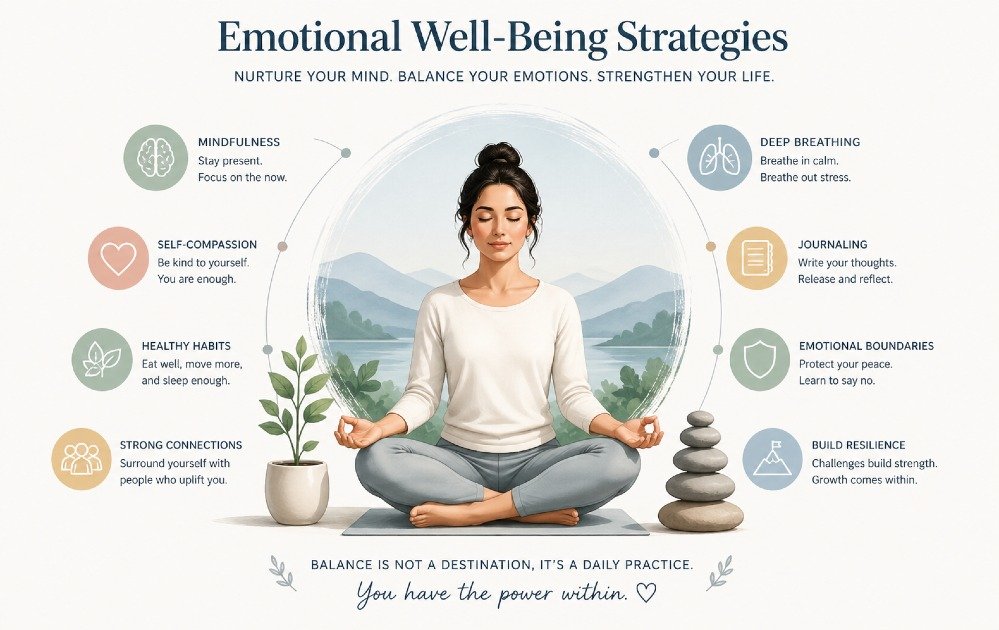
Without awareness, emotions build up and affect how you think and respond.
Common signs include:
- Mood swings
- Overreacting to minor issues
- Emotional exhaustion
- Difficulty expressing feelings
Ignoring these patterns weakens both mental clarity and relationships.
Strong emotional well-being strategies focus on awareness and regulation.
Use practical techniques:
- Clearly identify your emotions
- Write down thoughts to release mental pressure
- Practice mindfulness to stay present
- Pause before reacting
- Communicate your feelings directly
Before responding in a stressful moment, I pause and define what you’re actually feeling.
Core advantages:
You respond with clarity instead of reacting impulsively.
Over time, you gain:
- Greater emotional resilience
- Stronger communication skills
- Reduced overwhelm
- Clearer, more balanced thinking
Frequently Asked Questions
What are the most common mental health challenges?
Stress, anxiety, burnout, depression, poor sleep, and emotional fatigue often build slowly through constant pressure, weak recovery habits, and untreated stress.
Many people face several of these issues together. Chronic stress can heighten anxiety, while poor sleep can negatively affect mood, focus, and emotional balance.
How can I tell if my mental health is declining?
Mental health struggles usually appear through consistent patterns, not isolated bad days.
Common warning signs include:
- Constant fatigue or low energy
- Difficulty concentrating
- Irritability or mood changes
- Feeling emotionally overwhelmed
- Loss of motivation
- Changes in sleep or appetite
If these symptoms continue and begin affecting daily life, they should not be ignored.
Can lifestyle changes improve mental health?
Yes, daily habits shape mental and emotional well-being.
Consistent improvements in areas like:
- Sleep quality
- Physical activity
- Stress management
- Social connection
- Daily structure
- Reduced screen overload
can improve focus, emotional balance, and resilience over time.
Small, sustainable changes are usually more effective than extreme short-term solutions.
What’s the difference between stress and burnout?
Stress typically involves feeling overwhelmed while still functioning and engaged. Burnout happens after prolonged stress leads to emotional exhaustion, mental detachment, and reduced motivation.
Common signs of burnout include:
- Feeling drained even after rest
- Reduced productivity
- Increased frustration or negativity
- Loss of motivation and focus
Burnout requires intentional recovery, not just temporary rest.
When should someone seek professional mental health support?
Professional help is important when symptoms become persistent, severe, or difficult to manage alone.
Consider seeking support if:
- Anxiety or sadness feels constant
- Daily responsibilities become harder to manage
- Sleep or appetite changes significantly
- Emotional distress affects work or relationships
- Self-help strategies no longer feel effective
Early support often leads to better recovery and long-term stability.
Recap: Build a Lasting Mental Health Strength
Mental health issues usually build up over time from ongoing stress, emotional strain, poor recovery, and constant pressure.
Healing follows the same path, improving gradually through steady daily habits.
Improving sleep, managing stress, setting boundaries, and prioritizing recovery build emotional resilience and enhance mental clarity over time.
You don’t need a perfect routine, just consistent habits that support your mental well-being. Caring for your mind with intention builds calm, strength, and focus.
Ready to Start Prioritizing Your Mental Health Today
Don’t change everything at once. Focus on one area and build gradually.
Step into a clearer, stronger mindset by using this platform to take control of your mental health, build daily resilience, and turn overwhelming thoughts into focused, manageable action you can sustain.