
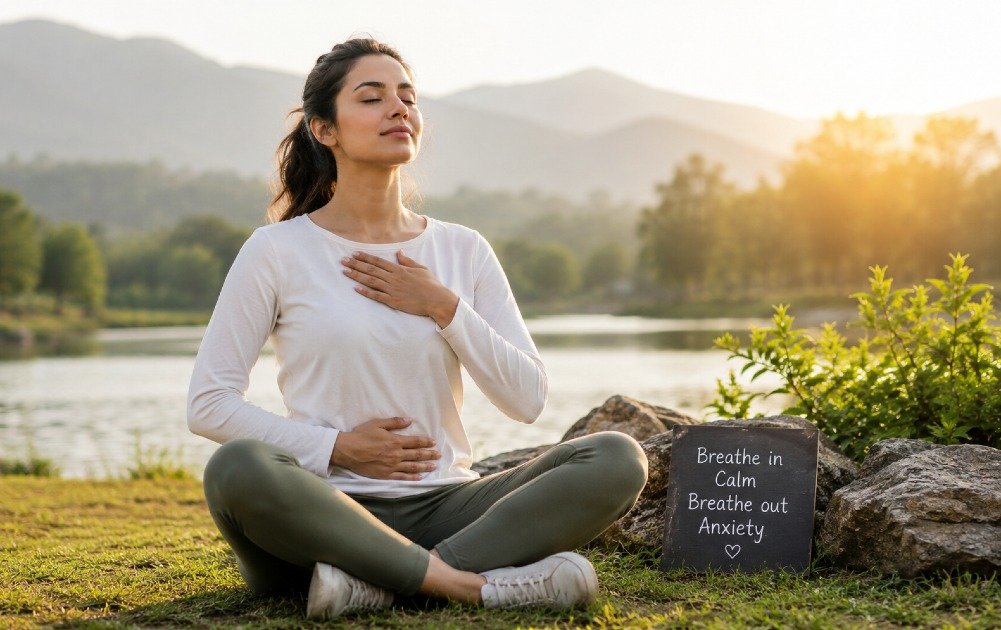
Still struggling to quiet your anxious mind, no matter what you try?
Anxiety can drain your energy, focus, and sleep, but healthy coping strategies can help calm occasional stress and persistent anxious thoughts.
This guide explains natural strategies that can help you build resilience, and enjoy more peaceful days.
Understanding Why Anxiety Feels So Intense
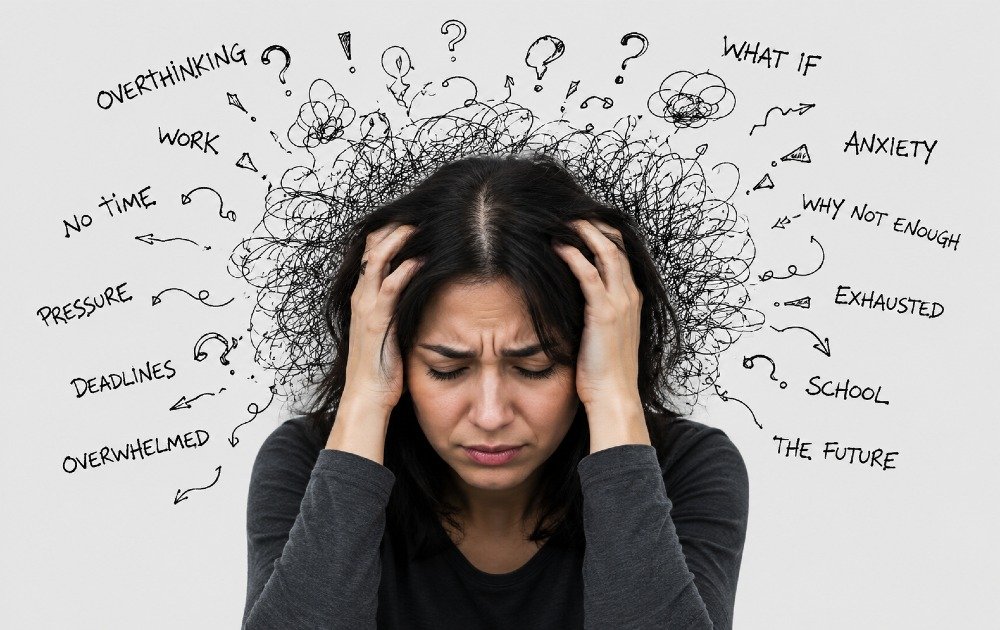
Understanding how chronic anxiety triggers the fight-or-flight response, leaving you tense, restless, and emotionally drained is important.
Common symptoms include:
- Racing thoughts
- Difficulty concentrating
- Increased heart rate
- Muscle tension
- Sleep disturbances
- Excessive worry
- Irritability
The goal isn’t to eliminate anxiety, but to build effective strategies for managing it.
WHO explains that self-care supports anxiety treatment by helping manage symptoms and improve overall well-being.
12 Best Daily Habits to Ease Anxiety Naturally
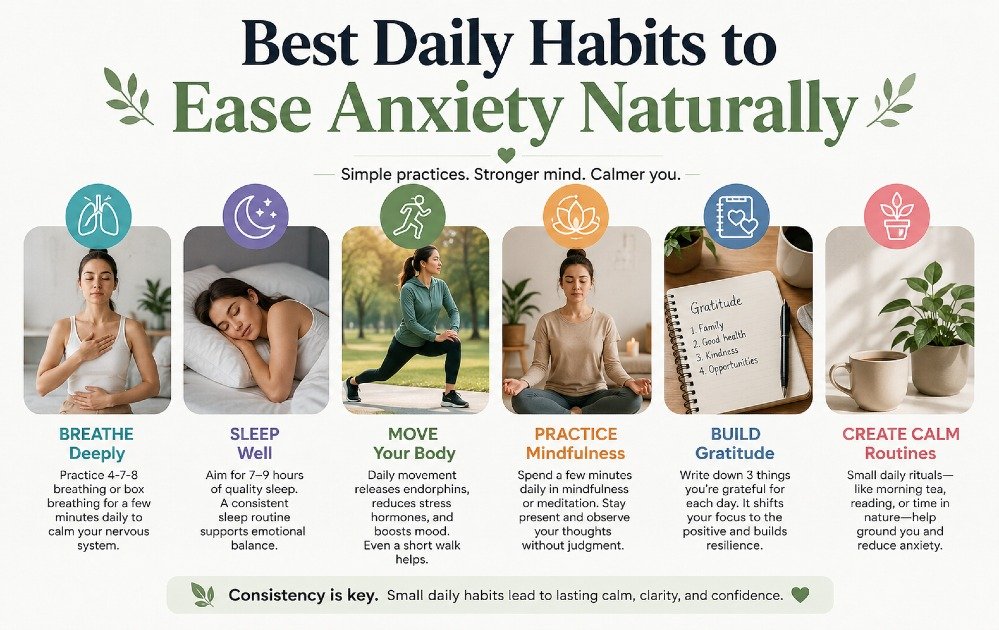
Still struggling with anxious thoughts that disrupt your mood and peace of mind?
Discover twelve daily habits that naturally reset your mind’s needs to feel calmer and more balanced.
1. Practice Deep Breathing to Calm Your Nervous System
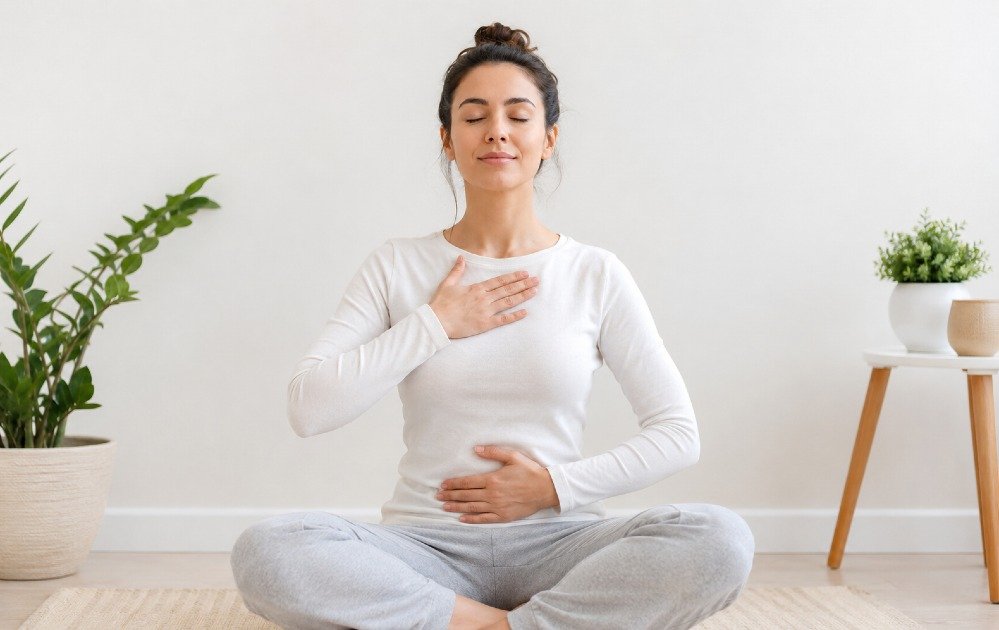
Calm anxiety fast with intentional breathing exercises that slow your heart rate and reset your body’s stress response.
Try the 4-4-6 method:
- Inhale through your nose for 4 seconds.
- Hold for 4 seconds.
- Exhale slowly for 6 seconds.
- Repeat for 3–5 minutes.
Core advantages:
- Lower stress hormones
- Reduce physical tension
- Improve mental clarity
- Promote immediate calm
Personal experience:
I incorporate deep breathing practices into my routine to support nervous system balance, relieve anxiety, and create a greater sense of inner calm.
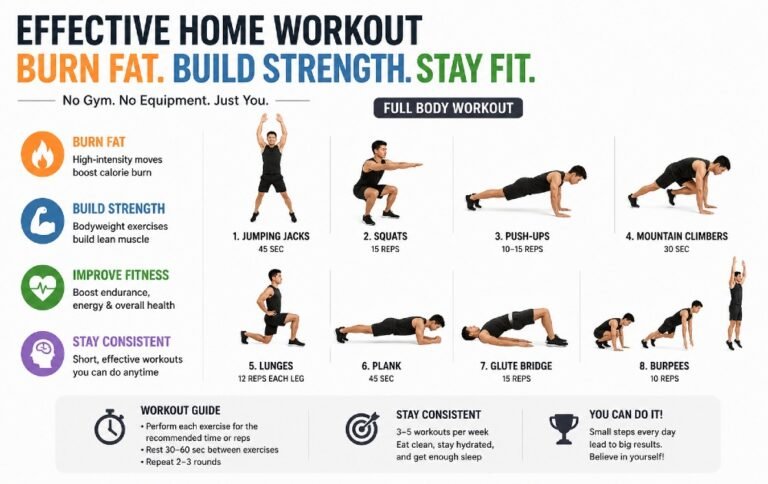
2. Get Regular Physical Activity

Exercise helps release built-up nervous energy and reduce anxiety, with 30 minutes of movement most days supporting better emotional balance.
Excellent options include:
- Walking
- Cycling
- Swimming
- Yoga
- Strength training
- Dancing
Core advantages:
- Release mood-boosting endorphins
- Reduce stress hormones
- Improve sleep quality
- Increase emotional resilience
Personal experience:
I prioritize regular physical activity to build strength, boost energy, ease anxiety, elevate mood, and support lifelong health.
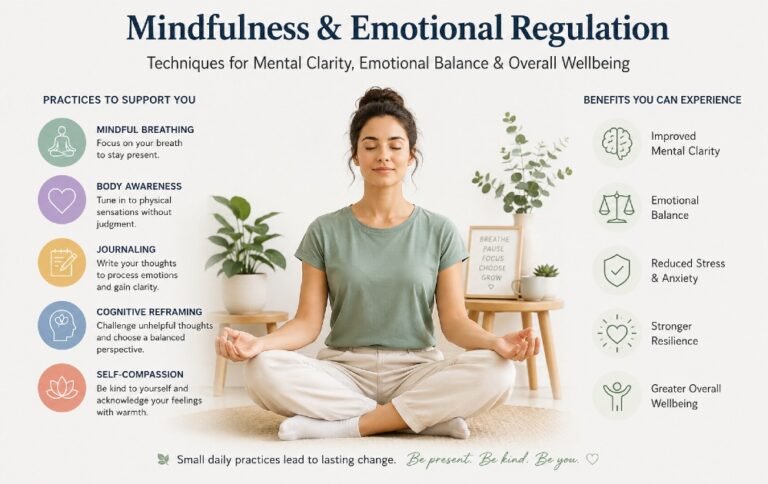
3. Use Mindfulness to Stay Present
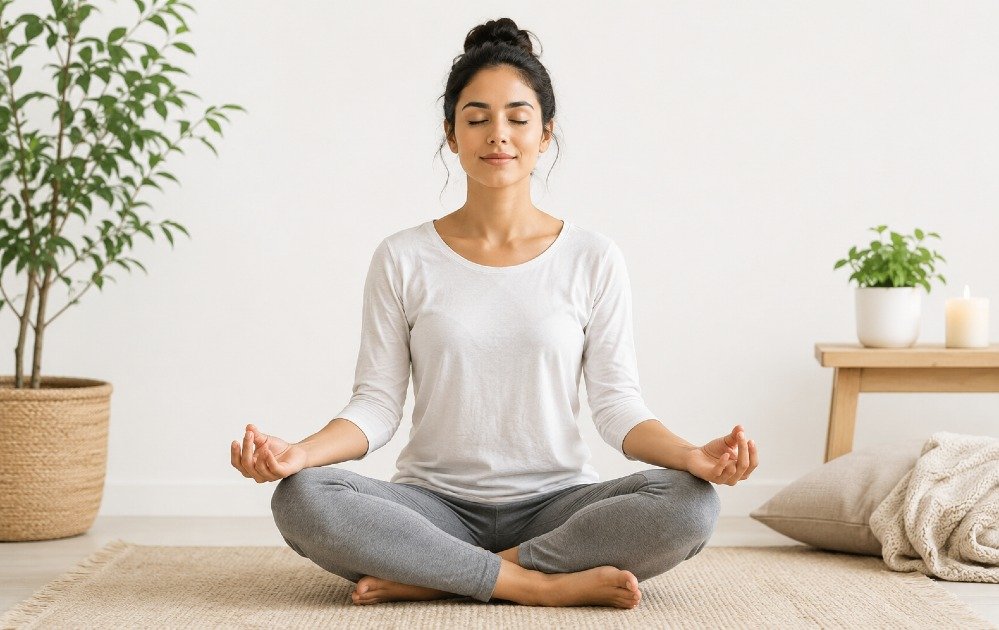
Mindfulness for anxiety breaks the cycle of future worries by grounding your attention in the present through simple practices like focusing on an object for one mindful minute.
Five-senses exercise:
- 5 things you see
- 4 things you feel
- 3 things you hear
- 2 things you smell
- 1 thing you taste
Core advantages:
- Reduce overthinking
- Improve focus
- Increase emotional awareness
- Support long-term stress reduction
Personal experience:
I use mindfulness to stay present, sharpen focus, ease anxiety, and create more balance in everyday life.
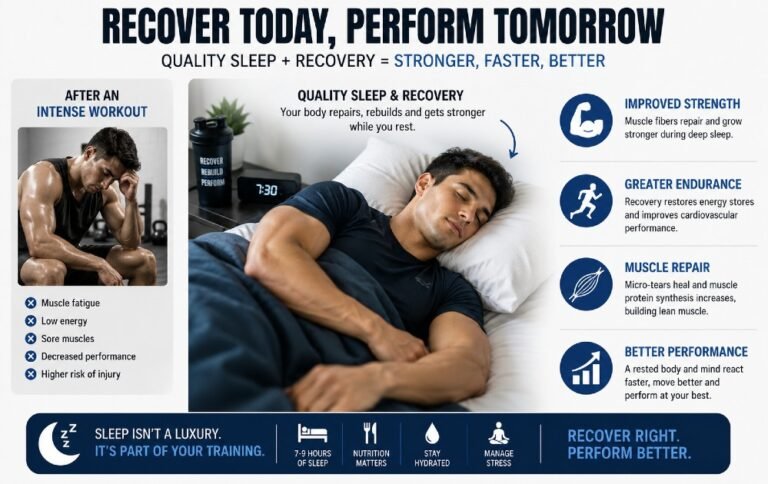
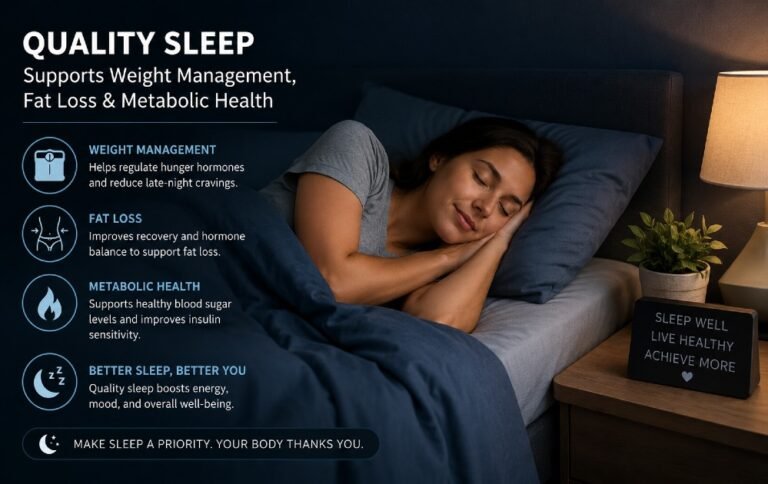
4. Improve Your Sleep Quality
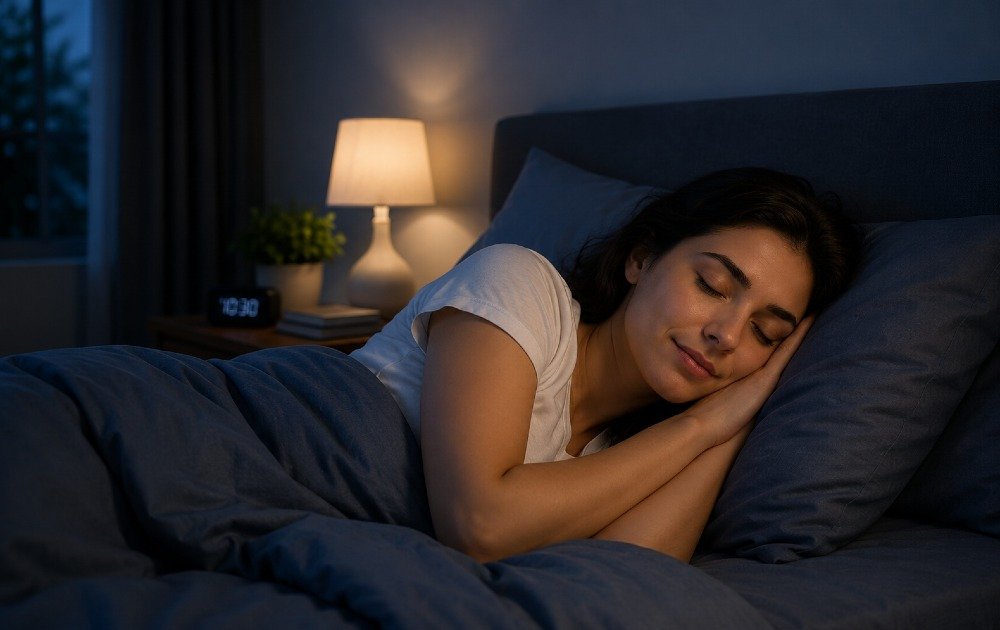
Poor sleep fuels anxiety, while anxiety disrupts sleep, creating a cycle that’s hard to break.
Establish healthy bedtime habits:
- Maintain a consistent sleep schedule
- Avoid screens one hour before bed
- Keep your bedroom cool and dark
- Limit caffeine late in the day
- Develop a relaxing nighttime routine
Core advantages:
- Better emotional regulation
- Improved concentration
- Reduced stress levels
- Enhanced mental wellness
Personal experience:
Simple habits help me relax, ease anxiety, and improve sleep quality so that I wake up refreshed.
5. Reduce Excessive Caffeine Intake
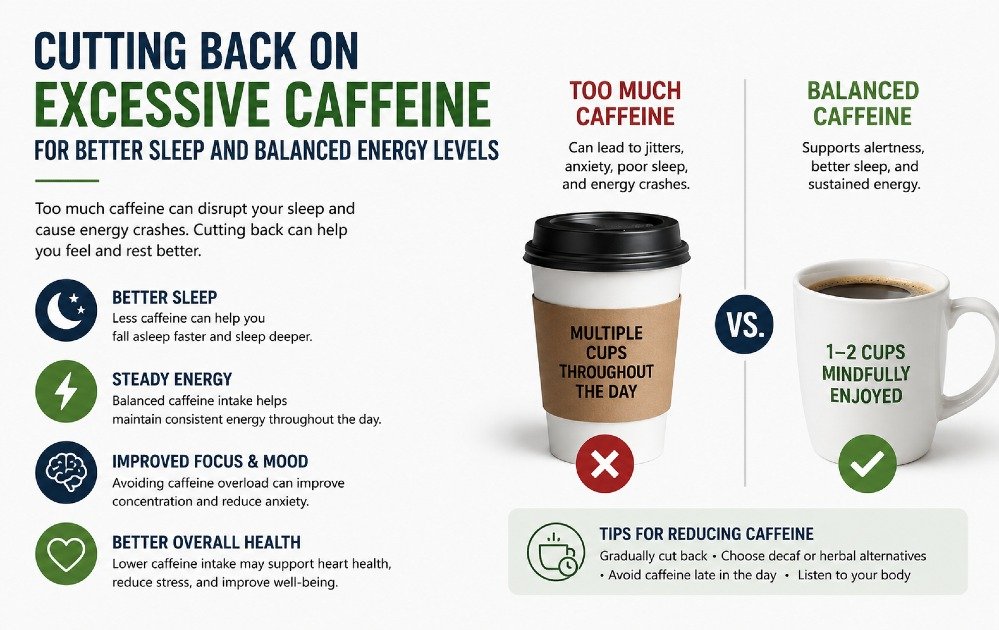
Excessive caffeine intake can worsen anxiety by triggering jitters, restlessness, rapid heartbeat, and heightened nervousness.
Monitor your intake and consider reducing:
- Coffee
- Energy drinks
- Certain teas
- Pre-workout supplements
Replace some caffeinated beverages with:
- Herbal tea
- Water
- Decaffeinated alternatives
Core advantage:
Reducing caffeine can help many people feel calmer and experience fewer anxiety symptoms within days.
Personal experience:
I limit my caffeine consumption to maintain balanced energy levels, sharpen concentration, and promote a calmer state of mind naturally.
6. Spend More Time Outdoors
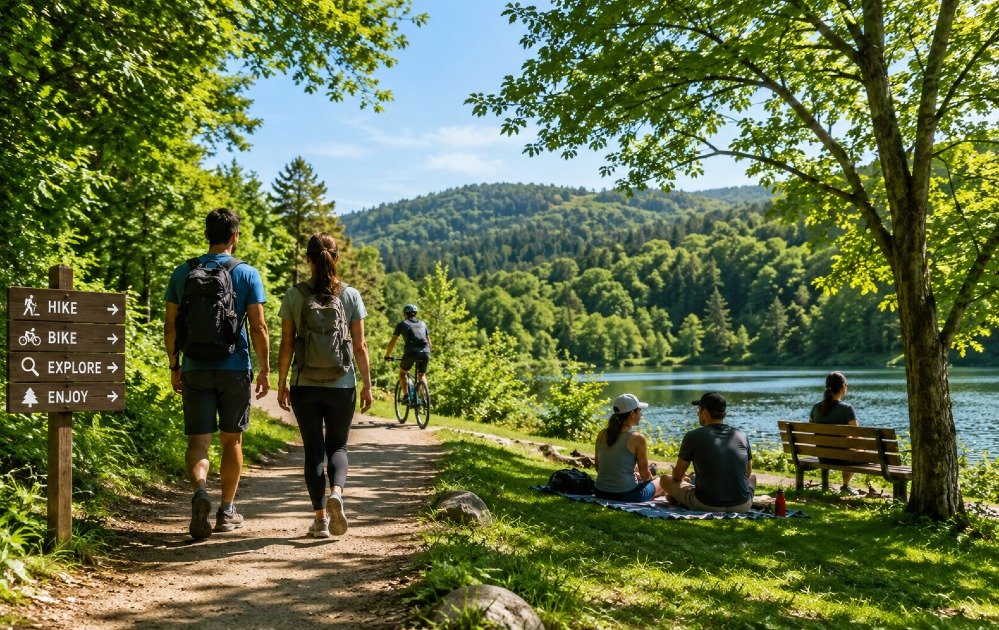
Spend more time outdoors—too much time indoors fuels stress, mental fatigue, and burnout.
Ideas include:
- Nature walks
- Gardening
- Hiking
- Park visits
- Outdoor exercise
Core advantage:
Spending time in nature eases anxiety and boosts your mood naturally.
Personal experience:
I step outside regularly to create space for mental clarity, emotional calm, and renewal, using the restorative power of nature, open air, and sunlight to recharge my mind and body.
7. Practice Progressive Muscle Relaxation
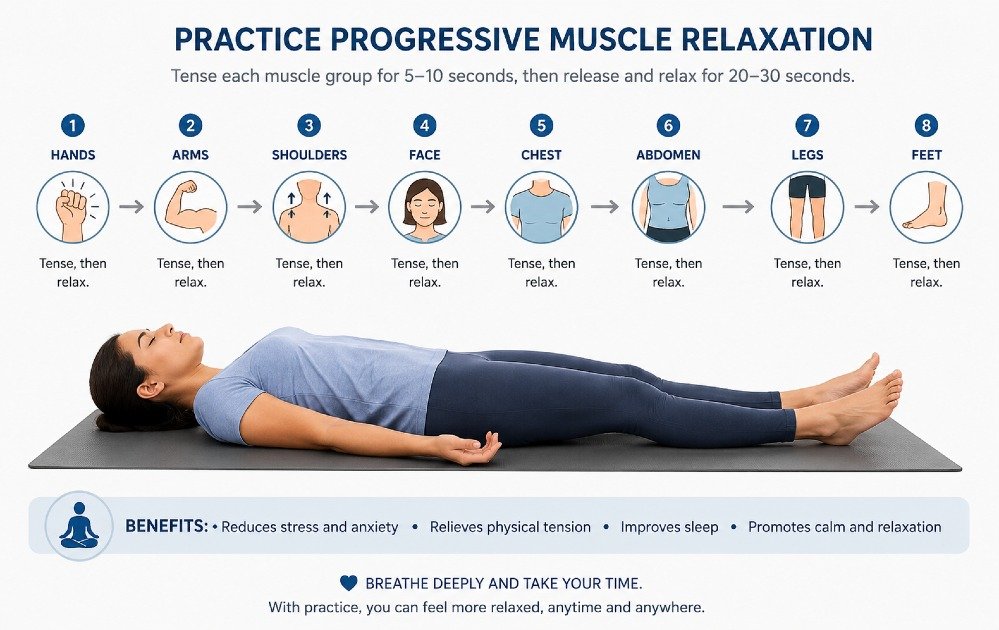
Progressive Muscle Relaxation (PMR) releases the hidden muscle tension anxiety builds throughout your body.
Start with your feet and work upward:
- Tighten muscles for 5 seconds.
- Release completely.
- Notice the contrast between tension and relaxation.
Core advantages:
- Reduce muscle tightness
- Increase body awareness
- Promote calmness
- Support better sleep
Personal experience:
I practice progressive muscle relaxation to ease anxiety and restore calm.
8. Limit Information Overload
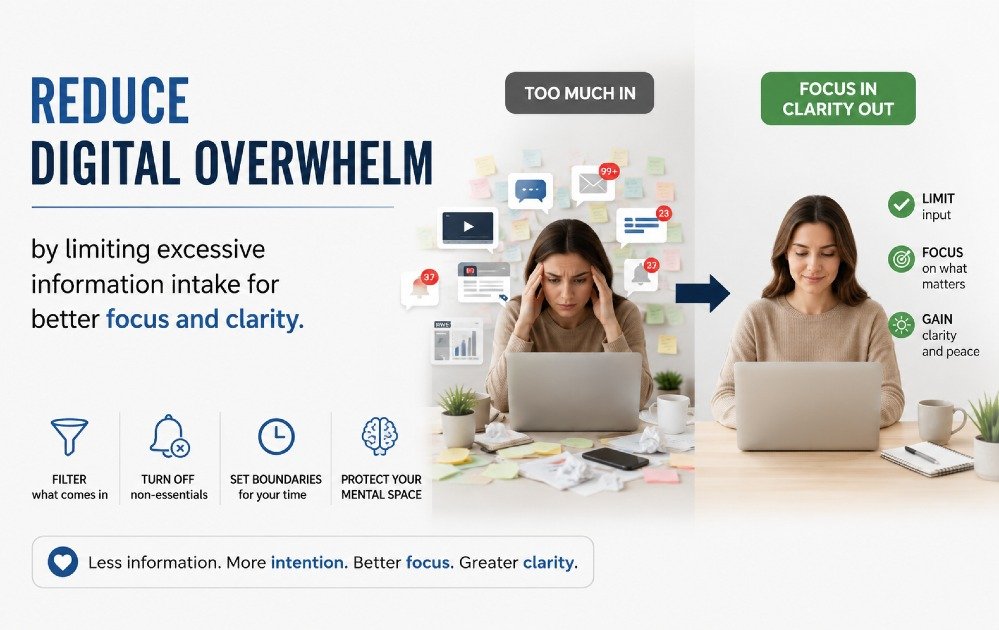
Constant news and social media overload fuel anxiety—set healthy digital boundaries.
Try:
- Scheduled news consumption
- Social media breaks
- Notification limits
- Screen-free periods
Core advantages:
- Improve focus
- Lower stress levels
- Support emotional balance
Personal experience:
I limit information overload to ease anxiety and stay mentally clear.
9. Nourish Your Body with Balanced Nutrition

Skipping meals and consuming highly processed foods may contribute to mood instability.
Focus on nutrient-rich foods such as:
- Fruits
- Vegetables
- Whole grains
- Lean proteins
- Healthy fats
Particularly beneficial nutrients include:
- Omega-3 fatty acids
- Magnesium
- B vitamins
Core advantages:
- Brain health
- Stable energy levels
- Improved mood
- Long-term emotional wellness
Personal experience:
I nourish my body with balanced nutrition to ease anxiety, boost energy, and thrive every day.
10. Keep a Daily Journal
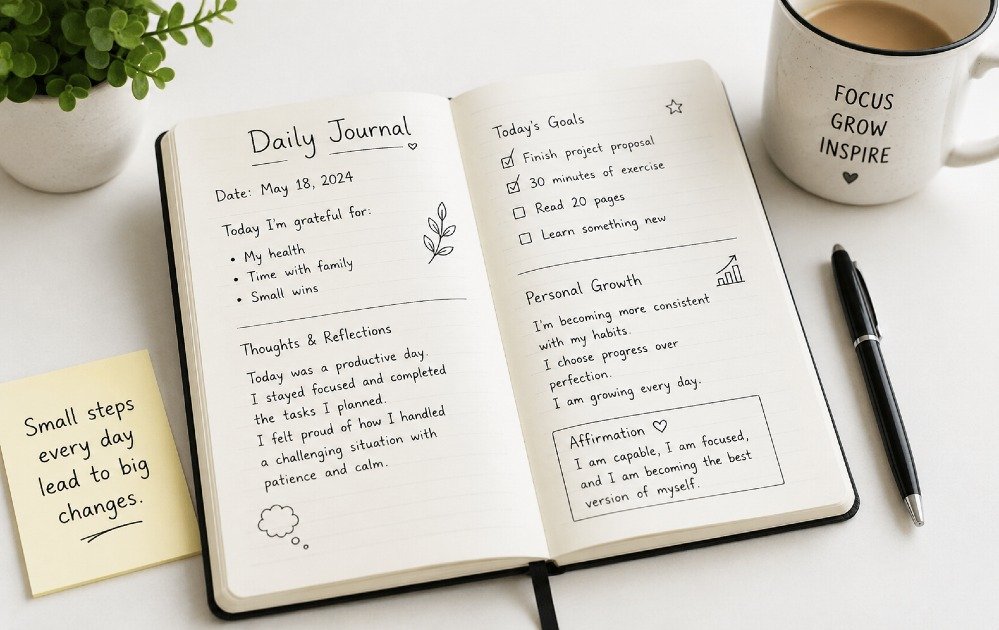
Stop anxious thoughts from spiraling by journaling to clear and organize your mind.
Helpful prompts include:
- What am I worried about?
- Is this concern within my control?
- What evidence supports this worry?
- What positive action can I take today?
Core advantages:
- Increase self-awareness
- Reduce mental clutter
- Identify anxiety triggers
- Develop healthier thought patterns
Personal experience:
I keep a daily journal to ease anxiety, clear my mind, and gain perspective every day.
11. Build Strong Social Connections

Isolation can amplify anxiety, but staying connected with supportive people remains one of the most powerful ways to manage anxious feelings.
Consider:
- Calling a trusted friend
- Joining community groups
- Participating in hobbies
- Seeking support groups
Core advantages:
- Emotional support
- Perspective
- Encouragement
- Reduced feelings of loneliness
Personal experience:
I strengthen emotional well-being through meaningful connections that provide support, reduce stress, and ease anxiety.
12. Try Yoga and Gentle Stretching
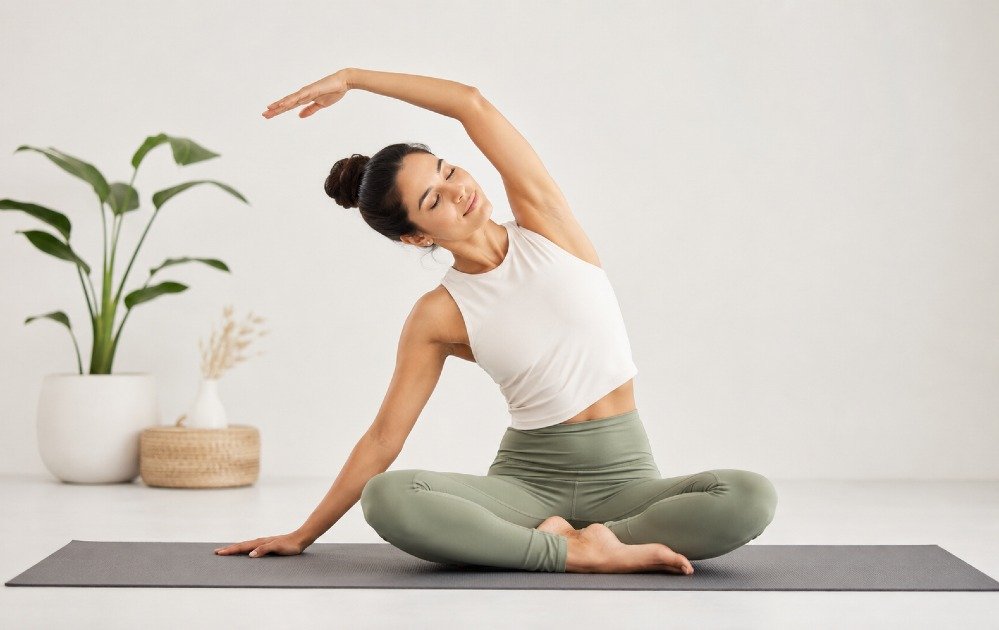
Anxiety impacts the mind and body, while yoga uses movement, breathwork, and mindfulness to restore balance.
Beginner-friendly styles include:
- Hatha Yoga
- Restorative Yoga
- Yin Yoga
Core advantages:
- Physical relaxation
- Improved flexibility
- Better breathing patterns
- Reduced stress
Personal experience:
I use yoga and gentle stretching to ease anxiety, release tension, boost flexibility, and cultivate daily calm.
Natural Ways to Ease Anxiety
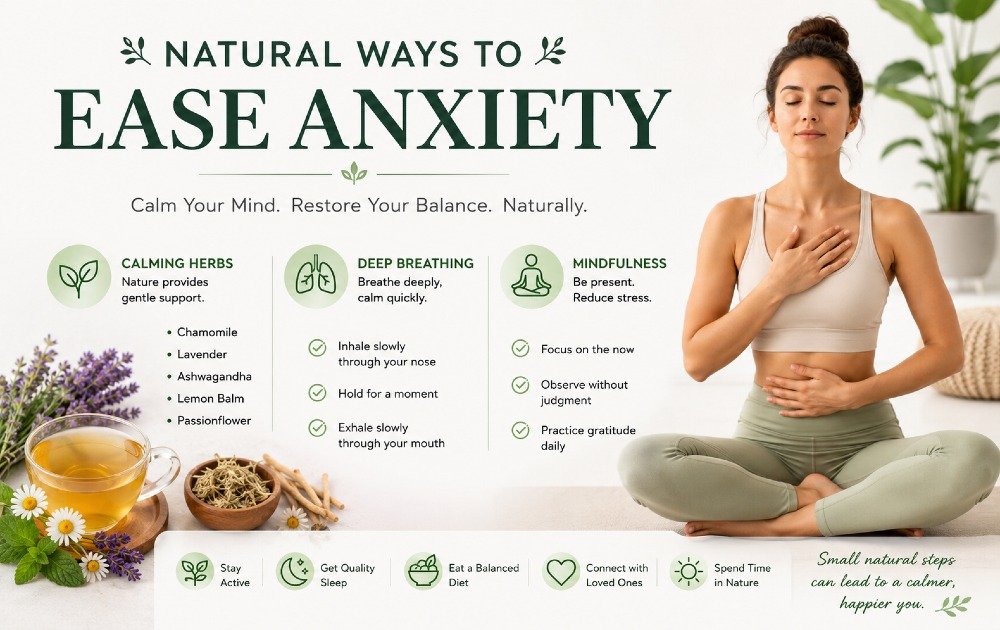
Anxiety can disrupt sleep, focus, and energy, but natural relief through daily habits helps build lasting calm, balance, and resilience beyond temporary distractions.
Effective strategies include:
- Practicing deep breathing exercises
- Spending time outdoors
- Exercising regularly
- Following a consistent sleep schedule
- Practicing mindfulness or meditation
- Reducing caffeine intake
The goal is not to eliminate anxiety completely but to manage it more effectively and confidently.
Anxiety Coping Skills That Work
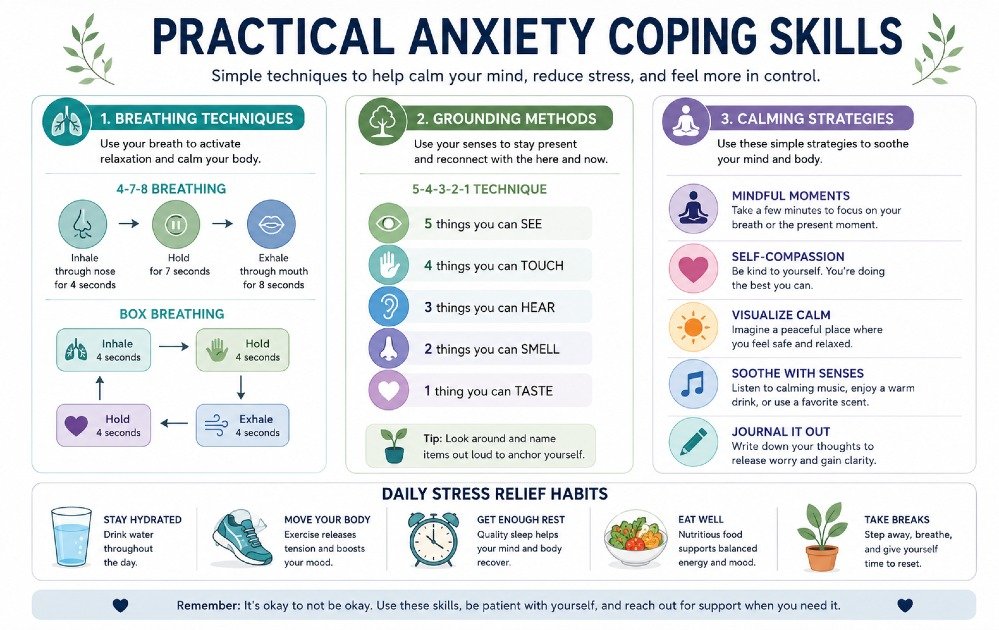
When anxiety feels overwhelming, learn practical coping skills to calm racing thoughts, reduce tension, and regain focus in everyday life.
Helpful techniques include:
- Deep breathing exercises
- Journaling
- Mindfulness practices
- Breaking large tasks into smaller steps
- Challenging negative thoughts
- Talking with supportive friends or family
The more often you practice these skills, the more effective they become.
Healthy Habits for Mental Wellness
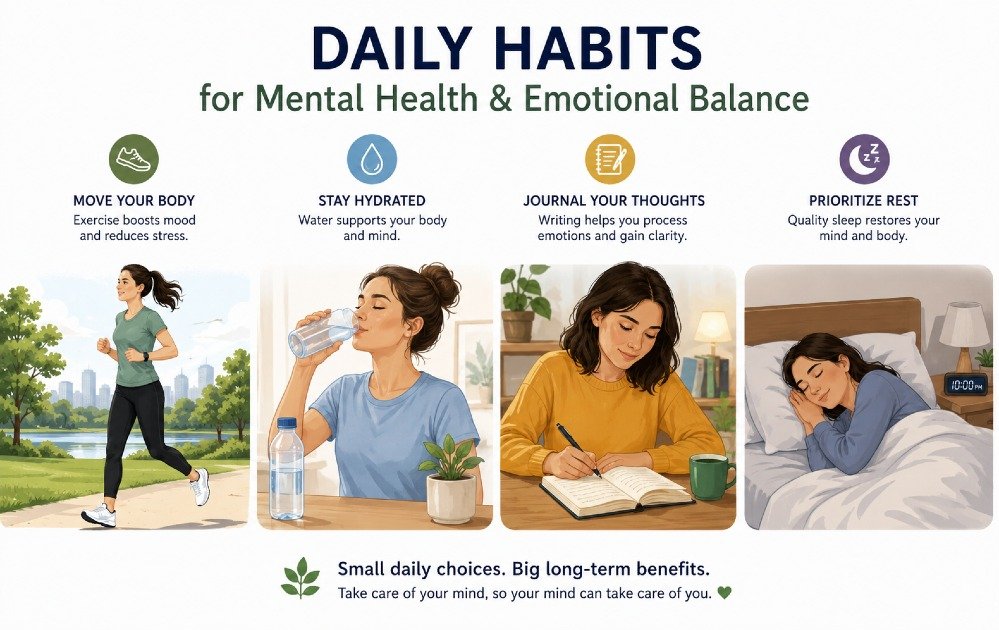
Daily stress, poor sleep, inactivity, and unhealthy habits can fuel anxiety and burnout, while healthy routines strengthen mental balance and resilience.
Focus on habits such as:
- Prioritizing quality sleep
- Exercising regularly
- Spending time outdoors
- Practicing gratitude
- Maintaining social connections
- Setting healthy boundaries
- Scheduling time to relax
- Limiting excessive screen time
Daily mental wellness grows through intentional habits that strengthen how you feel, think, and handle life’s challenges.
Frequently Asked Questions
What is the fastest natural way to ease anxiety?
Deep breathing quickly eases anxiety by calming the nervous system, reducing tension, and restoring control within minutes.
Can lifestyle changes reduce anxiety?
Regular exercise, quality sleep, balanced nutrition, mindfulness, and stress management build emotional resilience and help reduce anxiety, with consistent habits creating lasting benefits.
What foods may help support a calmer mood?
Omega-3s, magnesium, and B vitamin-rich foods like fatty fish, leafy greens, nuts, seeds, beans, and whole grains nourish brain health and support emotional well-being.
How long does it take for natural anxiety relief strategies to work?
Deep breathing and mindfulness offer quick relief, while exercise, quality sleep, and better nutrition require consistent practice to create lasting results.
When should I seek professional help for anxiety?
Consult a healthcare professional if anxiety disrupts daily life, as expert guidance can provide effective tools when self-help strategies fall short.
Recap: Lasting Anxiety Relief Starts With Daily Choices
Natural anxiety relief is built through mindful breathing, exercise, quality sleep, balanced nutrition, and meaningful connections.
It strengthens resilience and improves emotional balance over time.
Every positive step you take today can help you manage life’s challenges and support lasting peace of mind.
Ready to Stop Letting Anxiety Control Your Day?
You don’t have to spend another day feeling overwhelmed by stress and anxious thoughts.
Discover how this guided meditation platform can quiet racing thoughts, build daily calm, and create a more balanced mindset.