

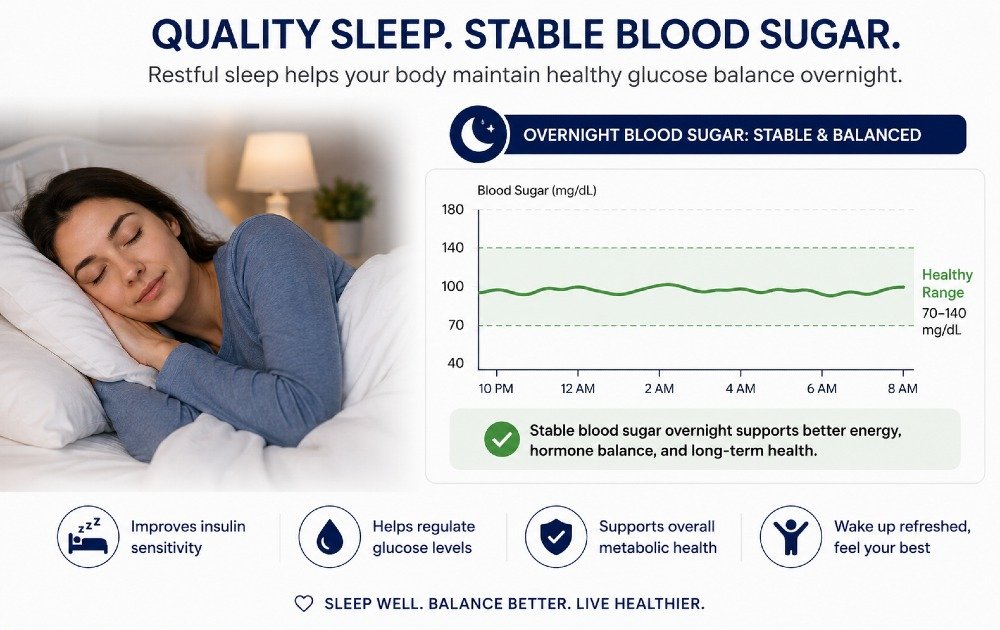
Still struggling with energy crashes, cravings, or unpredictable blood sugar levels?
Sleep restores energy, balances hormones, improves insulin sensitivity, and supports healthy blood sugar—explore how quality sleep improves long-term metabolic health in our Sleep and Recovery Guide.
This guide reveals how better sleep habits can naturally support healthier blood sugar balance.
How Sleep Directly Impacts Blood Sugar Regulation
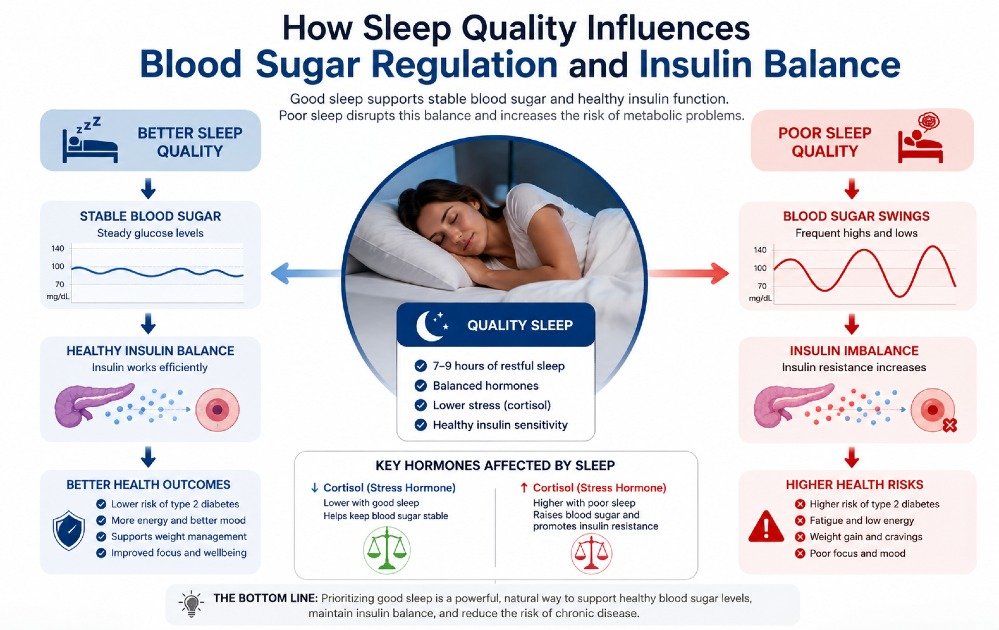
Quality sleep helps balance blood sugar by improving insulin function, while poor sleep can disrupt glucose control and weaken metabolic health.
NIH research shows that poor sleep can impair insulin sensitivity and disrupt blood sugar regulation, making it harder for your body to process glucose effectively.
Why it matters:
Poor sleep disrupts hormones like insulin, cortisol, and growth hormone, making it harder to maintain healthy blood sugar balance.
What works for me:
I’ve learned that quality sleep helps regulate blood sugar, sustain energy, support metabolic health, and improve overall well-being.
How to start:
- Aim for 7–9 hours of consistent sleep
- Maintain a fixed bedtime and wake-up time
- Avoid heavy meals 2–3 hours before bed
- Reduce screen exposure at night to support melatonin production
- Keep your bedroom cool and dark
6 Powerful Strategies to Promote Healthy Blood Sugar Control and Metabolic Wellness
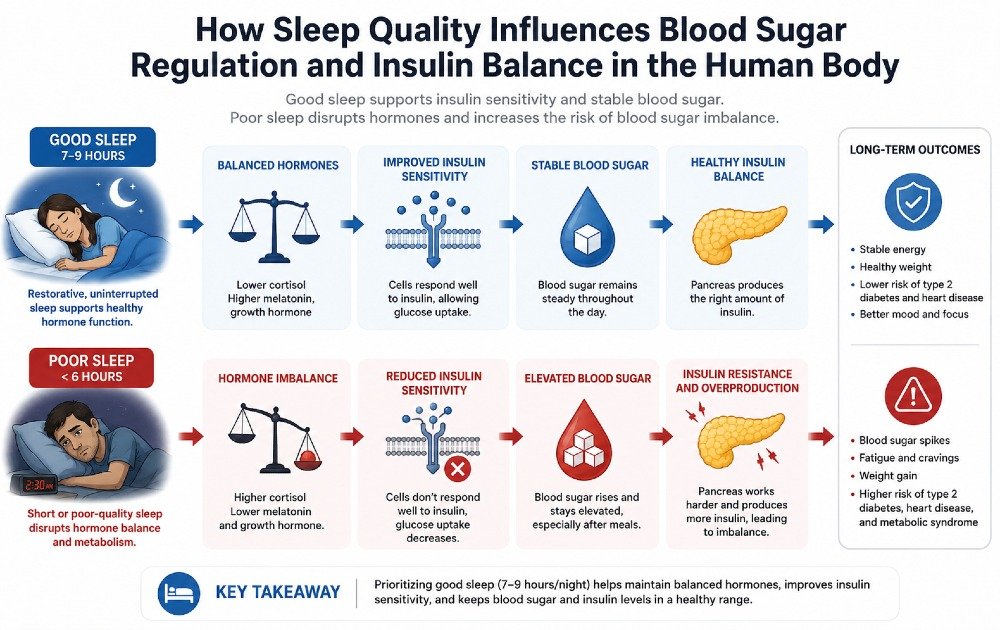
Still battling energy crashes, cravings, or fatigue?
Support healthy glucose regulation with quality sleep, regular exercise, balanced nutrition, and stress management to stabilize blood sugar, boost energy, curb cravings, and improve metabolic health.
Discover six proven strategies to support healthy glucose balance and boost your metabolic health.
1. Deep Sleep and Insulin Sensitivity Connection
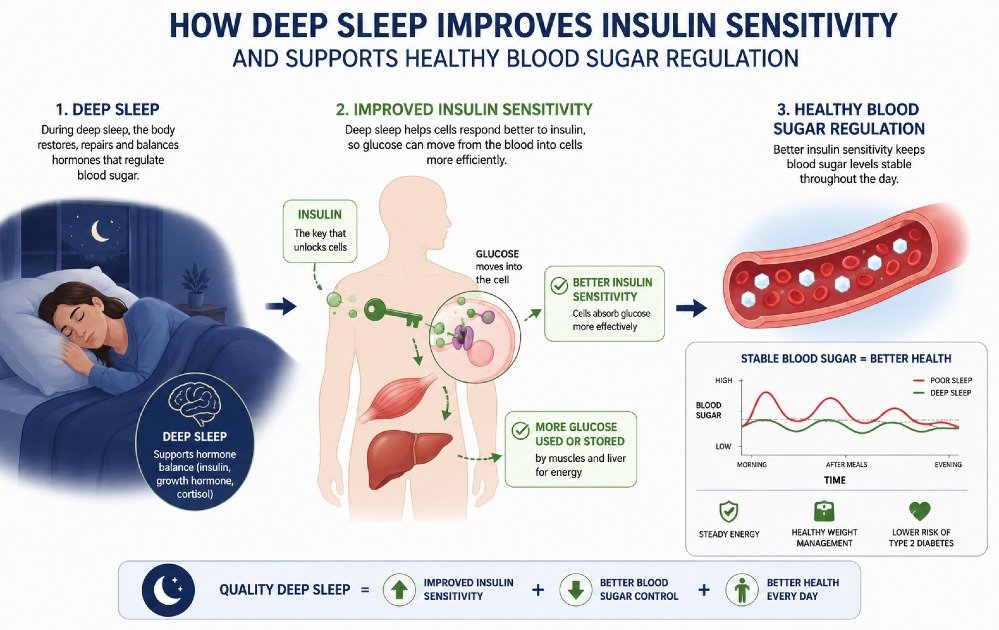
Deep sleep supports insulin sensitivity and healthy blood sugar control, while poor sleep can disrupt glucose metabolism and strain your body’s metabolic health.
Why it matters:
Deep sleep restores your body, repairs cells, and supports healthy insulin function—while too little can disrupt glucose metabolism.
What works for me:
I’ve learned that deep sleep improves insulin sensitivity, balances blood sugar, and strengthens metabolic health.
How to start:
- Create a relaxing bedtime routine (reading, stretching, breathing)
- Avoid caffeine after 2 PM
- Try magnesium-rich foods like bananas or almonds
- Keep a consistent sleep environment
- Use white noise or calming sounds if needed
2. Sleep Deprivation and Sugar Cravings Cycle
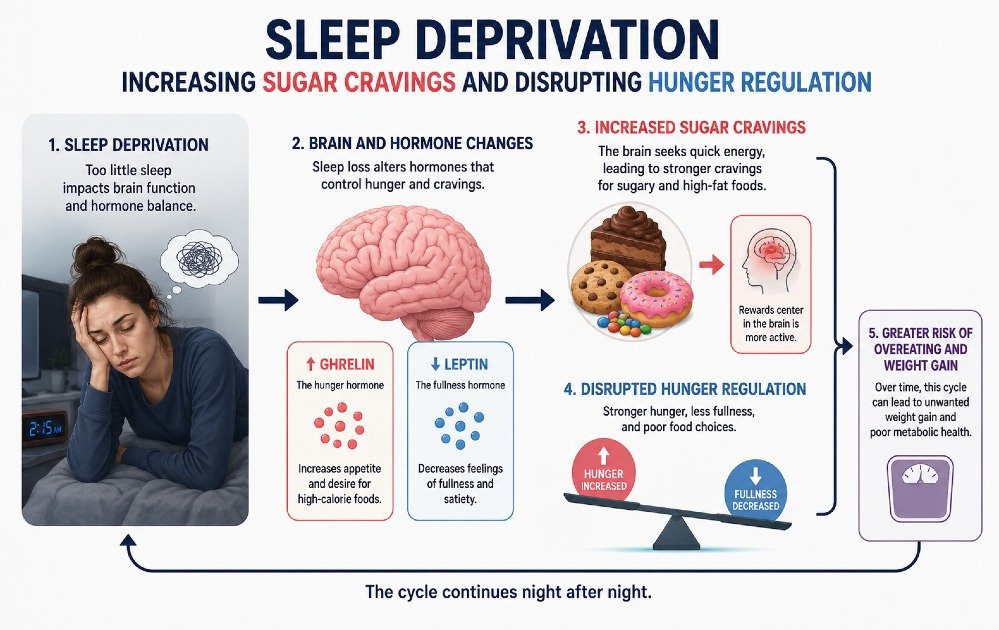
Poor sleep can fuel sugar cravings, disrupt hunger hormones, trigger blood glucose spikes and crashes, and become a hidden driver of unstable glucose levels.
Why it matters:
Poor sleep disrupts hunger hormones, increasing sugar cravings and becoming a hidden trigger for unstable blood glucose levels.
What works for me:
I boost my energy, control cravings, and improve health by breaking the sleep deprivation and sugar craving cycle with restorative sleep habits.
How to start:
- Eat a balanced dinner with protein + fiber
- Avoid late-night snacking
- Keep healthy snacks available (nuts, yogurt, fruit)
- Stick to a sleep schedule even on weekends
- Manage stress before bed with breathing exercises
3. Circadian Rhythm and Blood Sugar Control
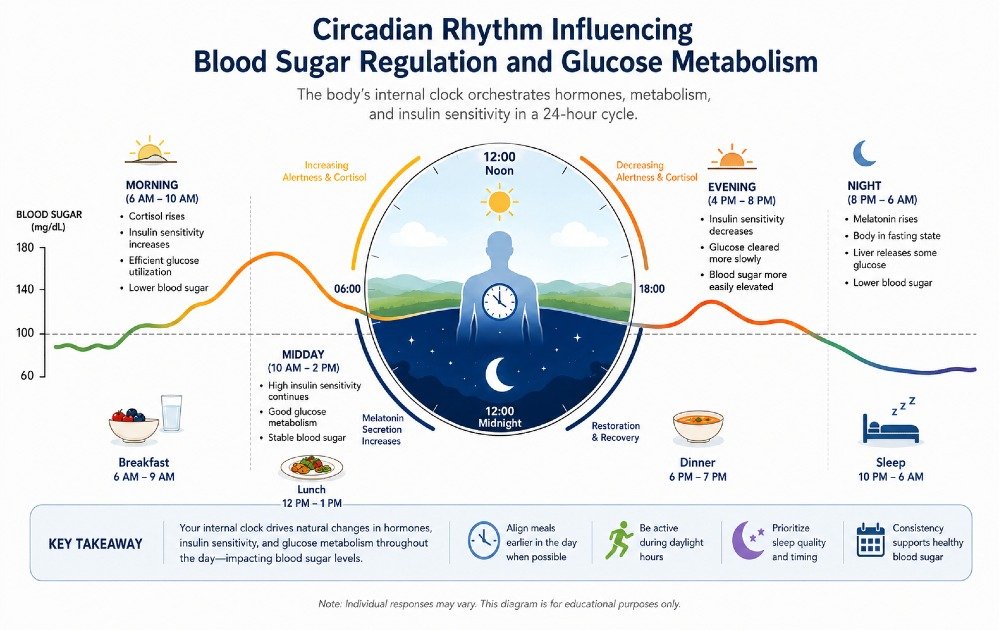
Keep a consistent sleep schedule to strengthen your circadian rhythm, improve insulin function, stabilize blood glucose, and boost lasting energy.
Why it matters:
Disrupted sleep patterns can confuse your internal clock, altering insulin function and making it harder to maintain stable blood sugar levels.
What works for me:
Aligning my circadian rhythm helps regulate blood sugar, improve insulin function, and sustain steady energy all day.
How to start:
- Wake up at the same time daily
- Get morning sunlight exposure
- Avoid bright screens at night
- Eat meals at consistent times
- Limit naps to 20–30 minutes
4. Cortisol, Stress, and Nighttime Blood Sugar Spikes
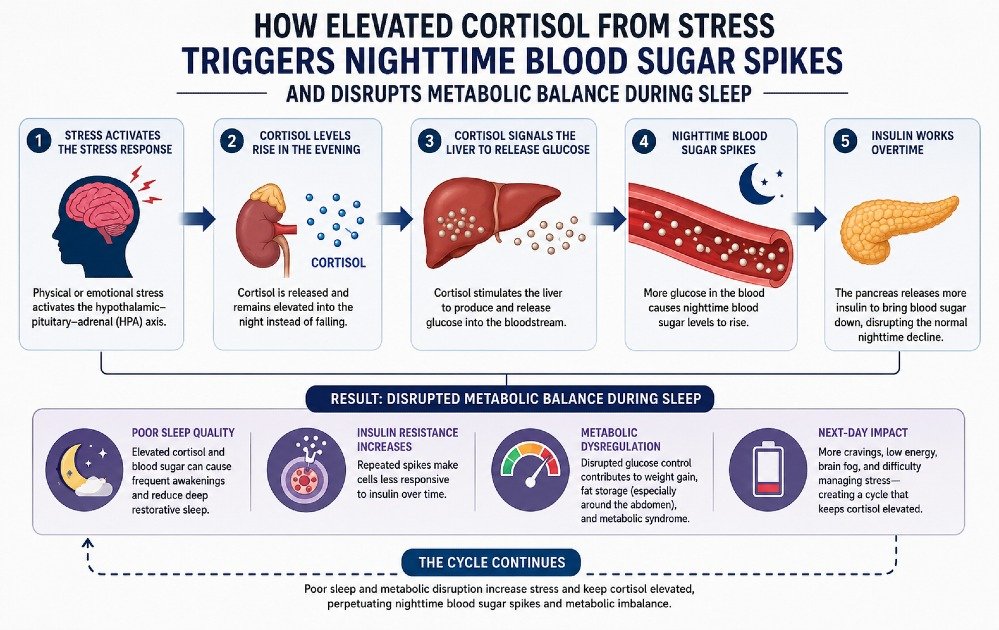
Poor sleep and chronic stress raise cortisol, triggering blood glucose spikes—making bedtime relaxation a powerful way to support healthier glucose control and overnight recovery.
Why it matters:
Poor sleep raises cortisol, your stress hormone, which increases blood glucose levels.
What works for me:
Manage cortisol and stress to prevent nighttime blood glucose spikes, sleep deeper, and wake up energized with better metabolic balance.
How to start:
- Turn off work-related activities 1 hour before bed
- Practice mindfulness or prayer/meditation
- Take a warm shower
- Use calming essential oils like lavender
- Avoid emotional conversations late at night
5. Best Sleep Habits to Naturally Stabilize Blood Sugar
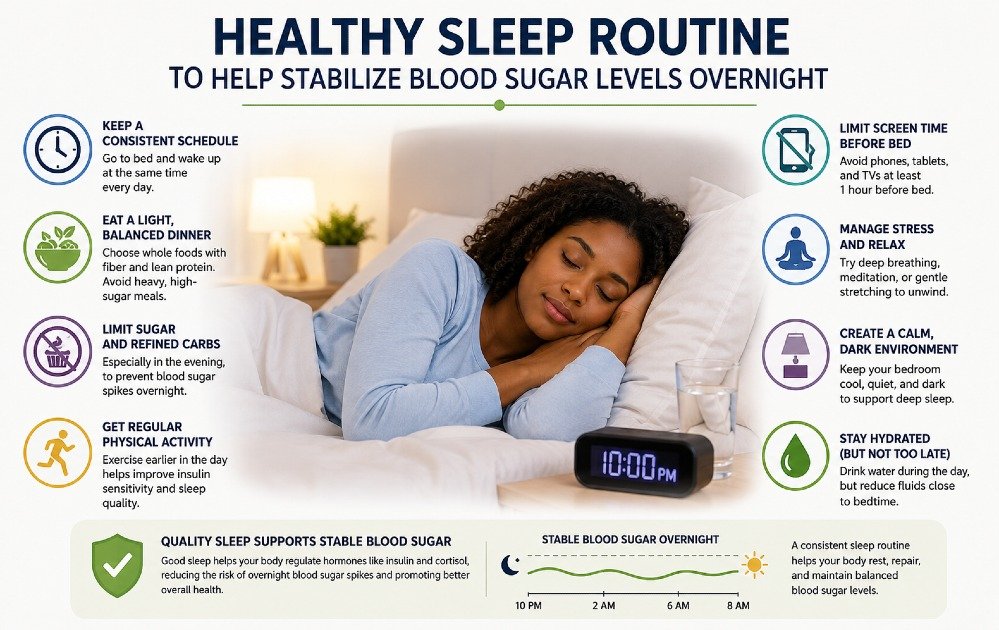
Consistent sleep routines, a calming bedtime environment, and healthy habits like limiting screens and late caffeine can improve sleep quality, stabilize blood sugar, and support overall health.
Why it matters:
Consistent sleep habits balance insulin, curb cravings, and support steady energy all day.
What works for me:
I build healthy sleep habits to stabilize blood sugar, boost insulin sensitivity, and wake up energized every day.
How to start:
- Set a fixed bedtime alarm
- Dim lights after sunset
- Avoid caffeine after mid-day
- Prepare your room for sleep (cool, dark, quiet)
- Track sleep using a journal or app
6. Sleep-Friendly Nutrition for Better Blood Sugar Balance
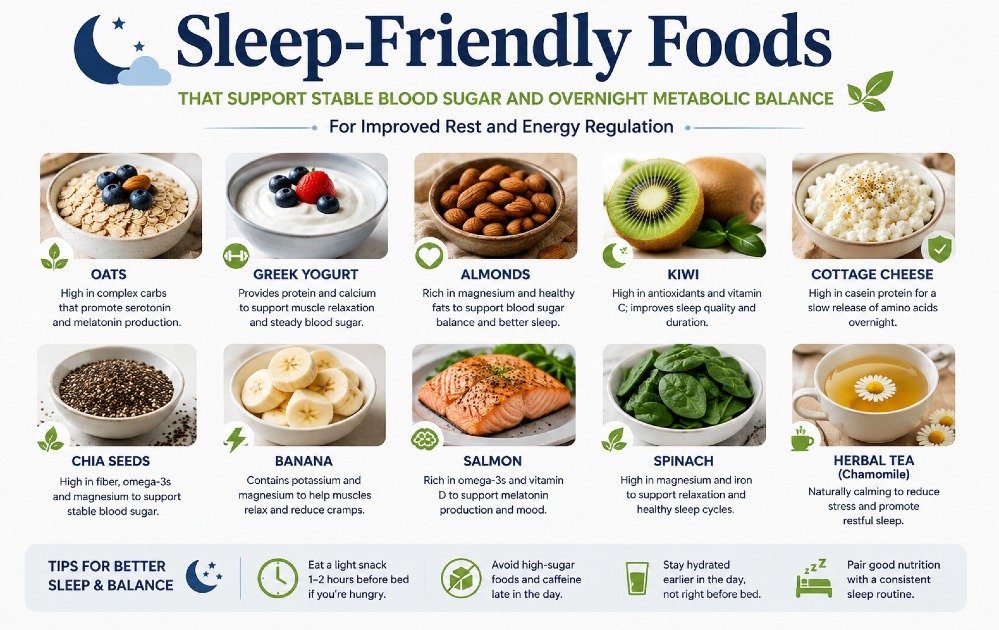
Smart evening food choices with protein, fiber, healthy fats, and magnesium-rich foods can support deeper sleep and more stable overnight blood sugar while reducing glucose spikes and nighttime disruptions.
Why it matters:
What you eat affects both sleep quality and glucose control.
What works for me:
I choose sleep-friendly nutrition to balance blood sugar, boost energy, and support healthier daily habits.
How to start:
- Include protein in dinner (chicken, fish, tofu)
- Add fiber-rich vegetables
- Avoid sugary desserts late at night
- Stay hydrated but reduce fluids before bed
- Try magnesium-rich foods
Sleep and Prediabetes
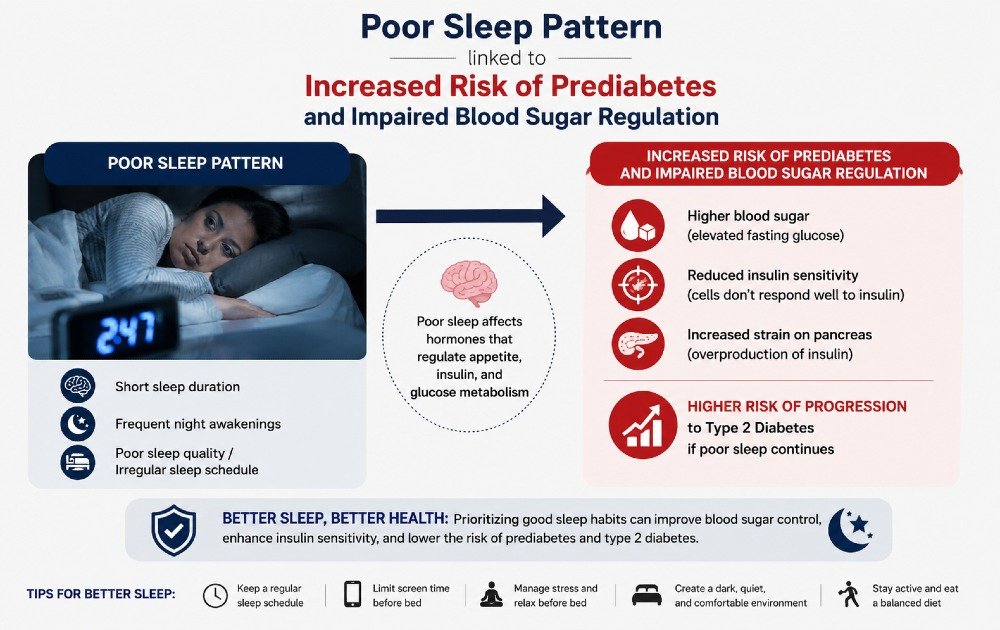
Poor sleep can silently increase prediabetes risk by reducing insulin sensitivity, while better sleep supports healthier blood sugar regulation and glucose metabolism.
Key habits include:
- Get 7–9 hours of sleep each night.
- Keep a consistent sleep schedule.
- Limit screen time before bed.
- Create a dark, quiet, and comfortable sleep environment.
- Avoid caffeine and heavy meals late in the evening.
The Hidden Link Between Sleep Quality and Type 2 Diabetes Risk
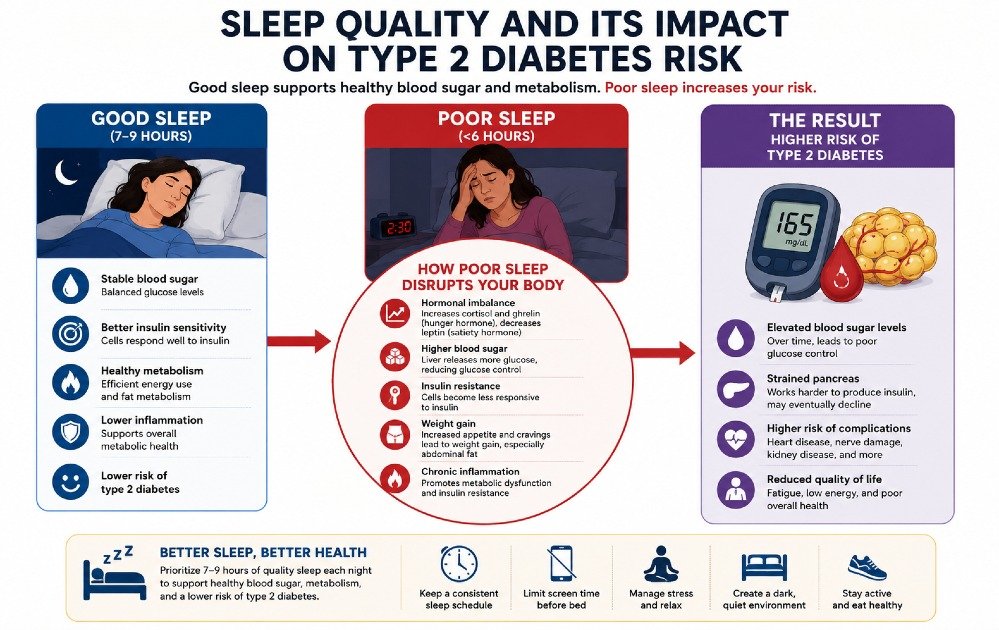
Poor sleep can increase Type 2 diabetes risk by driving insulin resistance, inflammation, and impaired glucose control—making quality sleep essential for metabolic health.
Helpful strategies include:
- Follow a regular sleep schedule.
- Establish a calming bedtime routine.
- Reduce blue light exposure before bed.
- Manage stress through relaxation techniques.
- Keep the bedroom quiet and free of distractions.
How Sleep Supports Hormone Balance and Glucose Regulation
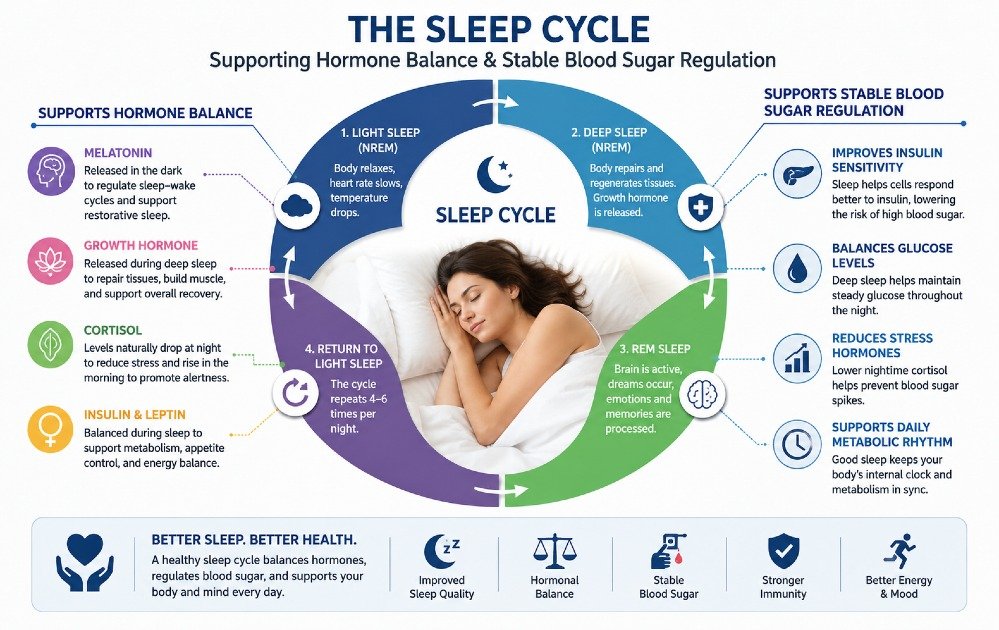
Poor sleep disrupts appetite, stress, insulin, and blood sugar hormones, increasing cravings, hunger, and energy swings—prioritize quality sleep to restore balance and improve glucose control.
Effective approaches include:
- Maintain a consistent bedtime and wake time.
- Get natural morning sunlight exposure.
- Avoid stimulating activities before bed.
- Practice stress-management techniques.
- Make sufficient sleep a daily priority.
Nighttime Routines That Support Metabolic Health
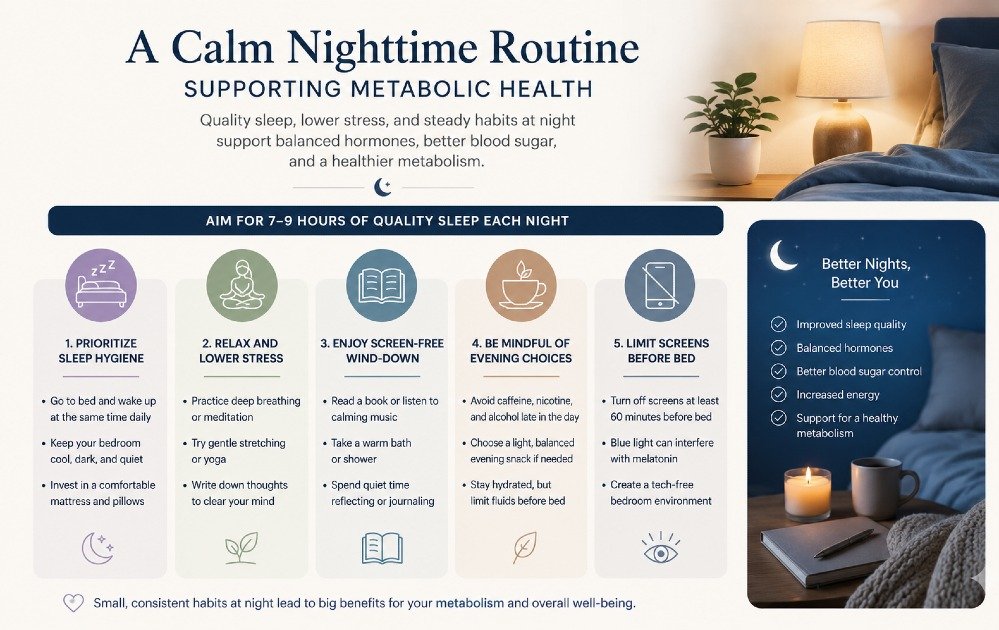
Late-night eating, screen overload, and irregular sleep patterns can disrupt metabolism—build an evening routine that supports deeper sleep, balanced blood sugar, and better recovery.
Start with these habits:
- Finish meals 2–3 hours before bedtime.
- Reduce screen exposure in the evening.
- Read, stretch, or practice deep breathing before bed.
- Keep your bedroom cool, dark, and comfortable.
- Go to bed at the same time each night.
Frequently Asked Questions
Does poor sleep affect blood sugar levels?
Poor sleep can reduce insulin sensitivity, making it harder for your body to regulate glucose and increasing blood sugar levels—even with a healthy diet and active lifestyle.
How much sleep supports healthy blood sugar control?
Aim for 7–9 hours of quality sleep nightly to support insulin function, hormone balance, and healthy blood sugar regulation.
Can better sleep reduce sugar cravings?
Poor sleep can trigger cravings for sugar and carbs, while quality rest helps control appetite and maintain steady daily energy.
Why is deep sleep important for glucose regulation?
Deep sleep powers the body’s recovery by improving insulin sensitivity, balancing hormones, and optimizing glucose metabolism.
Can stress and poor sleep raise blood sugar?
Yes. High stress and poor sleep can raise cortisol, increasing blood sugar levels—while stress management and better sleep habits support healthier glucose control.
Related Articles
Recap: Better Sleep Supports Better Blood Sugar
Quality sleep is a powerful driver of blood sugar balance, insulin sensitivity, hormones, and appetite control.
Better sleep habits reduce cravings, boost energy, and support long-term metabolic health.
Reset your blood sugar journey with restorative sleep—unlock better metabolic health, steady energy, and long-term wellness every day.
Ready to Break the Cycle of Poor Sleep and Unstable Blood Sugar?
Still waking up exhausted, battling energy crashes, and wondering why your blood sugar feels impossible to balance?
Discover how this smart sleep tracker reveals patterns affecting glucose health, improve your routine, and wake up more balanced and energized.