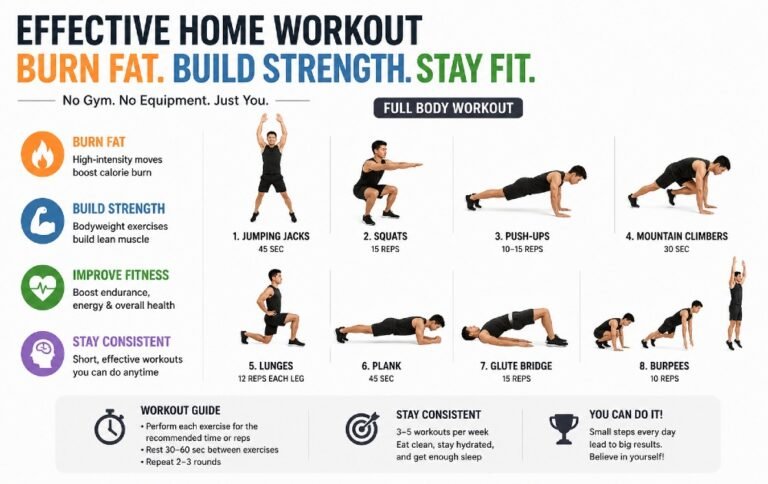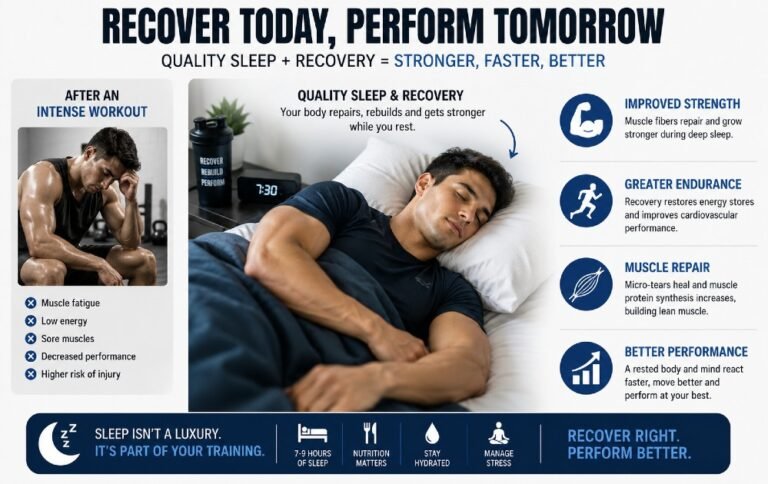

Still waking up drained, struggling to focus, or feeling like your body never truly recovers?
The CDC recommends adults get at least seven hours of quality sleep nightly to support better health, recovery, and overall well-being.
This guide reveals how sleep and recovery work together and simple strategies to help you wake up refreshed, energized, and healthier.
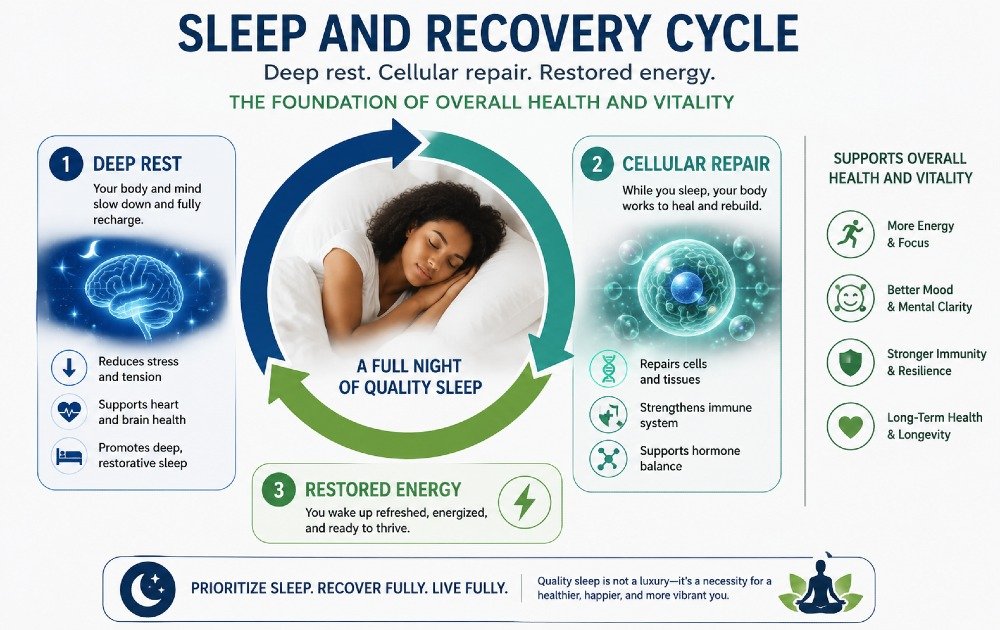
What Is Sleep and Recovery?

Quality sleep and recovery help your body repair, rebuild, restore energy, balance hormones, strengthen immunity, support mental clarity, and optimize every healthy habit.
Why it matters:
Quality sleep fuels recovery, sharpens mental performance, boosts energy, and helps your body repair, restore, and protect long-term health.
What works for me:
I see sleep and recovery as my body’s reset process that restores energy, repairs tissues, balances health, and helps me wake up refreshed and stronger.
How to start:
- Prioritize sleep like any other health goal.
- Schedule a consistent bedtime.
- Reduce late-night screen exposure.
- Create a calming evening routine.
- Aim for quality, not just quantity.
12 Powerful Health Connection Between Sleep and Recovery
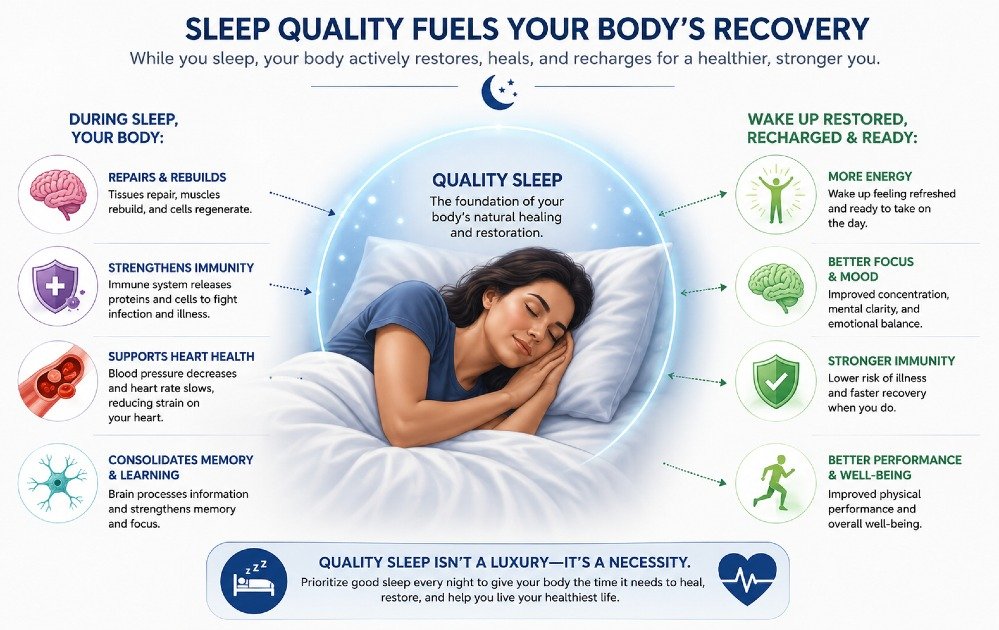
Still waking up exhausted, recovering slowly, or wondering why your body isn’t performing at its best?
Quality sleep fuels faster recovery by balancing hormones, strengthening immunity, and boosting performance, focus, mood, and metabolism.
Discover twelve powerful sleep-recovery connections and practical strategies to boost health, restore energy, and improve overall well-being.
1. Sleep and Recovery Improve Physical Performance

Sleep and recovery boost performance by restoring energy, repairing muscles, and improving strength, endurance, and overall physical function.
Why it matters:
Your muscles don’t grow during workouts—they grow during recovery, when sleep repairs exercise-induced stress and builds strength.
What works for me:
I prioritize sleep and recovery to restore energy, build strength, and maximize my physical performance.
How to start:
- Sleep 7–9 hours nightly.
- Avoid intense workouts right before bed.
- Stay hydrated throughout the day.
- Include recovery days in your training plan.
- Listen to signs of fatigue.
2. Better Sleep Supports Weight Management
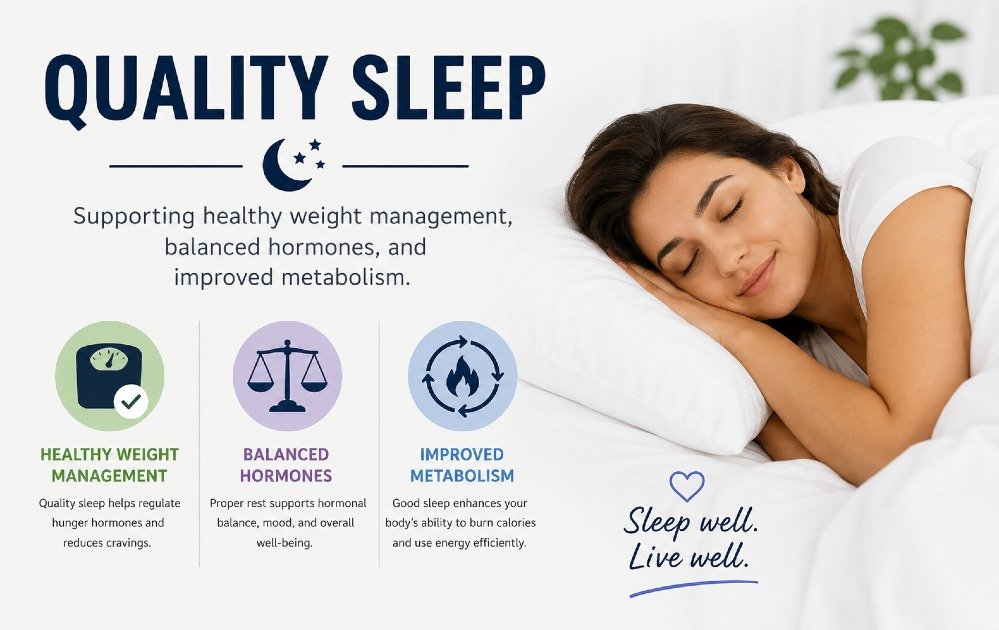
Better sleep supports weight management by balancing hormones, reducing cravings, improving metabolism, and helping the body maintain a healthier weight naturally.
Why it matters:
Poor sleep disrupts hunger hormones, fueling stronger cravings and appetite changes.
What works for me:
I prioritize better sleep and recovery because quality rest helps regulate energy, metabolism, and habits for healthier weight management.
How to start:
- Maintain consistent sleep schedules.
- Avoid heavy meals before bedtime.
- Limit alcohol consumption.
- Focus on protein-rich breakfasts.
- Prioritize recovery during weight-loss efforts.
3. Sleep and Recovery Strengthen the Immune System

Sleep and recovery strengthen the immune system by allowing the body to repair, regulate defenses, and build resilience against illness.
Why it matters:
Your immune system performs critical maintenance while you sleep.
What works for me:
I prioritize sleep and recovery to strengthen my immune system, support my body’s defenses, and maintain daily health.
How to start:
- Establish a regular bedtime.
- Manage stress levels.
- Avoid excessive caffeine.
- Support immunity with proper nutrition.
- Sleep more when recovering from illness.
4. Better Recovery Improves Mental Health
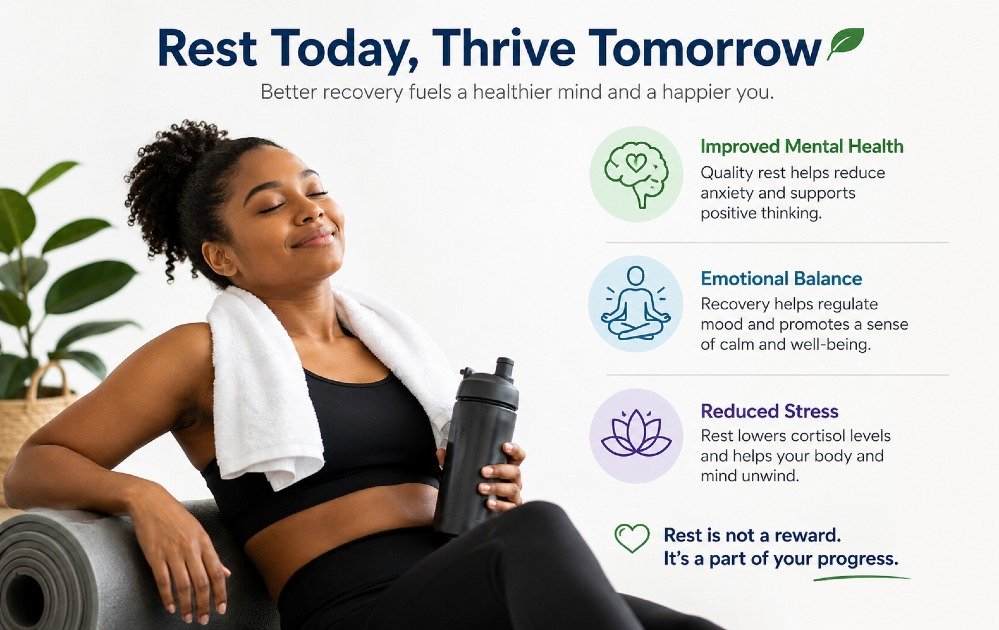
Better recovery strengthens mental health by reducing stress, improving mood, enhancing emotional balance, and supporting a clearer, more resilient mind.
Why it matters:
Poor sleep weakens emotional resilience, making everyday stress feel harder to manage.
What works for me:
I prioritize sleep and recovery to boost mental clarity, emotional balance, and daily focus through better rest.
How to start:
- Create a relaxing evening routine.
- Practice mindfulness before bed.
- Journal stressful thoughts.
- Reduce evening stimulation.
- Maintain consistent sleep times.
5. Sleep Enhances Brain Function and Focus
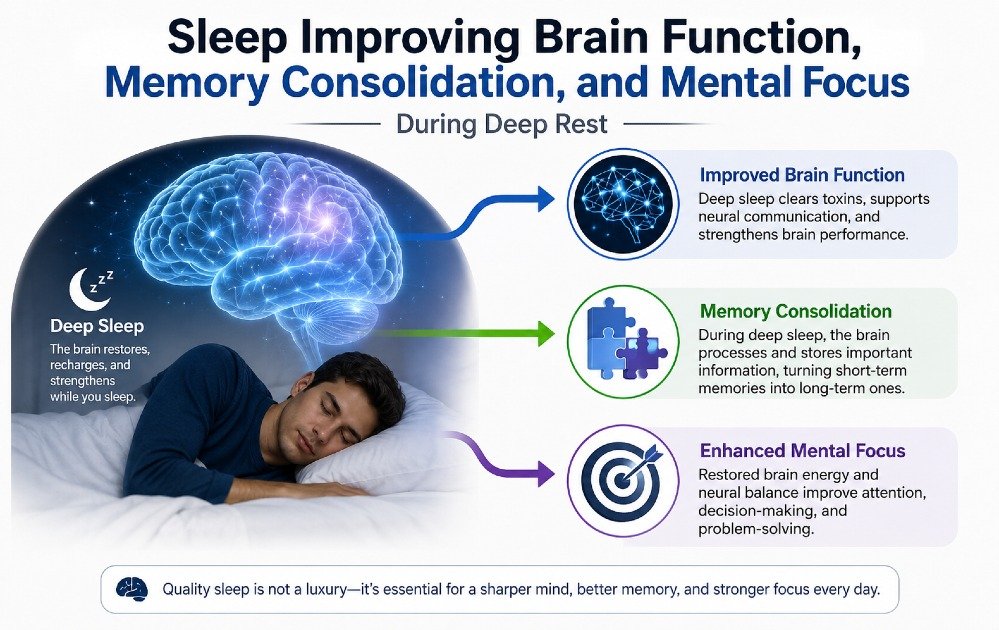
Sleep enhances brain function and focus by supporting memory, mental clarity, emotional balance, and the cognitive energy needed for sharper thinking and better daily performance.
Why it matters:
Your brain uses sleep to organize and store information.
What works for me:
I prioritize quality sleep and recovery to boost focus, enhance brain function, and think more clearly every day.
How to start:
- Avoid all-night work sessions.
- Take recovery seriously during busy periods.
- Limit late-night screen time.
- Create a dark sleep environment.
- Prioritize sleep before important events.
6. Sleep and Recovery Support Heart Health
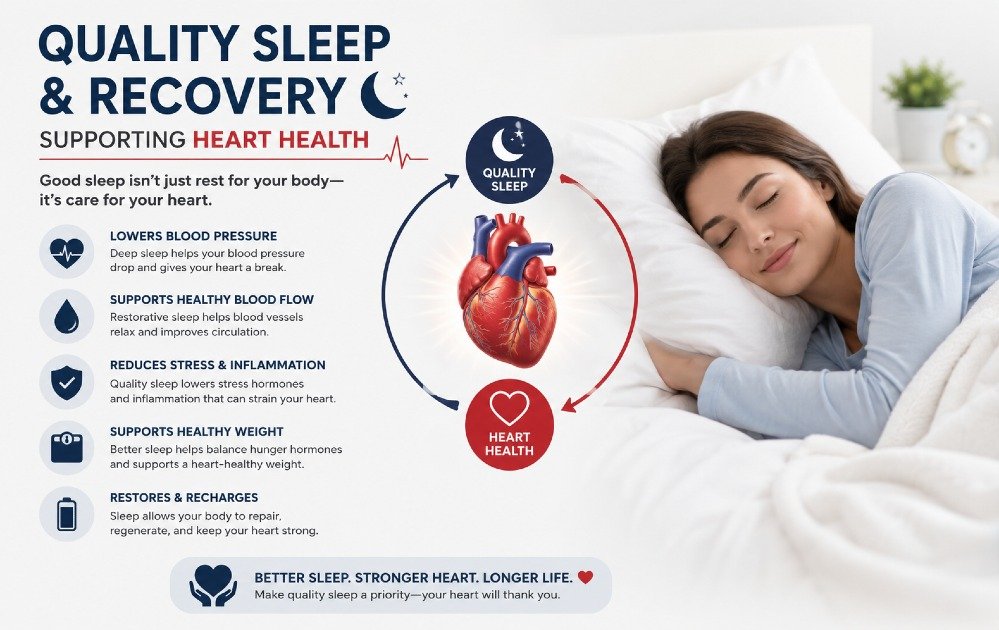
Sleep and recovery support heart health by helping regulate blood pressure, reduce stress, improve circulation, and strengthen the body’s ability to maintain a healthier cardiovascular system.
Why it matters:
Your cardiovascular system benefits significantly from restorative sleep.
What works for me:
I prioritize sleep and recovery to support heart health, improve circulation, manage stress, and strengthen overall cardiovascular wellness.
How to start:
- Follow a consistent bedtime schedule.
- Reduce evening stress.
- Exercise regularly.
- Avoid nicotine and excessive alcohol.
- Monitor sleep quality.
7. Recovery Helps Balance Hormones
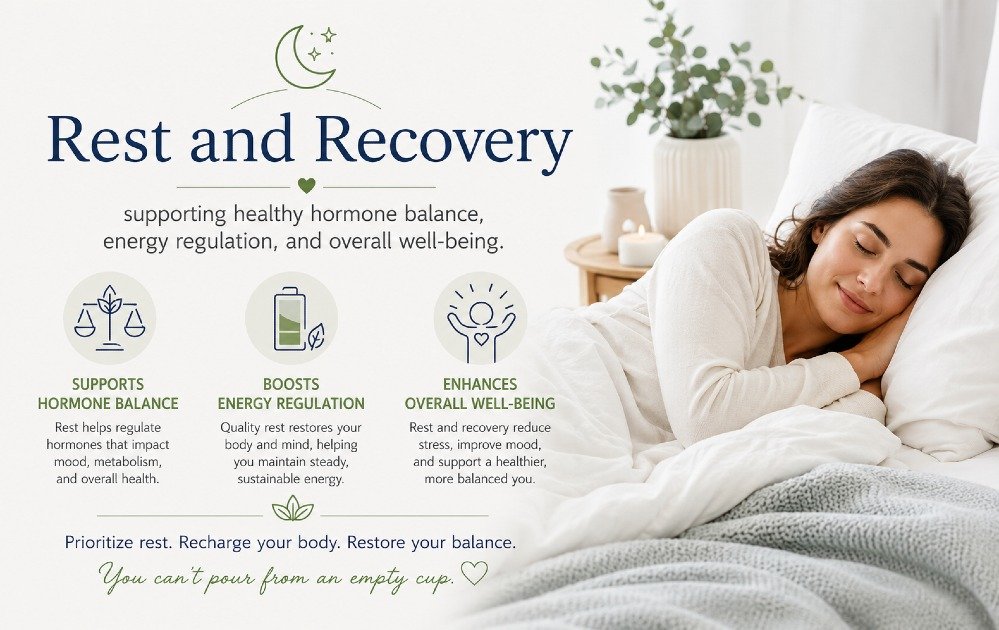
Recovery helps balance hormones by supporting the body’s natural repair processes, reducing stress, and promoting healthy regulation of energy, mood, metabolism, and overall well-being.
Why it matters:
Hormones regulate virtually every bodily process.
What works for me:
I support hormone balance through sleep and recovery, helping regulate stress, energy, and overall well-being.
How to start:
- Sleep 7–9 hours nightly.
- Keep a regular wake-up time.
- Get morning sunlight exposure.
- Reduce nighttime light exposure.
- Avoid unnecessary sleep interruptions.
8. Quality Sleep Supports Healthy Aging

Quality sleep supports healthy aging by helping the body repair, restore energy, protect brain health, strengthen immunity, and maintain overall vitality as we grow older.
Why it matters:
Recovery becomes increasingly important with age.
What works for me:
I prioritize quality sleep because it fuels my sleep and recovery, boosts energy, supports healthy aging, and protects my long-term health.
How to start:
- Establish lifelong sleep habits.
- Stay physically active.
- Manage stress proactively.
- Create a comfortable sleep environment.
- Track sleep quality patterns.
9. Sleep and Recovery Reduce Inflammation
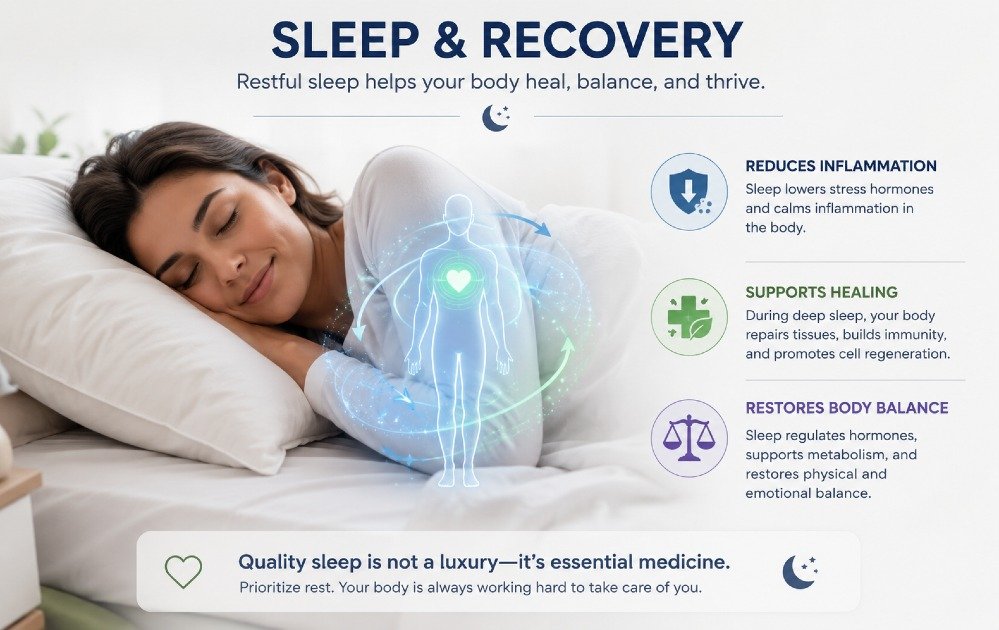
Sleep and recovery help calm inflammation by supporting immune balance, repairing the body, and reducing stress-related inflammatory responses for better overall health and resilience.
Why it matters:
Chronic inflammation contributes to many health conditions.
What works for me:
I prioritize sleep and recovery to reduce inflammation, accelerate healing, and protect my long-term health.
How to start:
- Sleep consistently.
- Eat anti-inflammatory foods.
- Stay active.
- Manage stress.
- Avoid excessive alcohol.
10. Recovery Improves Energy Levels Naturally
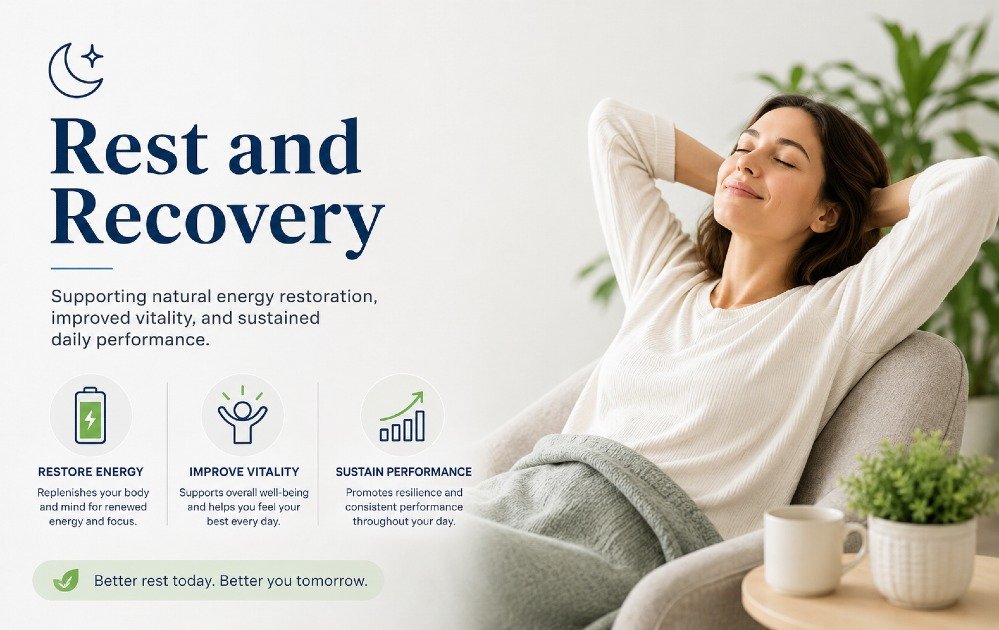
Recovery naturally restores the body’s energy reserves, helping improve strength, reduce fatigue, and support a more refreshed, energized daily life.
Why it matters:
Many people chase fatigue with caffeine, but true energy starts with better recovery.
What works for me:
I prioritize sleep and recovery to naturally restore energy, boost performance, and maintain daily balance.
How to start:
- Set a bedtime alarm.
- Limit caffeine after lunch.
- Get sunlight exposure daily.
- Stay hydrated.
- Avoid sleep debt.
11. Sleep Supports Healthy Blood Sugar Levels
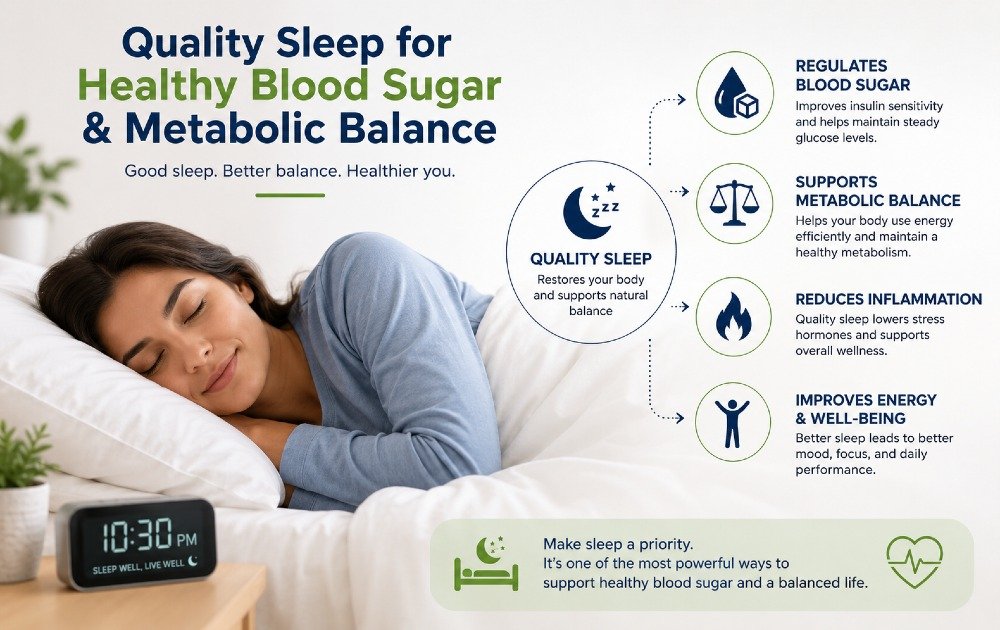
Sleep supports healthy blood sugar levels by improving insulin sensitivity, regulating glucose metabolism, and helping the body maintain balanced energy throughout the day.
Why it matters:
Blood sugar regulation influences energy, hunger, and long-term health.
What works for me:
I prioritize sleep and recovery to support balanced blood sugar, stronger metabolism, and lasting daily energy.
How to start:
- Prioritize sleep before pursuing complex diets.
- Avoid late-night snacking.
- Maintain consistent meal timing.
- Stay physically active.
- Reduce evening stress.
12. Better Recovery Improves Overall Quality of Life

Effective recovery renews my energy, builds lasting strength, and supports both body and mind, allowing me to live with greater vitality, stay active, and enjoy a richer, healthier life.
Why it matters:
Every aspect of wellness benefits from proper rest.
What works for me:
I prioritize sleep and recovery to restore my energy, optimize performance, and support a healthier life.
How to start:
- Treat sleep as a health investment.
- Build sustainable routines.
- Protect your bedtime.
- Practice consistency.
- Focus on progress, not perfection.
Practical Sleep and Recovery Habits That Actually Work
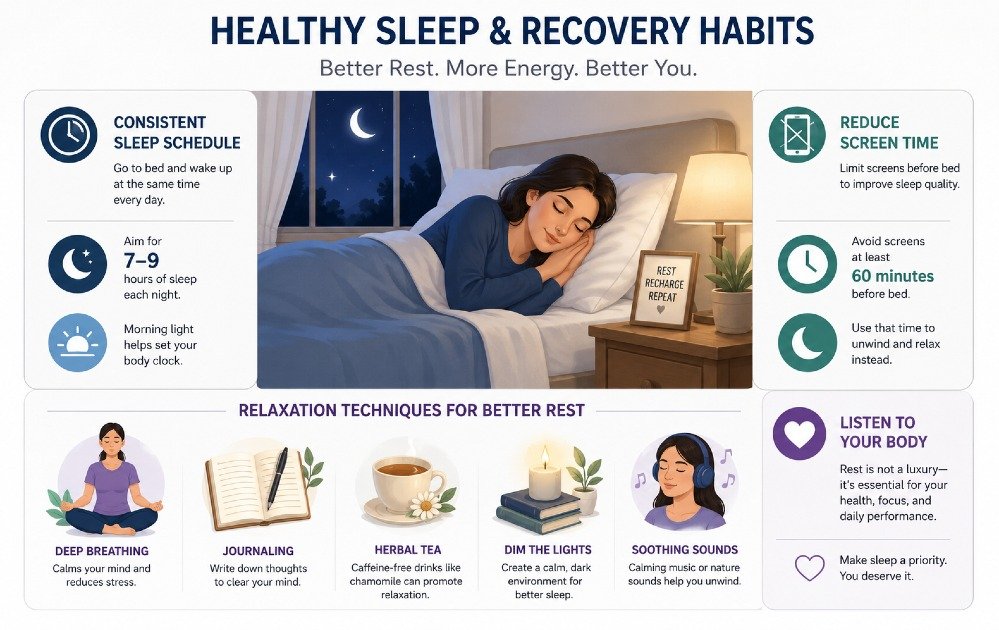
Practical sleep and recovery habits built on consistent routines and quality rest restore energy, support health, and improve daily well-being with these strategies:
- Create a consistent sleep schedule: Stick to a consistent sleep schedule to reset your body clock, improve sleep quality, boost energy, and support overall health.
- Build a sleep-friendly bedroom: Create a sleep-friendly bedroom with a calm, dark, cool space that helps you relax faster and achieve deeper, higher-quality rest.
- Reduce screen exposure: Limit screen time to improve sleep quality, ease eye strain, and support mental well-being.
- Practice evening relaxation: Create an evening wind-down routine that calms your mind, reduces stress, and promotes deeper sleep and recovery.
- Get morning sunlight: Get morning sunlight to reset your body clock, boost energy, improve sleep, and start your day feeling balanced.
Frequently Asked Questions
How many hours of sleep do adults need?
Most adults need 7–9 hours of sleep nightly, as consistently getting less than 7 hours can reduce recovery, energy, focus, and overall health.
Can extra sleep on weekends help recover from the sleep debt built up during the week?
Short-term extra sleep can help repay some lost rest, but maintaining a steady sleep routine—not relying on weekend catch-up—is what truly supports recovery from chronic sleep loss.
Why do I feel tired after a full night’s sleep?
Poor sleep quality—not just short sleep—caused by stress, unhealthy habits, disorders, alcohol, or frequent awakenings can block the restorative rest your body needs.
Does exercise help improve sleep?
Regular exercise boosts sleep quality and recovery, but intense workouts before bed may disrupt sleep for some people.
What is the best way to improve sleep and recovery?
Maintaining a regular sleep routine trains your internal clock to function more smoothly by aligning your bedtime and morning wake-up time each day.
Recap: Better Sleep Powers Better Recovery and Lasting Energy
Sleep is the foundation of recovery, peak performance, mental clarity, and lasting health—often more powerful than any diet or workout.
Prioritize better sleep to restore your body, increase energy, strengthen immunity—making every healthy habit easier to maintain.
Your journey to better recovery starts with better sleep tonight—and a healthier, more energized life performs at its best.
Ready to Stop Waking Up Tired and Start Recovering Better?
Still feeling tired when you open your eyes, even after enough time in bed?
Discover how this white noise machine blocks disruptive sounds, helps you fall asleep faster, supports restoration, and wakes up feeling truly rested and full of energy.