

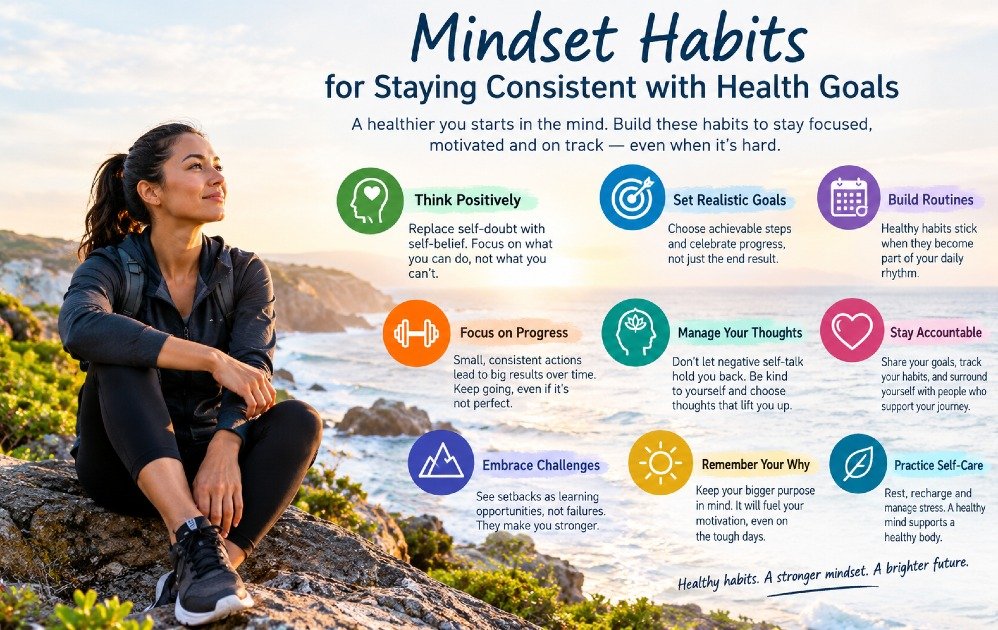
Still setting a mindset for health goals only to lose momentum when life gets busy? Motivation can fade, routines can break, and one setback can make you feel like you’ve failed.
The NIH notes that healthy behavior change takes time and that setbacks are a normal part of the process.
This guide explains the fact that when your thinking supports your goals, healthier choices become easier to sustain.
Why Mindset Matters for Health Goals
Unrealistic expectations and setbacks can weaken consistency and make healthy habits harder to maintain.
A flexible, positive mindset helps you overcome setbacks, build lasting habits, and stay committed to your health goals.
Mindset Habits to Practice
Relying on motivation alone can make healthy routines difficult to sustain.
Setting realistic goals, tracking progress, and practicing self-compassion help you build consistency without chasing perfection.
8 Mental Shifts That Help You Stick With Healthy Habits

You may start a healthy habit with motivation, but sometimes, progress feels slow or one missed day turns into giving up.
Sticking with healthy habits becomes easier when you stop chasing perfection and start building thoughts that support consistent action.
Discover how these eight mental shifts can help you handle setbacks, strengthen your commitment, and make healthier choices feel more sustainable.
Focus on Progress Instead of Perfection

Perfection can make health goals feel impossible, but a progress-focused mindset for health goals keeps you moving forward through small, consistent wins.
Why it matters:
Perfection can make health goals feel impossible, but a progress-focused mindset for health goals keeps you moving forward through small, consistent wins.
What works for me:
I focus on one achievable health habit at a time and track my small wins with a habit journal, which keeps my mindset for health goals practical, visible, and motivating.
How to start:
- Replace “perfect” with “consistent enough to continue.”
- Measure weekly progress instead of judging one difficult day.
- Ask, “What can I do next?” after a setback.
- Keep a simple record of completed habits.
- Celebrate small improvements that move you toward your goal.
Choose One Clear Health Goal at a Time

Trying to change everything at once can dilute your focus, but one clear health goal creates a practical direction for action and strengthens your mindset for health goals.
Why it matters:
Focusing on one behavior makes your health plan easier to act on, track, and sustain instead of becoming overwhelmed by competing goals.
What works for me:
I choose one specific goal, track it daily with a habit journal, and build my mindset for health goals around consistent progress before adding another.
How to start:
- Select one health behavior you genuinely want to improve.
- Define exactly what you will do.
- Choose specific days or times.
- Keep the first version realistic.
- Reassess after one or two weeks.
Build Your Routine Around Your Real Life
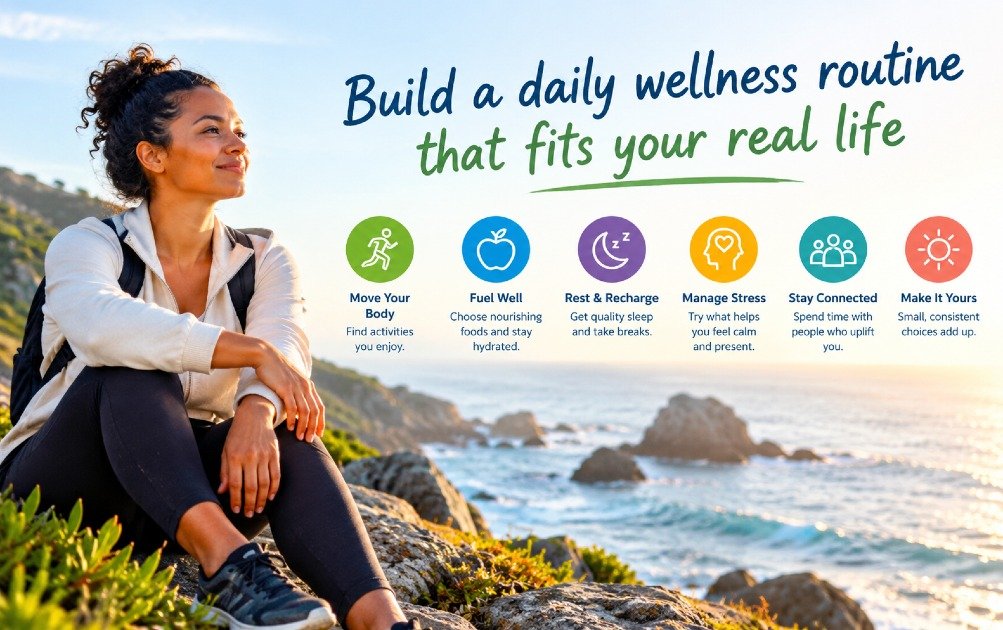
Rigid routines can fail when real life gets busy, but a flexible plan built around your schedule can strengthen your mindset for health goals.
Why it matters:
A realistic routine is easier to repeat, helping healthy actions become consistent habits even when life does not go as planned.
What works for me:
I build my routine around what I can realistically sustain, using a wellness habit tracker to stay focused, adjust when needed, and keep my mindset for health goals moving forward.
How to start:
- Identify one obstacle that repeatedly disrupts your routine.
- Change your environment to reduce that obstacle.
- Put useful tools where you naturally see them.
- Attach your new habit to an existing routine.
- Create a backup plan for busy days.
Stop Waiting to Feel Motivated

Waiting to feel motivated can keep your health goals stuck, but a stronger mindset for health goals starts with taking the first small step.
Why it matters:
Motivation comes and goes, while consistent routines, realistic goals, and self-monitoring can help turn healthy intentions into lasting action.
What works for me:
I stop waiting for motivation, set one achievable daily goal, and use a fitness tracker to monitor my progress and keep my mindset for health goals focused.
How to start:
- Create a smaller version of your habit.
- Decide what counts as a minimum effort.
- Prepare your clothes, equipment, or materials in advance.
- Use a consistent cue to begin.
- Focus on starting rather than negotiating with yourself.
Use Self-Talk That Supports Action
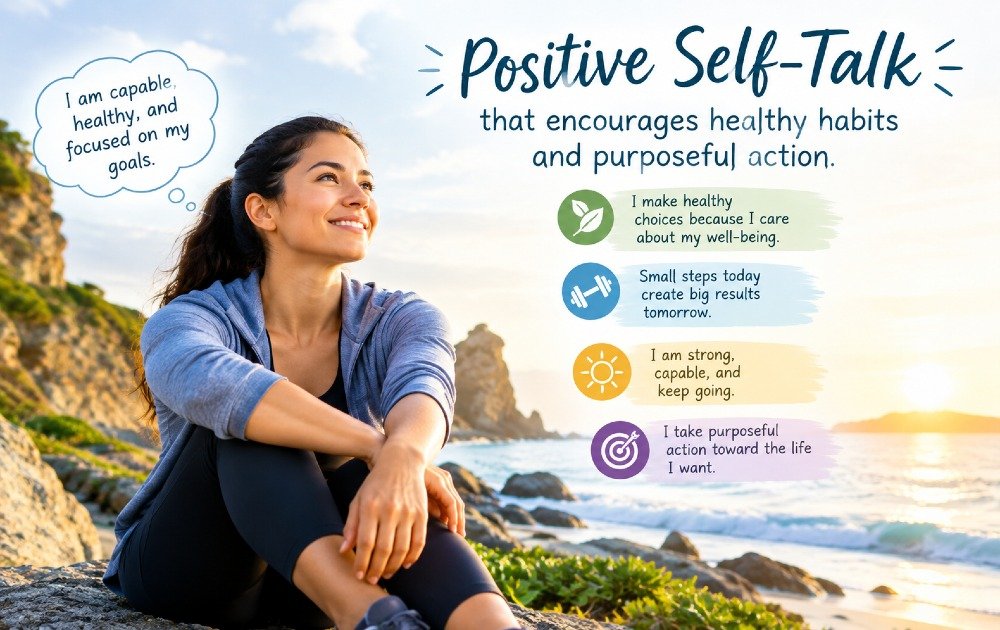
Negative self-talk can weaken motivation, while intentional words can build a mindset for health goals that supports action.
Why it matters:
The way you speak to yourself can influence confidence, persistence, and your willingness to take the next healthy step.
What works for me:
I replace “I can’t” with one action-focused statement and use a mindfulness journal to turn positive self-talk into daily progress.
How to start:
- Notice negative statements that repeatedly appear.
- Replace absolute words such as “always” and “never.”
- Describe the problem without attacking yourself.
- Identify one practical adjustment.
- Give yourself credit for taking action.
Track the Behavior You Want to Strengthen
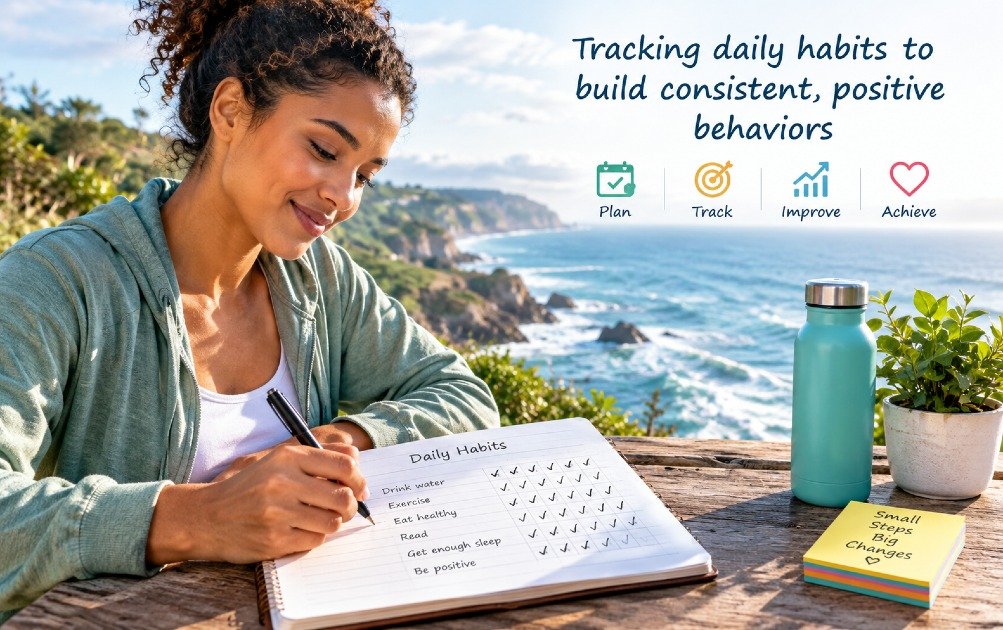
Small behaviors become stronger when you consistently track them with the right mindset for health goals.
Why it matters:
Tracking reveals patterns, builds accountability, and helps you strengthen the behaviors that move your health goals forward.
What works for me:
I track one health behavior daily with a fitness tracker, using the feedback to stay accountable and strengthen my mindset for health goals.
How to start:
- Choose one behavior to track.
- Record it at the same time each day.
- Review your results once a week.
- Look for patterns instead of judging yourself.
- Adjust your plan based on what you learn.
Plan for Stress Before Stress Disrupts Your Goals
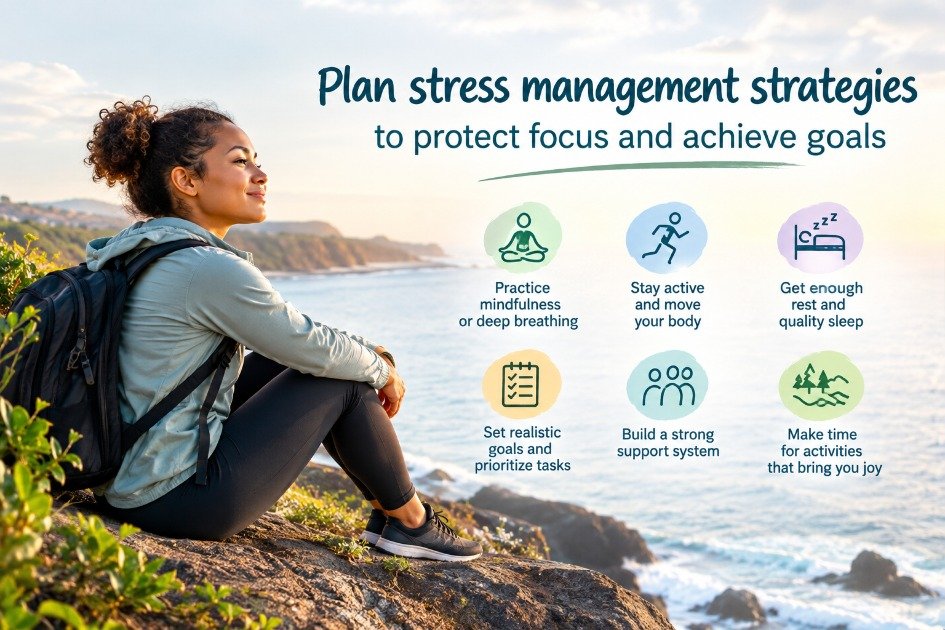
Stress can quietly derail your priorities, so building a plan early protects your mindset for health goals before pressure takes control.
Why it matters:
Preparing for predictable stress helps you stay focused, protect healthy routines, and keep moving toward your goals when challenges arise.
What works for me:
I use a simple stress plan—scheduled breathing breaks, short walks, and a meditation platform—to reset my mindset for health goals and stay consistent when life gets demanding.
How to start:
- Identify your most common stress triggers.
- Choose one healthy response for each trigger.
- Schedule short recovery periods.
- Protect your sleep routine when possible.
- Ask for professional support if stress becomes difficult to manage.
Connect Your Health Goal to a Meaningful Reason
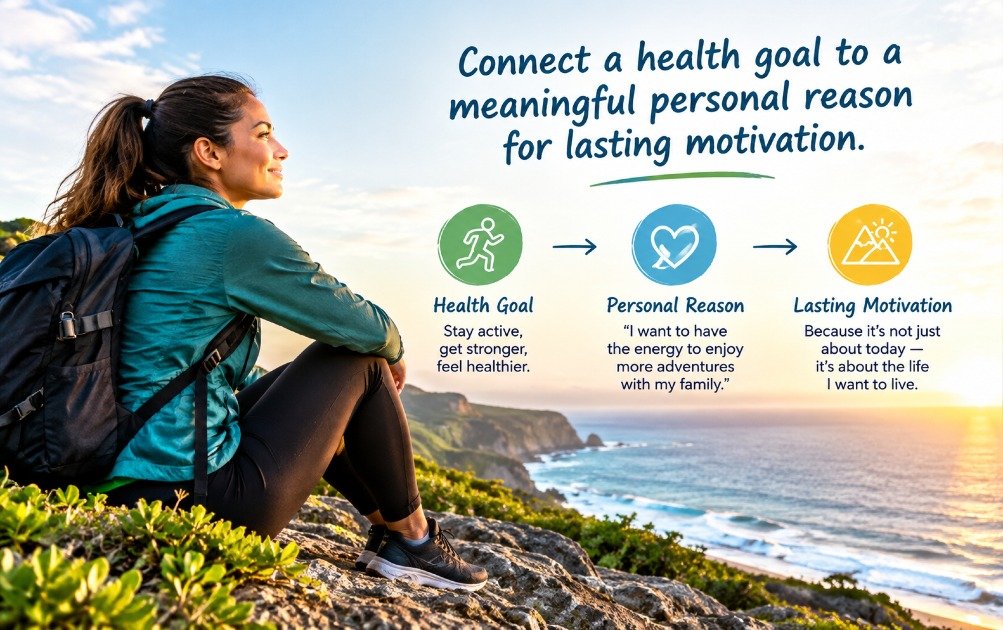
A health goal without a meaningful reason can lose its power, but connecting it to what truly matters can strengthen your mindset for health goals and commitment.
Why it matters:
A personal reason gives your goal meaning and can help turn intention into consistent action when motivation fades.
What works for me:
I connect each health goal to a reason that matters to my life, then use a health-tracking app or fitness tracker to monitor my progress and keep my mindset for health goals focused.
How to start:
- Write down your main health goal.
- Finish this sentence: “I want this because…”
- Choose a reason that feels personally meaningful.
- Keep the reason somewhere visible.
- Revisit it when your motivation drops.
How to Build a Stronger Mindset for Health Goals Every Week
Building a stronger mindset for health goals each week helps you stay focused, develop healthy habits, and make steady progress.
Unrealistic expectations and inconsistent habits can weaken motivation and make health goals harder to maintain.
A stronger mindset for health goals builds consistency, improves motivation, and turns small weekly actions into lasting healthy habits.
Frequently Asked Questions
What is the best mindset for achieving health goals?
A strong health mindset prioritizes realistic progress, consistency, flexibility, and learning from setbacks through manageable habits that move you toward your goals.
How do I stay motivated when I keep losing motivation?
Build lasting health habits with routines, reminders, tracking, and small actions that work even when motivation fades.
How can I stay consistent with healthy habits?
Build one health habit into your routine, track progress, plan for setbacks, and return to it consistently.
What should I do when I fail at a health goal?
Treat setbacks as feedback, adjust your routine, and restart with one manageable step to stay on track with your long-term health goals.
How long does it take to develop a healthy mindset?
There’s no set timeline for behavior change—focus on realistic health habits you can practice, adjust, and maintain over time.
Recap: Make Consistency Your Health Goal
If you keep waiting for motivation, perfect timing, or flawless results, your health goals can remain stuck in the planning stage.
Set one health goal today and commit to tracking it for the next 30 days. Each healthy choice is evidence that you are becoming more disciplined, confident, and capable of reaching your goals.
Start today, create a clear plan, and let your mindset move your health forward.
Ready To Make Consistency Your New Health Habit?
Still losing momentum when motivation fades? You can build habits that keep your health goals moving forward.
Discover how this habit tracker sets daily health goals, track your progress, and stay accountable when motivation dips.