
Still waking up tired, mentally foggy, or feeling older than your age?
Unlock healthier aging, faster recovery, sharper thinking, and better hormone balance in our complete Stress Management Blueprint.
This guide reveals practical strategies to improve sleep, support healthy aging, and help you live a more vibrant life.
The Connection Between Quality Sleep and Healthy Aging

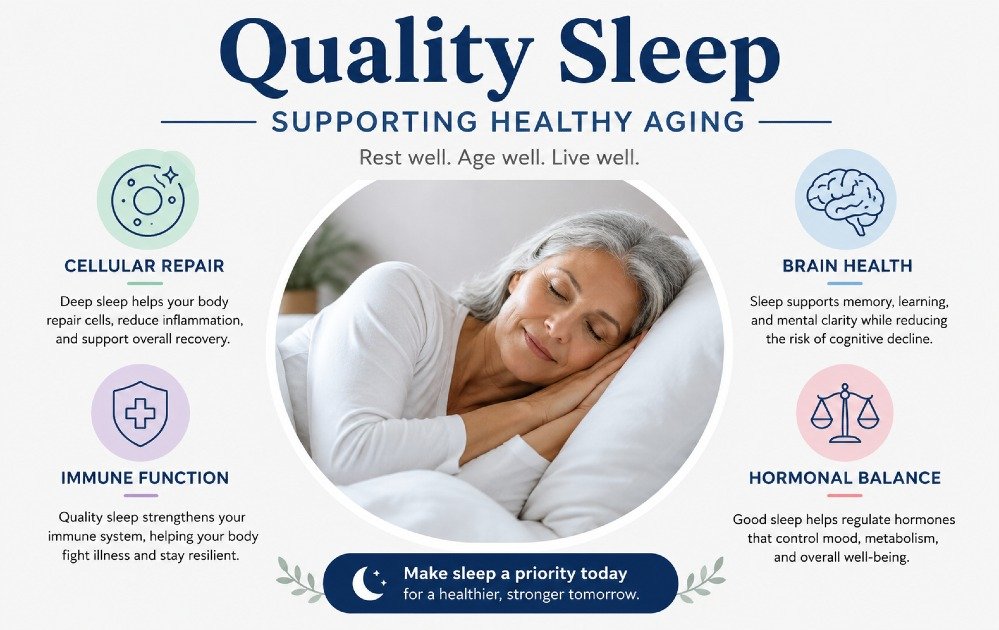
Quality sleep supports healthy aging by repairing the body, reducing inflammation, lowering chronic disease risk, and helping preserve long-term physical and mental health.
NIH explains that deep, restorative sleep is essential for cellular repair, brain detoxification, and hormone balance.
Why it matters:
Aging isn’t just about wrinkles—it’s about how well your body repairs itself, and quality sleep is when that essential restoration happens.
What works for me:
I transformed sleep from simple rest into recovery therapy, and small intentional changes created powerful improvements.
How to start:
- Stick to a consistent sleep schedule (even weekends)
- Avoid heavy meals 2–3 hours before bed
- Keep your bedroom cool and dark
- Limit caffeine after 2 PM
4 Natural Ways Quality Sleep Support Healthy Aging to Improve Life Quality

Are sleepless nights leaving you feeling exhausted and concerned about aging well?
Quality sleep is a powerful foundation for healthy aging, helping preserve energy, mental clarity, and immunity.
Discover how these four natural ways can support your body, protect your well-being, and help you enjoy a healthier, more active life.
1. Quality Sleep and Brain Health

Quality sleep strengthens memory, learning, and mental clarity by helping the brain process information, clear daily waste, and protect cognitive function as you age.
Why it matters:
Quality sleep helps your brain clear harmful proteins like beta-amyloid, protecting memory and reducing cognitive decline risk.
What works for me:
Consistent sleep—not supplements or stimulants—sharpened my focus and memory, while blue light filters improved my nights.
How to start:
- Reduce screen exposure 1 hour before bed
- Try a wind-down routine (reading, stretching, or journaling)
- Sleep in complete darkness or use blackout curtains
- Avoid late-night mental stimulation (social media, emails)
2. Hormonal Balance and Sleep Regulation
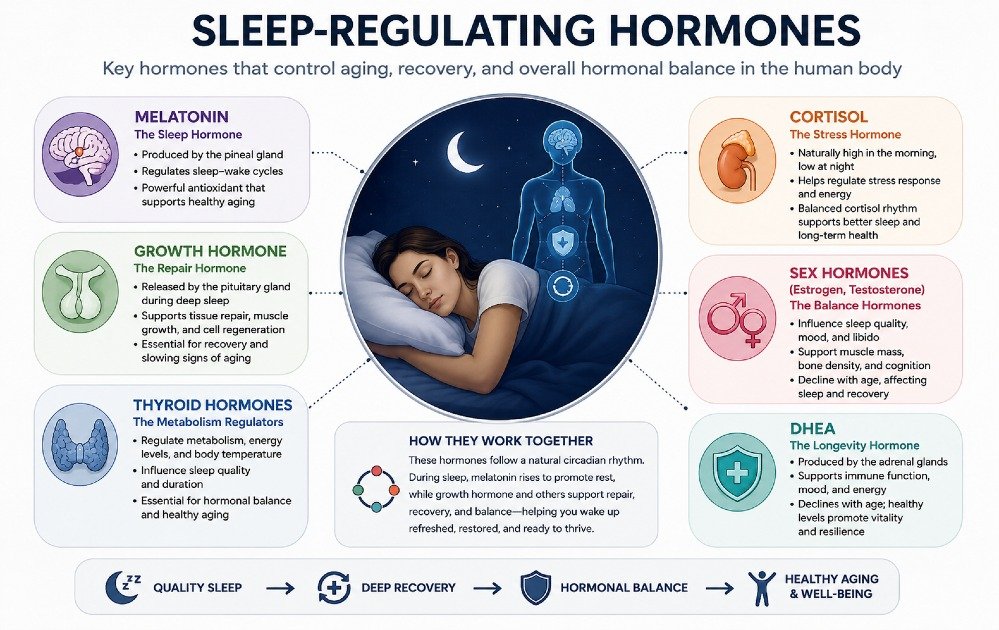
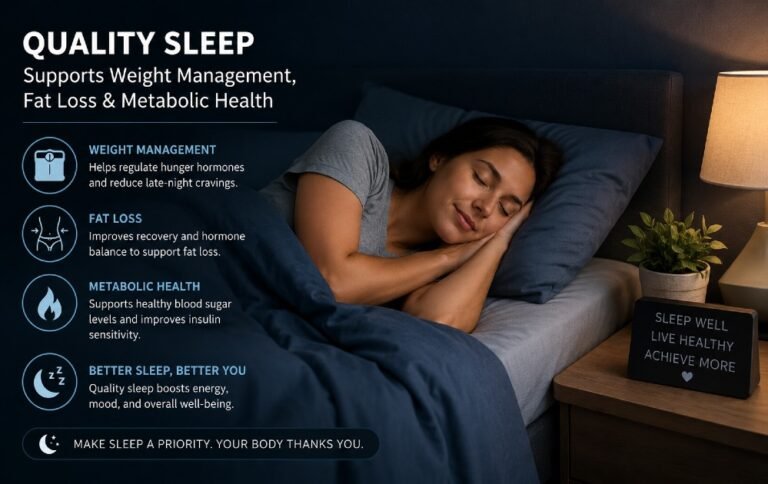
Poor sleep disrupts key hormones that regulate stress, metabolism, appetite, and recovery, increasing fatigue, weight gain, and signs of faster aging, while consistent sleep restores balance and supports long-term health.
Why it matters:
When sleep is disrupted:
- Cortisol (stress hormone) rises
- Growth hormone decreases
- Insulin sensitivity declines
What works for me:
A calming bedtime routine curbed late-night cravings and boosted my morning energy.
How to start:
- Practice deep breathing before bed
- Take a warm shower to lower cortisol
- Keep your bedroom free from work-related items
- Maintain consistent sleep-wake timing
3. Sleep, Cellular Repair, and Longevity
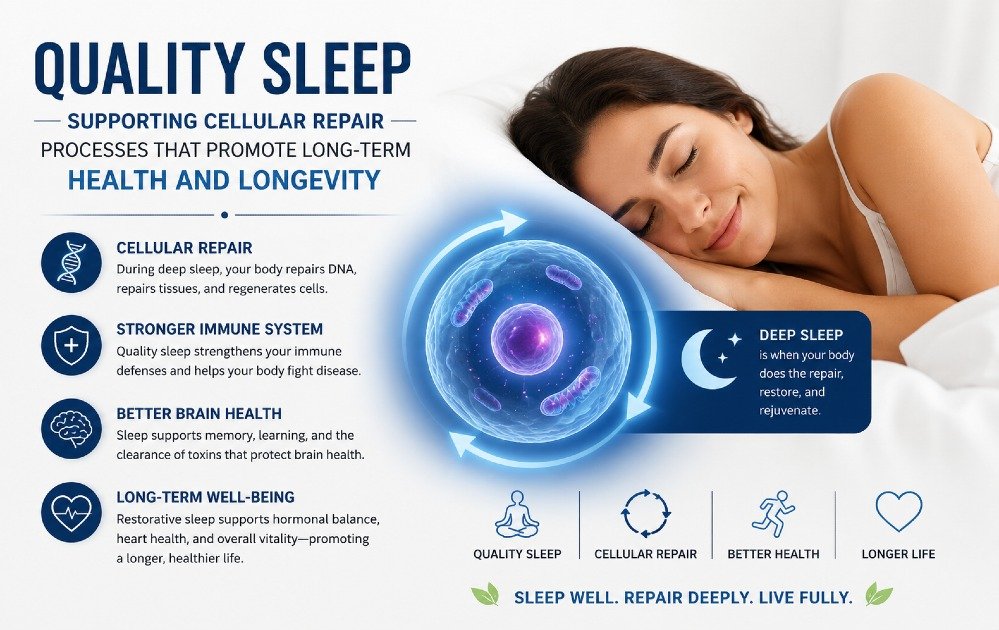
Quality sleep fuels the body’s natural repair system, supporting cell renewal, tissue recovery, immunity, and healthy aging for long-term vitality.
Why it matters:
Deep sleep powers your body’s repair cycle, restoring muscles, regenerating tissues, and strengthening immunity—while poor-quality sleep leaves recovery incomplete.
What works for me:
Improving my sleep depth—not just hours—helped my body and mind recover faster from physical and mental stress.
How to start:
- Add magnesium-rich foods to dinner (spinach, almonds)
- Reduce alcohol intake at night
- Keep bedtime consistent
- Try relaxation techniques like meditation
4. Lifestyle Habits That Improve Quality Sleep Naturally
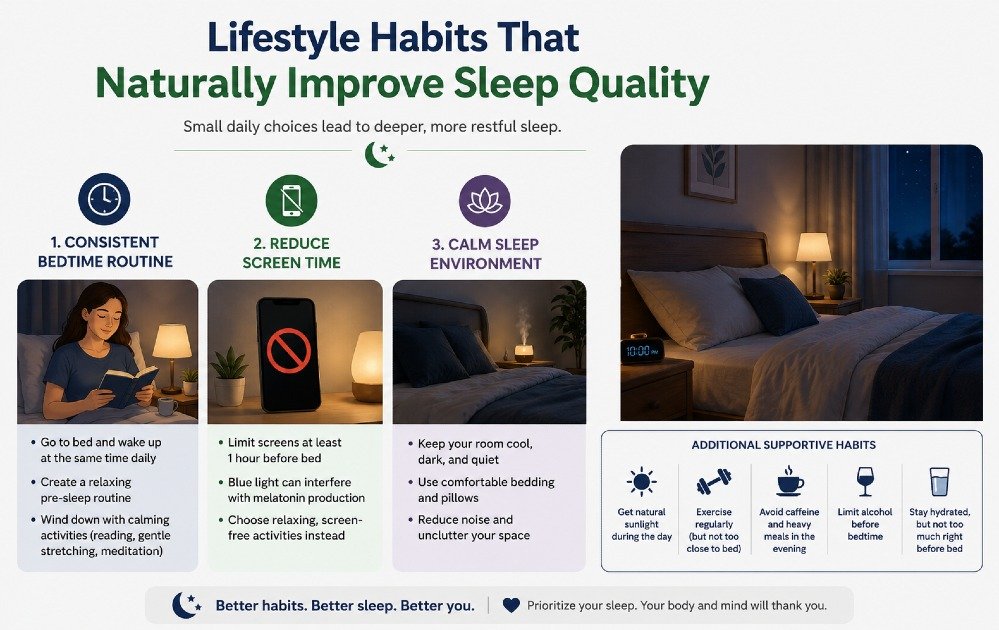
Consistent sleep, regular exercise, morning sunlight, less late-day caffeine, and a restful bedroom naturally improve sleep quality and overall health.
Why it matters:
Sleep habits can dramatically improve sleep quality and support healthier aging.
What works for me:
Morning sunlight transformed my sleep-wake cycle, while a weighted blanket may reduce nighttime anxiety and improve sleep quality.
How to start:
- Get sunlight exposure within 30 minutes of waking
- Exercise earlier in the day (not right before bed)
- Avoid long daytime naps
- Keep bedroom electronics minimal
Common Sleep Mistakes That Speed Up Aging
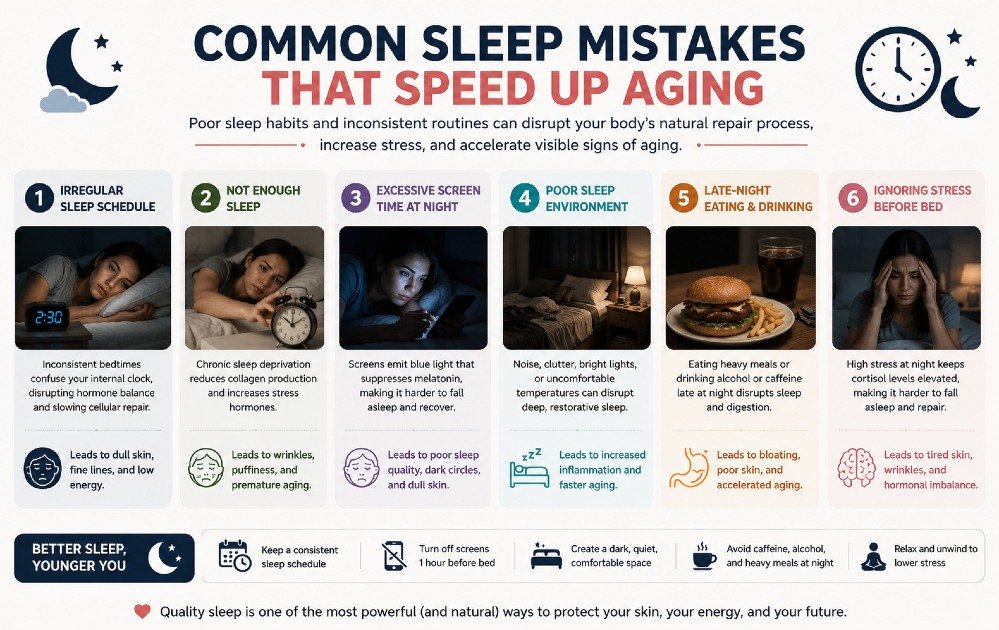
Poor sleep habits like inconsistent bedtimes, late caffeine, and nighttime screen use quietly disrupt recovery, accelerate age-related changes, and undermine long-term health.
Why it matters:
Many people unknowingly sabotage their sleep, accelerating aging and slowing recovery.
Common mistakes:
- Irregular sleep schedules
- Late-night screen exposure
- High caffeine intake
- Sleeping in noisy environments
- Skipping wind-down routines
How to fix them:
- Set a fixed bedtime alarm
- Create a digital curfew (1 hour before sleep)
- Use white noise or calming sounds
- Prioritize comfort and temperature control
Sleep Hygiene as The Foundation of Quality Sleep
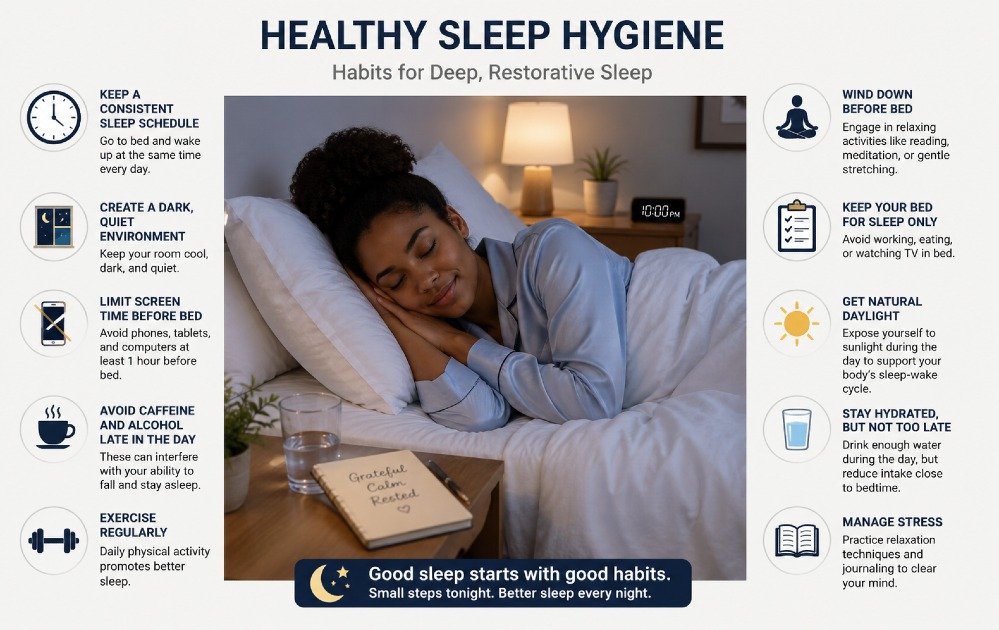
Poor sleep hygiene disrupts quality sleep, but simple daily habits can help you fall asleep faster and sleep better.
How to improve sleep hygiene:
- Go to bed and wake up at the same time every day.
- Keep your bedroom cool, dark, and quiet.
- Avoid caffeine and nicotine later in the day.
- Give your eyes a break by avoiding electronic devices for the last hour before bed.
- Reserve your bedroom for sleep and relaxation.
- Follow a calming bedtime routine, such as reading or light stretching.
Good sleep hygiene promotes deeper, restorative sleep while supporting long-term sleep health and healthy aging.
Keeping Your Internal Clock on Track
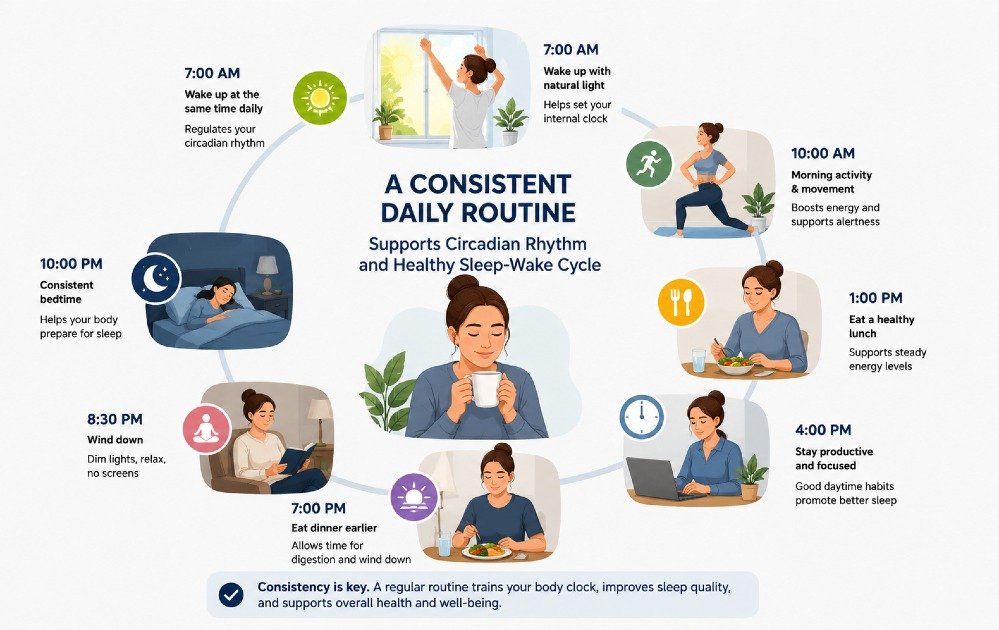
Disrupting your circadian rhythm with irregular schedules or artificial light can reduce sleep quality and leave you feeling less rested.
How to support a healthy circadian rhythm:
- Wake up at the same time every day.
- Get morning sunlight exposure.
- Eat meals on a regular schedule.
- Limit bright light exposure in the evening.
- Avoid large differences between weekday and weekend sleep schedules.
- Maintain a consistent daily routine.
A balanced circadian rhythm supports more efficient repair and recovery by keeping your internal clock aligned.
How the Body Repairs and Restores Itself
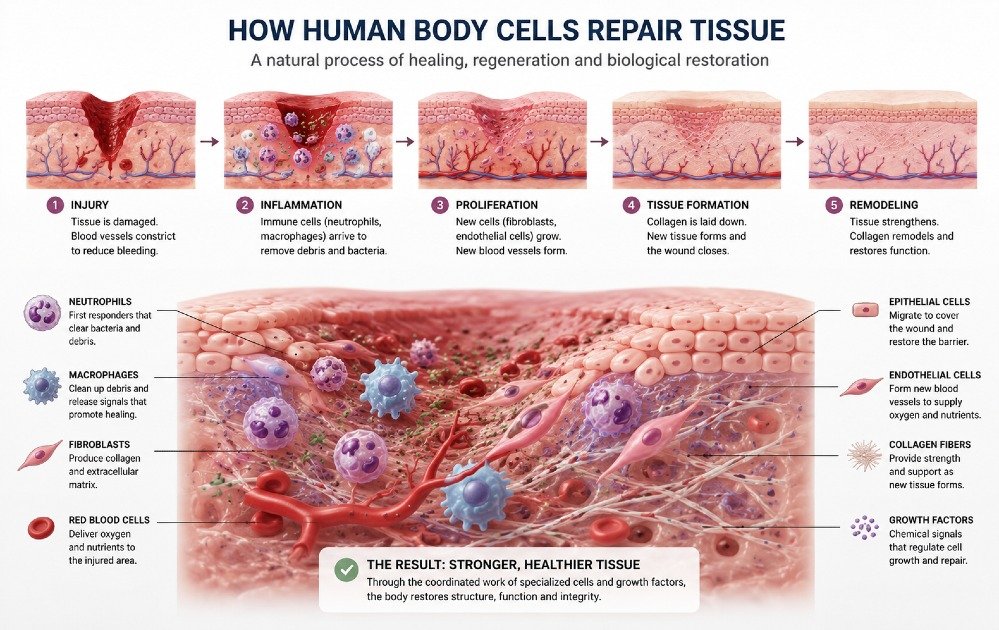
Sleep recovery is your body’s overnight repair process, and without quality sleep, healing, energy, and physical and mental performance decline.
How to improve sleep recovery:
- Aim for 7–9 hours of sleep each night.
- Establish a relaxing bedtime routine.
- Avoid alcohol before bed.
- Stay physically active during the day.
- Manage stress through relaxation techniques.
- Use a supportive mattress and pillow.
Better recovery helps you wake up refreshed and supports long-term health as you age.
Daily Sleep Habits for Aging Well That Make a Difference

Poor sleep habits like irregular schedules, excess caffeine, and ineffective routines can reduce sleep quality, recovery, and overall well-being.
Sleep habits that support healthy aging:
- Follow a consistent sleep schedule.
- Create a relaxing bedtime routine.
- Exercise regularly.
- Keep daytime naps short.
- Stay hydrated throughout the day.
- Practice stress-management techniques.
Strong sleep habits improve sleep quality, promote healthy aging, and enhance overall well-being.
Frequently Asked Questions
How much sleep do adults need for healthy aging?
Most adults need 7–9 hours of quality sleep nightly, as deep restorative sleep helps the body and brain repair, recover, and perform at their best.
Can poor sleep accelerate aging?
Chronic sleep deprivation fuels inflammation, hormonal imbalance, weakened immunity, and cognitive decline, accelerating aging and increasing chronic disease risk.
What are the signs of poor sleep quality?
Common signs include:
- Waking up tired
- Difficulty concentrating
- Frequent nighttime awakenings
- Irritability or mood changes
- Low energy during the day
These signs may reveal your sleep isn’t delivering the recovery your body needs.
How does quality sleep support brain health?
Quality sleep strengthens memory, sharpens thinking, and supports long-term brain health by helping the brain process information and clear waste.
What is the best way to improve sleep quality naturally?
Focus on proven habits:
- Maintain a consistent sleep schedule
- Create a comfortable sleep environment
- Limit screen time before bed
- Stay physically active
- Manage stress effectively
Small, consistent changes often deliver the best results.
Related Articles
Recap: Quality Sleep As The Most Powerful Anti-Aging Tool
Sleep is the foundation of healthy aging, supporting brain function, hormone balance, immune health, and cellular repair.
Quality sleep is a powerful investment in your future health, helping you to think clearer and recover faster every day.
Better sleep starts with the choices you make tonight. Give your body the rest it needs to recover, recharge, and age well.
Ready to Reclaim Your Energy and Sleep Better Every Night?
You don’t have to keep waking up exhausted and hoping tonight will finally be different.
Discover how this reliable sleep tracker can help you uncover your sleep patterns, improve your nightly rest, and build habits that support healthier aging—starting tonight.