
Still feeling overwhelmed no matter how hard you try to stay positive?
Life’s nonstop demands can leave you stressed, distracted, and mentally drained.
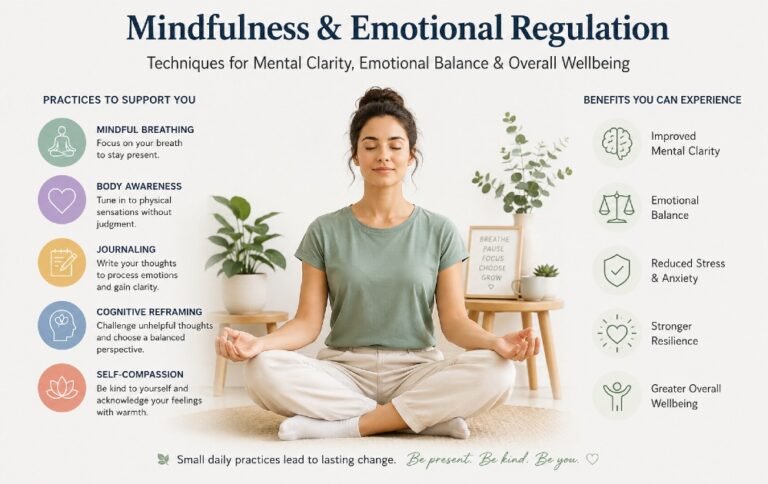
This guide explains mindfulness practices that can help you regain focus, reduce stress, and feel more present every day.
What Is a Mindfulness Practice?

Mindfulness helps you stay fully present in the moment instead of dwelling on the past or worrying about the future.
Why mindfulness matters:
- Reduce stress levels
- Improve concentration
- Enhance emotional regulation
- Support better sleep
- Increase self-awareness
- Promote overall mental wellness
The American Psychological Association explains that mindfulness-based interventions can effectively reduce stress and improve psychological health.
Top 10 Mindfulness Practices That Transform Your Day
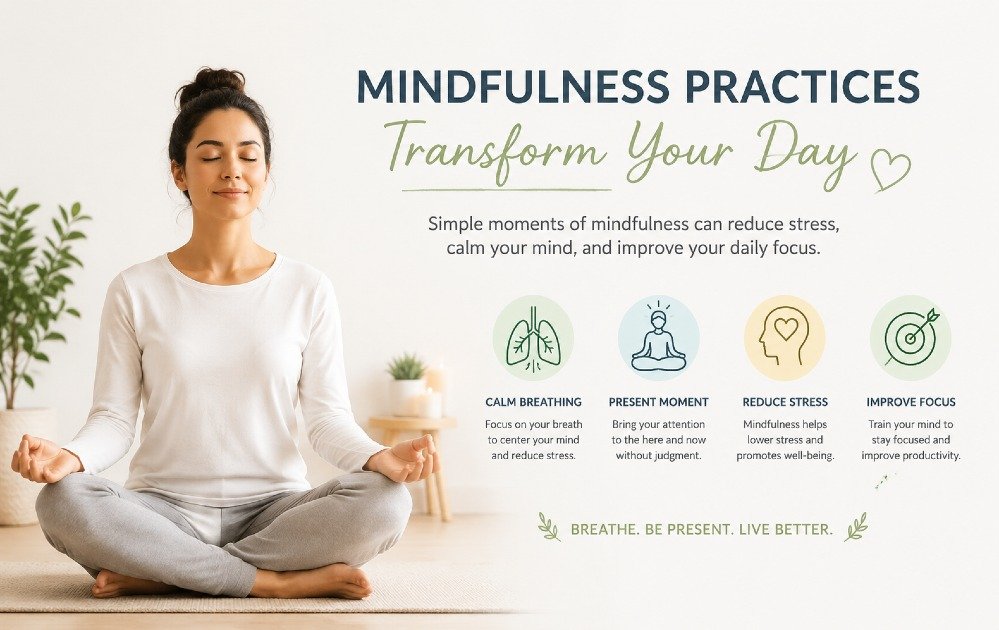
Do your days feel rushed and constantly filled with distractions?
Constant demands and digital distractions drain your focus, leaving you mentally exhausted and wondering where your day went.
Here’re ten practices that can help you regain balance, clarity, and control every day.
1. Mindful Breathing as The Starting Point for Every Mindfulness Practice
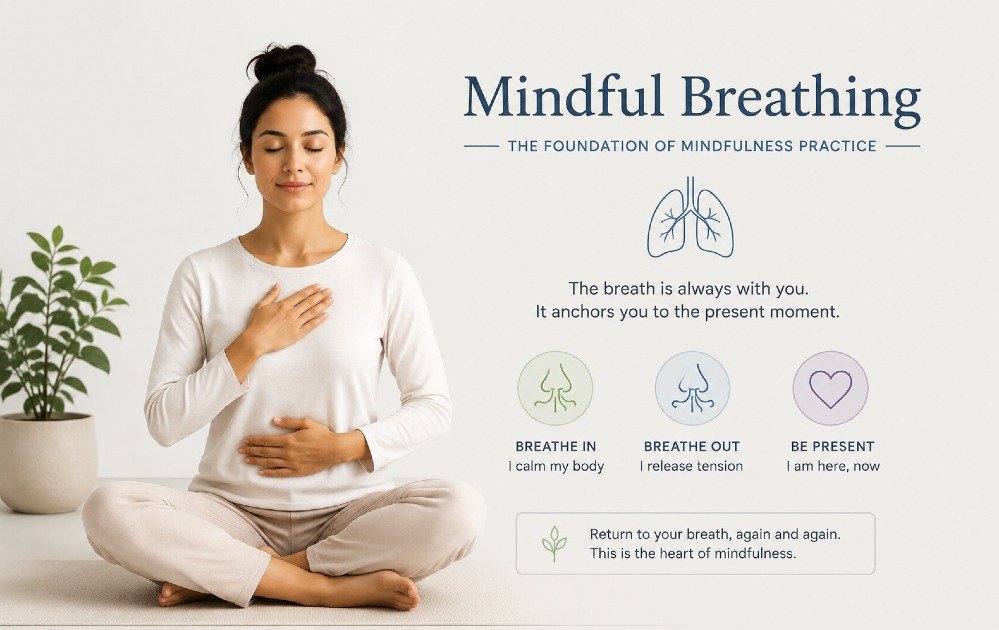
Many people stay tense without realizing it—pause and focus on your breathing for just 1–3 minutes to reset.
Try this simple method:
- Inhale slowly through your nose.
- Hold briefly.
- Exhale slowly through your mouth.
- Repeat.
Core advantage:
Mindful breathing quickly calms your nervous system and refocuses you on the present.
Personal experience:
I practice mindful breathing to stay calm before meetings, tough conversations, and stressful situations.
2. Start Your Morning With Intentional Awareness
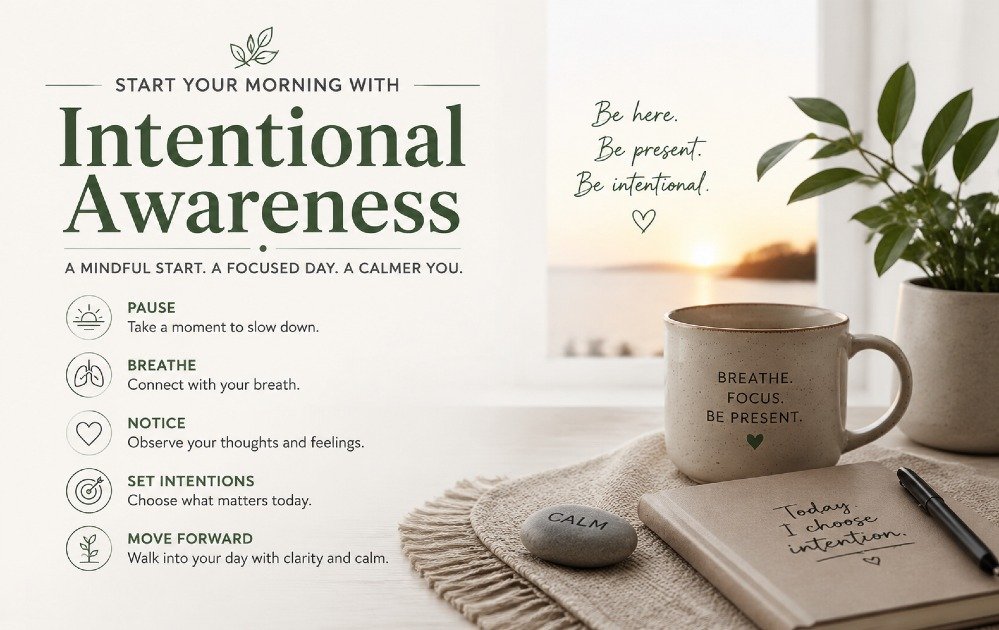
Start your day with a mindful morning ritual instead of checking emails or social media first.
Before touching your phone:
- Take three deep breaths
- Stretch gently
- Set one intention for the day
- Express gratitude for something positive
Core advantage:
Mindful mornings sharpen focus and keep you calm all day.
Personal experience:
I start each morning with intentional awareness, setting a calm, focused tone for the day ahead.
3. Practice Mindful Eating

Stop eating on autopilot—put distractions away and give your full attention to every meal.
Pay attention to:
- Flavor
- Texture
- Aroma
- Hunger signals
- Fullness cues
Core advantage:
Eating with intention encourages smarter food decisions, supports healthy digestion, and makes every meal more satisfying.
Personal experience:
I practice mindful eating to build healthier habits and strengthen my relationship with food.
4. Use a Body Scan to Release Stress
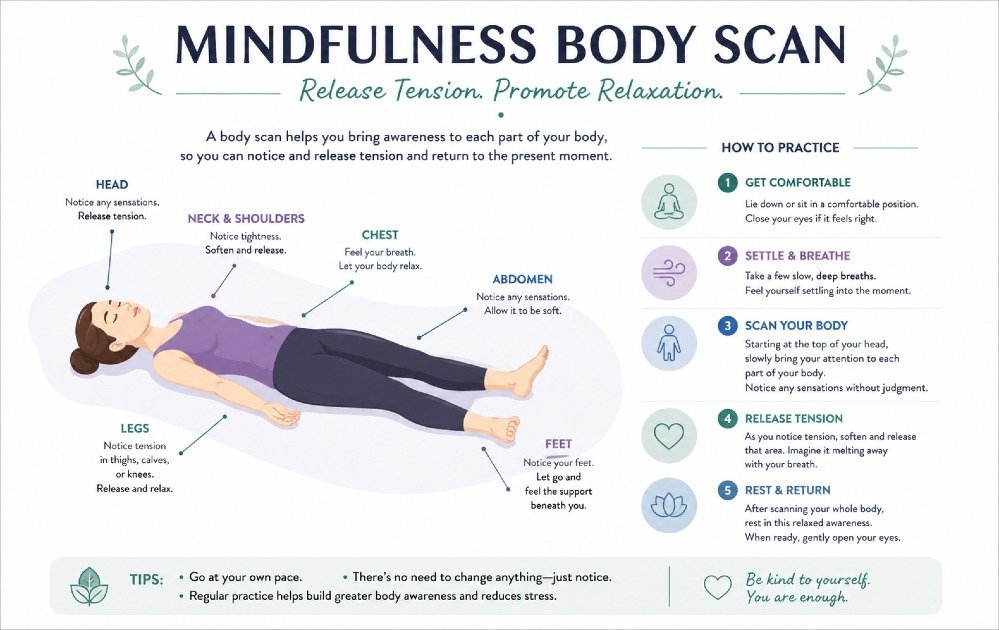
Stress often builds in your body before your mind notices—do a quick body scan to catch it early.
Starting from your head and moving downward:
- Notice areas of tension
- Relax tight muscles
- Observe sensations without judgment
Core advantage:
Body scans boost self-awareness and relieve physical stress before it becomes overwhelming.
Personal experience:
I use a body scan to release tension early, helping me relax, reduce stress, and stay grounded and in control.
5. Mindful Walking for Instant Mental Clarity
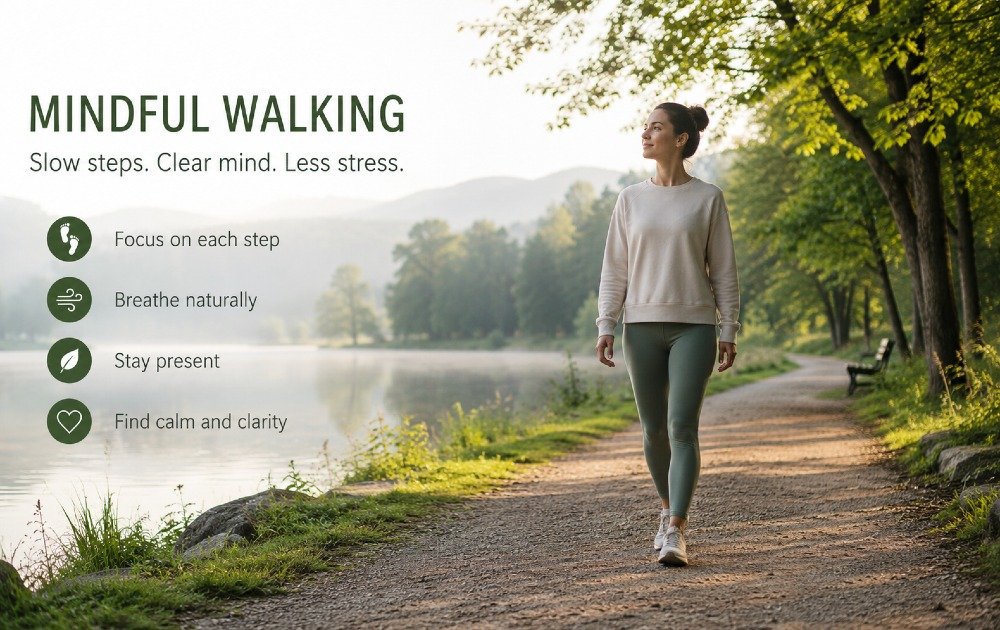
Sitting too long drains focus—take a mindful walk to refresh your mind and regain clarity.
During your walk:
- Notice each step
- Observe sounds around you
- Feel the air on your skin
- Pay attention to movement
Core advantage:
Mindful walking refreshes your mind while boosting both physical and mental well-being.
Personal experience:
I clear mental fog and reduce stress with a mindful walk, returning calmer, sharper, and more focused.
6. Single-Task Instead of Multitask

Managing one task at a time reduces stress, improves accuracy, and helps you achieve better results.
When working:
- Close unnecessary tabs
- Silence notifications
- Complete one activity before starting another
Core advantage:
Single-tasking boosts productivity while sharpening mindfulness and focus.
Personal experience:
I focus on one task at a time to sharpen concentration, increase productivity, and work with greater clarity and efficiency.
7. Keep a Mindfulness Journal
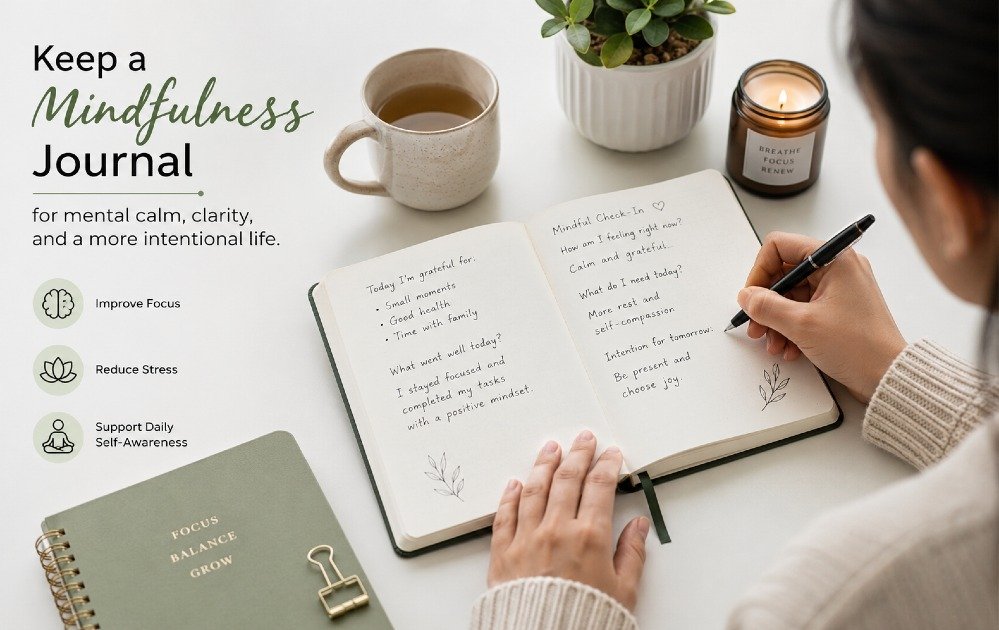
Unprocessed thoughts and emotions can build up—take five minutes to journal and clear your mind.
Write about:
- What you’re feeling
- What you’re grateful for
- Lessons learned today
- Positive moments
Core advantage:
Journaling builds self-awareness by revealing patterns that impact well-being—consistency matters more than writing perfectly or at length.
Personal experience:
A mindfulness journal helps me track emotions, uncover patterns, reduce stress, and build self-awareness for a calmer, more balanced mindset.
8. Practice Gratitude Daily
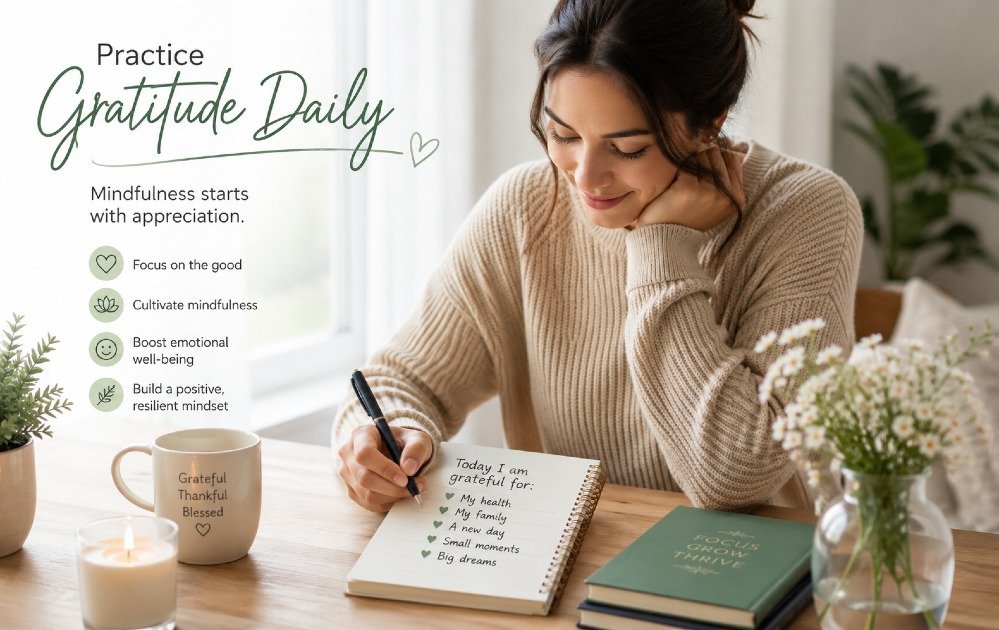
Retrain your brain’s threat-focused attention by intentionally noticing and reinforcing positive experiences.
Every day, write down:
- Three things you appreciate
- One positive experience
- One personal success
Core advantage:
Gratitude boosts optimism and emotional resilience, making it one of the most powerful mindfulness habits.
Personal experience:
Daily gratitude helps me build a positive mindset and appreciate small moments that enhance my overall well-being.
9. Create Technology-Free Moments

Reduce digital overload by scheduling tech-free breaks to quiet distractions and restore mental focus.
Examples include:
- During meals
- Before bedtime
- During walks
- While spending time with family
Core advantage:
Stepping away from digital distractions strengthens mental clarity, mindful awareness, and emotional stability.
Personal experience:
I create tech-free moments to clear my mind, sharpen focus, and reconnect with what matters most.
10. End Your Day With Reflection

End your day by spending five minutes reflecting on unresolved stress and avoid carrying the weight of stress into the night.
Ask yourself:
- What went well?
- What did I learn?
- What am I grateful for?
- What can I improve tomorrow?
Core advantage:
Evening reflection builds self-awareness, eases anxiety, and supports better sleep habits by creating a calming sense of closure before bed.
Personal experience:
I end my day with reflection to gain clarity, appreciate progress, and move forward with purpose.
Common Mistakes That Prevent Mindfulness Success
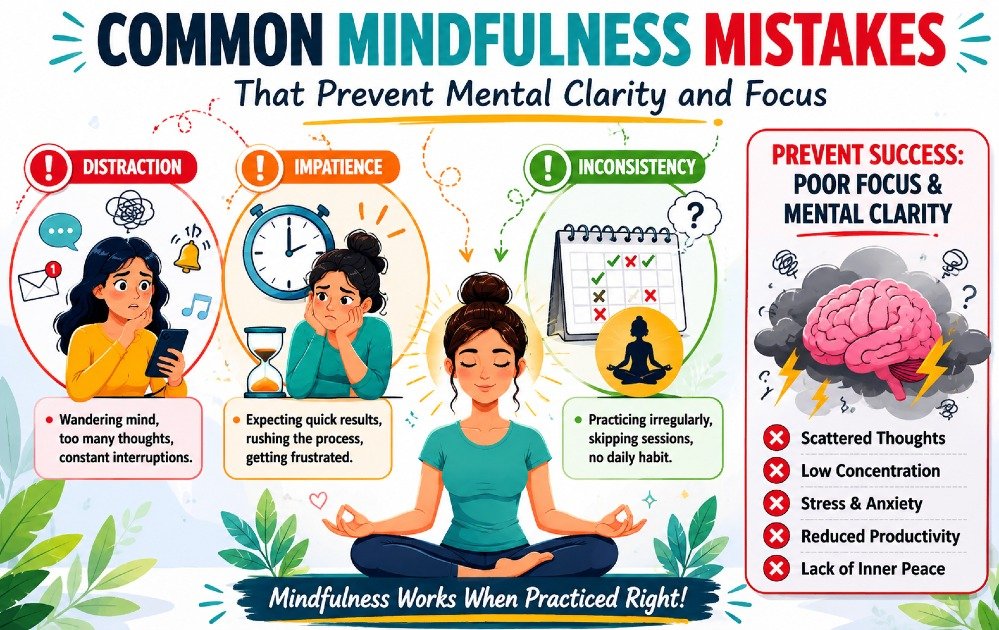
Mindfulness works, but unrealistic expectations and inconsistent habits often prevent people from seeing lasting results.
Common mistakes include:
- Expecting a completely empty mind
- Practicing only when stressed
- Being inconsistent
- Criticizing themselves for getting distracted
- Trying multiple techniques at once
To build a sustainable mindfulness practice:
- Start with 2–5 minutes daily
- Focus on consistency over duration
- Accept distractions without judgment
- Practice even on good days
- Master one technique before adding another
Over time, you can develop:
- Better focus
- Lower stress levels
- Greater self-awareness
- Improved emotional control
- Stronger mental resilience
Present Moment Awareness of Mindfulness

Present-moment awareness is the foundation of mindfulness, helping you stay focused on today instead of being trapped by past regrets or future worries.
Simple practices include:
- Focusing on your breathing
- Eating without distractions
- Taking mindful walks
- Listening fully during conversations
- Pausing between tasks
As you become more grounded in the present, your choices feel more deliberate and your daily moments become more meaningful.
How to Build a Sustainable Mindfulness Practice

Start small to succeed—begin with simple habits like 2 minutes of breathing, 5 minutes of journaling, or one mindful meal a day instead of trying to change everything at once.
Pair mindfulness with activities you already do:
- Brushing your teeth
- Drinking coffee
- Walking the dog
- Eating lunch
This strategy increases long-term success.
Emotional Well-Being Using Mindful Practice
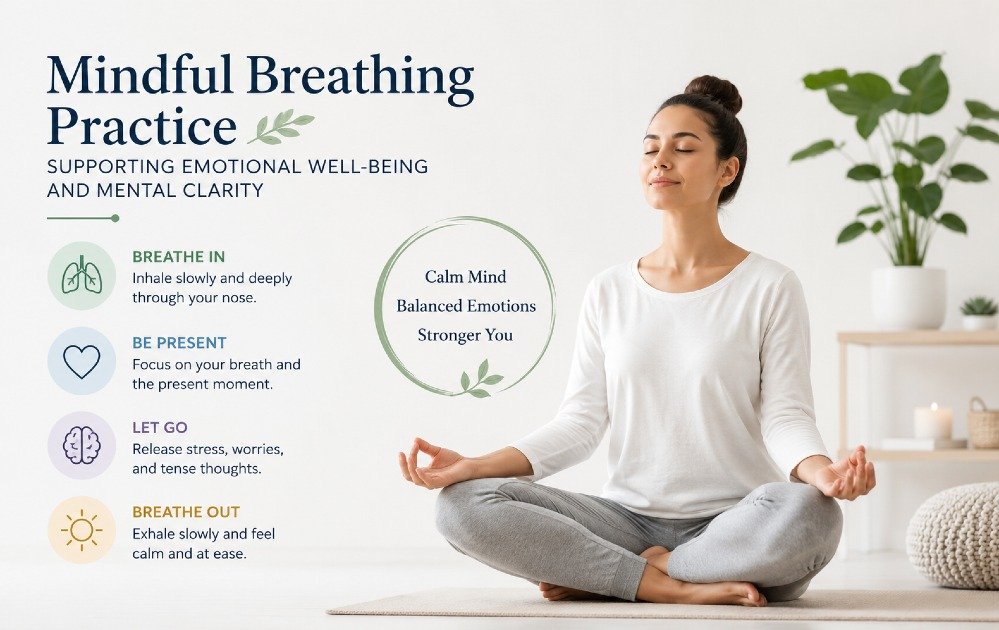
Mindful practices strengthen emotional well-being by helping you recognize and manage reactions before difficult emotions take control.
Beneficial practices include:
- Mindful breathing during stressful moments
- Daily gratitude reflection
- Brief body scan exercises
- Journaling thoughts and feelings
- Pausing before reacting
These habits build emotional awareness, helping you respond with clarity and control instead of reacting impulsively.
Stress Management Using Mindful Practice

Stress is inevitable; mindfulness helps you recognize it early and respond with control.
Effective strategies include:
- Practicing mindful breathing
- Taking short mindful walks
- Using grounding techniques
- Limiting unnecessary distractions
- Creating moments of quiet reflection
A few minutes of mindfulness can calm the mind, ease tension, and help you respond to stress with intention.
Frequently Asked Questions
How soon can you notice the benefits of practicing mindfulness consistently?
Many people feel calmer and more focused after one session, but lasting results come from practicing just a few minutes consistently each day.
What is the best mindfulness practice for beginners?
Start with mindful breathing—just a few focused breaths can quickly calm your mind and sharpen awareness.
Can mindfulness improve mental well-being?
Yes—regular mindfulness reduces stress, strengthens emotional balance, and helps you stay calm through life’s challenges.
Do I need to meditate to practice mindfulness?
No—meditation is just one form of mindfulness; you can practice it anytime while eating, walking, exercising, working, or talking.
How often should I practice mindfulness?
Practice daily—even five minutes strengthens focus, builds self-awareness, and creates lasting mindfulness habits.
Recap: Moments of Mindfulness Practices Create Life-Changes Awareness
Mindfulness requires intentional daily habit that gradually reduces stress and builds emotional resilience.
Effective practice strengthens your focus, presence, and inner calm every day.
A healthier mindful way of living transforms your well-being over time.
Ready to Stop Feeling Distracted and Start Living More Intentionally?
Still letting constant distractions steal your focus, peace, and precious time every day?
Discover how this guided meditation platform can help you feel calmer, think more clearly, and build a lasting mindfulness habit.
Start today and make daily practice simple, consistent, and effective.