

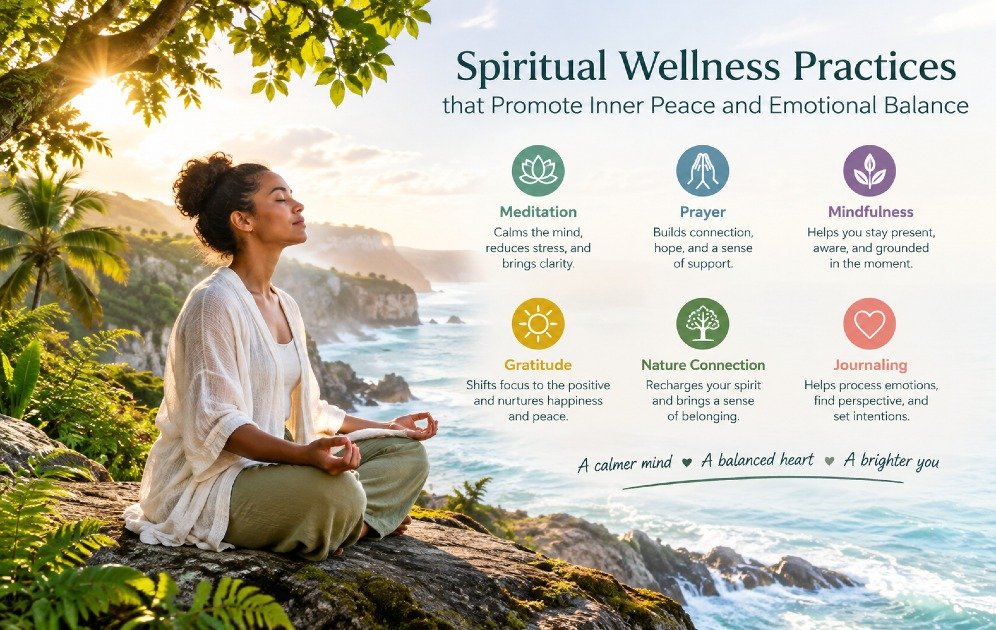
Feeling overwhelmed, disconnected, or constantly restless can make inner peace seem out of reach.
NIH suggests that mindfulness and meditation may support stress management and overall well-being.
This guide explains how you can turn quiet moments into intentional habits through prayer, meditation, reflection, gratitude, mindful breathing, or time in nature.
Why Spiritual Wellness Matters
Stress, uncertainty, and disconnection can disrupt inner peace and leave you feeling emotionally unsettled.
Consistent spiritual wellness practice can ease stress, strengthen self-awareness, and support a calmer, more grounded life.
What Spiritual Wellness Practices Involve
Without a sense of purpose or personal values, it can be harder to find meaning and emotional balance.
Prayer, meditation, gratitude, and reflection can deepen self-understanding and help you feel more connected to your values.
How to Practice Spiritual Wellness
Busy routines and constant distractions can leave little time for reflection and inner calm.
Set aside a few quiet minutes daily for prayer, mindful breathing, or journaling to build inner peace and emotional balance.
8 Practices to Reduce Stress and Reconnect With Yourself
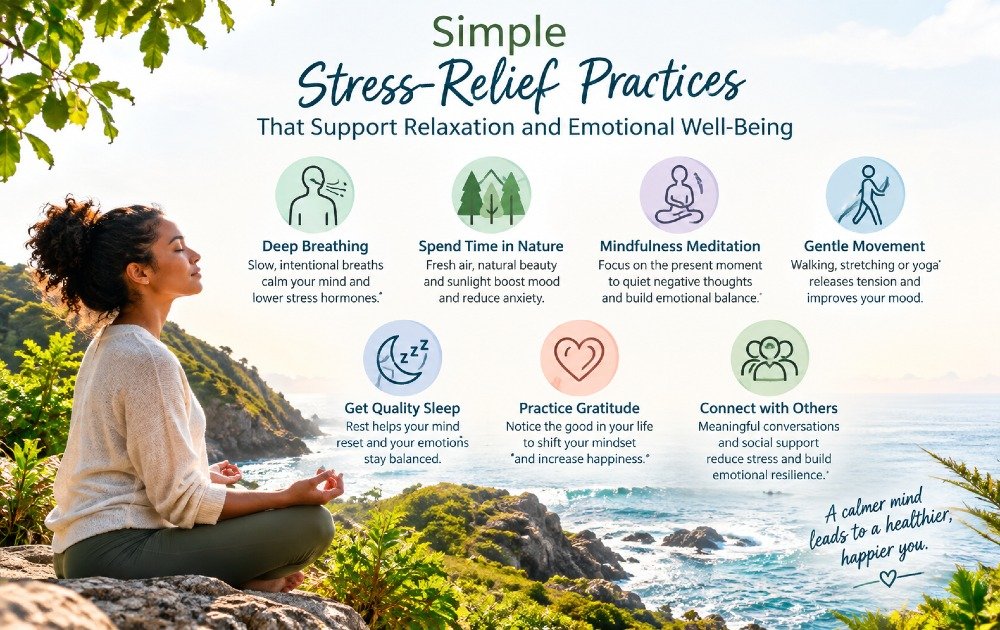
Feeling mentally drained or disconnected from yourself can become the price of constantly pushing through stress.
When stress stays high, it can affect sleep, mood, focus, and overall well-being.
Discover how these eight practices can help you create more calm, clarity, and space for what truly matters.
Begin the Day With Mindful Breathing

Starting the day overwhelmed can shape everything that follows, but mindful breathing creates a simple pause for calm, focus, and spiritual wellness practices.
Why it matters:
Slow, focused breathing can support the body’s relaxation response and help you approach the day with greater awareness.
What works for me:
I begin with 3–5 minutes of slow breathing before reaching for my phone, sometimes using a guided meditation platform to stay focused and make mindful breathing part of my spiritual wellness practices.
How to start:
- Sit comfortably for 2–5 minutes after waking.
- Take slow breaths and pay attention to the sensation of breathing.
- When your thoughts wander, gently return your attention to your breath.
- Avoid judging yourself for having distracting thoughts.
- Gradually increase your practice if a longer session feels comfortable.
Create a Daily Gratitude Practice

When stress and negativity dominate your day, daily gratitude can help shift your attention toward what is still good and meaningful.
Why it matters:
A consistent gratitude practice may support emotional well-being, positive mood, and stress management, making it a valuable part of spiritual wellness practices.
What works for me:
I write three specific things I’m grateful for each morning in a gratitude journal, pairing the practice with quiet reflection as one of my spiritual wellness practices.
How to start:
Each evening, write down:
- One thing you appreciated today
- One person who made a difference
- One small moment that brought you peace
- One lesson you learned
- One thing you want to carry into tomorrow
Use Meditation to Create Mental Space

A busy mind leaves little room for clarity, but meditation can create mental space for calm, focus, and intentional living.
Why it matters:
Regular meditation can support emotional balance, reduce mental overload, and complement other spiritual wellness practices.
What works for me:
I use a short guided meditation each day to quiet mental noise, and a meditation platform helps me stay consistent wherever I am.
How to start:
- Choose a consistent time.
- Sit somewhere relatively quiet.
- Set a timer for 5–10 minutes.
- Focus on breathing or another simple anchor.
- Notice distracting thoughts without following them.
- Return to your chosen point of focus.
Make Time for Prayer or Personal Reflection

When life becomes too busy for prayer or personal reflection, spiritual wellness practices can help you pause, reconnect with what matters, and regain perspective.
Why it matters:
Making intentional time for prayer or reflection can strengthen your sense of purpose, connection, clarity, and inner peace.
What works for me:
I set aside 5–10 quiet minutes each morning for prayer and journaling, using a guided prayer journal to stay consistent and make my spiritual wellness practices more intentional. and priorities.
How to start:
Try asking yourself:
- What matters most to me right now?
- What am I carrying that I need to release?
- What kind of person do I want to become?
- Where do I need more patience?
- What deserves my attention today?
- What can I accept rather than control?
Spend Intentional Time in Nature

Constant noise and screen time can leave you disconnected, making intentional time in nature a simple way to restore calm and reconnect with yourself.
Why it matters:
Time outdoors can support mental clarity, emotional balance, and spiritual wellness practices that strengthen your overall sense of well-being.
What works for me:
I take a quiet walk outdoors with a guided mindfulness platform to slow down, reflect, and make nature a practical part of my spiritual wellness practices.
How to start:
- Take a 10-minute mindful walk.
- Leave your phone in your pocket.
- Notice five things you can see.
- Notice sounds around you.
- Take several slower breaths.
- Allow yourself to walk without rushing.
Practice Journaling for Self-Reflection

Journaling creates a quiet space to examine your thoughts, feelings, values, and growth through intentional spiritual wellness practices.
Why it matters:
Regular self-reflection can reveal patterns, clarify what matters, and help you make more intentional choices for your well-being.
What works for me:
I use a simple journal and five focused minutes to reflect, write gratitude, and set one meaningful intention, making it an easy spiritual wellness practice I can sustain—especially with a guided reflection journal.
How to start:
Try one prompt each evening:
- What gave me energy today?
- What drained my energy?
- What am I grateful for?
- What did I learn about myself?
- What situation needs a different response tomorrow?
- What am I holding onto that no longer serves me?
- What personal value do I want to practice tomorrow?
Strengthen Meaningful Relationships and Community

Feeling disconnected can quietly weaken your sense of belonging, but meaningful relationships and community can strengthen emotional and social well-being.
Why it matters:
Strong connections provide support, belonging, and resilience while helping protect overall mental and physical well-being.
What works for me:
I make time for honest conversations, shared activities, and spiritual wellness practices, using a guided wellness journal to reflect, stay grounded, and build more meaningful connections.
How to start:
- Call someone you genuinely care about.
- Schedule one meaningful conversation each week.
- Join a community connected to your values.
- Volunteer for a cause that matters to you.
- Practice listening without immediately trying to solve someone’s problem.
- Ask for support when you need it.
Turn Acts of Kindness and Service Into a Wellness Habit

Kindness and service can do more than help others—they can become simple spiritual wellness practices that strengthen your own sense of purpose and well-being.
Why it matters:
Regular acts of kindness can build meaningful connection, reduce stress, and make wellness feel more purposeful.
What works for me:
I make kindness part of my routine through small acts of service, reflection, and a guided meditation platform that helps me stay grounded and intentional.
How to start:
Try these simple actions:
- Send an encouraging message to someone.
- Help a neighbor with a practical task.
- Volunteer once a month.
- Donate useful items you no longer need.
- Listen to someone who needs support.
- Look for one opportunity each week to make another person’s day easier.
How to Build a Spiritual Wellness Routine
Build a spiritual wellness routine with simple daily practices that nurture inner peace, purpose, and emotional balance.
Without consistent spiritual wellness practices, daily stress and distractions can weaken your sense of connection and direction.
Consistent spiritual wellness practices can help you manage stress, strengthen your sense of purpose, and cultivate lasting inner peace.
Make Spiritual Wellness Part of Your Everyday Life
Make spiritual wellness part of your daily routine to nurture inner peace, strengthen purpose, and build emotional balance.
Daily stress and disconnection can weaken your sense of purpose and inner peace.
Consistent spiritual wellness practices help you manage stress, reconnect with your values, and cultivate lasting inner peace.
Frequently Asked Questions
What are the best spiritual wellness practices for inner peace?
Choose spiritual wellness practices that fit your beliefs, lifestyle, and goals—from meditation and prayer to gratitude, nature, meaningful relationships, and service.
Can spiritual wellness practices reduce stress?
Mindfulness and relaxation practices may help manage stress and build healthier coping skills, but they should not replace professional care for medical or mental health conditions.
How long should I practice spiritual wellness each day?
Start with 5–10 minutes a day—consistent practice matters more than duration and makes healthy habits easier to sustain.
Do spiritual wellness practices have to be religious?
Spiritual wellness may include prayer, meditation, gratitude, nature, service, reflection, and purpose—choose practices that align with your beliefs and values.
What if meditation makes me feel uncomfortable?
Don’t push through severe distress—shorten the session, try mindful walking or breathing, or seek professional guidance if meditation triggers ongoing anxiety, depression, intrusive memories, or other concerning symptoms.
Recap: Make Inner Peace a Daily Health Goal
Constant stress, mental noise, and disconnection can gradually drain your energy and make it harder to feel grounded.
Spiritual wellness gives you a practical way to slow down, reconnect with what matters, and create more space for peace, purpose, and emotional well-being.
Give yourself 5–10 minutes of intentional spiritual practice each day for the next 30 days. Track and notice the changes in your stress, focus, mood, and sense of connection.
Start today. Protect your peace, strengthen your well-being, and make inner peace part of the healthier life you are building.
Ready to Create More Inner Peace?
Feeling disconnected, overwhelmed, or unable to quiet your mind? Make space for stillness and take a meaningful step toward greater inner peace.
Discover how this guided meditation platform can strengthen your spiritual wellness practice, and make inner peace part of your everyday health goal.