
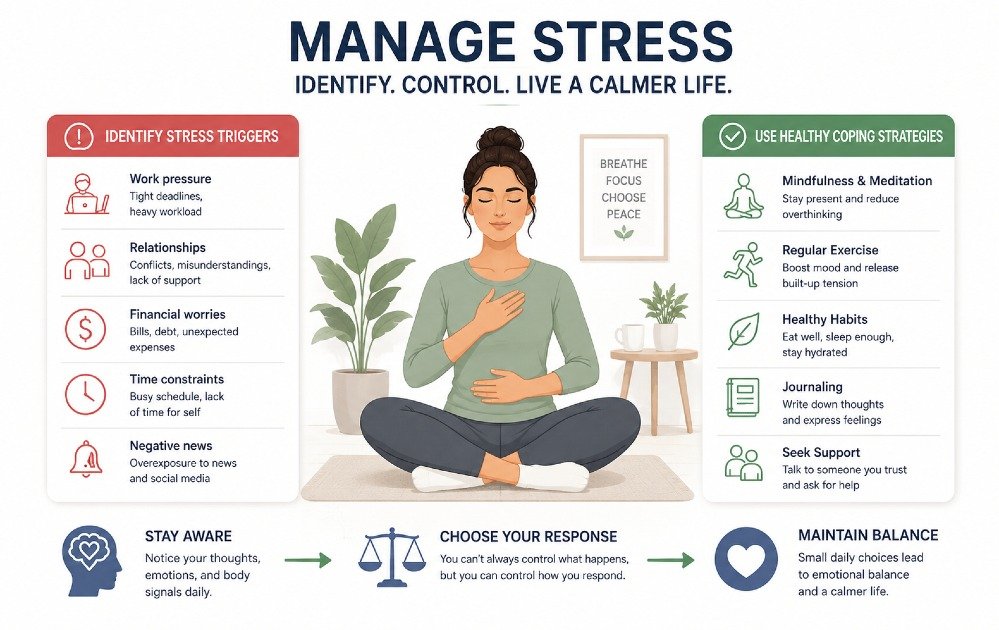
Still feeling overwhelmed, constant worry, irritability, or mental exhaustion?
Identifying your stress triggers can help you respond calmly and build a stronger stress management routine with our comprehensive Stress Management Blueprint.
This guide explains how identifying and controlling stress triggers can help you regain clarity and control over your daily life.
Why Identifying Stress Triggers Is the First Step to Manage Stress
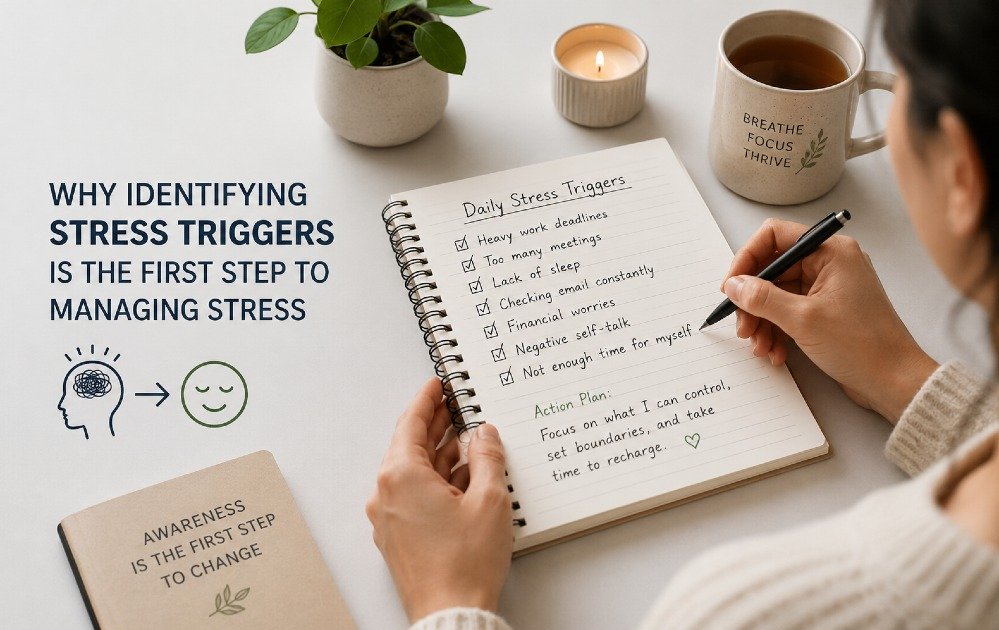
Many people manage stress symptoms without addressing the root cause, but identifying your stress triggers makes lasting relief easier.
NIH explains that recognizing stress triggers is one of the most effective ways to reduce their impact before they take control.
Why it matters:
When you identify stress triggers, you gain more control over your reactions. Instead of constantly feeling overwhelmed, you can prepare, adapt, or eliminate unnecessary stressors.
What works for me:
I’ve found that stress becomes easier to manage once I identify the real trigger, which is often my mindset, expectations, or lack of preparation—not the situation itself.
How to start:
- Notice recurring situations that upset you.
- Track emotional reactions throughout the day.
- Look for patterns in your stress levels.
- Ask yourself what happened right before the stress appeared.
- Focus on understanding, not judging, your reactions.
Understanding the Different Types of Stress Triggers
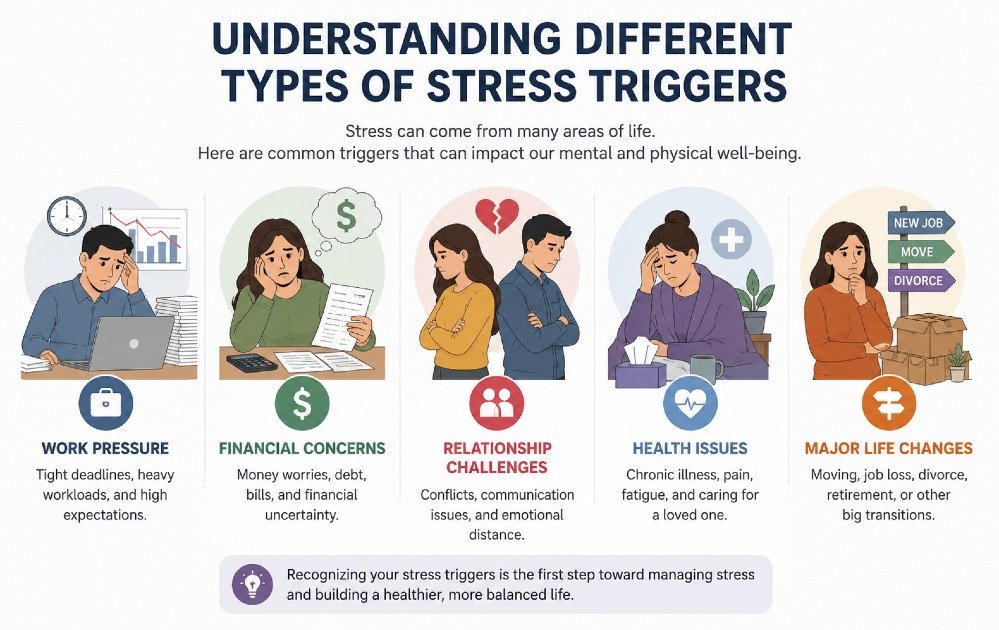
Some stress triggers are obvious, while others silently build until they take a toll.
External stress triggers include:
- Work deadlines
- Financial pressure
- Family conflicts
- Traffic and commuting
- Health concerns
- Major life changes
Internal stress triggers include:
- Negative self-talk
- Perfectionism
- Fear of failure
- Unrealistic expectations
- Constant worry
- Overthinking
Why it matters:
Recognizing your stress trigger helps you respond with the right stress management approach.
How to start:
- Write down your biggest stressors.
- Label each as external or internal.
- Focus first on triggers you can control.
- Create specific action plans for recurring stressors.
8 Ways to Manage Stress Triggers in Daily Life
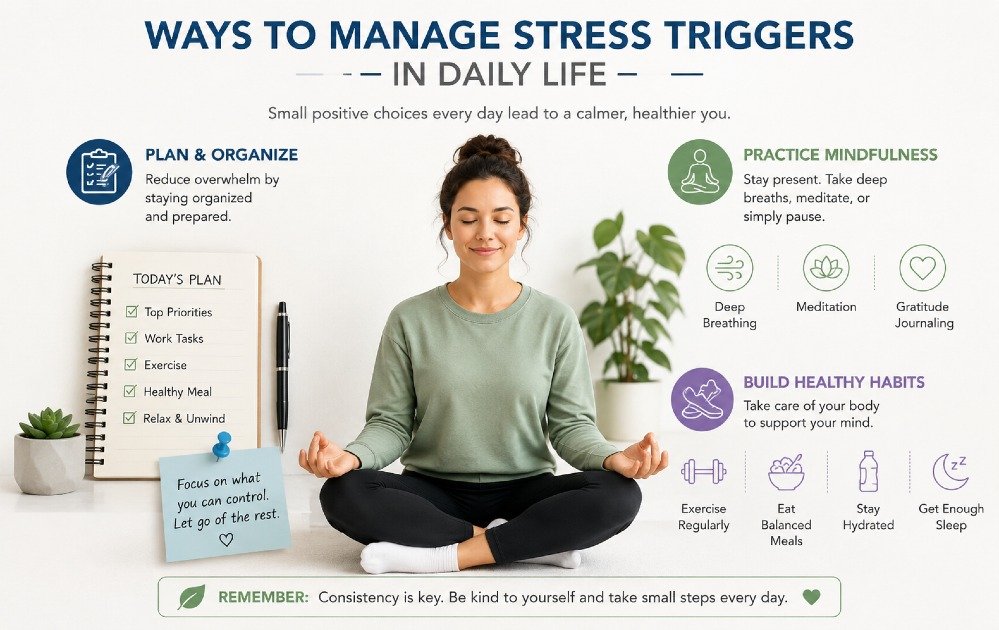
Have you noticed how the same challenges keep pulling you back into a stressful state?
Recognizing everyday stress triggers is a powerful foundation to turn awareness into action, helping you spot hidden patterns before they build into chronic stress.
Discover eight ways to identify the cause and respond with confidence instead of frustration.
1. Keep a Stress Journal to Discover Hidden Patterns
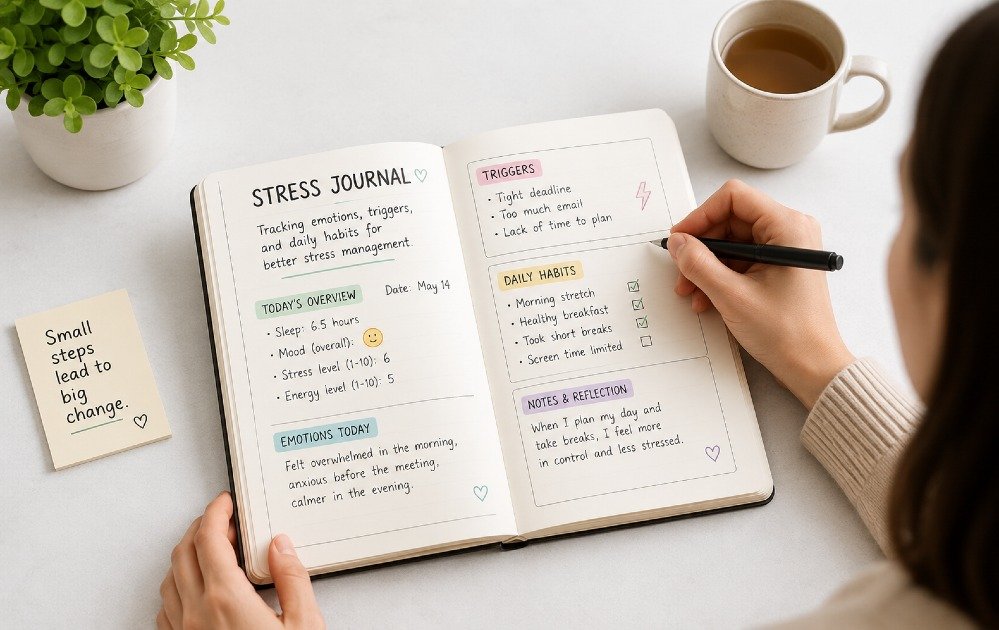
Tracking your stress is one of the most effective ways to uncover hidden patterns and take control of your well-being.
Why it matters:
Stress often seems unpredictable until a journal reveals recurring triggers, patterns, emotions, and habits behind it.
What works for me:
Simple notes can uncover hidden patterns, revealing how poor sleep, skipped meals, or daily tasks consistently trigger stress.
How to start:
Record:
- Date and time
- Situation
- Stress level (1–10)
- Thoughts you experienced
- Physical symptoms
- How you responded
- Review your entries after two weeks
2. Recognize Physical Signs Before Stress Escalates
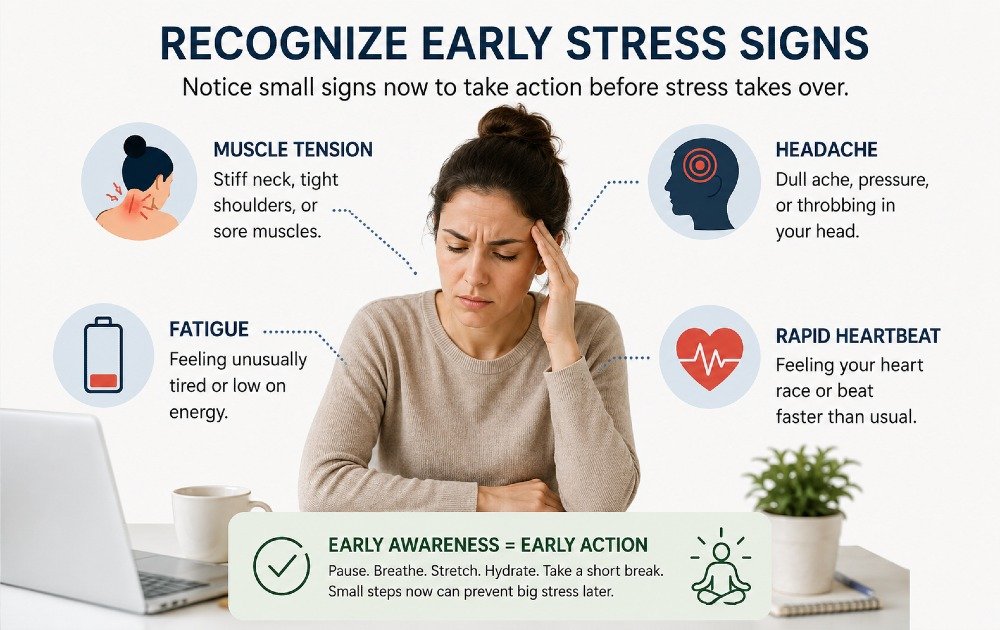
Your body often detects stress before your mind—recognizing these early signs helps you take action sooner.
Why it matters:
Early awareness prevents stress from building into burnout.
Common physical stress signals:
- Headaches
- Muscle tension
- Jaw clenching
- Increased heart rate
- Fatigue
- Digestive discomfort
- Poor sleep
- Frequent illness
What works for me:
When I feel physical tension, I recognize it as an early signal to address before it escalates.
How to start:
- Perform daily body scans.
- Notice tension in your shoulders and neck.
- Pay attention to sleep quality.
- Monitor energy levels.
- Take short breaks throughout the day.
3. Learn How Your Thoughts Influence Stress
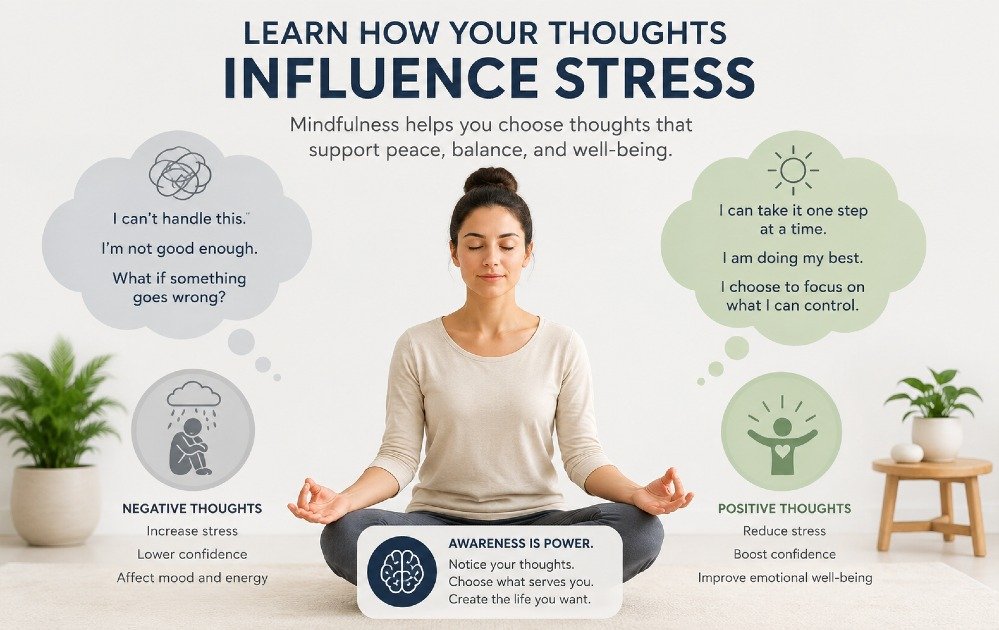
Your biggest stress trigger may not be the situation itself—it’s the meaning you attach to it.
Why it matters:
Thought patterns strongly influence emotional reactions.
Common stress-producing thoughts:
- “I have to be perfect.”
- “Everything depends on me.”
- “I can’t make mistakes.”
- “Things will never improve.”
- “I’m not good enough.”
What works for me:
Questioning negative assumptions often reduces stress immediately.
How to start:
When stress appears, ask:
- Is this thought completely true?
- What evidence supports it?
- What evidence challenges it?
- What would I tell a friend in this situation?
4. Set Boundaries to Protect Your Mental Energy

Overcommitment fuels stress—learning to say no helps you manage stress and regain control.
Why it matters:
Without boundaries, stress accumulates quickly.
Common boundary challenges:
- Taking on too much work
- Constant availability
- People-pleasing
- Lack of personal time
- Difficulty saying no
What works for me:
Protecting time for rest often increases productivity rather than reducing it.
How to start:
- Set clear work hours.
- Limit unnecessary commitments.
- Communicate expectations clearly.
- Schedule personal downtime.
- Practice saying no respectfully.
5. Create Healthy Responses to Common Stress Triggers
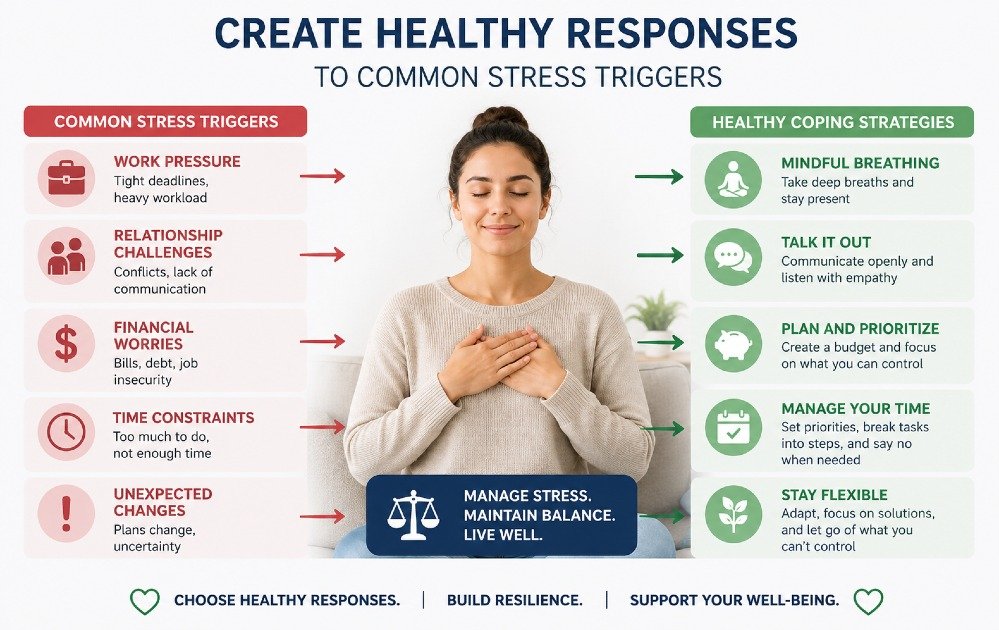
You can’t remove every stressor, but you can change your response and learn how to manage stress with greater control.
Why it matters:
Your response often determines how much stress affects you.
Instead of:
- Reacting impulsively
- Avoiding problems
- Bottling up emotions
Try:
- Pausing before responding
- Taking deep breaths
- Problem-solving calmly
- Seeking support
- Practicing mindfulness
What works for me:
A brief pause before reacting helps you manage stress, avoid unnecessary conflict, and protect your emotional energy.
How to start:
- Take three slow breaths before responding.
- Walk away briefly if emotions are high.
- Focus on solutions.
- Use positive self-talk.
- Ask for help when needed.
6. Build Daily Habits That Reduce Stress Vulnerability
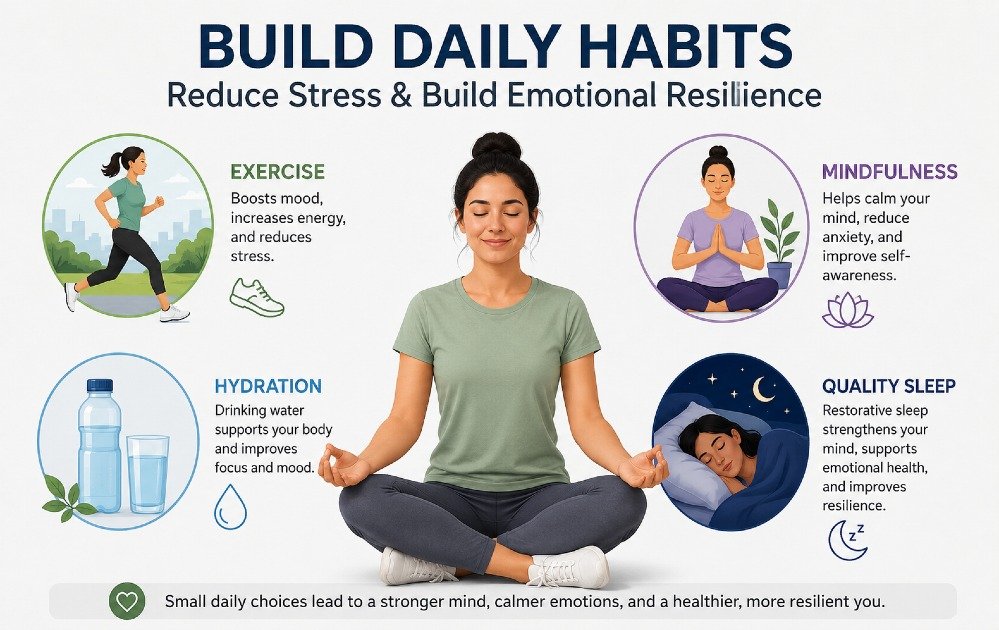
When your body and mind are drained, stress triggers hit harder—learn how to manage stress before they take control.
Why it matters:
Healthy habits increase resilience and improve your ability to manage stress.
What works for me:
Long-term stress relief is often built through steady daily practices that create meaningful results, rather than relying on infrequent, drastic changes.
How to start:
Focus on:
- 7–9 hours of sleep
- Daily movement
- Proper hydration
- Balanced meals
- Mindful breathing
- Regular relaxation
7. Use Technology Wisely to Manage Stress
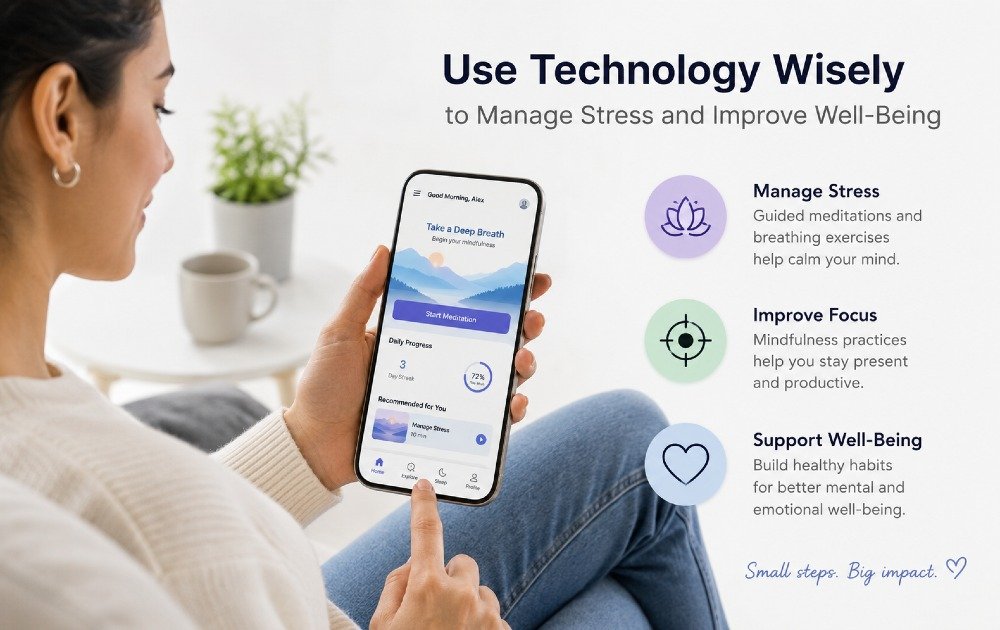
Technology can either fuel stress or become a powerful tool to help you manage stress and improve well-being.
Why it matters:
Constant notifications and digital overload often create hidden stress triggers.
How technology can help:
- Meditation apps
- Habit trackers
- Sleep monitoring devices
- Guided breathing programs
- Digital journals
How to start:
- Turn off unnecessary notifications.
- Schedule screen-free periods.
- Use mindfulness apps intentionally.
- Limit social media consumption.
8. When to Seek Professional Help

When stress feels overwhelming, learn how to manage stress before it takes control of your well-being.
Why it matters:
Seeking help early can prevent long-term emotional and physical health problems.
Signs you may need support:
- Persistent anxiety
- Frequent panic attacks
- Chronic insomnia
- Difficulty functioning daily
- Ongoing feelings of hopelessness
- Physical symptoms without clear causes
How to start:
- Talk with your healthcare provider.
- Consider counseling or therapy.
- Join a support group.
- Reach out to trusted family or friends.
- Reaching out for support reflects courage and self-awareness, not a lack of strength.
Noticing Stress Before It Builds Up
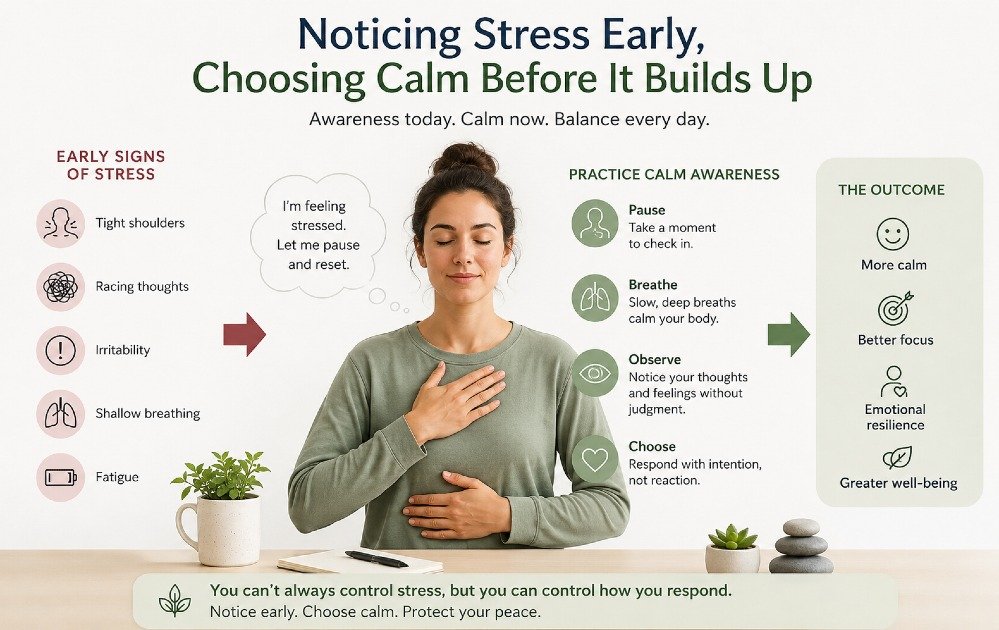
Stress builds through subtle mental and physical signals; recognizing them early helps you manage stress before it leads to exhaustion or burnout.
Common signs include:
- Mental fatigue that doesn’t improve with rest
- Irritability over small issues
- Reduced focus and clarity
- Muscle tension in the neck, shoulders, or jaw
- Feeling mentally “switched on” even during downtime
Practical solution steps:
- Pause briefly during the day to check how you feel
- Notice situations that drain your energy
- Track mood changes without overanalyzing
- Identify repeating stress patterns
- Reflect at the end of the day: What affected my stress today?
How to Recover Faster After Pressure

Low resilience allows stress to linger, but building resilience helps you recover faster and manage stress before it drains your energy.
Common signs include:
- Overreacting to minor setbacks
- Difficulty letting go of problems
- Ongoing worry after stressful events
- Feeling stuck or mentally exhausted
Practical solution strategies:
- Reframe setbacks as feedback, not failure
- Use slow breathing during stress peaks
- Break problems into smaller steps
- Maintain consistent sleep and recovery habits
- Strengthen supportive relationships
- Replace self-criticism with practical thinking
Regulating Your Body’s Automatic Reaction
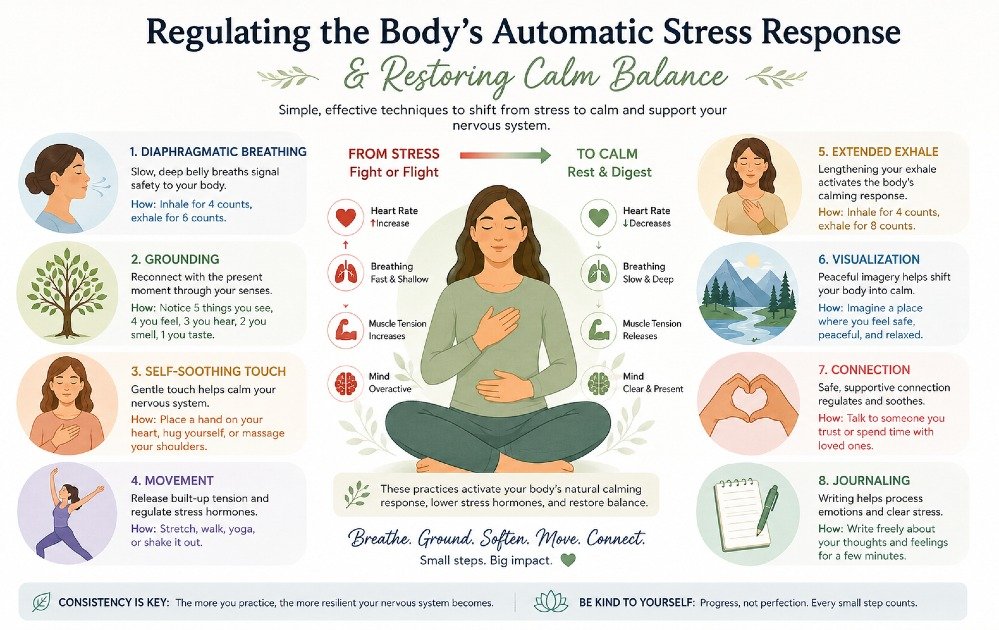
Your stress response can activate automatically, but modern pressures, overthinking, and digital overload can keep you stuck in a cycle where learning to manage stress becomes essential.
Common reactions:
- Increased heart rate
- Shallow breathing
- Muscle tightness
- Racing thoughts
- Emotional reactivity
Practical solution methods:
- Slow breathing (inhale 4 seconds, exhale 6 seconds)
- Pause before responding in emotional situations
- Step away briefly from triggering environments
- Ground yourself using physical sensations
- Reduce constant notifications and multitasking
- Take short breaks to reset mentally
Frequently Asked Questions
What is the first step to manage stress effectively?
Identify your stress triggers first—understanding the patterns behind them makes stress management easier and more effective.
How do I identify my personal stress triggers?
Track mood, energy, and focus shifts with a stress journal to identify patterns, triggers, and situations that increase stress.
Can stress triggers change over time?
Yes, stress triggers evolve with life changes, making regular self-checks essential for recognizing new patterns early.
What are the most common stress triggers in daily life?
Common stress triggers like work pressure, financial worries, poor sleep, digital overload, negative thoughts, and relationship tension often build silently over time.
How long does it take to improve stress management?
Consistent practice often brings noticeable improvement within weeks, with progress driven by daily awareness and simple coping strategies.
Related Articles
Recap: Take Control by Learning to Manage Stress Effectively
Stress builds through daily habits and thought patterns. When the real cause is unclear, stress keeps repeating in the same patterns.
Understanding its triggers can help you take control and protect your focus, health, and emotional well-being.
Reset your stress awareness through strengthened resilience and regulate stress response as you create a more stable mental foundation.
Ready to Take Back Control and Stop Stress From Running Your Day
You don’t need to let stress control your mood, decisions, and daily life.
Discover how this guided meditation platform can help you build a calmer mind, improve focus, and create lasting stress management habits with simple practices that fit your everyday routine.