
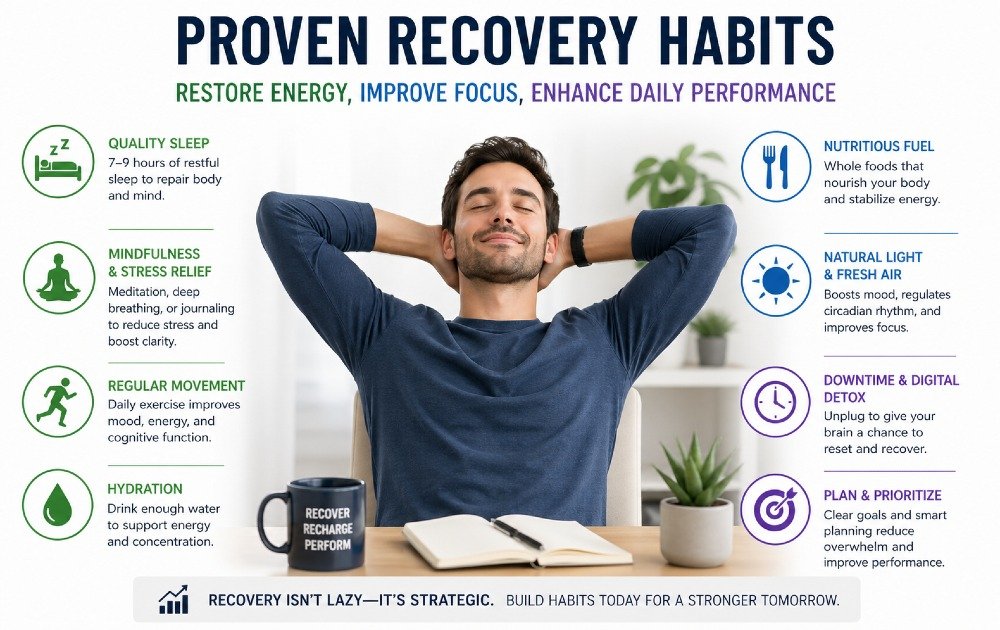
You can sleep, eat “well,” and still feel constantly drained. That’s because most people misunderstand recovery.
Recovery isn’t passive rest—it’s an active process that restores your body, stabilizes your mind, and rebuilds energy daily. Without it, productivity drops, stress builds, and burnout becomes inevitable.
This guide explains nine practical habits that are simple, science-informed, and designed for real life.
9 Proven Recovery Principles
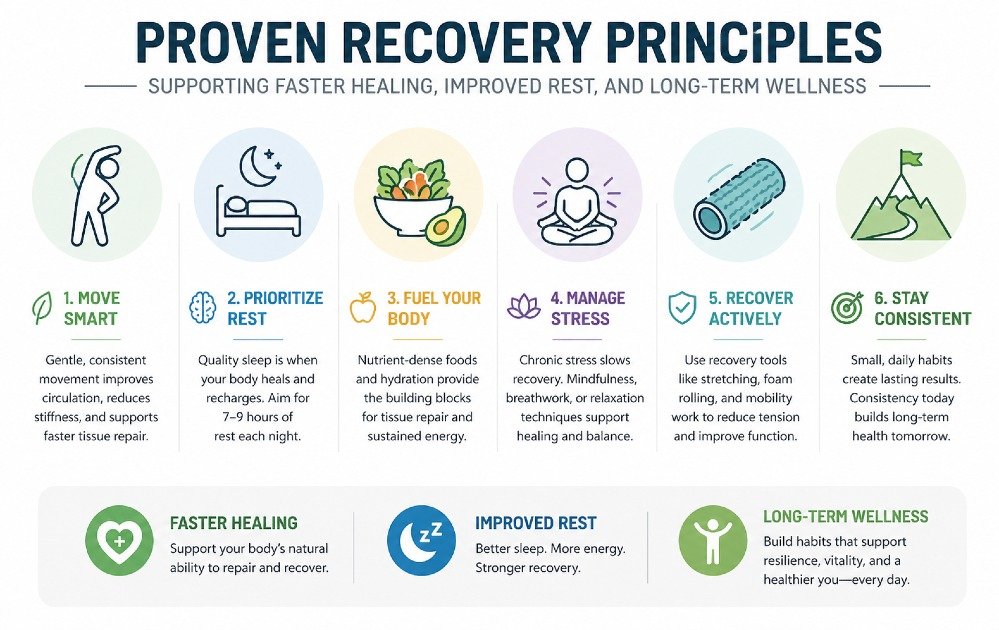
Recovery goes beyond rest. It helps the body rebuild energy, repair damage, and sustain mental and physical performance. Poor recovery can lower focus, drain productivity, and increase fatigue over time.
It is often reduced to sleep, but stress, poor nutrition, inconsistent habits, and nonstop screen time also delay mental and physical restoration.
Discover nine proven habits that help boost energy, sharpen focus, and support natural healing in a simple, sustainable way.
1. Prioritize Deep, Consistent Sleep

Most people underestimate sleep quality. Irregular schedules, late-night screens, and stimulation before bed reduce deep recovery even if total hours look “fine.”
Focus on consistent, high-quality sleep cycles.
Do this:
- Keep a fixed sleep and wake time
- Stop screens 60 minutes before bed
- Keep your room cool, dark, and quiet
- Avoid caffeine late in the day
Core advantage:
You wake up with real energy, better focus, and faster physical performance—not just fewer hours of exhaustion.
2. Use Active Movement Instead of Total Inactivity
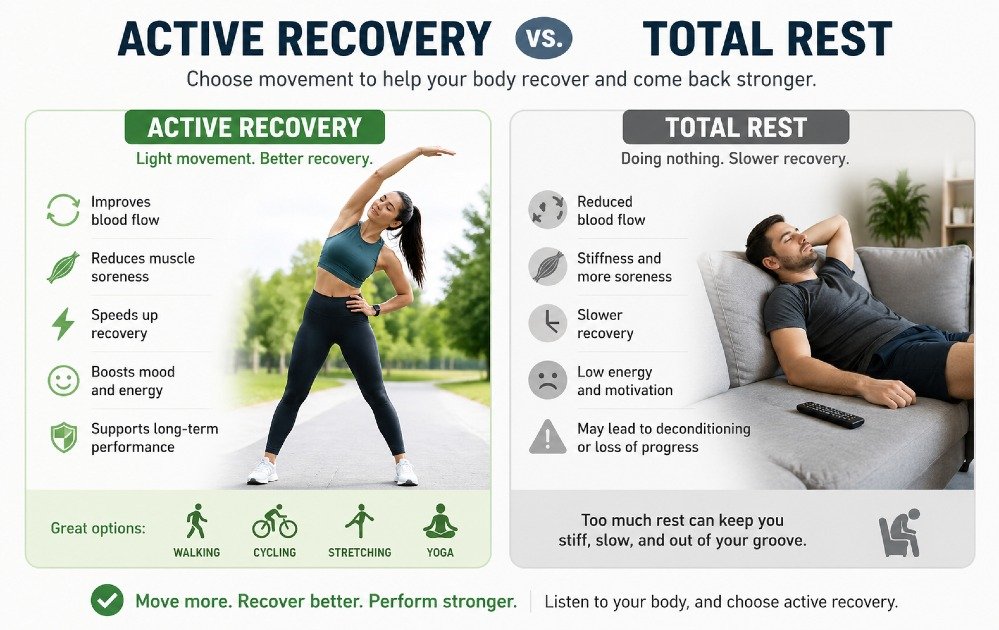
Resting completely for long periods can increase stiffness, reduce circulation, and slow recovery.
Add light movement that supports healing.
Do this:
- Walking at a relaxed pace
- Gentle stretching
- Yoga or mobility exercises
Core advantage:
Active movement helps reduce soreness, improve blood flow, and restore energy faster than complete inactivity.
3. Hydration as a Refresher Tool

Even mild dehydration reduces mental clarity, slows muscle repair, and increases fatigue.
Treat hydration as a daily recovery system.
Do this:
- Drink water first thing in the morning
- Keep a bottle within reach all day
- Add electrolytes if you sweat or exercise regularly
Core advantage:
Better hydration improves energy, cognitive, and physical performance efficiency.
4. Eat Foods That Actually Support Healing
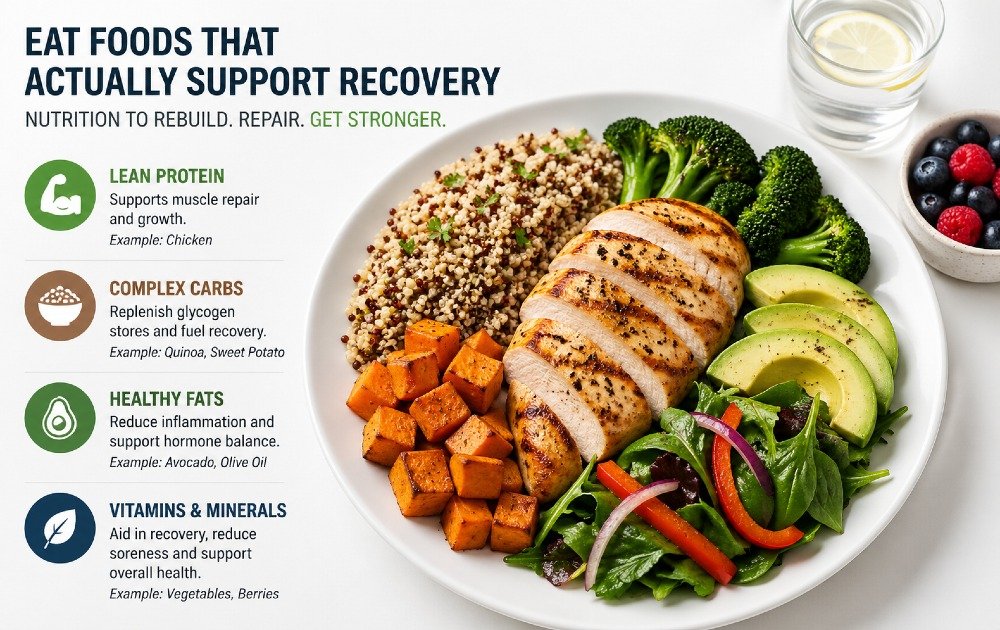
Skipping meals or relying on processed foods slows down recovery and keeps energy unstable.
Focus on nutrient-dense whole foods that repair and fuel the body.
Prioritize:
- Protein for muscle repair
- Healthy fats for hormone balance
- Complex carbs for steady energy
- Fruits and vegetables for micronutrients
Core advantage:
Your body recovers faster, your energy becomes more stable, and fatigue reduces significantly.
5. Control Stress Before It Controls You
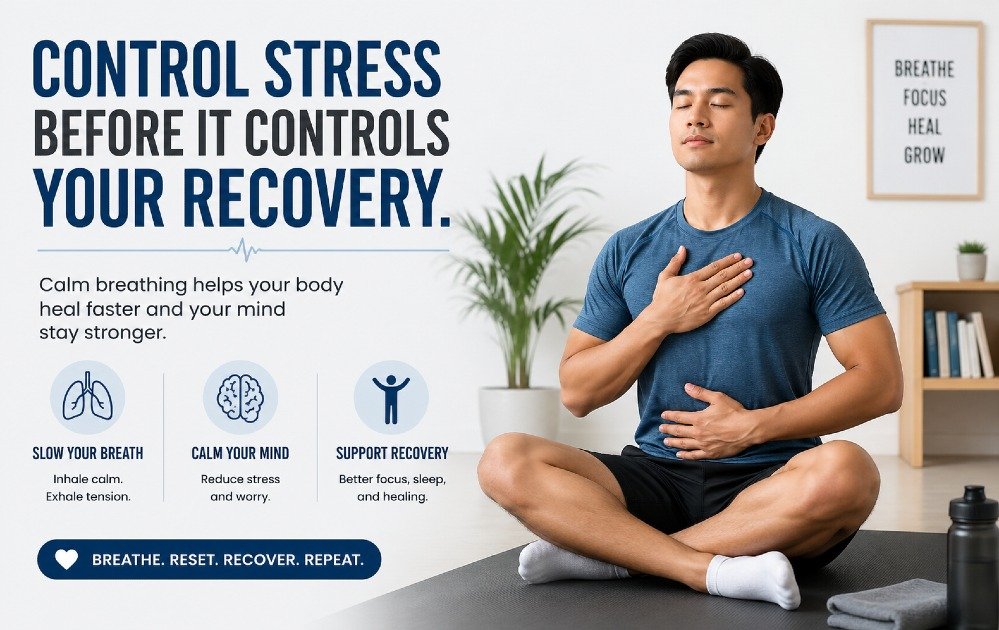
Chronic stress keeps your body in a constant alert state, preventing proper healing—even if you rest.
Build daily stress regulation habits.
Do this:
- Deep breathing (2–5 minutes daily)
- Journaling thoughts before bed
- Short walks without distractions
Core advantage:
Lower stress improves sleep quality, focus, and your body’s ability to recover naturally.
APA highlights stress as changes affecting the body system.
6. Take Real Breaks—Not Digital Distractions
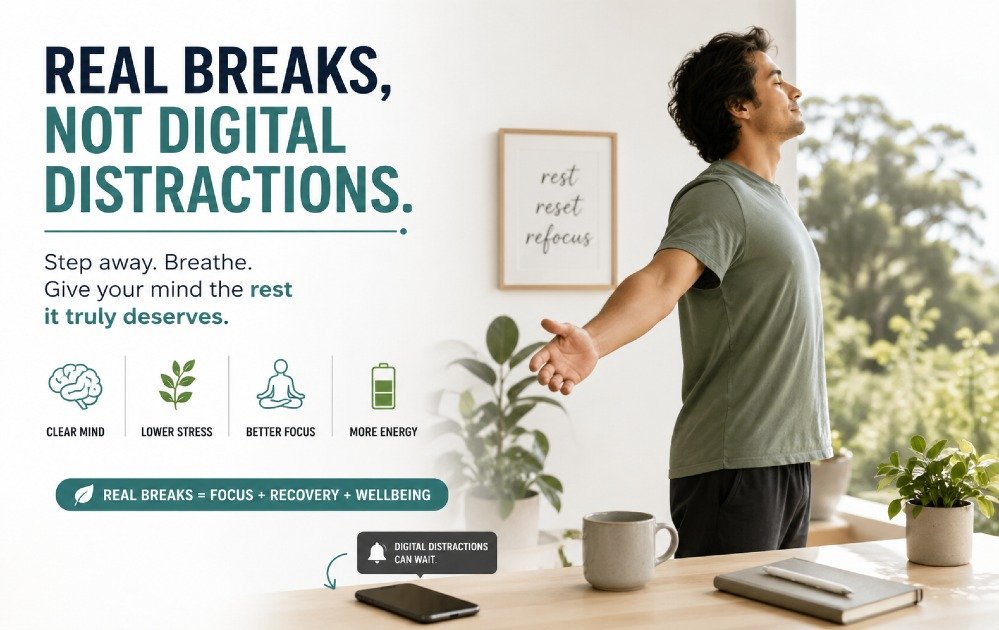
Scrolling on your phone feels like rest but actually keeps your brain overstimulated.
Use intentional, device-free breaks.
Do this:
- 10–15 minutes of silence
- Stepping outside without your phone
- Sitting and doing nothing structured
Core advantage:
Your brain resets, focus improves, and mental fatigue reduces significantly.
7. Use Temperature Therapy for Faster Physical Recovery
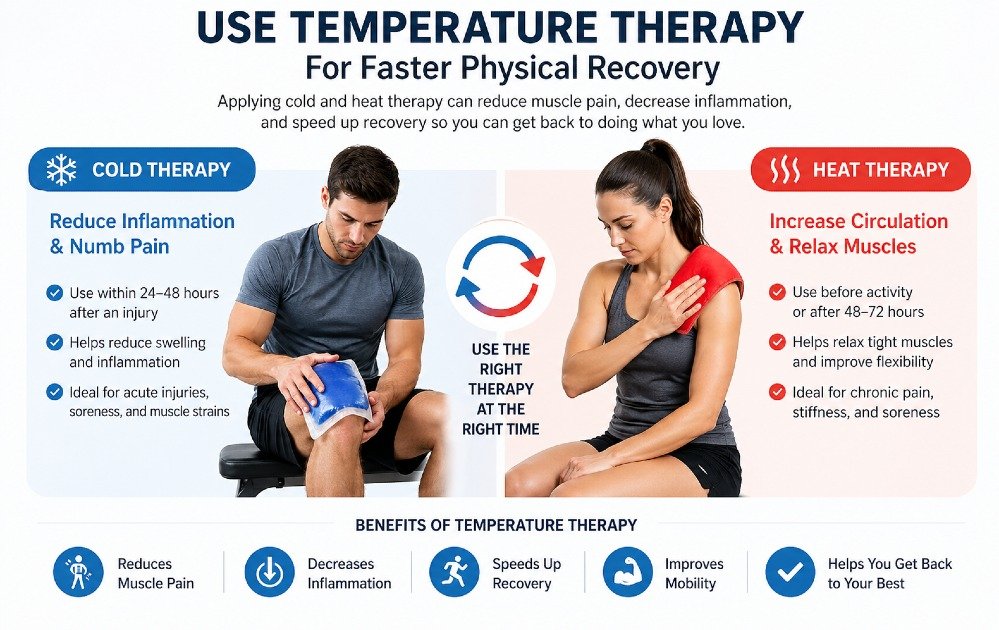
Muscle fatigue, tension, and inflammation often linger longer than necessary without proper healing.
Use hot and cold therapy strategically.
Do this:
- Cold showers to reduce inflammation
- Warm baths to relax muscles
- Alternating hot and cold for circulation
Core advantage:
Improved circulation, reduced soreness, and faster physical performance.
Enhance your healing therapy with this cold and heat wrap.
8. Remove Habits That Block Recovery
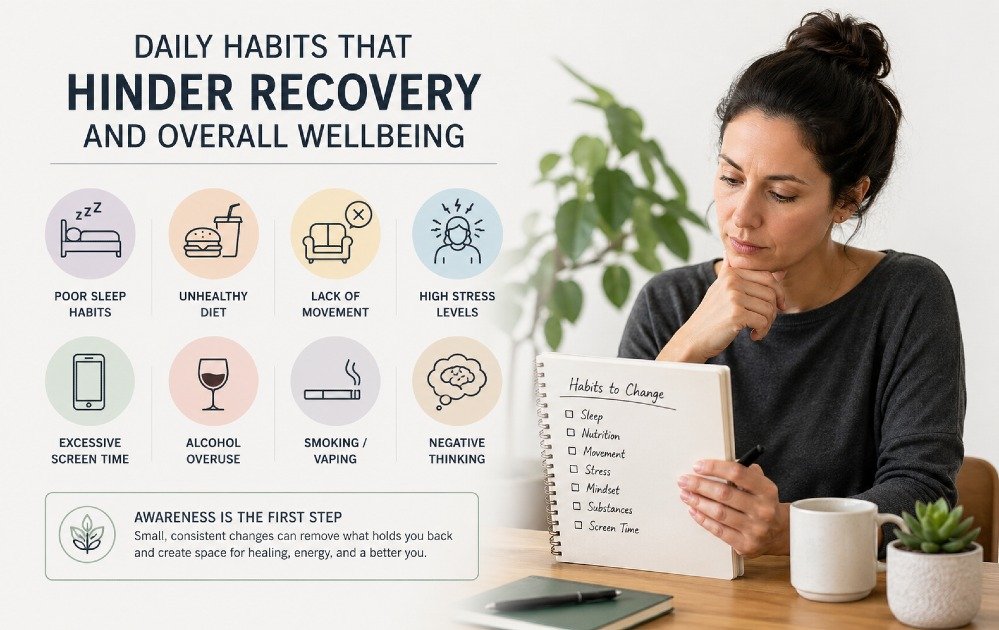
Some daily habits quietly destroy without obvious warning signs.
Common issues:
- Excess alcohol consumption
- Poor sleep hygiene
- Constant late-night screen exposure
- Overworking without rest cycles
Replacing damaging habits helps to support routines.
Core advantage:
More stable energy, improved sleep quality, and reduced burnout risk.
9. Build a Consistent Recovery Routine
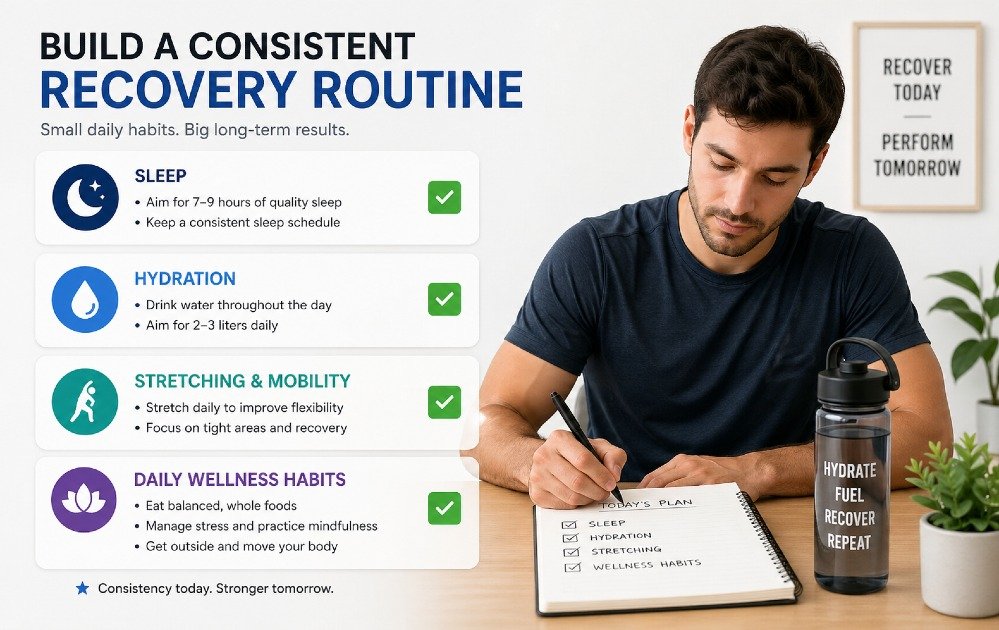
Random healthy actions don’t create lasting results. Consistency does.
Turn recovery into a structured daily system.
Do this:
- Morning: hydration + light movement
- Midday: balanced meals + short breaks
- Evening: wind-down routine + reduced stimulation
Core advantage:
Your body and mind begin to recover automatically—without constant effort or decision-making.
Natural Ways to Improve Recovery

Quick fixes like caffeine and energy drinks hide fatigue but don’t restore energy.
Use natural ways to improve restoration that support your body’s systems.
Focus on:
- Consistent hydration — supports energy and muscle repair
- Whole foods — protein, healthy fats, and complex carbs
- Morning sunlight — helps regulate your internal clock
- Light movement — walking or stretching boosts circulation
- Reduced stimulants — limit caffeine and alcohol, especially late
Core advantage:
You build steady energy instead of short spikes. Restoration becomes reliable, sustainable, and easier to maintain.
Mental and Physical Restoration Strategies

Most people address physical fatigue but ignore mental strain. This leads to poor focus, low motivation, and burnout.
Combine mental and physical restoration strategies for full recovery.
Do this:
- Set clear work limits — stop work at a consistent time
- Use active restoration — light activity instead of full rest
- Reset your mind — journaling or quiet reflection
- Limit input — reduce notifications and screen time
- Make recovery — non-negotiable.
Core advantage:
You recover more completely. This improves focus, emotional control, and physical performance.
Sleep and Restoration Optimization

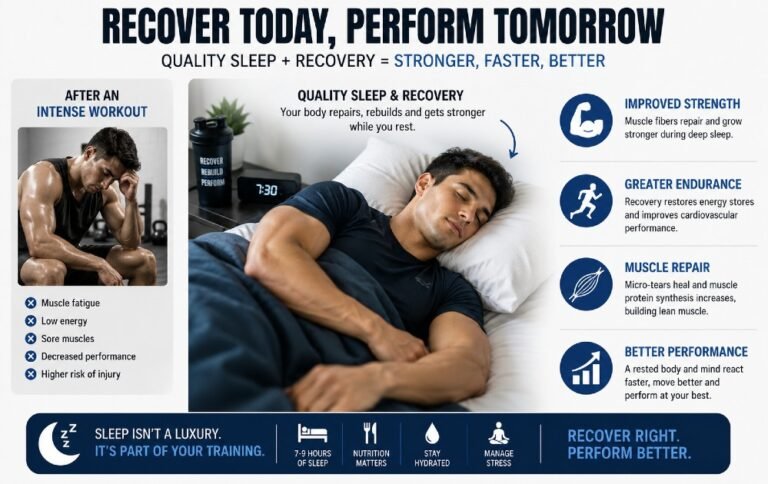
Sleep quality is often poor, even when duration seems adequate. Disrupted sleep cycles prevent full recovery.
Improve sleep and restoration optimization by focusing on quality and consistency.
Key actions:
- Maintain a fixed sleep schedule
- Create a wind-down routine — reduce light and screen exposure
- Optimize your environment — cool, dark, quiet room
- Avoid late heavy meals
- Manage stress before bed — simple breathing or reading
Core advantage:
Better sleep drives better recovery. You gain deeper rest, clearer thinking, and consistent energy.
Frequently Asked Questions
What are the best restorative habits for improving daily energy?
The most effective restorative habits are simple, consistent, and sustainable.
Focus on:
- Quality sleep
- Daily hydration
- Balanced nutrition
- Light physical activity
- Stress management
- Regular mental breaks
These habits help restore energy, improve focus, and reduce physical and mental fatigue over time.
How long does it take to improve recovery?
Some people notice better energy and focus within a few days. More consistent improvements usually appear after 1–2 weeks of maintaining healthy recovery habits.
The key is consistency. Small daily habits produce better long-term results than extreme short-term changes.
Can poor recovery affect mental performance?
Yes. Recovery directly affects brain function.
Poor recovery can lead to:
- Brain fog
- Low concentration
- Irritability
- Mental fatigue
- Reduced productivity
Strong restorative habits support clearer thinking, emotional balance, and better focus.
What is the biggest recovery mistake people make?
The most common mistake is treating recovery as something optional or waiting until burnout happens.
Many people also assume sleep alone is enough. In reality, recovery depends on multiple factors, including:
- Sleep quality
- Nutrition
- Hydration
- Stress levels
- Daily movement
- Work-life balance
Effective restoration requires a complete lifestyle approach.
Does exercise improve recovery?
Yes—when used correctly.
Excessive training without rest slows recovery. However, light movement often supports it.
Helpful recovery exercises include:
- Walking
- Stretching
- Yoga
- Mobility work
These activities improve circulation, reduce stiffness, and support faster healing.
How can I improve sleep and recovery naturally?
Better sleep starts with better habits.
Practical strategies include:
- Keeping a consistent sleep schedule
- Reducing screen time before bed
- Limiting caffeine late in the day
- Sleeping in a cool, dark room
- Creating a calming nighttime routine
Improving sleep quality strengthens energy, recovery, and mental performance.
Are supplements necessary for recovery?
Not usually.
Most recovery benefits come from foundational habits such as:
- Proper sleep
- Balanced nutrition
- Hydration
- Stress management
- Consistent routines
Supplements may help in some cases, but they should support—not replace—healthy habits.
Why do I still feel tired even after resting?
Rest does not always equal recovery.
You may still feel fatigued because of:
- Poor sleep quality
- High stress levels
- Inconsistent nutrition
- Excess screen time
- Lack of physical activity
- Mental overload
True recovery happens when both the body and mind have time and support to restore properly.
Recap: Recovery Drives Energy, Focus, and Performance
Most people try to solve low energy by doing more—more work, more caffeine, more effort. That approach misses the point.
When recovery is inconsistent, focus declines, stress builds, and performance drops. When it is structured, energy stabilizes, thinking improves, and your body performs as it should.
Recovery isn’t optional—it’s the foundation of performance. Therefore, you don’t need extreme changes. You need consistent habits that work with your lifestyle—not against it.
Ready to Start Recovering Smarter, Not Harder
You don’t need to improve your energy by doing more. You only need to improve by recovering better.
Track your recovery daily with this powerful tracker and start rebuilding the energy, mental focus, and consistent performance your body has been missing.