
Still struggling to calm your racing thoughts and manage daily stress?
Mindful breathing calms your mind, reduces stress, and restores emotional balance—explore our complete Stress Management Blueprint to build lasting resilience.
This guide explains techniques that can help you regain control from within.
What Is Mindful Breathing?
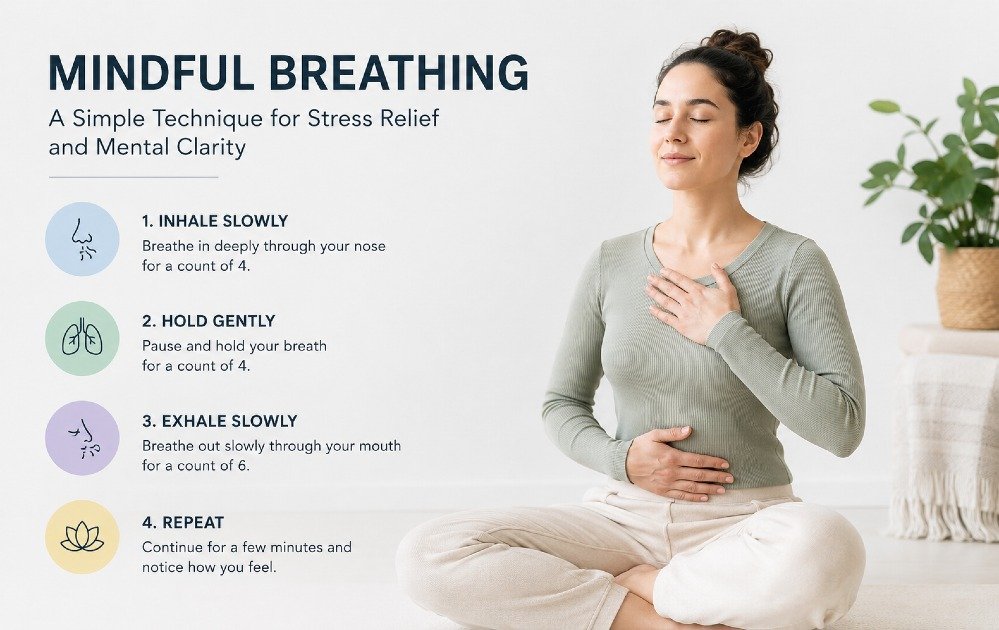
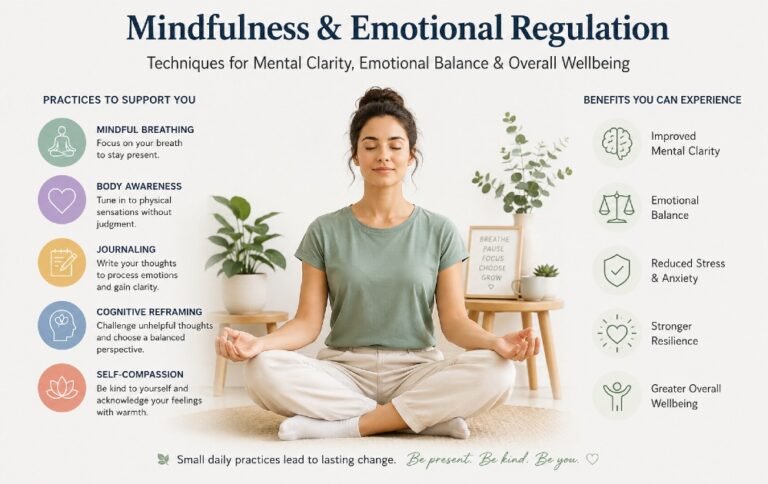
Mindful breathing trains you to calmly focus on each breath, gently returning your attention whenever your mind wanders to reduce stress and restore clarity.
Research shows that mindfulness and controlled breathing reduce stress, ease anxiety, strengthen emotional balance, and support overall mental well-being.
Why it matters:
Mindful breathing calms shallow, stress-driven breathing, activates your body’s relaxation response, and helps you regain control.
What works for me:
I’ve found that mindful breathing helps me pause, regain focus, and respond to stress with clarity instead of impulse.
How to start:
- Sit comfortably in a quiet space.
- Inhale slowly through your nose.
- Exhale gently through your mouth.
- Focus only on the movement of your breath.
- Practice for two to five minutes daily.
How Mindful Breathing Helps Manage Stress
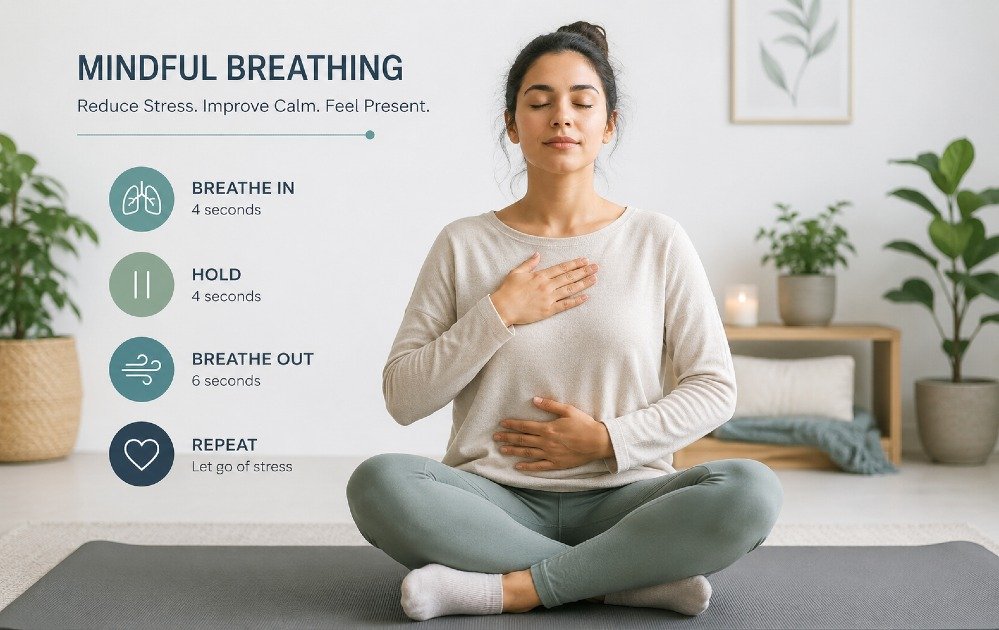
Mindful breathing calms your stress response, eases tension, and helps you stay focused and in control during stressful moments.
NCBI recognizes breathing practices as an effective way to calm the nervous system and improve emotional well-being.
Why it matters:
Chronic stress traps your body in fight-or-flight mode, but mindful breathing restores calm, sharpens focus, improves sleep, and supports lasting health.
What works for me:
Even on my busiest days, a few mindful breaths clear mental clutter and help me regain control.
How to start:
- Pause before responding to stressful situations.
- Use breathing exercises during work breaks.
- Practice before important meetings.
- Take slow breaths before bedtime.
- Pair breathing sessions with daily routines.
7 Powerful Mindful Breathing Techniques for Stress Relief
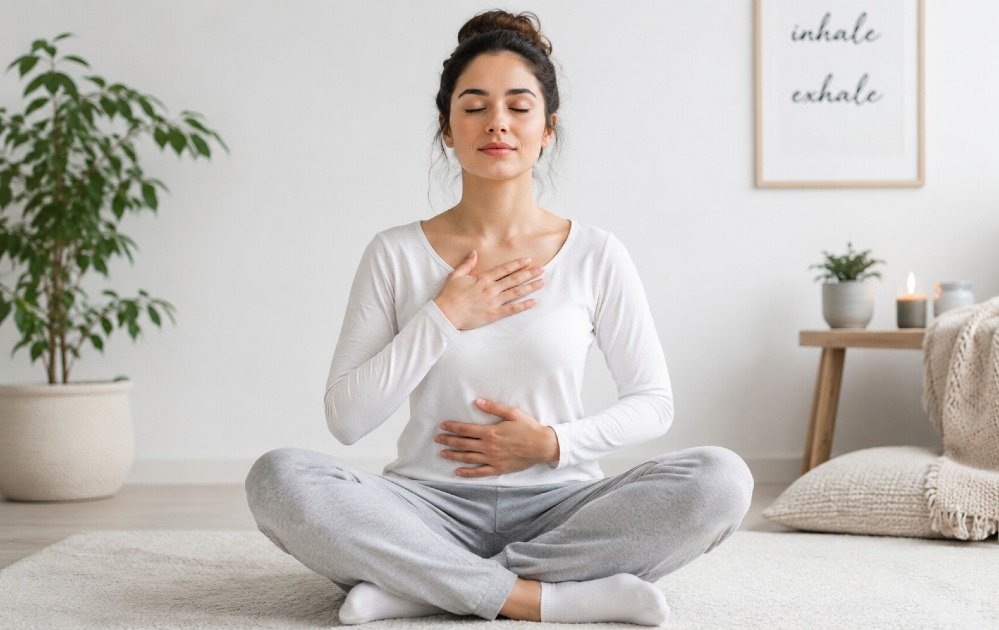
Feeling trapped in a cycle of stress, anxiety, and nonstop thoughts?
Discover seven techniques that can help you calm your mind, relax your body, and build a healthier response to everyday challenges.
1. Box Breathing
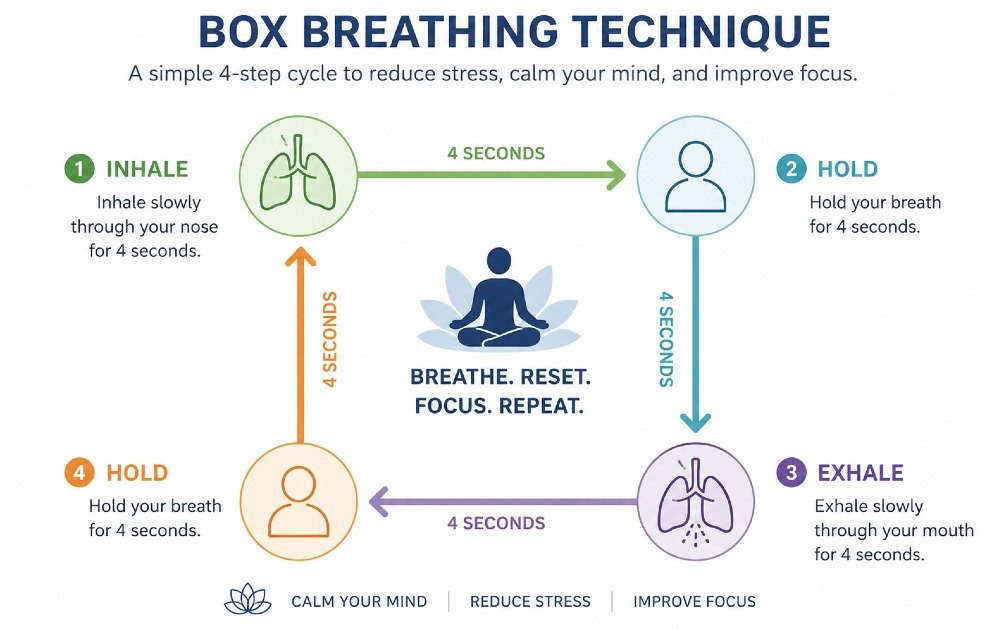
Box breathing is a powerful stress-relief technique trusted by top performers and first responders.
Why it matters:
It boosts focus, emotional control, and inner calm.
How to practice:
- Inhale for 4 seconds.
- Hold for 4 seconds.
- Exhale for 4 seconds.
- Hold again for 4 seconds.
Repeat for 5 minutes.
Core advantages:
- Reduces stress quickly
- Improves concentration
- Supports emotional balance
2. 4-7-8 Breathing
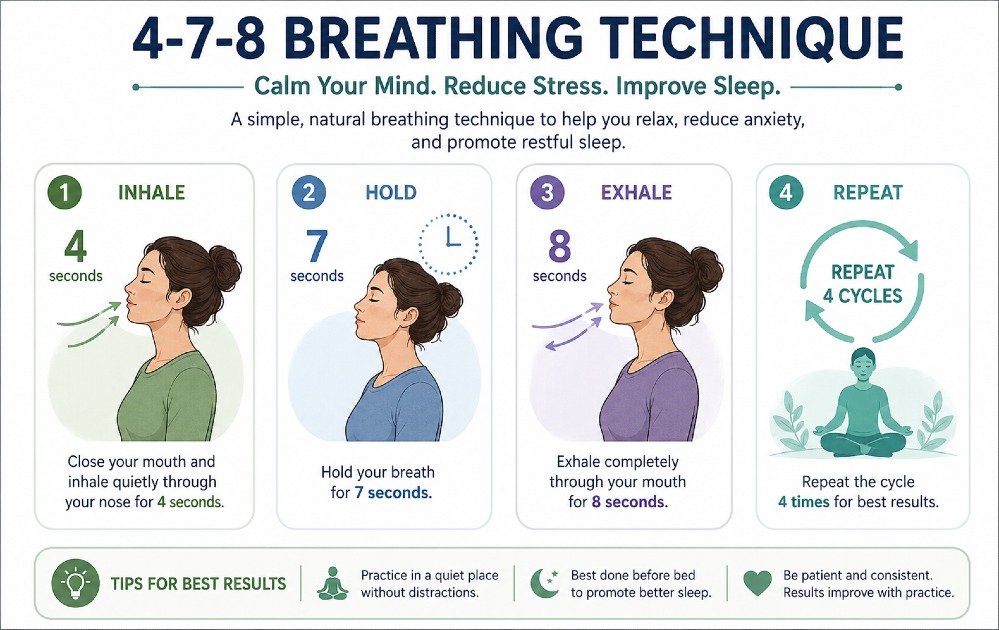
This technique promotes relaxation and helps you fall asleep faster.
Why it matters:
It slows breathing and calms the nervous system.
How to practice:
- Inhale for 4 seconds.
- Hold for 7 seconds.
- Exhale slowly for 8 seconds.
Repeat four times.
Core advantages:
- Supports better sleep
- Reduces anxious thoughts
- Promotes relaxation
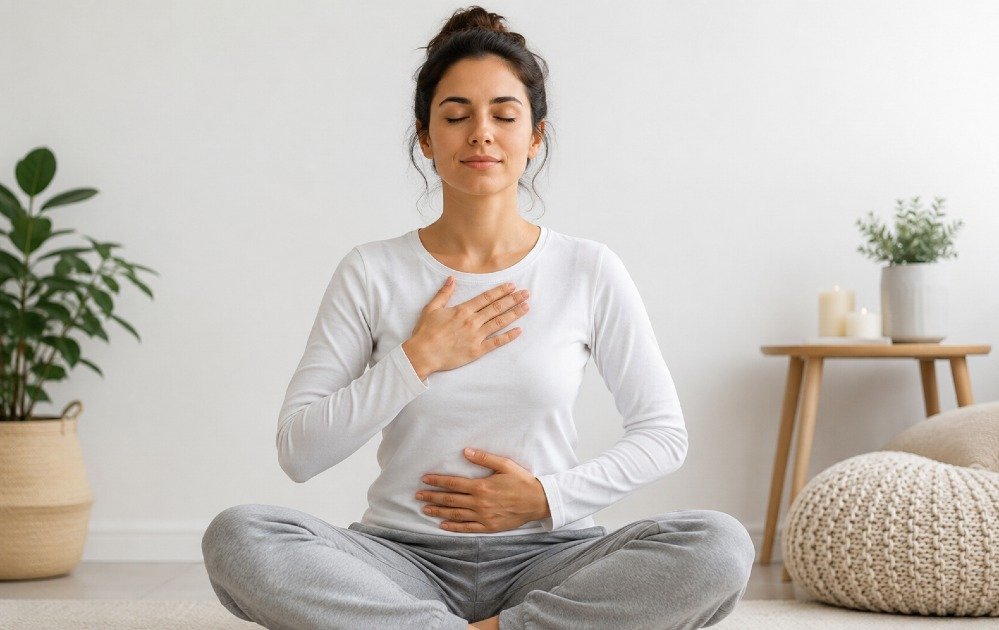
3. Diaphragmatic Breathing
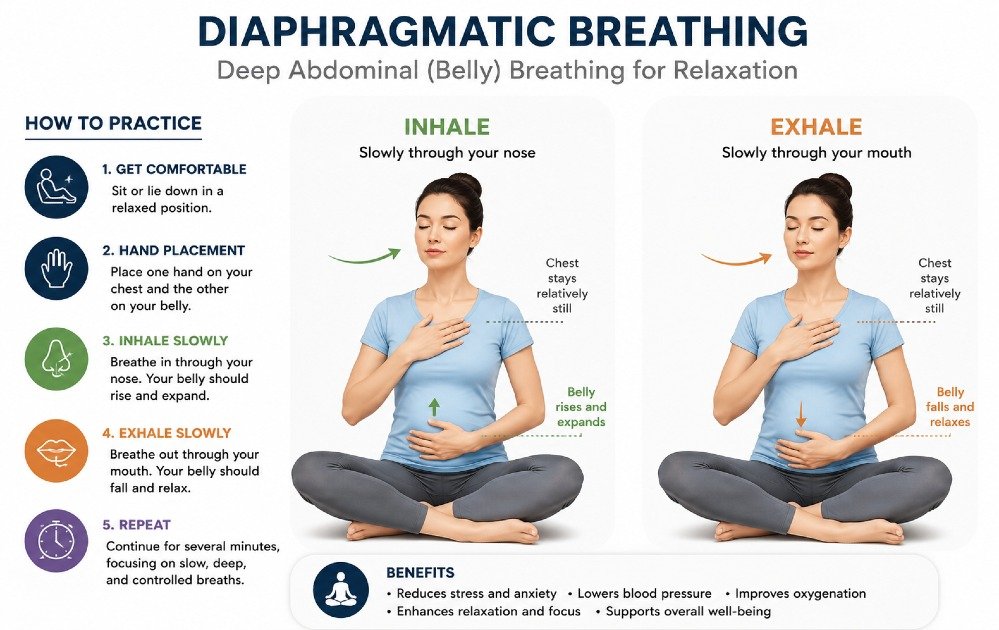
Also known as belly breathing, this technique engages the diaphragm rather than shallow chest breathing.
Why it matters:
Deep breathing sends calming signals throughout the body.
How to practice:
- Place one hand on your chest.
- Place the other on your abdomen.
- Breathe deeply so your stomach rises.
- Exhale slowly.
Core advantages:
- Improves oxygen flow
- Lowers tension
- Enhances relaxation
4. Alternate Nostril Breathing
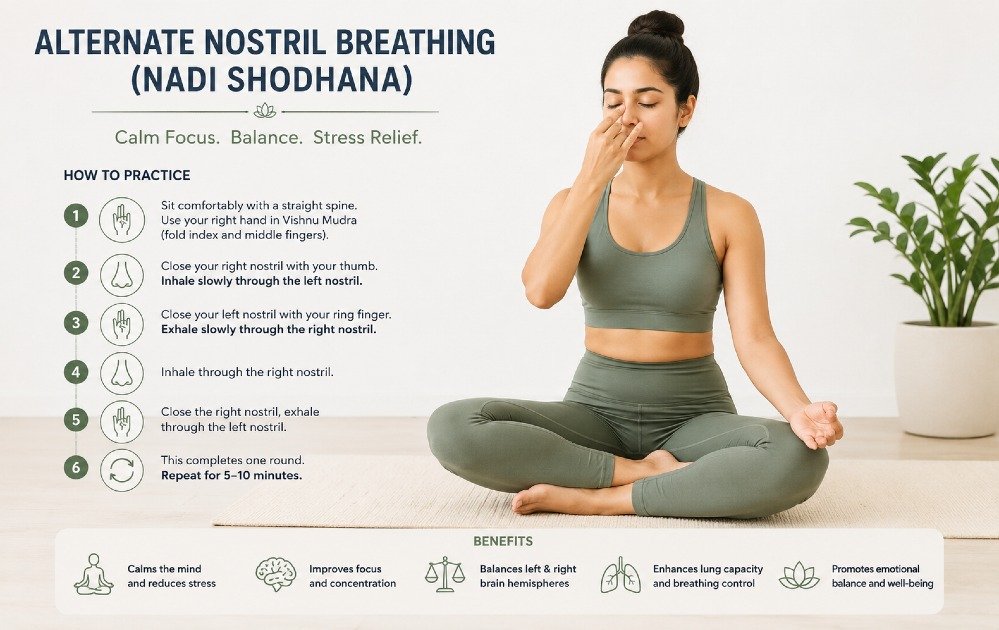
This mindfulness technique originates from traditional yoga practices.
Why it matters:
It encourages mental clarity and balance.
How to practice:
- Close one nostril.
- Inhale through the open nostril.
- Switch sides and exhale.
- Continue alternating.
Core advantages:
- Enhances focus
- Promotes calmness
- Reduces mental fatigue
5. Counting the Breath
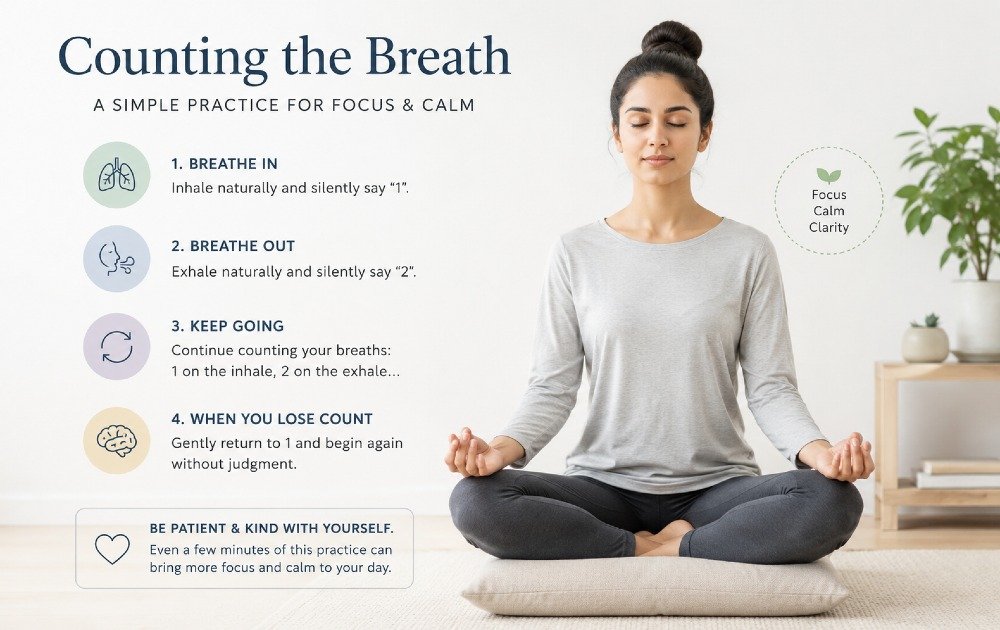
This simple exercise helps anchor attention to the present moment.
Why it matters:
Counting prevents the mind from wandering.
How to practice:
- Inhale and count “one.”
- Exhale and count “two.”
- Continue to ten.
- Start over.
Core advantages:
- Improves mindfulness
- Increases concentration
- Supports emotional wellness
6. Guided Mindful Breathing
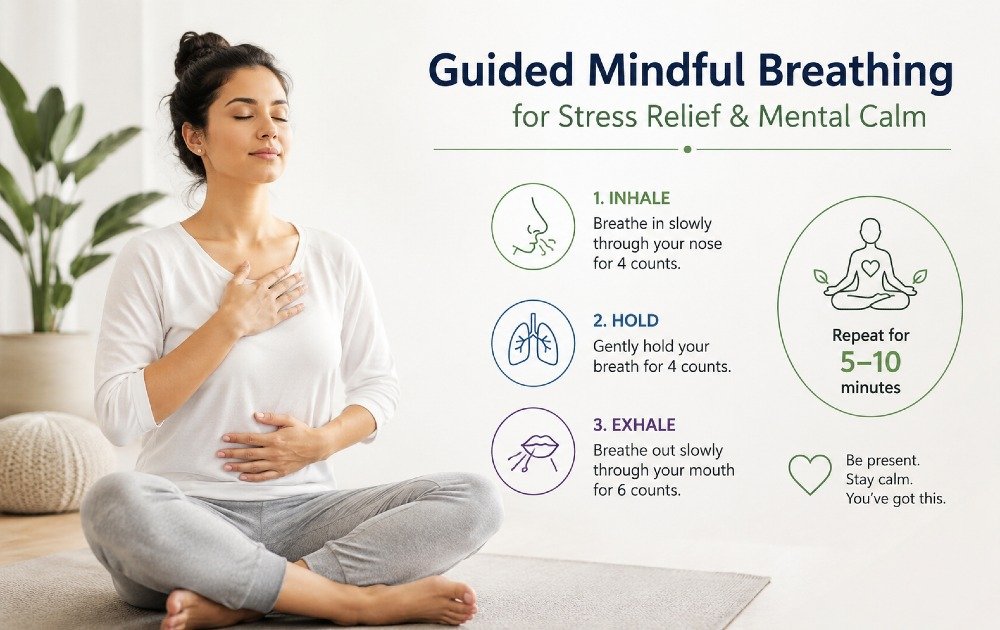
Guided breathing uses audio instructions to lead you through a relaxation session.
Why it matters:
Beginners often find guided practices easier to follow.
How to practice:
- Find a quiet space
- Close your eyes and settle in
- Focus on your breath
- Follow guided instructions
- Breathe slowly and deeply
- Notice physical sensations
- Acknowledge distractions
- Practice consistently
- End with awareness
Core advantages:
- Easy to follow
- Encourages consistency
- Supports stress reduction
7. Breath Awareness Meditation
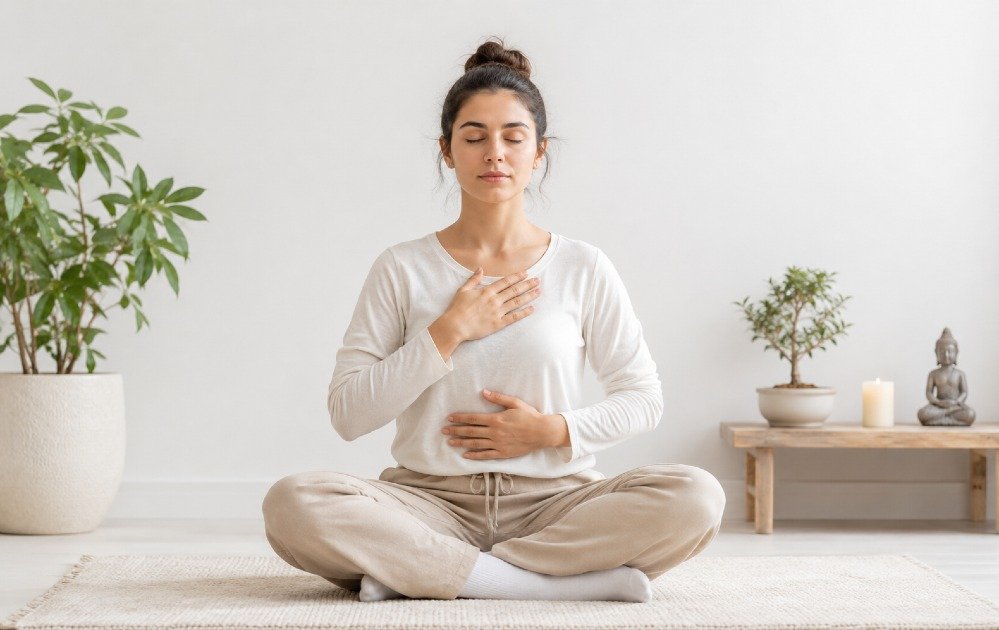
This practice focuses solely on observing the breath.
Why it matters:
It develops present moment awareness.
How to practice:
- Sit comfortably.
- Notice each inhale and exhale.
- Observe without changing your breathing.
- Return focus whenever your mind wanders.
Core advantages:
- Strengthens mindfulness
- Improves emotional resilience
- Reduces stress naturally
Building a Daily Mindful Breathing Routine
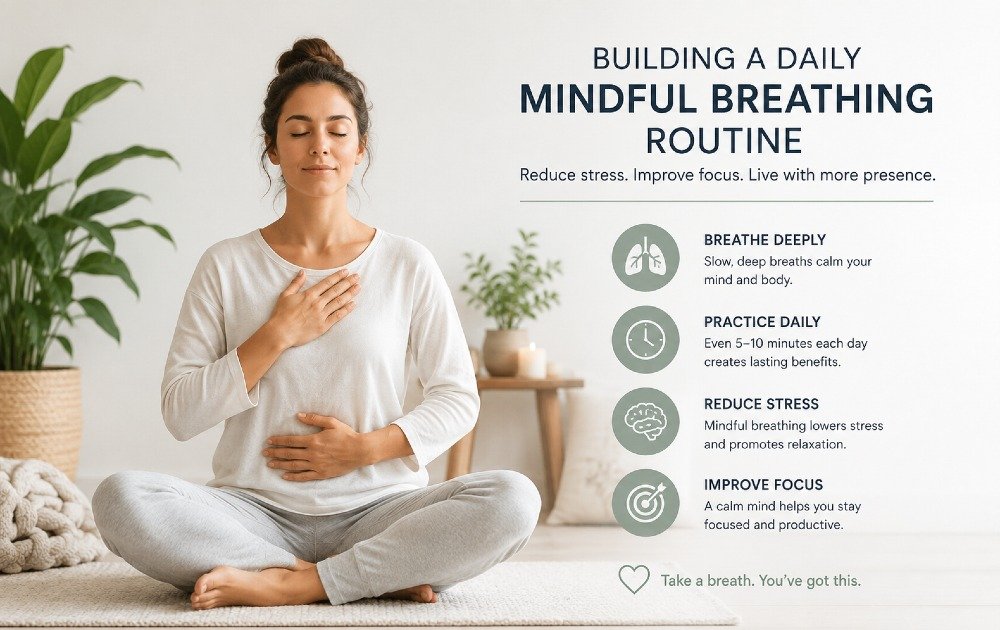
Build a daily mindful breathing routine by practicing a few minutes at the same time each day and linking it to an existing habit for lasting consistency.
Why it matters:
A daily mindful breathing practice lowers stress, sharpens focus, balances emotions, and creates lasting calm.
What works for me:
Attaching breathing exercises to existing habits makes them easier to maintain.
How to start:
Morning:
- Practice for 3–5 minutes after waking.
Midday:
- Take a breathing break before lunch.
Evening:
- Use deep breathing exercises before bed.
Frequently Asked Questions
How long should I practice mindful breathing each day?
Start with 5 minutes daily—consistent practice builds lasting results, and you can gradually increase your time as mindfulness becomes a natural habit.
Can mindful breathing reduce stress quickly?
Focused breathing can calm your nervous system within minutes, easing tension and helping you regain control during stressful moments.
What is the best mindful breathing technique for beginners?
Box breathing and belly breathing are simple, effective techniques you can practice anywhere to build a strong foundation for stress relief.
Can mindful breathing help with anxiety?
Mindful breathing helps calm the stress response and ease overwhelm, offering a practical tool for anxious moments while complementing—not replacing—professional care.
Can I practice mindful breathing anywhere?
Practice mindful breathing anywhere—at home, work, or on the go—with no equipment or special setting needed.
Related Articles
Recap: The Power of Breathing
Mindful breathing is a simple, powerful tool that strengthens emotional resilience and improves focus.
Slowing your breath creates calm by giving you space to pause and respond with greater awareness.
Turn your breath into a powerful stress-management tool that improves emotional balance and builds resilience.
Ready to Break Free From the Stress Cycle?
You don’t have to keep waking up exhausted, overwhelmed, and trapped in the same cycle of stress every day.
Discover how this guided meditation platform can help you to experience deeper calm every day, think more clearly, and manage stress with confidence.