
Still overwhelmed and mentally drained after stressful days?
A relaxation routine can calm your mind, strengthen emotional resilience, and create lasting balance—explore our complete Stress Management Blueprint for more powerful stress strategies.
This guide explains routines that fits daily life, promotes mental health, and supports balance.
Why a Daily Relaxation Routine Matters
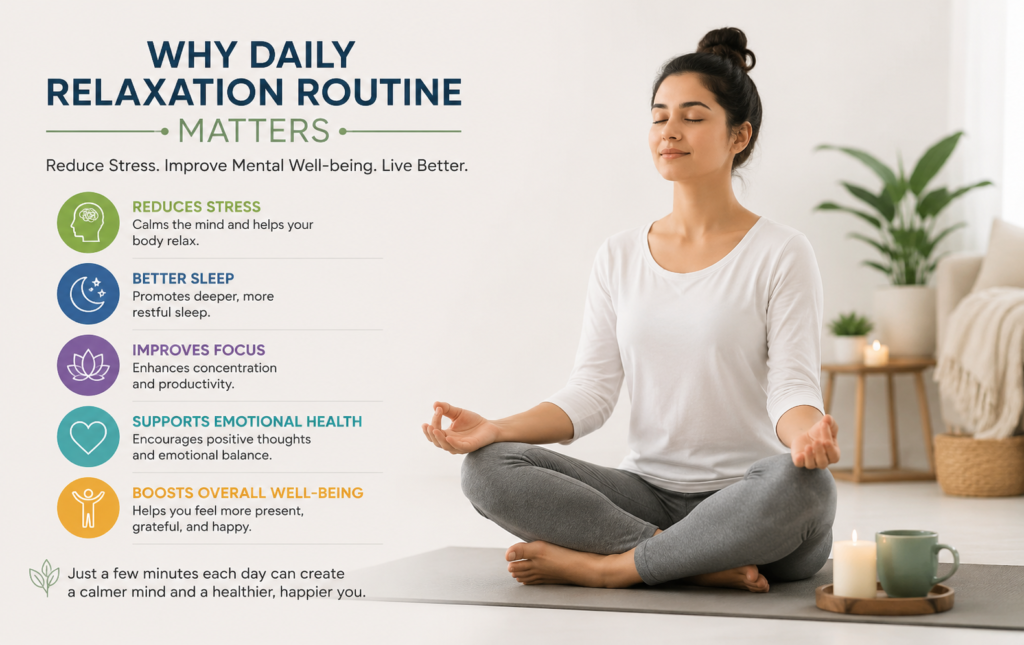
A daily relaxation routine reduces stress, improves sleep and mental clarity, and builds lasting resilience for better overall health.
Harvard Health emphasizes that regular stress-reduction practices can help improve sleep quality, support emotional well-being, and promote overall health
The hidden cost of constant stress:
- Sleep quality
- Energy levels
- Focus and productivity
- Blood pressure
- Emotional resilience
- Relationships
What works for me:
I’ve learned that intentional relaxation—even just 10 focused minutes a day—works far better than waiting for weekends or vacations to recover.
How to start:
- Schedule relaxation time like an important appointment.
- Start with 10–15 minutes daily.
- Choose activities you genuinely enjoy.
- Create a consistent routine.
- Focus on progress, not perfection.
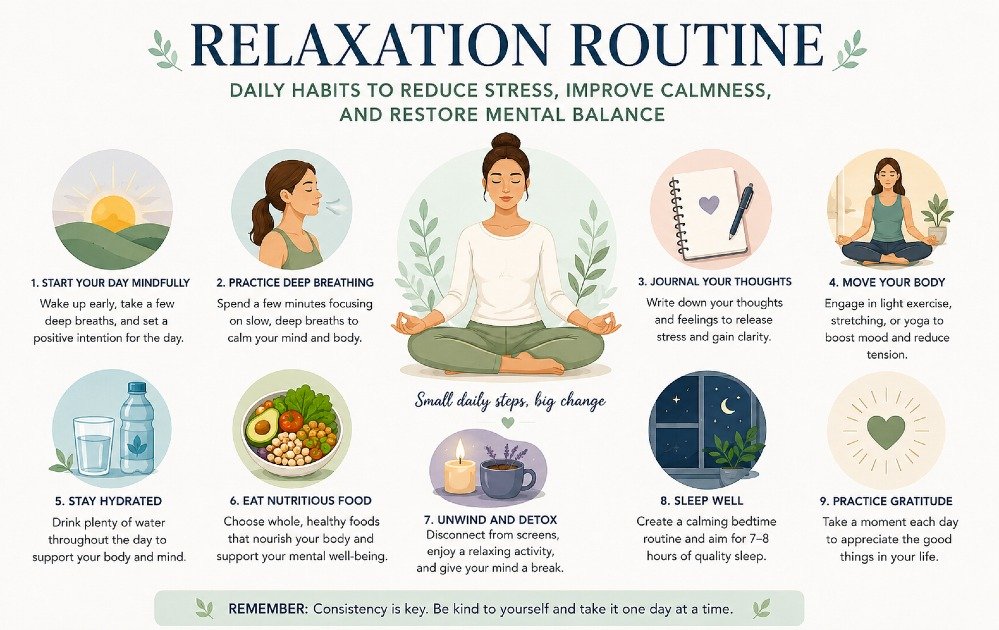
9 Relaxation Routine for Better Focus and Less Stress
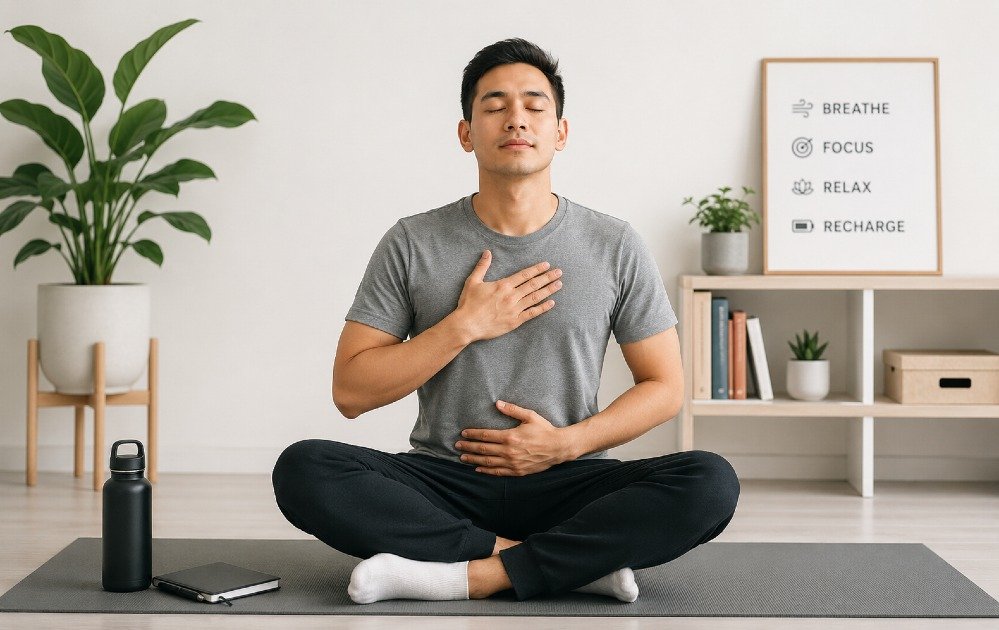
Are stress and constant distractions making it harder to focus and enjoy your day?
Relaxation routine is a powerful foundation that can sharpen focus and boost daily productivity without requiring hours of effort.
Discover how these nine relaxation habits can help quiet your mind, restore your energy, and improve your overall well-being.
1. Begin Your Morning With Quiet Time
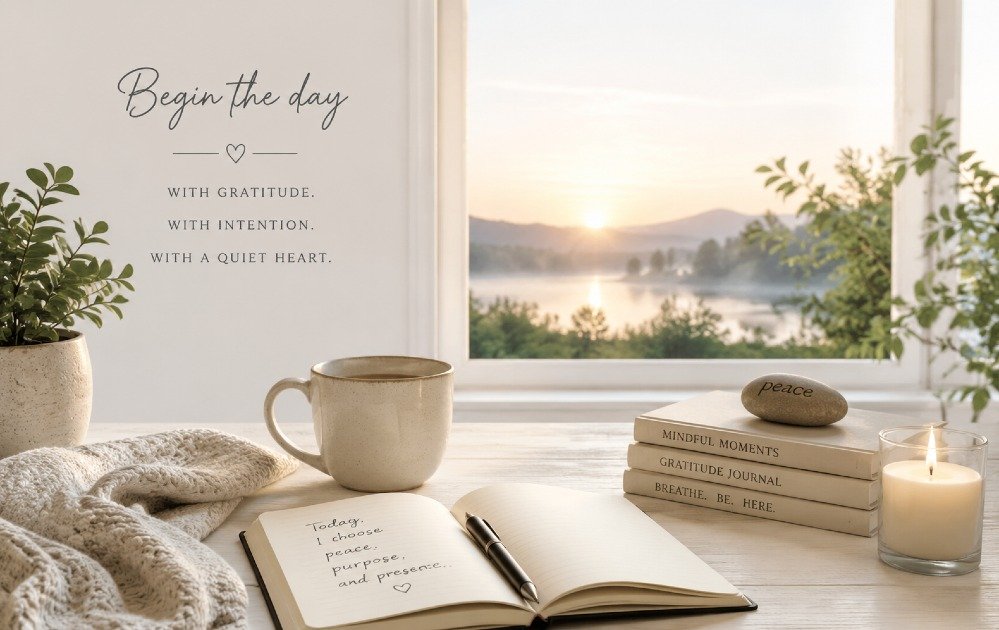
Start your morning with a few quiet, screen-free minutes to clear your mind, sharpen focus, and set a positive tone for the day.
Why it matters:
Your morning routine sets the tone for your mindset, allowing inner peace to become a powerful shield against stress before it gains control.
What works for me:
Avoiding my phone for the first 15 minutes helps me start the day feeling grounded, focused, and in control.
How to start:
- Wake up 10 minutes earlier.
- Sit quietly before checking messages.
- Practice gratitude.
- Stretch gently.
- Set one positive intention for the day.
2. Incorporate Deep Breathing Into Your Relaxation Routine

Deep breathing lowers stress, calms the nervous system, improves focus, and builds emotional control with just a few minutes of daily practice.
Why it matters:
Deep breathing activates your nervous system’s relaxation response, helping your body shift out of stress mode.
What works for me:
A few minutes of slow breathing helps me reset focus and regain clarity whenever I feel overwhelmed.
How to start:
- Inhale through your nose for four seconds.
- Hold for four seconds.
- Exhale slowly for six seconds.
- Repeat for five minutes.
3. Create a Calming Evening Wind-Down Ritual

A calming evening routine with reading, stretching, journaling, and less screen time helps reduce stress, improve sleep quality, and prepare your mind and body for a refreshed tomorrow.
Why it matters:
Many people carry daily stress into bed, but a structured evening routine helps signal your body that it’s time to unwind.
What works for me:
Turning off bright screens an hour before bed helps me fall asleep faster and sleep better.
How to start:
- Dim lights after dinner.
- Reduce screen time.
- Read a book.
- Listen to calming music.
- Practice gentle stretching.
4. Use Movement as a Relaxation Tool
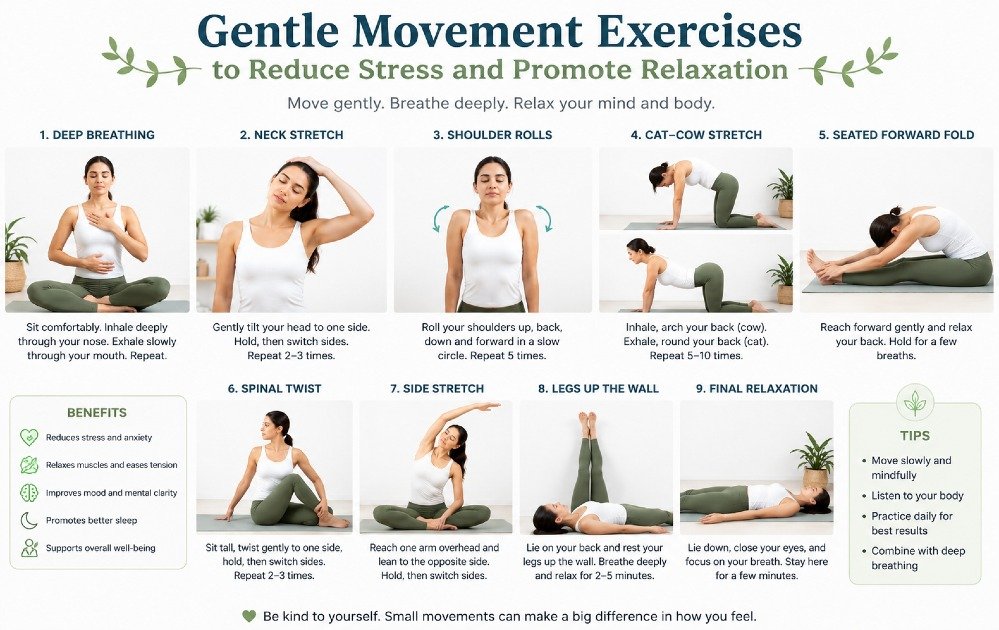
Movement reduces stress, boosts mood and energy, and clears your mind through simple activities like walking, stretching, or yoga that support overall well-being.
Why it matters:
Stress builds up in your body, but movement helps release stored tension and restore balance.
What works for me:
A 15-minute outdoor walk can reset my mindset and ease stress after a demanding day.
How to start:
- Walking
- Yoga
- Stretching
- Dancing
- Cycling
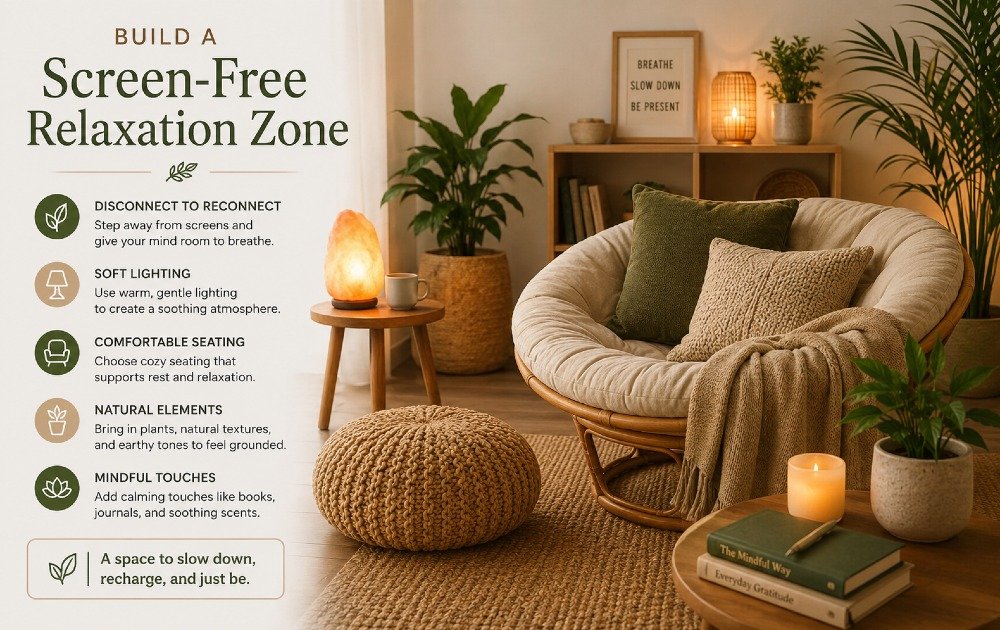
5. Build a Screen-Free Relaxation Zone
Gratitude shifts your focus from stress to positivity, strengthening emotional resilience, improving mindset, and building a lasting habit for balance and well-being.
Why it matters:
Digital overload fuels mental fatigue and makes true relaxation harder to achieve.
What works for me:
Creating a technology-free room instantly restores calm and reduces digital distractions.
How to start:
- Set device-free hours.
- Keep phones away during meals.
- Create a reading corner.
- Use paper journals instead of digital notes.
- Spend time outdoors daily.
6. Practice Gratitude Every Day
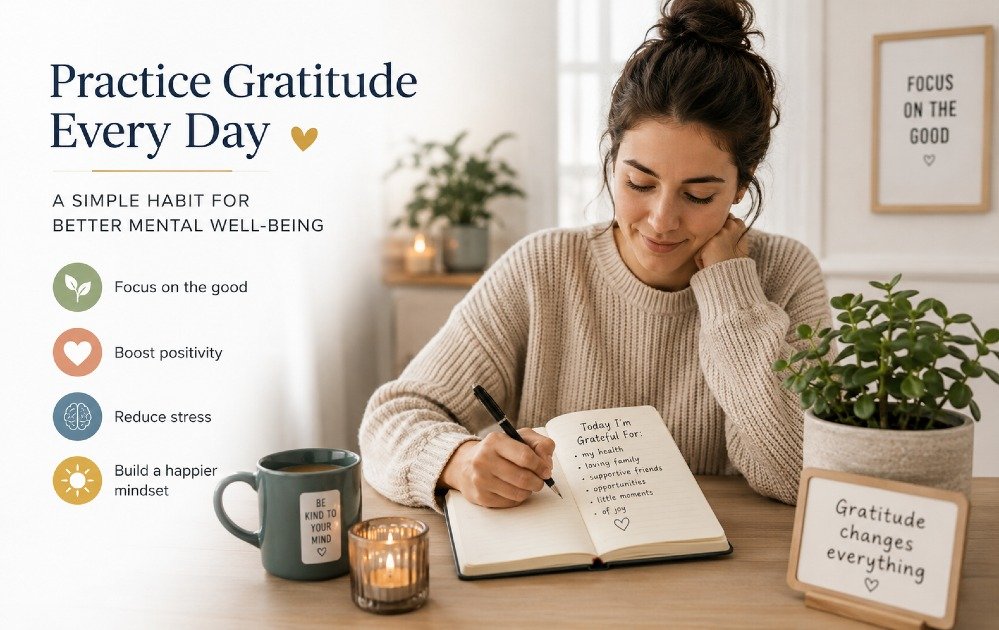
Relaxing sounds like music and nature tones can ease stress, clear the mind, improve focus, and support relaxation during breaks, meditation, or bedtime.
Why it matters:
Stress can trap your focus on problems, but gratitude redirects your attention toward progress and positive experiences.
What works for me:
Writing down three good things each evening helps you end the day with a more positive, balanced perspective.
How to start:
- Keep a gratitude journal.
- Write three positive moments daily.
- Share appreciation with loved ones.
- Celebrate small wins.
- Reflect on personal growth.
7. Use Relaxing Music and Nature Sounds
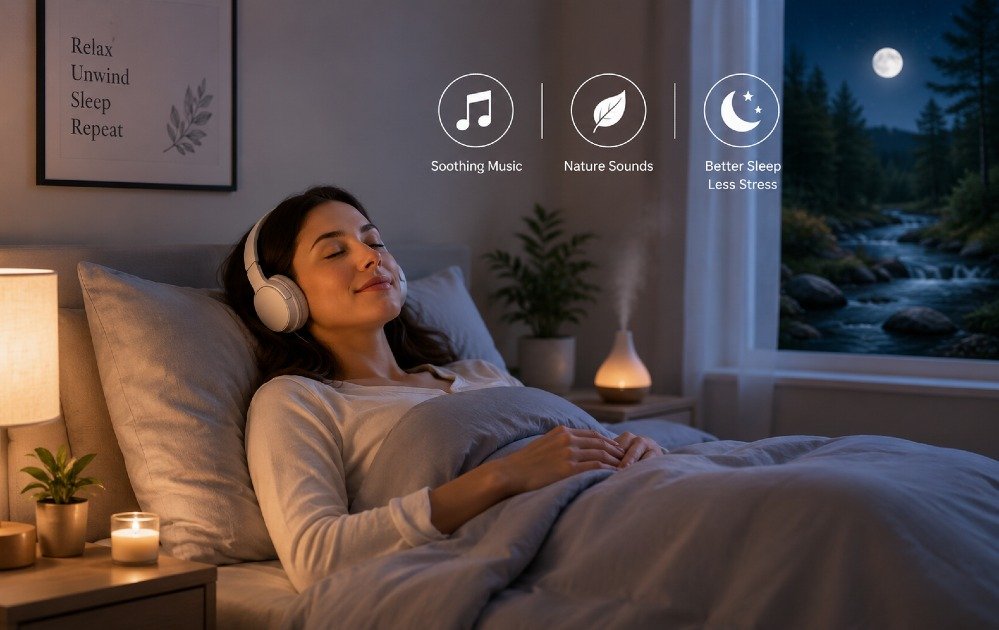
Relaxing sounds like music and natural tones can calm stress, clear the mind, boost focus, and support relaxation during work breaks, meditation, or bedtime.
Why it matters:
Sound shapes your mood, and the right audio environment can ease mental tension.
What works for me:
Nature sounds create a calming environment that supports focus during breaks and relaxation at bedtime.
How to start:
- Listen to rain sounds
- Ocean waves
- Instrumental music
- Forest sounds
- Meditation playlists
8. Learn to Protect Your Energy With Boundaries

Set healthy boundaries to protect your energy, reduce stress, and focus on what truly matters without feeling overwhelmed.
Why it matters:
A relaxation routine works best when paired with healthy boundaries that prevent daily stress from overwhelming your mental well-being.
What works for me:
Learning to say “not right now” has been one of the most effective stress-management tools I’ve adopted.
How to start:
- Limit unnecessary commitments.
- Schedule personal time.
- Reduce multitasking.
- Set realistic expectations.
- Communicate clearly.
9. Make Relaxation a Non-Negotiable Daily Habit
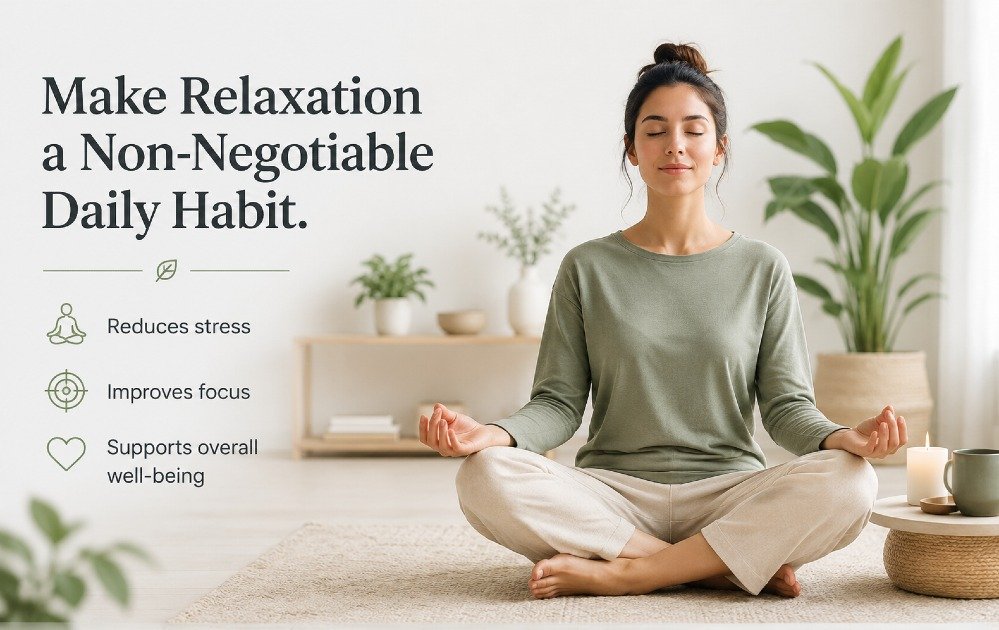
Make daily relaxation a priority—not an occasional escape—to reduce stress buildup, strengthen focus, improve mood, and support long-term well-being.
Why it matters:
Treating relaxation as optional is a common mistake—consistent practice is the key to lasting results.
What works for me:
Pair relaxation with daily routines to build effortless, lasting consistency.
How to start:
- Attach relaxation to morning coffee.
- Practice breathing after lunch.
- Stretch before bed.
- Use reminders.
- Track your progress.
Simple Daily Relaxation Routine
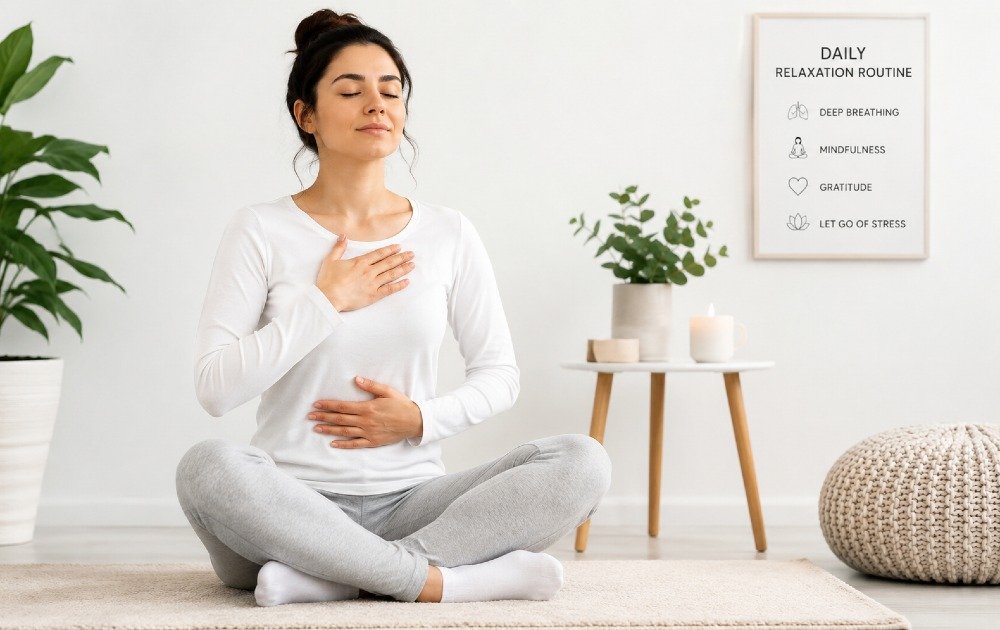
A simple relaxation routine with deep breathing, movement breaks, and calming evening habits can lower stress, improve focus, and support a healthier, more balanced lifestyle.
Follow this schedule:
Morning (10 minutes):
- Deep breathing (3 minutes)
- Gratitude practice (3 minutes)
- Gentle stretching (4 minutes)
Afternoon (5 minutes):
- Short walk
- Screen break
Evening (15 minutes):
- Light stretching
- Reading
- Reflection journal
Total time: 30 minutes or less
Simple Self-Care Routine To Restore Your Energy
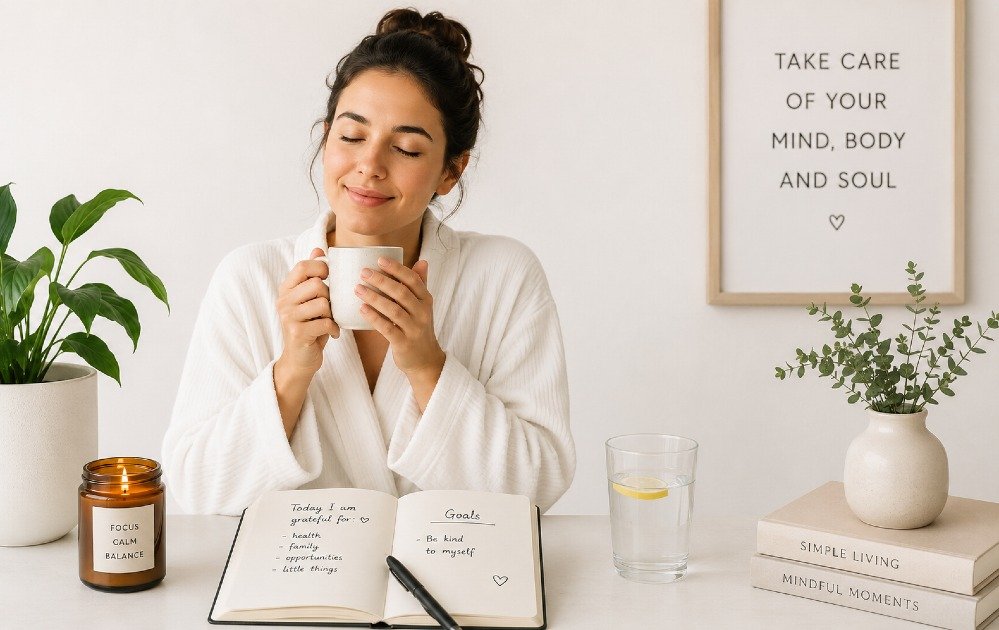
Self-care is often neglected until burnout strikes, but a simple, consistent routine can prevent exhaustion, improve emotional balance, and protect your well-being.
Focus on small daily habits:
- Drink water before caffeine
- Take short breaks during work
- Spend time outdoors
- Practice brief gratitude at night
- Set clear personal boundaries
- Make time for activities you enjoy
These habits reduce mental fatigue, stabilize emotions, and help you manage stress with greater resilience and sustained energy.
Daily Routine That Keep Stress Under Control
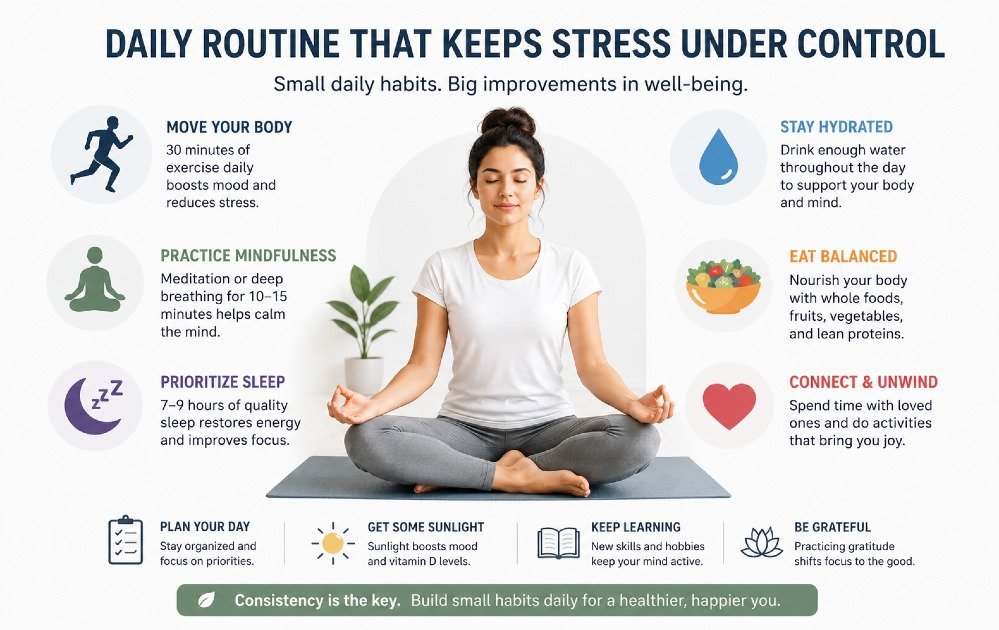
Ignoring stress until it disrupts sleep, focus, or health can make it harder to control—building a consistent stress management routine helps prevent it from escalating.
Core habits that work:
- Start the day with deep breathing
- Take movement breaks during work
- Protect sleep as a priority
- Reduce unnecessary stress triggers
- Practice 5–10 minutes of mindfulness
- Write down thoughts to clear mental clutter
Stay calm under pressure, recover faster from stress, and turn overwhelming moments into manageable challenges.
Calming Evening Routine to Reset Your Mind Before Sleep
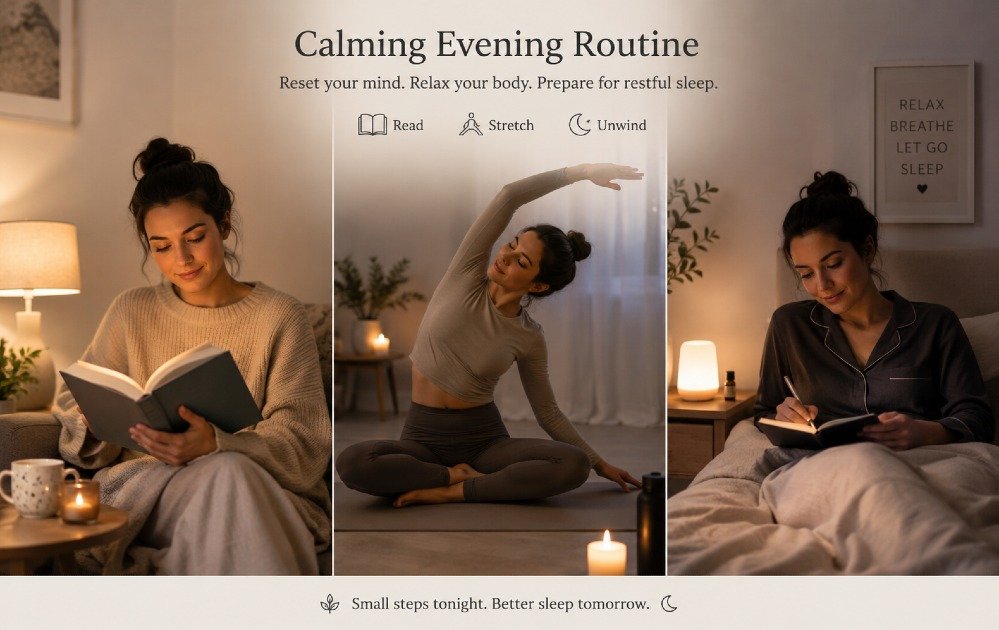
End your day with a calming routine that replaces constant stimulation from screens and work, helping your brain slow down and signaling your body it’s time to rest.
Effective habits include:
- Stop screen use 1 hour before bed
- Dim lights after dinner
- Read instead of scrolling
- Stretch lightly to release tension
- Use calming sounds or music
- Write tomorrow’s priorities
Your mind naturally slows for deeper sleep, helping you wake up focused, refreshed, and less stressed.
Simple Relaxation Habits That Improve Sleep
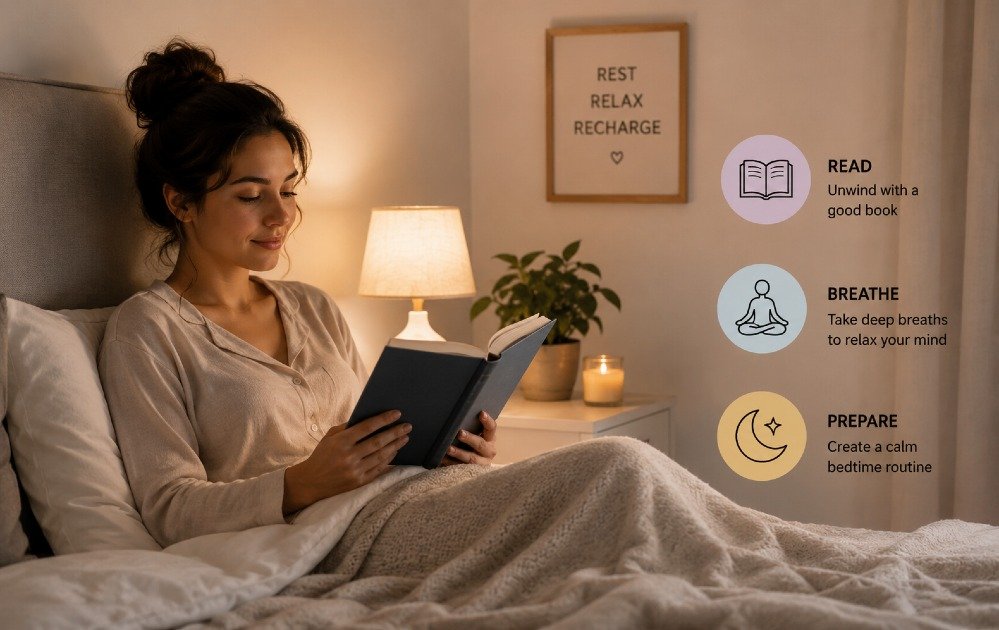
Sleep problems often stem from an overstimulated mind, but relaxation techniques can calm the nervous system and prepare your body for deeper rest.
Use these habits:
- Deep breathing for 5 minutes
- Gentle stretching before bed
- Keep the room cool and dark
- Avoid caffeine late in the day
- Maintain a consistent sleep schedule
- End the day with gratitude journaling
Relaxation promotes deeper sleep, which boosts focus, mood, and stress resilience the next day.
Frequently Asked Questions
What is a relaxation routine and why does it matter?
A daily relaxation routine calms the nervous system, reduces stress, and prevents mental overload by improving focus, sleep, mood, and overall well-being.
How long should a daily relaxation routine be?
Consistent 10–30 minute daily practices deliver better results than occasional longer sessions.
When is the best time to practice a relaxation routine?
The best time to practice depends on your routine—morning sessions promote calm, evening sessions support deeper rest, and daily pauses maintain focus and awareness.
Can a relaxation routine really reduce stress levels?
Ongoing relaxation routines create a calmer physiological state, reduce emotional overreaction to stress, and improve your ability to handle challenges without feeling overwhelmed.
What should I include in a simple relaxation routine?
Practice simple habits like mindful breathing, light movement, less screen time, and quiet reflection to calm your mind and body.
Related Articles
Recap: Relaxation Routine Restores Balance
Relaxation routine reduces stress, improves sleep, and boosts focus through simple daily habits.
Daily relaxation turns small moments into lasting benefits that support long-term health, resilience, and well-being.
Give your mind the reset it deserves as you journey toward a balanced life that starts with a single intentional relaxation.
Ready to Break the Cycle of Constant Stress and Start Feeling Calm Again?
You don’t have to keep living in survival mode every single day feeling overwhelmed.
Discover how this guided sleep and relaxation system can help you unwind faster, ease daily stress, and wake up feeling calm, refreshed, and ready for the day ahead.