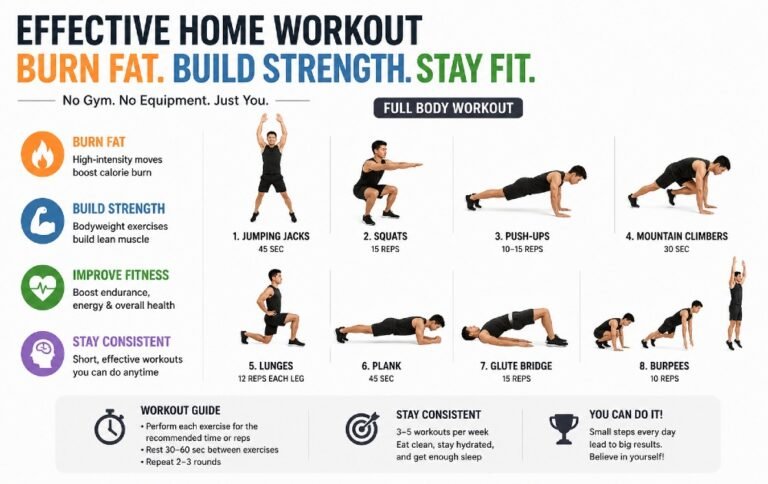

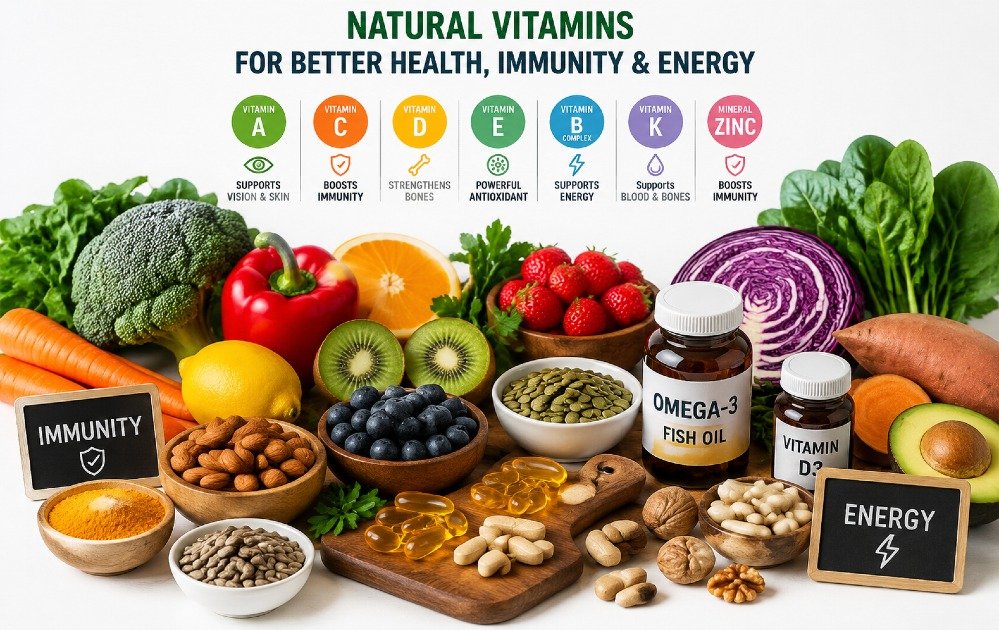
Still struggling to feel energized and resilient despite making healthier choices?
Vitamins power energy, immunity, brain health, and healthy aging—discover how essential nutrients unlock your body’s full potential in our complete Nutrition Guide.
This guide reveals how essential vitamins can naturally boost your energy, strengthen immunity, and support lifelong health.
Why Vitamins Matter for Overall Health?
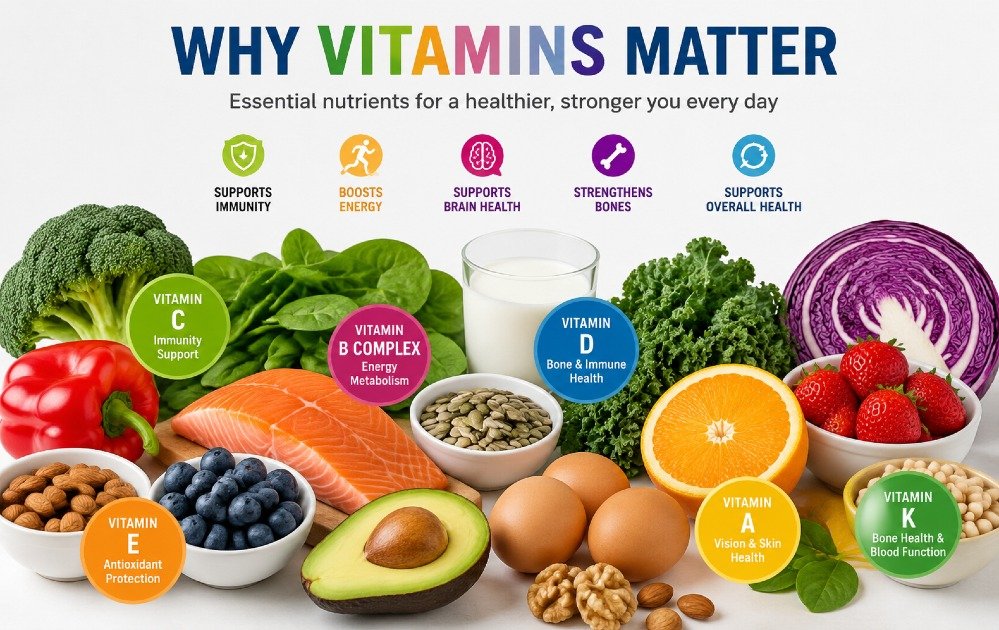
Vitamins are essential organic compounds your body needs in small amounts to power vital processes and support overall health.
NIH highlights that getting enough vitamins from a balanced diet is essential because your body cannot function optimally without them.
What works for me:
Vitamins support energy, immunity, brain function, and essential processes that help me feel and perform my best.
How to start:
- Eat a variety of colorful fruits and vegetables.
- Include whole grains, lean proteins, and healthy fats.
- Limit highly processed foods.
- Stay hydrated.
- Schedule regular health checkups if you suspect deficiencies.
10 Ways Vitamins Supports Body Functions, Energy, and Performance
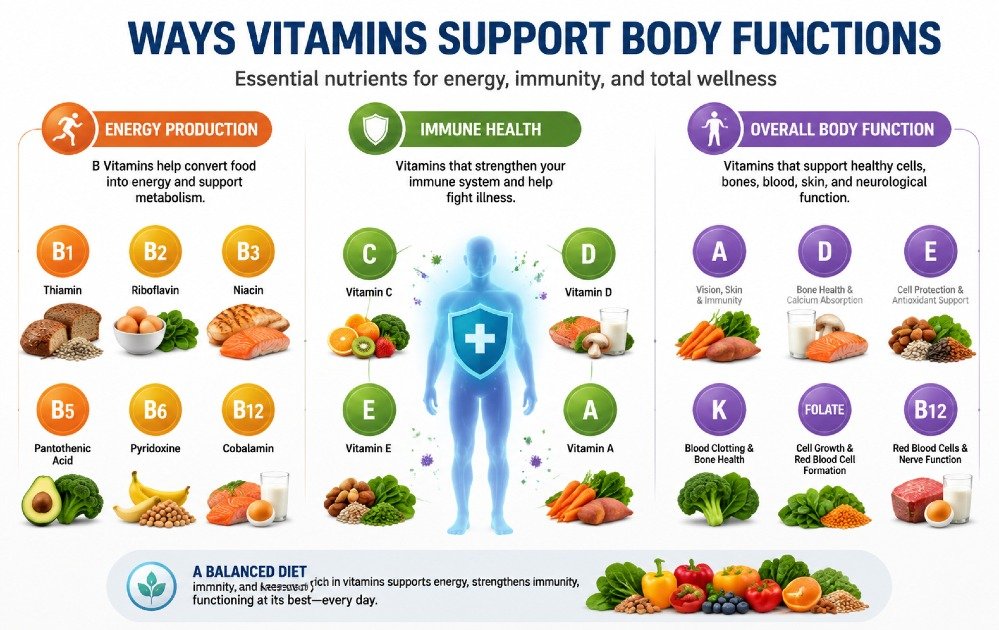
Still struggling with low energy, poor focus, or reduced performance despite making healthier choices?
Vitamins support vital body functions, but nutrient gaps are common.
Discover ten powerful ways vitamins support energy, optimize body functions, and help you feel your best naturally.
1. Strengthen Your Immune System
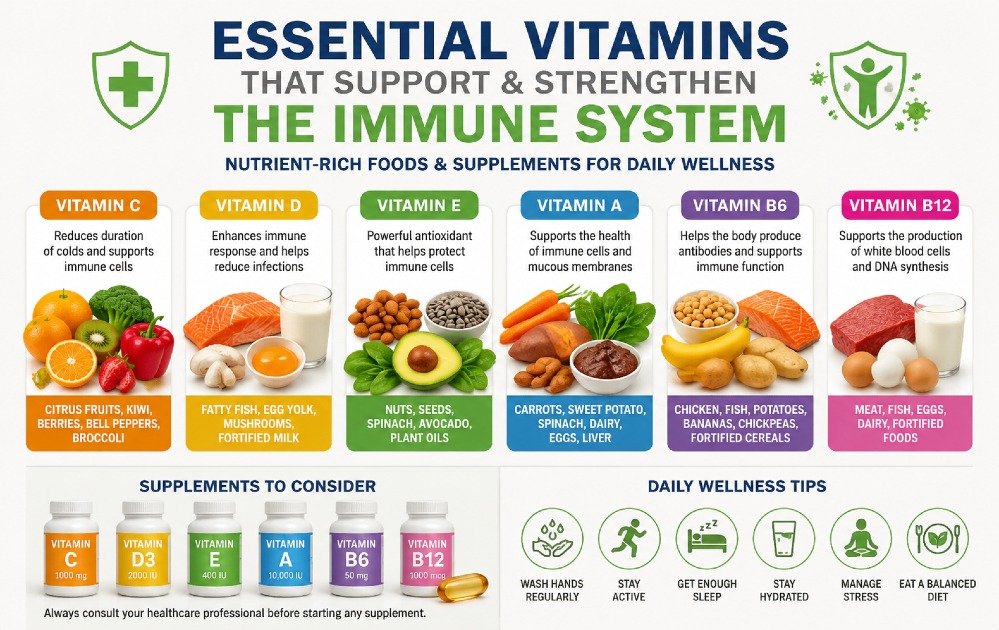
Vitamins A, C, and D strengthen immune defenses, helping your body fight infections and recover faster.
Why it matters:
Support your immune system with essential nutrients that help immune cells function effectively and defend against threats.
What works for me:
I strengthen my immune defenses with citrus fruits and leafy greens to help my body fight illness and stay resilient.
How to start:
- Eat oranges, strawberries, and kiwi.
- Add spinach and kale to meals.
- Spend time outdoors for natural vitamin D.
- Include fatty fish regularly.
- Consider testing vitamin D levels if advised by your healthcare provider.
2. Help Boost Energy Production
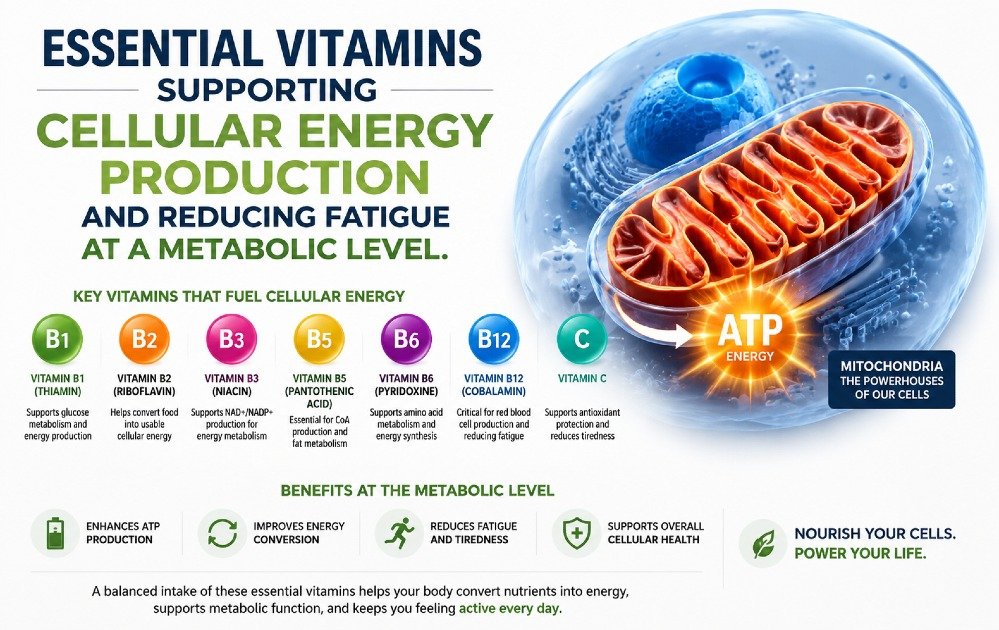
Feeling constantly fatigued can drain daily life, but getting enough essential nutrients—especially B vitamins—helps your body convert food into energy and sustain steady vitality.
Why it matters:
Several essential nutrients help turn food into usable energy, while low levels can leave your body struggling to produce energy efficiently.
What works for me:
I get a natural energy boost eating nutrient-rich meals that help my body convert food into usable energy.
How to start:
- Include eggs and lean meats.
- Eat whole grains.
- Consume legumes regularly.
- Add leafy greens to meals.
- Avoid skipping breakfast.
3. Support Heart Health
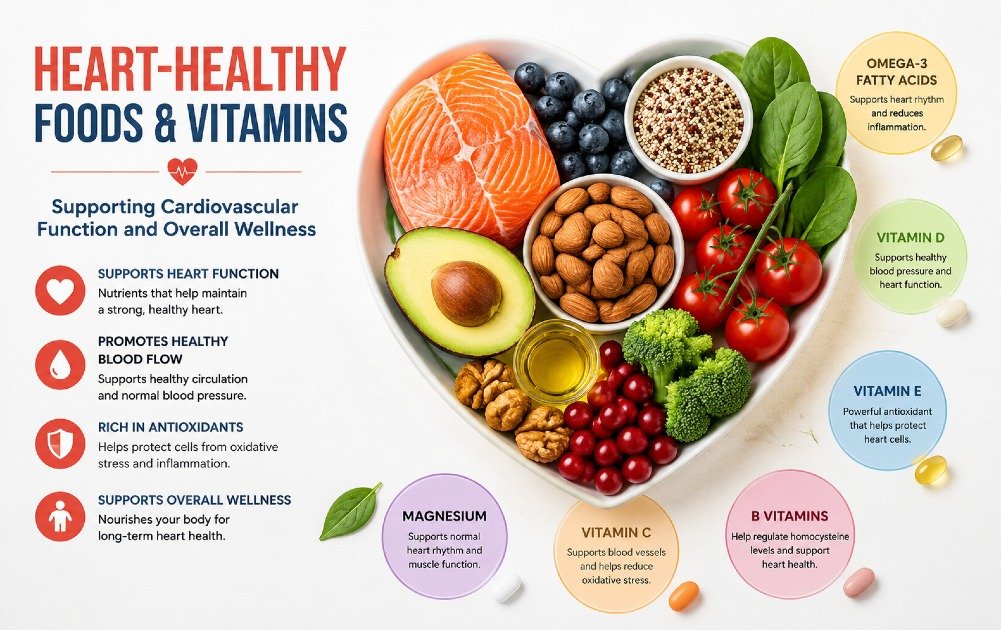
Support your heart health with vitamins B6, B12, and D, balanced nutrition, and an active lifestyle to promote healthy circulation and long-term cardiovascular wellness.
Why it matters:
Certain nutrients support healthy blood vessels, circulation, and heart function.
What works for me:
I support heart health with a balanced diet that provides essential nutrients for healthy cardiovascular function and overall wellness.
How to start:
- Eat leafy vegetables frequently.
- Choose fatty fish rich in nutrients.
- Reduce processed food intake.
- Include nuts and seeds.
- Maintain regular physical activity.
4. Promote Healthy Skin
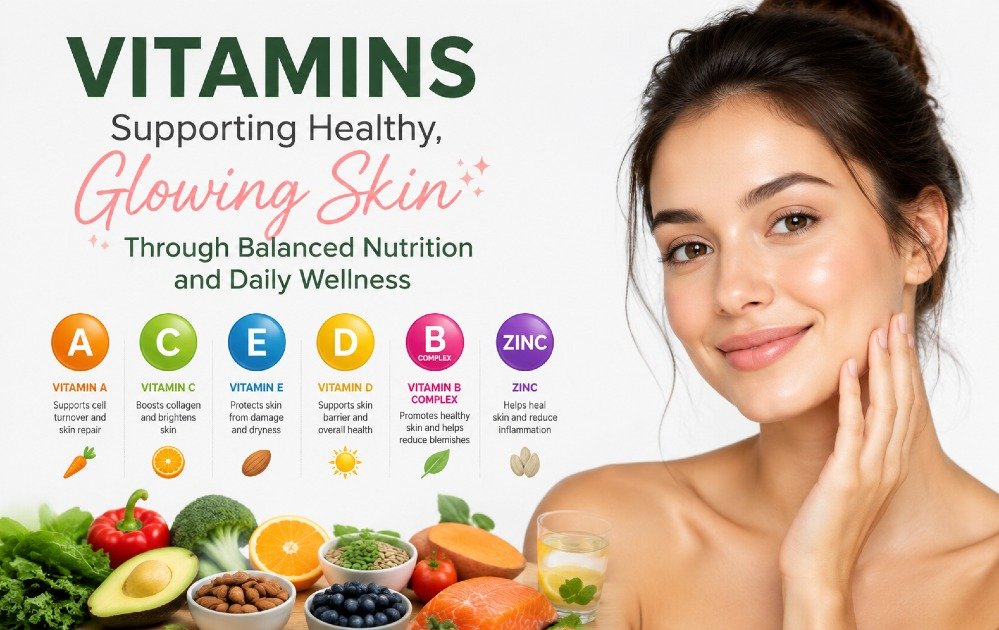
Healthy skin starts with proper nutrition that supports repair, collagen production, protection, strength, and a healthy appearance from the inside out.
Why it matters:
Skin continually renews itself, relying on key nutrients for repair and protection.
What works for me:
I support healthy skin by maintaining its strength, hydration, and natural glow.
How to start:
- Eat bell peppers and berries.
- Include carrots and sweet potatoes.
- Add avocado to meals.
- Stay hydrated.
- Protect skin from excessive sun exposure.
5. Support Strong Bones and Teeth
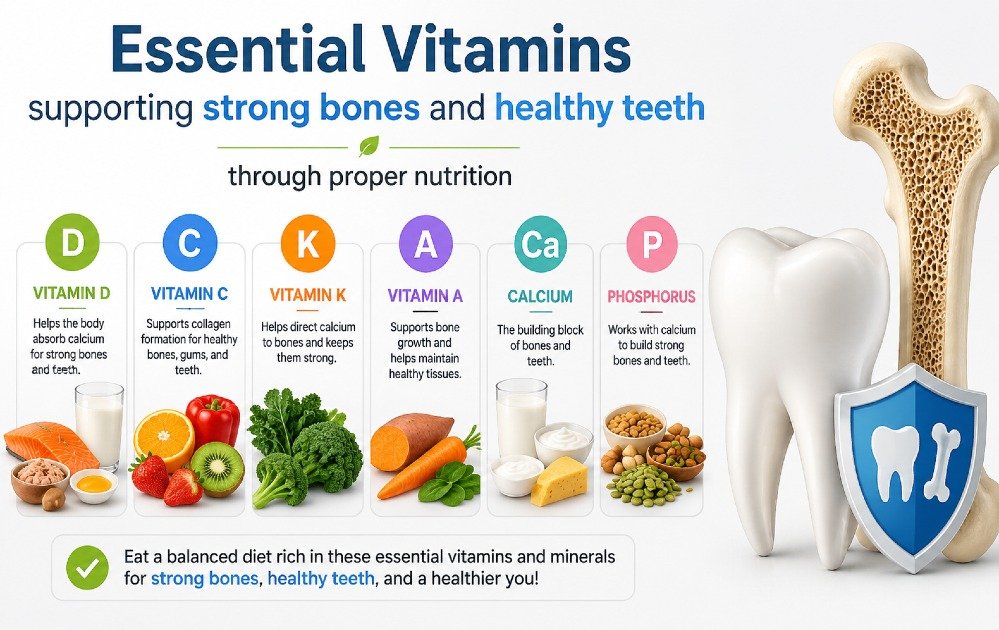
As you age, supporting strong bones and teeth with key nutrients helps maintain bone density, mobility, strength, and long-term skeletal health.
Why it matters:
Strong bones help prevent fractures and preserve lifelong mobility.
What works for me:
I depend on key nutrients to maintain strong bones, protect healthy teeth, and sustain my strength.
How to start:
- Consume dairy or fortified alternatives.
- Spend time outdoors.
- Include leafy greens.
- Walk regularly.
- Perform strength-training exercises.
6. Enhance Brain Function
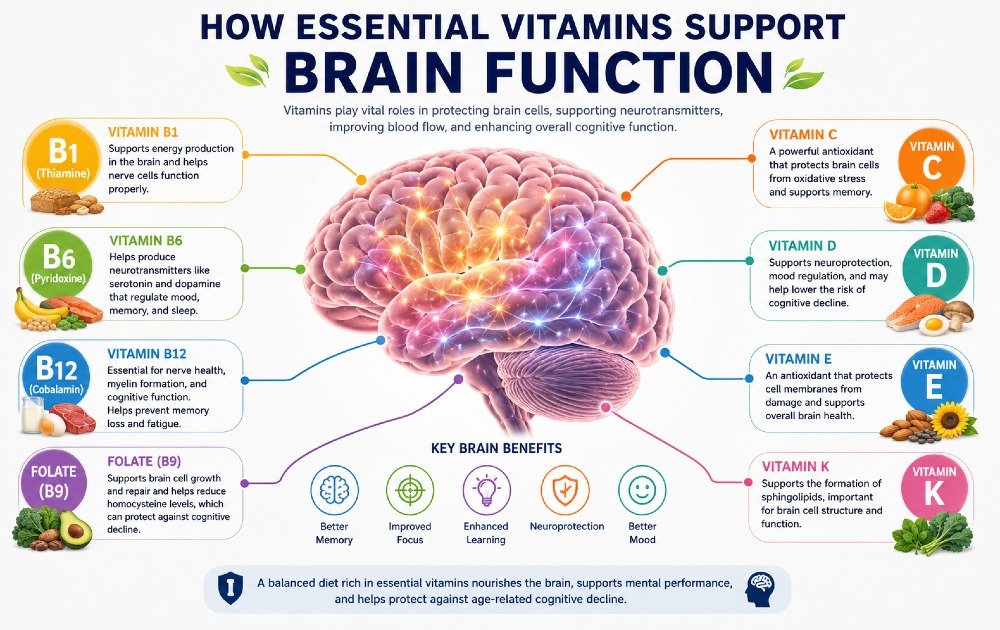
Your brain needs consistent nutrients to support memory, focus, nerve health, mental performance, and protection from oxidative stress.
Why it matters:
Proper nutrient intake supports memory, focus, learning, and mood.
What works for me:
I rely on essential nutrients to keep my brain focused, alert, and sharp all day.
How to start:
- Eat fish rich in omega-3 fatty acids.
- Include whole grains.
- Add nuts and seeds.
- Consume berries regularly.
- Prioritize quality sleep.
7. Protect Eye Health
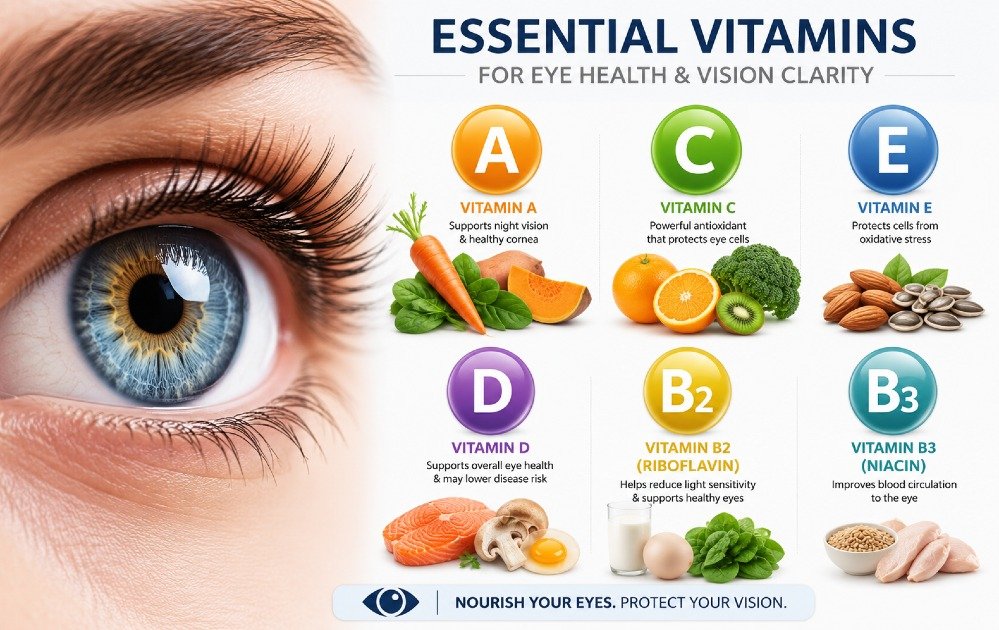
Protecting your vision starts with nutrient-rich foods that support healthy eyesight, protect eye tissues, and promote long-term eye health—especially as you age.
Why it matters:
Support healthy eyesight while helping protect delicate eye tissues.
What works for me:
Essential nutrients protect my eye health and support clear vision.
How to start:
- Eat carrots.
- Include sweet potatoes.
- Add spinach and kale.
- Consume eggs.
- Schedule routine eye exams.
8. Support Healthy Aging
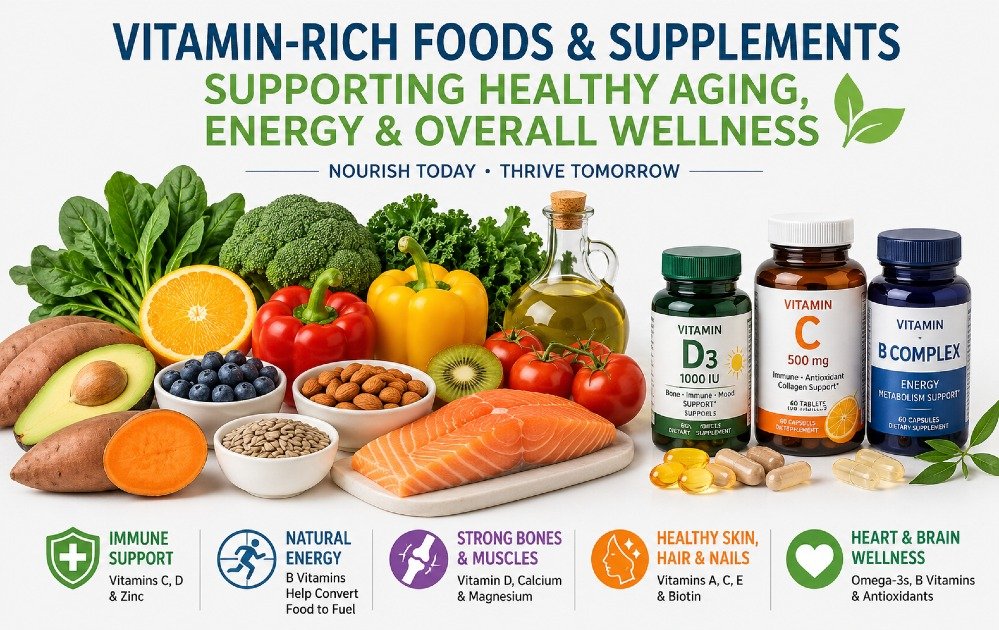
Aging well starts with strong nutrition that supports bones, brain function, immunity, strength, mobility, and cellular health—helping protect independence and overall well-being.
Why it matters:
Nutrients support strength, mobility, and a better quality of life.
What works for me:
I support healthy aging by fueling my body for energy, strength, and overall well-being.
How to start:
- Eat a rainbow of fruits and vegetables.
- Stay physically active.
- Manage stress.
- Get adequate sleep.
- Maintain healthy social connections.
9. Reduce Nutritional Gaps
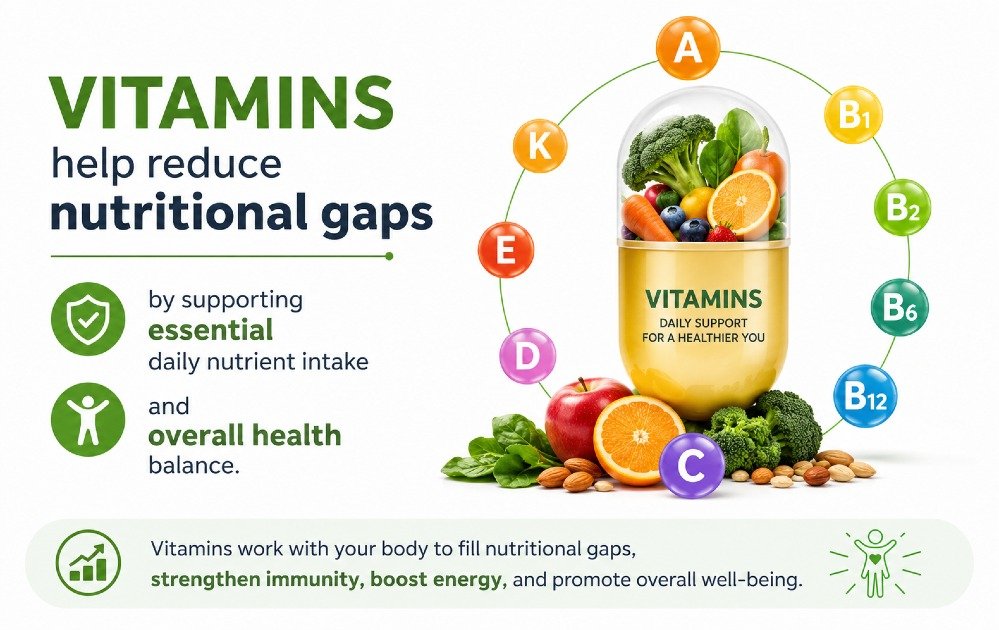
Even healthy eaters can miss key nutrients due to busy lifestyles, restrictive diets, or food preferences, making a balanced diet essential for preventing nutritional gaps and supporting overall health.
Why it matters:
Busy schedules and food choices can make it hard to get all the nutrients you need.
What works for me:
I use supplements to fill nutritional gaps and support overall health when my diet falls short.
How to start:
- Meal prep weekly.
- Choose whole foods first.
- Read nutrition labels.
- Diversify food choices.
- Discuss supplementation with a healthcare professional when needed.
10. Support Overall Wellness and Longevity
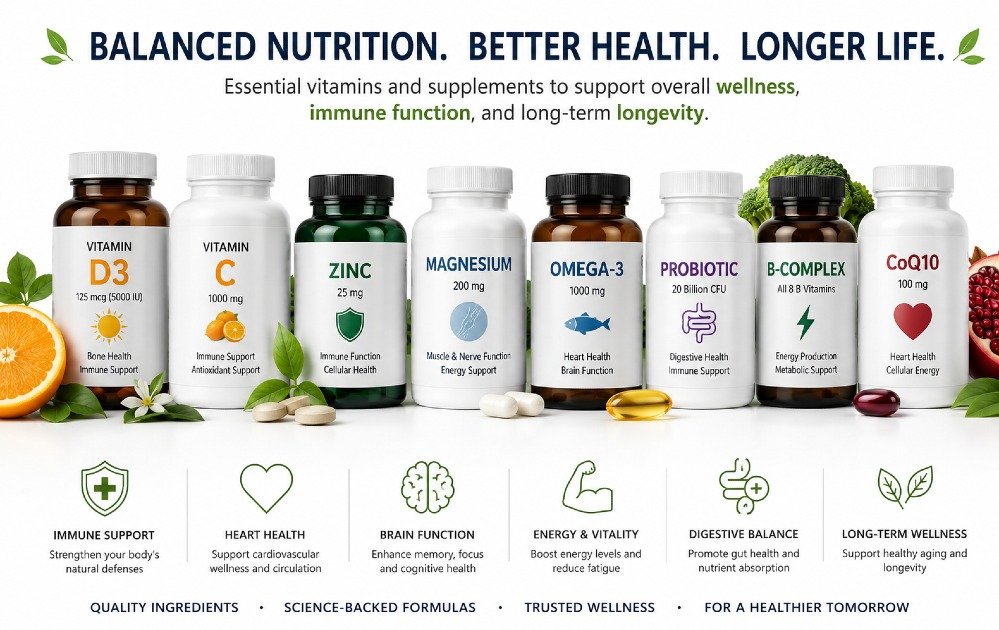
Good nutrition supports energy, immunity, brain and bone health, cellular function, recovery, and long-term wellness.
Why it matters:
Strong health depends on every body system working together effectively.
What works for me:
I support long-term wellness by fueling my body with essential nutrients for energy, healthy function, and resilience.
How to start:
- Focus on long-term habits.
- Eat balanced meals.
- Stay active.
- Manage stress.
- Prioritize preventative healthcare.
Vitamin Deficiencies
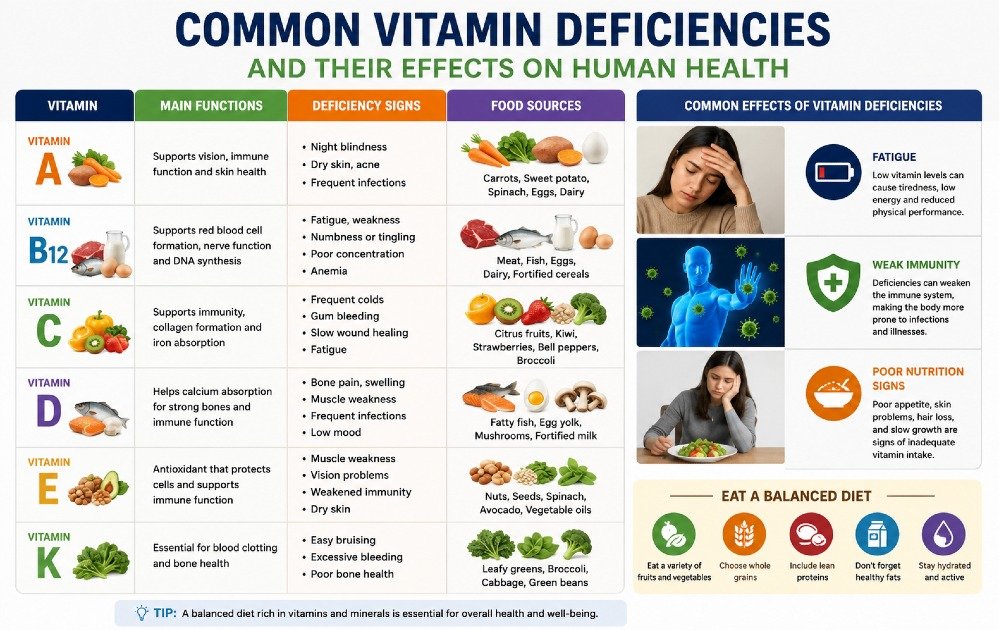
Deficiencies can develop unnoticed, making a balanced, nutrient-dense diet your best defense.
Common warning signs include:
- Ongoing fatigue
- Frequent infections
- Muscle weakness
- Poor wound healing
- Dry skin
- Mood changes
- Difficulty focusing
Focus on:
- Fruits and vegetables
- Whole grains
- Lean proteins
- Fatty fish
- Nuts and seeds
- Dairy or fortified alternatives
Additional steps include:
- Eating a variety of foods.
- Limiting highly processed foods.
- Maintaining consistent healthy eating habits.
- Seeking medical advice if symptoms persist.
Should You Take Vitamin Supplements?
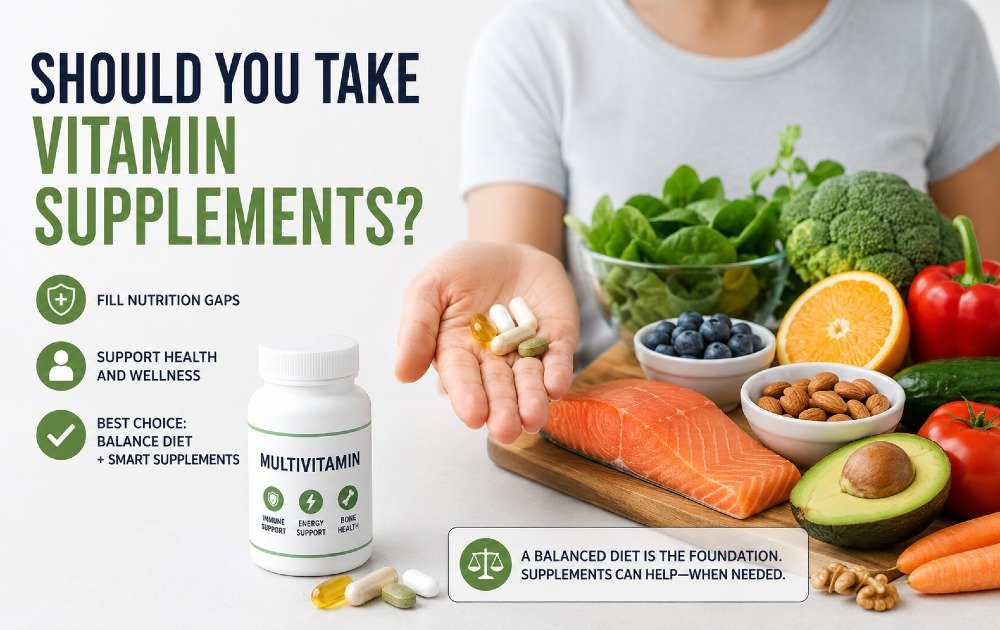
Even a healthy diet can leave nutrient gaps, making targeted supplements useful when needed—but they should complement, not replace, nutritious food.
Common signs of low vitamin intake include:
- Low energy
- Frequent illness
- Poor concentration
- Slow recovery
- Weak hair, skin, or nails
Before taking supplements:
- Review your current diet.
- Consult a healthcare professional.
- Test for deficiencies if recommended.
- Choose reputable, high-quality products.
- Follow recommended dosages.
Best Food Sources of Vitamins
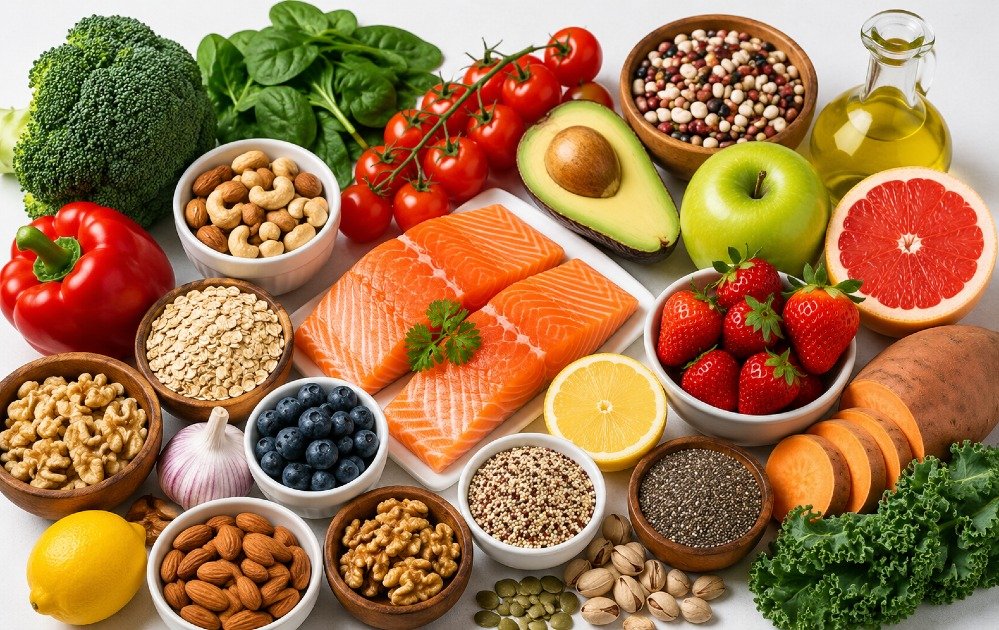
Choose colorful whole foods like fruits, vegetables, whole grains, lean proteins, nuts, seeds, and dairy to get essential nutrients naturally and support overall health.
Excellent sources include:
Vitamin A:
- Sweet potatoes
- Carrots
- Spinach
Vitamins B:
- Eggs
- Whole grains
- Lean meats
- Legumes
Vitamin C:
- Oranges
- Strawberries
- Bell peppers
Vitamin D:
- Fatty fish
- Fortified dairy products
- Egg yolks
Vitamin E:
- Almonds
- Sunflower seeds
- Avocados
Essential Vitamins for Healthy Aging
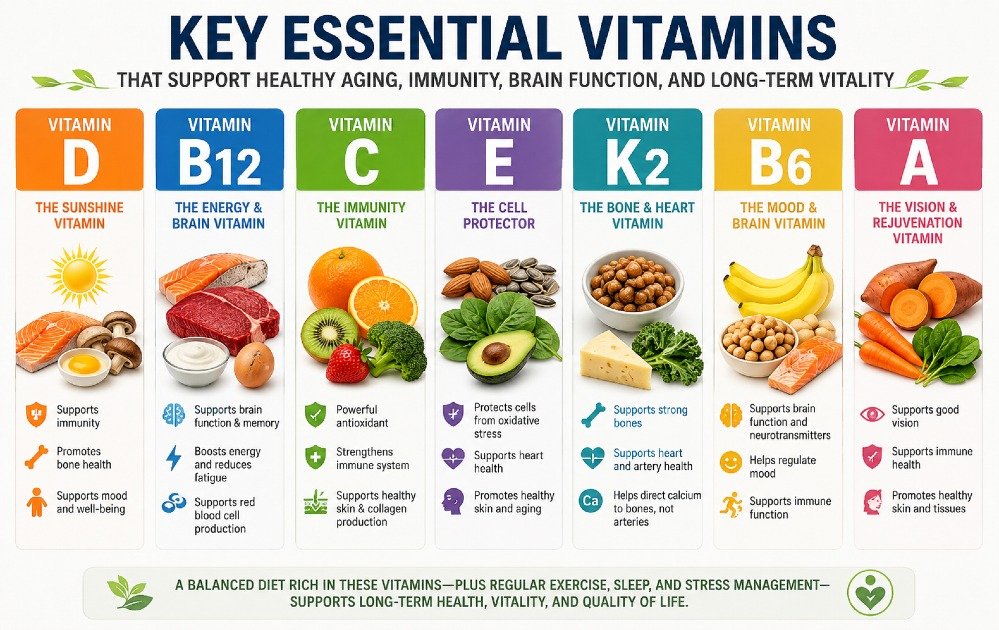
Aging can reduce nutrient absorption while increasing the body’s need for key nutrients.
Without proper nutrition, aging may contribute to:
- Bone loss
- Reduced mobility
- Lower energy
- Slower recovery
- Cognitive decline
Several vitamins play a critical role in healthy aging:
- Vitamin B12 supports nerve function and energy production.
- Vitamin C supports immunity and collagen formation.
- Vitamin D supports bone health and calcium absorption.
- Vitamin E helps protect cells from oxidative stress.
- Vitamin K supports bone and cardiovascular health.
Support these nutrients with:
- Regular exercise
- Strength training
- Adequate hydration
- Quality sleep
- A balanced diet
Essential Vitamins for Overall Wellness
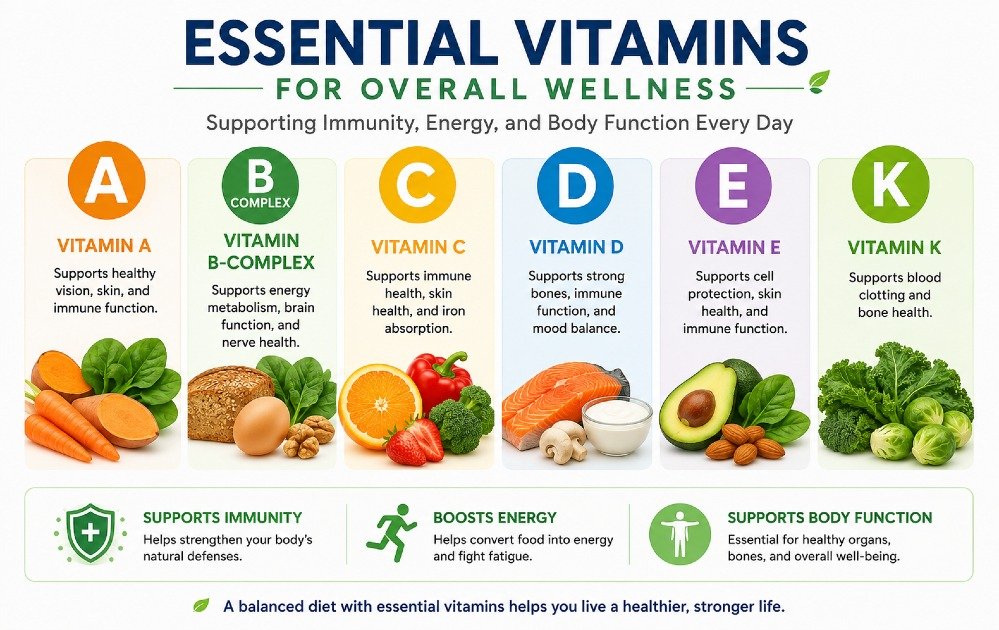
A balanced diet rich in essential nutrients supports energy, immunity, recovery, and whole-body health.
Key vitamins include:
- Vitamin A for vision and immune function
- Vitamins B for energy metabolism
- Vitamin C for immune support
- Vitamin D for bone and muscle health
- Vitamin E for cellular protection
- Vitamin K for bone and blood health
Simple ways to improve vitamin intake:
- Fill half your plate with fruits and vegetables.
- Eat a variety of whole foods.
- Include healthy fats to improve absorption.
- Limit processed foods.
- Build balanced meals consistently.
Frequently Asked Questions
Can I get all the vitamins I need from food?
A balanced diet often provides essential vitamins, but age, dietary limits, or health conditions may make supplements beneficial.
What vitamins are most important for overall health?
Essential vitamins like A, C, D, E, K, and B support immunity, energy, brain function, strong bones, and healthy cell repair for overall wellness.
How can I tell if I have a vitamin deficiency?
Persistent fatigue, frequent illness, poor focus, muscle weakness, dry skin, or slow healing may signal an issue—seek professional evaluation if symptoms persist.
Do I need vitamin supplements?
Supplements can help fill nutrient gaps or deficiencies, but they should support—not replace—a healthy diet.
Which vitamins support energy levels?
B vitamins like B12 and B6, along with vitamin D and key nutrients, support energy production and overall vitality.
Related Articles
Recap: Build Better Health One Vitamin-Rich Choice at a Time
Power your health with essential vitamins that boost energy, immunity, brain function, and lifelong wellness.
Eating colorful fruits, vegetables, whole foods, and building healthy habits—can create lasting improvements in your health over time.
Start today with vitamin-rich choices that help you build a stronger, healthier, and more energized future.
Ready to Take Control of Your Health and Energy?
You don’t need to keep pushing through low energy, recurring fatigue, or the effects of poor nutrition.
Discover how this daily wellness multivitamin can support your energy, fill nutritional gaps, and build a stronger foundation for everyday wellness and complement your healthy lifestyle.