
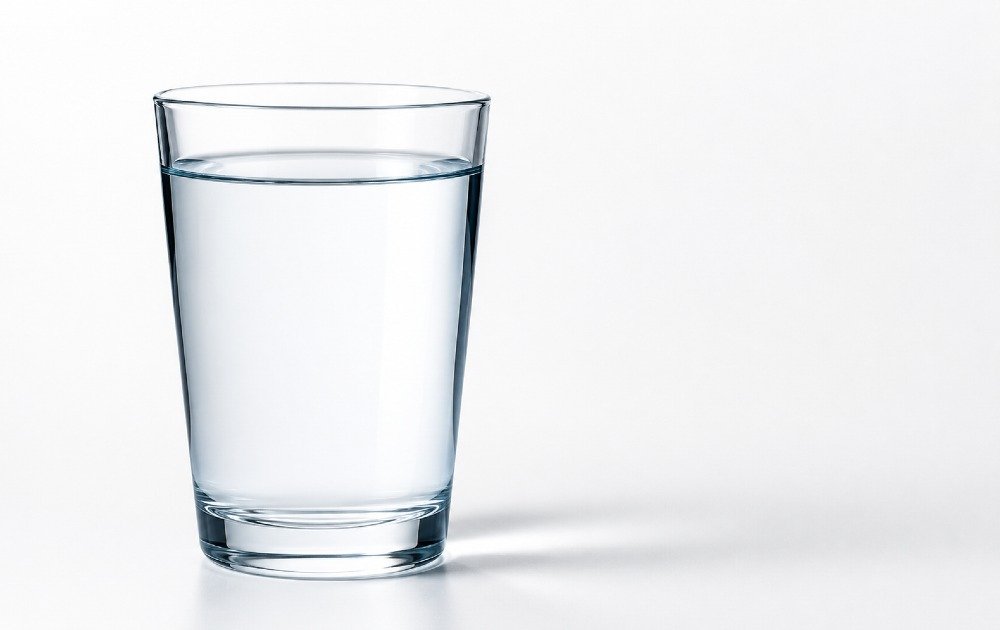
Still feeling drained, foggy, or low on energy despite your healthy habits?
Proper hydration boosts nutrient absorption, digestion, energy, and overall health—explore why it’s a powerful habit for maximizing the benefits of a nutrient-rich lifestyle in our complete Nutrition Guide.
This guide reveals how proper hydration can boost your health and daily performance.
Why Water Is Essential for Overall Health
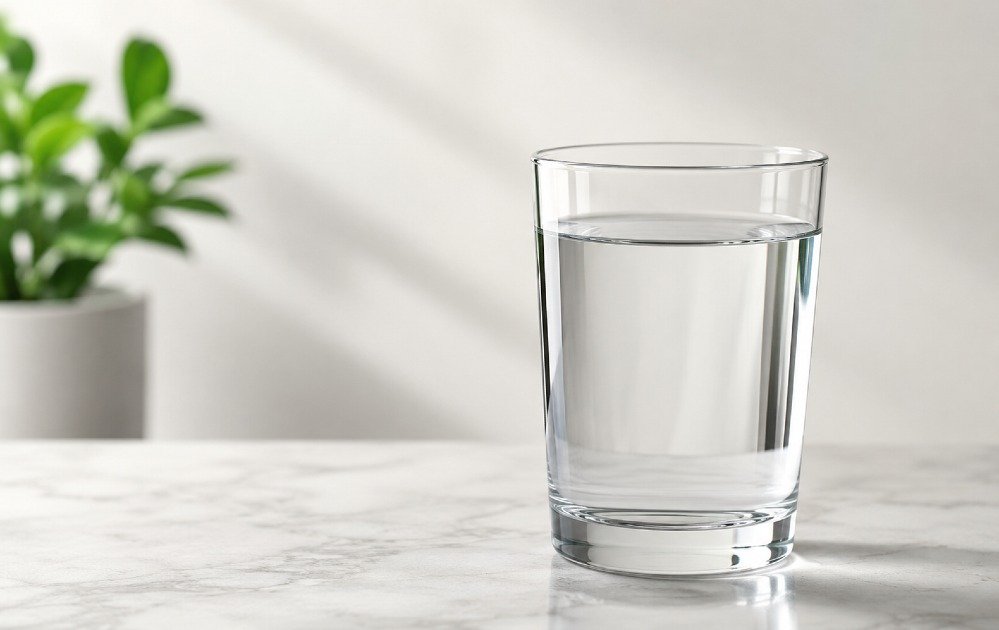
Water supports nutrient transport, waste removal, organ function, energy, focus, and overall health, making consistent hydration essential for keeping the body balanced and working efficiently.
NIH notes that proper hydration supports essential body functions, temperature regulation, and overall health.
Why it matters:
Water makes up about 60% of your body, powering brain function, digestion, circulation, joint health, temperature control, nutrient delivery, waste removal, and daily performance.
What works for me:
I rely on proper hydration to boost energy, sharpen focus, regulate temperature, support digestion, improve physical performance, and keep every cell functioning efficiently.
How to start:
- Drink a glass of water immediately after waking up.
- Carry a reusable water bottle.
- Set hydration reminders on your phone.
- Drink water before each meal.
- Monitor your daily intake.
7 Ways Water Support Body Functions, Energy, and Performance
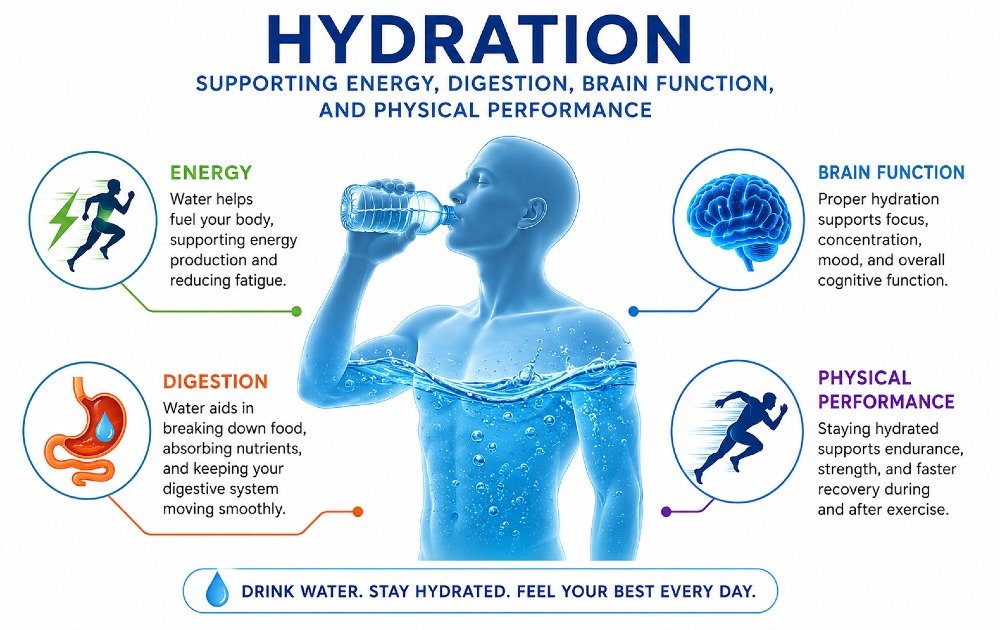
What if your low energy, poor focus, and declining performance are signs that your body needs better hydration?
Water fuels vital body functions like nutrient absorption, digestion, temperature control, and waste removal while improving energy, focus, and daily performance through simple hydration habits.
Discover seven powerful ways water fuels your body and helps you perform at your best.
1. Improves Energy and Reduces Fatigue
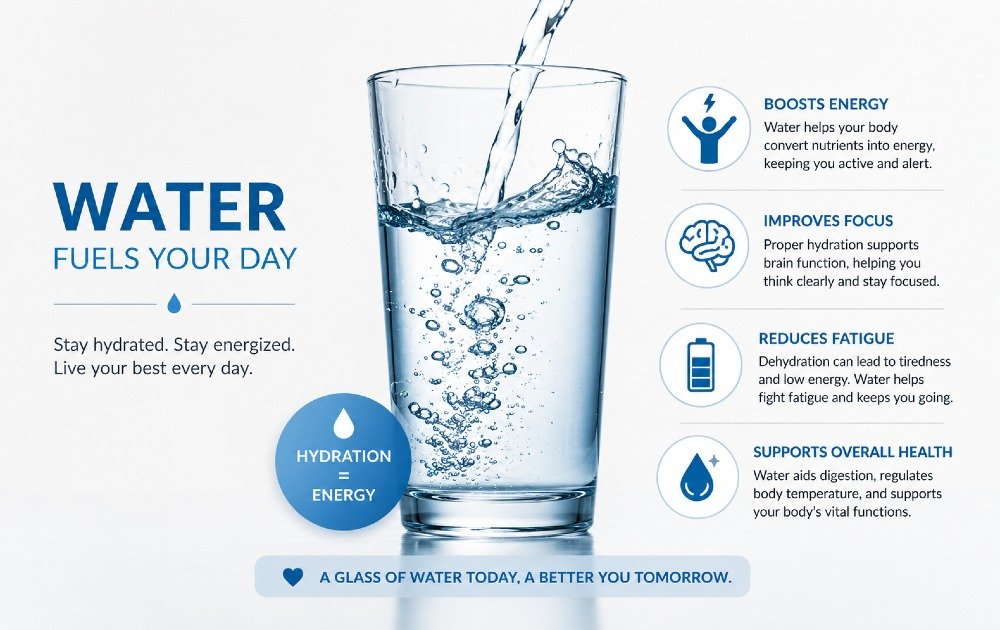
Even mild dehydration can reduce circulation and oxygen delivery, causing fatigue, sluggishness, and lower stamina that can undermine physical and mental performance.
Why it matters:
Feeling sluggish may signal dehydration, as low fluid levels force the heart to work harder, reducing energy and leaving you fatigued.
What works for me:
I feel more energized, alert, and ready to take on my day while reducing tiredness and sluggishness.
How to start:
- Stay hydrated throughout the day.
- Increase intake during hot weather.
- Hydrate before exercise.
- Swap sugary drinks for healthier options.
- Monitor energy levels alongside hydration habits.
2. Supports Brain Function and Mental Clarity
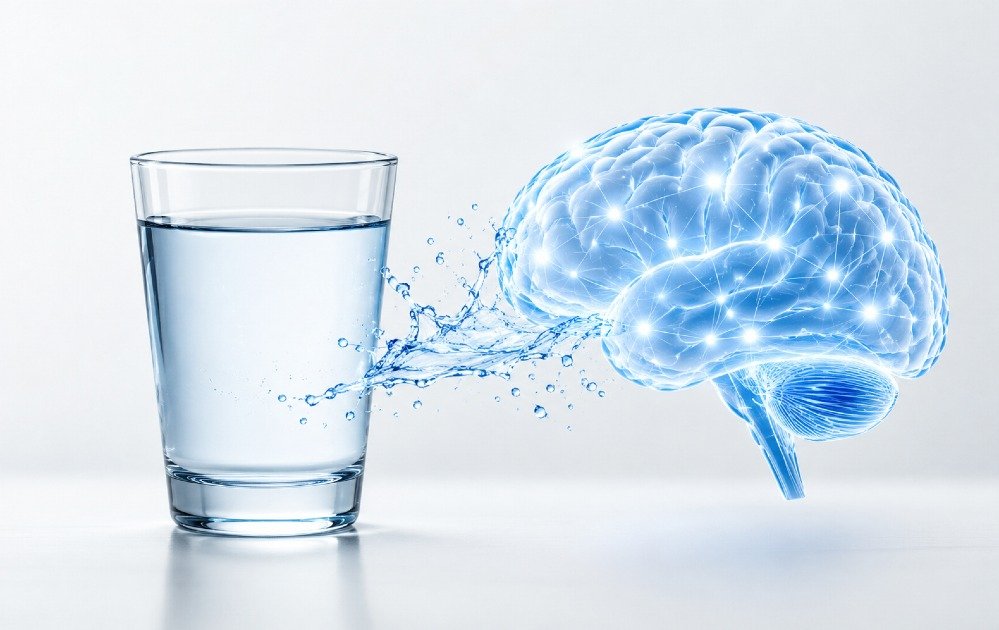
Even mild dehydration can trigger brain fog, slower thinking, poor focus, and memory issues, making adequate fluid intake essential for sharper mental performance.
Why it matters:
Even slight fluid loss may leave you mentally sluggish, less focused, forgetful, irritable, and prone to headaches.
What works for me:
I support my brain function and mental clarity by staying well hydrated.
How to start:
- Keep fluids within reach while working.
- Drink before mentally demanding tasks.
- Take hydration breaks throughout the day.
- Pair fluids intake with routine activities.
- Reduce sugary beverages.
3. Helps Maintain Healthy Digestion
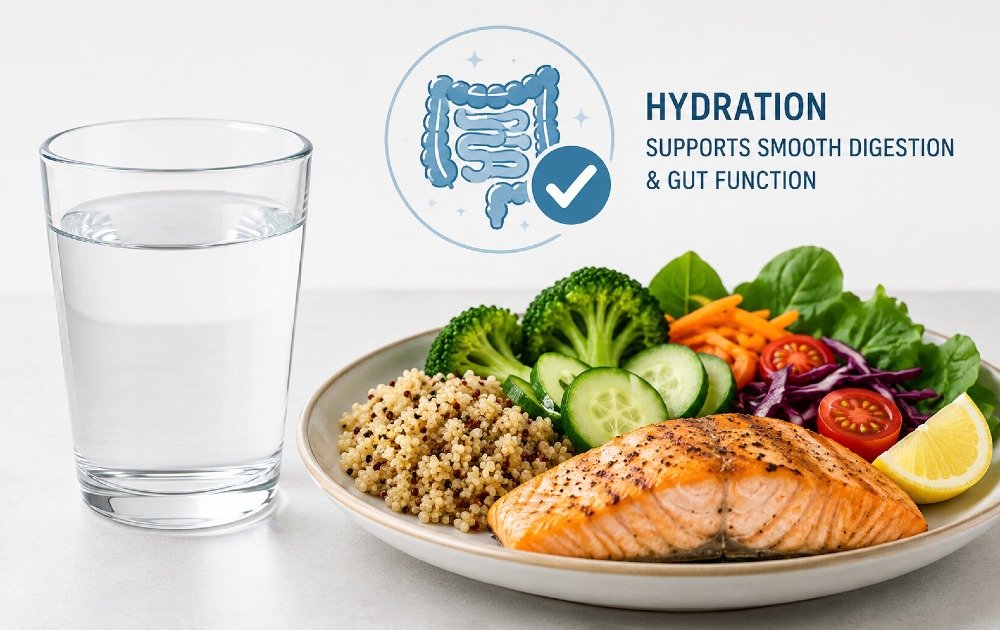
Proper hydration supports smoother digestion, reduces bloating and constipation, and helps your body absorb nutrients more efficiently.
Why it matters:
Staying well-hydrated helps your digestive system process food, absorb nutrients, eliminate waste, and maintain regular bowel movements while reducing digestive discomfort.
What works for me:
I support smooth, efficient digestion by staying properly hydrated.
How to start:
- Drink water throughout the day rather than all at once.
- Include water-rich foods in your meals.
- Increase intake when consuming more fiber.
- Start meals with a glass of water.
- Monitor digestive improvements.
4. Supports Weight Management
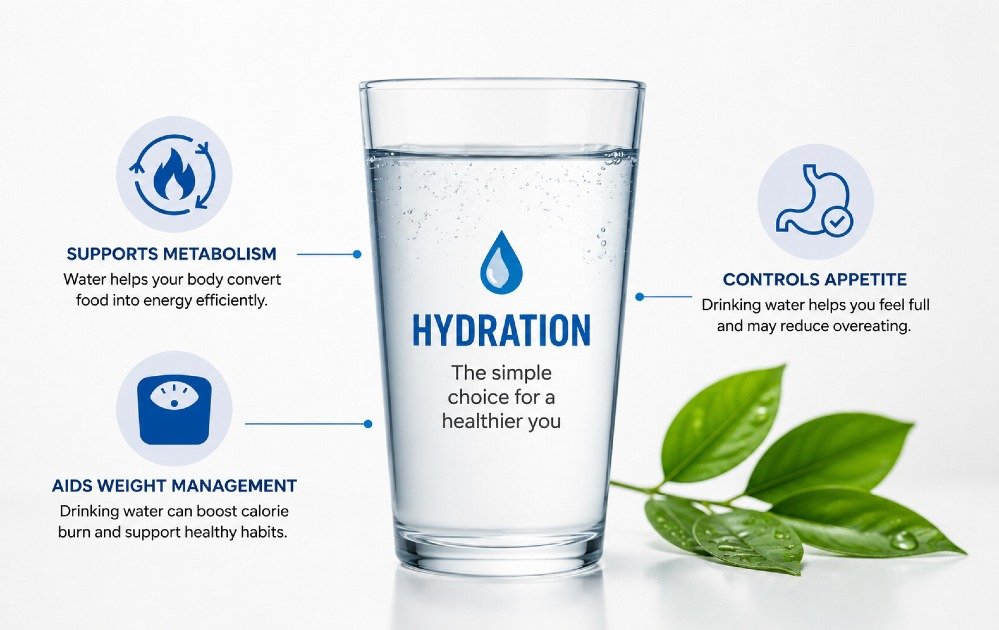
Staying hydrated can curb unnecessary eating, reduce calorie intake, replace sugary drinks, and support metabolism for healthier eating habits.
Why it matters:
Thirst can mimic hunger, so staying hydrated may curb unnecessary eating, promote fullness, and support healthy weight management.
What works for me:
I support my weight goals by staying hydrated to feel fuller, digest food well, and maintain steady energy.
How to start:
- Drink water before meals.
- Replace soda with water.
- Use a refillable bottle.
- Add fruit slices for flavor.
- Track hydration habits.
5. Promotes Healthy Skin
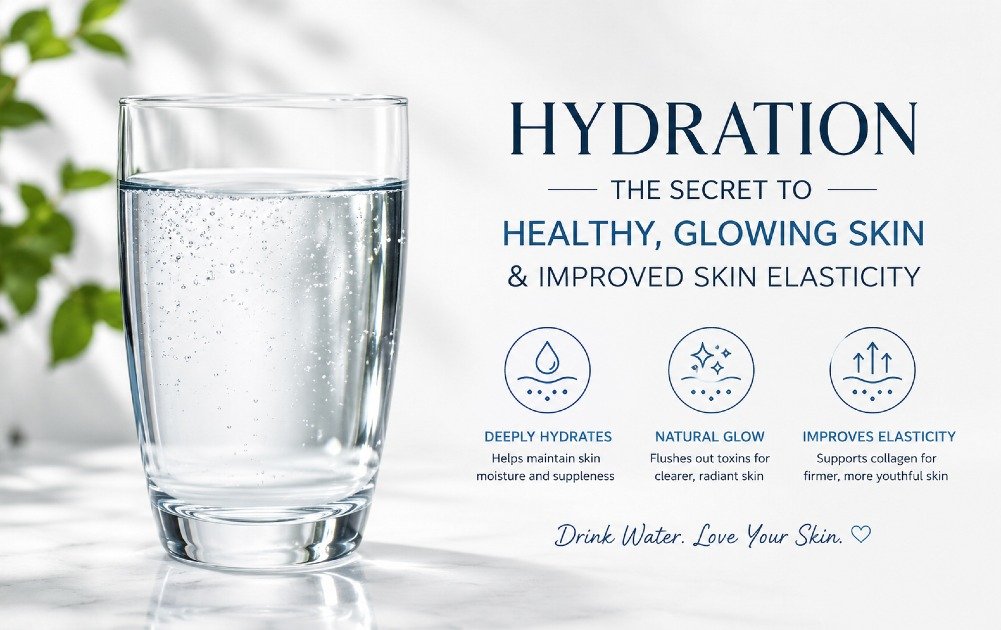
Proper hydration helps keep skin moisturized, smooth, elastic, and healthy-looking while reducing dryness and dullness.
Why it matters:
While hydration won’t erase skin concerns, it supports healthier skin function for a more vibrant, supple appearance.
What works for me:
I support healthy, glowing skin by staying well-hydrated throughout the day.
How to start:
- Carry fluids throughout the day.
- Eat fruits and vegetables with high water content.
- Limit excessive sugary beverages.
- Stay hydrated during exercise.
- Maintain consistency.
6. Supports Joint and Muscle Health
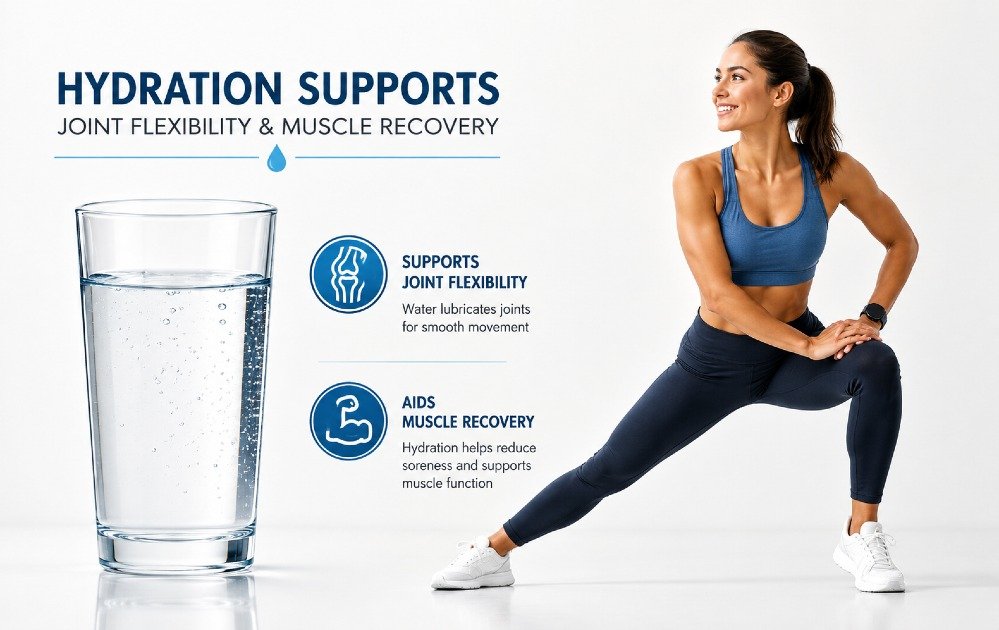
Proper hydration lubricates joints, supports muscle strength and recovery, reduces stiffness and cramps, and promotes smoother, more comfortable movement.
Why it matters:
Staying well hydrated helps keep joints flexible and muscles working efficiently, while lowering the risk of cramps, stiffness, and reduced physical performance.
What works for me:
I stay properly hydrated to lubricate my joints, support smooth muscle function and physical performance, and reduce stiffness during daily activities.
How to start:
- Drink water before exercising.
- Take regular hydration breaks.
- Increase intake during intense workouts.
- Monitor urine color as a hydration indicator.
- Replenish fluids after activity.
7. Helps Regulate Body Temperature

Proper hydration helps regulate body temperature, prevent overheating, and maintain energy during heat and physical activity.
Why it matters:
Staying well hydrated helps the body release excess heat through sweating and maintain proper circulation, lowering the chance of overheating.
What works for me:
I regulate my body temperature by keeping cool, comfortable, and balanced all day.
How to start:
- Carry water outdoors.
- Increase intake in warm climates.
- Drink before feeling thirsty.
- Hydrate during outdoor activities.
- Monitor for signs of dehydration.
Signs You May Not Be Drinking Enough Water
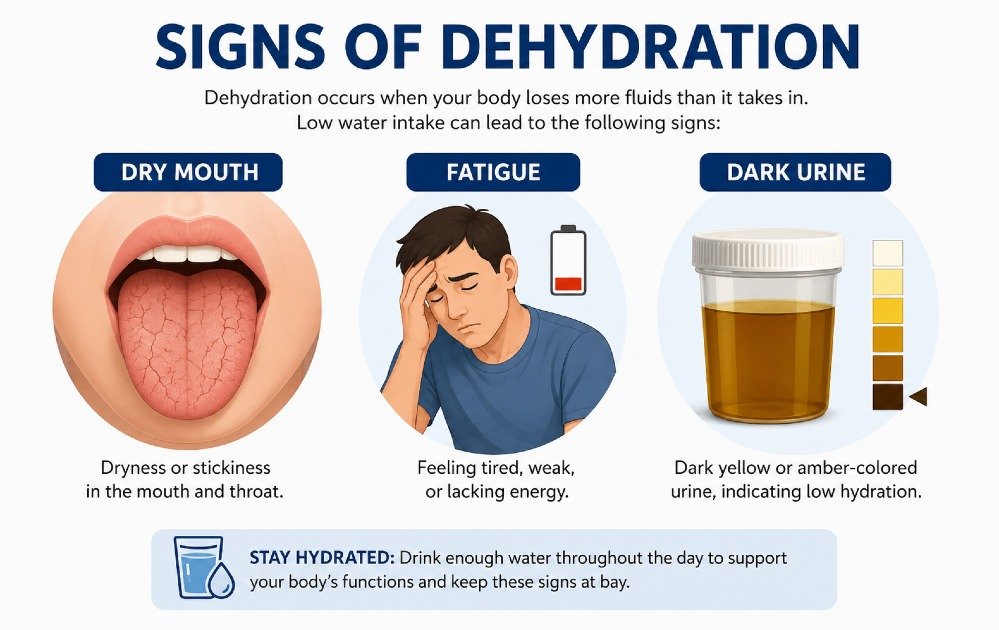
Dehydration can develop unnoticed, with symptoms mistaken for stress or fatigue, potentially impairing physical and mental performance.
Common signs of dehydration:
- Increased thirst
- Dry mouth or lips
- Dark yellow urine
- Headaches
- Fatigue
- Dizziness
- Difficulty concentrating
- Dry skin
- Muscle cramps
- Reduced exercise performance
Ways to Prevent Dehydration
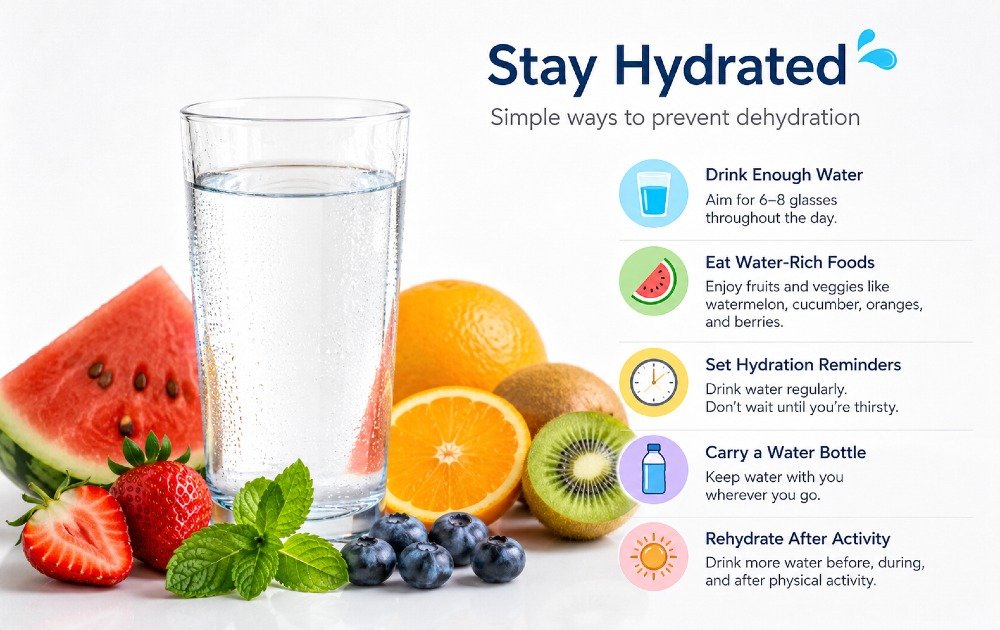
Stay ahead of dehydration during exercise, heat, travel, or illness—thirst may signal you’re already behind, even when mild dehydration affects how you feel and function.
Hydration habits:
- Drink water regularly throughout the day.
- Increase fluids during physical activity.
- Carry water when you’re away from home.
- Choose hydrating foods like watermelon, oranges, and cucumber to help boost your daily fluid intake.
- Replace fluids lost through sweating.
- Check urine color as a simple hydration guide.
- Drink extra fluids when you’re sick.
Easy Ways to Drink More Water Every Day
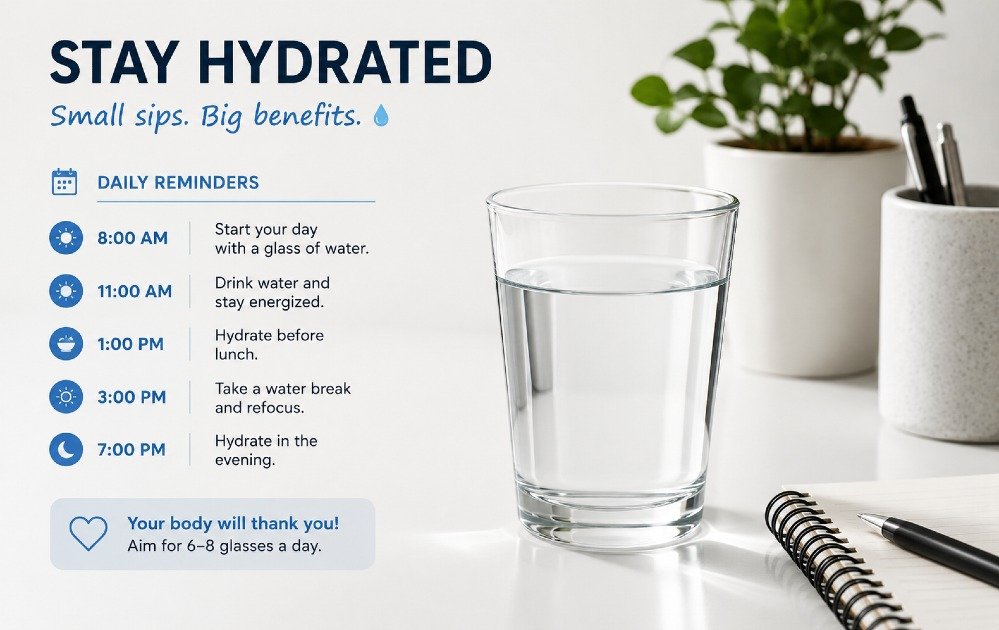
Busy days and too much coffee or soda can make hydration easy to forget, leaving you low on energy, focus, and overall well-being.
Simple daily hydration habits:
- Start your day with a glass of water.
- Carry a reusable water bottle.
- Drink water before meals and snacks.
- Set reminders if you often forget.
- Add lemon, cucumber, or fruit for flavor.
- Keep water within reach throughout the day.
- Swap one sugary drink for water.
Water for Overall Health
Prioritize hydration daily—it supports essential body functions, boosts performance, and helps you feel your best.
Water helps:
- Transport nutrients and oxygen.
- Regulate body temperature.
- Support digestion.
- Lubricate joints.
- Remove waste products.
- Maintain focus and concentration.
- Support healthy circulation.
- Improve physical performance.
How Much Water Should You Drink Daily?
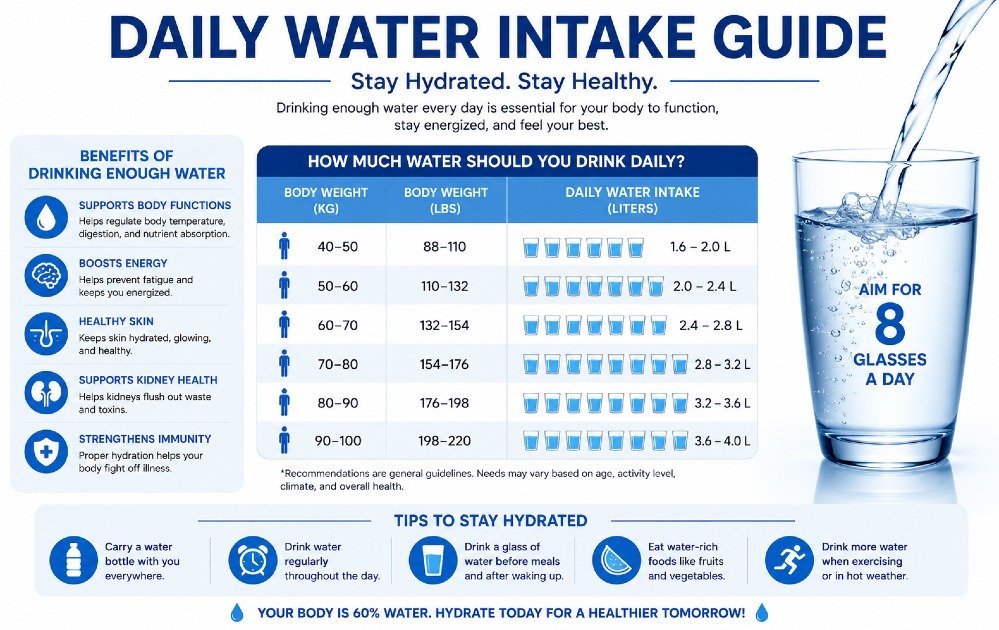
There’s no one-size-fits-all fluid goal—your needs vary with body size, activity, climate, diet, and health, with general daily guidance of about 91 ounces for women and 125 ounces for men from all beverages and food sources.
Ways to Meet Your Daily Needs:
- Drink regularly: Sip fluids throughout the day instead of waiting until you feel thirsty.
- Increase intake with exercise: Replace fluids lost through sweating, especially during longer or intense workouts.
- Adjust for hot weather: Drink more when heat and humidity increase fluid loss.
- Eat hydrating foods: Fruits, vegetables, soups, and other fluid-rich foods contribute to daily intake.
- Pay attention to thirst: Thirst can help guide your intake under normal conditions.
- Check urine color: Pale-yellow urine generally suggests adequate hydration, while consistently dark urine may signal that you need more fluids.
- Consider individual needs: Pregnancy, breastfeeding, certain medications, and some health conditions can change fluid requirements.
Frequently Asked Questions
How much water should I drink each day?
Hydration needs differ by age, activity, climate, and health, so drink water consistently and adjust intake based on your body’s signals.
Can drinking more water increase energy levels?
Dehydration can drain energy, impair focus, and reduce performance, while proper hydration supports efficient body function and steady daily energy.
Is water better than sports drinks for hydration?
For most people, water is enough for daily hydration, while sports drinks are mainly useful during prolonged or intense exercise.
What are the most common signs of dehydration?
Early dehydration signs like thirst, dry mouth, dark urine, headaches, fatigue, dizziness, and poor focus should be addressed early to prevent complications.
Can water support weight-management goals?
Drinking water before meals can increase fullness, curb unnecessary calories, and replace high-calorie drinks to support healthier habits.
Related Articles
Recap: Better Health Starts With Better Hydration
Recognizing signs of dehydration can improve how you feel and perform.
Water fuels your body by boosting energy, brain function, digestion, temperature regulation, and physical performance—making proper hydration a simple yet powerful step toward better health.
Your hydration journey begins with simple habits—carry a water bottle, drink before meals, and fuel your body with the hydration it needs to feel and function at its best.
Ready to Feel More Energized and Hydrated Every Day?
Still feeling drained, sluggish, fatigue, brain fog, and low energy?
Discover how this smart water bottle can track hydration, build healthier habits, and support better energy, focus, and overall wellness.