

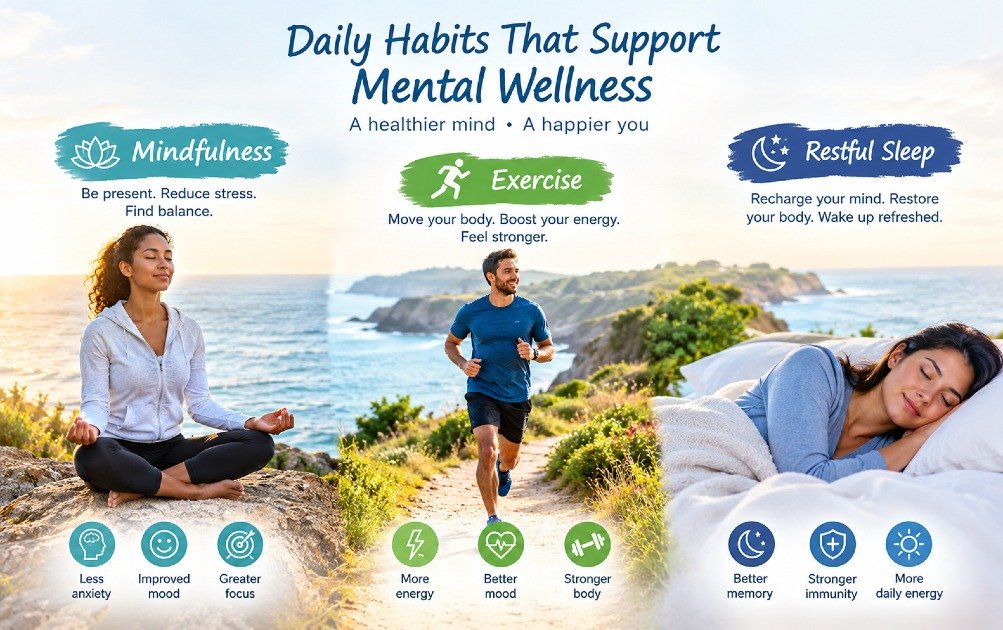
Feeling stressed, mentally drained, or constantly overwhelmed can make even ordinary days feel harder than they should.
The NIMH notes that small acts of self-care, including regular movement, quality sleep, relaxation, healthy routines, and staying connected, can support mental health.
This guide explores realistic habits you can build into everyday life so that you can feel calmer, more focused, and more in control.
Protect Your Mental Wellness
Daily stress and poor self-care can affect your mood, focus, and emotional well-being.
Simple daily habits help manage stress, improve focus, and support better mental wellness.
Build Healthy Daily Habits
Neglecting sleep, movement, and social connection can make emotional challenges harder to manage.
Prioritizing rest, physical activity, and meaningful connections supports a healthier mind and steadier mood.
9 Daily Habits That Help You Build a Healthier Mind

Feeling mentally drained, overwhelmed, or stuck in negative thoughts can make even ordinary days feel harder.
When stress, poor sleep, constant distractions, and emotional pressure become daily patterns, your mental well-being can suffer.
Discover how these nine daily habits can help you manage stress, improve emotional well-being, sharpen your focus, and create more mental clarity.
Start the Day With a Mindful Pause

Rushing into the day can drain your focus before it begins; a mindful pause creates space for calm, clarity, and mental wellness.
Why it matters:
Starting with intention can reduce mental clutter and help you respond to daily stress with greater awareness.
What works for me:
I start with five quiet minutes of mindful breathing using a guided meditation platform, helping me build a calmer mindset and support my mental wellness before the day gets busy.
How to start:
- Sit quietly for 2–5 minutes after waking.
- Take five slow, comfortable breaths.
- Notice your mood without trying to immediately change it.
- Avoid checking your phone during the first few minutes.
- Gradually increase your practice if it feels helpful.
Move Your Body Every Day

Sitting too long can drain your energy and mental wellness, but daily movement can help you feel stronger, clearer, and more energized.
Why it matters:
Moving every day supports physical health, energy, mood, and mental wellness while making healthy aging easier to maintain.
What works for me:
I start with a simple daily walk or short workout, using a fitness tracker to stay accountable and turn movement into a consistent, measurable habit.
How to start:
- Take a 10–20 minute walk after work or dinner.
- Stretch for five minutes between demanding tasks.
- Choose stairs when practical.
- Put movement on your calendar.
- Choose activities you genuinely enjoy.
Protect Your Sleep Schedule

An inconsistent sleep schedule can disrupt energy, focus, and mental wellness, making consistent sleep a simple health priority.
Why it matters:
Protecting a regular sleep schedule helps your body maintain a steady rhythm that supports better rest, daily function, and mental wellness.
What works for me:
I protect my sleep schedule by keeping consistent bed and wake times and using a sleep tracker to monitor my patterns and stay accountable.
How to start:
- Keep your bedtime and wake time reasonably consistent.
- Reduce stimulating screen activity before bed.
- Create a quiet, comfortable sleep environment.
- Avoid turning your bed into a workspace.
- Give yourself enough time for sleep instead of treating it as leftover time.
Practice a Short Breathing or Mindfulness Exercise

Stress can quickly disrupt focus and calm, but a few mindful breaths can support mental wellness and restore control.
Why it matters:
Short breathing exercises can ease tension, sharpen awareness, and make mental wellness easier to practice throughout the day.
What works for me:
I start with two minutes of slow, focused breathing using a guided meditation platform, which helps me reset my mind and stay consistent with my mental wellness routine.
How to start:
- Sit comfortably and relax your shoulders.
- Breathe slowly without forcing your breath.
- Notice the sensation of breathing.
- When your mind wanders, gently return your attention.
- Start with 2–5 minutes.
Create a Daily Gratitude Practice

When stress and negativity take over, a daily gratitude practice can redirect your attention toward what supports your mental wellness.
Why it matters:
Consistent gratitude can strengthen positive thinking, emotional resilience, and a healthier mental wellness routine.
What works for me:
I start each morning by writing three things I’m grateful for in a gratitude journal, making the practice simple enough to sustain and promote daily mental wellness.
How to start:
- Write down three specific things you appreciated.
- Mention why each one mattered.
- Include small moments rather than only major events.
- Practice gratitude before bed if mornings feel rushed.
- Occasionally express your appreciation directly to someone.
Stay Connected to People Who Support You

Isolation can quietly weaken mental wellness, but staying connected to supportive people can strengthen resilience and emotional health.
Why it matters:
Meaningful relationships provide encouragement, perspective, and a stronger support system when life feels overwhelming.
What works for me:
I make time for people who genuinely support my mental wellness, using a guided meditation platform to help me stay grounded and intentional between meaningful connections.
How to start:
- Call someone you trust instead of only sending a message.
- Schedule one meaningful conversation each week.
- Take a walk with a friend or family member.
- Join a community, class, volunteer group, or faith-based activity.
- Reach out when you need support instead of waiting until you feel overwhelmed.
Set Healthy Boundaries Around Your Time and Energy

Constant demands can drain your time, energy, and mental wellness, but clear boundaries help you protect what matters most.
Why it matters:
Healthy boundaries reduce overwhelm, protect your energy, and create more space for mental wellness and meaningful priorities.
What works for me:
I set clear limits on my time and availability, using a digital wellness planner to organize priorities, protect my energy, and stay consistent.
How to start:
- Identify your three most important priorities for the day.
- Turn off unnecessary notifications.
- Create specific times to check messages.
- Practice saying, “I cannot take that on right now.”
- Leave some unscheduled time in your day.
Give Your Mind Time to Recover

Constant mental overload can drain your focus and emotional energy, making recovery essential for lasting mental wellness.
Why it matters:
Giving your mind time to recover can reduce mental fatigue, restore focus, and support stronger mental wellness.
What works for me:
I give myself intentional screen-free breaks and use a guided meditation platform to quiet my mind and make mental recovery part of my daily routine.
How to start:
- Schedule a short quiet break.
- Spend a few minutes outside.
- Listen to calming music without multitasking.
- Read something unrelated to work.
- Practice prayer, reflection, or another meaningful spiritual activity.
End the Day With a Simple Mental Check-In

A simple end-of-day mental check-in can help you pause, process the day, and protect your mental wellness.
Why it matters:
Checking in with yourself helps you recognize stress, emotions, and unfinished thoughts before they carry into tomorrow.
What works for me:
I end my day by asking what went well, what felt difficult, and what I need tomorrow, using a sleep tracker to support my evening wellness routine.
How to start:
- Before bed, write down: one thing that went well.
- One source of stress.
- One emotion you noticed.
- One habit you completed.
- One small priority for tomorrow.
How to Build These 9 Mental Wellness Habits
Build mental wellness habits that help you manage stress, strengthen emotional resilience, and improve daily well-being.
Neglecting mental wellness can increase stress, disrupt focus, and make everyday challenges harder to manage.
These nine habits provide practical ways to manage stress, improve focus, and build lasting emotional balance.
A Simple Daily Mental Wellness Routine
A simple daily mental wellness routine helps you manage stress, improve focus, and support emotional balance.
Daily pressures can affect your mood, concentration, and overall mental wellness when left unmanaged.
Consistent daily habits help you manage stress, build emotional resilience, and maintain better mental wellness.
When Daily Habits Are Not Enough
When daily habits no longer ease stress or emotional struggles, your mental wellness may need additional support.
Persistent stress, low mood, or sleep problems can signal that self-care alone may not be enough.
Recognizing when to seek professional help can strengthen your mental wellness and guide you toward effective support.
Frequently Asked Questions
What are the best daily habits for mental wellness?
Build a sustainable daily routine with movement, quality sleep, mindfulness, connection, relaxation, gratitude, healthy boundaries, enjoyable activities, and self-reflection.
How long does it take for mental wellness habits to work?
There’s no universal timeline—consistent habits like walking, breathing exercises, or talking with someone you trust can deliver benefits over time.
Can mental wellness habits reduce stress?
Combining quality sleep, exercise, mindfulness, relaxation, social connection, and healthy boundaries can strengthen your approach to managing everyday stress.
What mental wellness habits can I do in five minutes?
Try five minutes of slow breathing, mindfulness, stretching, gratitude, fresh air, or connection to build lasting mental wellness habits.
Should I practice all nine habits every day?
Start with one or two habits that meet your biggest needs, then build gradually for a routine you can sustain.
Recap: Build Better Mental Wellness One Day at a Time
Ignoring your mental wellness can leave stress, negative thoughts, and emotional exhaustion controlling more of your day.
Choose one habit from this guide and practice it consistently for the next 7 days—whether it’s mindful breathing, better sleep, movement, gratitude, or meaningful connection. Track your progress, notice how you feel, and build from there.
Start today with one intentional habit and give your mind the daily care it deserves.
Ready To Make Mental Wellness A Daily Habit?
Still feeling mentally drained despite trying to slow down? Make mindfulness part of your routine, build the habit, and track your progress toward feeling calmer and more focused.
Discover how this guided meditation platform gives you structured sessions for stress relief, relaxation, focus, and better sleep.