

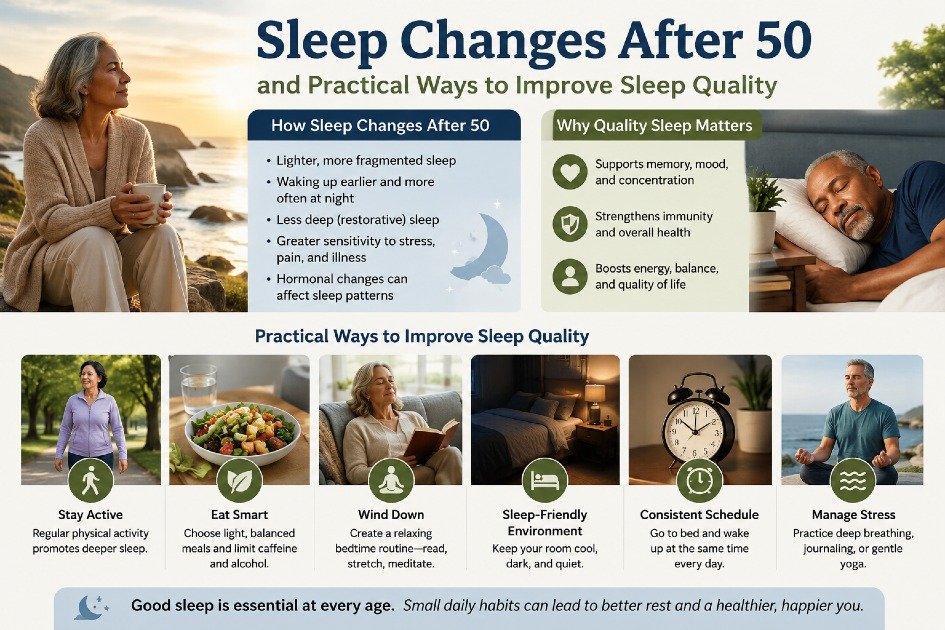
Still waking up earlier, tossing and turning, or feeling tired despite spending enough time in bed?
The National Institute on Aging notes that older adults generally still need 7–9 hours of sleep, while changes in sleep patterns, medications, health conditions, and menopause can make restful sleep harder.
This guide explores what changes in sleep after 50 and simple ways to improve your nighttime routine.
Why Sleep Changes After 50
Age-related changes in body rhythms, sleep patterns, and health conditions can make it harder to fall asleep and stay asleep.
Understanding these changes helps you identify sleep problems early and choose habits that support more restful nights.
What Changes in Sleep After 50
Sleep after 50 may involve lighter sleep, earlier waking, and more frequent nighttime awakenings.
Recognizing these patterns helps you set realistic sleep expectations and identify changes that may need medical attention.
How to Improve Sleep After 50
Irregular sleep schedules, evening caffeine, stress, and poor sleep environments can disrupt nighttime rest.
Maintaining a consistent bedtime, limiting late-day caffeine, managing stress, and creating a comfortable sleep environment can improve sleep quality and daytime energy.
7 Common Changes and Proven Ways to Sleep Better
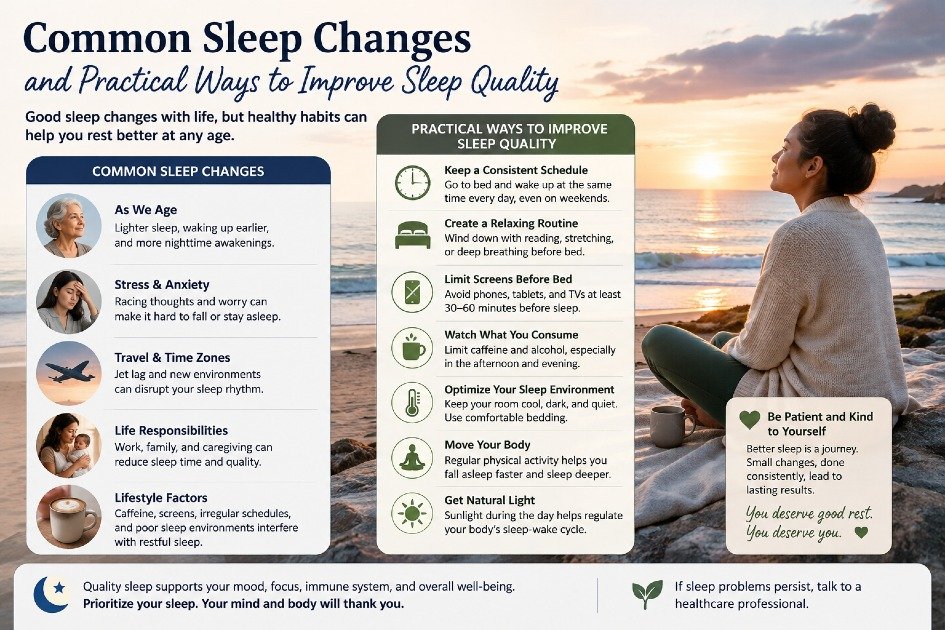
Struggling with lighter sleep, frequent nighttime waking, or waking too early?
These changes can leave you tired the next day and make restful sleep feel harder to reach. As we age, sleep naturally becomes lighter and more interrupted, but poor sleep should not simply be accepted as part of getting older.
Discover seven practical ways to sleep better so that you can wake up feeling more refreshed, focused, and ready for the day.
You May Start Feeling Sleepy Earlier in the Evening

Feeling sleepy earlier in the evening can be a normal part of how your sleep pattern changes with age, especially after 50.
Why it matters:
Understanding these changes can help you protect consistent sleep after 50 without fighting your body’s natural rhythm.
What works for me:
I listen to my earlier sleep cues and use a sleep tracker to monitor my bedtime and sleep patterns, helping me build a routine that supports better rest.
How to start:
- Choose a realistic bedtime based on when you naturally feel tired.
- Keep your wake-up time consistent.
- Begin your wind-down routine 30–60 minutes before bed.
- Avoid bright, stimulating activities late at night.
- Give your body several days to adjust to the new schedule.
Your Sleep May Become Lighter

Sleep after 50 may become lighter, making it harder to stay asleep and feel refreshed the next day.
Why it matters:
Poor sleep after 50 can affect energy, mood, focus, and your ability to maintain healthy daily habits.
What works for me:
I use a sleep tracker to monitor my sleep patterns and adjust my bedtime routine for more consistent, restorative sleep.
How to start:
- Keep the bedroom comfortably cool.
- Reduce unnecessary noise.
- Use dim lighting during your evening routine.
- Keep your phone away from the bed if possible.
- Choose bedding that does not make you too hot.
- Address uncomfortable pillows or mattresses rather than tolerating them.
You May Wake Up More Often During the Night

Waking more often at night can become more common with sleep after 50, making restful sleep harder to maintain.
Why it matters:
Frequent nighttime waking can leave you tired the next day and disrupt the restorative sleep your body needs.
What works for me:
I focus on a consistent bedtime routine and use a sleep tracker to spot nighttime patterns and make smarter adjustments to my sleep habits.
How to start:
- Drink most of your fluids earlier in the day.
- Use the bathroom immediately before bed.
- Limit caffeine later in the day.
- Avoid heavy meals close to bedtime.
- Keep the bedroom quiet and comfortable.
- If nighttime waking becomes persistent, discuss it with a healthcare professional.
Your Body Clock May Shift Toward Earlier Waking
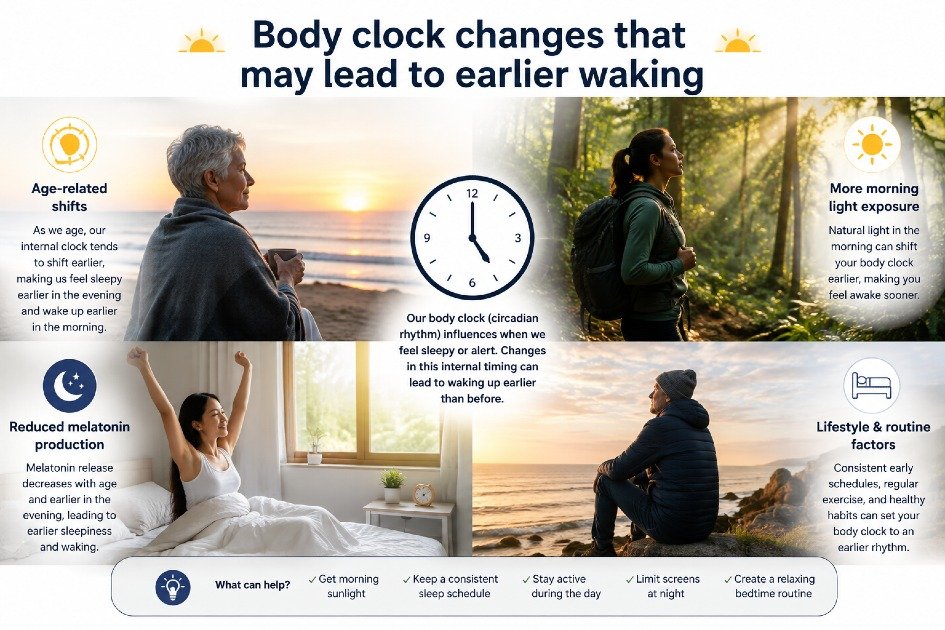
As we age, our body clock may shift toward earlier waking, making sleep after 50 feel shorter or less predictable.
Why it matters:
Recognizing this natural shift can help you adjust your routine and protect consistent, restorative sleep.
What works for me:
I keep a consistent bedtime and use a sleep tracker to monitor my sleep patterns, helping me adjust my routine when earlier waking becomes a pattern.
How to start:
- Get natural outdoor light in the morning.
- Wake at approximately the same time each day.
- Stay physically active during the day.
- Avoid spending excessive time in bed awake.
- Keep your evening lighting softer as bedtime approaches.
Menopause and Hormonal Changes Can Disrupt Sleep
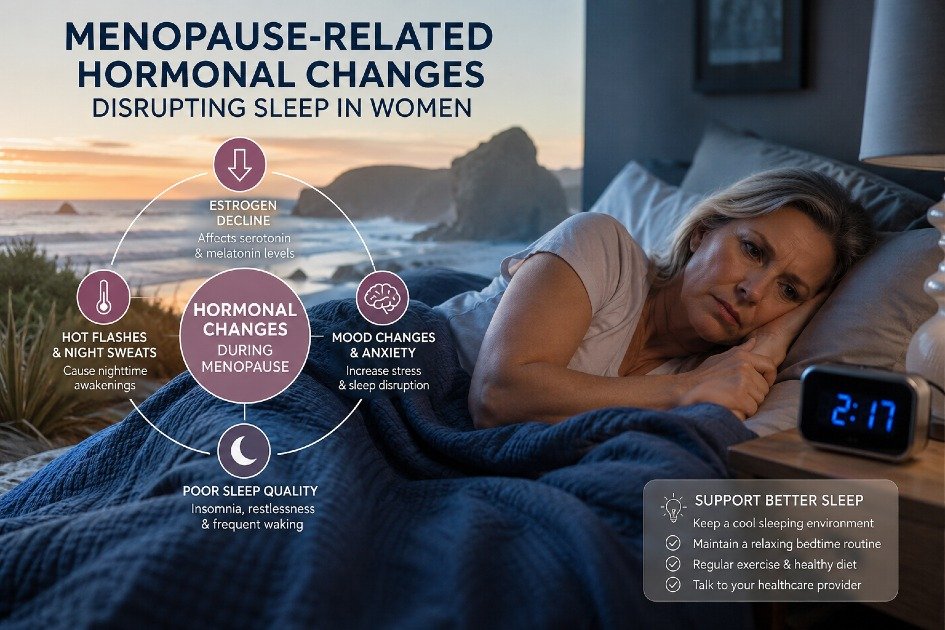
Menopause-related hormonal changes can trigger night sweats, sleep disruptions, and restless nights, making quality sleep after 50 harder to maintain.
Why it matters:
Poor sleep can leave you exhausted and less focused, making consistent sleep habits essential for protecting energy and daily well-being.
What works for me:
I use a sleep tracker to monitor my sleep patterns and adjust my evening routine, helping me make sleep after 50 more intentional and consistent.
How to start:
- Keep your bedroom comfortably cool.
- Wear breathable sleep clothing.
- Use lightweight bedding that can be adjusted easily.
- Track when nighttime symptoms occur.
- Discuss persistent menopausal sleep problems with your healthcare professional.
Stress Can Have a Bigger Impact on Your Sleep

Stress can keep your mind alert at night, making sleep after 50 harder to achieve and maintain.
Why it matters:
Poor sleep can leave you tired, less focused, and less prepared to manage daily health demands.
What works for me:
I calm my mind with a consistent wind-down routine and a sleep tracker to monitor my sleep patterns and build better sleep after 50 habits.
How to start:
Try this 15-minute wind-down routine:
- 5 minutes: Write tomorrow’s priorities.
- 3 minutes: Practice slow, comfortable breathing.
- 5 minutes: Read something calming.
- 2 minutes: Dim the lights and prepare for bed.
Sleep Problems May Become More Noticeable

Sleep problems may become more noticeable with age, making sleep after 50 an important part of protecting energy, focus, and daily health.
Why it matters:
Poor sleep after 50 can affect daytime energy, mood, concentration, and your ability to maintain healthy routines.
What works for me:
I keep a consistent bedtime and track my sleep with a sleep tracker to spot patterns and make better sleep choices after 50.
How to start:
For two weeks, record:
- Bedtime
- Approximate time you fall asleep
- Number of nighttime awakenings
- Wake-up time
- Daytime naps
- Caffeine intake
- Alcohol intake
- Exercise
- Stress level
- How rested you feel the next morning
How Much Sleep Do You Need After 50?
Sleep needs may change with age, but quality rest remains essential for energy, focus, and healthy aging after 50.
Knowing how much sleep after 50 your body needs helps you recognize sleep problems that may affect daily energy, memory, and overall well-being.
Aim for 7–9 hours of quality sleep nightly to support memory, steady energy, and healthier aging.
Ways to Improve Sleep After 50
Sleep after 50 can become more difficult, but simple bedtime habits can help you rest better and wake up feeling refreshed.
Age-related changes, stress, medications, and health conditions can disrupt sleep after 50, affecting energy, mood, and daily function.
Consistent sleep habits can improve sleep quality, boost daytime energy, support memory, and promote healthier aging.
A Simple Evening Routine for Better Sleep After 50
A consistent evening routine can help adults over 50 unwind, fall asleep more easily, and wake up feeling refreshed.
Changes in sleep patterns after 50, combined with stress and inconsistent bedtime habits, can make restful sleep harder to achieve.
A simple evening routine for better sleep after 50 helps promote relaxation, support consistent sleep, and improve morning energy.
When Sleep After 50 Should Not Be Ignored
Sleep changes after 50 can be common, but persistent disruptions may signal health problems that deserve attention.
Recognizing when sleep after 50 becomes a concern helps identify warning signs such as chronic insomnia, loud snoring, breathing pauses, or ongoing daytime fatigue.
Addressing sleep after 50 early helps uncover treatable causes, improve daytime energy, and protect long-term health and well-being.
Build a Better Sleep Environment
A calm, comfortable bedroom can make sleep after 50 more restful and consistent.
Noise, excess light, uncomfortable temperatures, and clutter can interfere with sleep quality as you age.
Create a dark, quiet, cool, and comfortable bedroom to support deeper rest, better energy, and improved daytime focus.
Frequently Asked Questions
Does sleep change after 50?
After 50, sleep may become lighter and more fragmented, but most adults still need about 7–9 hours nightly.
Why do I wake up at 4 or 5 a.m. after 50?
Waking earlier can be a normal part of aging, but frequent early waking may also signal insomnia, stress, medication effects, health conditions, or other sleep problems.
How can I sleep better after 50 naturally?
Build better sleep after 50 with consistent sleep times, morning light, daytime activity, a calming bedtime routine, a comfortable bedroom, and less late-day caffeine—before relying on medications or supplements.
Why am I waking up several times during the night after 50?
Nighttime waking becomes more common with age due to lighter sleep, bathroom trips, pain, medications, stress, insomnia, or sleep apnea—if it persists or disrupts your day, talk with a healthcare professional.
How many hours of sleep should I get after 50?
Most adults need 7–9 hours of sleep, but individual needs vary—aim for enough quality sleep to feel rested and function well during the day.
Recap: Make Better Sleep After 50 Your Daily Health Goal
Sleep changes after 50 are common, but restless nights, frequent waking, or early mornings do not have to become your new normal.
Make better sleep your daily health goal. Keep up with a sleep schedule, create a calming bedtime routine, stay active during the day, limit late-day caffeine and screens, and make your bedroom comfortable for rest.
Start tonight with one sleep habit you can maintain. Better sleep after 50 is not about chasing your younger years—it is about giving your body and mind the rest they need to help you live them well.
Ready To Take Back Control of Your Sleep?
Still waking up tired or struggling to stay asleep after 50? Don’t let changing sleep patterns become your new normal.
Discover how this sleep tracker monitors your sleep patterns and identify trends that can help you make smarter bedtime decisions.