
What if the reason you’re constantly exhausted isn’t a lack of sleep—but the habits sabotaging your sleep quality every night?
Poor sleep habits may be quietly draining your energy, focus, and overall health.
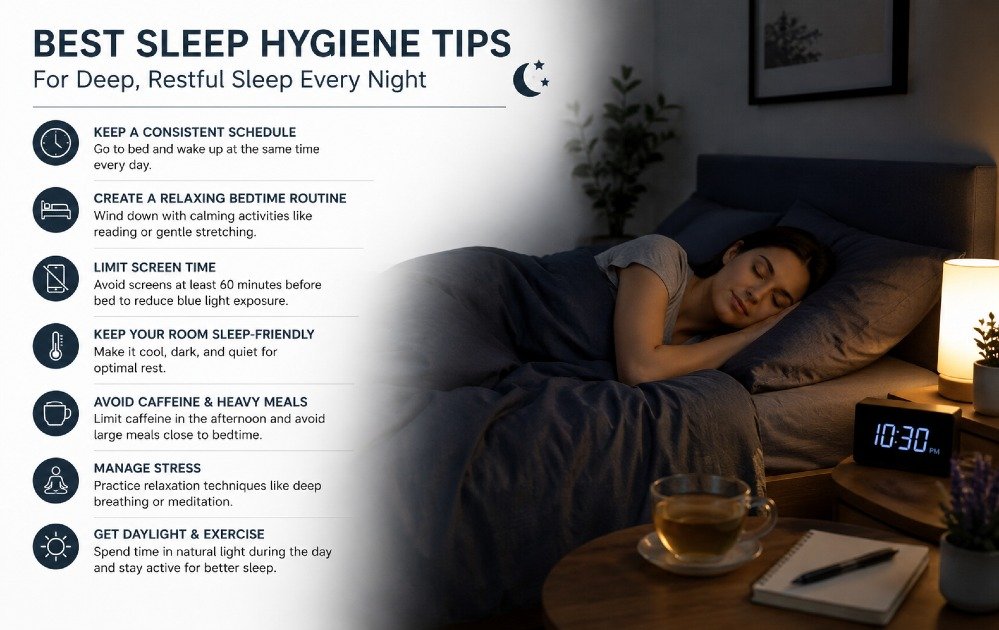
This guide explains the best sleep hygiene tips that can help you achieve deeper, more restorative rest.
What Sleep Hygiene Really Means
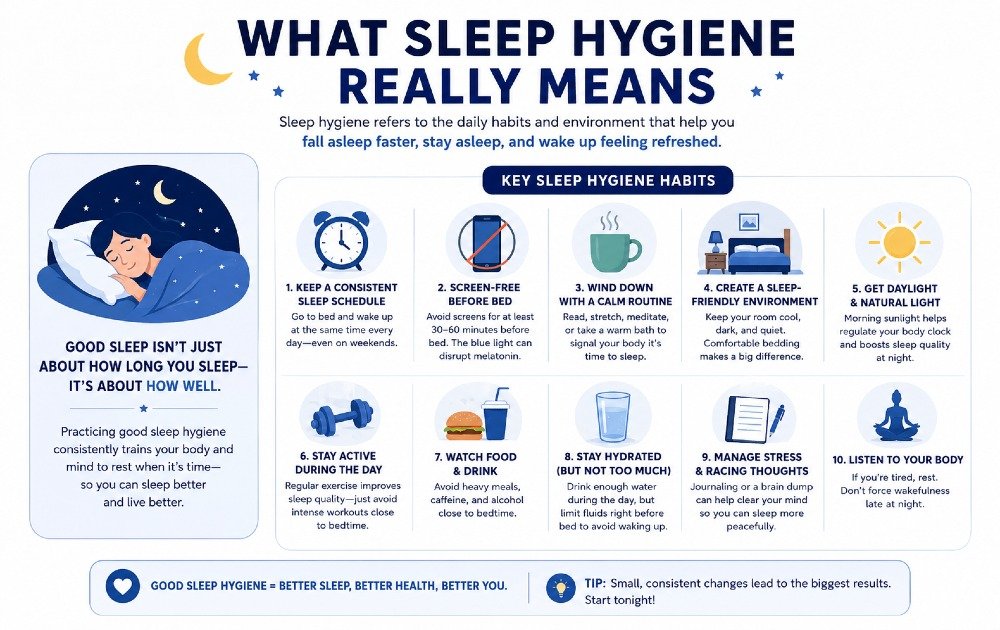
Sleep hygiene refers to the habits, environment, and daily routines that shape your sleep quality.
When it’s poor, you may experience:
- Trouble falling asleep
- Frequent night awakenings
- Light, unrefreshing sleep
- Morning fatigue even after long hours in bed
When it’s strong, your sleep becomes:
- Faster to start
- Deeper and more restorative
- More consistent night to night
In simple terms, better sleep hygiene improves both sleep quality and daily performance.
10 BEST Sleep Hygiene Tips for Better Sleep Quality
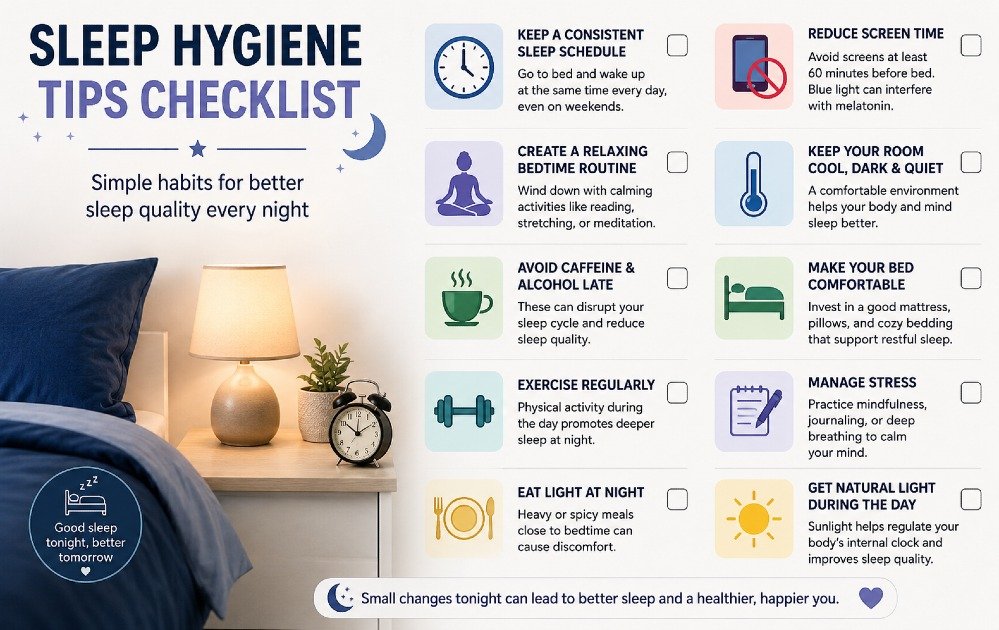
Many people spend enough time in bed yet still wake up tired—the culprit is often poor sleep hygiene—the daily habits that shape sleep quality.
Discover ten sleep hygiene tips that can help you fall asleep faster, stay asleep longer, and wake up feeling refreshed.
1. Keep a Fixed Sleep Schedule
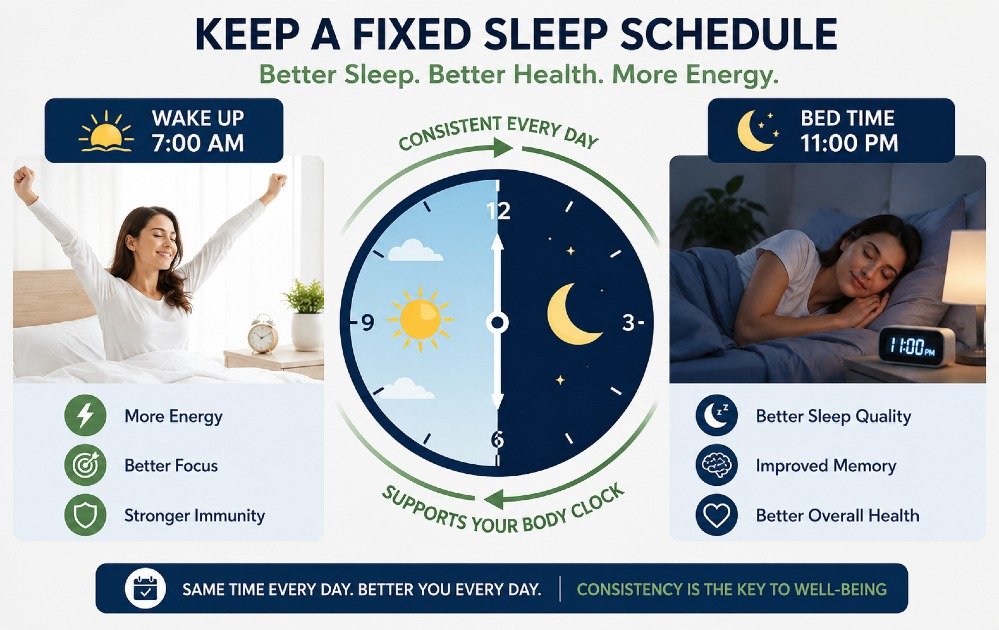
One of the strongest drivers of good sleep is consistency.
When your bedtime and wake-up time constantly change, your internal clock struggles to stabilize.
What to do:
- Sleep and wake at the same time daily
- Keep weekends consistent (within 1 hour variation)
- Set a reminder for bedtime wind-down
Why it works:
Your body learns when to release sleep hormones, making sleep feel more natural instead of forced.
According to Harvard Health, a regular sleep schedule helps the body keep to its internal clock.
2. Optimize Your Sleep Environment
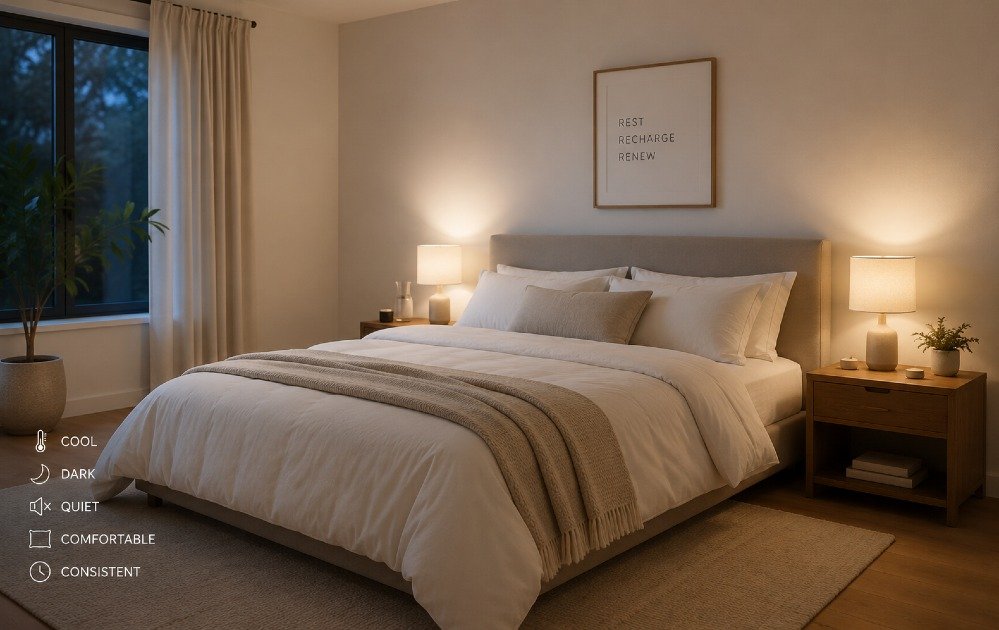
Your bedroom should support sleep, not compete with it.
Even small distractions—light, noise, temperature—can reduce sleep quality.
What to adjust:
- Keep the room cool and comfortable
- Reduce light exposure (blackout curtains if needed)
- Minimize noise or use white noise
- Keep the space clutter-free
Core advantage:
Your brain starts associating the room with rest, making it easier to fall asleep faster.
3. Reduce Screen Exposure Before Bed
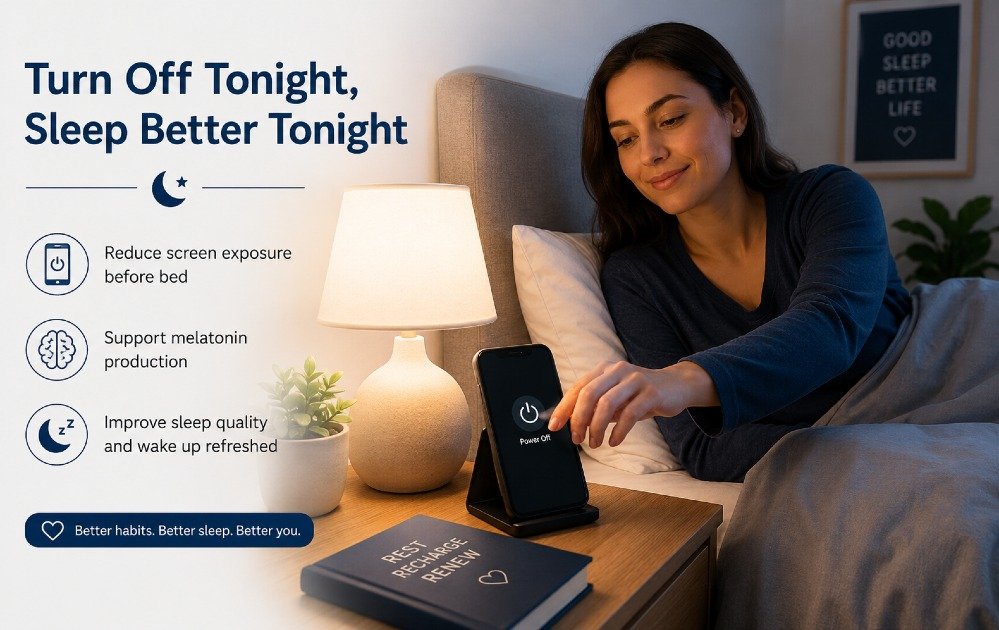
Screens keep your brain alert when it should be winding down.
Blue light delays melatonin production, which can shift your sleep cycle later than intended.
What to do:
- Stop screen use 45–60 minutes before bed
- Replace scrolling with calming activities
- Use warm lighting in the evening
Alternatives:
- Reading a physical book
- Light stretching
- Journaling or reflection
4. Be Intentional With Evening Food and Drinks

What you consume at night has a direct impact on sleep depth and comfort.
Avoid:
- Caffeine late in the day
- Heavy or spicy meals at night
- Alcohol close to bedtime
Choose:
- Light snacks if needed
- Herbal teas like chamomile
- Simple, easy-to-digest foods
Core advantage:
Less nighttime disruption and more stable sleep cycles.
5. Build a Consistent Wind-Down Routine
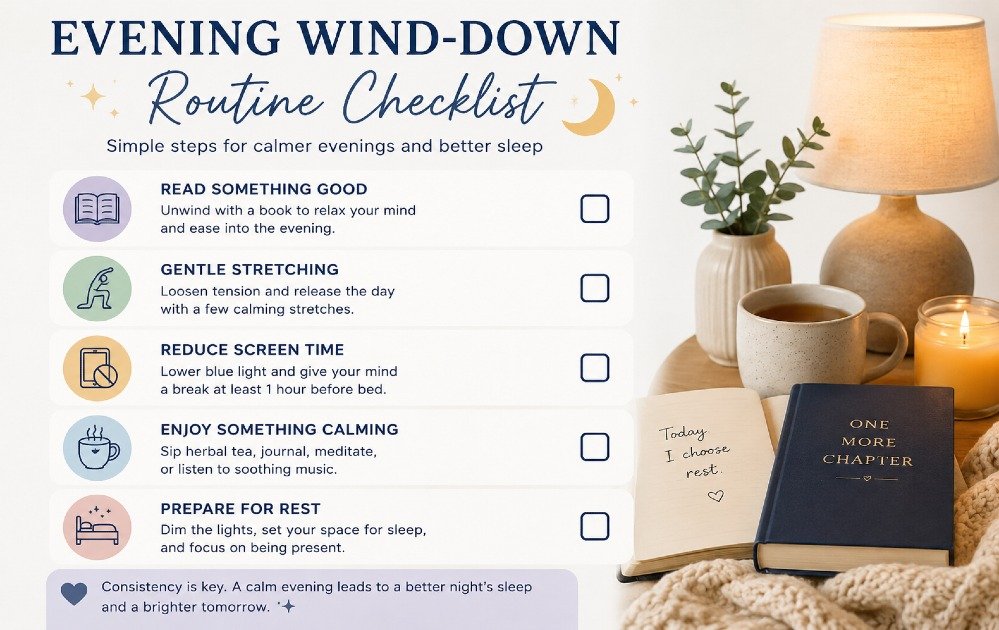
Your body needs time to shift from “active mode” to “rest mode.”
A sudden jump from stress or screen time to bed rarely works.
Simple routine:
- Dim the lights
- Take a warm shower
- Do light stretching
- Practice slow breathing
Why it matters:
It signals your nervous system that sleep is approaching, making the transition smoother.
6. Calm the Mind Before Bed

Racing thoughts are one of the most common barriers to sleep.
If your mind stays busy, your body stays alert.
What helps:
- Write down thoughts or tomorrow’s tasks
- Try deep breathing (slow and controlled)
- Practice short mindfulness exercises
- Keep a simple gratitude list
Core advantage:
Reduces mental noise and supports faster sleep onset.
7. Get Morning Light Exposure

Morning sunlight is one of the most overlooked sleep tools.
Why it matters:
Natural light helps reset your circadian rhythm, improving both sleep timing and quality.
What to do:
- Spend 10–20 minutes outside in the morning
- Take a short walk if possible
- Sit near natural light if outdoors isn’t an option
8. Be Strategic With Naps

Naps can help—or disrupt sleep—depending on timing and length.
Guidelines:
- Keep naps short (10–30 minutes)
- Avoid late-afternoon naps
- Maintain consistency if you nap regularly
Core advantage:
Prevents interference with nighttime sleep pressure.
9. Train Your Brain to Associate Bed With Sleep Only

Your brain learns through repetition.
If your bed is used for work, scrolling, or watching content, it becomes a multi-purpose space—not a sleep cue.
Fix this by:
- Using bed only for sleep and rest
- Moving work and screens elsewhere
- Getting up if you can’t sleep after a while
Core advantage:
Stronger mental association between bed and sleep.
10. Consider Natural Sleep Supports

Some people benefit from gentle support while improving habits.
Examples:
- Magnesium (supports relaxation)
- Weighted blankets (calming pressure effect)
- Blue light blocking glasses for evening screen use
These are not replacements for good habits—but they can support the transition.
Bedtime Routine for Better Sleep

Excess screen time, late-night work, and nonstop mental stimulation can keep your brain on high alert, making it harder to relax and fall asleep..
A consistent bedtime routine for better sleep helps your body relax and prepares your brain for rest.
Simple bedtime routines:
- Go to bed at the same time each night
- Dim lights before bed
- Avoid screens 30–60 minutes before sleep
- Take a warm shower or bath
- Read or listen to calming audio
Simple routines work best because they are easier to maintain consistently.
Why it matters:
A steady nighttime routine supports your circadian rhythm and helps you fall asleep more naturally.
Tip:
If racing thoughts keep you awake, write down tomorrow’s tasks before bed. Clearing your mind can make it easier to relax and fall asleep.
Sleep Environment Tips for Better Rest
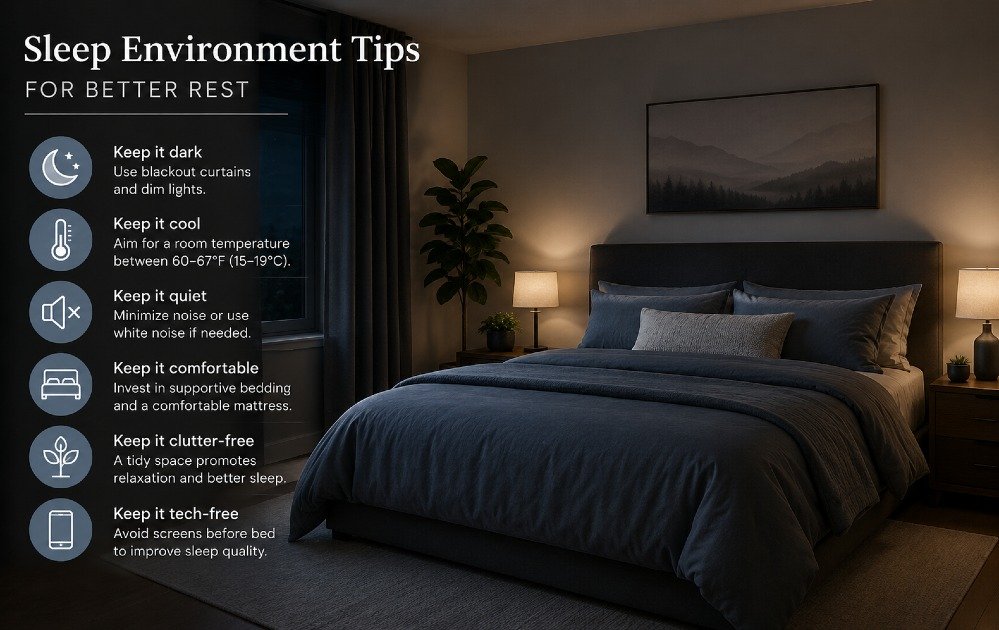
Your bedroom environment affects how well you sleep. Light, noise, temperature, and clutter can disrupt sleep quality without you realizing it.
A calm, comfortable room helps your body stay relaxed throughout the night.
Improve environment:
- Keep the room cool and dark
- Use blackout curtains if needed
- Reduce noise or use white noise
- Choose comfortable pillows and bedding
- Keep TVs and electronics away from the bed
Even small adjustments can improve sleep quality.
Why it works:
Your brain responds to environmental cues. A quiet, dark space helps the body stay in sleep mode longer and reduces nighttime interruptions.
Tip:
A fan or white noise machine can help block sudden sounds and create a more consistent sleep environment.
Insomnia Sleep Hygiene Habits That Support Better Sleep
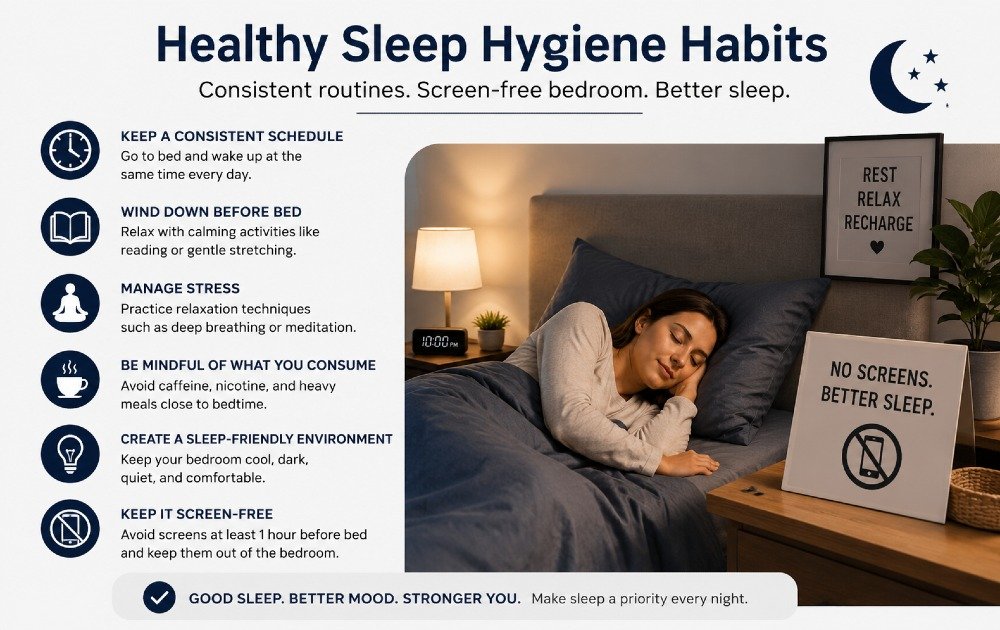
Poor sleep habits often make insomnia worse. Irregular sleep schedules, caffeine late in the day, stress, and nighttime screen use can keep the brain overstimulated.
Improving your insomnia sleep hygiene habits helps your body develop a more stable sleep pattern.
Healthy sleep habits:
- Wake up at the same time daily
- Avoid caffeine in the evening
- Limit daytime naps
- Use the bed only for sleep
- Avoid checking the clock repeatedly at night
Consistency is one of the most important parts of improving sleep naturally.
Why these habits:
Good sleep hygiene supports a stable circadian rhythm and reduces behaviors that interfere with sleep.
Tip:
If you cannot fall asleep, get out of bed and do something calming in low light until you feel sleepy again.
Frequently Asked Questions
How long does it take to improve sleep hygiene?
Many people notice better sleep within a few days of consistent habits. More noticeable improvements often happen within a few weeks.
What is the most important sleep hygiene habit?
A consistent sleep and wake schedule is one of the most effective habits for improving sleep quality and supporting a healthy body clock.
Can sleep hygiene help insomnia?
Good sleep hygiene can reduce habits that interfere with sleep. It may not fully resolve chronic insomnia, but it often improves sleep quality and nighttime consistency.
Does screen time affect sleep quality?
Yes. Blue light from phones, tablets, and TVs can delay melatonin production and make it harder to fall asleep naturally.
Why do I wake up tired after sleeping long hours?
Sleep quality matters as much as sleep duration. Stress, inconsistent routines, and poor nighttime habits can reduce restorative sleep.
Recap: Better Sleep Starts With Better Habits
Better sleep does not require extreme routines or complicated changes.
A regular bedtime, less screen exposure, and a comfortable sleep environment can help you fall asleep faster and sleep more deeply. Thus, supporting better focus, steadier energy, and improved mental clarity.
Starting with a few manageable changes and improving sleep hygiene often lead to long-term health benefits.
Ready to Stop Waking Up Tired Every Morning
Still struggling to feel rested even after a full night of sleep?
You don’t need another complicated sleep routine—improving your sleep environment and nighttime comfort can make a noticeable difference.
This weighted blanket stops exhaustion, calms your body, eases nighttime stress, and helps you sleep longer and wake up refreshed.