
Waking up stiff and exhausted after 50? Hidden daily habits may be stealing your energy—not aging.
After 50, energy, recovery, and weight management become more challenging, but consistent daily habits—not age—are the key to staying strong, energized, independent, and active without extreme diets or exhausting workouts.
This guide explains simple, realistic habits that deliver lasting results in everyday life.
Why a Structured Routine After 50 Matters
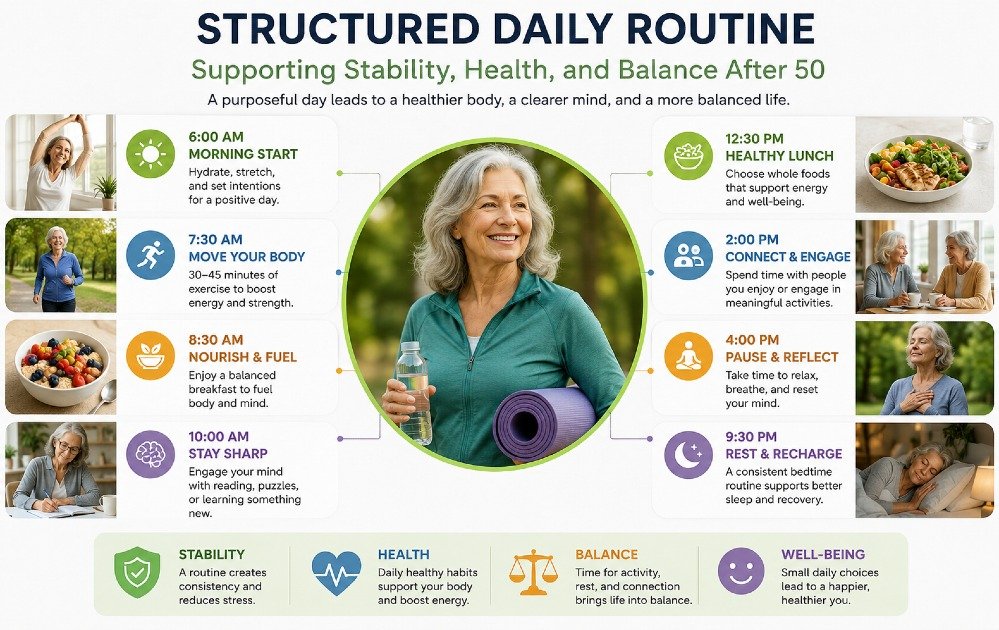
Without a clear routine, many people experience:
- Low energy throughout the day
- Gradual weight gain
- Stiff joints and reduced mobility
- Poor sleep quality
- Mental fatigue and low focus
A strong routine restores balance by giving your body predictable rhythm:
- Sleep and wake times stay stable
- Movement becomes consistent
- Meals support energy instead of draining it
- Stress is managed before it builds up
Core advantage:
- More stable energy
- Easier weight control
- Better mood and focus
- Stronger mobility and balance
- Improved overall health resilience
6 Best Lifestyle Routines for Healthy Aging
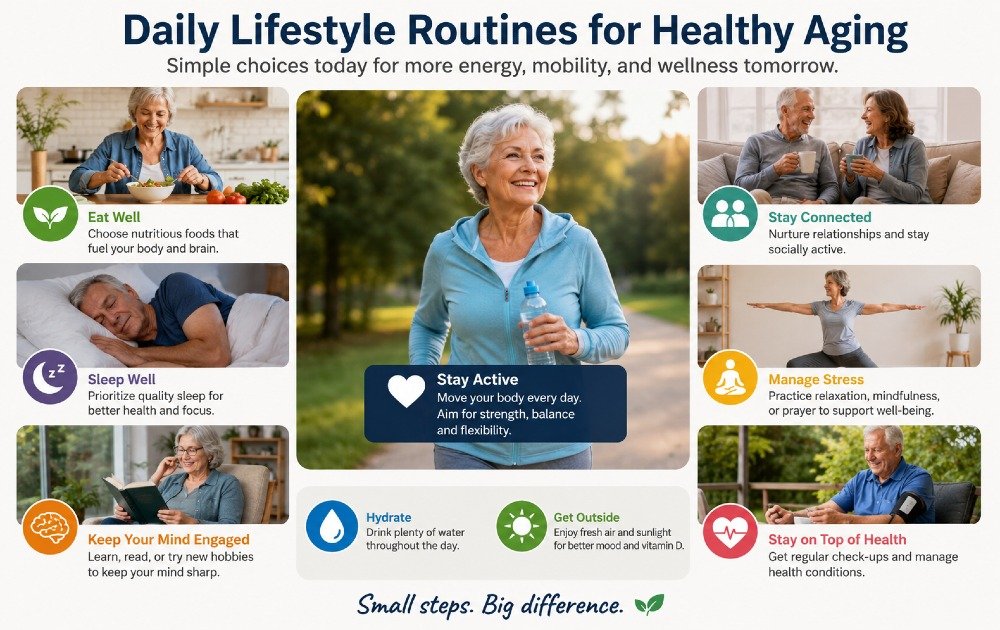
Feeling tired, stiff, or slower with age? Simple daily habits can help you maintain energy, strength, and overall health for years to come.
Discover six healthy aging habits that help you stay active, independent, and feeling your best for years.
1. Morning Routine After 50 for Natural Energy
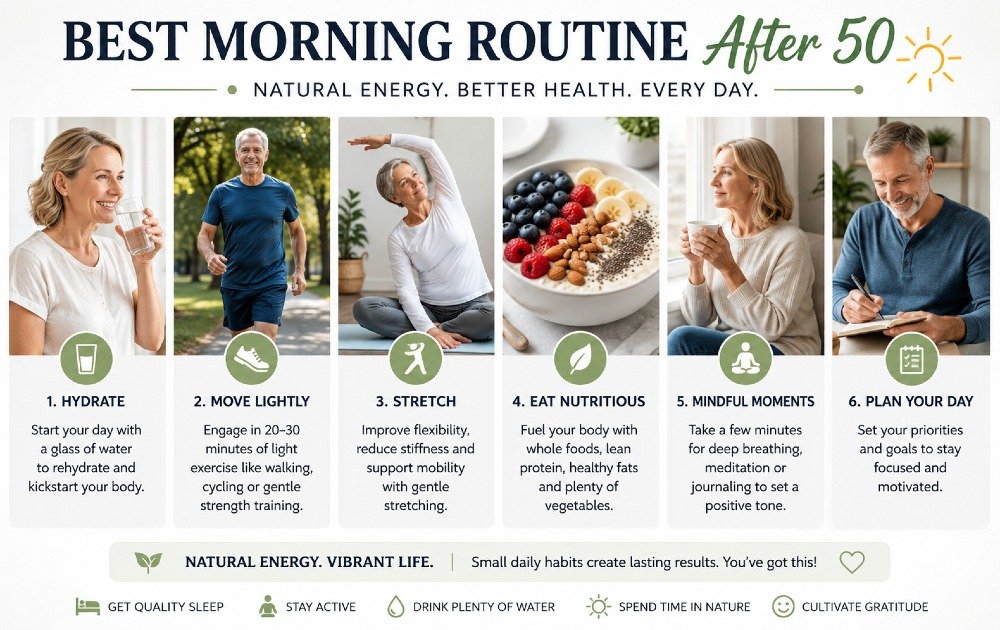
Wake up tired, stiff, or foggy? That morning slump can drain your entire day.
A simple morning routine can help you feel refreshed, sharpen your focus, and create momentum for a healthier, more productive day.
Do this:
- Drink water immediately after waking
- Light stretching (5–10 minutes)
- Short walk outdoors for sunlight exposure
- Protein-focused breakfast
- 5 minutes of quiet reflection or journaling
Core advantages:
- Improve circulation and alertness
- Reduce morning stiffness
- Support metabolism naturally
- Set a focused mental tone for the day
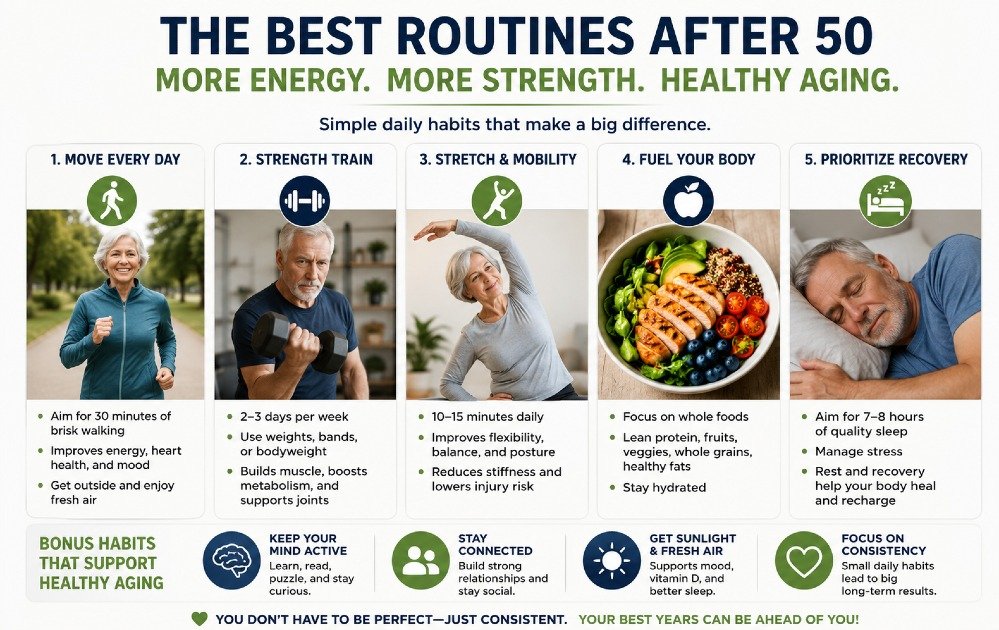
2. Fitness Routine After 50 for Strength and Mobility
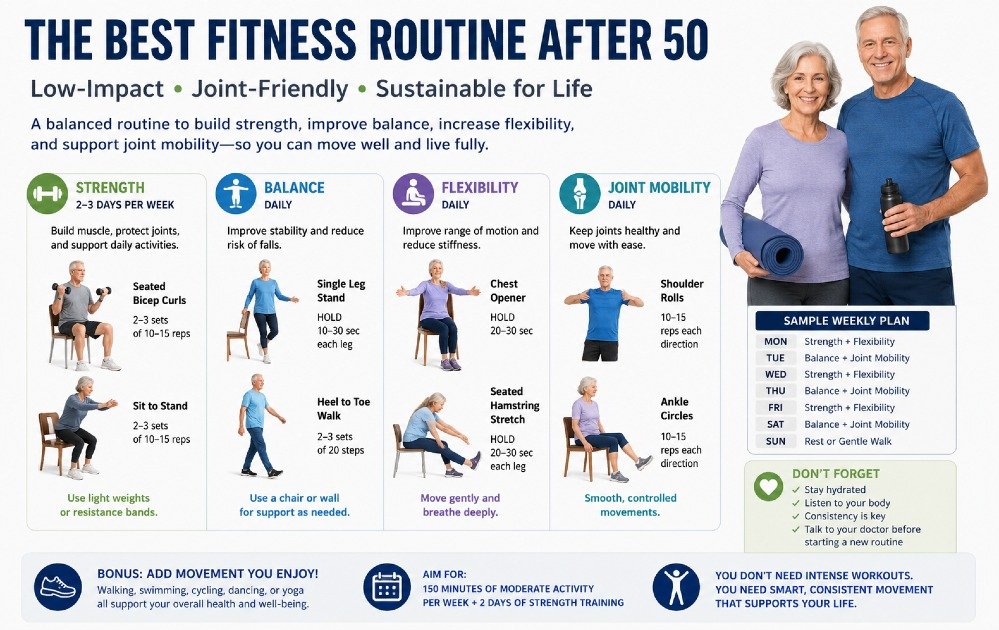
After 50, muscle loss accelerates and joint flexibility declines without regular activity.
Build lasting fitness with the right mix of strength, cardio, and flexibility.
Strength training (2–3 times weekly):
- Bodyweight squats
- Light dumbbells
- Resistance bands
Cardio (most days of the week):
- Walking
- Cycling
- Swimming
Mobility work (daily or frequent):
- Stretching
- Yoga
- Gentle balance exercises
Core advantages:
- Better posture and stability
- Reduced risk of falls
- Improved joint comfort
- Higher overall strength for daily tasks
3. Nutrition Routine After 50 for Energy and Health
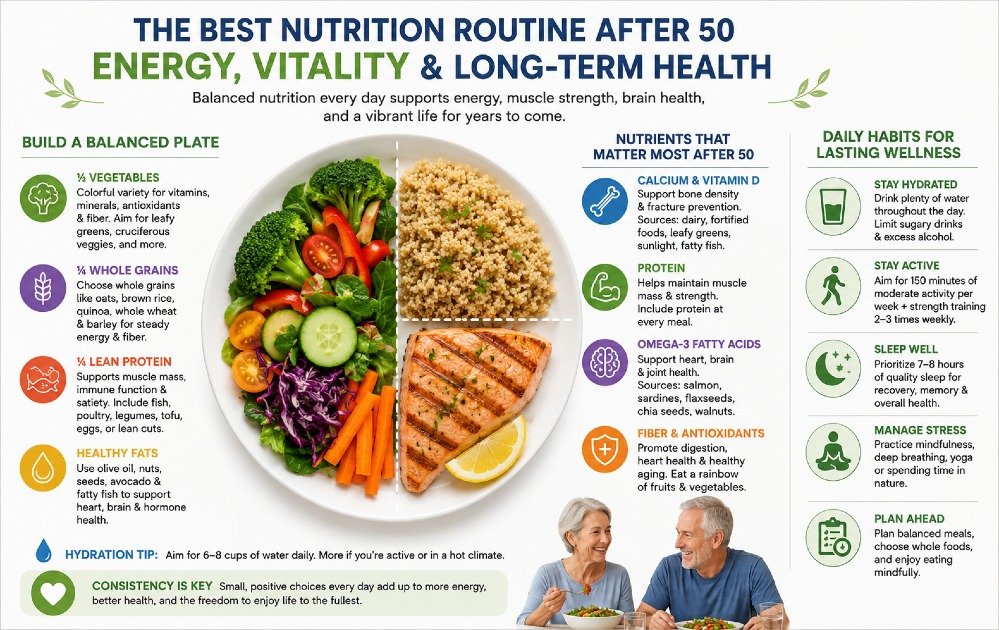
Poor nutrition often leads to:
- Energy crashes
- Weight gain
- Inflammation
- Digestive discomfort
Structured nutrition routine:
- Include protein in every meal
- Prioritize vegetables and fiber-rich foods
- Choose healthy fats like olive oil and nuts
- Stay hydrated throughout the day
Simple daily structure:
- Breakfast: protein + fiber
- Lunch: balanced plate (protein, vegetables, carbs)
- Dinner: lighter, nutrient-dense meal
Core advantages:
- Stable blood sugar
- Improved digestion
- Better appetite control
- Healthy body composition
4. Evening Routine After 50 for Deep Sleep
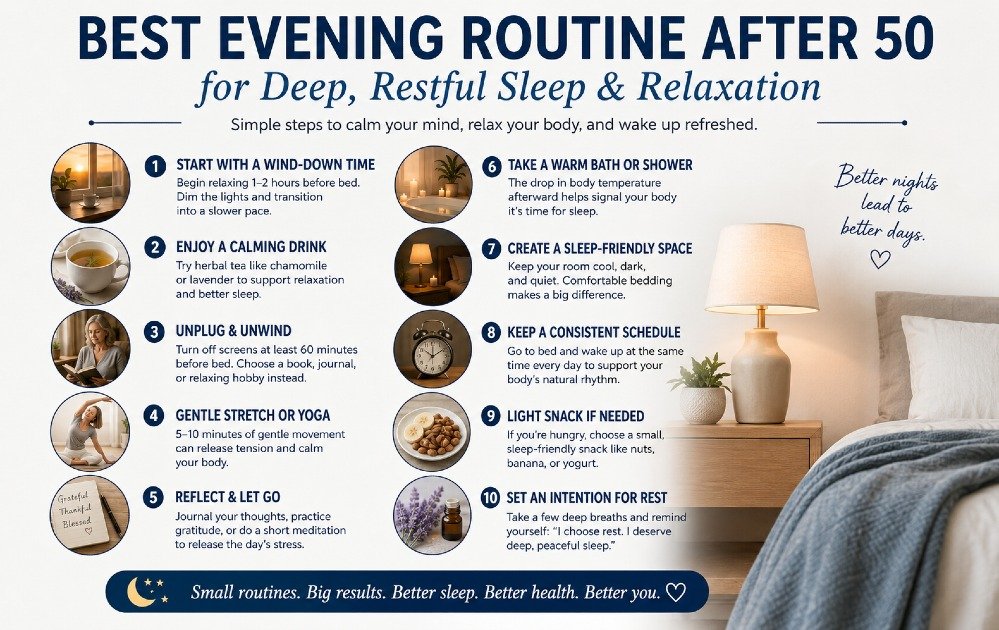
Sleep often becomes lighter and more disrupted with age.
Structured evening routine:
- Power down digital devices for at least 60 minutes to help your mind unwind before bedtime.
- Light stretching or gentle movement
- Herbal tea or warm drink
- Reading or calming activity
- Fixed bedtime schedule
Core advantages:
- Improve sleep quality
- Reduce nighttime waking
- Support hormone balance
- Increase next-day energy
5. Mental Routine After 50 for Brain Health
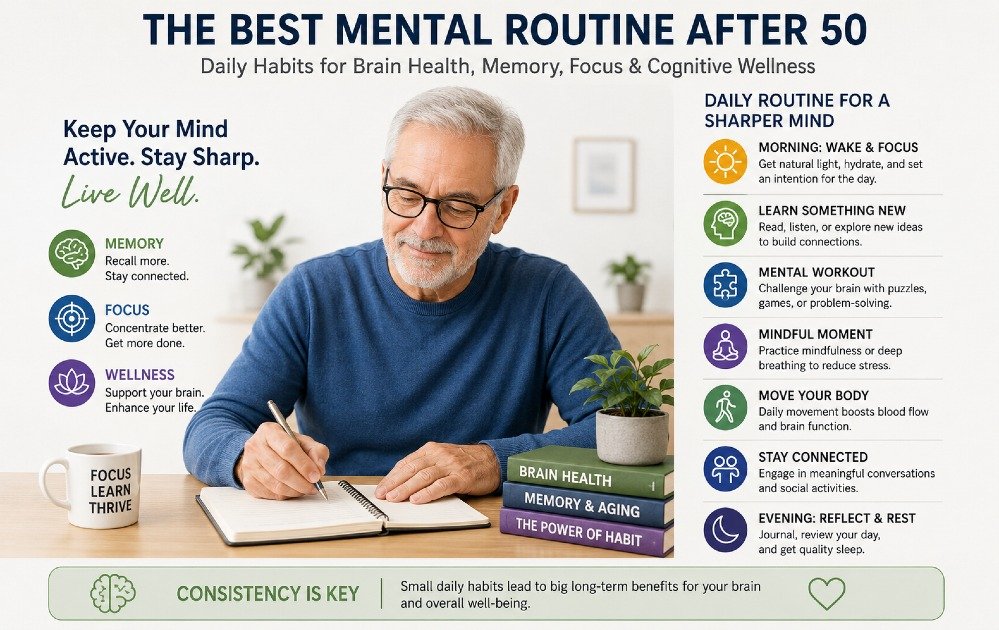
Memory and focus can decline without regular mental stimulation.
Structured mental routines:
- Reading daily (20–30 minutes)
- Learning new skills or hobbies
- Brain games or puzzles
- Meaningful social interaction
Core advantages:
- Improving focus
- Supporting memory retention
- Enhancing mental clarity
- Reducing cognitive decline risk
6. Stress Management Routine After 50
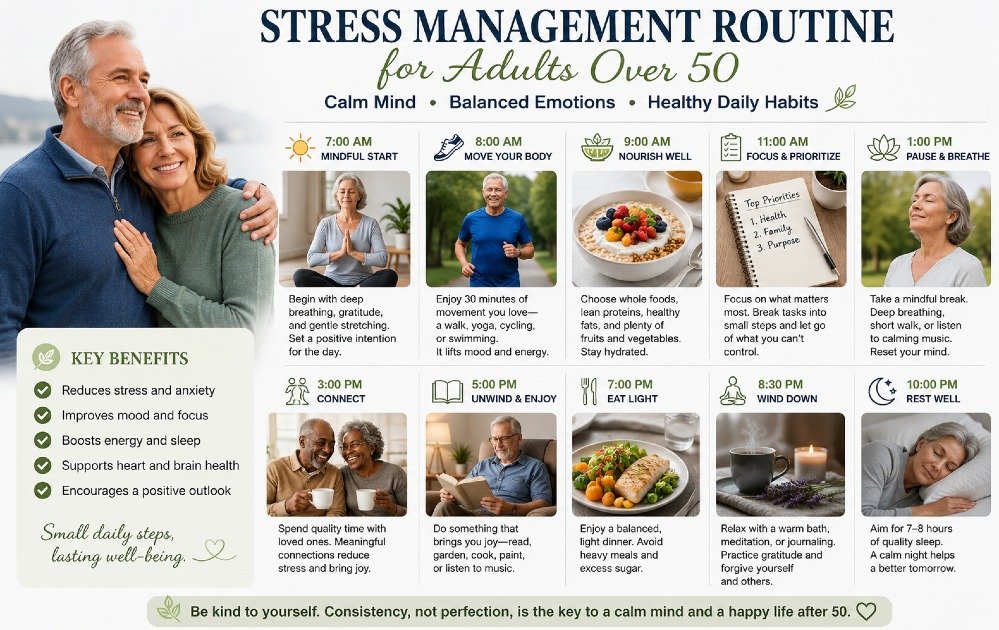
Unmanaged stress contributes to:
- High blood pressure
- Poor sleep
- Fatigue
- Emotional imbalance
Structured stress routines:
- Deep breathing exercises
- Short meditation or prayer
- Walking outdoors
- Journaling thoughts
Core advantages:
- Better emotional control
- Improved heart health
- Reduced tension and fatigue
Simple Weekly Routine Blueprint
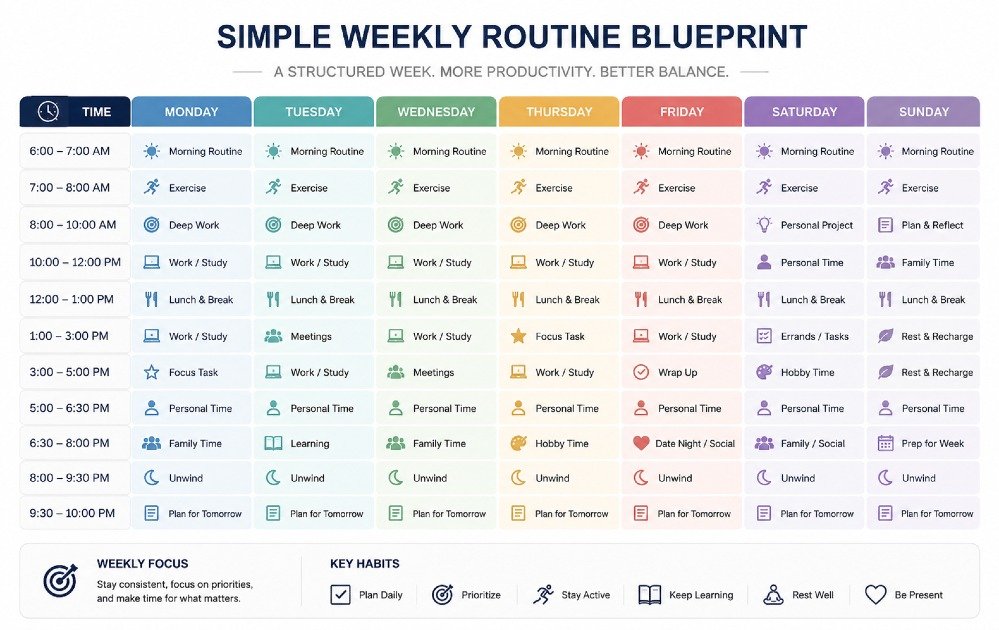
Many people over 50 understand the importance of exercise, healthy eating, and sleep, but without structure they struggle to stay consistent, turning healthy habits into occasional efforts instead of daily routines.
A clear routine eliminates guesswork and builds consistency.
Monday–Friday:
- Dedicate a minimum of 30 minutes daily to moving your body through walking or any active pursuit.
- Complete 2–3 strength-training sessions each week
- Eat meals at consistent times
- Maintain a regular sleep schedule
Saturday:
- Enjoy an active hobby such as gardening, cycling, or hiking
- Spend time with family or friends
Sunday:
- Stretch, walk, or do light yoga
- Prepare meals for the week
- Plan upcoming workouts and activities
Core advantages:
- More consistent energy
- Better physical fitness
- Reduced stress
- Greater long-term success
Lifestyle Habits That Make Your Routine Work Better
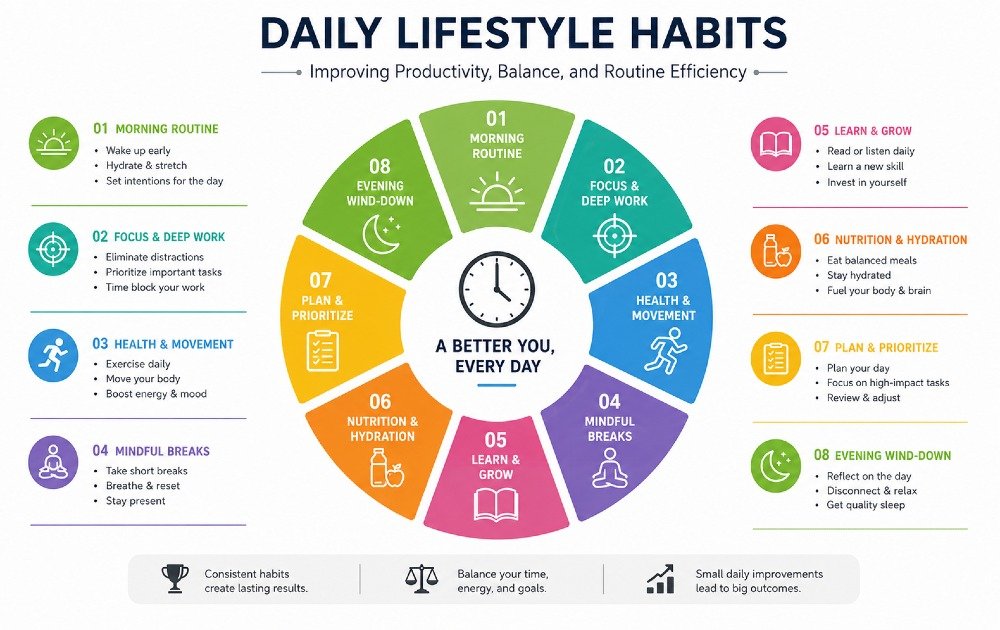
Even a good routine can lose effectiveness when daily habits work against it.
Common issues include:
- Long periods of sitting
- Poor hydration
- Excessive screen time
- Irregular sleep patterns
- Ongoing stress
Strengthen your routines:
- Drink water regularly
- Move throughout the day
- Spend time outdoors
- Manage stress before it builds
- Limit screen use before bed
- Stay socially connected
Core advantages:
- Better energy levels
- Improved recovery
- Enhanced mood
- Stronger immune health
- Better overall well-being
Sleep Routine for Better Aging
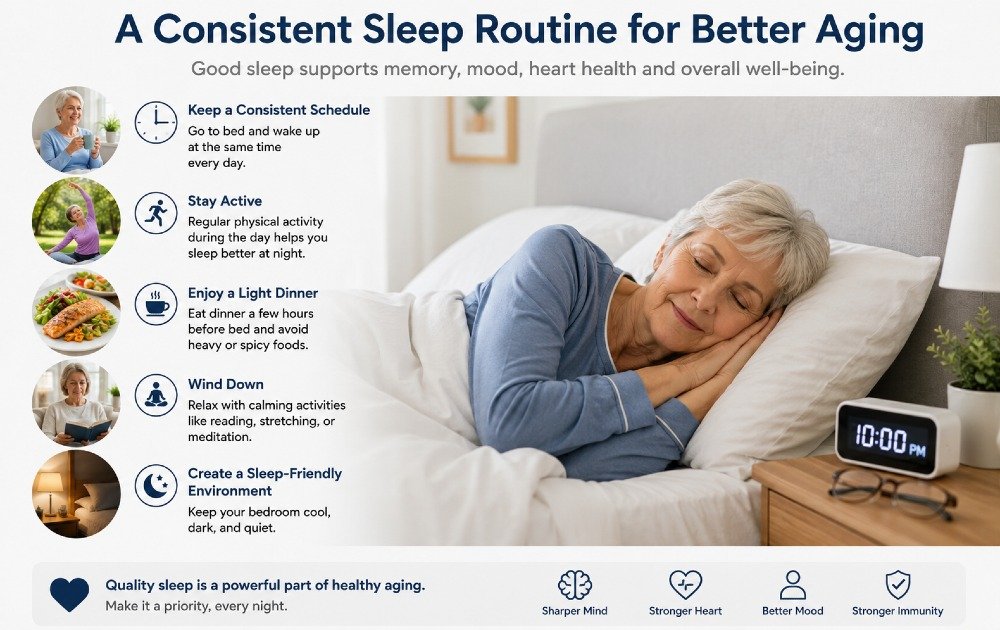
As people age, sleep problems become more common, leaving many adults struggling to fall asleep, stay asleep, or wake feeling rested.
Poor sleep can affect:
- Energy
- Memory
- Mood
- Heart health
- Weight management
Follow quality sleep routine:
- Maintain a consistent sleep schedule by retiring for the night and starting your day at the same hour every day.
- Avoid caffeine late in the day
- Limit heavy meals before bedtime
- Keep your bedroom cool, dark, and quiet
- Power down electronic devices at least 60 minutes before bedtime to support better sleep quality
Relaxing evening routine:
- Read a book
- Stretch gently
- Practice deep breathing
- Listen to calming music
Core advantages:
- Improved focus and memory
- Better mood
- Stronger immunity
- More energy during the day
- Better overall recovery
Mental Health Routine for Seniors

Mental health is key to healthy aging, but ongoing stress, isolation, and life changes can quietly affect sleep, motivation, and overall quality of life.
Strengthen emotional health and resilience by:
- Keeping a gratitude journal
- Reading daily
- Learning new skills
- Staying connected with family and friends
- Practicing meditation or mindfulness
- Participating in hobbies you enjoy
Core advantages:
- Lower stress levels
- Better emotional balance
- Improved mental sharpness
- Stronger sense of purpose
- Better social connections
Mental wellness is just as important as physical health for aging well.
Routine for Weight Management After 50
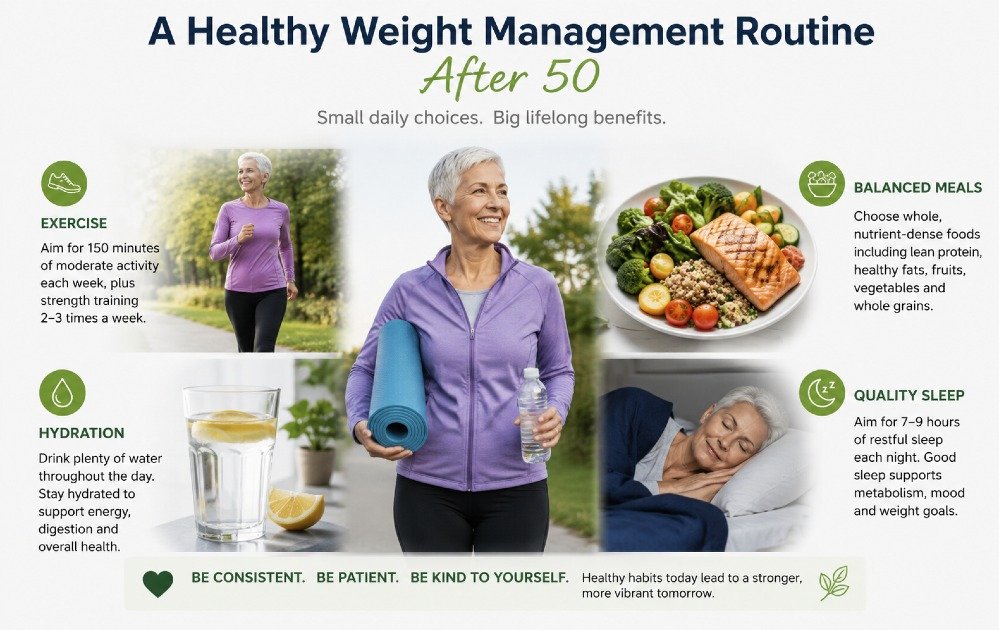
After 50, a slower metabolism and muscle loss make it harder to maintain a healthy weight, so old habits may no longer work.
Long-term weight management depends on consistency, not restriction.
Focus on:
- Including protein with every meal
- Eating more vegetables and fiber-rich foods
- Staying physically active each day
- Strength training several times weekly
- Drinking enough water
- Getting quality sleep
Helpful strategies include:
- Planning meals ahead of time
- Watching portion sizes
- Eating without distractions
- Limiting highly processed foods
Core advantages:
- Increased energy
- Better mobility
- Improved blood sugar control
- Less stress on joints
- Lower risk of chronic disease
Frequently Asked Questions
What is the best daily routine after 50?
An effective wellness routine is built on staying active, eating nourishing foods, getting enough rest, managing stress, and keeping your brain challenged.
How much exercise should adults over 50 get each week?
Aim for at least 150 minutes of moderate physical activity each week, along with two or more strength-training sessions.
Walking, resistance training, stretching, and balance exercises all support healthy aging.
Can I naturally improve my energy levels after 50?
Yes. Better sleep, regular exercise, proper hydration, and nutrient-dense meals can significantly improve energy levels.
Many people notice positive changes within a few weeks of adopting healthier daily habits.
Why is strength training important after 50?
Strength training helps maintain muscle mass, support bone health, improve balance, and preserve independence.
It also supports metabolism and makes everyday activities easier.
What is the biggest mistake people make when creating a healthy aging routine?
Trying to change everything at once. Lasting results come from focusing on a few important habits and building on them over time. Consistency always beats short-term intensity.
Recap: Create Long-Term Results Through Daily Routines
Healthy aging is built through daily choices, not occasional efforts.
A well-designed routine after 50 can restore energy, improve strength, and help you feel more in control of your daily life again.
Prioritizing movement, nutritious food, restorative sleep, and stress management provides a strong foundation for long-term health.
Create daily routines that make healthy choices easier to maintain over time. Let your routine do the heavy lifting for a quality health and life.
Ready to Break Free From Low Energy and Declining Strength
You don’t need a complicated strategy that makes healthy aging feel unattainable.
You are ready to feel stronger, move with confidence, and stay active for years to come.
This resistance band will help you build the strength, balance, and energy that support healthy aging after 50.