
Worried that turning 50 means accepting lower energy, weaker muscles, poor sleep, or declining health? Aging is inevitable, but feeling your best as you age is influenced by the habits you build now.
The National Institute on Aging emphasizes that regular physical activity, nutritious food choices, quality sleep, mental well-being, and proactive healthcare can support healthy aging and quality of life.
This gide explores how healthy aging can help you protect your strength, independence, energy, and well-being.
Why Healthy Aging Matters
After 50, age-related changes can affect muscle strength, mobility, sleep, and long-term health.
Healthy aging habits help preserve physical function, support better sleep, and maintain independence as you age.
Healthy Aging Habits to Start
Neglecting daily wellness routines can make it harder to maintain strength, energy, and healthy function over time.
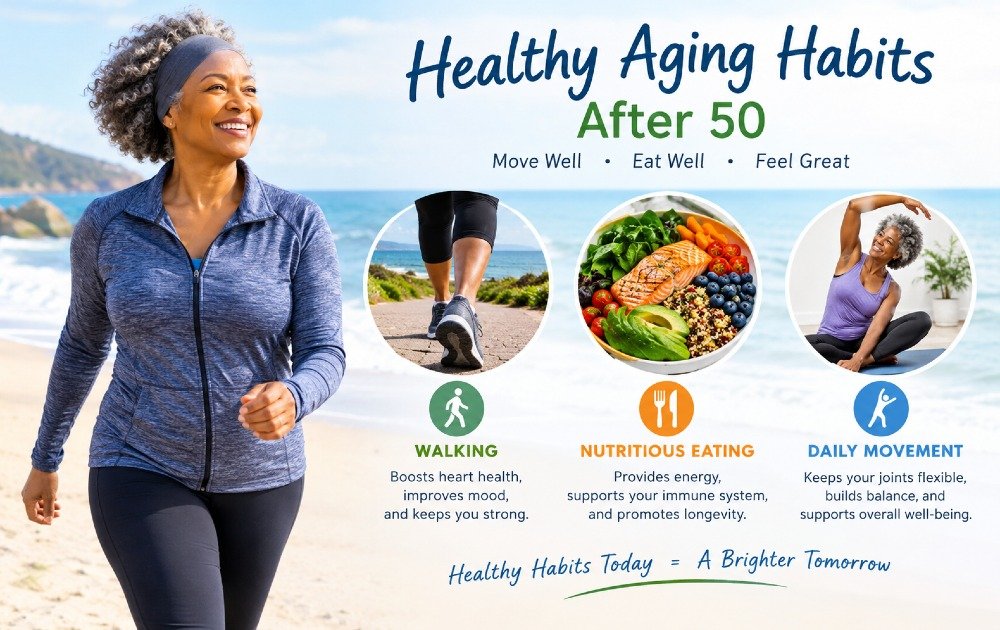
Regular movement, nutritious meals, quality sleep, and social connection support healthier aging and everyday vitality.
How to Build Healthy Aging Habits
Uncomplicated routines are easier to maintain than major lifestyle changes.
Start with small, consistent steps to build lasting healthy aging habits that support strength, mobility, and well-being after 50.
12 Daily Habits That Protect Your Future Health
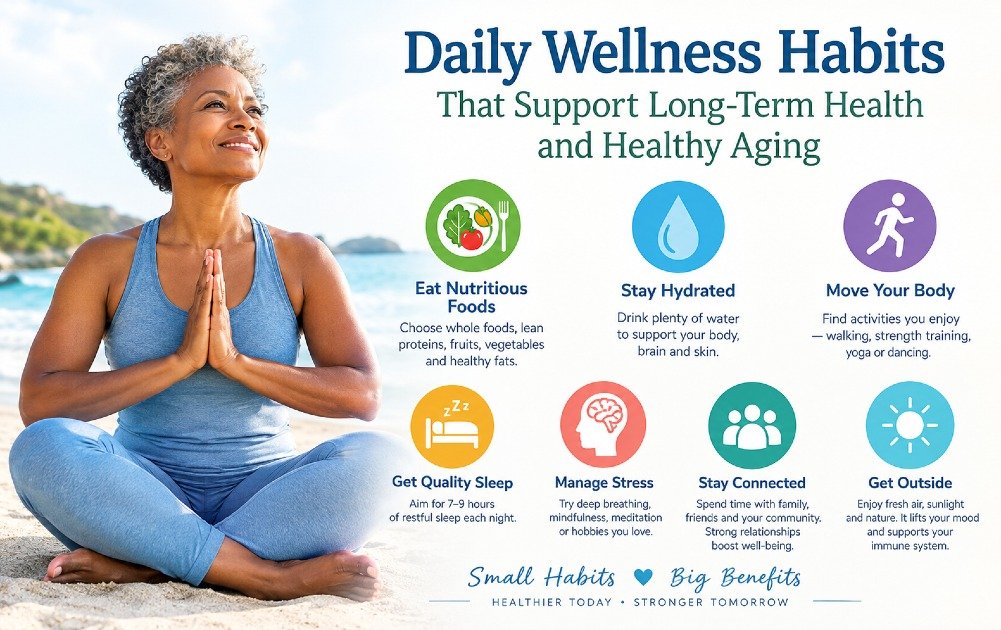
You may feel fine today, but unhealthy routines can quietly shape the health problems you face tomorrow.
Poor nutrition, inactivity, inadequate sleep, and skipping preventive care can increase your risk of chronic disease over time.
Discover how these twelve daily habits protect your future health and make lasting health a daily priority.
Make Daily Movement Non-Negotiable
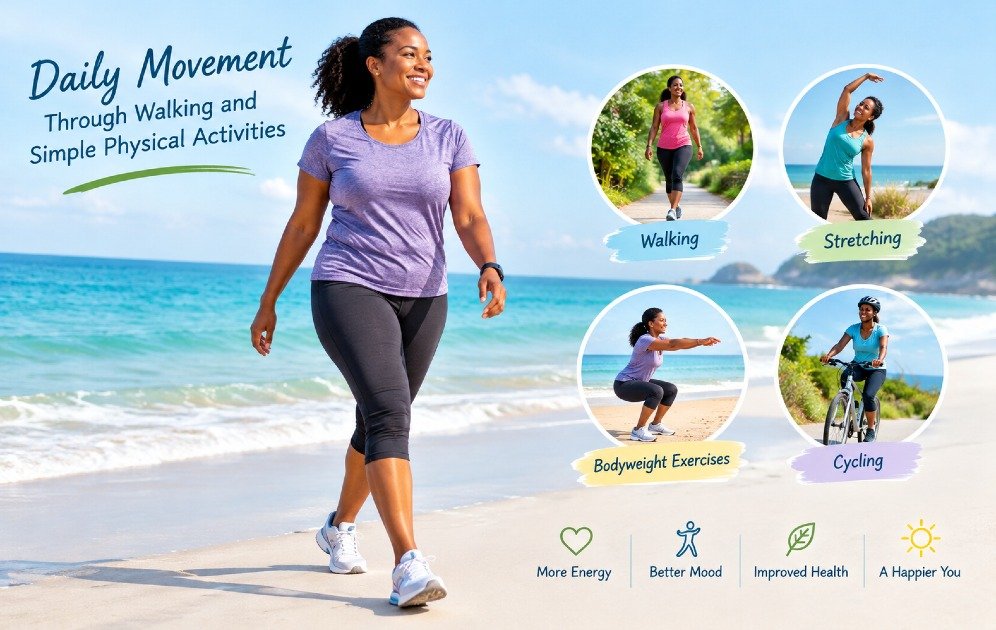
Skipping daily movement can weaken healthy habits over time, but small, consistent steps help you build strength and support healthy aging.
Why it matters:
Daily movement supports mobility, heart health, and independence, helping you stay active as you age.
What works for me:
I make movement non-negotiable by taking daily walks, using a fitness tracker to monitor my steps, and building consistency one day at a time.
How to start:
- Take a 10–20 minute walk after one meal.
- Stand and move around every 30–60 minutes during long periods of sitting.
- Add gentle mobility exercises in the morning.
- Gradually work toward the CDC activity recommendations.
- Choose activities you enjoy enough to repeat.
Strengthen Your Muscles Twice a Week

Skipping strength training can weaken muscles over time, but twice-weekly workouts can help you build strength and support healthy aging.
Why it matters:
Regular strength training helps preserve muscle, improve balance, and maintain independence as you age.
What works for me:
I build strength with two weekly resistance workouts and use resistance bands for convenient, joint-friendly exercise that supports healthy aging.
How to start:
- Begin with two strength sessions per week.
- Practice controlled squats or chair stands.
- Add wall push-ups or modified push-ups.
- Use resistance bands for rows and presses.
- Increase resistance gradually as your strength improves.
Protect Your Mobility and Balance
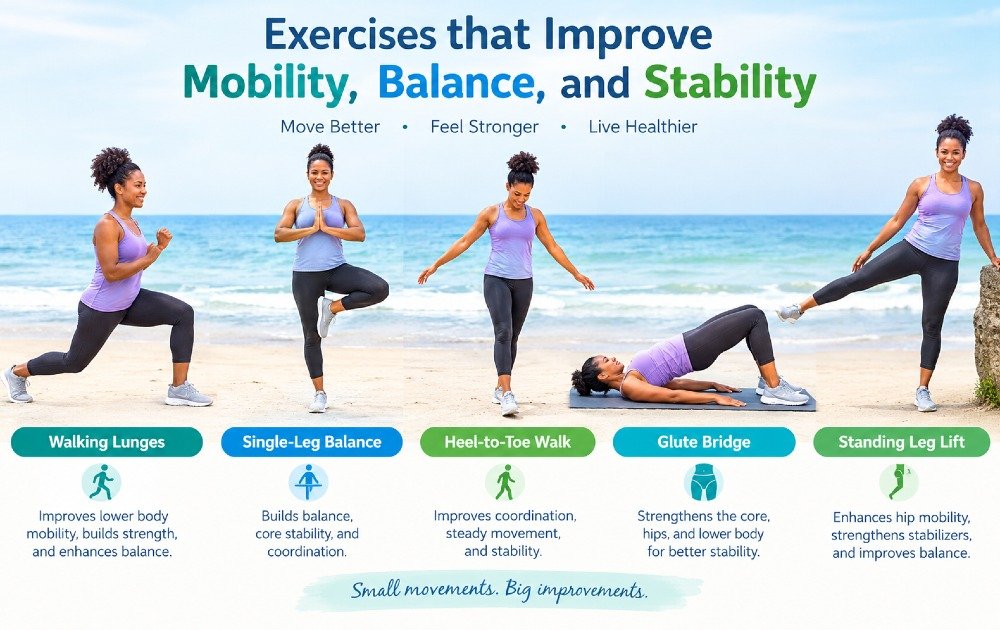
Losing mobility and balance can limit independence with age, but simple daily movements can help protect strength, stability, and confidence during healthy aging.
Why it matters:
Better mobility and balance help reduce fall risk, support independence, and keep everyday activities manageable as you age.
What works for me:
I practice daily balance exercises and gentle strength training, using a balance trainer to support stability, confidence, and healthy aging.
How to start:
- Practice standing from a chair without using your hands.
- Try gentle heel-to-toe walking near a stable surface.
- Add yoga or stretching several times each week.
- Work on ankle, hip, shoulder, and upper-back mobility.
- Stop an exercise if it causes significant pain or instability.
Build Meals Around Nutrient-Dense Foods

Relying on low-nutrient meals can leave gaps in your daily nutrition, but nutrient-dense foods help you build stronger habits for healthy aging.
Why it matters:
Nutrient-dense foods supply essential vitamins, minerals, protein, and fiber to help sustain daily energy, maintain muscle strength, and promote healthy aging.
What works for me:
I build meals around vegetables, fruits, lean protein, and whole grains, using a food journal to track nutrient intake and support healthy aging.
How to start:
- Include vegetables or fruit at most meals.
- Add a quality protein source to meals and snacks.
- Choose whole grains more often.
- Include beans, peas, lentils, nuts, seeds, seafood, eggs, or other appropriate protein foods.
- Choose fewer heavily refined packaged foods loaded with excess salt and added sugars to support better overall health.
Pay Attention to Protein

Skipping protein can leave you missing key nutrients your body needs to maintain strength, energy, and healthy aging.
Why it matters:
Adequate protein helps preserve muscle, support recovery, and maintain strength as you age.
What works for me:
I include protein-rich foods in my daily meals and use a quality protein powder when needed to support strength and healthy aging.
How to start:
- Add eggs or yogurt to breakfast.
- Include beans, lentils, poultry, seafood, tofu, or another protein source at lunch.
- Add a protein-rich food to dinner.
- Keep simple protein options available for snacks.
- Ask a registered dietitian about individual protein needs if you have specific medical or dietary concerns.
Make Sleep a Health Priority

Poor sleep can drain your energy and weaken healthy habits, but prioritizing nightly rest helps you age stronger and feel better.
Why it matters:
Quality sleep supports memory, mood, immune function, and healthy aging while helping your body recover.
What works for me:
I protect my sleep with a consistent bedtime, a calming evening routine, and a sleep tracker to monitor my rest and build better habits.
How to start:
- Aim for 7–9 hours of sleep.
- Go to bed and wake up around the same time.
- Keep your bedroom quiet and comfortable.
- Avoid large meals, caffeine, or alcohol close to bedtime.
- Reduce screen use before bed.
Stay Hydrated Throughout the Day

Even mild dehydration can drain your energy, but consistent hydration helps you feel better and supports healthy aging.
Why it matters:
Drinking enough water supports digestion, temperature regulation, and physical function as you age.
What works for me:
I keep a reusable smart water bottle nearby to track my intake, build consistent hydration habits, and support healthy aging.
How to start:
- Keep water within easy reach.
- Make water a regular part of your daily routine rather than waiting for thirst to signal that you need a drink.
- Carry a reusable bottle when leaving home.
- Drink water with meals.
- Increase fluids appropriately during heat or physical activity.
Manage Stress Before It Manages You

Unmanaged stress can drain your energy and disrupt sleep, but simple daily habits can restore calm and support healthy aging.
Why it matters:
Managing stress helps protect emotional well-being, improve sleep, and support healthier aging over time.
What works for me:
I manage stress by practicing mindful breathing, taking short walks, and using a guided meditation platform to reset my mind and build lasting calm.
How to start:
- Take five slow breaths when stress rises.
- Walk outside for 10 minutes.
- Write down the problem instead of repeatedly thinking about it.
- Protect a short period of quiet time each day.
- Reduce unnecessary commitments when your schedule becomes overwhelming.
Stay Connected With Other People

Social isolation can weaken well-being, but staying connected with others builds meaningful relationships that support healthy aging.
Why it matters:
Regular social connections support emotional well-being, mental sharpness, and a stronger sense of belonging as you age.
What works for me:
I make time for regular calls, shared activities, and meaningful conversations, using a guided social wellness journal to nurture connections and support healthy aging.
How to start:
- Schedule one meaningful conversation each week.
- Invite someone for a walk.
- Join a community or activity group.
- Volunteer for something meaningful.
- Stay connected with family and friends even when schedules become busy.
Keep Your Brain Active

Mental sharpness can fade when you stop challenging your mind, but daily mental activities can support focus, memory, and healthy aging.
Why it matters:
Keeping your brain active supports cognitive function, mental engagement, and independence as you age.
What works for me:
I challenge my mind with reading, puzzles, and learning new skills, and a brain-training journal helps me stay consistent with my healthy aging goals.
How to start:
- Read regularly.
- Learn a new skill.
- Try puzzles or strategy games.
- Take a class that interests you.
- Teach someone something you already know.
Keep Up With Preventive Health Care

Skipping preventive care can allow health problems to go unnoticed, but regular checkups help you protect your health and support healthy aging.
Why it matters:
Routine screenings, vaccinations, and health assessments help detect risks early and support better long-term health.
What works for me:
I schedule routine checkups, track my screenings, and use a health-tracking journal to stay proactive about healthy aging and my overall well-being.
How to start:
- Schedule recommended preventive appointments.
- Keep an updated medication list.
- Know your important health numbers.
- Ask which screenings are appropriate for your age and risk factors.
- Discuss vaccinations with your healthcare professional.
- Bring a written list of questions to appointments.
Track Your Habits Instead of Chasing Perfection

Chasing perfection can stall progress, but tracking small daily habits builds consistency and supports healthy aging.
Why it matters:
Tracking your habits reveals progress, strengthens accountability, and turns healthy choices into lasting routines.
What works for me:
I track my daily habits with a simple journal or habit tracker journal to stay consistent, celebrate small wins, and build healthier routines for healthy aging.
How to start:
Try tracking these five habits for 30 days:
- ☐ Daily movement
- ☐ Strength training
- ☐ Consistent sleep
- ☐ Nutritious meals
- ☐ Stress-recovery time
A Simple Weekly Healthy Aging Routine
A simple weekly healthy aging routine helps you build consistent habits that support strength, energy, and overall well-being as you age.
Without a regular plan, healthy habits like physical activity, nutritious eating, and quality sleep can easily be overlooked.
A simple weekly plan supports healthy aging by improving mobility, preserving strength, and helping you maintain independence as you grow older.
Frequently Asked Questions
What is the most important habit for healthy aging after 50?
There’s no one-size-fits-all habit, but regular exercise, nutritious eating, quality sleep, strength training, social connection, stress management, and preventive care can strengthen healthy aging—start with the change that will make the biggest difference in your daily life.
How can I start healthy aging after 50 if I have not exercised in years?
Start gradually with walking, mobility, and basic strength exercises, building activity safely to improve fitness while matching your abilities and health needs.
How much sleep do adults over 50 need?
Most adults need 7–9 hours of sleep nightly, but persistent sleep problems or daytime fatigue warrant a healthcare professional’s advice.
What foods support healthy aging after 50?
Choose a varied, nutrient-dense eating pattern with vegetables, fruits, whole grains, protein, and suitable dairy or fortified alternatives while limiting added sugar, saturated fat, and sodium, and adjusting choices for your individual health needs.
Can it really be too late to start healthy habits after 50?
You don’t need to undo the past—focus on today’s healthier choices, from better sleep and meals to daily movement, strength, social connection, and preventive care.
Recap: Make Your Next 10 Years Healthier
After 50, waiting for health problems to appear can cost you strength, independence, and quality of life.
The better approach is to start protecting your future health today by moving regularly, eating nutrient-rich foods, prioritizing quality sleep, managing stress, staying socially connected, and keeping up with preventive care.
Your age does not have to define your health—your daily choices can help shape the years ahead.
Ready To Track Your Health After 50?
Still guessing whether your daily habits are supporting your health after 50?
Discover how to make your health goals measurable with a fitness tracker that monitors activity, heart rate, sleep, and other key wellness metrics—use what you learn to build stronger habits for the years ahead.