
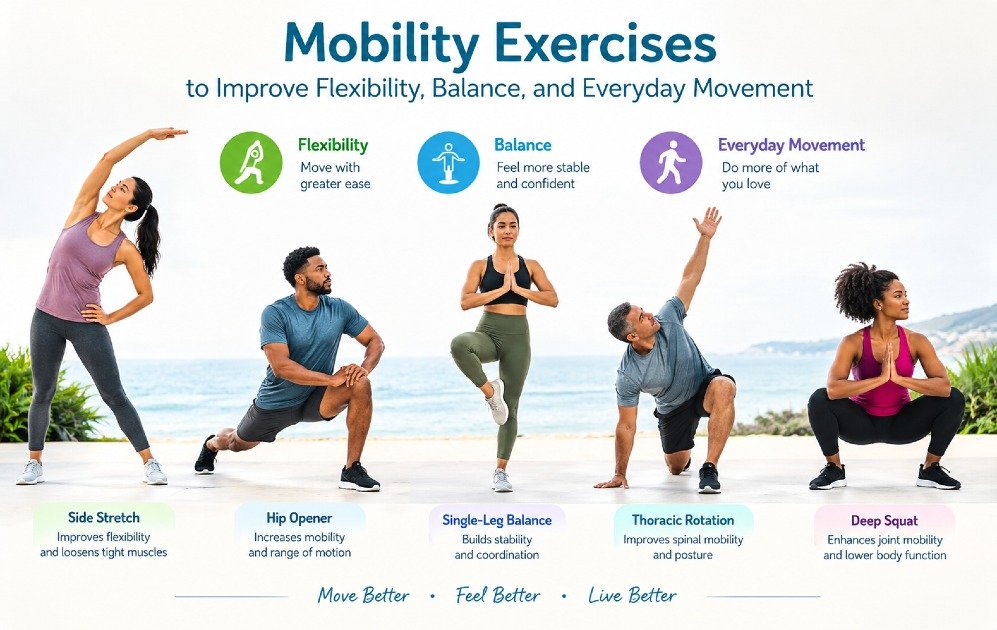
Feeling stiff, limited, or less confident with everyday movement can make simple tasks feel harder than they should.
The CDC recommends regular physical activity that supports strength, balance, and physical function, all of which can help you stay active and independent.
This guide explains how mobility exercises can help you move with greater ease, build functional strength, and make everyday movement feel more natural.
Why Mobility Matters
Limited joint mobility can make walking, bending, and reaching more difficult.
Stiff joints and restricted movement can interfere with daily activities.
Regular mobility exercise helps improve range of motion and makes everyday movements easier.
What Mobility Exercises Involve
Mobility exercises use controlled movements to improve joint movement, flexibility, and coordination.
Poor mobility can limit comfortable movement and make routine tasks harder.
Targeted exercises help maintain joint function and support smoother, more comfortable movement.
How to Improve Everyday Movement
Practice gentle mobility exercises daily, focusing on the hips, shoulders, ankles, and spine.
Inconsistent movement can contribute to stiffness and reduced flexibility.
A simple daily routine helps maintain mobility, improve movement control, and make everyday activities easier.
10 Simple Moves to Improve Mobility and Everyday Function
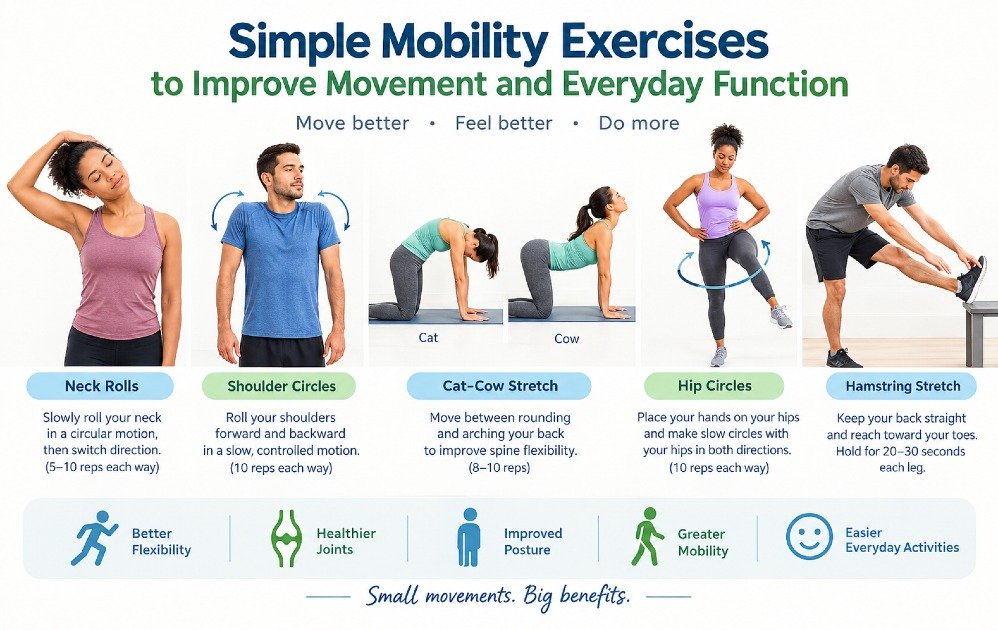
Feeling restricted with everyday movements can reduce physical function and limit mobility.
Limited mobility can affect how easily you walk, bend, reach, climb stairs, or get up from a chair.
Discover how these ten moves can help you move with greater ease, build confidence, and make daily movement feel more natural.
Cat-Cow Movement
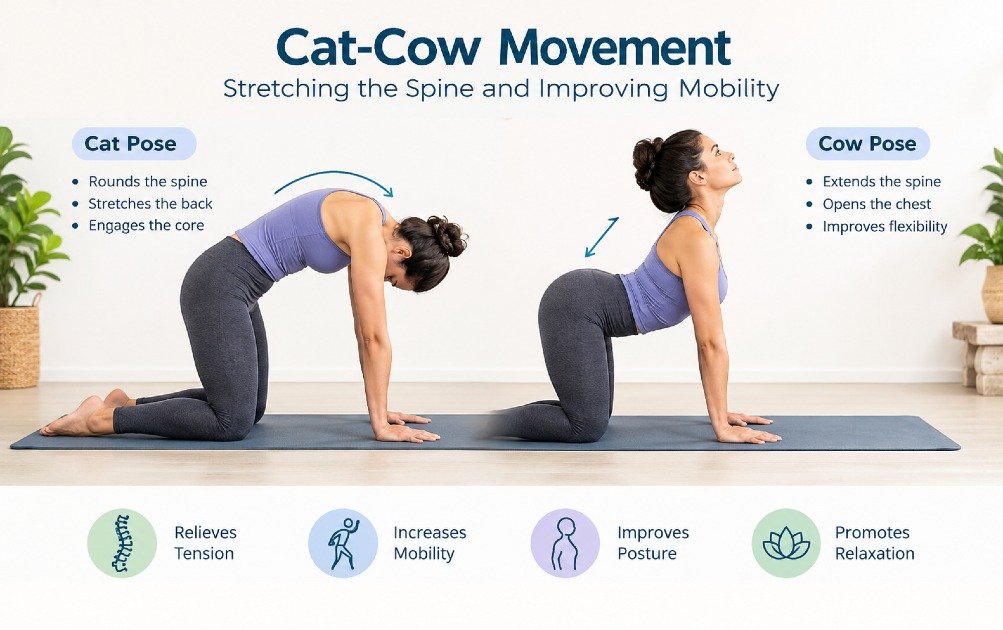
Cat-Cow is a gentle mobility exercise that helps loosen the spine and improve flexibility through controlled movement.
Why it matters:
Regular Cat-Cow movement supports spinal mobility, reduces stiffness, and helps you move more comfortably.
What works for me:
I pair Cat-Cow with a supportive yoga mat to practice slow, controlled movements and build a consistent mobility routine.
How to start:
- Perform 6–10 slow repetitions.
- Coordinate your breathing with the movement.
- Keep the motion comfortable rather than exaggerated.
- Focus on moving one section of your spine at a time.
- Stop if the movement causes sharp or unusual pain.
Standing Hip Circles
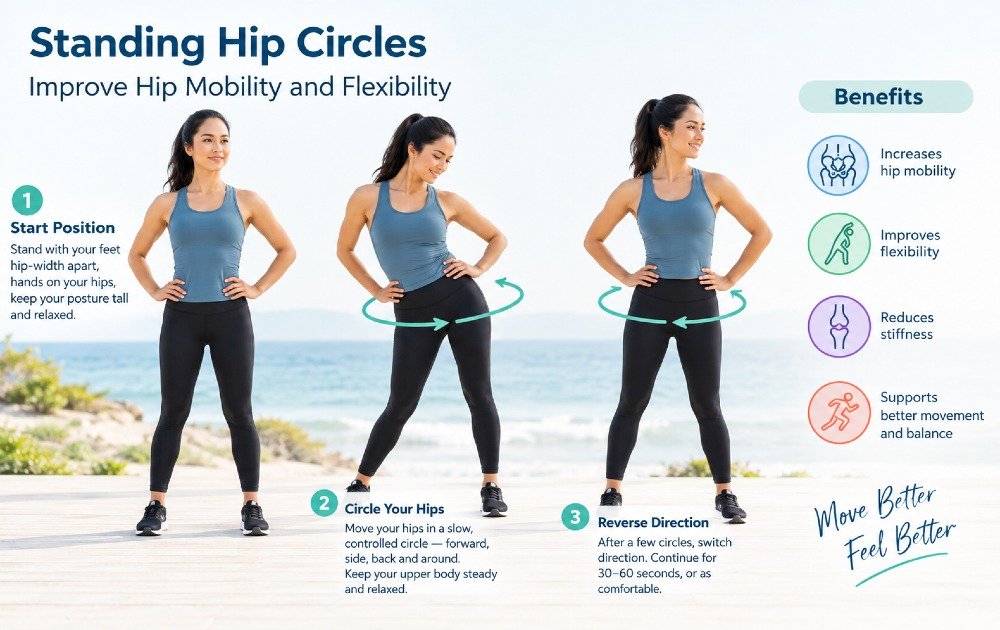
Standing hip circles are a simple mobility exercise that helps loosen stiff hips and improve everyday movement.
Why it matters:
Better hip mobility supports flexibility, balance, and smoother movement during walking, bending, and daily activities.
What works for me:
I start with slow, controlled standing hip circles and use a hip mobility band for added support in my mobility routine.
How to start:
- Begin with 5–8 circles per direction.
- Keep the circles small at first.
- Maintain an upright posture.
- Hold a stable surface if balance feels uncertain.
- Gradually increase the circle only when the movement feels comfortable.
Shoulder Circles
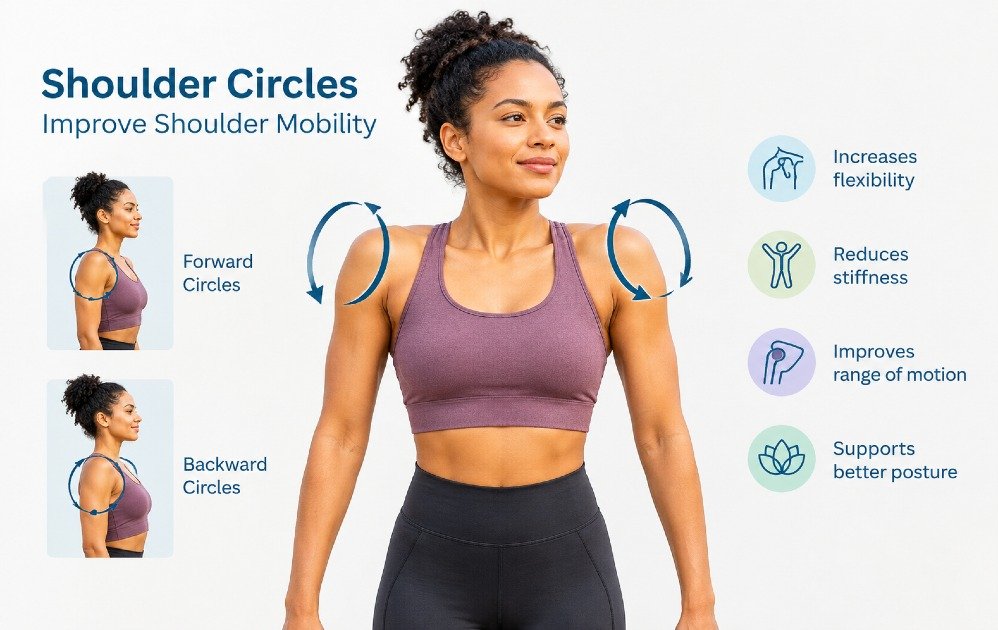
Shoulder circles are a simple mobility exercise that helps loosen stiff shoulders and improve everyday movement.
Why it matters:
Regular shoulder circles support shoulder mobility, reduce stiffness, and make daily activities more comfortable.
What works for me:
I start with slow, controlled shoulder circles and use a resistance band to support my mobility routine and build shoulder strength over time.
How to start:
- Perform 5–10 circles in each direction.
- Keep your neck relaxed.
- Avoid shrugging aggressively.
- Move slowly rather than relying on momentum.
- Keep the range comfortable.
Ankle Rocks
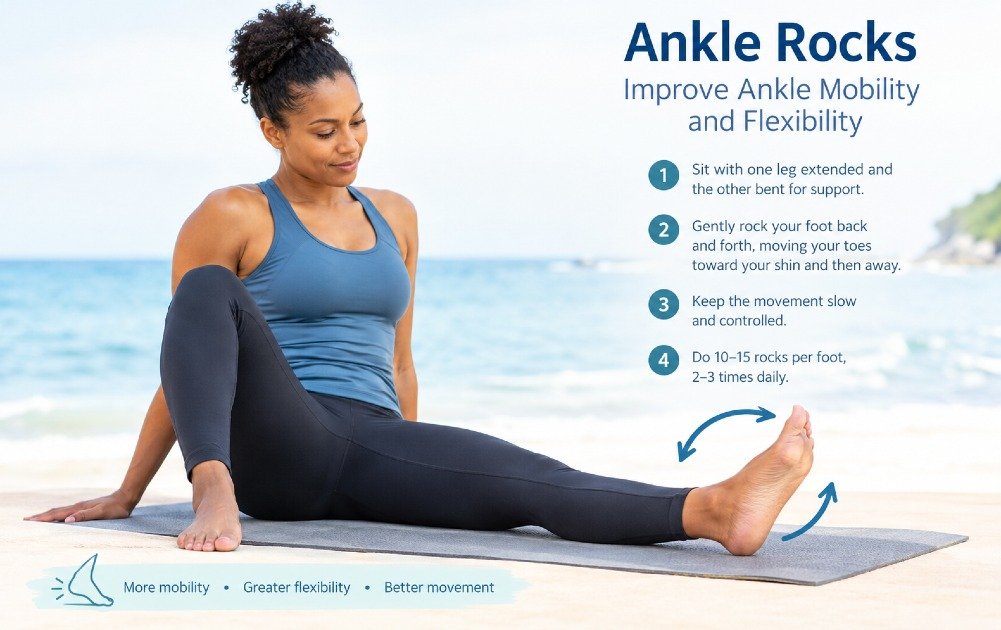
Stiff ankles can limit comfortable movement, but ankle rocks offer a simple mobility exercise to improve flexibility and support smoother steps.
Why it matters:
Ankle rocks help improve ankle mobility and support better balance, walking, and everyday movement.
What works for me:
I use ankle rocks before walking or exercising and pair them with supportive exercise shoes to make this mobility exercise more comfortable and consistent.
How to start:
- Begin with 8–10 repetitions per side.
- Keep your heel connected to the floor.
- Use a wall for balance.
- Move gradually rather than forcing the knee forward.
- Compare how each ankle feels without trying to make both sides identical.
Seated Knee Extensions
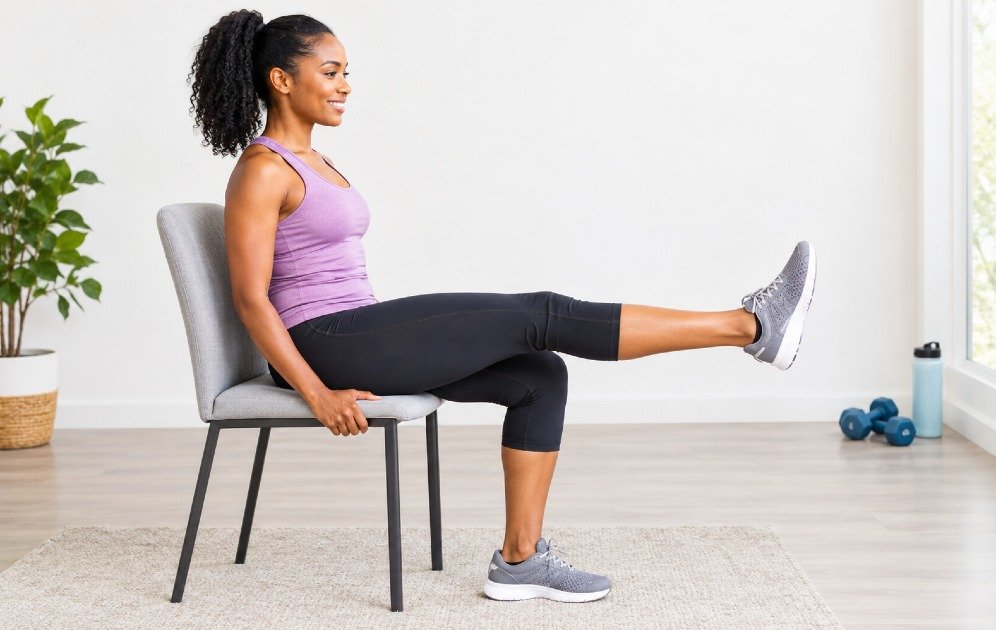
Seated knee extensions are a simple mobility exercise that strengthens the thighs and supports everyday movement.
Why it matters:
Stronger thigh muscles help support knee stability, walking, and standing from a chair.
What works for me:
I use slow, controlled seated knee extensions with light ankle weights to build thigh strength and support better mobility.
How to start:
- Perform 8–12 repetitions per leg.
- Move slowly through the available range.
- Keep your thigh supported by the chair.
- Avoid snapping the knee straight.
- Stop if the movement causes pain.
Standing Torso Rotations
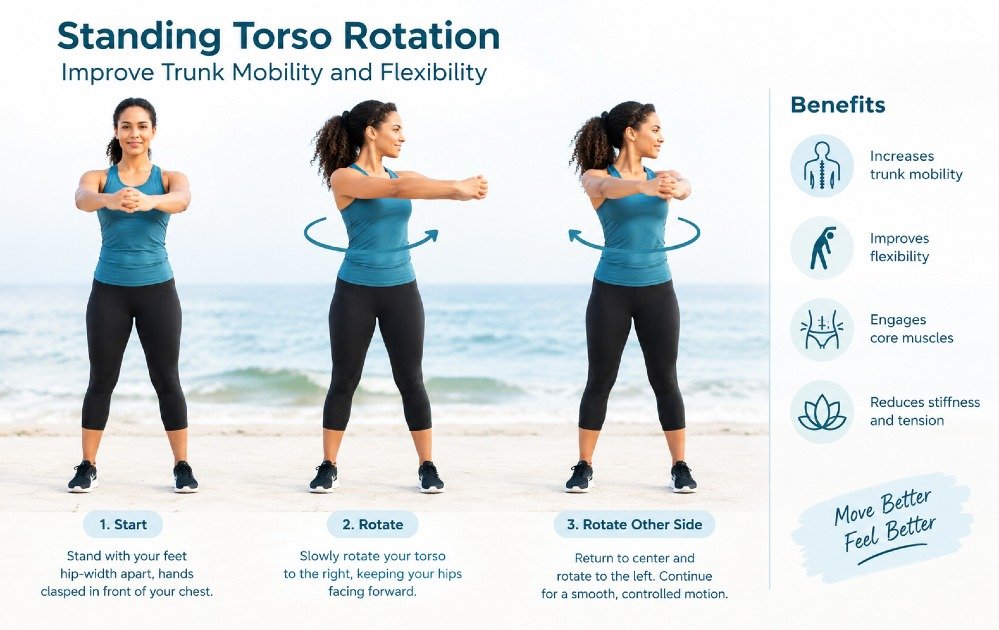
Standing torso rotations are a simple mobility exercise that helps loosen your torso and improve comfortable movement.
Why it matters:
Regular torso rotations support spinal mobility, flexibility, and smoother movement during everyday activities.
What works for me:
I start with slow, controlled standing torso rotations and use a stretching strap to support my mobility routine and maintain consistent movement.
How to start:
- Perform 6–10 rotations per side.
- Keep your movement controlled.
- Avoid forcing the rotation.
- Keep your feet stable.
- Turn only as far as feels comfortable.
Wall Angels
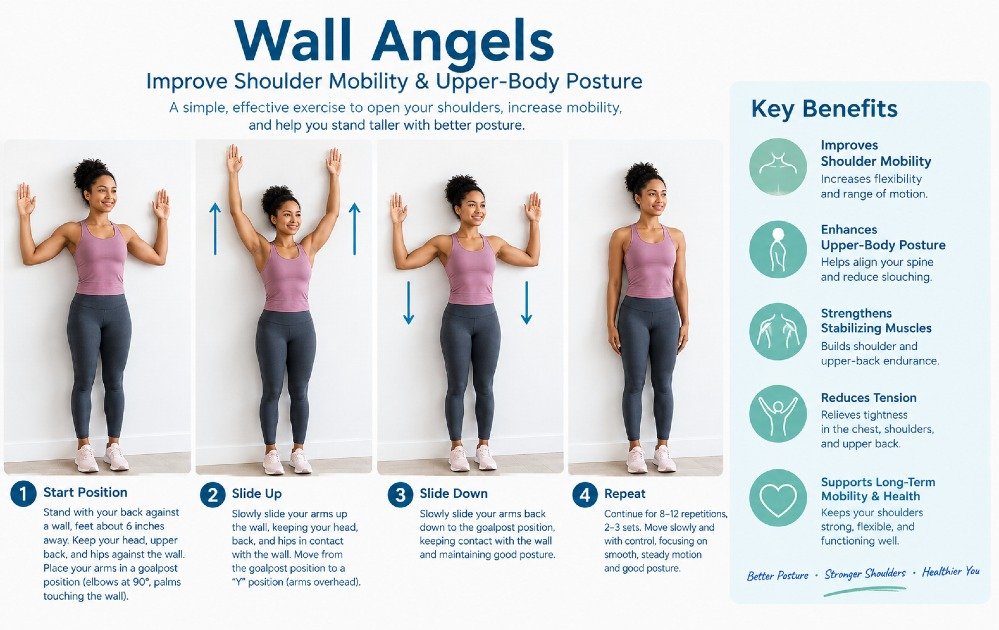
Poor posture and tight shoulders can limit movement, but wall angels offer a simple mobility exercise to improve shoulder mobility and upper-back control.
Why it matters:
Wall angels encourage better posture, shoulder flexibility, and controlled movement when practiced consistently.
What works for me:
I practice wall angels slowly against a wall and use a posture corrector as an optional reminder to maintain alignment during daily activities.
How to start:
- Perform 5–8 controlled repetitions.
- Do not force your arms against the wall.
- Keep your ribs from flaring excessively.
- Move through a comfortable range.
- Reduce the range if your shoulders feel restricted.
Sit-to-Stand

Limited movement can weaken everyday mobility, but sit-to-stand exercises help build strength and make daily activities easier.
Why it matters:
Limited movement can weaken everyday mobility, but sit-to-stand exercises help build strength and make daily activities easier.
What works for me:
I practice controlled sit-to-stand repetitions using a sturdy chair and promote a resistance band to support a stronger, more consistent mobility routine.
How to start:
- Begin with 5–10 repetitions.
- Use a chair with a stable seat.
- Keep your feet planted.
- Push through your feet as you stand.
- Use your hands for assistance if necessary.
Standing Side Bends
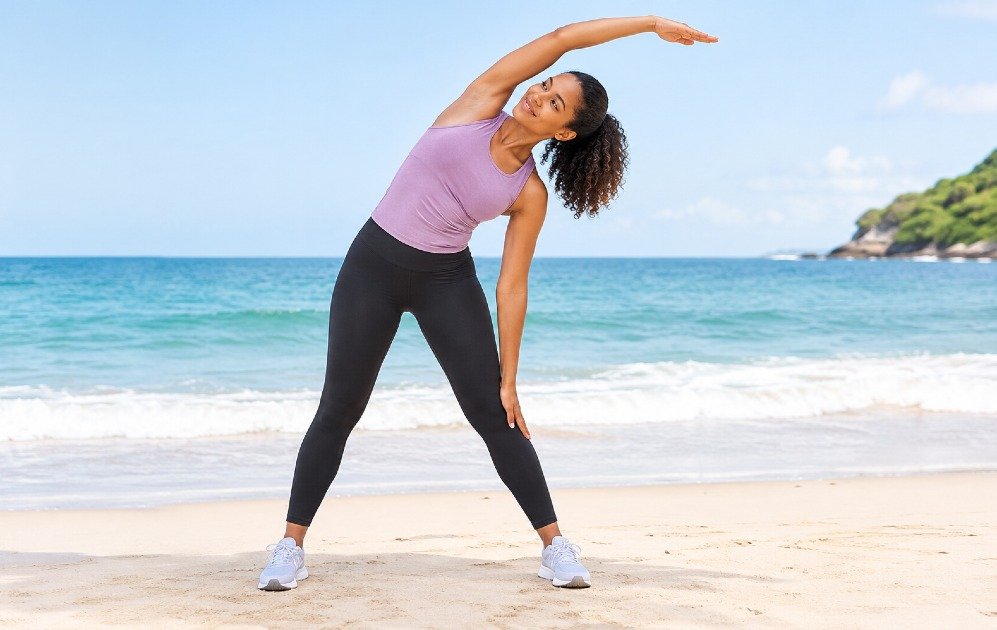
Standing side bends are a simple mobility exercise that helps loosen the sides of your torso and improve flexibility.
Why it matters:
This movement supports spinal mobility, side-body flexibility, and easier everyday reaching and bending.
What works for me:
I pair slow, controlled standing side bends with a supportive yoga mat to improve comfort and consistency in my mobility exercise routine.
How to start:
- Perform 5–8 repetitions per side.
- Keep the movement slow.
- Avoid collapsing forward.
- Keep both feet grounded.
- Stop before you reach a painful position.
Heel-to-Toe Walking
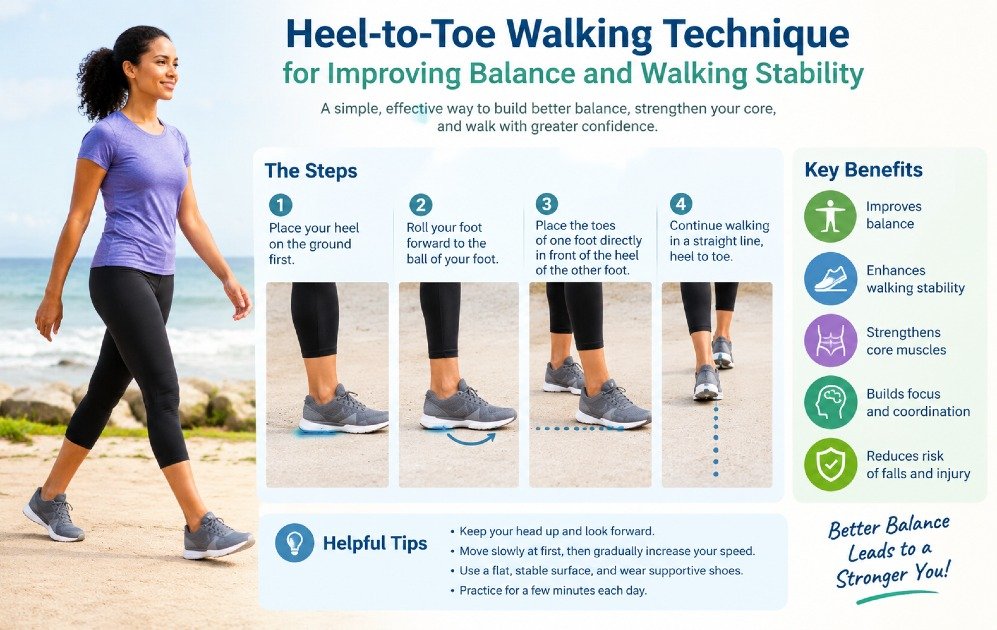
Poor balance can make everyday movement feel uncertain, but heel-to-toe walking offers a simple mobility exercise to improve walking control and stability.
Why it matters:
Heel-to-toe walking challenges balance, coordination, and body awareness, helping support safer movement during daily activities.
What works for me:
I practice heel-to-toe walking along a clear, stable path and use a balance trainer for added support and confidence as my mobility improves.
How to start:
- Begin with 5–10 controlled steps.
- Stay close to a stable support.
- Look forward rather than down continuously.
- Move slowly.
- Stop if you feel unsteady.
How Often Should You Do Mobility Exercises?
Mobility exercises help maintain joint flexibility and make everyday movements easier and more comfortable.
Inconsistent mobility exercise can limit flexibility and make daily activities harder over time.
Performing mobility exercises most days helps improve joint movement and flexibility, making everyday activities easier.
Common Mistakes to Avoid With Mobility Exercises
Avoiding common mobility exercise mistakes helps you move safely, protect your joints, and improve everyday movement.
Poor form, forced movements, and excessive stretching can cause strain and limit mobility progress.
Proper technique and controlled progression help improve joint movement, reduce injury risk, and make daily activities easier.
When to Modify or Stop an Exercise
Learn when to modify or stop exercise to protect your body and keep moving safely.
Pushing through pain, dizziness, or unusual fatigue during mobility exercise can increase the risk of injury.
Adjusting or stopping exercise when warning signs appear helps prevent further strain and supports safer, more consistent movement.
Frequently Asked Questions
What are the best mobility exercises for beginners?
Start with beginner-friendly moves like shoulder circles, cat-cow, ankle rocks, knee extensions, and hip circles, using controlled movements to gradually improve mobility and range of motion.
How long should a mobility routine last?
Start with 5–10 minutes and break mobility work into short daily sessions you can consistently maintain.
Can mobility exercises improve flexibility?
Mobility combines flexibility with movement control, while stretching can improve flexibility and range of motion for easier daily movement.
Are mobility exercises good for older adults?
For adults 65+, combine them with aerobic, strength, and balance activities to support a well-rounded weekly fitness plan recommended by the CDC.
Can I do mobility exercises every day?
Gentle mobility exercises can support a daily routine when matched to your abilities, varied in intensity, and never pushed through pain.
Recap: Make Every Move Count for Better Mobility
Limited mobility can slowly turn simple movements into frustrating challenges.
Spend a few minutes each day practicing mobility exercises, then gradually build toward a more active routine that keeps your body moving and your everyday function strong.
Start today, track your progress, and make better mobility part of your long-term health goal. Move with greater ease, flexibility, and confidence while supporting the activities that matter most every day.
Ready To Move With More Confidence?
Still feeling stiff, restricted, or hesitant during everyday movement? You can build better mobility, move with greater ease, and make daily movement a health goal worth tracking.
Discover how this fitness tracker monitors your daily steps, activity, and movement progress while staying accountable to your mobility goals.