


If your mind feels overloaded, you’re not alone. You jump from thought to thought. You try to focus, but distractions win, leaving you drained with little to show for the day.
You don’t need more discipline. You need a system to organize your thoughts. Journaling does exactly that.
This guide explains simple habits you can start today to clear your thoughts, lower stress, and sharpen decisions without overwhelm.
Why Journaling Works

Most people quit because they believe they’re doing it wrong. They chase perfect wording, overthink every line, and eventually give up.
Reality:
It isn’t about writing well—it’s about thinking clearly.
APA highlights that expressive writing can improve mental clarity and emotional health.
Keep it simple:
- Write freely
- Stay consistent
- Focus on clarity, not perfection
The key is to build a habit that actually works.
What Are Journaling Habits?
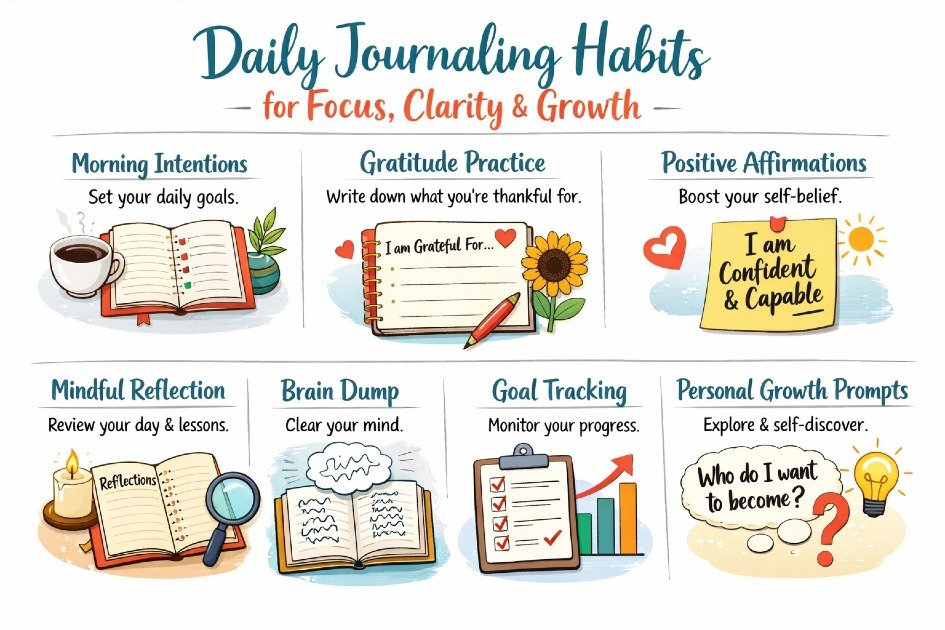
Journaling habits are regular, intentional writing practices that help you process thoughts, track progress, and understand your daily experiences more clearly.
Common types of habits include:
- Daily reflection: Reviewing wins, challenges, and experiences
- Gratitude journaling: Listing what you’re thankful for
- Goal tracking: Recording steps toward personal or professional objectives
- Stress release: Freewriting to clear mental clutter
The key is consistency and purpose—habits turn journaling into a long-term tool for growth.
How Journaling Habits Transform Your Mindset

Regular journaling does more than record your day—it reshapes your thinking.
Here’s what consistent practice can do:
- Clarifies thoughts: Organizes your mind and highlights priorities
- Reduces mental clutter: Frees cognitive space by offloading worries
- Builds self-awareness: Reveals patterns in mood, behavior, and reactions
- Promotes positivity: Shifts focus toward progress and gratitude
- Improves decision-making: Makes challenges and solutions clearer
The key is to create a more intentional, focused, and resilient mindset.
Why Journaling Habits Are Essential Today
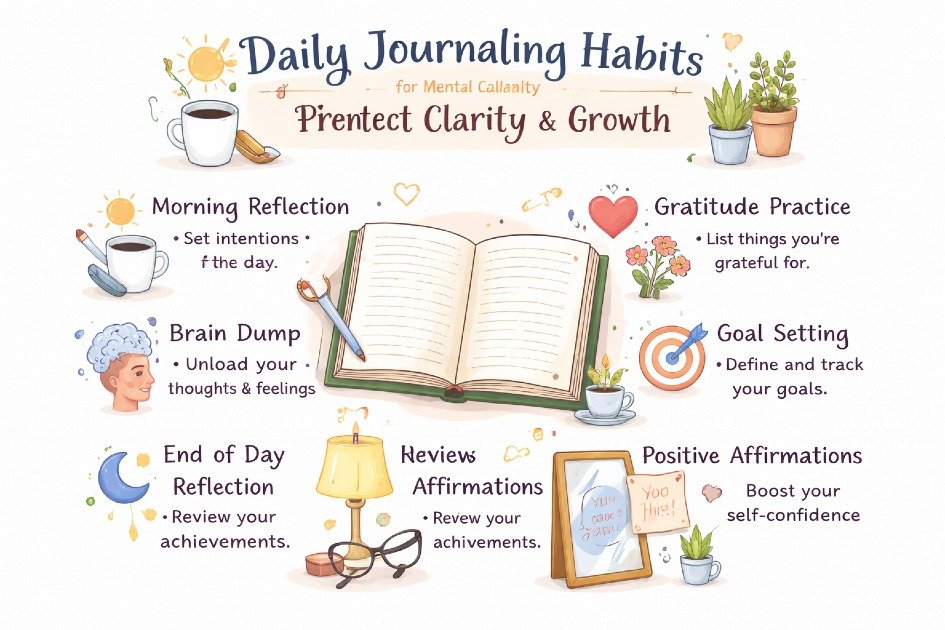
Modern life is fast, digital, and distracting. Constant notifications scatter your focus, while it helps you slow down, think clearly, and regain control.
Its benefits in the modern world include:
- Stress relief: Helps process emotions before they escalate
- Restored focus: Strengthens attention amid distractions
- Emotional resilience: Builds better coping strategies
- Goal alignment: Clarifies meaningful actions versus reactive behavior
Journaling is now essential for clear thinking, emotional stability, and living with purpose in a fast-moving world.
9 Proven Journaling Habits to Boost Clarity, Focus, and Emotional Control
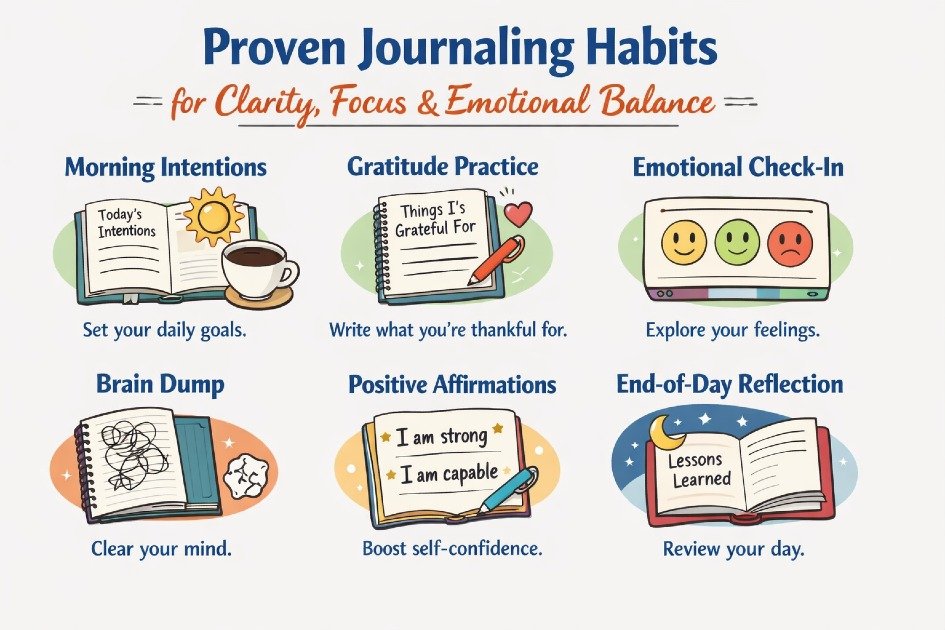
Many people start journaling during stressful times but quit early due to inconsistency, overthinking entries, or expecting quick results, then wrongly assume it doesn’t work.
It is most effective when guided by clear, evidence-based methods. Writing helps you externalize thoughts so they become easier to understand, structure, and act on.
Discover nine practical journaling habits to clear mental clutter, manage emotions, and sharpen focus without the pressure of perfection.
1. Start With a Daily Brain Dump

Your mind is overloaded with thoughts, tasks, and worries.
Action:
Write everything down—uncensored.
How to do it:
- Set a timer for 5–10 minutes
- Write continuously
- Don’t edit or filter
Core advantages:
- Clears mental clutter instantly
- Improves focus
- Reduces stress
Best time: Morning for clarity or night for better sleep.
2. Use Simple Prompts to Stay Consistent

You don’t know what to write.
Action:
Use prompts to guide your thinking.
Try These:
- What’s on my mind right now?
- What’s one thing I can improve today?
- What’s stressing me—and why?
Core advantages:
- Removes guesswork
- Builds consistency
- Keeps entries focused
3. Practice Gratitude Journaling Daily

Your brain defaults to negative thinking.
Action:
Train it to notice what’s working.
How:
Write 3 things you’re grateful for every day.
Core advantages:
- Improves mood quickly
- Lowers stress
- Builds a positive mindset
4. Track Your Habits and Progress
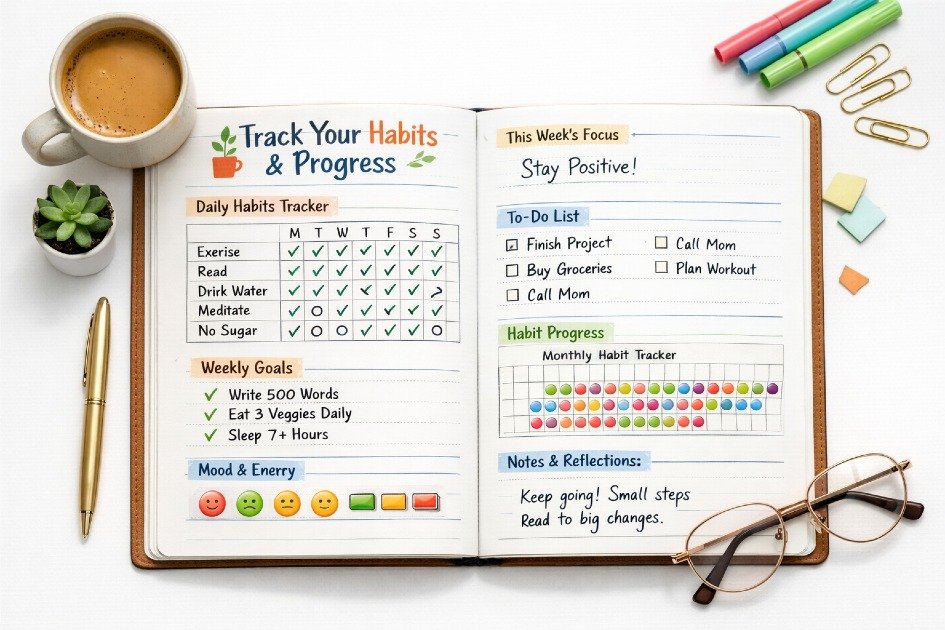
You feel stuck and unsure if you’re improving.
Action:
Track key areas in your journal.
What to Track:
- Daily routines
- Health and fitness
- Productivity
- Mood patterns
Core advantages:
- Makes progress visible
- Increases accountability
- Boosts motivation
5. Use Journaling to Make Better Decisions

You overthink and delay decisions.
Action:
Write your way to clarity.
Simple Framework:
- Define the problem
- List possible solutions
- Choose the next step
Core advantages:
- Faster decisions
- Less mental noise
- Clear direction
6. Reflect Weekly to Improve Faster
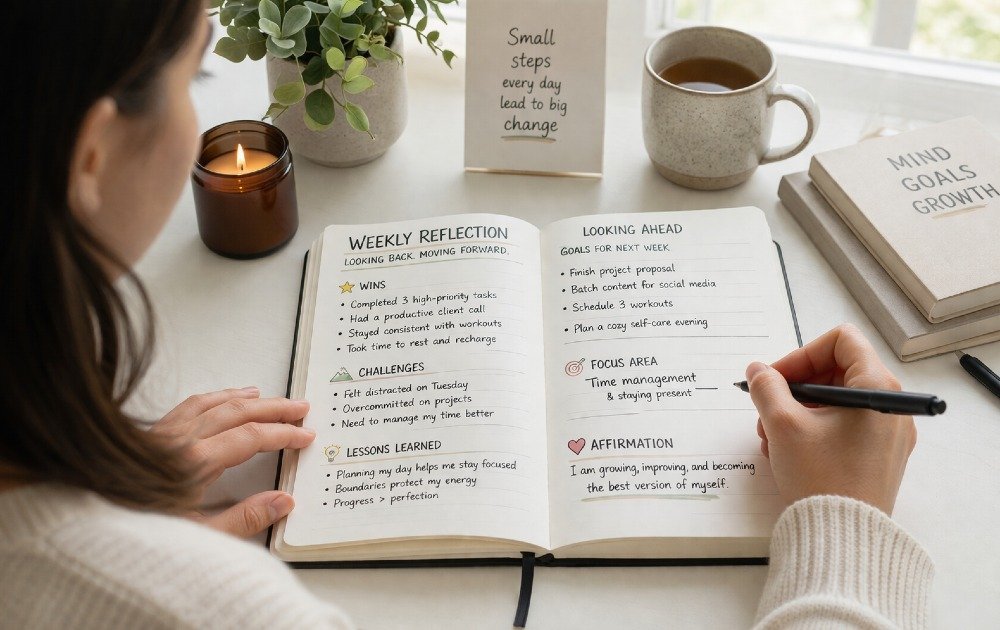
You repeat mistakes without noticing patterns.
Action:
Schedule a weekly reflection.
Ask Yourself:
- What worked?
- What didn’t?
- What will I change?
Core advantages:
- Builds self-awareness
- Accelerates growth
- Improves results over time
7. Use Journaling for Stress and Emotional Release

Stress builds up with no outlet.
Action:
Write honestly about how you feel.
How:
- Be direct and unfiltered
- Don’t worry about structure
- Focus on expression
Core advantages:
- Reduces anxiety
- Releases emotional tension
- Clears your mind
8. Visualize Your Goals in Writing

Your goals feel vague or distant.
Action:
Write them as if they’re already real.
Example:
“I start my day focused, energized, and in control.”
Core advantages:
- Strengthens motivation
- Clarifies direction
- Builds confidence
9. Keep Journaling Simple and Sustainable

You try to journal perfectly—and quit.
Action:
Lower expectations.
Remember:
- Short entries work
- Imperfect writing is fine
- Consistency matters most
Core advantages:
- Builds a lasting habit
- Reduces pressure
- Delivers long-term results
Tools That Make Journaling Easier
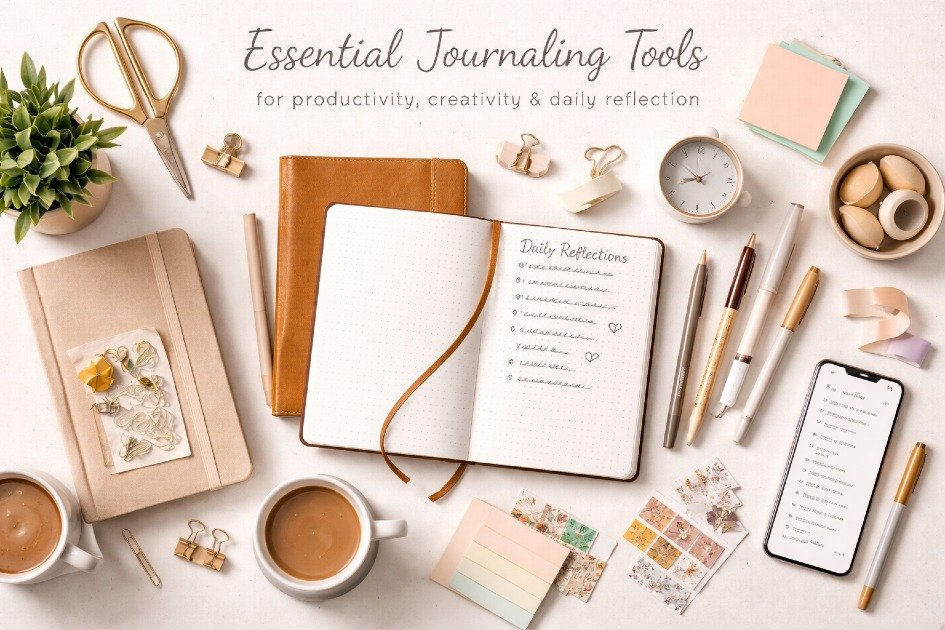
You don’t need anything fancy to start. A notebook works.
However, structured tools can make journaling easier—especially if you struggle with consistency.
The Mindful Living Journal offers a guided, no-stress way to build a consistent journaling habit.
How to Build a Journaling Habit That Sticks

Many people start with intent but stop within days. It feels like a chore, overthinking takes over, and missing one day breaks the rhythm.
Its habit sticks when it’s simple and tied to your routine.
Do this:
- Pick a fixed time: After coffee or before bed
- Keep it short: 5 minutes is enough
- Use prompts: Remove decision fatigue
- Drop perfection: Write freely, no editing
- Track consistency: A simple streak builds momentum
Example routine:
- Morning: Write one intention
- Night: Note one win and one lesson
Core advantages:
- Journaling becomes automatic
- You think more clearly each day
- You build a habit that lasts
Simplicity drives consistency.
Journaling for Stress and Anxiety

Stress grows when it goes unprocessed, leading to constant overthinking and mental exhaustion.
Journaling moves thoughts out of your head and onto paper—where you can manage them.
Use this simple method:
- Brain dump: Write everything bothering you
- Name it: “I feel anxious because…”
- Question: Is this thought true or useful?
- Act on it: What’s one small step I can take?
- Ground yourself: List what you can control
Example:
“I feel overwhelmed by deadlines. The issue is poor planning. Tomorrow, I’ll focus on my top 3 tasks.”
Core advantages:
- Reduces mental overload
- Clarifies emotions
- Helps you respond instead of react
You can’t stop every stressor—but you can process it better.
Simple Journaling Ideas to Get Started
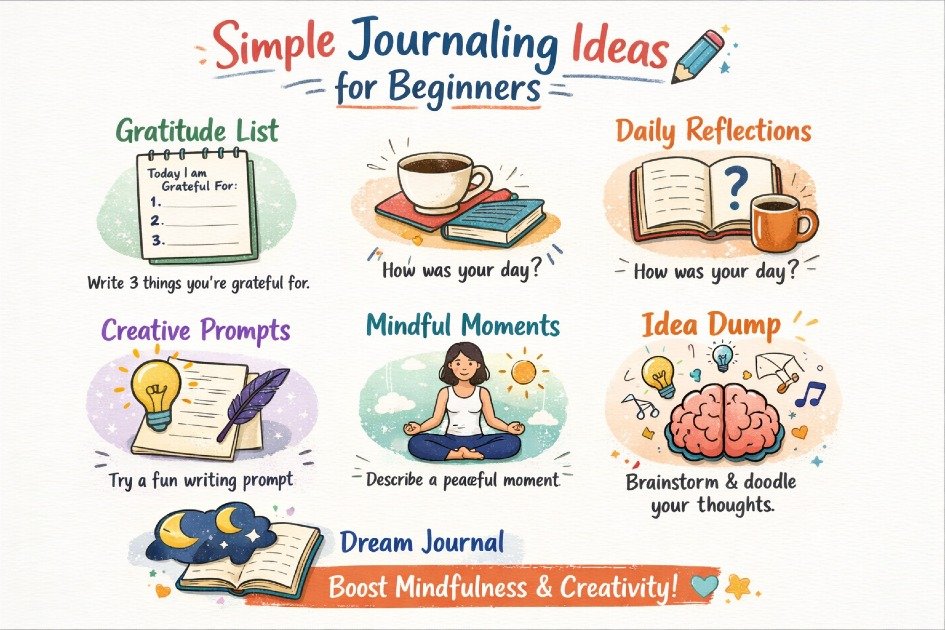
A blank page can stall your start. Without structure, it feels unnatural.
You don’t need complex systems. A few clear prompts create direction.
Start here:
1. Daily Reflection
- What went well today?
- What needs improvement?
2. Gratitude
- List 3 specific things you appreciate
3. Goal Focus
- What matters most today?
- What’s one action step?
4. Stress Check
- What’s bothering me?
- What can I control?
5. Future Visualization
- Describe your ideal day
- Focus on how it feels
6. One-Line Journal
- Write one sentence
- Example: “I stayed focused and finished my main task.”
Core advantages:
- Removes overthinking
- Keeps journaling simple
- Builds consistency—even on busy days
The easier it feels, the more you’ll do it.
Frequently Asked Questions
How long should I journal daily?
5–10 minutes is enough. Focus on consistency, not length.
What’s the best time to journal?
Morning for clarity. Night for reflection. Choose what fits your routine.
Can journaling reduce anxiety?
Yes. Writing helps process thoughts and reduces mental overload over time.
What if I don’t know what to write?
Start with a brain dump or use prompts. Clarity comes from writing, not thinking.
Is digital journaling effective?
Yes. Use whatever format you’ll stick with—paper or digital.
Recap: Build Journaling Habits That Create Clarity
Journaling is not about writing more—it’s about thinking clearly.
When you practice simple, consistent journaling habits, you give your mind space to process, reset, and focus. Over time, this leads to better decisions, lower stress, and a more controlled mindset.
The method is simple. The impact is lasting.
Focus on what works:
- Keep sessions short and focused
- Use prompts to guide your thinking
- Write honestly without editing
- Stay consistent, even on busy days
These small actions build momentum—and momentum drives results.
Ready to Make Journaling Easier
Frustrated with blank pages and no ideas?
A clear format will help you focus on writing—not deciding what to write.
Start using this journal today and clear mental clutter, sharpen your focus, and build a calmer, more productive mind one page at a time.
Clarity comes from seeing your thoughts on paper.