

Feeling weaker, less steady, or more cautious with everyday movement can make aging feel limiting.
The CDC recommends that adults 65 and older include muscle-strengthening and balance activities each week because they can improve physical function and reduce the risk of falls.
This guide breaks down practical exercises you can use to build strength, improve balance, and move with greater confidence.
Why Strength and Balance Matter More With Age
Age-related muscle loss and reduced balance can increase fall risk and make everyday activities more difficult.
Developing muscle control and steadiness helps older adults navigate daily activities with greater confidence and reduced risk of falls.
Weak muscles and poor stability can make walking, standing, and climbing stairs harder.
Consistent physical activity helps older adults maintain steadier balance, move with greater ease, and lower their likelihood of falling.
What Strength and Balance Exercises
These movements build muscle strength while sharpening balance, coordination, and control over body movements.
Without regular movement, muscle strength and coordination may decline with age.
Chair stands, heel raises, and supported single-leg stands help build strength and improve balance for daily activities.
How to Practice Strength and Balance Exercises
Begin with gentle, controlled movements, using a solid chair or countertop to steady yourself whenever necessary.
Incorrect form or exercises that exceed your fitness level can raise your risk of falls and exercise-related injuries.
Practicing consistently, progressing gradually, and using proper support help improve stability and confidence during everyday movement.
8 Powerful Moves to Build Stability, Mobility, and Confidence After 50
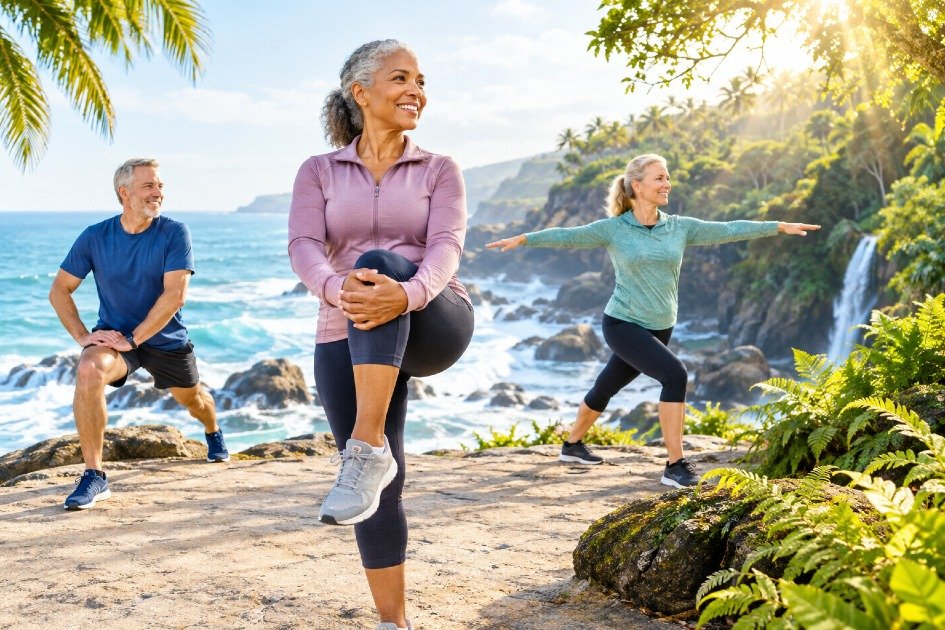
After 50, joint stiffness and reduced flexibility can make routine tasks feel more demanding and physically taxing.
Getting older does not mean you have to surrender your strength, mobility, or confidence. Regular exercises that build muscle strength, improve stability, and maintain mobility can support everyday activities and lower the likelihood of falls.
Discover how these eight powerful exercises will help you stand stronger, move with greater control, and feel more confident in your daily life.
Chair Sit-to-Stand
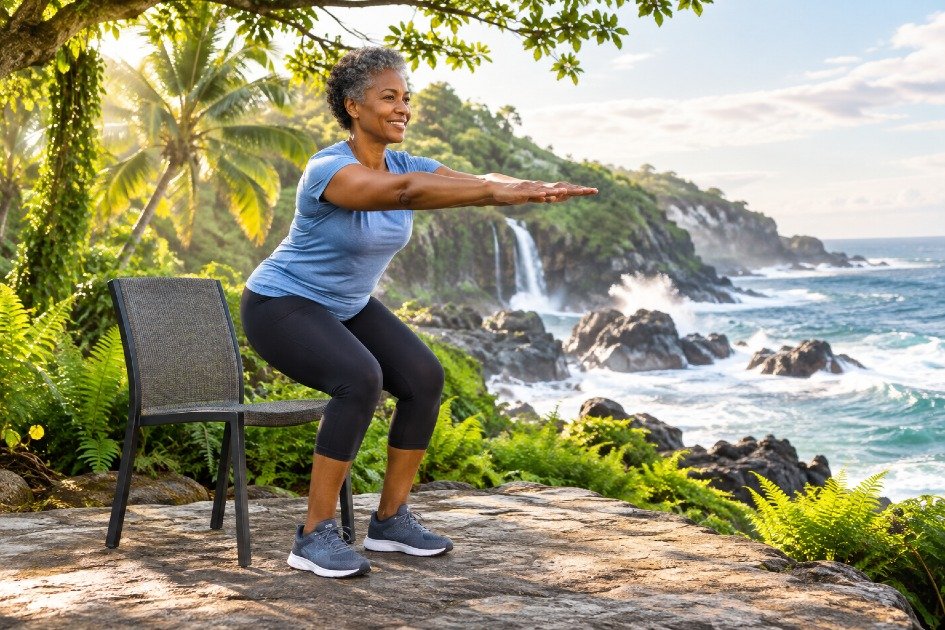
Chair sit-to-stand is a simple exercise for older adults that builds everyday lower-body strength and confidence.
Why it matters:
Stronger legs can make standing, walking, and other daily movements easier and more stable.
What works for me:
I start with controlled chair sit-to-stands and use a fitness tracker to monitor my activity and stay consistent with my strength goals.
How to start:
- Sit toward the front of a sturdy chair.
- Place your feet approximately hip-width apart.
- Lean your torso slightly forward.
- Push through your feet and stand.
- Slowly lower yourself back into the chair.
- Start with 5–8 controlled reps, then gradually increase to 8–12 as your strength and comfort improve.
Supported Calf Raises
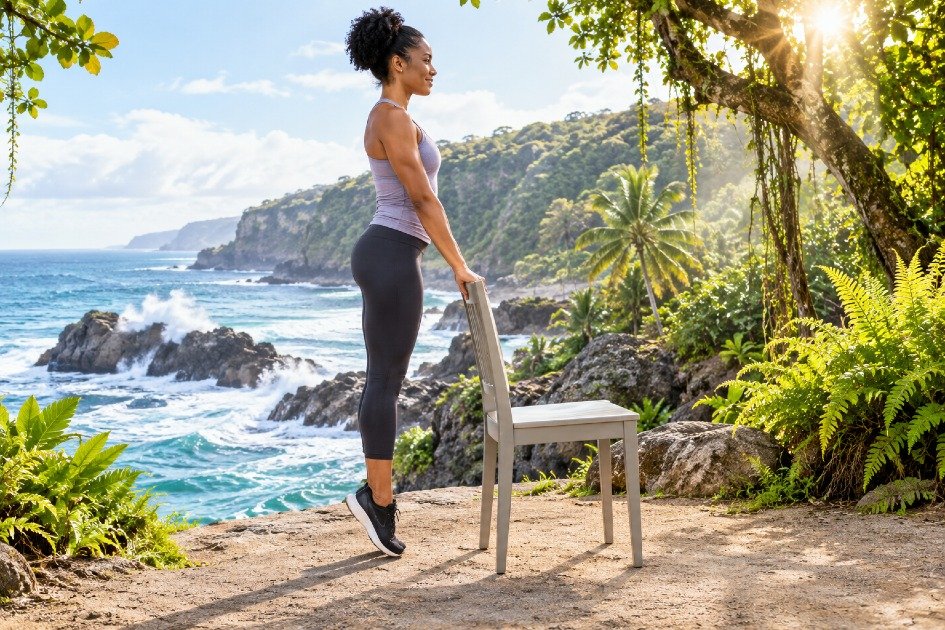
Supported calf raises strengthen the lower legs while giving older adults a simple, controlled exercise for older adults to build stability.
Why it matters:
Building calf strength helps maintain steady footing, reinforce ankle control, and make daily movements safer as you grow older.
What works for me:
Building stronger calf muscles can enhance balance, stabilize the ankles, and help you move with greater confidence and safety as you age.
How to start:
- Stand behind a sturdy chair.
- Place your feet hip-width apart.
- Hold the chair lightly.
- Slowly raise your heels.
- Pause briefly at the top.
- Lower your heels with control.
- Complete 8–12 repetitions.
Wall Push-Ups
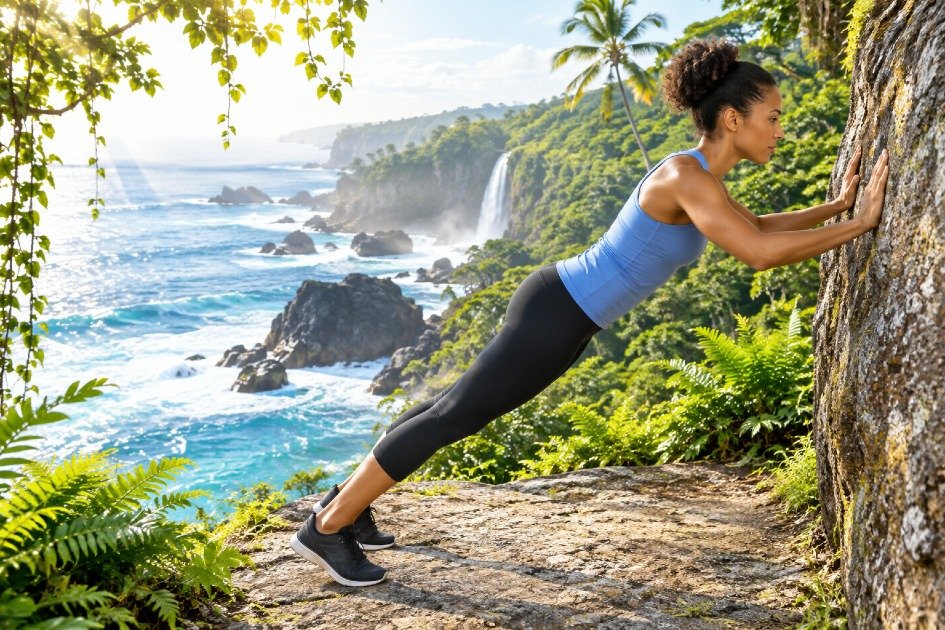
Wall push-ups are a simple, joint-friendly exercise for older adults that strengthens the upper body without getting down on the floor.
Why it matters:
Wall push-ups help strengthen your chest, shoulders, and arms, making daily tasks like pushing doors or lifting light objects feel more manageable.
What works for me:
I begin with gentle wall presses, then use a fitness tracker to monitor my progress and maintain a steady exercise routine suited to older adults.
How to start:
- Stand facing a wall.
- Place your hands approximately shoulder-width apart.
- Keep your body in a straight line.
- Bend your elbows and bring your chest toward the wall.
- Push yourself back to the starting position.
- Perform 6–12 controlled repetitions.
Supported Side Leg Raises
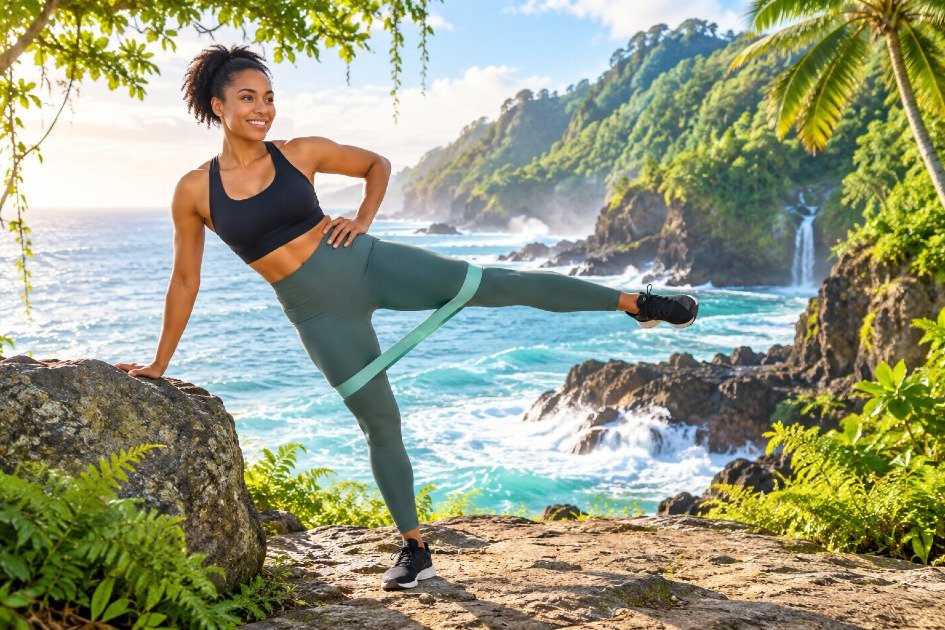
Supported side leg raises are a simple exercise for older adults that strengthens the hips and improves lower-body stability with added support.
Why it matters:
Stronger hip muscles help stabilize your body, improve leg coordination, and support steadier, more confident movement when walking or standing.
What works for me:
I use a sturdy chair for support and perform slow, controlled raises, while a fitness tracker helps me monitor my movement and stay consistent.
How to start:
- Stand tall behind a sturdy support.
- Keep your toes pointing forward.
- Slowly move one leg out to the side.
- Keep your upper body upright.
- Return the leg to the starting position.
- Repeat 8–12 times on each side.
Heel-to-Toe Walking

Heel-to-toe walking is an easy balance exercise for older adults that helps develop steadier steps, better movement control, and greater confidence while walking.
Why it matters:
Practise each movement with steady control to build better balance and move more confidently during everyday activities, reducing the chance of losing your footing.
What works for me:
I begin with slow heel-to-toe steps beside a stable support, wearing secure walking shoes or using a balance aid to improve stability and maintain a safer, more consistent routine.
How to start:
- Stand near a stable support.
- Place one foot directly in front of the other.
- Try to position the heel of the front foot close to the toes of the back foot.
- Take several slow steps.
- Look forward rather than constantly looking down.
- Use the support whenever necessary.
Supported Single-Leg Stand
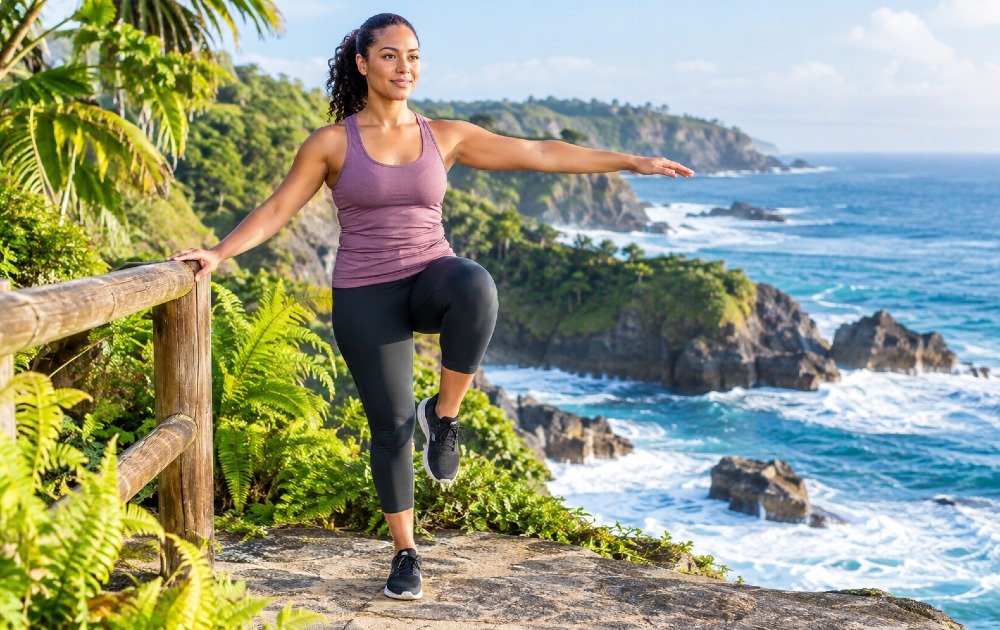
A supported single-leg stand is a simple exercise for older adults that builds balance and confidence while reducing the challenge of standing on one leg alone.
Why it matters:
Better balance can support steadier movement, safer daily activities, and greater confidence as you age.
What works for me:
I start with a sturdy chair for support, practice one leg at a time, and use a balance trainer to make this exercise for older adults more consistent and measurable.
How to start:
- Stand tall behind a sturdy support.
- Shift your weight onto one foot.
- Lift the opposite foot slightly from the floor.
- Hold for several seconds.
- Place the foot down.
- Repeat on the other side.
- Perform 3–5 repetitions per side.
Step-Ups
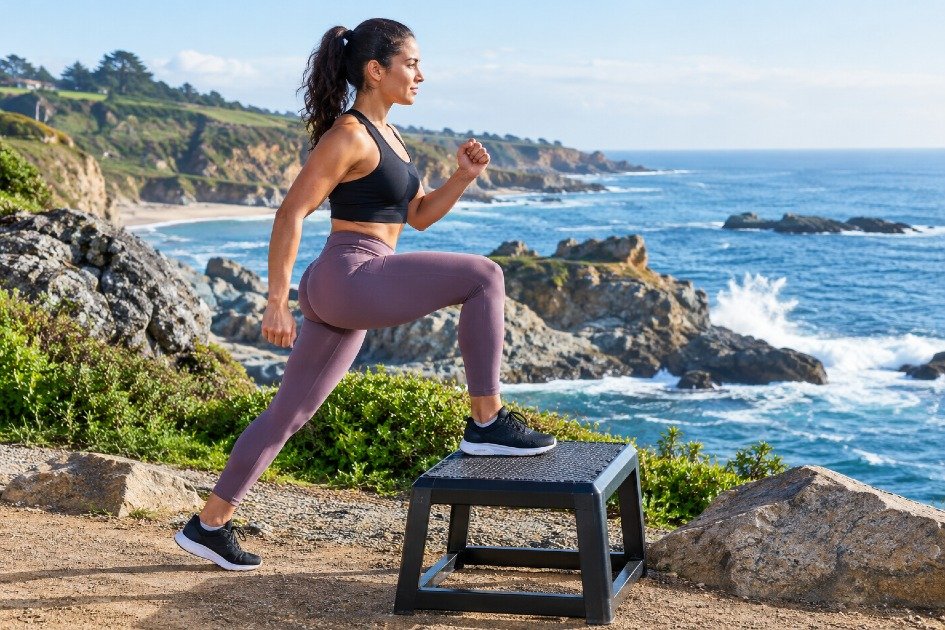
Step-ups are a simple exercise for older adults that builds lower-body strength, balance, and confidence for everyday movement.
Why it matters:
Regular step-ups can strengthen the legs and improve stability, helping make stairs, walking, and daily activities easier.
What works for me:
I start with a low, stable step and increase repetitions gradually; a fitness tracker helps me monitor my activity and stay consistent.
How to start:
- Stand facing a low, stable step.
- Place one foot securely on the step.
- Press through that foot to bring the other foot up.
- Step down carefully.
- Alternate legs.
- Begin with 5 repetitions per leg.
Resistance-Band Rows
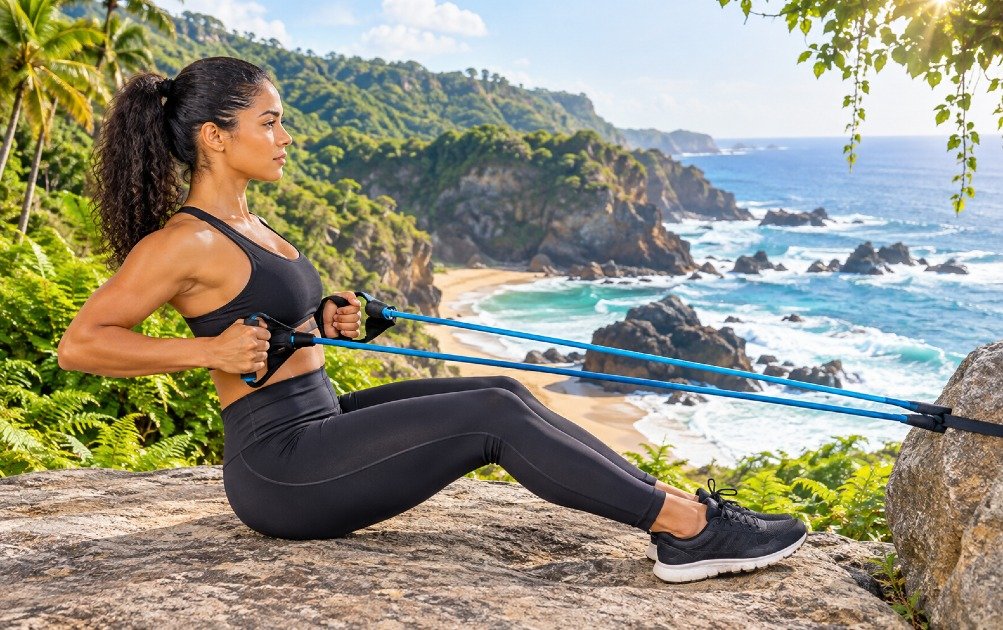
Resistance-band rows build upper-body pulling strength with controlled movement, making them a practical exercise for older adults.
Why it matters:
Stronger back and shoulder muscles can support better posture, stability, and everyday movements like lifting and pulling.
What works for me:
I use a resistance-band row with slow, controlled pulls to build strength safely, and a quality resistance-band set makes it easy to stay consistent at home.
How to start:
- Secure the band according to the manufacturer’s instructions.
- Sit or stand tall.
- Hold the handles or band ends.
- Pull your elbows backward.
- Gently squeeze your shoulder blades together.
- Slowly return to the starting position.
- Begin with 8–12 repetitions.
How to Combine These Exercises Into a Simple Routine
Combine simple exercises for older adults into a manageable routine that supports strength, balance, and mobility.
Doing exercises without a consistent plan can make it harder to build strength, maintain balance, and stay active.
A simple, structured routine helps older adults exercise consistently, improve stability, and maintain independence.
How to Make These Exercises Safer
Learn how to make exercises for older adults safer with proper form, controlled movements, and simple precautions.
Poor technique, overexertion, and unsafe surroundings can increase the risk of falls, strains, and injuries.
Using proper form, stable support, and gradual progress helps make exercises for older adults safer while improving balance, strength, and confidence.
How to Progress Without Overdoing It
Learn how to increase activity gradually to build strength and stamina safely with exercises for older adults.
Progressing too quickly can cause fatigue, joint strain, and injuries that interrupt your fitness routine.
Gradual progress helps older adults build strength, improve endurance, and stay active with greater confidence and less risk of injury.
Common Mistakes to Avoid
Avoiding common mistakes in exercises for older adults helps make every movement safer and more effective.
Poor form, overexertion, and skipping balance training can increase injury risk and limit progress.
Using proper techniques, gradual progression, and balanced routines helps older adults build strength, improve stability, and maintain independence.
Frequently Asked Questions
What are the best exercises for older adults to improve strength?
Chair sit-to-stands, wall push-ups, calf raises, step-ups, side leg raises, and resistance bands can improve fitness in older adults when matched to individual mobility, fitness level, and health needs.
How often should older adults do strength exercises?
For adults 65+, the CDC recommends strength training at least twice weekly, plus regular balance exercises to support strength and stability.
What are good balance exercises for older adults at home?
Supported single-leg stands and heel-to-toe walking improve balance in older adults when practiced safely with stable support and a clear area.
Can older adults build strength without going to a gym?
Many senior-friendly home exercises use body weight, a chair, wall, or resistance bands, so you can build an effective routine without a gym.
Can exercises for older adults help prevent falls?
Regular strength and balance exercises can improve physical function and help reduce fall risk, supporting the National Institute on Aging’s fall-prevention guidance.
Recap: Build Strength Today for a More Confident Tomorrow
Losing strength or feeling unsteady can make everyday movement harder—but aging does not mean giving up your independence.
Strength and balance exercises for older adults can help support mobility, stability, confidence, and safer daily movement.
Commit to strength and balance training each week, start at a level that matches your abilities, and gradually build consistency. Every controlled movement is an investment in staying active, capable, and independent.
Ready To Build Strength, Balance, and Confidence?
If weakness, poor balance, or fear of falling limits your mobility, track your daily activity, set realistic movement goals, and measure your progress toward greater stability and confidence.
Discover how this fitness tracker will help you track your movement, stay motivated, and build the strength and balance you need to move with greater confidence.