
You’re consistent. You train hard. But your strength isn’t increasing the way it should.
That’s not a motivation issue—it’s a strategy gap. Strength doesn’t come from doing more. It comes from doing the right things consistently.
This guide explains seven proven principles that are efficient and safe.
Why Training Matters
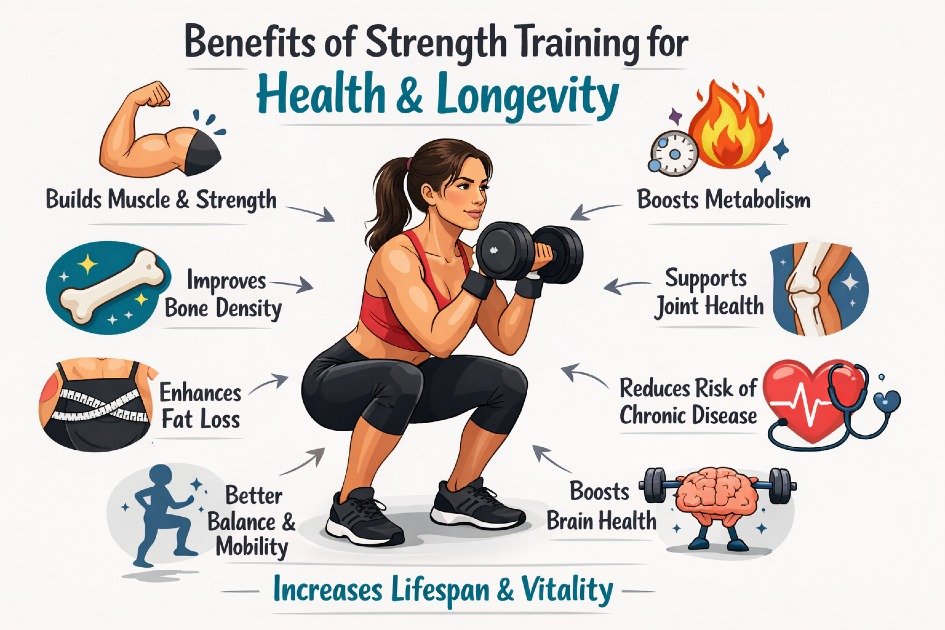
It improves more than muscle and supports:
- Bone density
- Metabolic health
- Balance and mobility
- Long-term independence
According to the CDC, it’s a key part of overall health.
7 Proven Principles Behind Building Strength Efficiently and Consistently
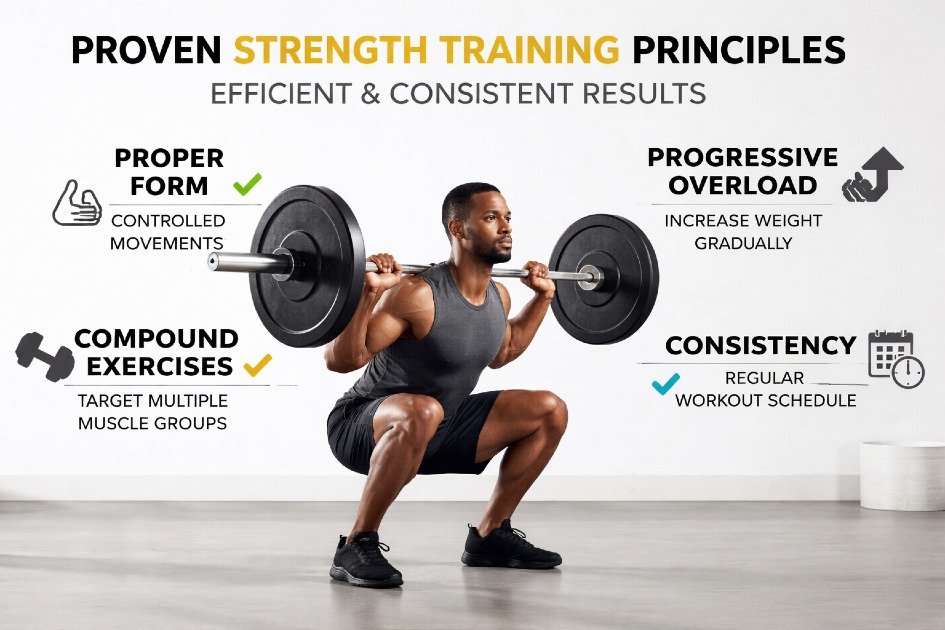
Strength isn’t built through random workouts or constant fatigue—it develops through progressive overload, proper recovery, and consistent execution of key lifts. These are the principles behind every effective training program.
A common mistake is prioritizing variety over progression. Changing exercises too often, ignoring form, or skipping recovery slows results.
Discover seven proven strategies to train with purpose, avoid common mistakes, and build strength faster without unnecessary complexity.
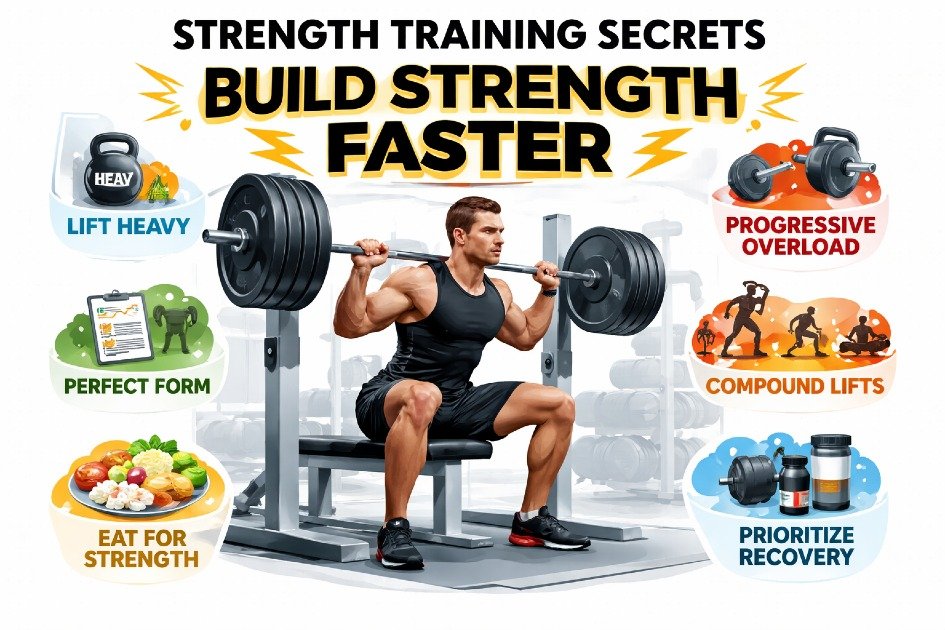
1. Train Specifically for Strength
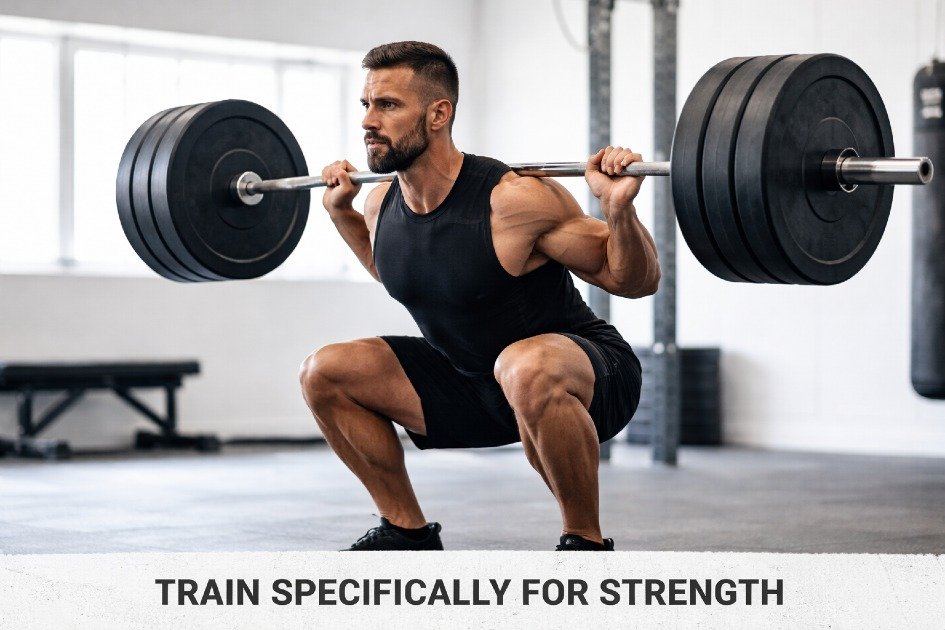
High-rep, fatigue-focused workouts build endurance—not maximum strength.
To achieve strength, train with heavier weights and lower reps:
- 4–6 reps per set
- 3–5 sets
- 2–3 minutes rest
This gives you the intensity needed to get stronger.
You develop greater force output, which is its foundation.
2. Build Around Compound Lifts
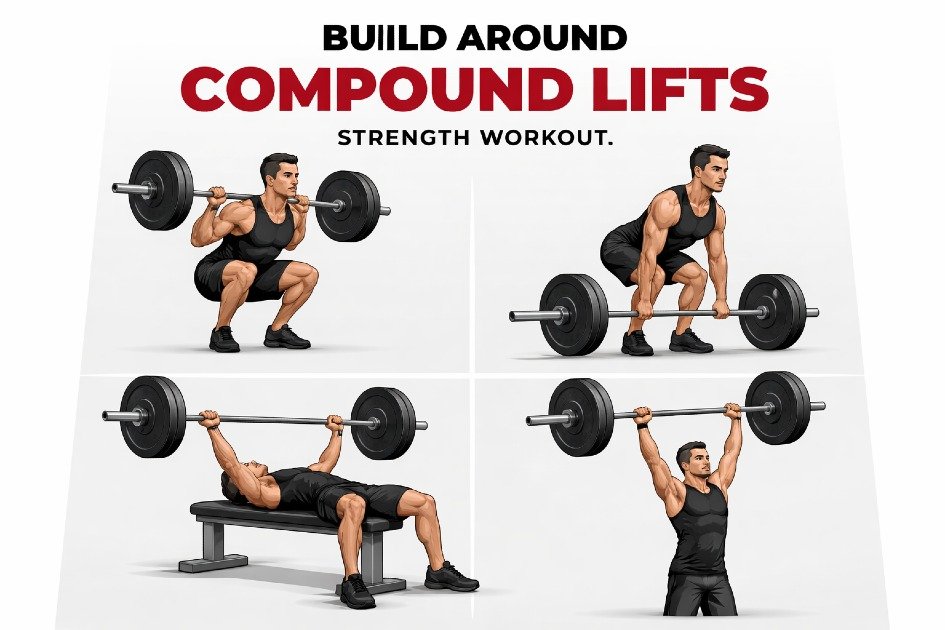
Isolation exercises limit overall strength development.
To achieve compound lifts, prioritize movements that train multiple muscle groups:
- Squats
- Deadlifts
- Bench press
- Pull-ups
- Overhead press
Use these as the core of your program.
Compound lifts build full-body strength faster and carry over to real-world movement.
3. Apply Progressive Overload

Repeating the same workouts leads to plateaus.
To achieve progressive overload, increase training demand over time:
- Add small weight increments
- Increase reps within range
- Improve control and technique
Make small improvements every session.
Consistent overload drives steady, measurable gains.
4. Prioritize Proper Form
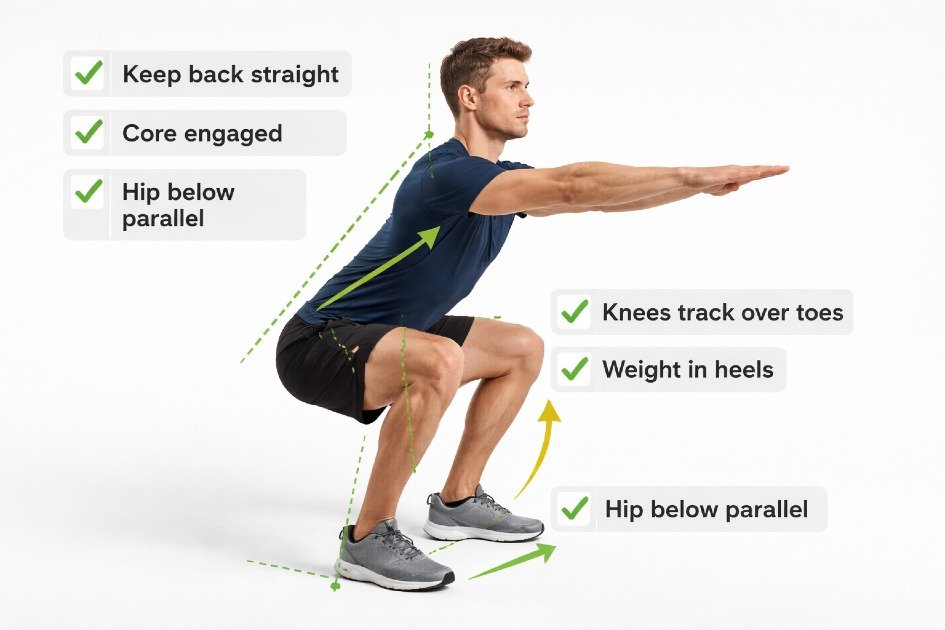
Poor technique limits results and increases injury risk.
To achieve proper form, focus on execution:
- Controlled tempo
- Full range of motion
- Stable positioning
Lower the weight if form breaks.
Good form improves muscle activation, safety, and long-term progress.
5. Treat Recovery as Essential

Ignoring recovery slows progress and increases fatigue.
To achieve recovery, observe daily:
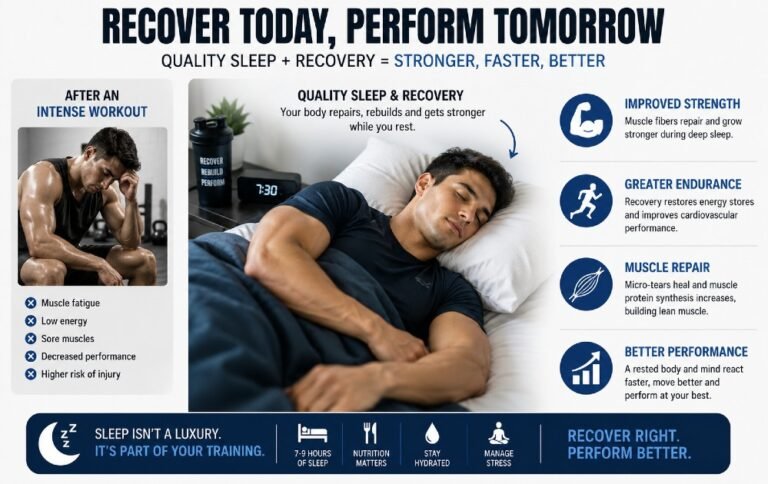
- Sleep 7–9 hours
- Schedule rest days
- Stay hydrated and mobile
Recovery allows your body to rebuild stronger, leading to better performance and consistency.
6. Eat Good

Poor nutrition limits energy, performance, and recovery.
To achieve good stamina, focus on the basics:
- Protein: 0.7–1g per lb body weight
- Carbs: fuel your workouts
- Fats: support hormones
Eat before training and refuel after.
Proper nutrition improves reliable output, recovery, and training consistency.
A clean whey protein can help you hit daily protein targets and recover faster.
7. Track Your Progress

Without tracking, progress becomes guesswork.
To achieve progress, log your workouts:
- Exercises
- Weights
- Sets and reps
Keep it simple, but stay consistent.
Tracking creates accountability and clear progression, so you keep improving.
A fitness tracker or workout app can simplify logging and keep you consistent.
How to Build Strength Faster
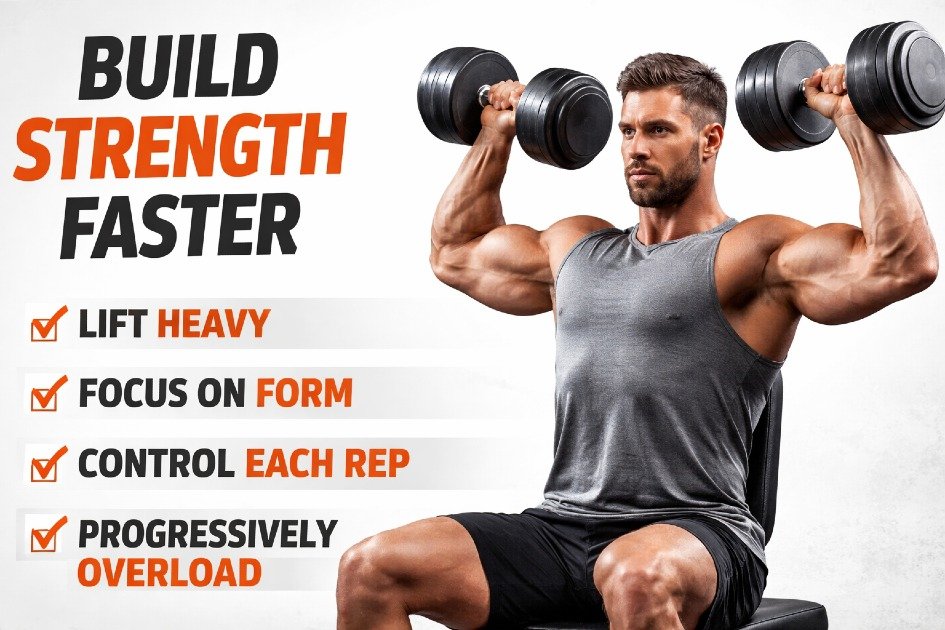
You train consistently, but your gains are slow or inconsistent.
This usually comes down to lack of structure—random workouts, no progression, and poor recovery.
Focus on what works:
- Train heavy with intent
Use 4–6 reps on key lifts.
- Apply progressive overload
Add small weight increases or extra reps each week.
- Stick to a consistent routine
Repeat core lifts instead of constantly changing workouts.
- Rest properly between sets
Take 2–3 minutes to maintain performance.
- Stay focused during training
Prioritize quality over rushing through sets.
With a structured approach, you’ll see:
- Faster strength gains
- Better lifting performance
- Increased confidence under heavier loads
Proven Strength Training Tips

Most advice online is either too complex or ineffective, leading to wasted effort.
Focus on simple, proven principles:
- Master compound movements
Squats, deadlifts, presses, and pulls should be your foundation.
- Prioritize proper form
Controlled, clean reps produce better results than sloppy heavy lifts.
- Keep workouts simple
4–6 exercises per session is enough when done correctly.
- Track your progress
Log weights, sets, and reps to ensure improvement.
- Stay consistent
Regular training beats occasional intensity.
- Support your training with nutrition
Eat enough protein and carbs to fuel performance and recovery.
These habits create clarity and consistency. You’ll get:
- Steady, measurable progress
- Fewer plateaus
- More efficient workouts
Effective Beginner Training Plan
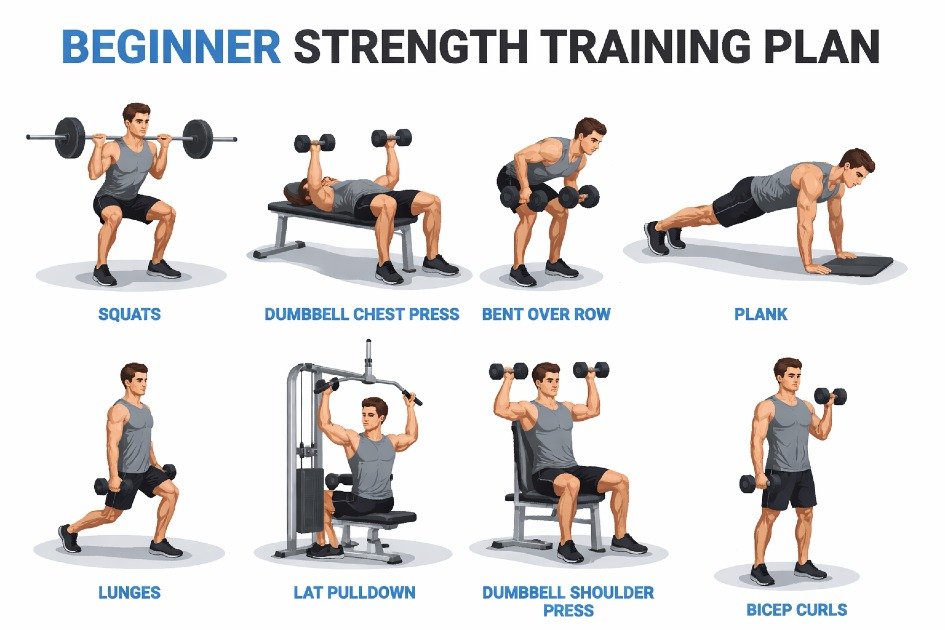
Beginners often overcomplicate training and lack a clear plan.
Follow a simple, repeatable 3-day full-body program.
Day 1:
- Squats — 3 × 5
- Bench Press — 3 × 5
- Bent-Over Rows — 3 × 6–8
Day 2:
- Rest or light activity (walking, mobility)
Day 3:
- Deadlifts — 3 × 5
- Overhead Press — 3 × 5
- Pull-Ups (or assisted) — 3 sets
Day 4:
- Rest
Day 5:
- Repeat Day 1
Key Guidelines:
- Increase weight gradually each week
- Rest 2–3 minutes between sets
- Focus on form before adding load
Core adavantages:
- Balanced full-body strength
- Faster, more predictable progress
- Confidence with a clear routine
Frequently Asked Questions
How often should I train?
Train 3–4 times per week to balance intensity and recovery.
Can beginners build strength quickly?
Yes. Early gains come quickly due to improved coordination and muscle activation.
Is strength training better than cardio?
They serve different purposes. Strength builds muscle and power; cardio supports heart health.
How long before I see results?
Most people feel stronger within 2–4 weeks with consistent training.
Do I need supplements?
No. Whole food comes first. Supplements are optional for convenience.
Recap: Train Smarter, Get Stronger
Strength comes from consistent, focused training—not complexity.
Follow a structured plan, apply proven principles, and track your progress. That’s how you build faster—and sustain it.
When you:
- Train with purpose
- Progress gradually
- Recover properly
You build real, lasting strength.
Start applying these principles now. Stay consistent. Track your progress.
Ready to Build Real Strength?
You might be training hard… but still not getting strong
Upgrade your strength training results by committing to the right essential training gear so that every rep builds real power, improves control, and accelerates visible strength gains faster than guesswork ever will.