

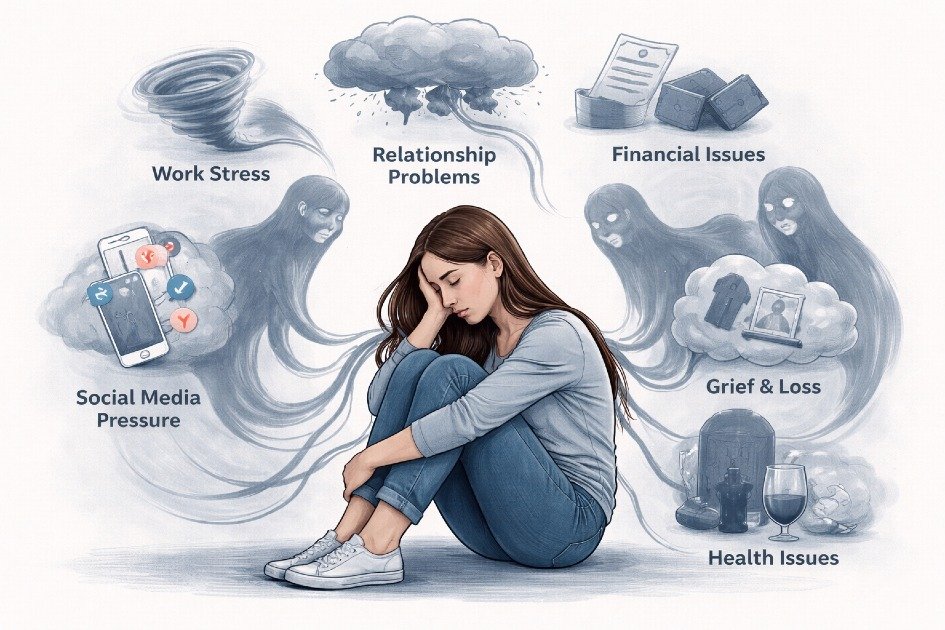
You’re showing up. You’re getting things done. But the weight is still there.
That’s what makes depression difficult—it often builds from subtle, overlooked triggers, not just major life events.
This guide explains the most common hidden causes and shows you how to fix them with simple, practical actions.
What Is Depression?

Depression is more than a passing low mood. It’s a persistent mental health condition that affects how you think, feel, and function day to day.
Common signs include:
- Ongoing sadness or emptiness
- Loss of interest in activities you once enjoyed
- Low energy or constant fatigue
- Difficulty focusing or making decisions
- Changes in sleep or appetite
These symptoms don’t fade quickly. They disrupt daily life and reduce overall functioning.
Depression is not a personal weakness. It is a multifaceted condition influenced by biological, mental, and environmental factors.
Why Understanding Depression Triggers Matters

Many people try to manage depression without understanding what drives it. As a result, the same emotional patterns repeat.
Without identifying triggers:
- Mood changes feel unpredictable
- Negative cycles continue
- Progress is inconsistent
Identify Your Triggers
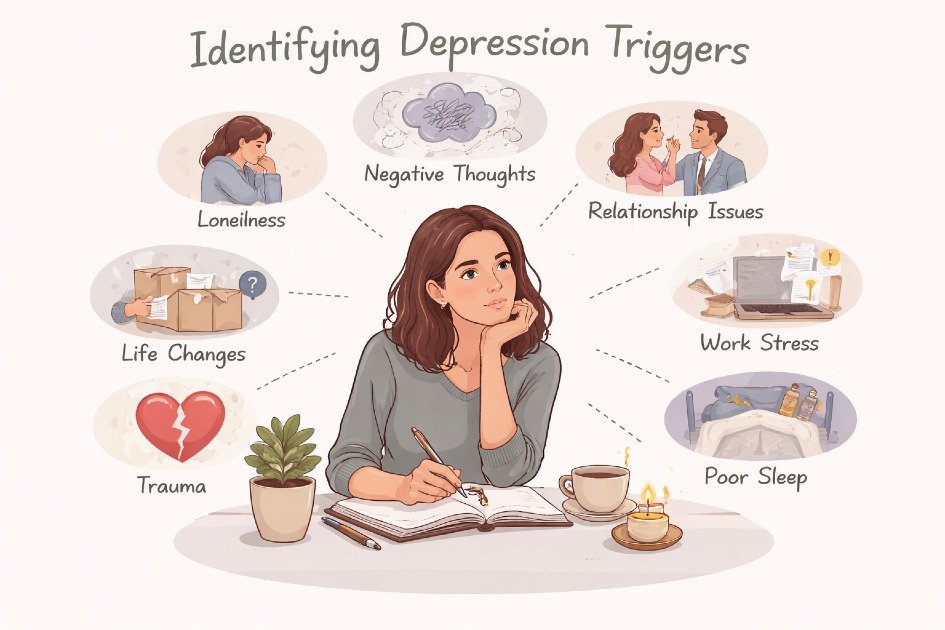
Depression usually develops from repeated patterns, not a single cause.
Common triggers include:
- Chronic stress or burnout
- Poor sleep habits
- Physical inactivity
- Social isolation
- Negative thought patterns
- Major life changes or unresolved emotions
To recognize your triggers:
- Track your mood alongside daily habits
- Notice what happens before emotional lows
- Identify recurring stressors or environments
- Pay attention to shifts in energy and behavior
Awareness Creates Control

Understanding your triggers allows you to act early and with intention.
You can:
- Prevent mood drops before they escalate
- Make targeted lifestyle changes
- Respond to stress more effectively
- Build routines that support mental stability
Most importantly, you move from reacting to depression to managing it with clarity and control.
9 Hidden Depression Triggers and How to Regain Emotional Balance
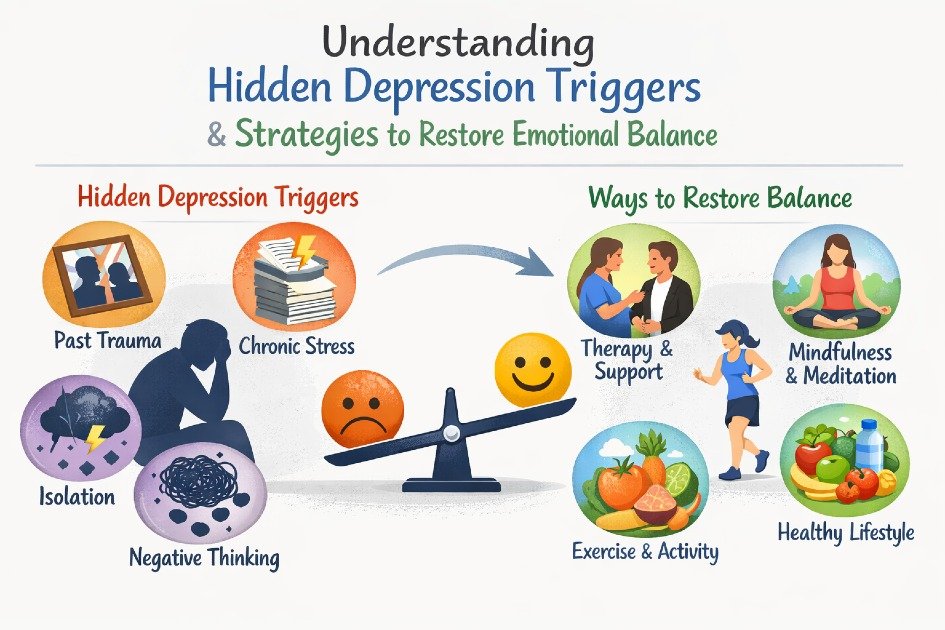
Depression often doesn’t start with a single major event. More commonly, it develops from repeated daily patterns—poor sleep, chronic stress, inactivity, and mental overload—that gradually affect mood and energy.
The challenge is that most people focus only on obvious causes and overlook these subtle triggers. As a result, they treat the symptoms instead of the source, which leads to short-term relief but recurring struggles.
Discover nine hidden triggers that quietly drain your energy, understand why they matter, and apply practical strategies to address them.
1. Constant Digital Overload

Your brain never gets a break. Notifications, social media, and news keep you in a loop of distraction and comparison.
Over time, this leads to:
- Mental fatigue
- Increased anxiety
- Reduced focus
A reliable approach to improvement is to create boundaries:
- Turn off non-essential notifications
- Set specific times to check your phone
- Replace scrolling with intentional breaks
A core advantage is to regain focus and feel more in control of your attention.
2. Poor Sleep Quality
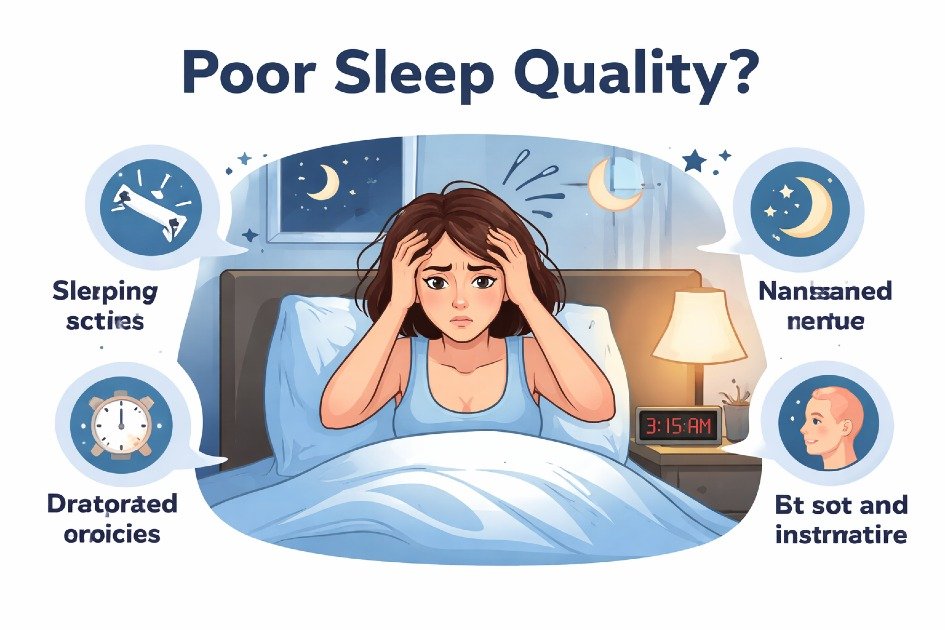
You sleep enough hours but still feel drained.
Common causes:
- Inconsistent sleep schedule
- Screen exposure before bed
- Ongoing stress
A reliable approach to improvement is to improve your sleep routine:
- Stabilize your sleep routine by going to bed and waking up at the same time everyday
- Avoid screens at least 60 minutes before sleep
- Build a simple wind-down habit
A core advantage is that better sleep leads to a more stable mood and higher energy.
3. Unresolved Emotional Baggage

Unprocessed emotions don’t disappear—they build up.
This can show up as:
- Sudden mood drops
- Irritability
- Ongoing sadness
A reliable approach to improvement is to start processing emotions:
- Journal regularly
- Talk to someone you trust
- Seek professional support if needed
A core advantage is to release emotional weight and gain mental clarity.
According to NIMH, depression can affect your behavior.
4. Lack of Purpose or Direction
When your days feel repetitive, motivation fades.
A reliable approach to improvement is to reintroduce direction:
- Set small, meaningful goals
- Try new activities
- Align your actions with your values
A core advantage is to make small goals restore a sense of progress and motivation.
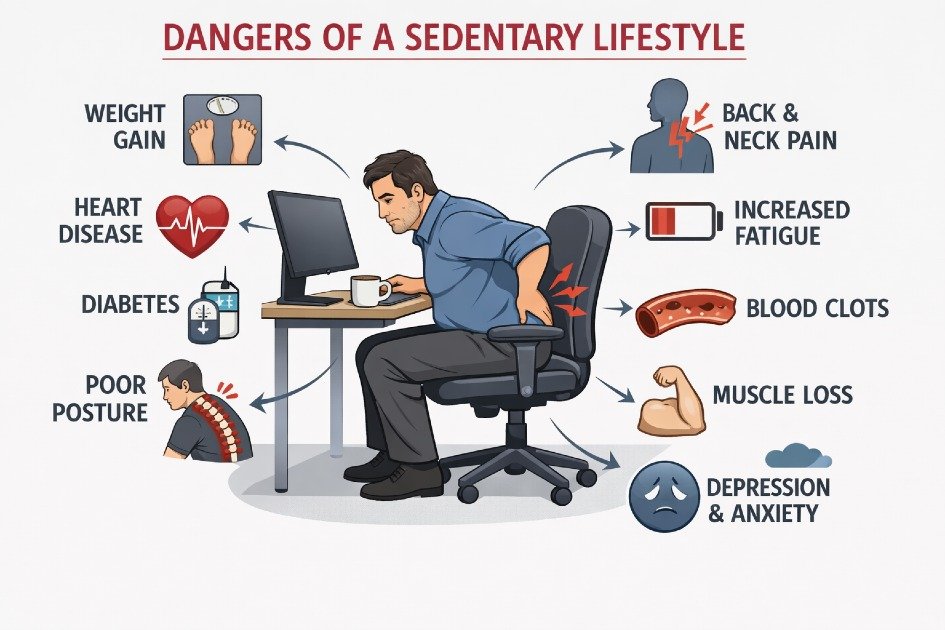
5. Sedentary Lifestyle

Too much sitting lowers energy and affects mood-regulating hormones.
A reliable approach to improvement is to move daily:
- Walk 20–30 minutes
- Use resistance bands for light strength training
- Take short movement breaks
A core advantage is to participate in exercise, this improves mood and reduces symptoms of depression.
6. Nutritional Gaps

Your brain depends on nutrients to function well.
Low levels of key nutrients can affect mood:
- Vitamin D
- Omega-3s
- B vitamins
A reliable approach to improvement is to support your diet:
- Eat whole, balanced meals
- Include fish, greens, and healthy fats
- Use supplements like Omega-3 if needed
A core advantage is that better nutrition supports consistent energy and mood stability.
7. Social Isolation

You can be digitally connected but emotionally disconnected.
This leads to:
- Loneliness
- Negative thinking
- Lower self-worth
A reliable approach to improvement is to prioritize real connection:
- Reach out to a friend
- Join a group or community
- Have more face-to-face or voice conversations
A core advantage is that strong connections improve emotional resilience.
8. Negative Self-Talk
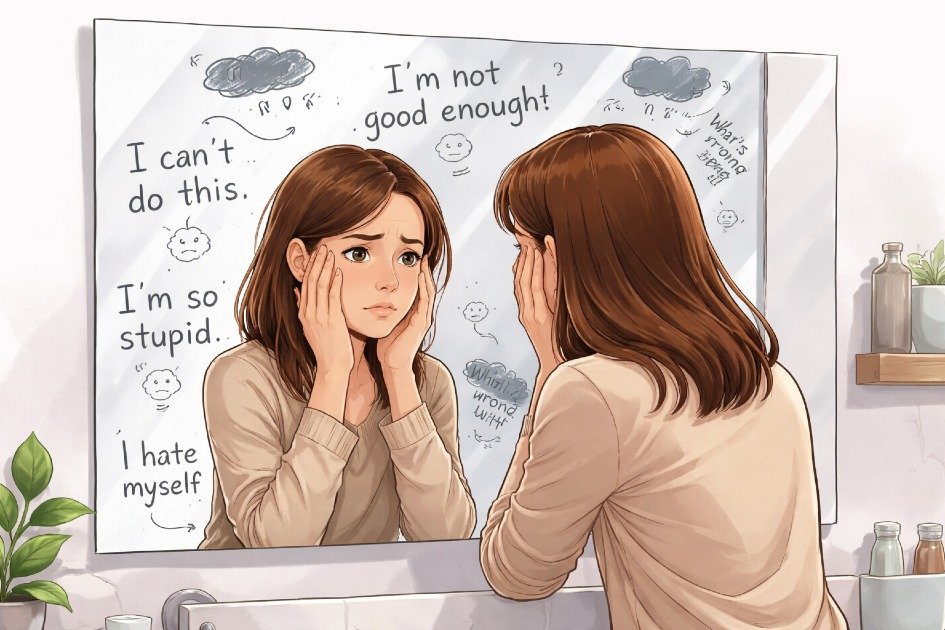
Your internal dialogue shapes how you feel.
Common patterns:
- “I’m not good enough”
- “Nothing will change”
A reliable approach to improvement is to challenge your thoughts:
- Notice negative patterns
- Question their accuracy
- Replace them with balanced thinking
A core advantage is for you to build a mindset that supports confidence and progress.
9. Chronic Stress

Constant stress becomes your “normal,” but your body still pays the price.
It leads to:
- Burnout
- Anxiety
- Emotional exhaustion
A reliable approach to improvement is to add daily stress relief:
- Deep breathing for 5 minutes
- Short walks
- Mindfulness or meditation
A core advantage is to lower stress by optimizing guided meditation for daily stress relief and emotional balance.
Hidden Causes of Depression

Depression doesn’t always stem from obvious life events. Often, subtle, hidden factors quietly sap your energy and mood, such as:
- Chronic stress from work or personal life
- Poor or irregular sleep patterns
- Lack of physical activity
- Nutritional deficiencies like low vitamin D or B12
- Social isolation or weak support networks
These hidden triggers can leave you feeling drained, anxious, or unmotivated—even when everything seems “fine” externally.
A reliable approach to improvement is to identify and address these hidden causes:
- Keep a mood and habit journal to spot patterns
- Maintain consistent sleep and wake times
- Incorporate daily movement or light exercise
- Eat nutrient-rich meals; supplement if necessary
- Stay socially connected through calls, meetups, or online communities
By tackling the root causes, you can reduce depressive symptoms, restore energy, and regain a sense of control over your life.
Daily Habits to Fight Depression
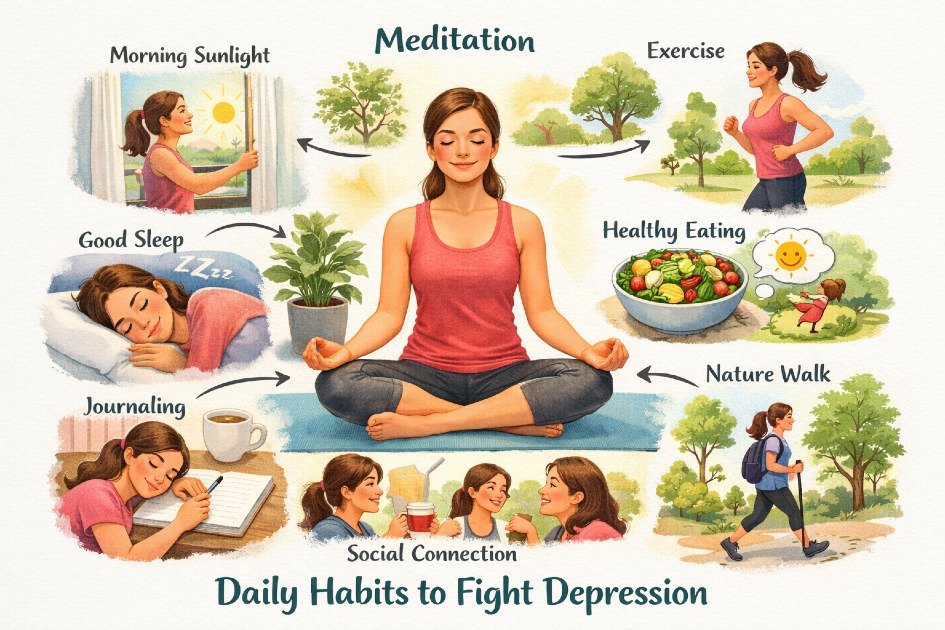
Neglecting small daily habits can let negative thoughts and low motivation take over. Without intentional routines, depression often lingers.
A reliable approach to improvement is to adopt practical, science-backed habits:
- Morning sunlight exposure – regulates circadian rhythm and boosts vitamin D
- Daily physical activity – even a 20-minute walk releases mood-lifting endorphins
- Mindful journaling – helps process emotions and gain perspective
- Balanced nutrition – include leafy greens, fatty fish, and whole grains
- Digital detox periods – limit social media and notifications to reduce stress
Consistent daily habits stabilize mood, increase focus, and gradually build resilience against depressive feelings. Small changes compound into noticeable improvements in energy and outlook.
Mental Health Tips for Depression
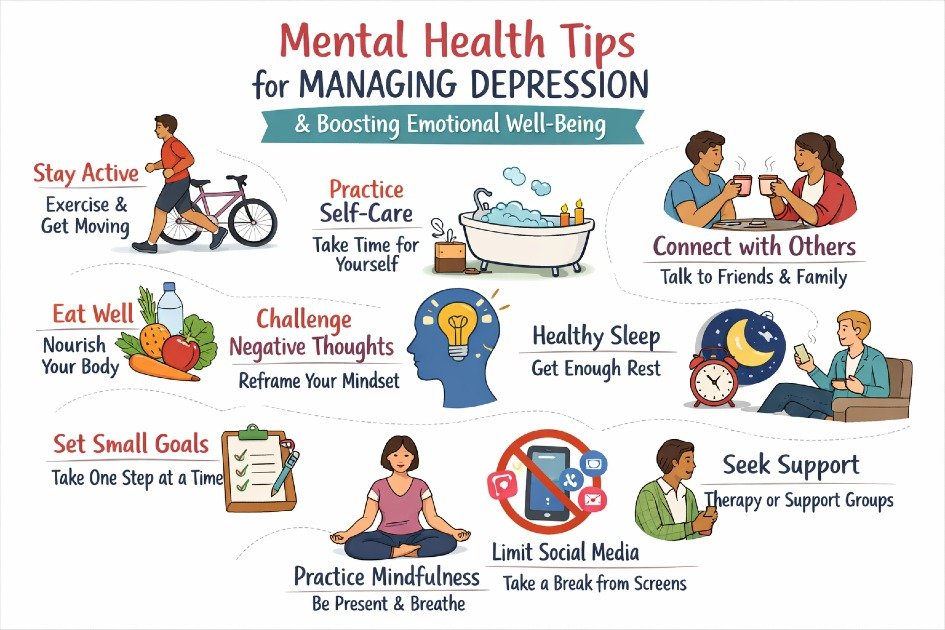
Depression can feel isolating, and without effective coping strategies, negative thoughts can spiral out of control. Many people struggle simply because they don’t have practical tools to support their mental health.
A reliable approach to improvement is to use actionable strategies to strengthen mental wellness:
- Practice gratitude – note 2–3 things you’re thankful for each day
- Connect with supportive people – regular interaction combats isolation
- Set small, achievable goals – accomplishing tasks boosts self-esteem
- Learn relaxation techniques – try deep breathing, meditation, or yoga
- Seek professional guidance – therapists and counselors provide valuable support
Applying these tips consistently helps you manage depressive symptoms, improve emotional resilience, and regain a sense of control over your life.
Frequently Asked Questions
What are hidden triggers of depression?
They are subtle daily habits or conditions—like poor sleep, stress, or lack of movement—that gradually affect your mental health.
Can small lifestyle changes really help depression?
Yes. Consistent small changes can significantly improve mood and energy over time.
How do I identify my triggers?
Track your daily habits, sleep, mood, and energy. Patterns will start to appear.
When should I seek professional help?
If symptoms persist or interfere with daily life, consult a licensed mental health professional.
Does diet really impact depression?
Yes. Proper nutrition supports brain function and helps regulate mood.
Recap: Take Control of Hidden Depression Triggers
Depression often develops through daily patterns—poor sleep, ongoing stress, inactivity, and mental overload—that gradually drain your energy. If left unchecked, these factors can add up and affect how you think and feel.
Be aware and recognize what’s driving your mood so that you can make focused, practical changes. You don’t need to change everything at once.
Start with a few essentials:
- Improve your sleep routine
- Move your body every day
- Reduce unnecessary digital and mental noise
- Stay connected with supportive people
- Pay attention to your thought patterns
These actions, repeated daily, help restore balance and reduce the impact of depression.
Ready to Take Back Control—Pick One Trigger at a Time
You don’t need a complete reset. You need a clear starting point—and the discipline to follow through.
Turn your awareness into real change by using this planner to map your days with intention, reduce mental overload, and create simple structure that helps you regain focus, stabilize your energy, and take back control of your daily life.