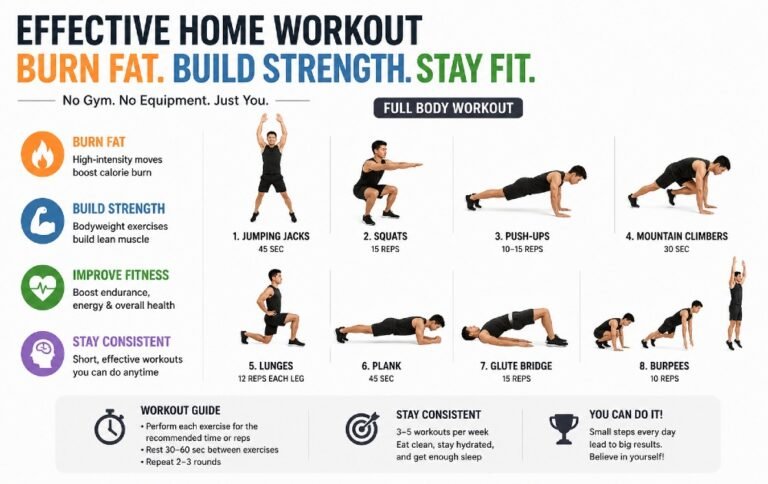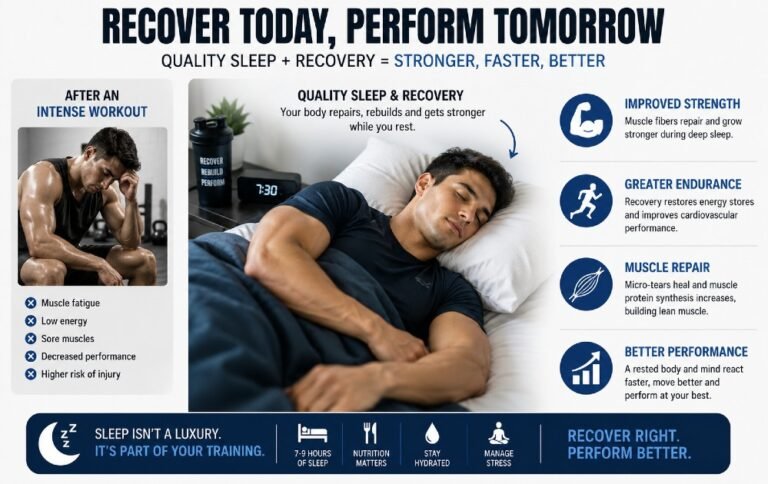

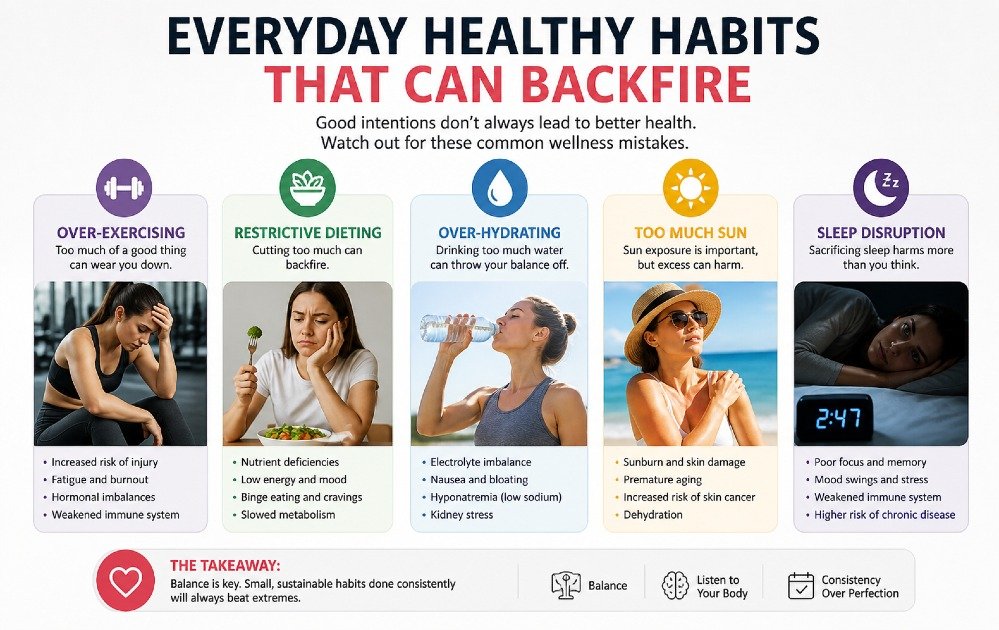
You eat well, train hard, and stay consistent, but your energy drops and progress stalls.
Some healthy routines become harmful when taken to extremes or done without balance.
This guide explains common routines that quietly backfire—and shows you how to correct them so your routine actually supports your body and mind.
9 Ways to Build Smarter, Sustainable Healthy Habits
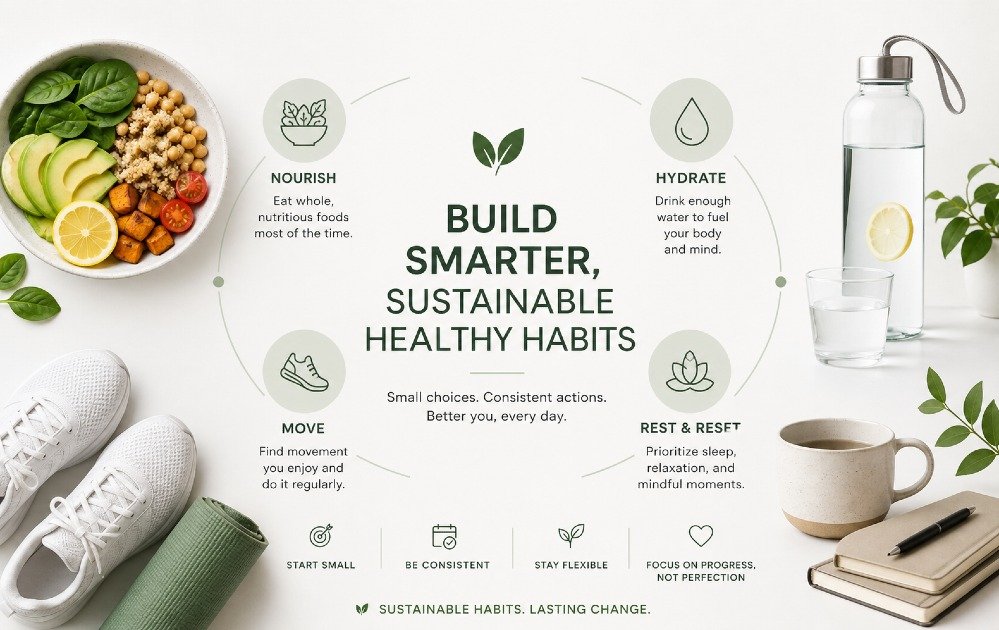
Healthy habits fail when they become rigid or ignore recovery. Lasting results come from balance and consistency.
Discover nine habits that are not just healthy in theory, but effective, realistic, and sustainable in everyday life.
1. Eating “Clean” All the Time
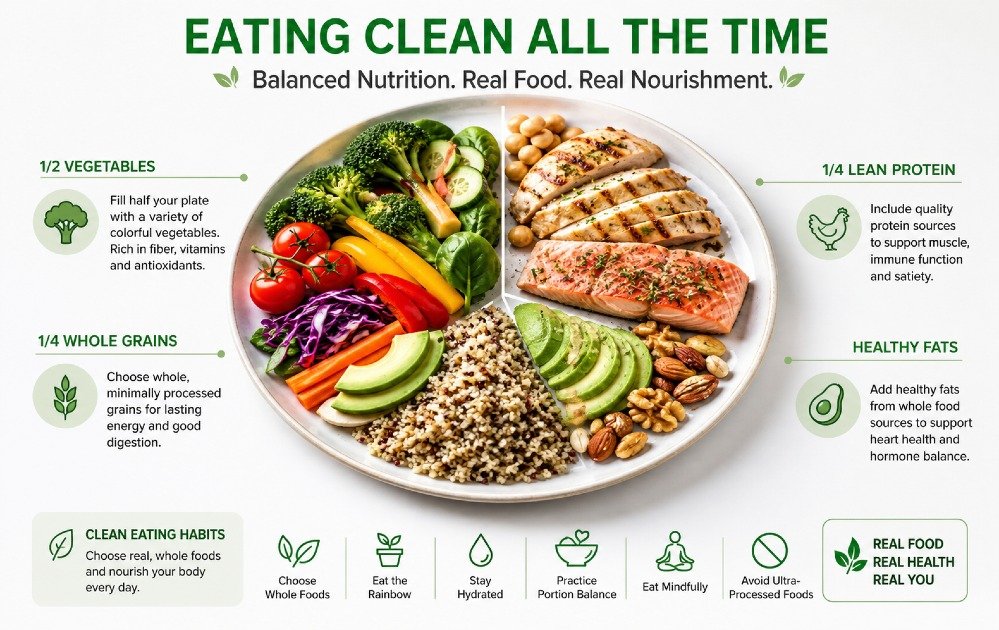
Clean eating sounds ideal, but strict rules around food often create stress instead of health.
Over time, this can lead to:
- Food cravings and rebound eating
- Anxiety around “off-limit” foods
- Poor long-term consistency
How to fix it:
Shift from strict eating to balanced eating.
- Follow an 80/20 approach
- Allow flexibility without guilt
- Focus on nutrient quality, not perfection
Core advantage:
A more sustainable diet, fewer cravings, and a healthier relationship with food.
2. Exercising Every Day

Daily workouts may look disciplined, but your body needs recovery to improve.
Without rest, you risk:
- Chronic fatigue
- Higher injury risk
- Plateaus in strength or fat loss
How to fix it:
Train smarter, not harder.
- Include 1–2 rest days weekly
- Alternate intensity levels
- Pay attention to fatigue signals
Core advantage:
Better performance, faster recovery, and consistent progress.
3. Drinking Too Much Water

Hydration is essential—but excessive water intake can disrupt electrolyte balance.
This may cause:
- Headaches
- Weakness
- Low energy
How to fix it:
Drink based on actual need.
- Use thirst as a guide
- Adjust for activity and climate
- Replenish electrolytes when sweating heavily
Core advantage:
Proper hydration that supports—not strains—your system.
4. Overusing Supplements

More supplements don’t equal better health. In fact, unnecessary stacking can overwhelm your body.
Common issues include:
- Nutrient imbalance
- Wasted money
- Reduced absorption efficiency
How to fix it:
Keep supplementation intentional.
- Prioritize whole foods first
- Use supplements only for gaps
- Stick to essentials when needed
Core advantage:
Cleaner nutrition, better absorption, and fewer unnecessary costs.
NCBI highlights the benefits and harmful effects of supplementation.
5. Waking Up Too Early Without Enough Sleep
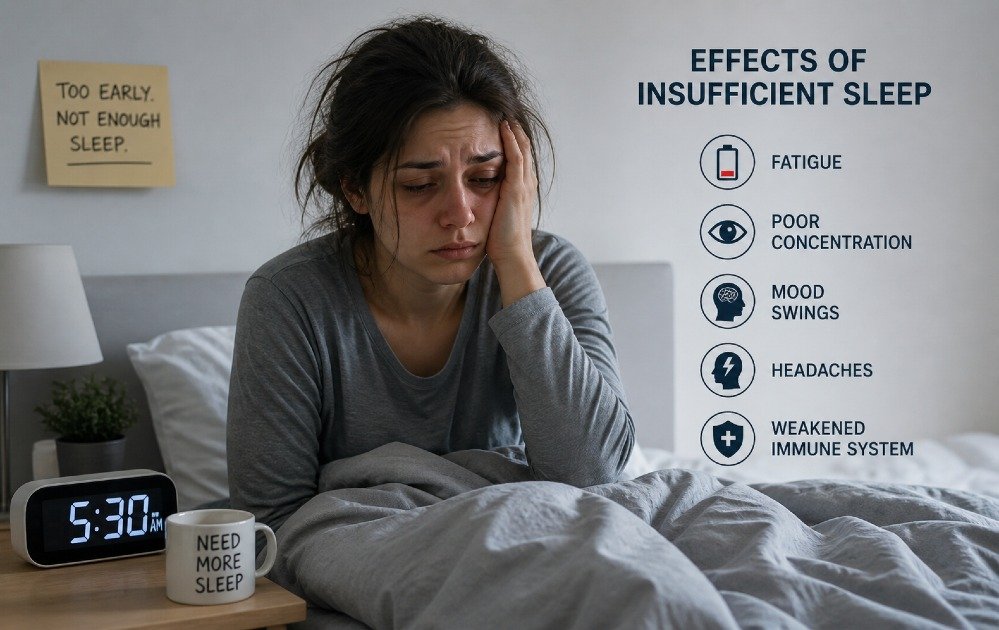
Early mornings are productive—until they steal your sleep.
Sleep deprivation leads to:
- Poor focus
- Mood swings
- Lower performance
How to fix it:
Prioritize sleep over early alarms.
- Aim for 7–9 hours nightly
- Keep a consistent sleep schedule
- Build a wind-down routine
Core advantage:
More energy, better focus, and improved daily performance.
6. Constant Productivity Without Breaks

Working nonstop feels productive—but it reduces mental efficiency over time.
This leads to:
- Burnout
- Reduced creativity
- Mental fatigue
How to fix it:
Schedule recovery into your day.
- Use focused work cycles (e.g., 25–50 minutes)
- Take short breaks regularly
- Step away from screens
Core advantage:
Higher-quality output with less exhaustion.
7. Following Strict Diet Trends
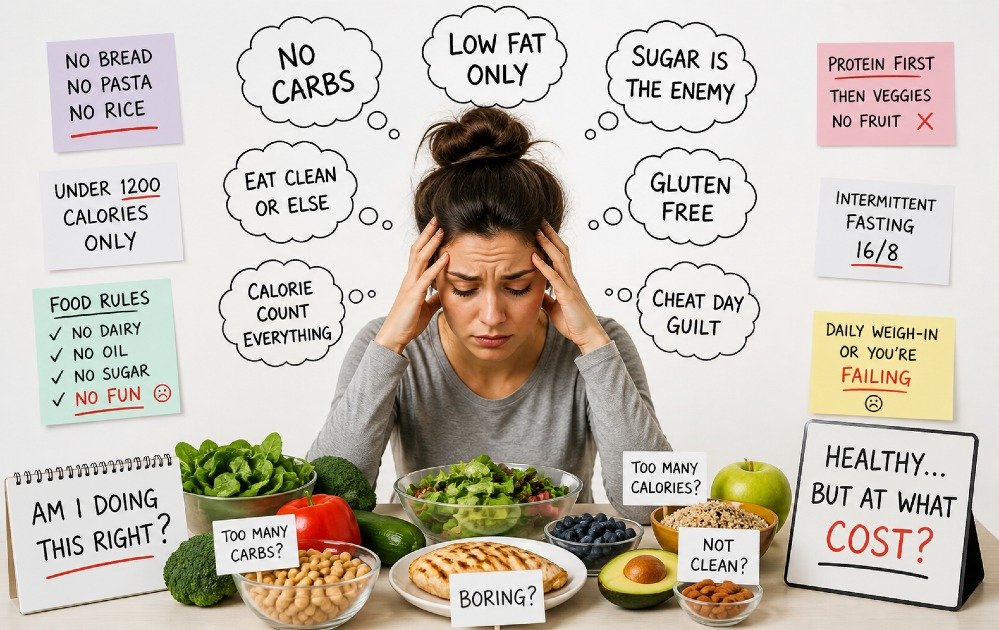
Diet trends promise fast results but often fail long-term.
They usually cause:
- Inconsistency
- Frustration
- Yo-yo dieting cycles
How to fix it:
Build a personalized approach.
- Eat based on your lifestyle
- Avoid extreme restrictions
- Focus on long-term consistency
Core advantage:
A diet you can actually maintain.
8. Trying to Eliminate All Stress

Not all stress is harmful. Avoiding it completely can limit growth.
Too little stress may reduce:
- Motivation
- Adaptability
- Mental resilience
How to fix it:
Manage stress instead of avoiding it.
- Accept manageable challenges
- Practice recovery techniques (breathing, journaling)
- Build tolerance gradually
Core advantage:
Stronger emotional resilience and better coping ability.
9. Over-Tracking Everything
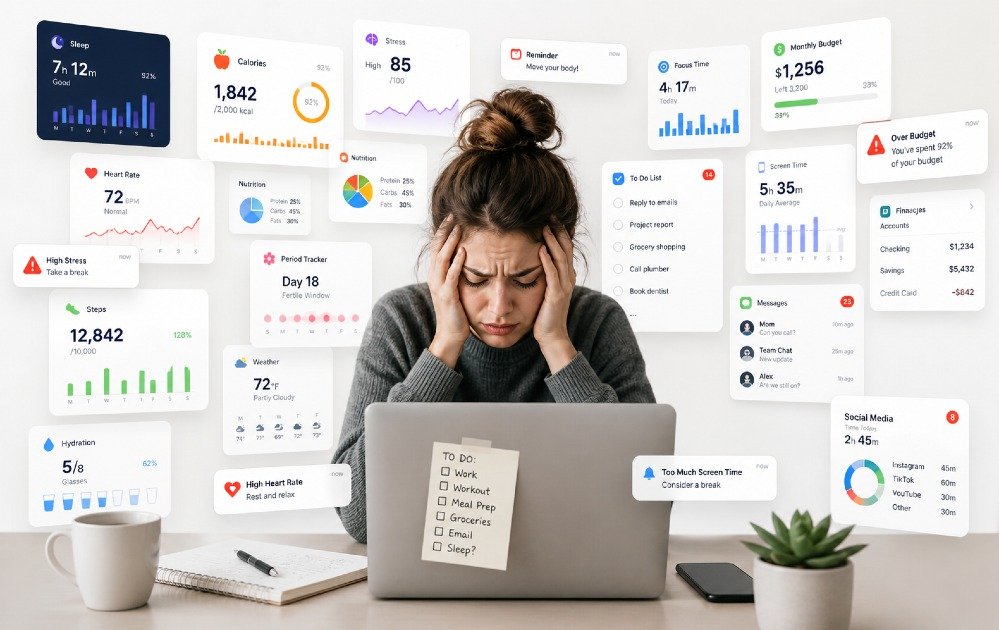
Tracking health metrics can help—but obsession creates pressure.
It may lead to:
- Anxiety
- Decision fatigue
- Loss of natural intuition
How to fix it:
Use tracking as a guide, not a rule.
- Track only key metrics
- Take periodic breaks
- Listen to your body
Core advantage:
A healthier balance between data and intuition.
Unhealthy Healthy Routines
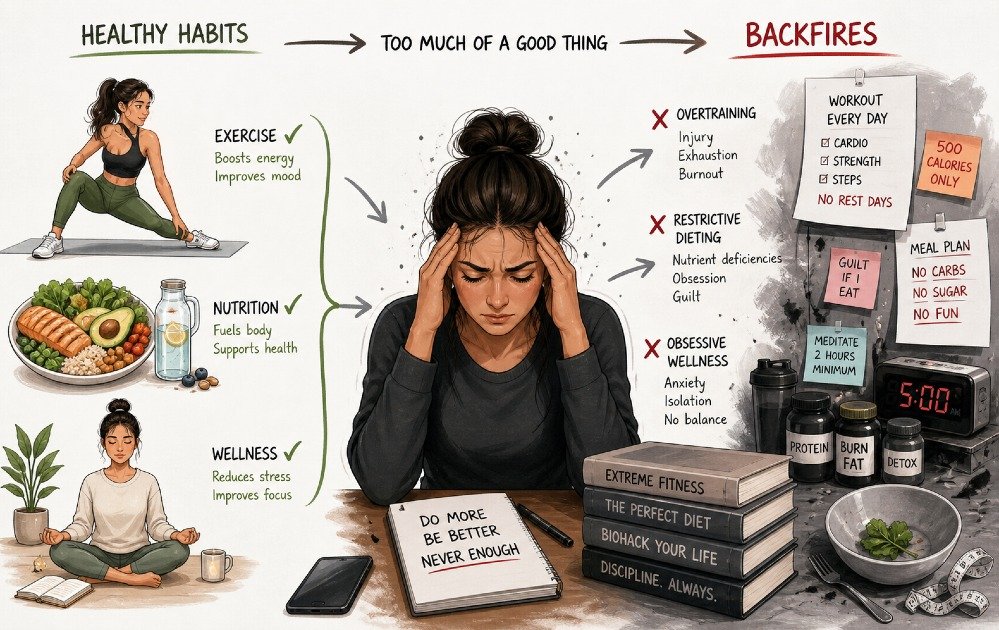
Healthy routines often fail when discipline becomes pressure and leads to burnout.
Healthy routines should feel supportive. Instead, they often become strict rules.
Watch for these signs:
- Anxiety when you miss a workout or meal plan
- Constant overthinking about food, sleep, or exercise
- Little room for flexibility in your day
At this point, the routine stops helping and starts draining you.
You don’t need to do less—you need to do it more sustainably.
Make these adjustments:
- Follow an 80/20 approach instead of aiming for perfection
- Allow flexibility in meals, workouts, and rest
- Focus on weekly consistency, not daily precision
Consistency works best when it’s realistic.
Core advantages:
When you remove unnecessary pressure, everything improves.
You’ll notice:
- Better consistency over time
- Less mental fatigue
- More enjoyment in your routine
Sustainable habits always outperform strict ones.
Clean Eating Mistakes
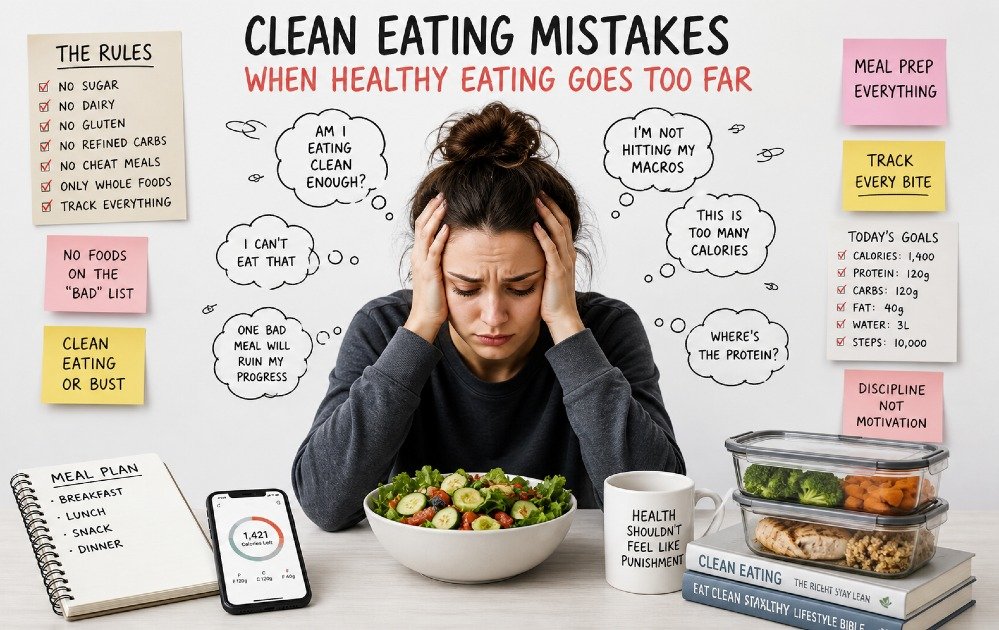
Clean eating works—until it becomes restrictive. Many clean eating mistakes come from trying to be too perfect.
Cutting out too many foods can create imbalance.
Common outcomes:
- Strong cravings and overeating later
- Stress in social situations involving food
- Missing nutrients from overly limited choices
Instead of improving health, strict eating creates tension.
Stop dividing food into “good” and “bad.” Focus on variety.
Here’s what works:
- Include all food groups in reasonable portions
- Avoid extreme restrictions
- Use an 80/20 balanced eating approach
Core advantages:
When you ease restrictions, your habits stabilize.
You gain:
- Fewer cravings and binge cycles
- More nutritional balance
- Less stress around food choices
Balanced eating is easier to maintain—and more effective long term.
Burnout From a Healthy Lifestyle
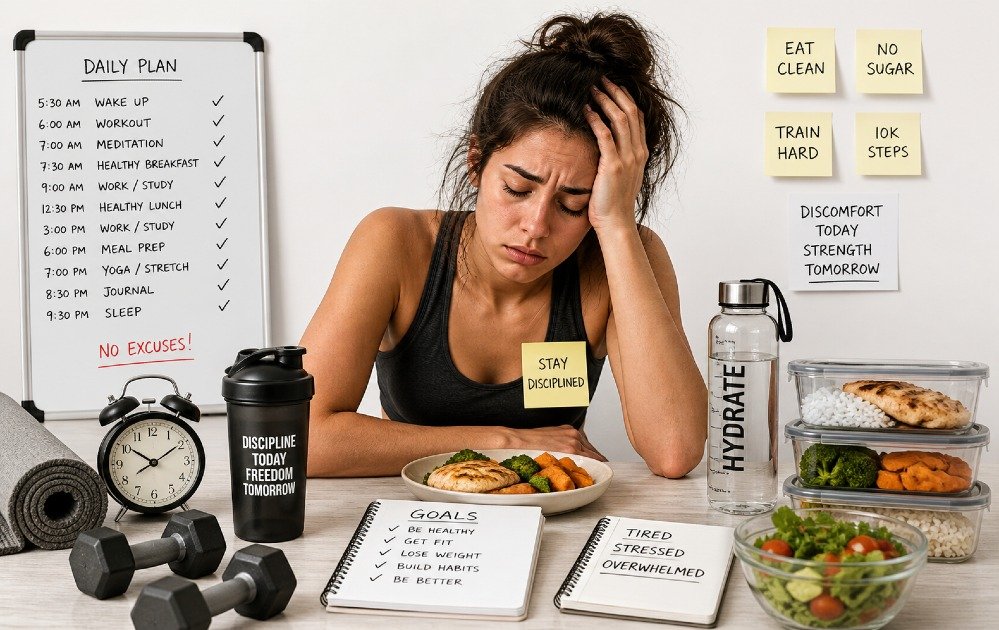
Many people experience burnout from healthy lifestyle habits without realizing it. Doing everything “right” can quickly become too much.
Pushing too hard leads to diminishing returns.
Typical causes:
- Intense daily workouts with no recovery
- Strict routines with no flexibility
- Tracking every detail obsessively
This creates fatigue, frustration, and loss of motivation.
Progress depends on balance—not constant effort.
Refocus your approach:
- Schedule rest days without guilt
- Reduce unnecessary tracking
- Prioritize consistency over intensity
CDC highlights that physical activity is vital for health.
Core advantages:
When you allow recovery, your body performs better.
You’ll experience:
- Steadier energy levels
- Improved performance
- Stronger mental focus
Rest isn’t a break from progress—it’s part of it.
Frequently Asked Questions
Can healthy habits become unhealthy?
Healthy habits can become harmful when taken too far. Overtraining, strict dieting, and nonstop productivity often create more stress than benefits.
Why do healthy routines stop working over time?
Most routines fail because they focus on short-term intensity instead of long-term consistency.
Common causes include:
- Overtraining without proper recovery
- Strict food rules
- Lack of mental rest
- Unrealistic expectations
Lasting progress comes from routines that fit real life consistently.
How do I know if a healthy routine is backfiring?
Watch for signs such as:
- Constant fatigue
- Increased stress or irritability
- Poor sleep quality
- Loss of motivation
- Obsessive tracking or perfectionism
- Minimal progress despite high effort
A healthy routine should improve your quality of life—not drain it.
What’s the best way to build a sustainable routine?
Keep your routine realistic, flexible, and consistent.
Focus on:
- Simple habits you can maintain
- Regular recovery and rest
- Progress over perfection
- Adjusting routines to fit your lifestyle
Sustainable habits are more effective than extreme routines because they last.
Is balance more important than discipline?
Discipline creates consistency, but balance keeps habits sustainable. Without flexibility, routines become stressful; with balance, you maintain health, life, and goals together.
Recap: Sustainable Health Produces
Many think better health comes from stricter routines and intense discipline, but too much often causes burnout, fatigue, and inconsistency.
Keeping things steady and low, boosts energy, strengthens mindset, and supports lasting progress.
The best routines are not the hardest but the ones you can maintain.
Ready to Build a Routine You Can Maintain
You don’t need a rigid routine—but a discipline that you can sustain. If your routine feels exhausting instead of supportive, simplify it.
Stop guessing which habits are helping or hurting you—use this fitness tracker to turn your daily routines into clear, actionable data so you can fix what backfires and finally build progress you can see.