
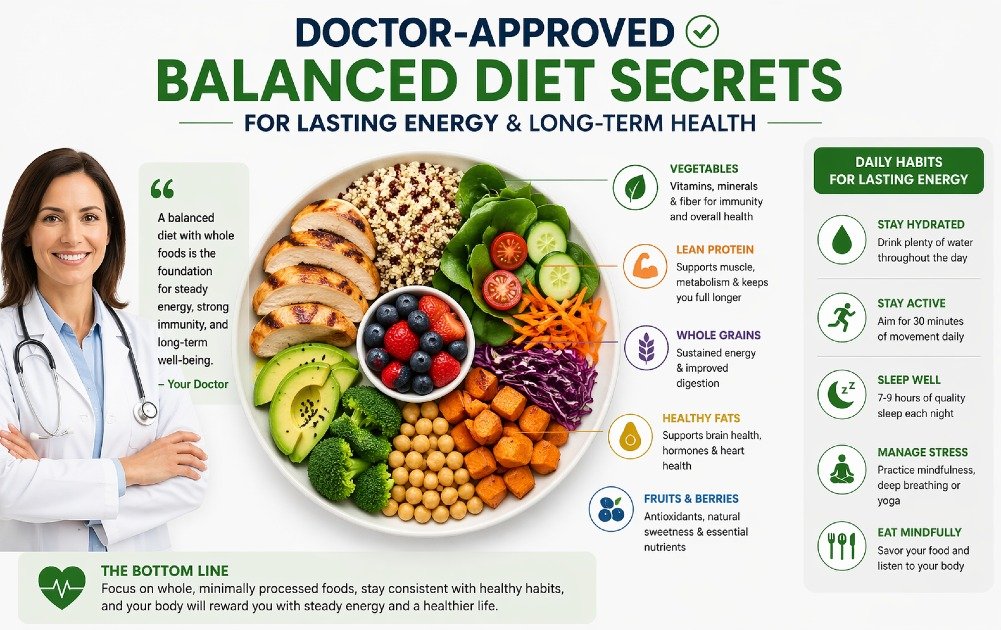
You’re eating better, avoiding junk food, and trying to make healthier choices—yet you still feel tired, sluggish, or constantly hungry. That’s usually not a discipline problem. It’s a balance problem.
A true balanced diet isn’t about restriction or trending diets. It’s about giving your body the right mix of nutrients so it can function properly every day—without confusion or stress.
This guide explains the key balanced diet that makes healthy eating simpler, sustainable, and effective.
7 Proven Balanced Diet Principles
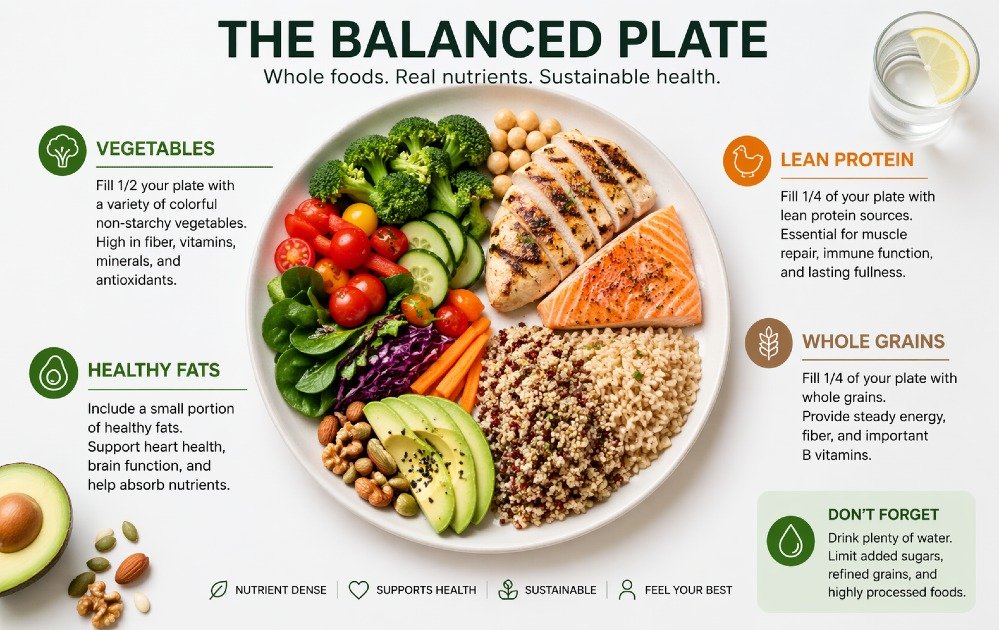
A balanced diet supports steady energy, healthy metabolism, and lasting wellness through proper nutrition.
Discover seven key principles that can help you build balanced meals, avoid eating mistakes, and support steady energy and long-term health.
1. Prioritize Balance Over Diet Trends
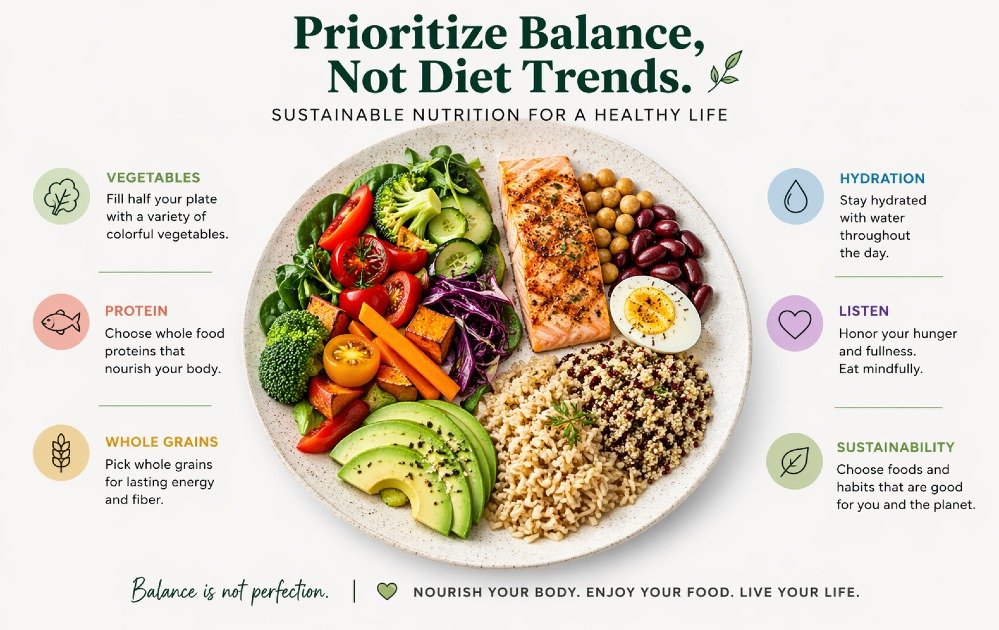
Most diets fail because they eliminate entire food groups, creating nutritional gaps and burnout.
How to fix it:
Includes all macronutrients:
- Carbohydrates for energy
- Protein for repair and strength
- Healthy fats for hormones and brain function
Core advantages:
- Stable energy
- Fewer cravings
- Better metabolic performance
Serve half vegetables, one-quarter protein, one-quarter whole carbs plus healthy fats.
2. Build Meals Around Whole Foods

Processed foods are convenient but often loaded with sugar, sodium, and unhealthy fats that disrupt health over time.
How to fix it:
Focus on whole, minimally processed foods:
- Vegetables and fruits
- Whole grains like oats and brown rice
- Lean proteins such as eggs, fish, and chicken
- Healthy fats like olive oil, nuts, and avocado
Core advantages:
- Better digestion
- Reduced inflammation
- Long-term energy stability
3. Choose Smart Carbs, Not Fewer Carbs
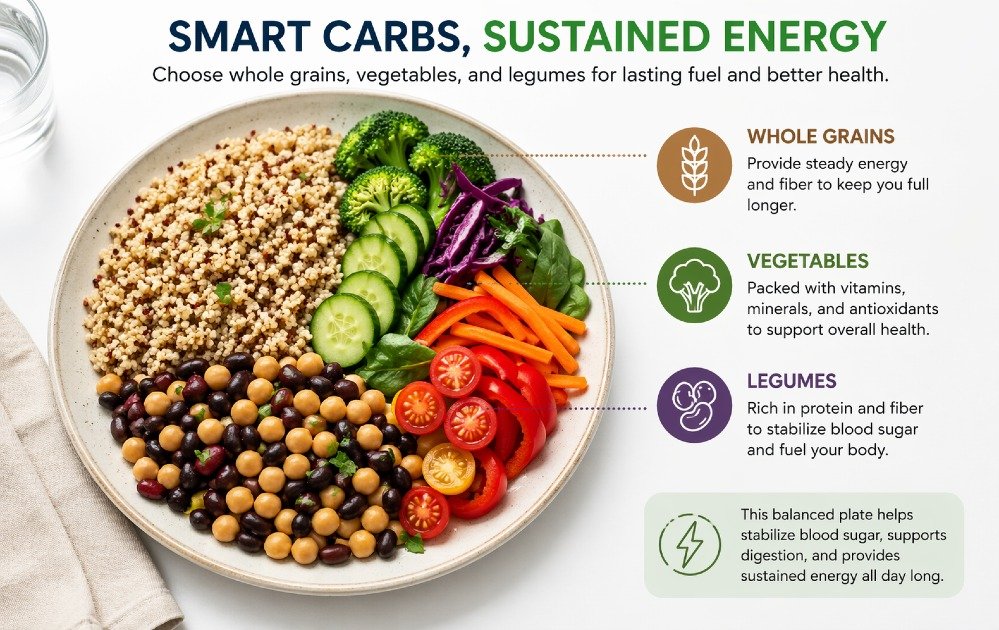
Carbs are often misunderstood and unnecessarily eliminated.
How to fix it:
Replace refined carbs with complex carbs:
- Sweet potatoes
- Quinoa
- Brown rice
- Oats
- Beans and legumes
Avoid white bread, pastries, and sugary snacks.
Core advantages:
- Steady energy
- Better brain function
- Stable blood sugar
Carbs are not the problem—refined carbs are.
4. Include Protein in Every Meal
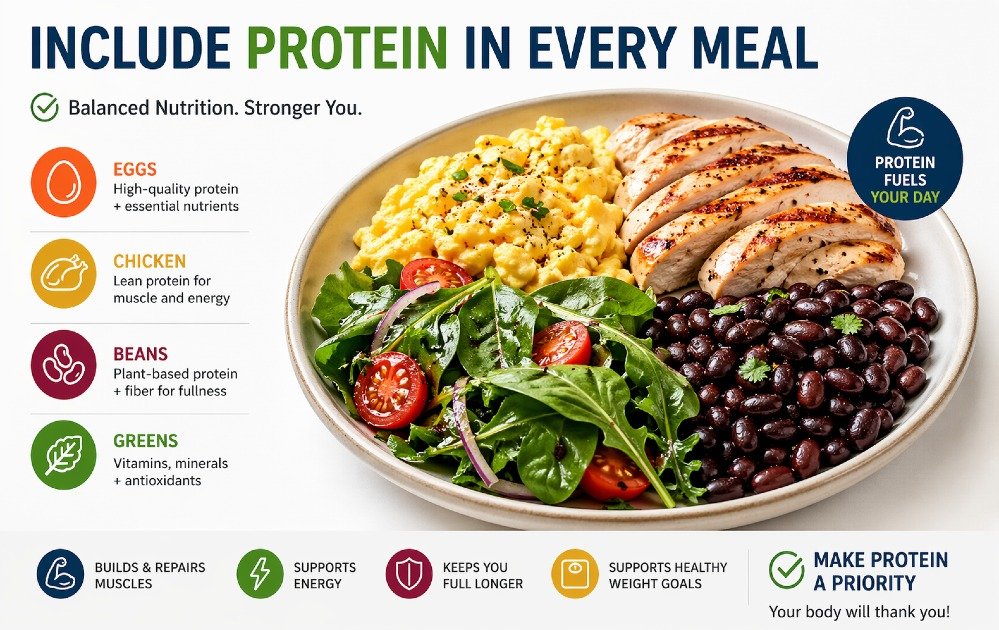
Many people under-eat protein unless they’re actively training.
How to fix it:
Add a protein source to every meal:
- Eggs
- Chicken or fish
- Greek yogurt
- Beans and lentils
Core advantages:
- Control hunger
- Support muscle health
- Prevent unnecessary snacking
Consistency matters more than quantity spikes.
5. Don’t Avoid Healthy Fats
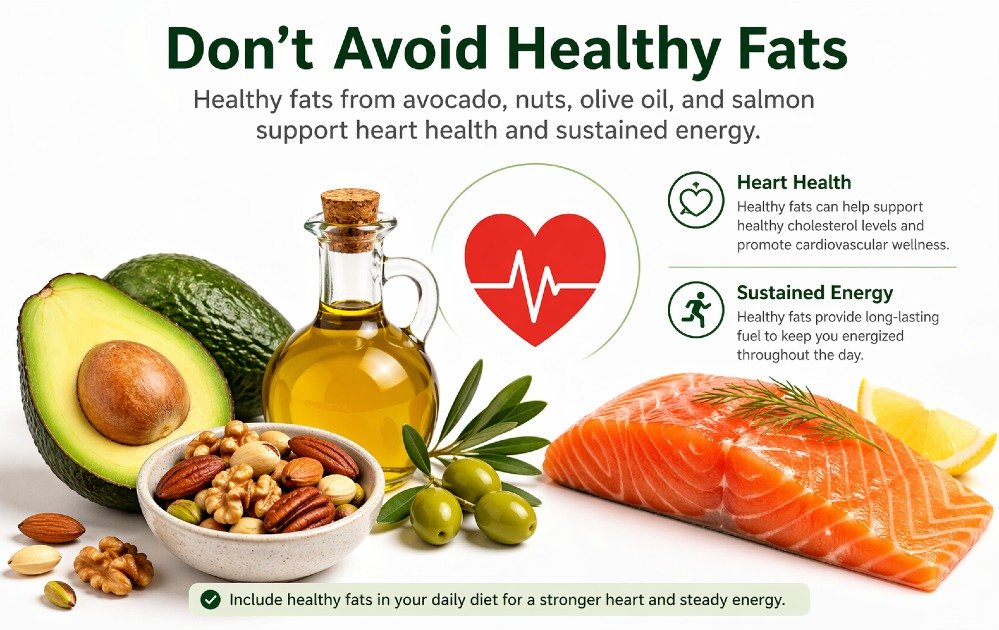
Low-fat diet trends led many people to fear fats entirely.
How to fix it:
Include healthy fats daily:
- Avocados
- Olive oil
- Nuts and seeds
- Fatty fish like salmon
Core advantages:
- Support brain function
- Improve heart health
- Help absorb key vitamins
Your body needs fats to function properly.
6. Hydration Is Part of Nutrition

Many people focus on food but ignore water intake, which directly affects energy and focus.
How to fix it:
Aim for consistent hydration:
- Around 8–10 glasses daily, adjusted for activity level
Core advantages:
- Digestion
- Mental clarity
- Energy levels
Simple additions like lemon or cucumber can improve consistency.
7. Control Portions, Not Just Food Quality
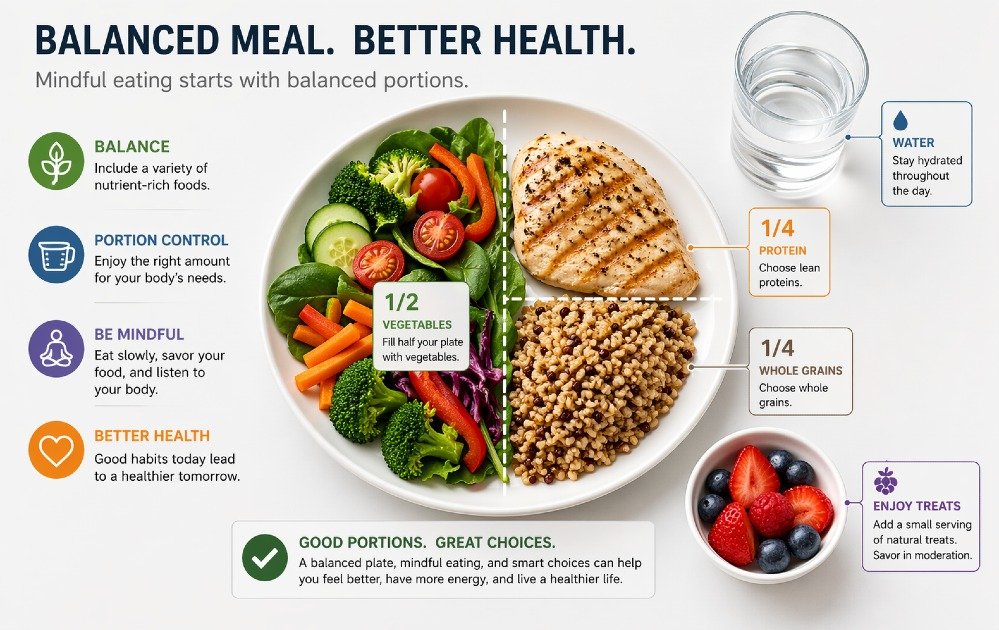
Even healthy foods can lead to weight gain when portions are uncontrolled.
How to fix it:
Practice mindful eating:
- Use smaller plates
- Eat slowly
- Stop when comfortably full (not stuffed)
Core advantages:
- Prevent overeating
- Maintain healthy weight
- Improve digestion
Consistency Beats Perfection
Healthy eating fails when people aim for perfection instead of consistency.
Use the 80/20 rule:
- 80% nutrient-dense meals
- 20% flexibility for enjoyment
This approach is realistic and sustainable long term.
The WHO emphasizes balanced nutrition as a key factor in preventing chronic disease and supporting long-term health.
Healthy Balanced Diet Plan
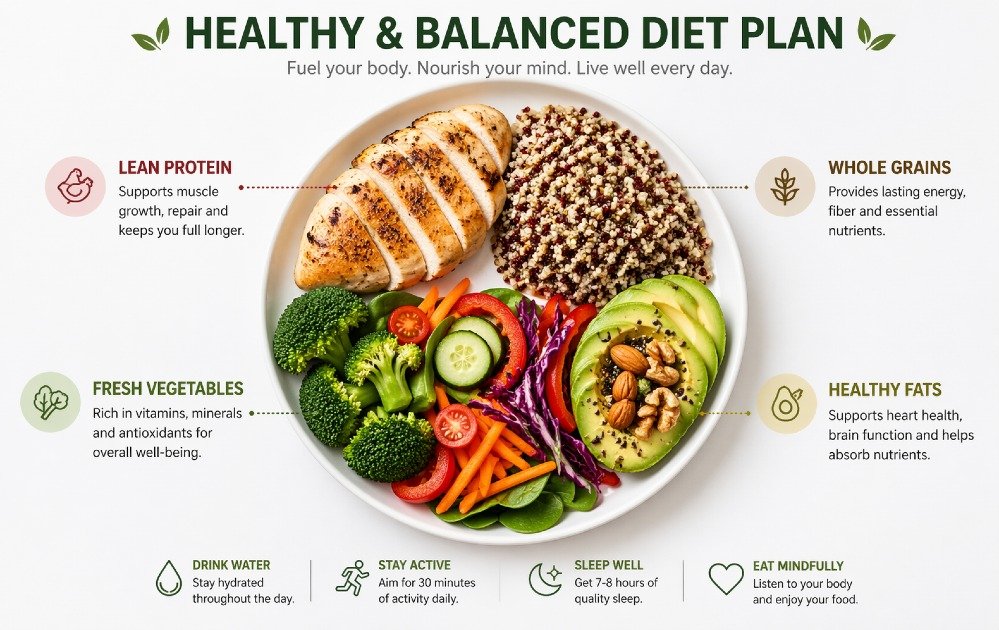
Most people overcomplicate healthy eating. They follow strict plans, skip meals, or constantly change routines. This leads to inconsistency and low energy.
How to fix it:
Use this simple framework:
- Breakfast: Protein + fiber (eggs with oats, yogurt with fruit)
- Lunch: Lean protein + vegetables + whole grains
- Dinner: Protein + vegetables + healthy fats
- Snacks (if needed): Nuts, fruit, or yogurt
Core advantages:
- Maintain steady energy
- Reduce cravings
- Stay consistent without overthinking meals
Tips:
- Prep simple meals ahead of time
- Keep healthy options within reach
- Don’t skip meals—it often leads to overeating later
Balanced Diet for Weight Management
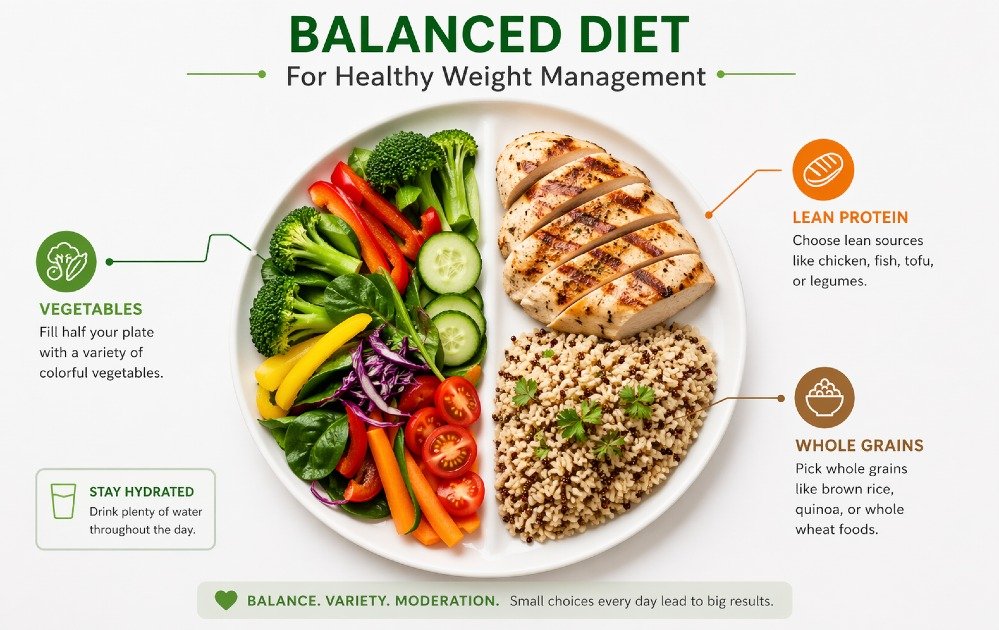
Weight issues often come from inconsistent eating and poor portion control—not just food quality. Skipping meals or overeating late in the day makes it worse.
How to fix it:
- Include protein in every meal
- Eat fiber-rich foods like vegetables and whole grains
- Use healthy fats in moderation
- Avoid sugary drinks and excess liquid calories
Core advantages:
- Better appetite control
- Fewer cravings
- Sustainable weight loss or maintenance
Tips:
- Eat slowly to recognize fullness
- Use smaller plates to manage portions
- Balance meals instead of eliminating foods
Best Foods for Long-Term Health
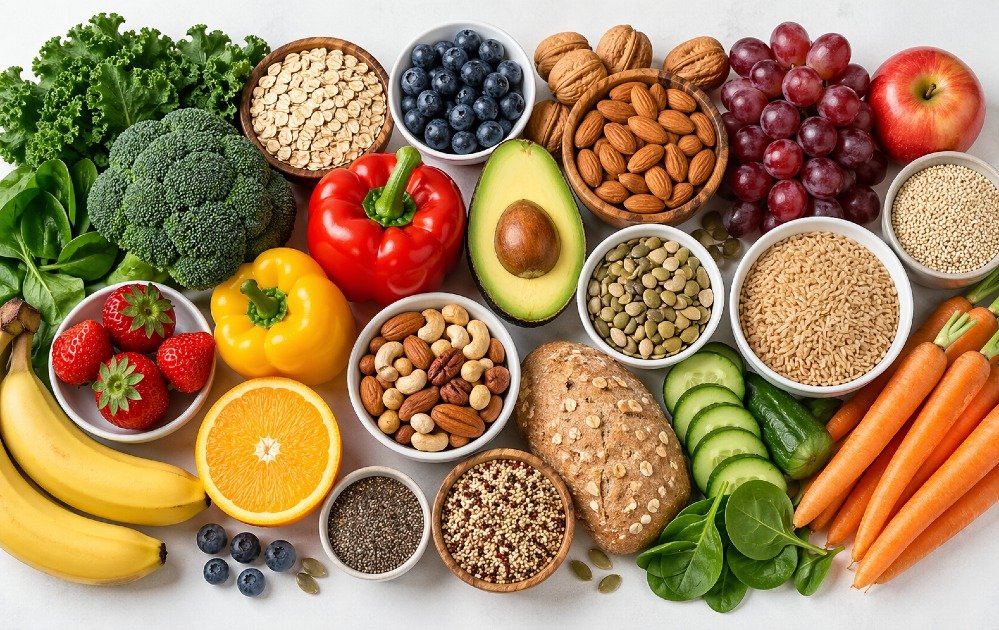
Short-term diets often ignore long-term health, leading to nutrient gaps and energy crashes.
How to fix it:
Focus on nutrient-dense:
- Vegetables: spinach, broccoli, carrots, kale
- Fruits: berries, apples, oranges
- Proteins: eggs, fish, chicken, beans, lentils
- Healthy fats: avocado, olive oil, nuts, seeds
- Whole grains: oats, brown rice, quinoa
Core advantages:
- Strengthen immunity
- Improve digestion
- Support brain and heart health
- Maintain steady energy levels
Tips:
- Add vegetables to every meal
- Replace refined grains with whole grains
- Include healthy fats regularly
- Rotate protein sources for variety
Frequently Asked Questions
What does a balanced diet look like daily?
A balanced diet is built on variety and proportion. Each meal should include:
- Protein (eggs, fish, beans)
- Vegetables or fruits
- Whole carbohydrates
- Healthy fats
It doesn’t require perfect meals—just consistent balance across the day.
Can a balanced diet improve energy levels?
Yes. Balanced meals provide a steady supply of nutrients, which helps avoid energy spikes and crashes.
You’ll likely notice:
- More stable energy
- Better focus
- Less fatigue
Consistency is what drives these results.
Do I need to eliminate certain foods?
No. A balanced diet is not based on strict restriction.
Instead:
- Limit highly processed foods
- Reduce added sugars
- Focus on nutrient-dense choices
The goal is moderation, not elimination.
How do I stay consistent?
Keep your approach simple and practical.
- Repeat easy, balanced meals
- Plan ahead when possible
- Keep healthy snacks available
- Follow an 80/20 approach
Consistency comes from habits you can maintain.
Is a balanced diet enough without supplements?
In most cases, yes. A well-balanced diet provides essential nutrients.
Supplements may help if:
- You have specific deficiencies
- Your diet lacks variety
Food should remain your primary source of nutrition.
Recap: Make Balance Your Default, Not a Diet
A balanced diet works because it’s sustainable.
Focus on:
- Whole, nutrient-dense foods
- Balanced intake of protein, carbs, and fats
- Proper portions and hydration
- Long-term consistency
When you apply these habits consistently, energy improves, cravings reduce, and overall health becomes easier to maintain. It isn’t a short-term fix—it’s a reliable, long-term approach.
Ready to Start Building Better Habits Today
You don’t need a complete overhaul. You need a nutrition tracker to stay organized, track progress, and maintain structure.
Fuel your body smarter with this meal planner that supports steady energy and stronger immunity.
Small actions, repeated daily, lead to lasting results.