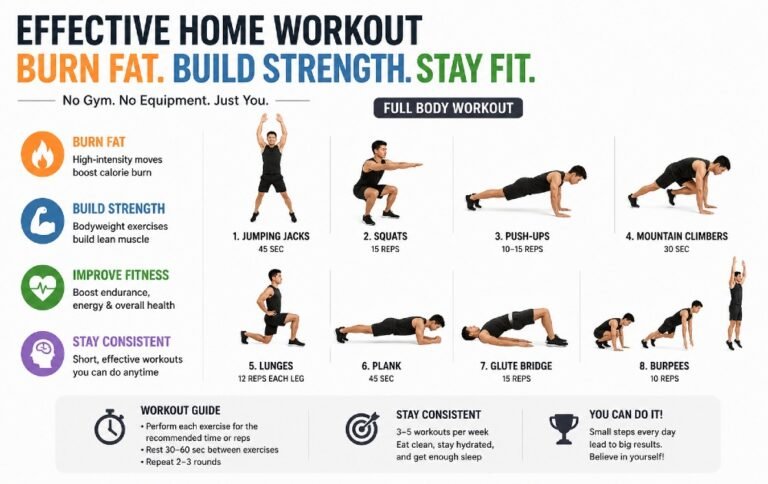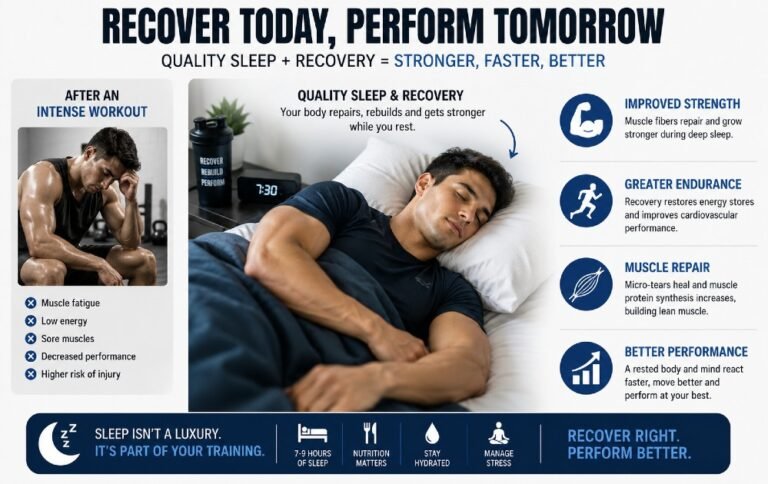


Many routines look healthy on the surface—clean eating, daily workouts, strict discipline. But not every Habit that appears beneficial actually supports your long-term progress.
Some habits quietly reduce energy, slow results, or create imbalance over time.
This guide highlights common healthy habits that may be holding you back—and how to fix them for better results.
9 Proven Healthy Habits

Healthy-looking habits don’t always deliver results. Real progress in fitness, nutrition, and productivity comes from balance, recovery, and consistency, not just effort.
Many people follow the right routines yet still hit plateaus, feel drained, or see slow gains.
Discover nine practical habits that explain correct common health myths and show how simple tweaks in training, diet, sleep, and productivity can improve energy and results.
1. Over-Exercising Without Recovery

More exercise does not always mean better results. Without recovery, the body breaks down instead of improving.
The NCBI highlights that over-exercising causes systemic inflammation resulting in depressed mood or central fatigue.
Common signs include fatigue, persistent soreness, and reduced performance.
How to fix it:
- Take at least 1–2 rest days per week
- Alternate high and low intensity workouts
- Prioritize sleep and hydration
Core advantage:
Better strength gains, fewer injuries, and improved consistency.
2. Eating Healthy Foods in Excess
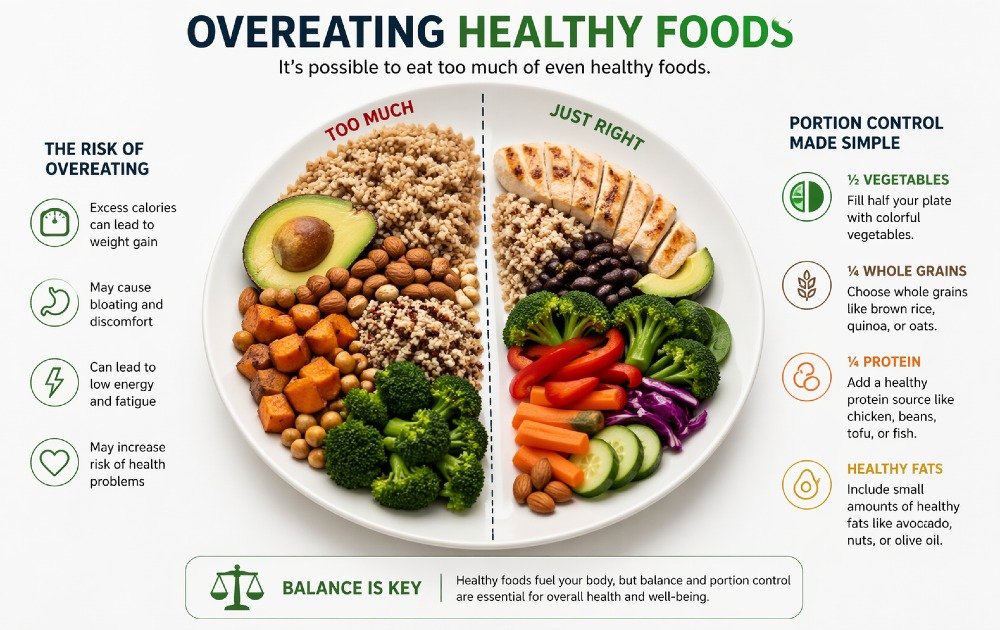
Healthy foods still contain calories. Overeating items like nuts, smoothies, or grains can slow progress or lead to weight gain.
How to fix it:
- Control portion sizes
- Eat slowly and stop at fullness
- Use smaller plates to manage intake
Core advantage:
Improved weight control without strict dieting.
3. Drinking Too Much Water
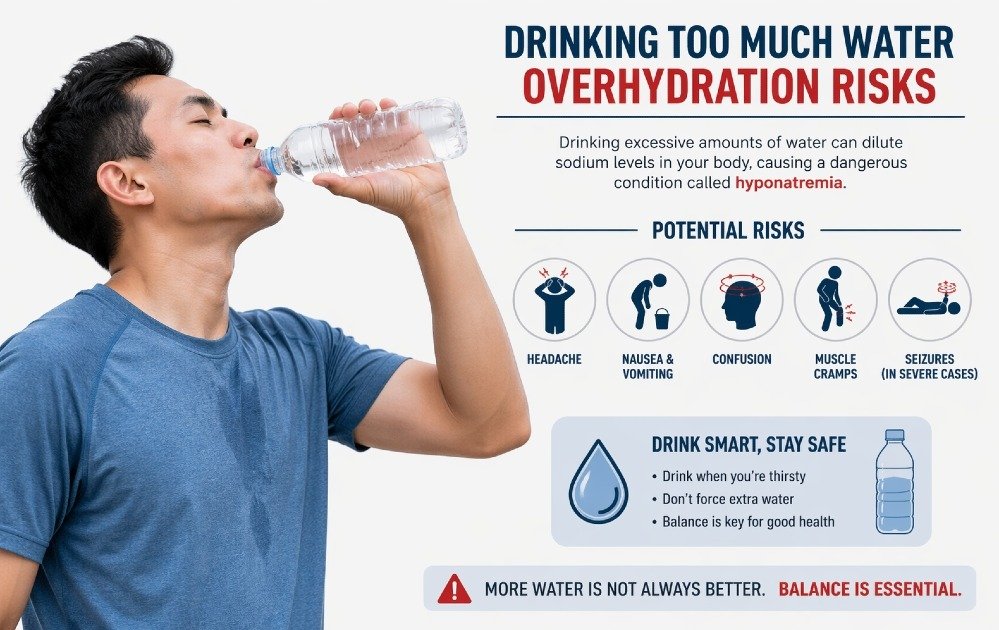
Hydration is essential, but excessive water intake can dilute electrolytes and affect energy levels.
How to fix it:
- Drink based on thirst
- Adjust intake during heat or exercise
- Include electrolyte-rich foods when needed
Core advantage:
Balanced hydration and stable energy throughout the day.
4. Cutting Out Entire Food Groups

Eliminating carbs or fats completely may feel disciplined but often leads to nutrient deficiencies and cravings.
How to fix it:
Focus on balance instead of restriction:
- Include complex carbohydrates
- Add healthy fats
- Maintain dietary variety
Core advantage:
Better energy, improved digestion, and sustainable nutrition habits.
5. Over-Relying on Supplements

Supplements cannot replace real food. Overdependence may create imbalances in nutrition.
How to fix it:
- Prioritize whole foods first
- Use supplements only when necessary
- Seek professional advice for deficiencies
Core advantage:
Stronger, more natural nutritional support.
6. Sleeping More Instead of Sleeping Better
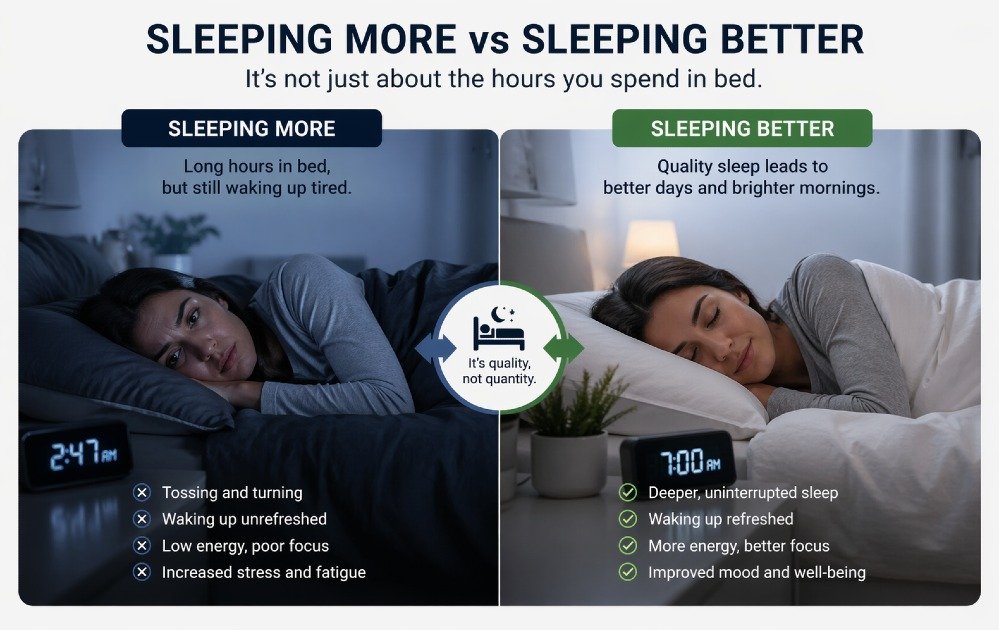
Long sleep hours do not guarantee rest. Poor sleep quality leads to fatigue and reduced focus.
How to fix it:
- Maintain consistent sleep schedules
- Reduce screen time before bed
- Improve sleep environment (dark, quiet, cool)
Core advantage:
Deeper rest, improved focus, and better recovery.
7. Choosing “Diet” or Low-Fat Foods

Many low-fat products contain added sugars or artificial ingredients that reduce their health value.
How to fix it:
- Read ingredient labels carefully
- Choose whole foods over processed alternatives
- Avoid marketing-driven food choices
Core advantage:
More stable energy and cleaner nutrition.
8. Constantly Tracking Everything

Tracking calories, steps, and macros can become mentally exhausting and unsustainable.
How to fix it:
- Use tracking as a learning tool, not a permanent system
- Shift toward intuitive eating and movement
- Focus on consistency instead of perfection
Core advantage:
Less stress and a healthier relationship with food and fitness.
9. Multitasking for Productivity

Multitasking reduces focus and lowers the quality of work.
How to fix it:
- Work in focused time blocks
- Remove distractions during tasks
- Complete one task before moving to the next
Core advantage:
Higher productivity with less mental fatigue.
Sustainable Healthy Lifestyle Tips That Work
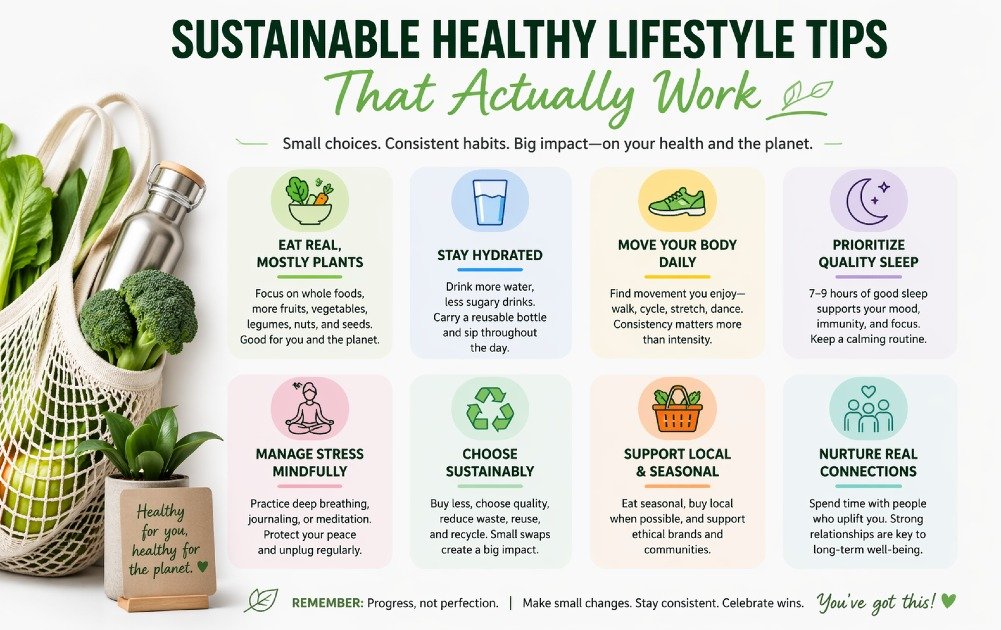
Quick fixes—strict diets, extreme routines, all-or-nothing plans—rarely last. They create short bursts of motivation, then fade.
Consistency breaks, and results stall.
How to fix it:
Adopt healthy habits that suit your lifestyle:
- Start small—build one habit at a time
- Stay flexible—adapt routines when needed
- Tie habits to existing actions (e.g., walk after meals)
- Focus on consistency, not intensity
- Plan for setbacks in advance
Core advantage:
You build habits you can maintain. Progress becomes steady and reliable.
Productivity Habits Mistakes That Reduce Efficiency
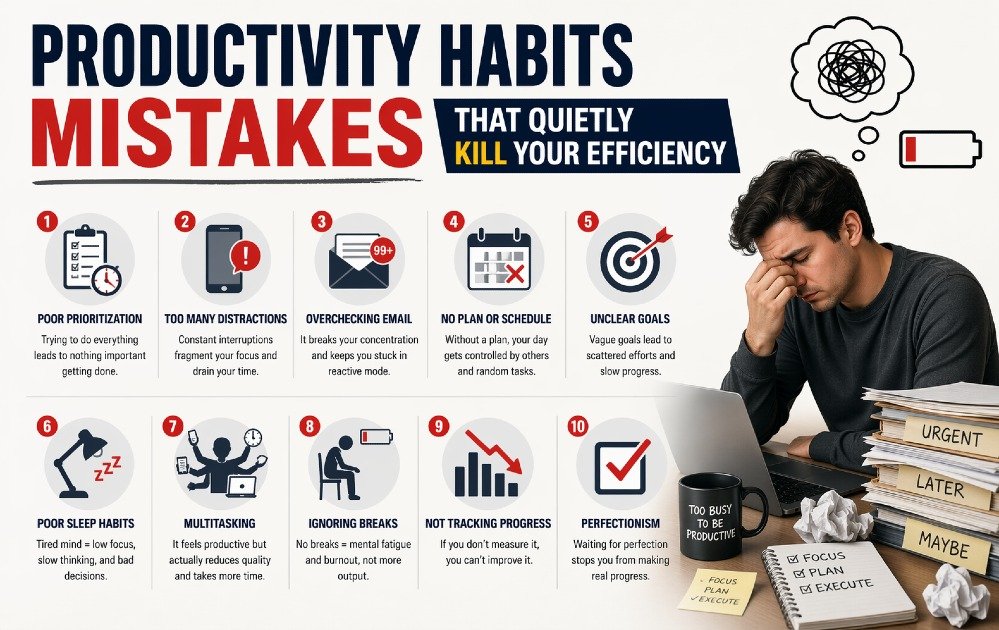
Some “productive” habits waste time. Multitasking, overplanning, and constant switching reduce focus.
These productivity habits make mistakes lower output and increase stress.
How to fix it:
Simplify your workflow:
- Work on one task at a time
- Use focused time blocks (25–50 minutes)
- Limit priorities to 3–5 tasks per day
- Avoid overloading your schedule
- Take short, intentional breaks
Core advantage:
You complete more work with better quality and less mental strain.
Sleep Habits Mistakes That Disrupt Recovery
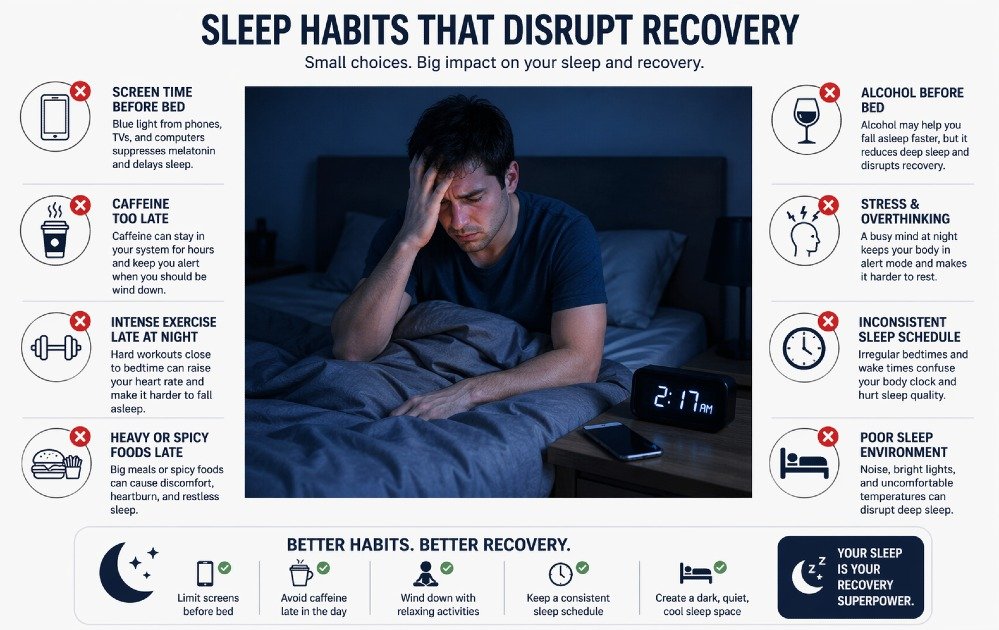
You may spend enough time in bed but still feel tired. Poor routines often go unnoticed.
Common sleep habits mistakes include irregular schedules and late-night screen use.
How to fix it:
Improve sleep quality with simple adjustments:
- Keep a consistent sleep and wake time
- Avoid screens 30–60 minutes before bed
- Maintain a dark, quiet, cool environment
- Avoid late-day caffeine and heavy meals
- Create a simple wind-down routine
Core advantage:
You sleep deeper, wake up refreshed, and maintain stable energy.
Frequently Asked Questions
Why do some healthy habits slow progress?
Results depend on balance and execution, not just intention. Even good habits can backfire when done excessively or without proper recovery.
How do I know if a habit is working against me?
Watch for clear signs:
- Ongoing fatigue
- Little or no progress
- Increased stress
If a habit consistently drains you, it needs adjustment.
Should I avoid strict routines?
No. Structure helps—but rigidity leads to burnout. Keep routines consistent, but flexible enough to adapt when needed.
Do small changes really make a difference?
Yes. Consistent, small improvements often produce better long-term results than extreme changes.
Which habit should I fix first?
Start with what affects your energy and recovery—typically sleep, nutrition, or workload. These drive everything else.
Recap: Focus on What Delivers Results
Not every healthy habit produces real progress. What matters is how your routine affects your energy, consistency, and performance over time.
Keep your approach simple:
- Avoid extremes
- Prioritize balance
- Stay consistent
- Adjust when needed
Refining your habits—not adding more—is what drives sustainable results.
Ready to Build Habits That Support Your Life
You don’t need a routine that feels ineffective or exhausting—focus on habits that support your lifestyle and are easy to maintain.
Break through the habits holding you back and use this fitness and health tracker to stay consistent, measure real progress, and build a healthier routine that actually delivers results.
Improving one habit at a time. Tracking what works.