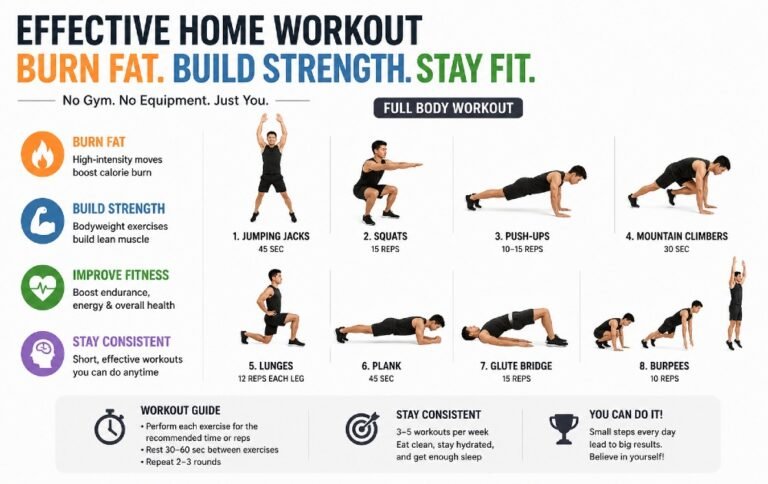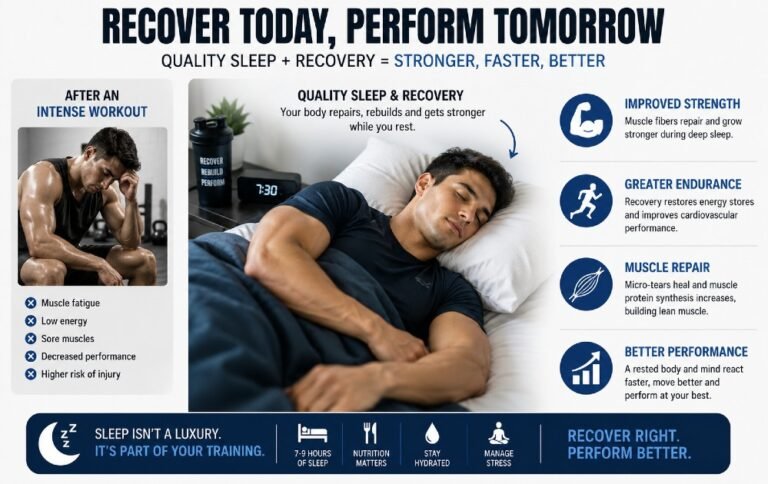

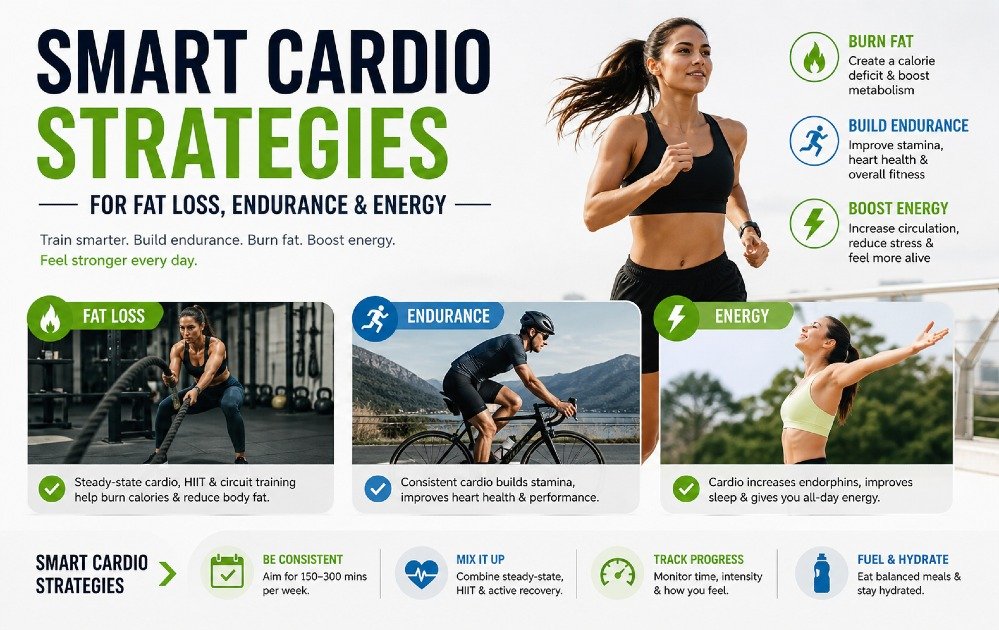
You train hard, sweat, and stay consistent, yet results still feel slow. More cardio isn’t the solution—smarter cardio is.
Many people follow outdated routines that waste energy without improving fat loss, endurance, or performance.
This guide explains practical strategies that improve results without wasting time or energy.
9 Proven Cardio Principles for Better Health
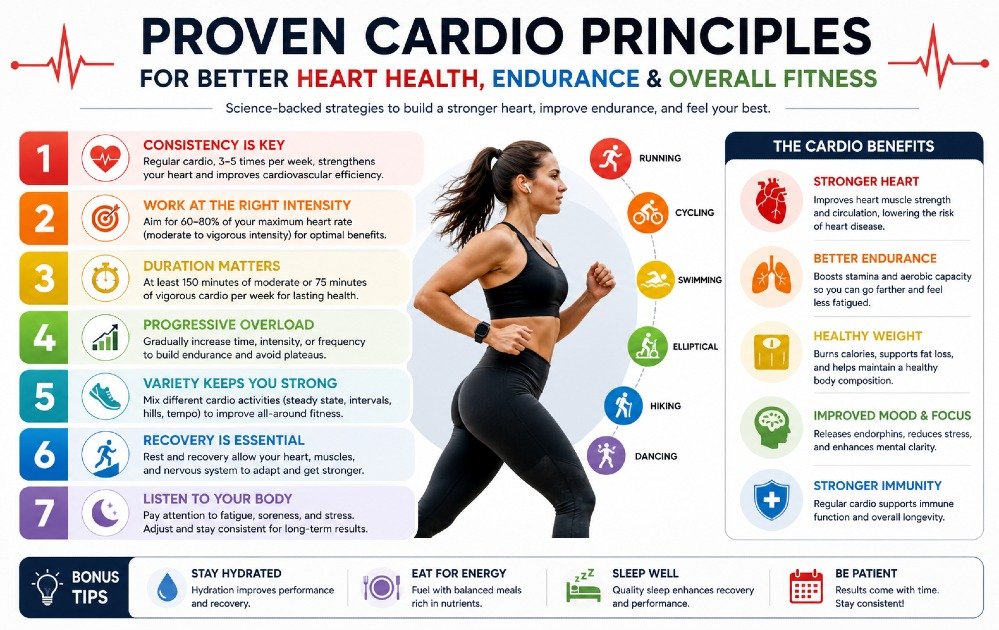
A smart cardio technique improves fitness and burns fat efficiently, while others hit plateaus and experience low energy.
Real results come from structured training, controlled intensity, and adequate recovery—not just longer sessions.
Discover nine proven strategies that fix common mistakes and show how to structure workouts for improved fat loss, endurance, and steady energy.
1. Stop Relying Only on Long, Steady Cardio
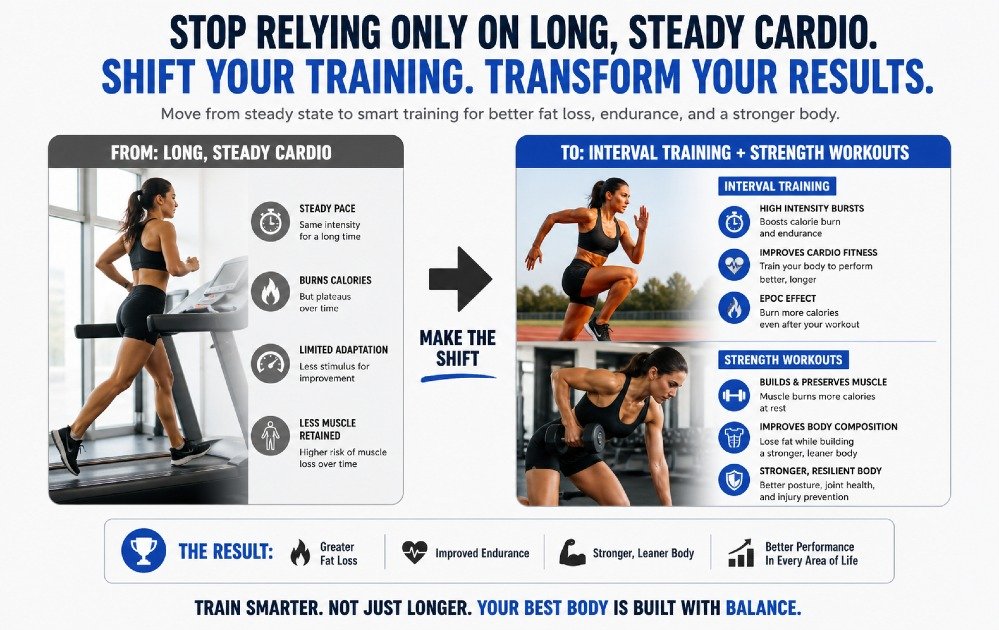
Steady-state alone can lead to slow progress and plateaus.
Combine steady cardio with interval training (HIIT):
- 30–60 seconds high effort
- 60–90 seconds recovery
- Repeat for 15–25 minutes
Core advantages:
- Burns more calories in less time
- Keeps metabolism elevated after workouts
- Helps preserve lean muscle
2. Train Based on Heart Rate, Not Just Time

Working out longer doesn’t guarantee better results if intensity is wrong.
Use heart rate zones:
- Zone 2: Fat burning and endurance
- Zone 3–4: Improved conditioning
- Zone 5: Short bursts for performance
Core advantages:
- Targets fat more efficiently
- Improves health health
- Prevents overtraining
3. Combine Cardio with Strength Training
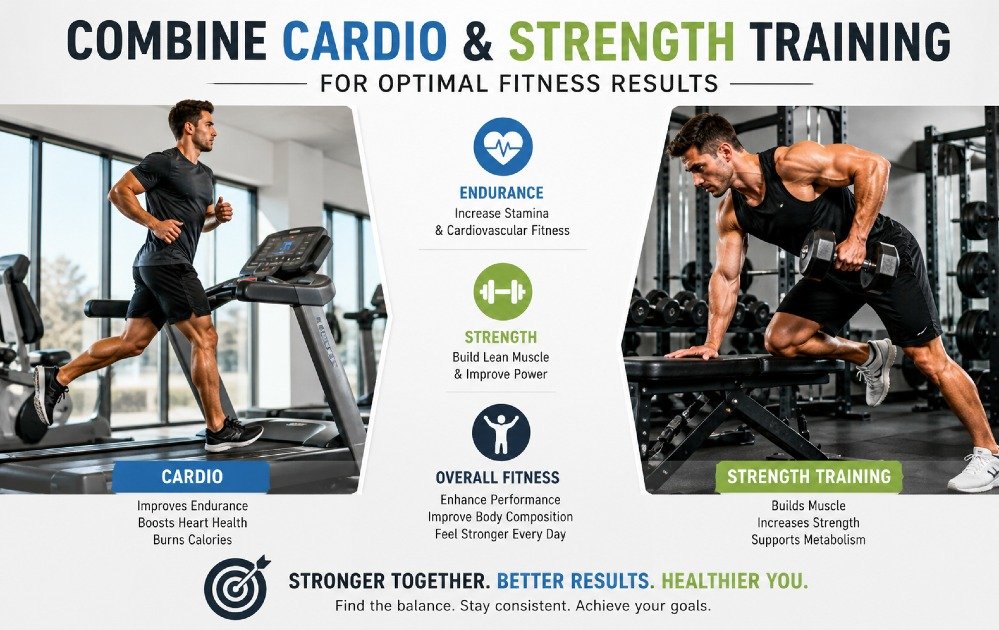
Too much cardio alone can reduce muscle mass and slow metabolism.
Add strength training 2–4 times per week:
- Bodyweight exercises
- Free weights or machines
- Short cardio finishers after lifting
Core advantages:
- Builds lean muscle
- Increases resting calorie burn
- Improves body composition
4. Use Workouts That Trigger the Afterburn Effect
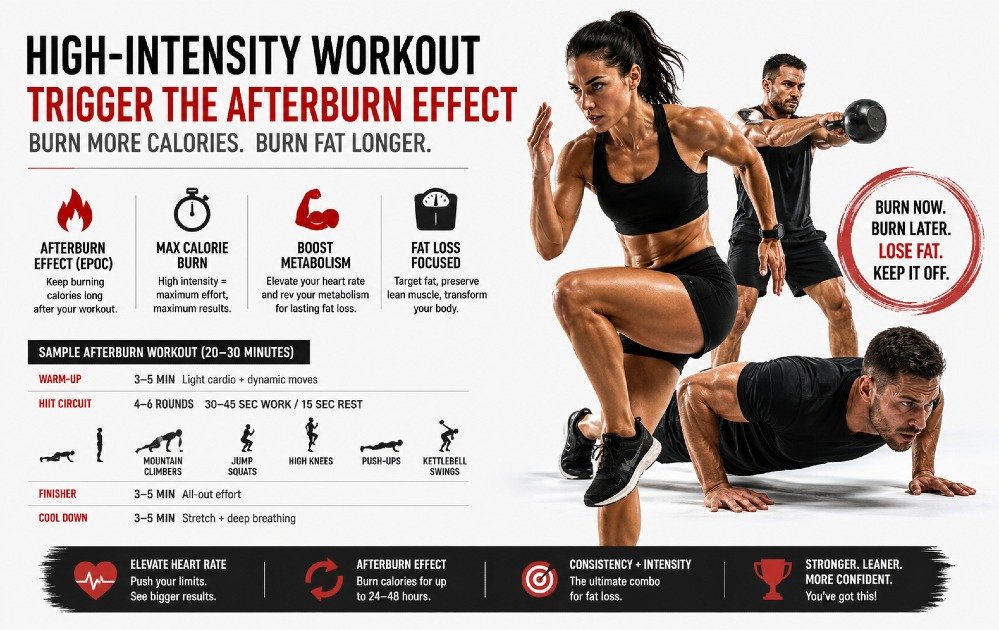
Traditional cardio only burns calories during the workout.
Use high-intensity formats:
- Sprint intervals
- Circuit training
- Hill sprints
Core advantages:
- Continues calorie burn post-workout (EPOC effect)
- Improves metabolic rate
- Maximizes training efficiency
5. Rotate Your Styles
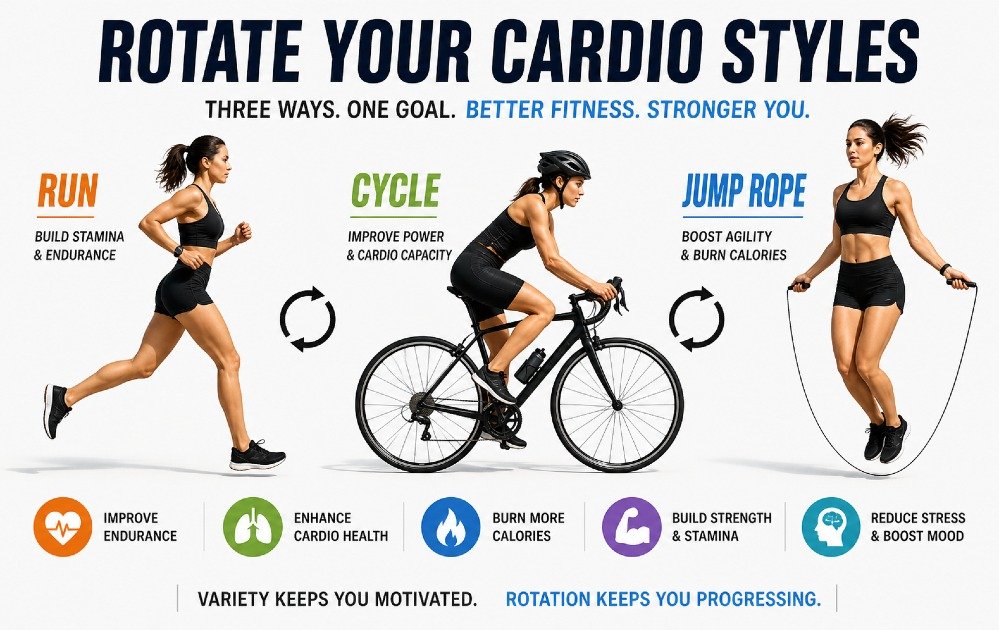
Doing the same workout repeatedly reduces progress and motivation.
Mix different methods:
- Running
- Cycling
- Swimming
- Rowing
- Jump rope
Core advantages:
- Engages different muscles
- Reduces injury risk
- Keeps training mentally fresh
6. Prioritize Recovery as Part of Training
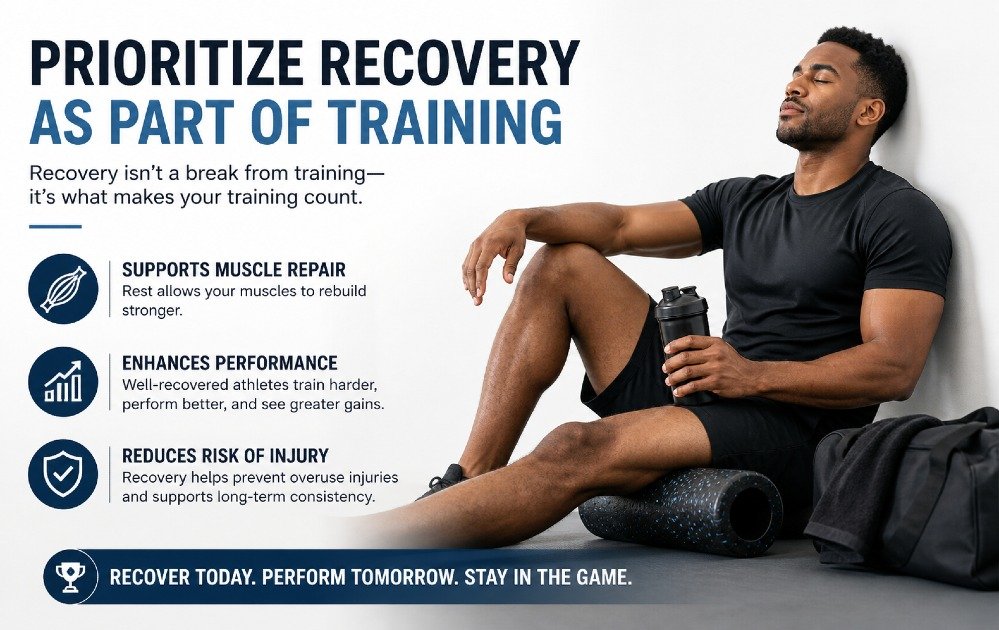
Overtraining leads to fatigue, poor performance, and stagnation.
Schedule recovery intentionally:
- At least 1–2 rest days weekly
- Light walking or mobility work
- Consistent sleep schedule
Core advantages:
- Supports muscle repair
- Improves performance
- Prevents burnout
7. Fuel Your Cardio Properly

Poor nutrition reduces energy and workout quality.
Support your training with proper fueling:
- Light carbs + protein before workouts
- Protein + complex carbs after workouts
- Stay consistently hydrated
Core advantages:
- Improves endurance
- Supports recovery
- Stabilizes energy levels
Harvard Health highlights the heart as a muscle and how to strengthen the heart muscle.
8. Track More Than Just Weight
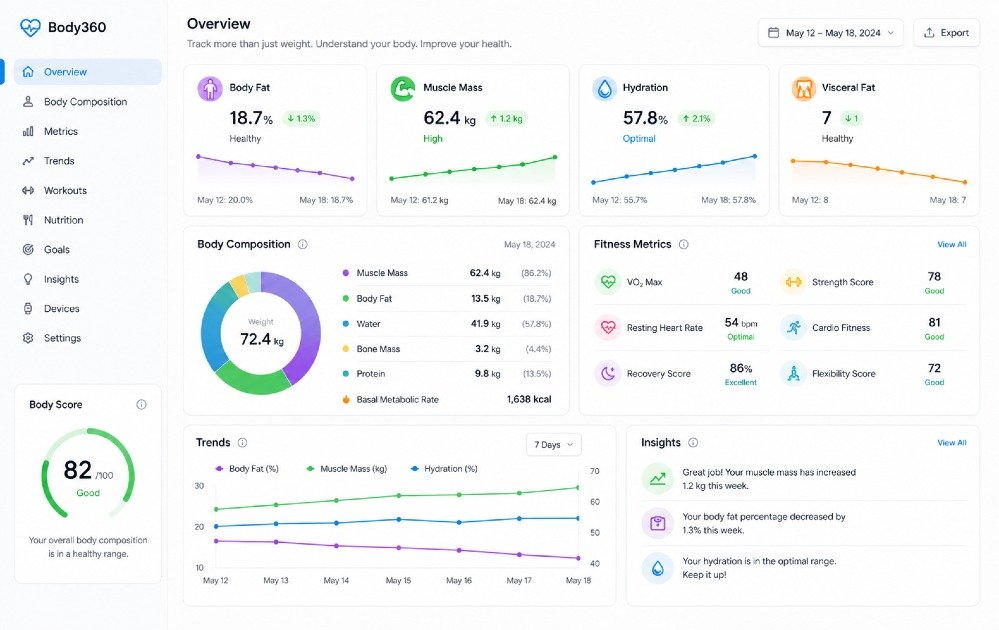
The scale alone doesn’t reflect real progress.
Monitor multiple indicators:
- Stamina improvements
- Heart rate recovery
- Energy levels
- Body measurements
Core advantages:
- Gives a clearer progress picture
- Keeps motivation stable
- Highlights real fitness improvements
9. Use Tools That Improve Training Accuracy

Guesswork leads to inefficient workouts.
Use simple fitness tools:
- Heart rate monitor
- Fitness tracker
- Proper running shoes
Core advantages:
- Helps control intensity
- Improves consistency
- Enhances training results
Heart Rate Zone Training
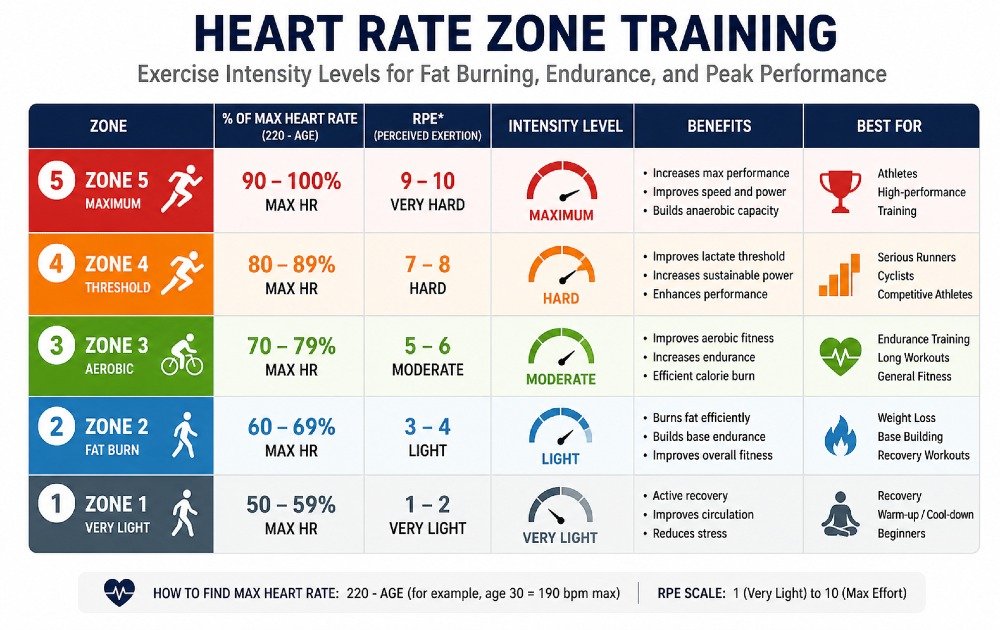
Poor pacing hurts progress. Overtraining leads to burnout, while low effort stalls improvement.
To improve, use heart rate zone training to guide your effort.
- Zone 1–2: Light activity (recovery, warm-ups)
- Zone 3: Moderate effort (steady fat burn)
- Zone 4: Hard effort (improves performance)
- Zone 5: Maximum effort (short bursts only)
Use a heart rate monitor or fitness tracker to stay accurate.
Core advantages:
- Burn fat more efficiently
- Build endurance without overtraining
- Maintain consistent, controlled workouts
- Reduce fatigue and improve recovery
Training by heart rate removes guesswork and improves results.
Fat Burning Routines
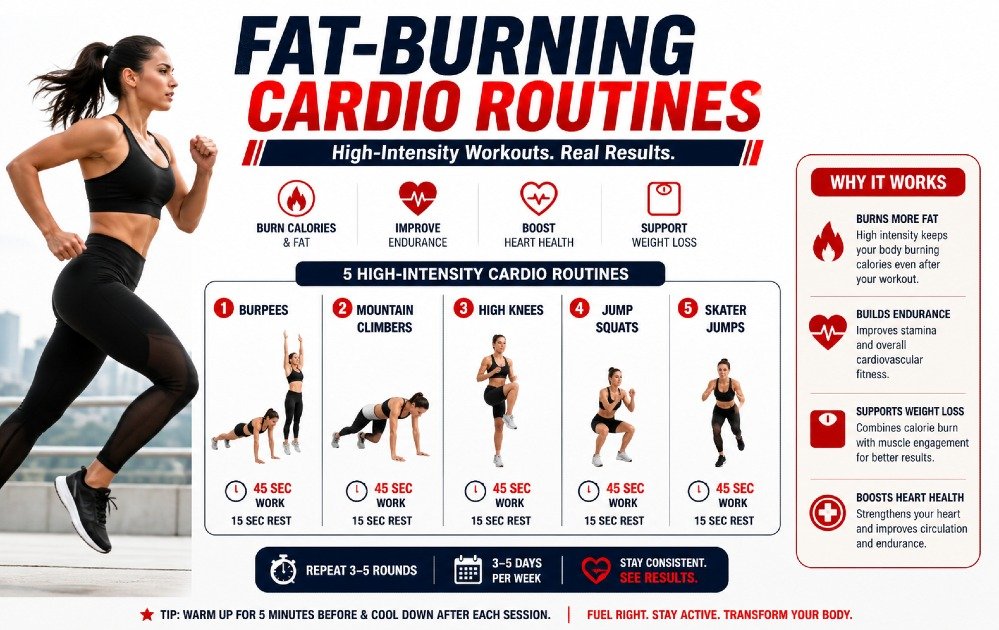
Doing the same exercise at the same pace leads to plateaus. Progress slows, and motivation drops.
To improve, use structured fat burning routines that combine intensity and recovery.
A simple format:
- 5–10 minutes warm-up
- 15–20 minutes intervals (high + low intensity)
- 5–10 minutes cool-down
Effective options:
- Sprint and walk intervals
- Cycling with resistance changes
- Jump rope circuits
- Rowing intervals
Push during work phases. Recover with control—not complete rest.
Core advantages:
- Higher calorie burn in less time
- Activates the afterburn effect (EPOC)
- Keeps workouts engaging
- Helps preserve muscle while losing fat
Structured routines turn cardio into a results-driven tool.
Smart Workout Plan
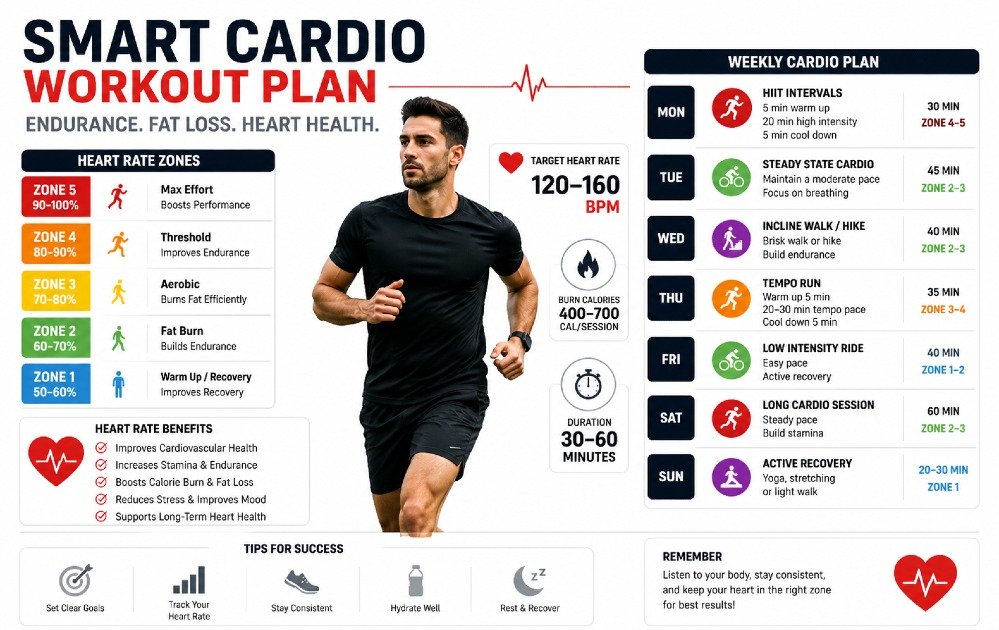
Unstructured cardio leads to overtraining or inconsistency. Both slow progress.
To improve, follow a smart workout plan that balances intensity and recovery.
Example weekly plan:
- Day 1: HIIT (20–25 minutes)
- Day 2: Low-intensity (30–45 minutes)
- Day 3: Active recovery
- Day 4: Interval training
- Day 5: Moderate steady cardio
- Day 6: Light activity or mobility
- Day 7: Full rest
Adapt intensity to your body, not the schedule
Core advantages:
- Prevents burnout and injury
- Supports steady fat loss
- Builds endurance over time
- Creates a sustainable routine
A clear plan makes consistency easier—and results more reliable.
Frequently Asked Questions
What type of cardio is best for fat loss?
Combining HIIT with steady cardio delivers better fat loss, higher calorie burn, and improved endurance than relying on one method alone.
How many cardio sessions should I do each week?
For most fitness goals, 3–5 sessions weekly is enough to improve endurance and support fat loss without excessive fatigue.
A balanced schedule may include:
- 1–2 HIIT workouts
- 2–3 moderate-intensity sessions
- 1 recovery-focused day
This structure improves consistency while helping prevent burnout and overtraining.
Does heart rate zone training really help?
Heart rate zone training optimizes exercise intensity, preventing overtraining and low-effort sessions while supporting steady progress.
Benefits include:
- More effective fat burning
- Improved endurance development
- Better recovery management
- Reduced risk of overtraining
Even a basic fitness tracker can help make workouts more accurate.
Can cardio alone help with weight loss?
It helps increase calorie burn, but sustainable fat loss depends on a combination of factors.
For better long-term results, combine cardio with:
- Strength training
- Balanced nutrition
- Quality recovery and sleep
- Consistent workout structure
This approach supports fat loss while helping preserve muscle and energy levels.
What is the biggest mistake people make with cardio?
A common mistake is excessive, unplanned cardio without proper intensity, recovery, or progression, leading to burnout and stalled progress.
Effective cardio focuses on:
- Structured intensity
- Recovery balance
- Progressive improvement
- Long-term consistency
Recap: Building a Smarter Cardio System
Well-structured cardio should not feel like endless effort with little progress.
Heart rate zones, interval training, and a structured weekly plan turn guesswork into a clear system that boosts fat loss, improves endurance, and maintains steady energy.
Adjusting your cardio approach can turn slow progress into clear, lasting health gains.
Ready to Improve Your Cardio Routine
You don’t need more cardio—you need structure that accelerates your progress
Turn your cardio sessions into measurable fat-burning progress and sustained energy gains by using this fitness tracker that keeps every step, heartbeat, and calorie burn aligned with real results so that you can train smarter, recover better, and see consistent improvements week after week.