
Still waking up with stiff muscles, aching joints, and a body that feels older than it should?
A simple stretching routine can loosen tight muscles, improve flexibility, ease stiffness, and speed recovery—helping you move better, feel more energized, and return to the activities you enjoy.
This guide explains the best stretching routines for improving flexibility, relieving muscle tightness, and helping your body feel stronger and more balanced every day.
Why Stretching Is More Important Than Most People Realize
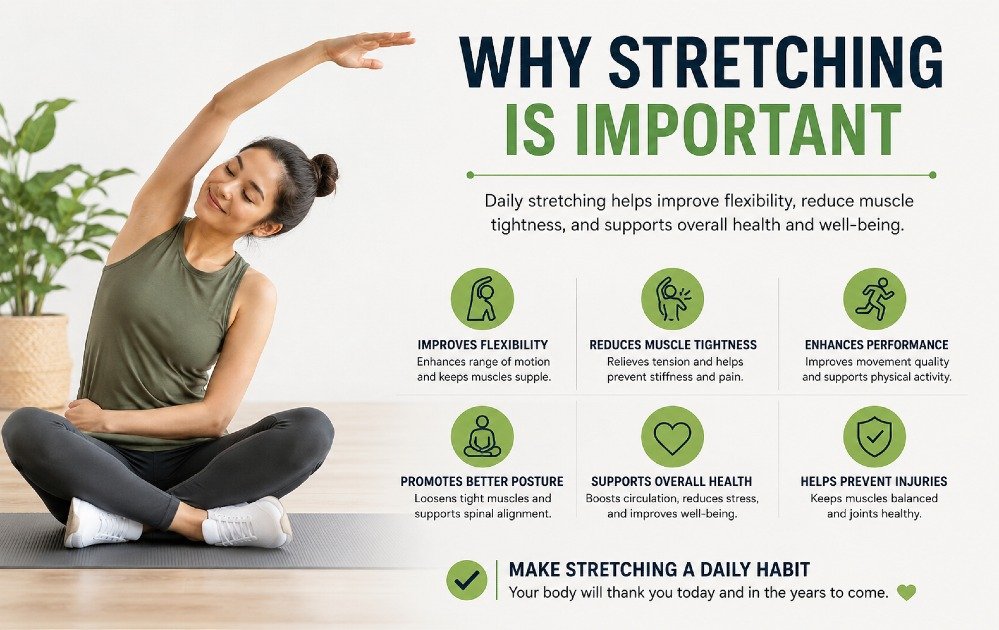
Many people skip stretching because they see it as optional. However, tight muscles and poor mobility can affect nearly every part of daily life.
Without regular stretching, the body gradually becomes stiff and restricted. That can lead to:
- Lower back discomfort
- Tight hips and hamstrings
- Poor posture
- Reduced flexibility
- Muscle tension
- Limited range of motion
- Slower recovery after workouts
Consistent stretching helps keep the body mobile, balanced, and more comfortable during everyday movement.
Harvard Health highlights that stretching helps your muscles stay loose, strong, and pain-free.
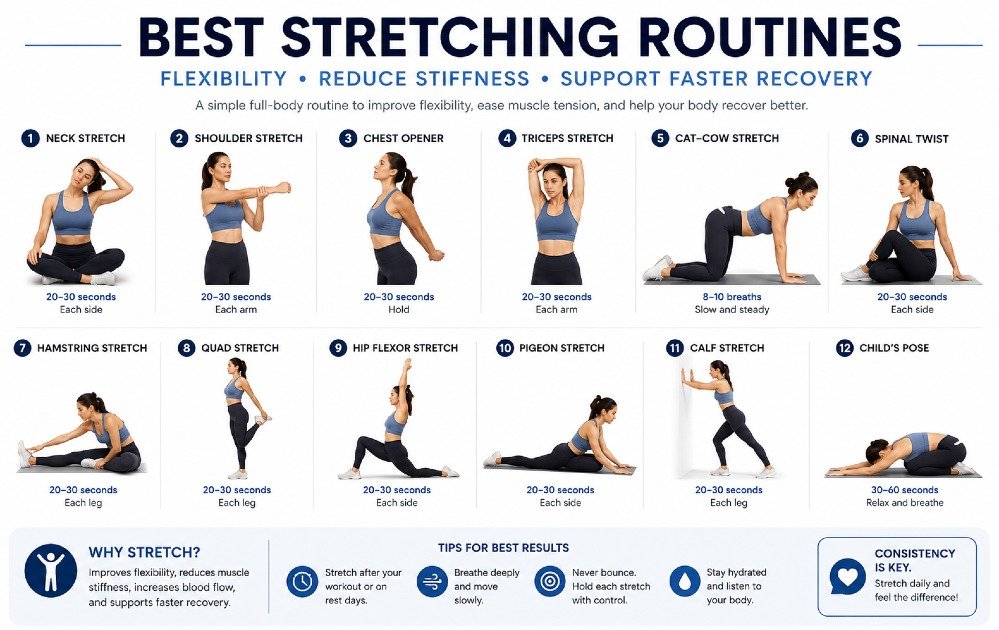
11 Best Stretching Routines for Full-Body Flexibility and Recovery
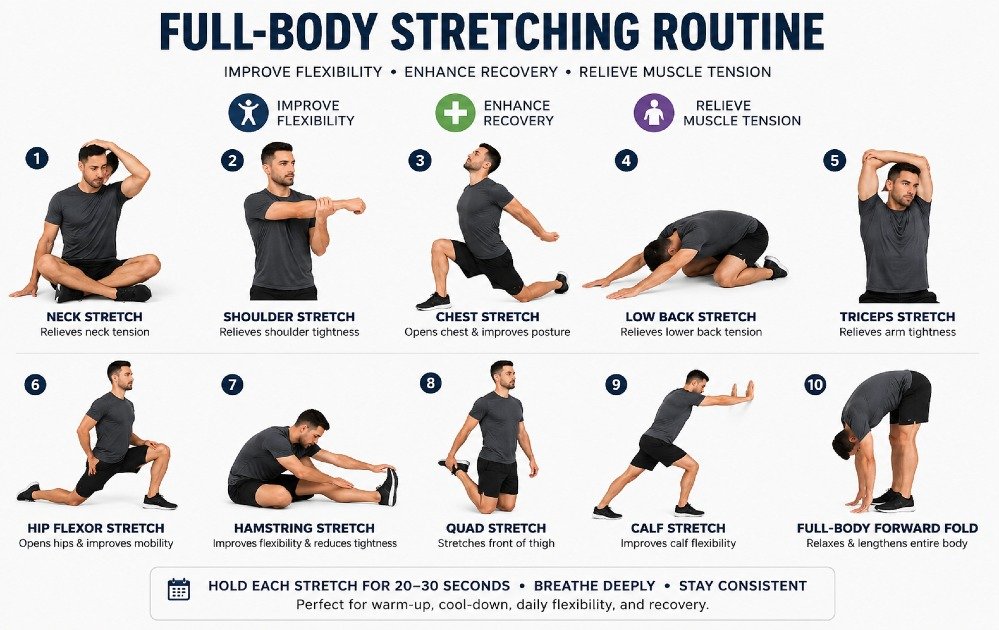
Tight muscles, poor mobility, and slow recovery often result from prolonged sitting, intense workouts, and daily stress.
A consistent stretching routine helps relieve tension, restore flexibility, improve movement, and support faster recovery—helping your body feel and perform better every day.
Discover eleven stretching routines designed to improve flexibility and faster recovery.
1. Standing Hamstring Stretch
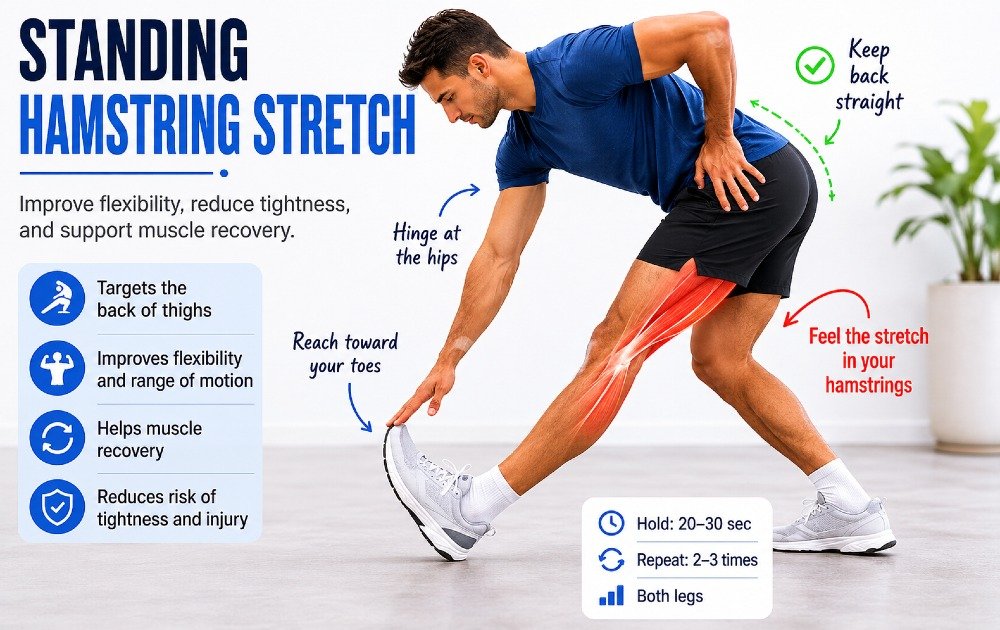
Tight hamstrings often contribute to lower back tension and restricted movement.
How to do it:
- Stand upright with one leg extended slightly forward
- Keep your back straight
- Hinge gently at the hips
- Reach toward your toes without forcing the movement
- Hold for 20–30 seconds
Core advantages:
- Improves leg flexibility
- Relieves lower back tightness
- Supports better posture and mobility
This is one of the most effective stretching exercises for people who sit for long periods during the day.
2. Cat-Cow Stretch
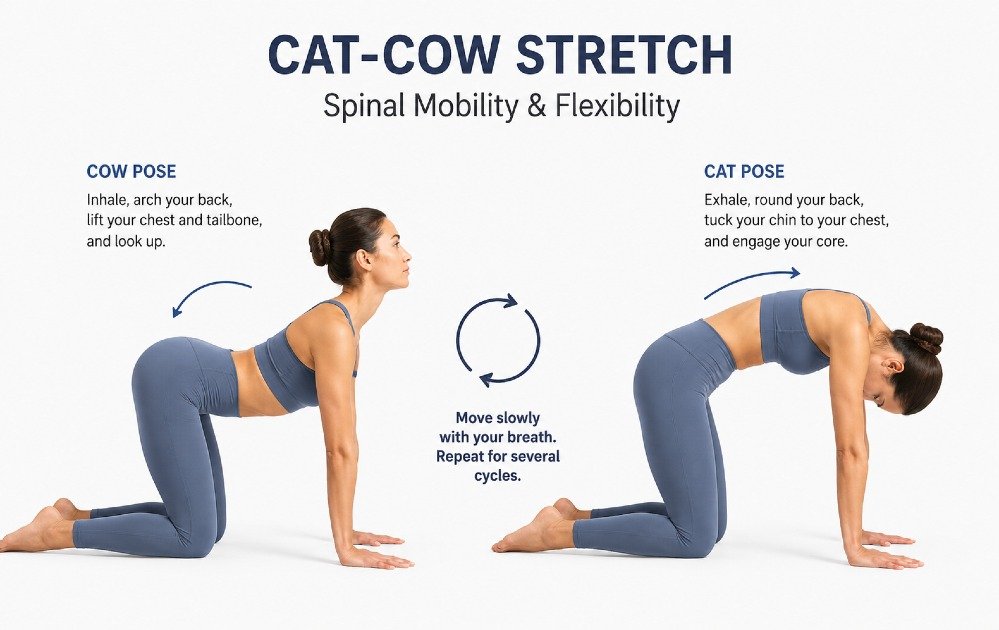
This simple mobility exercise helps loosen the spine and reduce stiffness.
How to do it:
- Start on your hands and knees
- Slowly round your back upward
- Then lower your stomach while lifting your chest
- Continue for 30–60 seconds
Core advantages:
- Improves spinal flexibility
- Reduces tension in the back
- Encourages better posture
It works especially well as part of a morning stretching routine.
3. Hip Flexor Stretch
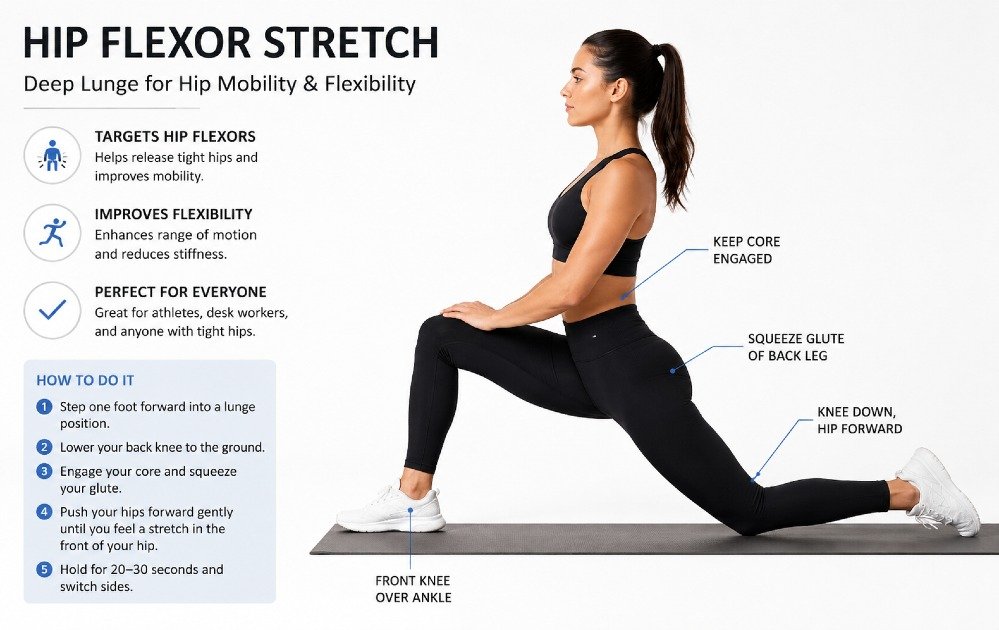
Sitting for long hours shortens the hip flexors, which often leads to tight hips and lower back discomfort.
How to do it:
- Step one foot forward into a lunge position
- Lower your back knee to the floor
- Push your hips forward gently
- Hold for 30 seconds on each side
Core advantages:
- Opens tight hips
- Improves mobility
- Reduces pressure on the lower back
4. Child’s Pose
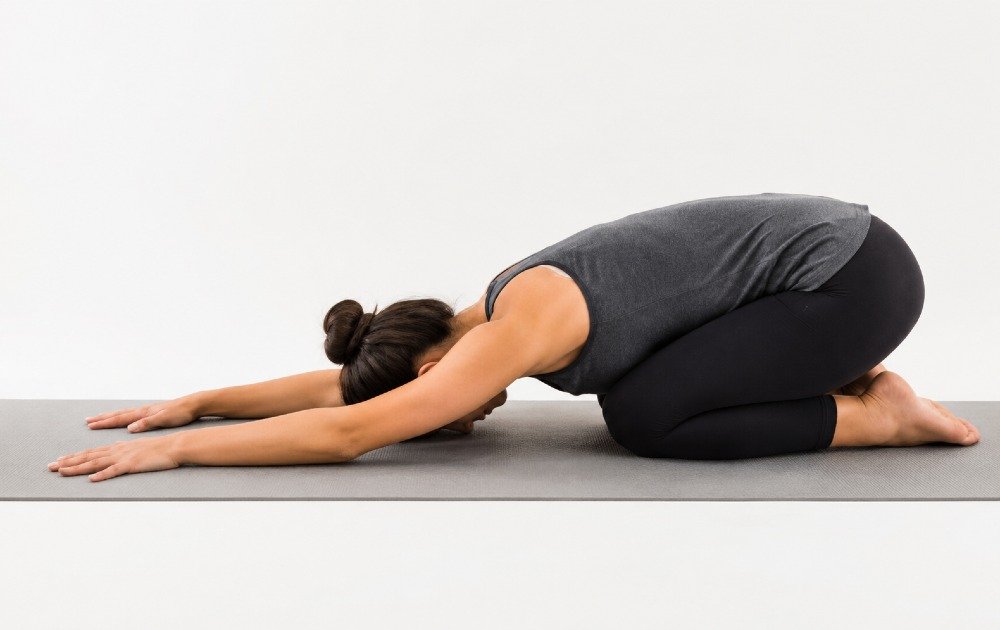
A child’s pose is a gentle full-body stretch that helps release tension and promote relaxation.
How to do it:
- Kneel on the floor
- Sit back on your heels
- Extend your arms forward
- Lower your chest toward the floor
Core advantages:
- Relaxes the lower back
- Releases shoulder tension
- Helps reduce stress and stiffness
This stretch is ideal for beginners because it feels gentle and restorative.
5. Chest Opener Stretch
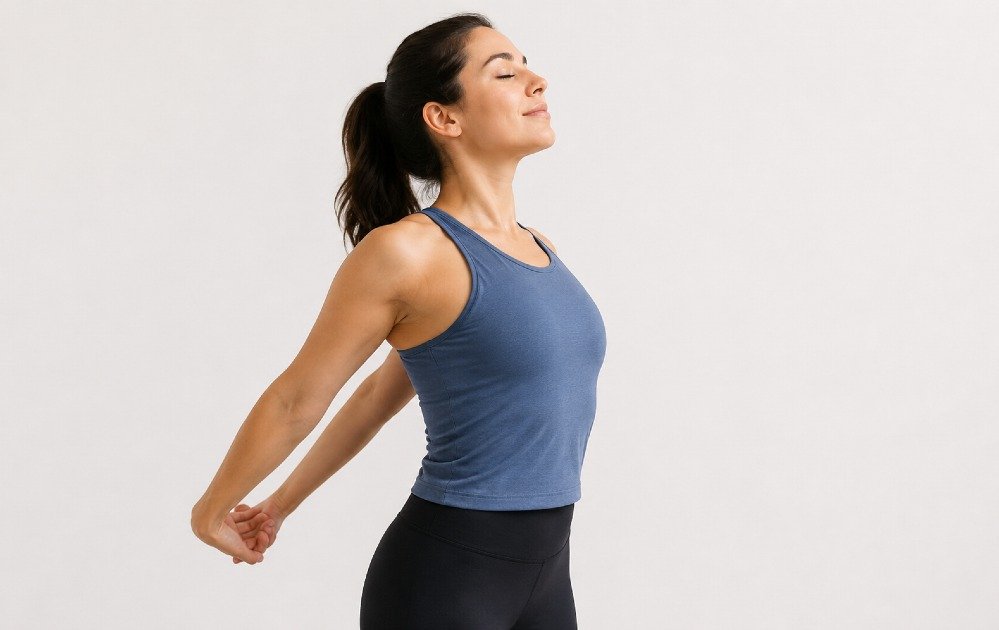
Hours spent looking at screens often cause rounded shoulders and tight chest muscles.
How to do it:
- Stand tall
- Clasp your hands behind your back
- Pull your shoulders back gently
- Lift your chest slightly upward
Core advantages:
- Improves posture
- Opens tight chest muscles
- Relieves shoulder tension
6. Figure-Four Glute Stretch
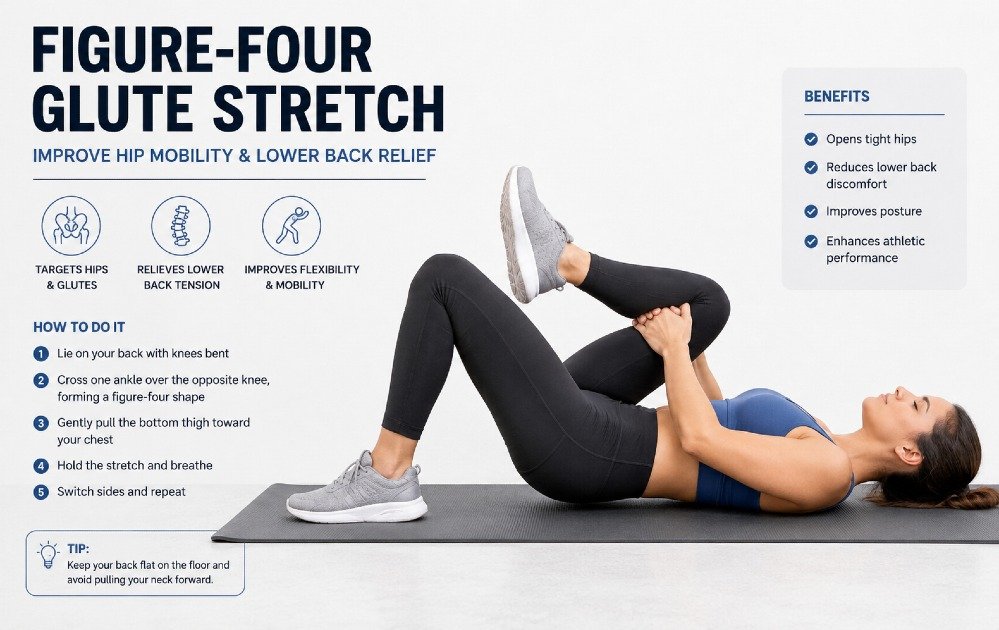
Tight glutes can affect the hips, knees, and lower back.
How to do it:
- Lie on your back
- Cross one ankle over the opposite knee
- Pull the supporting leg toward your chest
- Hold for 30 seconds
Core advantages:
- Releases deep hip tension
- Improves flexibility
- Helps relieve discomfort caused by prolonged sitting
7. Shoulder Stretch Across the Chest
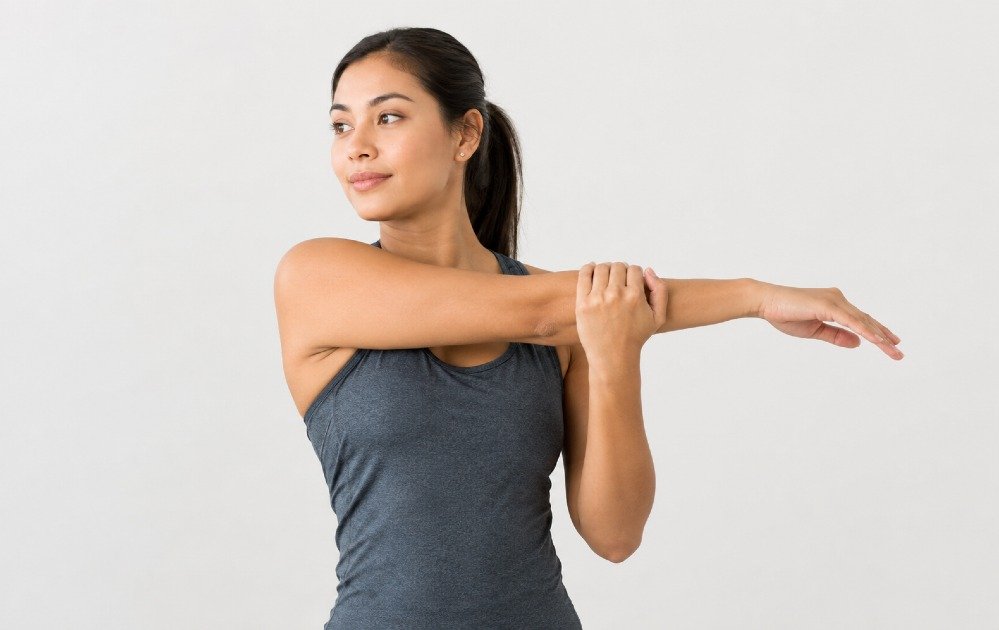
This stretch targets upper-body tension caused by stress, exercise, or poor posture.
How to do it:
- Bring one arm across your chest
- Use the opposite hand to pull it closer
- Keep your shoulders relaxed
- Hold for 20–30 seconds
Core advantages:
- Relieves shoulder tightness
- Improves mobility
- Supports faster recovery after workouts
8. Cobra Stretch
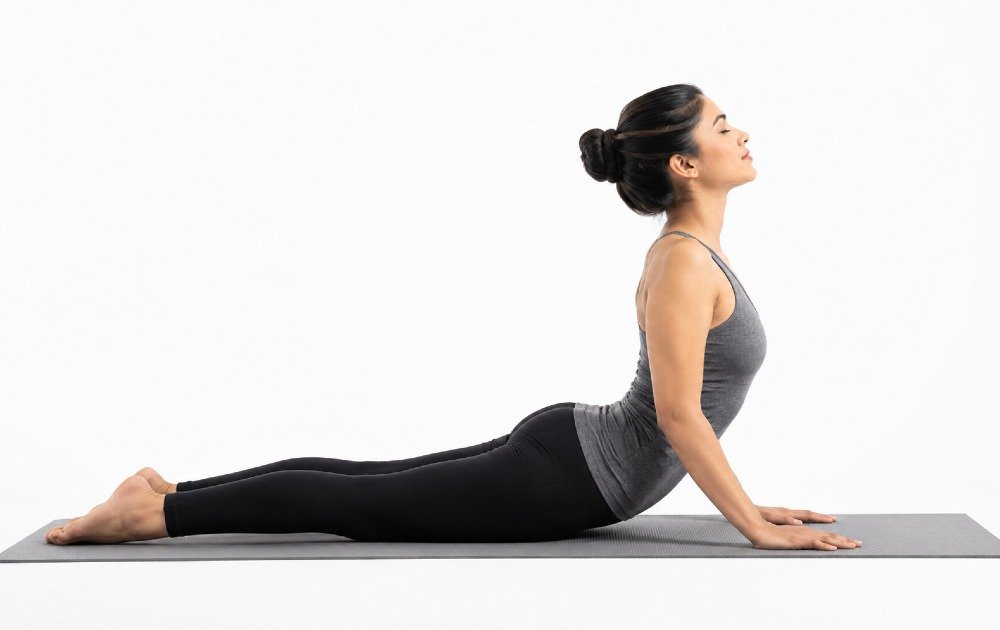
The cobra stretch helps open the front of the body while improving spinal mobility.
How to do it:
- Lie face down
- Place your hands beneath your shoulders
- Press upward slowly
- Keep your hips on the floor
Core advantages:
- Stretches the abdominal muscles
- Supports spinal flexibility
- Helps counter the effects of prolonged sitting
9. Neck Stretch Routine
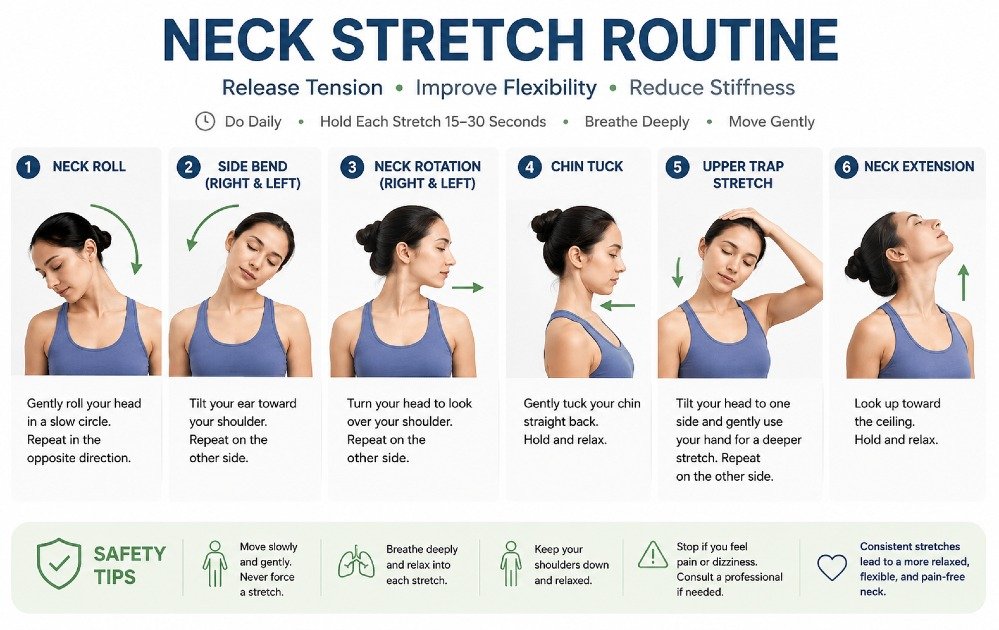
Neck tension is common among people who spend long hours working on computers or phones.
How to do it:
- Sit upright
- Tilt your head toward one shoulder
- Hold gently
- Repeat on the opposite side
Core advantages:
- Reduces neck stiffness
- Relieves muscle tension
- Helps reduce tension headaches
10. Butterfly Stretch
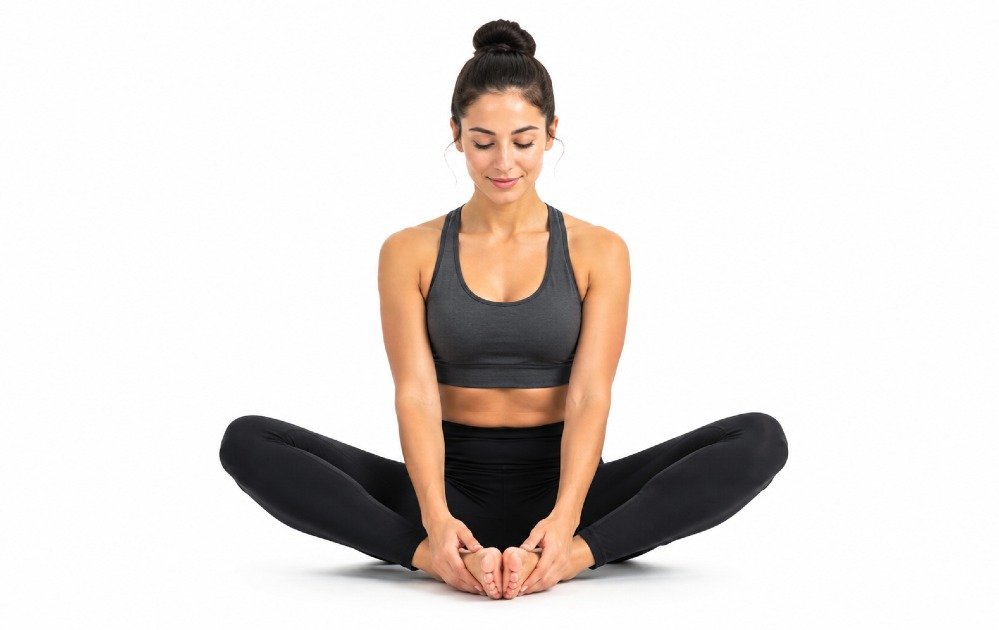
This stretch improves flexibility in the hips and inner thighs.
How to do it:
- Sit on the floor
- Bring the soles of your feet together
- Let your knees fall outward
- Lean forward slightly
Core advantages:
- Opens the hips
- Improves lower-body flexibility
- Supports better movement during exercise
11. Dynamic Stretching Routine
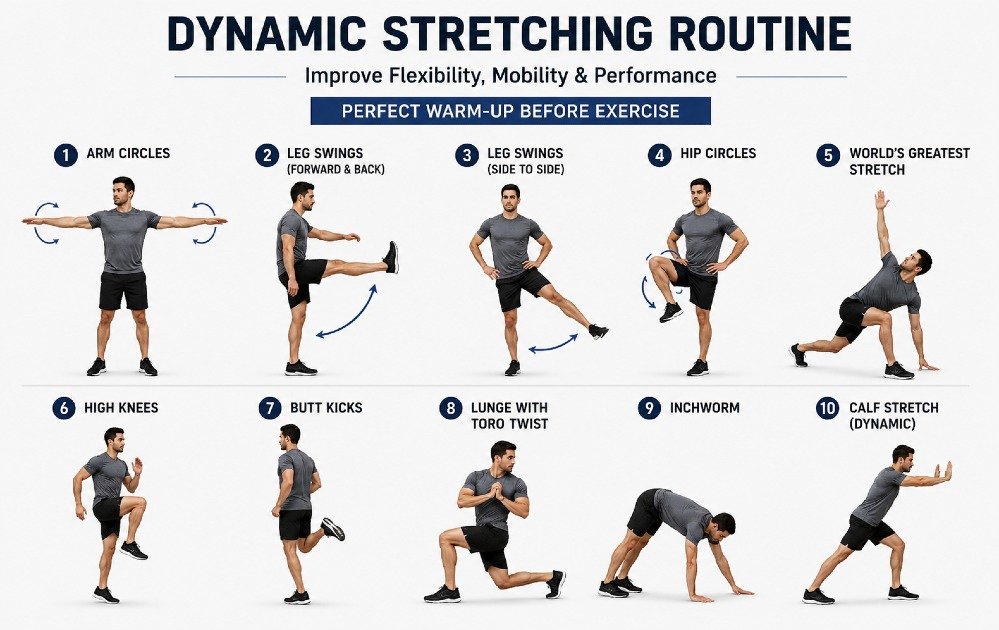
Dynamic stretching prepares the body for movement before workouts.
Best dynamic stretches:
- Arm circles
- Leg swings
- Walking lunges
- Torso twists
- High knees
Core advantages:
- Increases blood flow
- Warms up the muscles
- Improves athletic performance
Dynamic stretching works best before cardio or strength training sessions.
How to Create a Stretching Routine That Fits Your Lifestyle
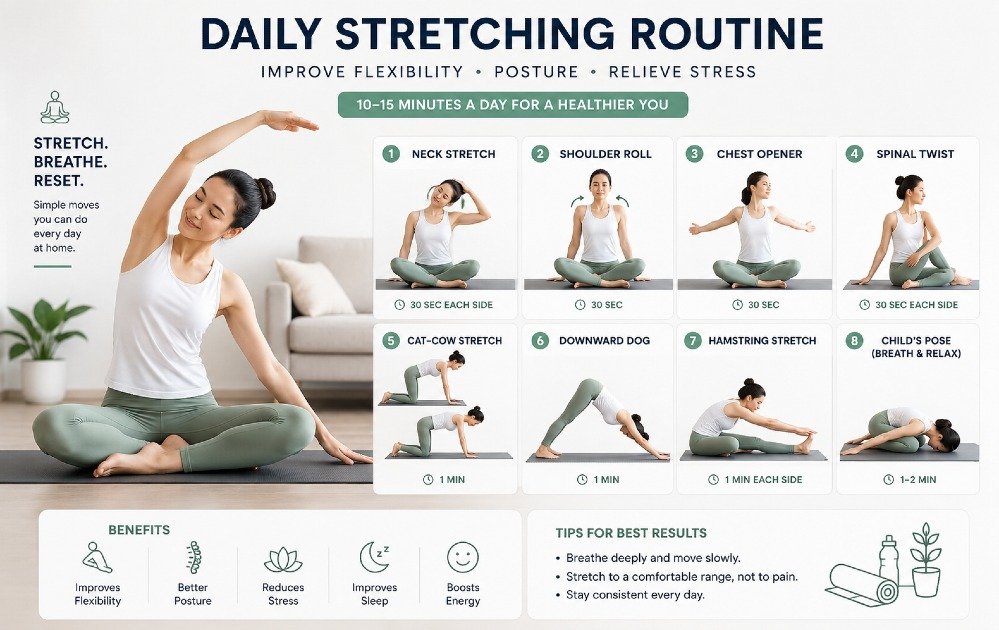
The best stretching plan is one you can stay consistent with.
1. If you sit most of the day
Focus on:
- Hip flexor stretches
- Chest openers
- Hamstring stretches
2. If you exercise frequently
Prioritize:
- Dynamic stretches before workouts
- Deep stretching after workouts
- Recovery-focused mobility exercises
3. If you wake up feeling stiff
Start your morning with:
- Cat-cow stretches
- Child’s pose
- Gentle spinal mobility exercises
Even 10 minutes a day can improve flexibility and reduce muscle tension over time.
Common Stretching Mistakes to Avoid
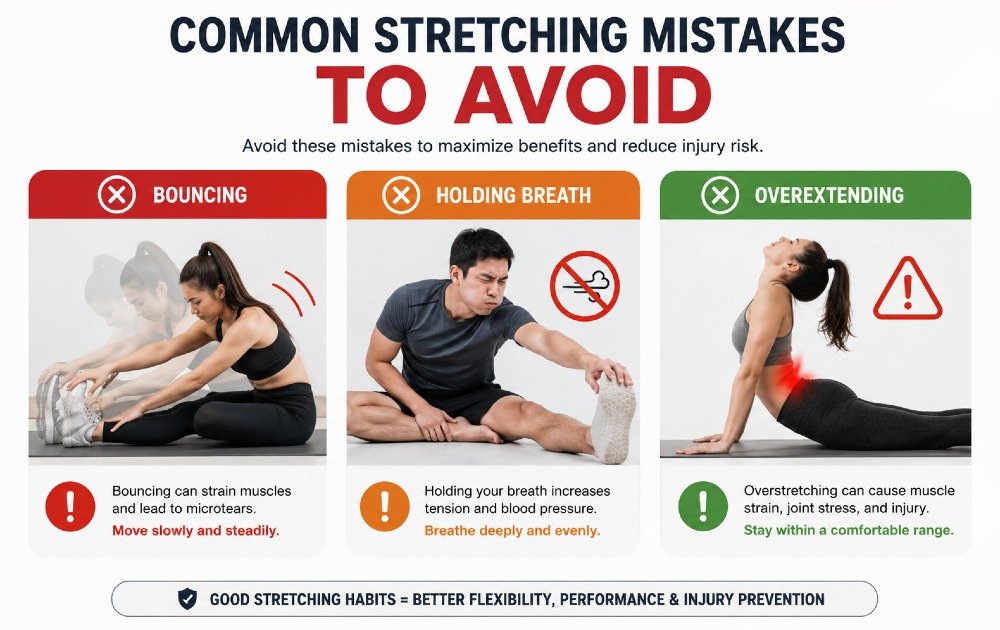
Stretching should help your body feel better, not worse.
Avoid these common mistakes:
- Stretching Too Aggressively: You should feel tension, not pain.
- Holding Your Breath: Slow breathing helps muscles relax more effectively.
- Bouncing During Stretches: Controlled movement is safer and more effective.
- Skipping Warm-Ups: Cold muscles are more prone to strain.
- Being Inconsistent: Daily stretching delivers better results than occasional long sessions.
Best Times to Stretch for Better Results
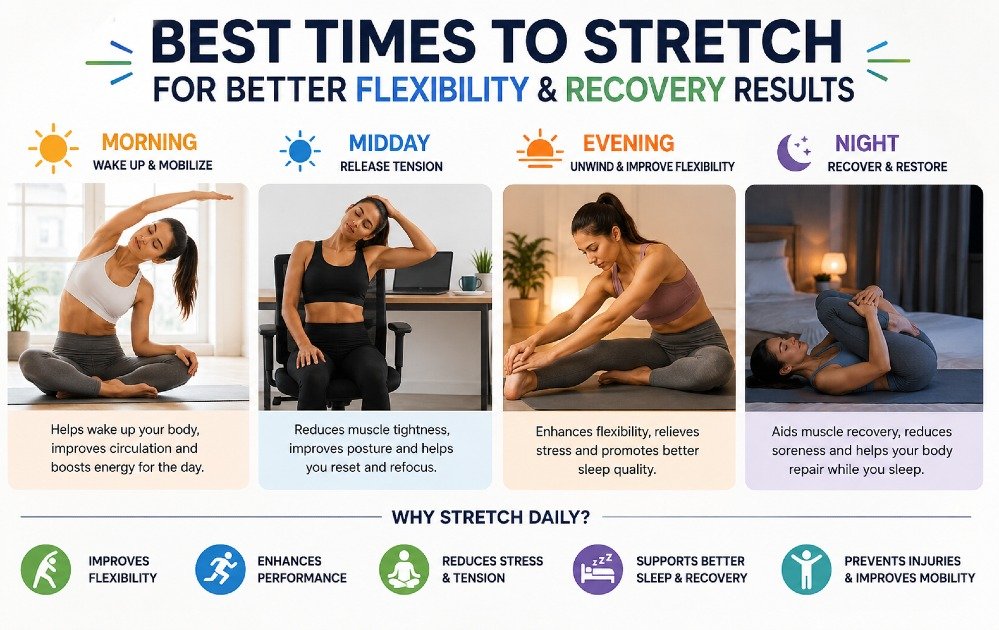
Different stretching routines work best at different times of the day.
1. Morning stretching
- Reduce stiffness
- Improve circulation
- Increase energy
2. Before workouts
Use dynamic stretches to prepare the body for movement.
3. After workouts
Static stretching helps:
- Relax tight muscles
- Improve flexibility
- Support recovery
4. Before bed
Gentle stretching can help the body relax and improve sleep quality.
Morning Stretching Routine
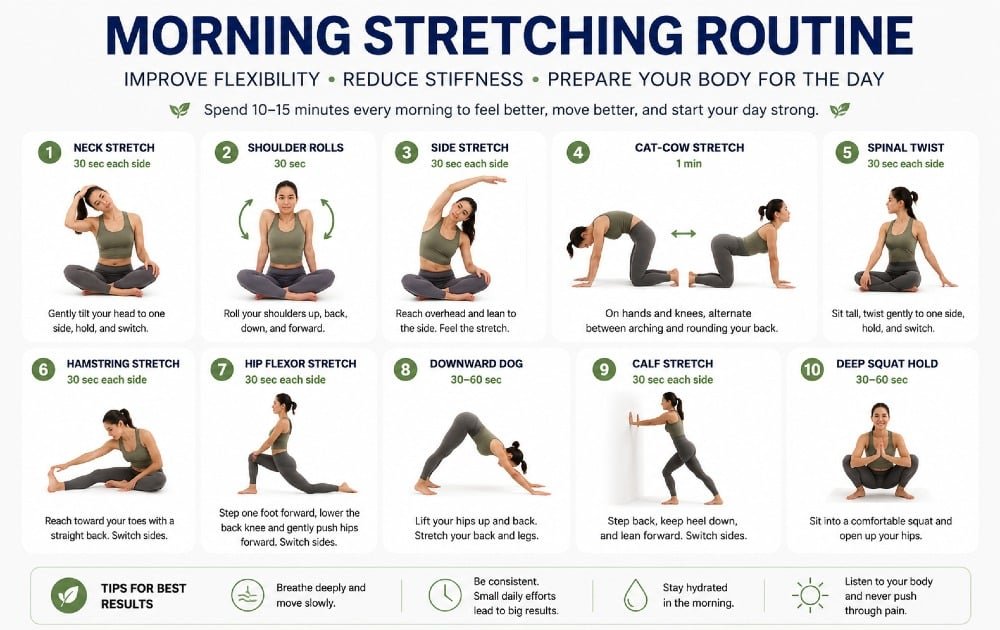
After hours of sleep, the body is naturally stiff. Blood flow is reduced, and muscles feel tight, especially in the neck, back, and hips.
This often leads to:
- Slow movement in the morning
- Tight lower back or neck
- Low energy on waking
- Poor posture early in the day
A few controlled movements are enough to activate the body and reduce stiffness.
Effective morning stretches:
- Neck stretches and gentle rotations
- Cat-cow for spinal mobility
- Standing forward fold for hamstrings
- Shoulder rolls and arm circles
- Light lunges for hip activation
Keep movements slow and controlled. Focus on steady breathing.
Core advantages:
- Improve circulation and reduce stiffness
- Increase natural energy levels
- Improve posture throughout the day
- Make movement easier and smoother
Even 5–10 minutes is enough.
Stretching for Muscle Recovery
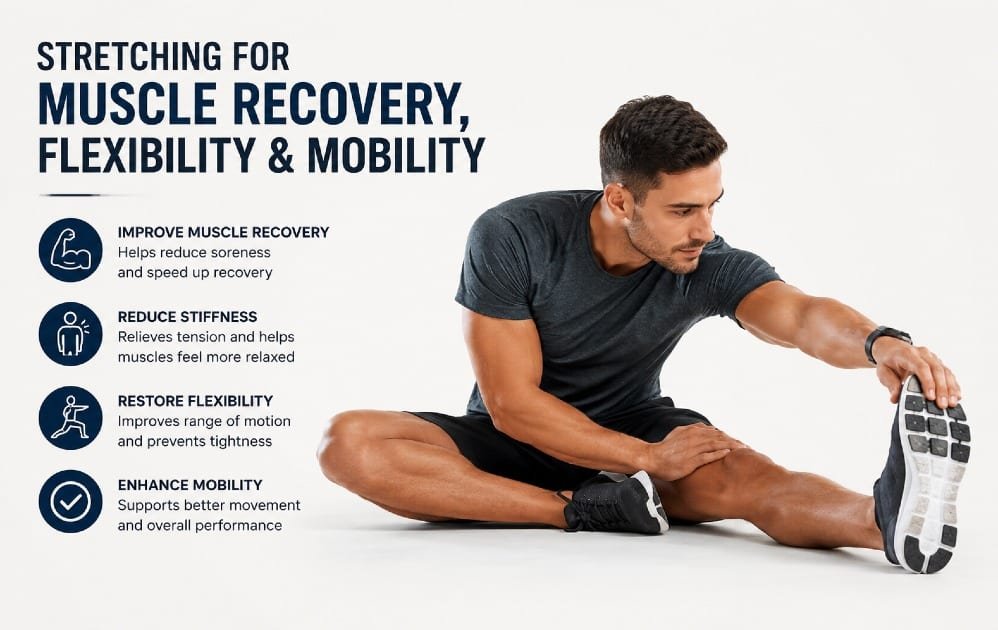
After workouts or physical activity, muscles become tight and inflamed. Without recovery work, soreness lasts longer and mobility decreases.
Common issues:
- Muscle soreness (DOMS)
- Tight hamstrings, quads, and back
- Slower recovery between workouts
- Reduced performance over time
Stretching after exercise improves blood flow and reduces muscle tension.
Key recovery stretches:
- Hamstring stretch
- Quad stretch
- Figure-four glute stretch
- Chest opener stretch
- Child’s pose
Guidelines:
- Hold each stretch 20–40 seconds
- Do not bounce or force movement
- Stretch after muscles are warm
- Breathe slowly throughout
Core advantages:
- Reduce muscle soreness
- Speed up recovery time
- Improve flexibility gradually
- Lower risk of injury
- Support consistent training
Improve Flexibility Naturally
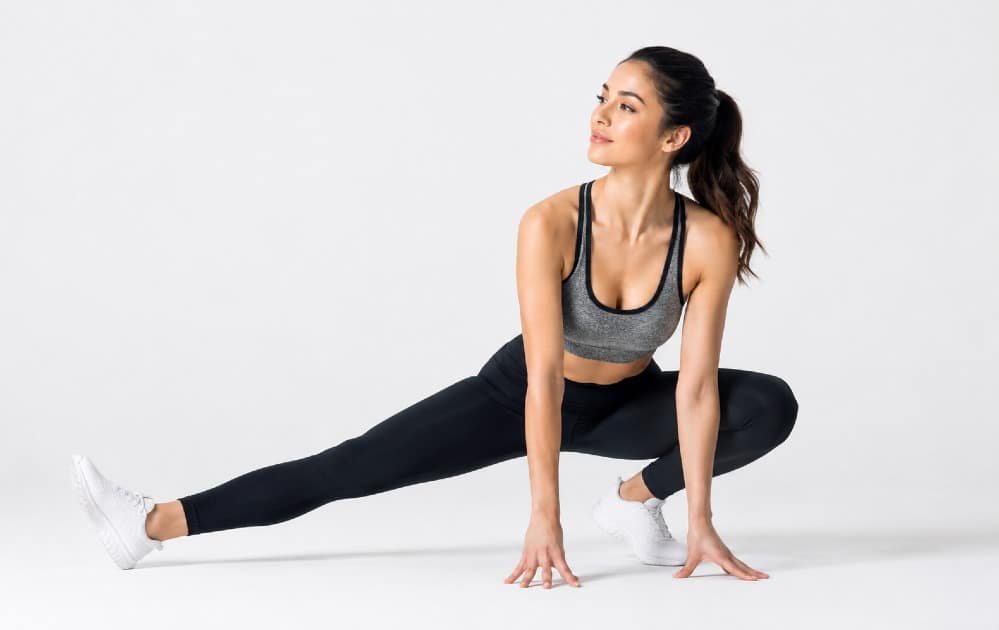
Lack of regular stretching leads to reduced mobility. Over time, simple movements like bending, reaching, or twisting feel restricted.
Common limitations:
- Tight hips and hamstrings
- Stiff shoulders and back
- Reduced range of motion
- Poor posture
Flexibility improves through repetition, not intensity.
Effective approach:
- Stretch daily for 10–15 minutes
- Focus on major tight areas (hips, hamstrings, shoulders)
- Hold stretches 30–60 seconds
- Use dynamic stretching before activity
- Use static stretching after activity
Useful stretches:
- Butterfly stretch
- Cobra stretch
- Seated forward fold
- Cross-body shoulder stretch
Core advantages:
- Better range of motion
- Less daily stiffness
- Improved posture
- Reduced injury risk
- Easier movement in daily life
Frequently Asked Questions
How often should I stretch?
Aim for daily stretching or at least 4–5 times per week. Even 10–15 minutes per session improves flexibility and reduces stiffness over time.
Should I stretch before or after exercise?
Both are useful:
- Before workouts: Use dynamic stretching to prepare muscles
- After workouts: Use static stretching to reduce tightness and support recovery
How long does flexibility improvement take?
Most people see noticeable improvement in 2–4 weeks with consistent practice. Long-term flexibility builds gradually with routine stretching.
Does stretching reduce muscle soreness?
Yes. Stretching improves circulation and helps muscles relax, which can reduce soreness and support faster recovery.
What mistake should I avoid when stretching?
Avoid forcing stretches. Painful or rushed movements reduce effectiveness and increase injury risk. Keep it controlled and steady.
Recap: Build Better Movement Through Consistency
Improving flexibility and reducing stiffness does not require complex routines.
Better movement doesn’t come from occasional effort—it comes from showing up consistently.
Regular stretching keeps your muscles mobile, supports faster recovery, and helps prevent everyday aches and tightness.
The goal is not extreme flexibility—it’s a body that moves comfortably and efficiently. Let each session build a stronger, more flexible body to create real change over time.
Ready to Stop Dealing With Tight Muscles and Slow Recovery?
You don’t need to keep pushing through stiffness or relying on random stretches that don’t give results.
This Nitrofit Limber Pro Adjustable Seat Stretch Machine gives your body a practical way to restore flexibility, release deep tension, and support faster recovery so that you can move better, feel lighter, and stay consistent with your stretching routine without forcing it on the floor.