
Still struggling to build muscle, burn stubborn fat, or get stronger despite spending hours in the gym?
Without the right strength training exercises, your workouts may be holding back muscle growth, fat loss, and strength gains. A proven strength training plan helps you build lean muscle, boost metabolism, and achieve faster, more effective results from every workout.
This guide explains the top strength training exercises which build full-body strength, improve muscle tone, support fat loss, and create a stronger, healthier body over time.
Why Strength Training Matters
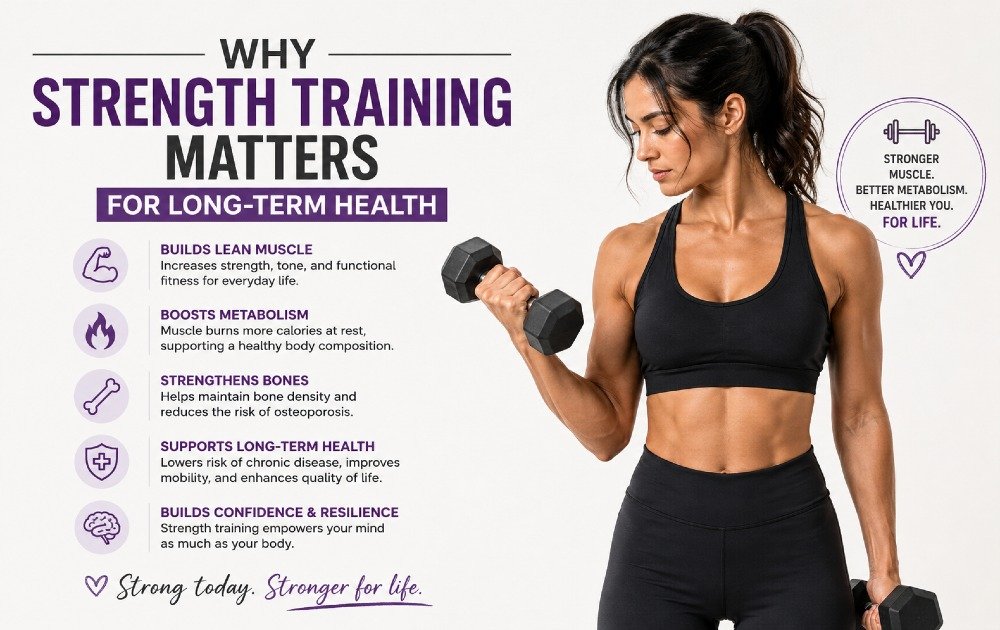
Many people think strength training is only for athletes or bodybuilders. In reality, it benefits nearly everyone.
Strength training routine:
- Build lean muscle naturally
- Increase daily calorie burn
- Improve posture and balance
- Strengthen bones and joints
- Reduce injury risk
- Support healthy aging
- Improve confidence and energy
Unlike endless cardio sessions, strength training changes how your body performs both inside and outside the gym.
Harvard Health highlights how strength training with weights or resistance bands helps build muscle, boost strength, and support long-term mobility.
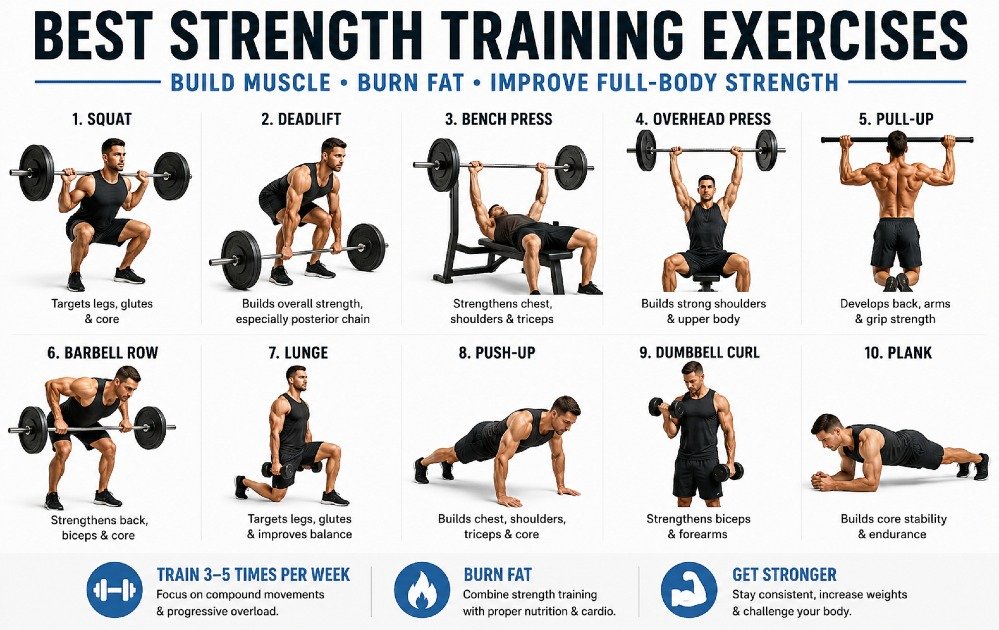
10 Effective Strength Training Moves for Lean Muscle, Fat Loss, and Total Body Power
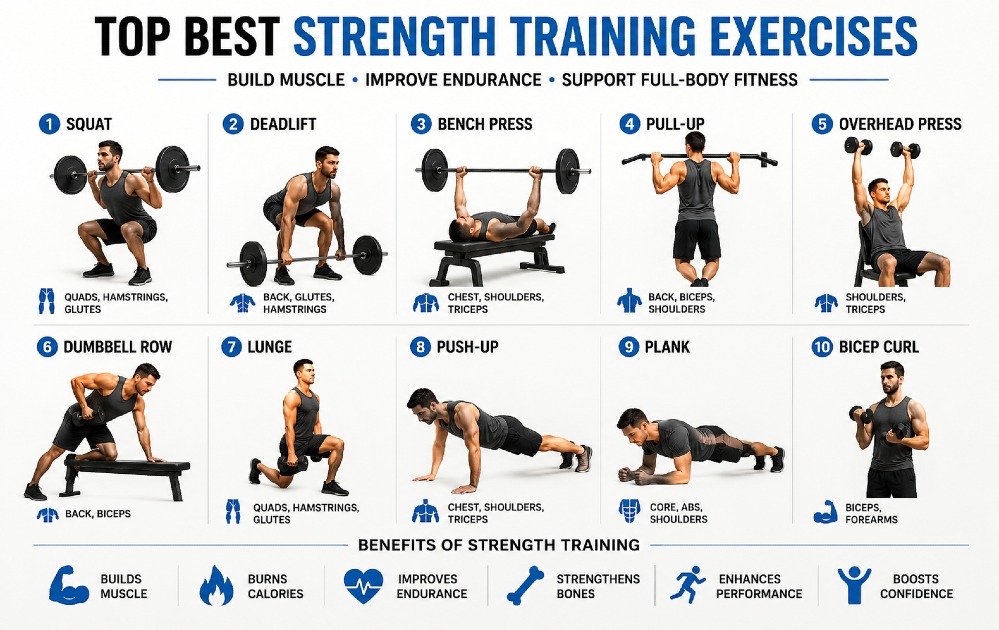
Most strength training programs fail because they rely on random exercises instead of proven movements.
Focus on the right exercises, and you can build lean muscle, burn more fat, boost metabolism, and increase full-body strength faster.
Discover ten strength training exercises that create functional strength to support fat loss, and improve overall performance.
1. Squats
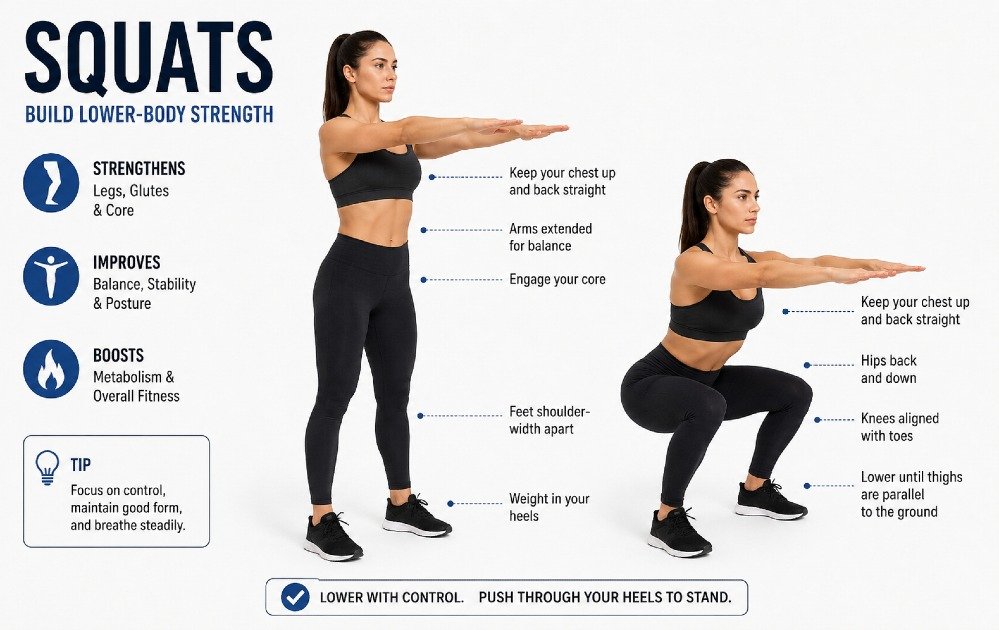
Squats are one of the most effective full-body strength exercises because they target multiple muscle groups at once.
They primarily work:
- Quadriceps
- Glutes
- Hamstrings
- Core muscles
Why squats work:
Squats improve lower-body strength while also supporting balance, coordination, and mobility. They mimic everyday movement patterns like sitting, standing, and lifting.
Squat tips:
- Keep your chest upright
- Push through your heels
- Keep your core engaged
- Lower with control
Core advantage:
Squats build lower-body power while helping increase overall calorie burn during workouts.
2. Deadlifts
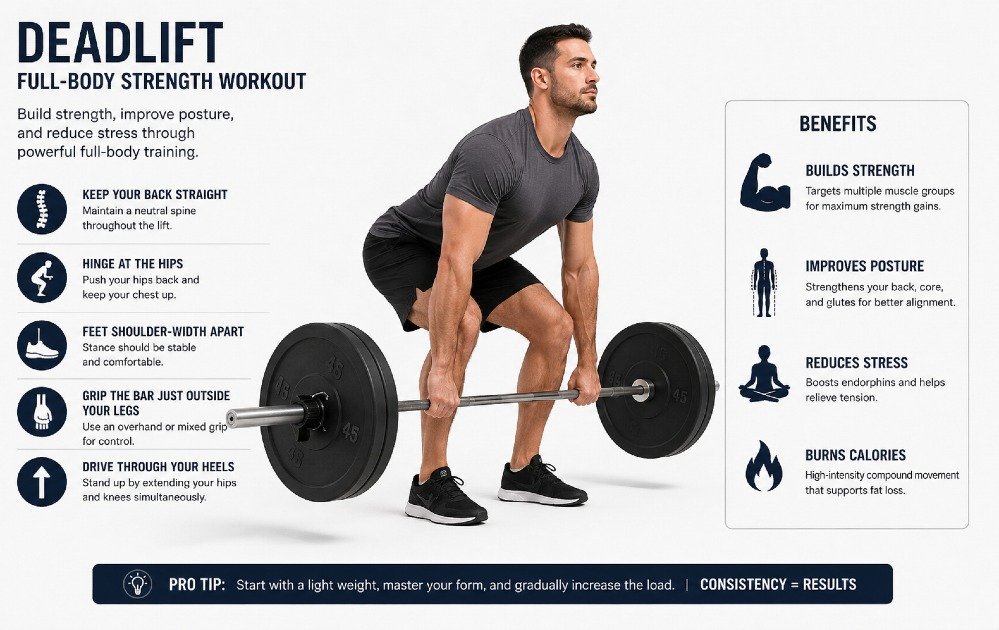
Deadlifts are one of the best exercises for building total-body strength.
They target:
- Hamstrings
- Glutes
- Lower back
- Upper back
- Core
- Grip strength
Common mistake:
Many beginners avoid deadlifts because they seem intimidating.
How to do it:
Start with lighter weight and focus on proper form before increasing resistance.
Deadlift tips:
- Keep the bar close to your body
- Maintain a neutral spine
- Engage your core throughout
- Drive your hips forward at the top
Core advantage:
Deadlifts strengthen the entire posterior chain, improve posture, and build functional strength for everyday movement.
3. Bench Press
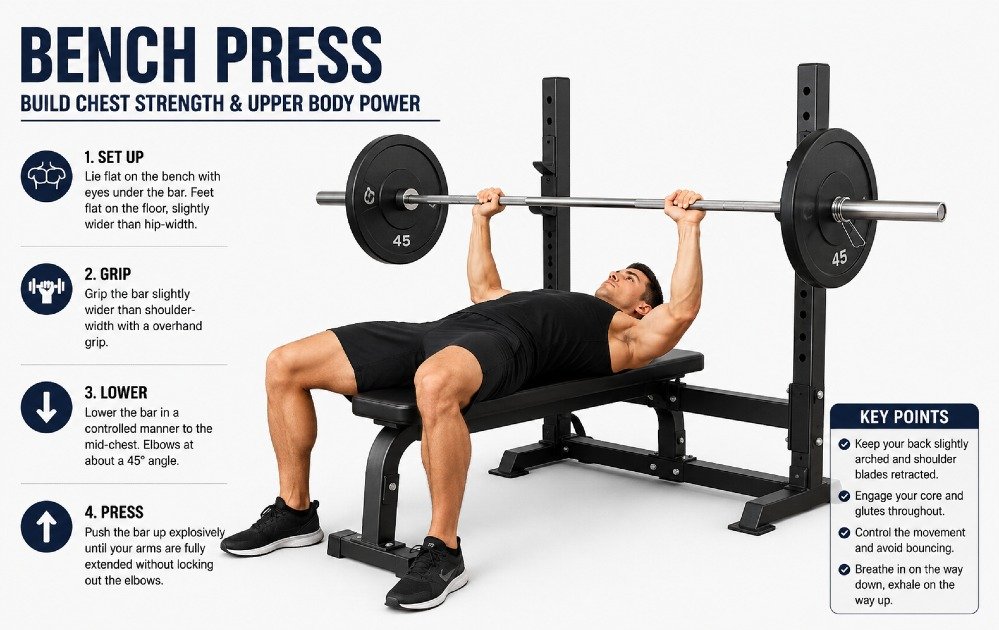
The bench press remains one of the best upper-body strength exercises for building pushing power.
It targets:
- Chest muscles
- Shoulders
- Triceps
Why it’s effective:
The bench press makes it easy to apply progressive overload, which is essential for building muscle and strength over time.
Bench press tips:
- Keep feet planted firmly
- Lower the weight slowly
- Avoid excessive elbow flare
- Maintain shoulder stability
Core advantage:
This exercise helps develop upper-body strength, muscle definition, and overall pressing power.
4. Pull-Ups
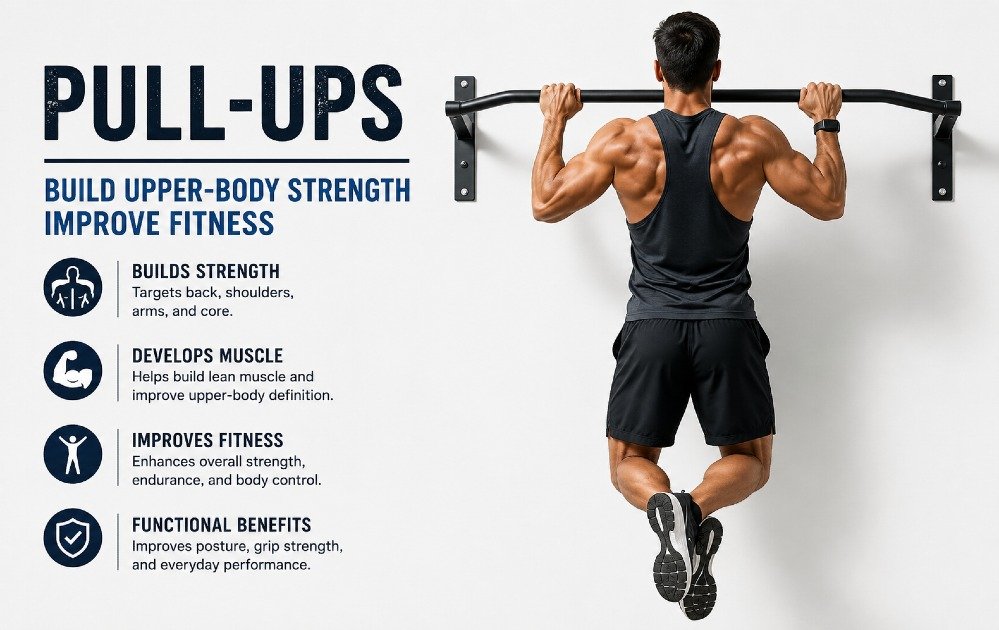
Pull-ups are one of the best bodyweight exercises for upper-body strength.
They strengthen:
- Back muscles
- Biceps
- Shoulders
- Core
Pull-ups tips:
- Begin with resistance bands
- Use assisted pull-up machines
- Start with negative pull-ups
Core advantage:
Pull-ups improve posture, grip strength, and upper-body muscle development.
5. Overhead Press
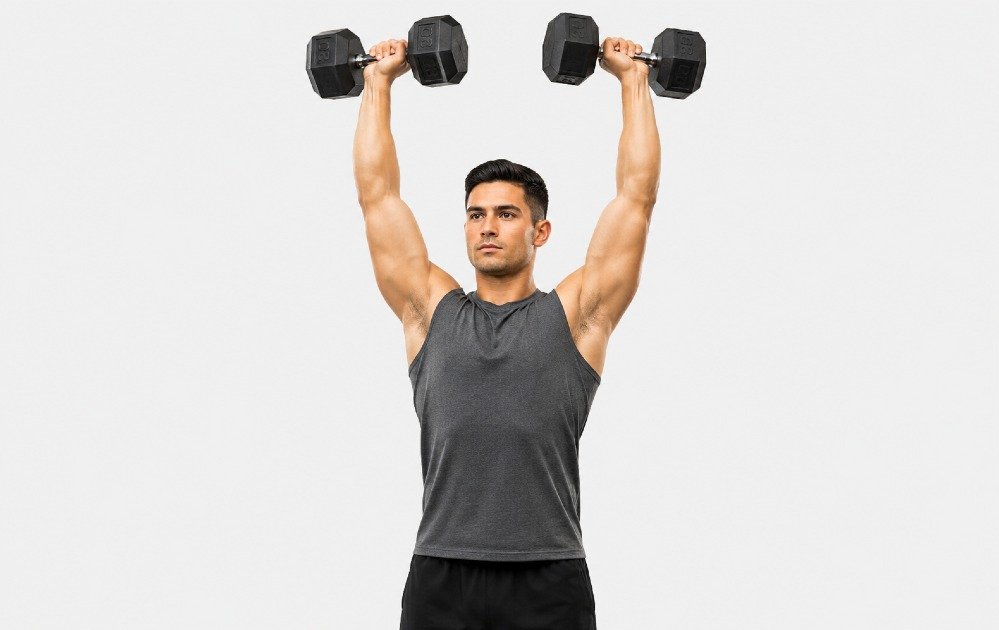
The overhead press strengthens the shoulders while challenging your core stability.
Why it matters:
Many people focus heavily on chest exercises while neglecting overhead pressing movements. This can create muscular imbalances over time.
Overhead press tips:
- Keep your core tight
- Avoid arching your lower back
- Press directly overhead
- Lower the weight under control
Core advantage:
The overhead press improves shoulder strength, posture, and upper-body stability.
6. Lunges
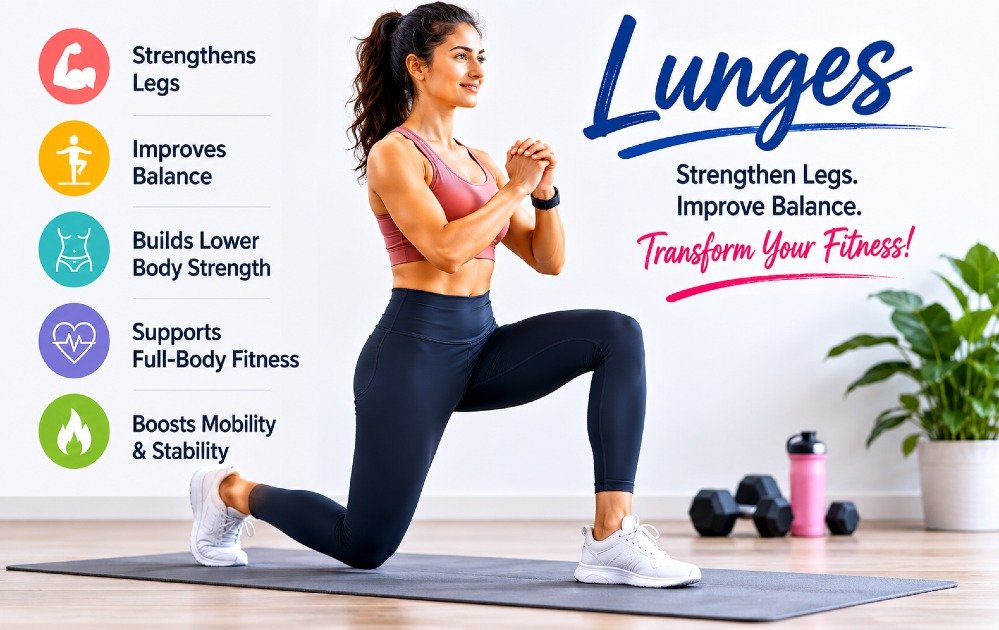
Lunges are excellent for building leg strength while improving balance and coordination.
Muscles worked:
- Glutes
- Quadriceps
- Hamstrings
- Core
Why lunges are effective:
Because each leg works independently, lunges help correct muscle imbalances and improve movement control.
Core advantage:
Lunges build functional lower-body strength that transfers well into sports and everyday activities.
7. Rows
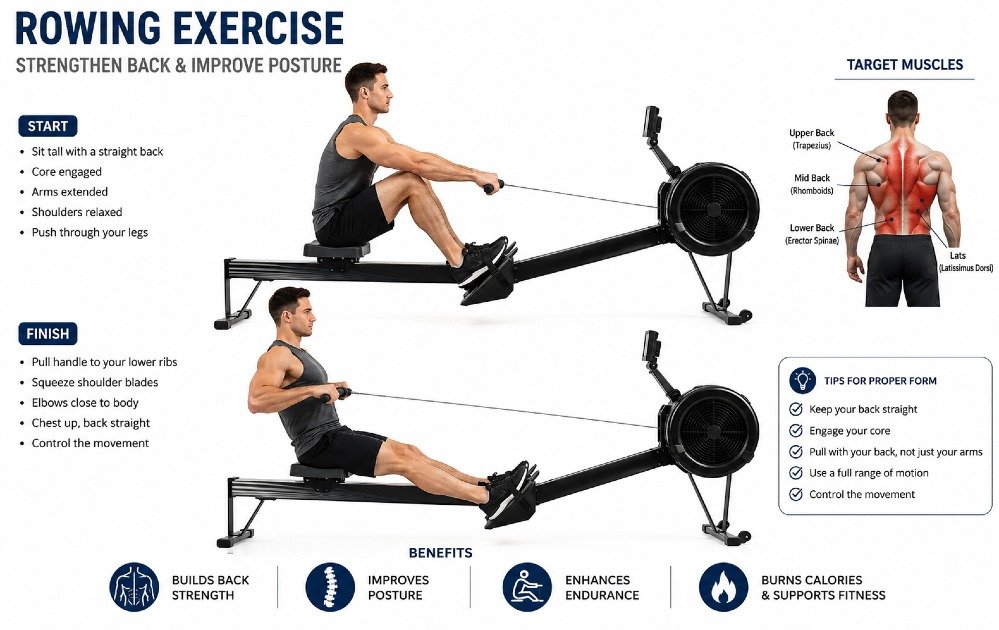
Rows are essential for developing a strong, balanced upper body.
They target:
- Upper back
- Lats
- Rhomboids
- Biceps
Why rows matter:
Many people overtrain pushing exercises while neglecting pulling movements. This often contributes to poor posture and shoulder discomfort.
Core advantage:
Rows improve posture, back strength, and upper-body balance.
8. Push-Ups
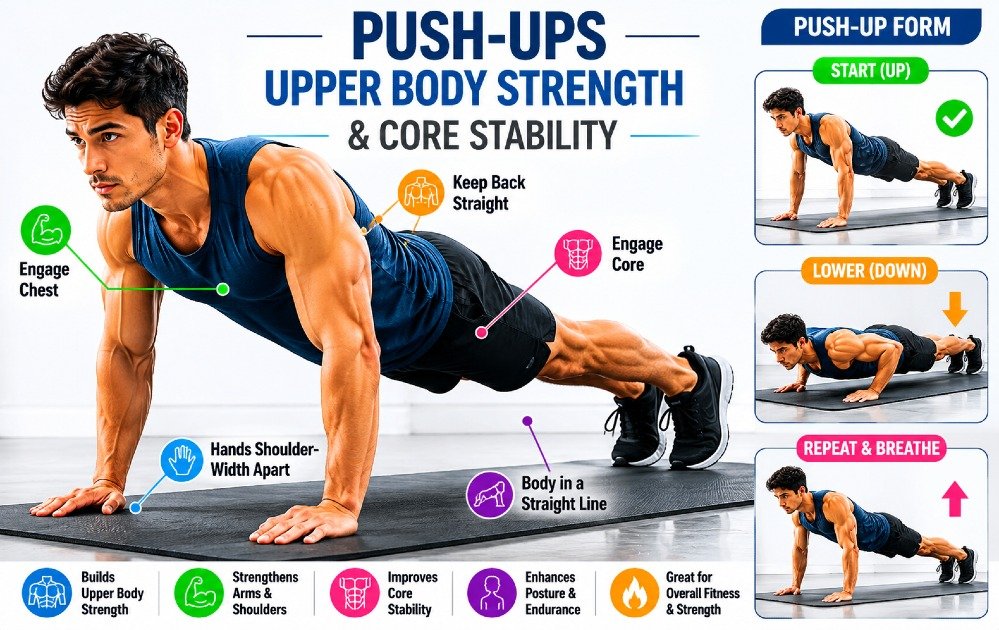
Push-ups remain one of the most effective bodyweight exercises because they strengthen several muscle groups simultaneously.
Muscles worked:
- Chest
- Shoulders
- Triceps
- Core
Easy progressions:
- Incline push-ups
- Standard push-ups
- Weighted push-ups
- Decline push-ups
Core advantage:
Push-ups improve muscular endurance, upper-body strength, and stability without requiring equipment.
9. Kettlebell Swings
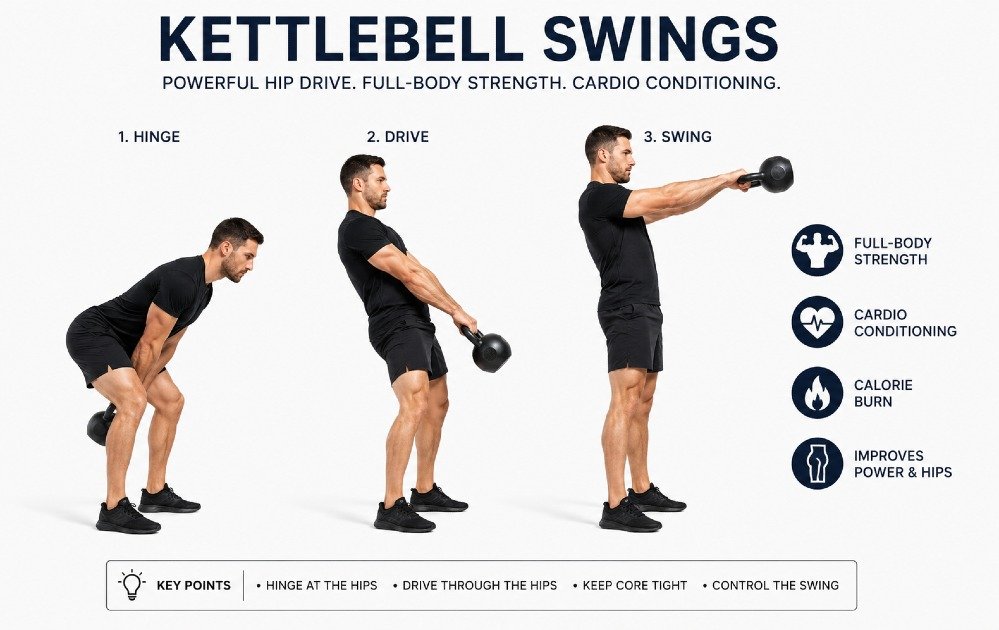
Kettlebell swings combine strength and conditioning into one powerful movement.
Muscles targeted:
- Glutes
- Hamstrings
- Core
- Lower back
Common mistake:
Many people squat the movement instead of using a proper hip hinge.
Core advantage:
Kettlebell swings improve explosive power, endurance, and calorie burn efficiently.
10. Planks
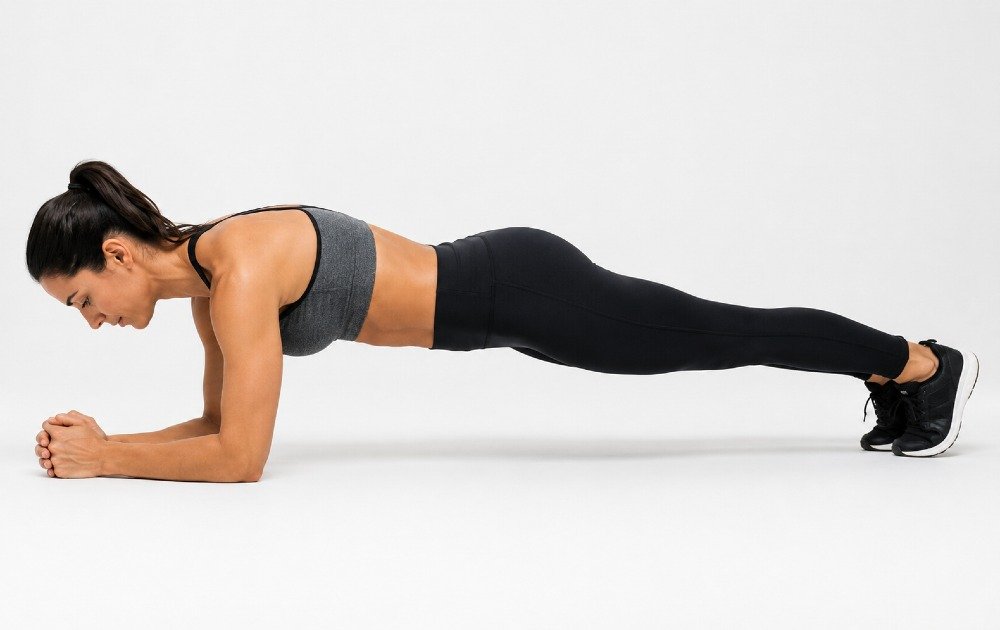
Core strength supports nearly every movement in strength training.
Planks strengthen:
- Abdominals
- Lower back
- Shoulders
- Stabilizer muscles
Plank tips:
- Keep hips level
- Maintain controlled breathing
- Avoid sagging your lower back
Core advantage:
Planks improve posture, stability, and overall exercise performance.
How to Build an Effective Strength Training Routine
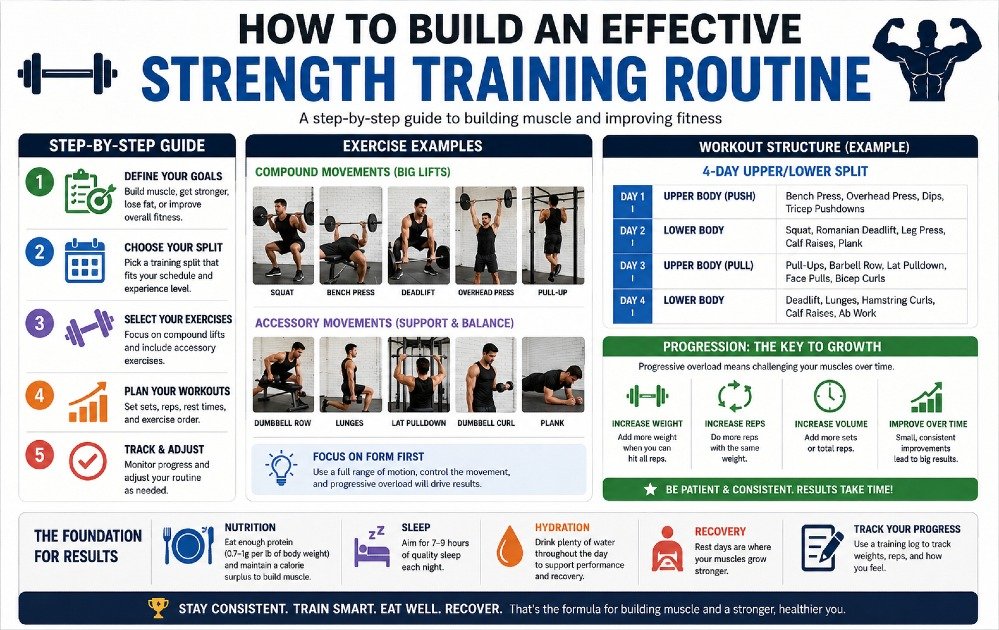
The best strength training program does not need to be complicated.
Prioritize exercises like:
- Squats
- Deadlifts
- Rows
- Pull-ups
- Presses
Compound movements train multiple muscle groups at once, helping you build strength more efficiently.
Aim for:
- 3–4 workouts per week
- Progressive overload
- Balanced recovery
Consistency produces better results than extreme workouts followed by long breaks.
Support recovery through:
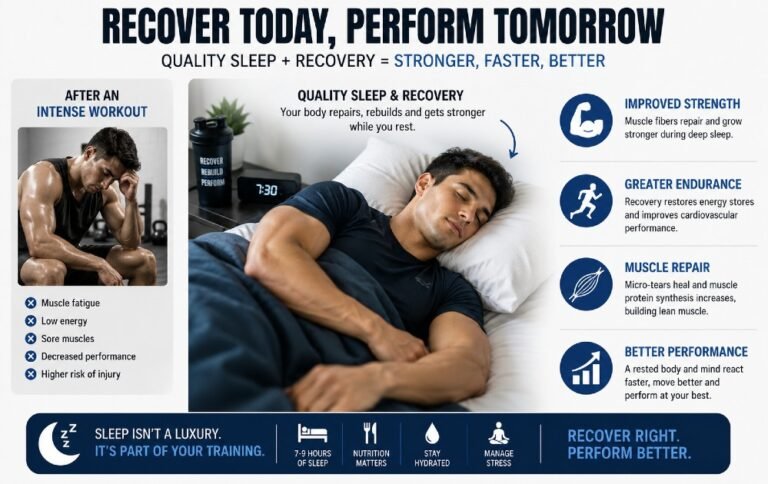
- Quality sleep
- Proper hydration
- Protein intake
- Mobility work
Recovery directly affects strength gains and muscle growth.
Common Strength Training Mistakes
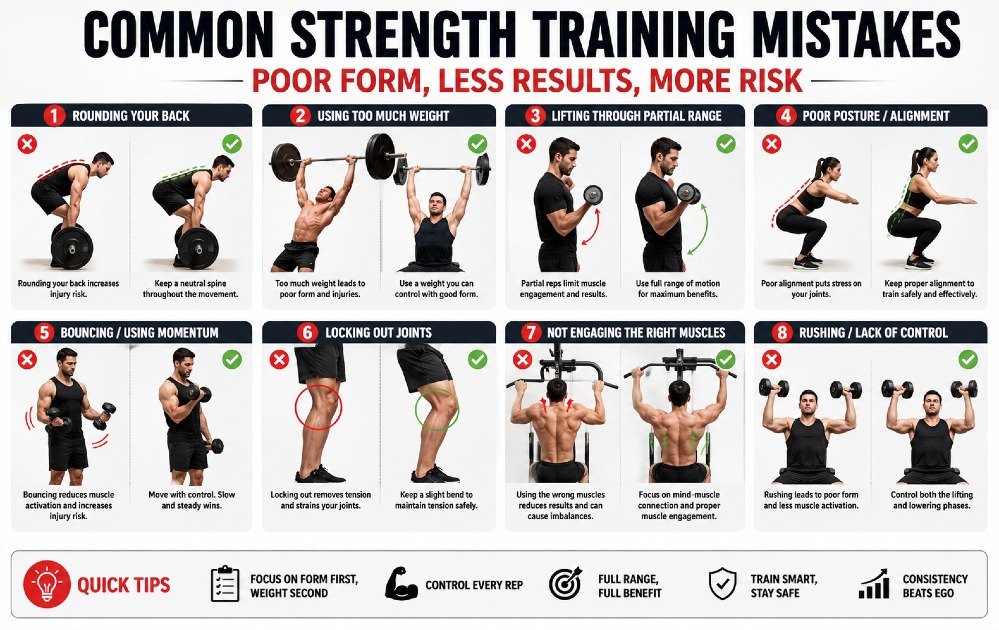
Skipping proper form:
Poor technique increases injury risk and limits results.
Master movement quality before lifting heavier weights.
Changing workouts too often:
Constantly switching exercises makes progress harder to track.
Stick with foundational movements long enough to improve strength.
Ignoring recovery:
Muscles recover and grow outside the gym.
Rest days are essential for long-term progress.
Avoiding progressive overload:
If resistance never increases, strength eventually plateaus.
Challenge your body gradually over time.
Best Equipment for Home Strength Training
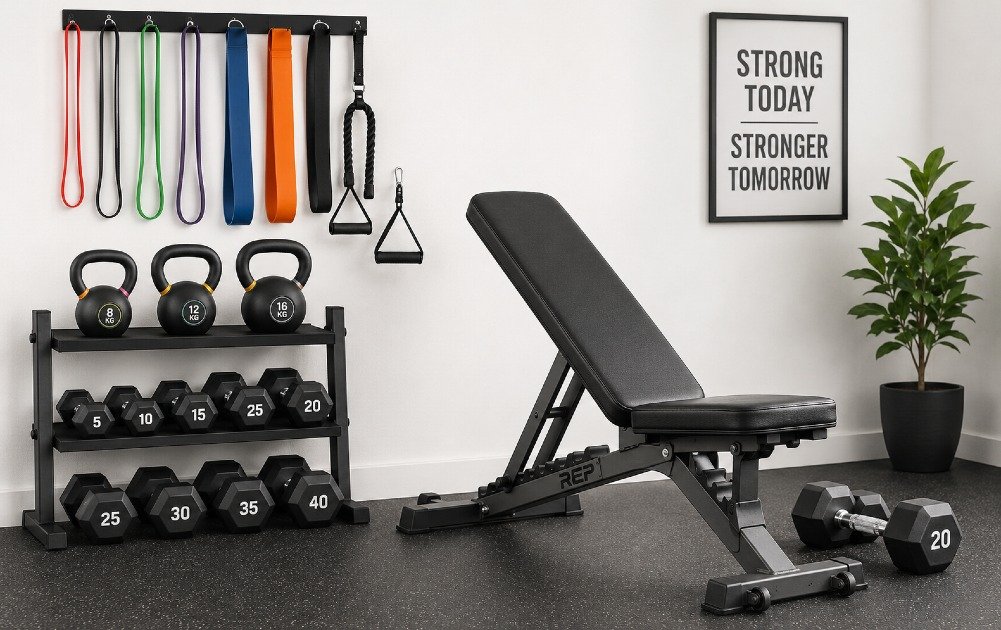
You do not need expensive machines to get stronger.
A few quality pieces of equipment can create an effective home setup.
Recommended options include:
- Adjustable dumbbells
- Resistance bands
- Kettlebells
- Pull-up bars
- Adjustable benches
Nutrition Tips for Better Strength Training Results
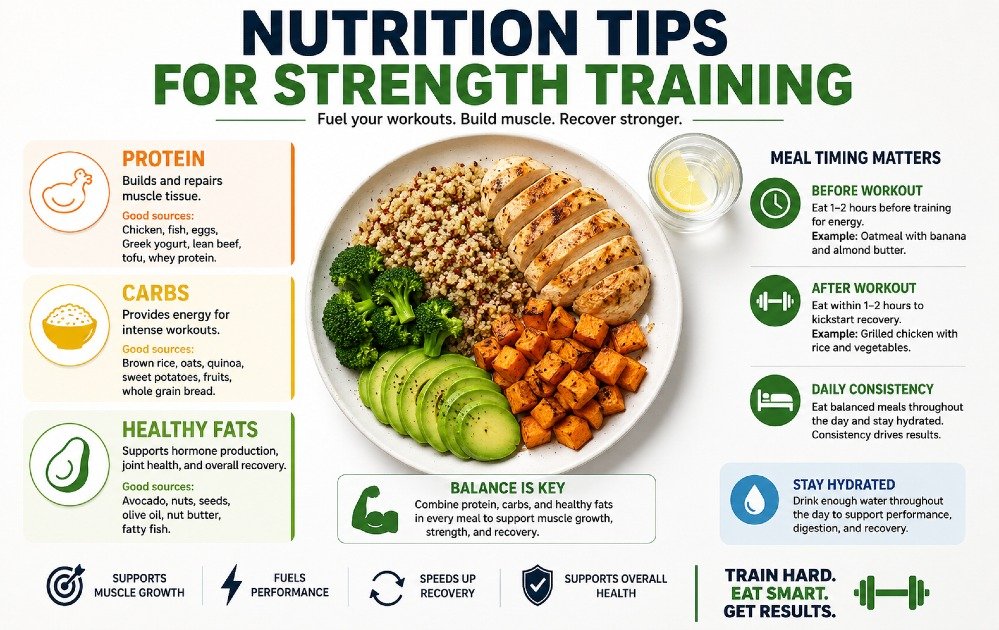
Training alone will not maximize results.
Nutrition plays a major role in muscle growth, energy, and recovery.
Good protein sources include:
- Eggs
- Fish
- Chicken
- Greek yogurt
- Beans
- Protein shakes
Protein supports muscle repair and recovery after workouts.
Stay hydrated:
Hydration directly affects strength, endurance, and recovery.
Eat enough calories:
Undereating can reduce energy levels and slow muscle development.
Strength Training for Muscle Building
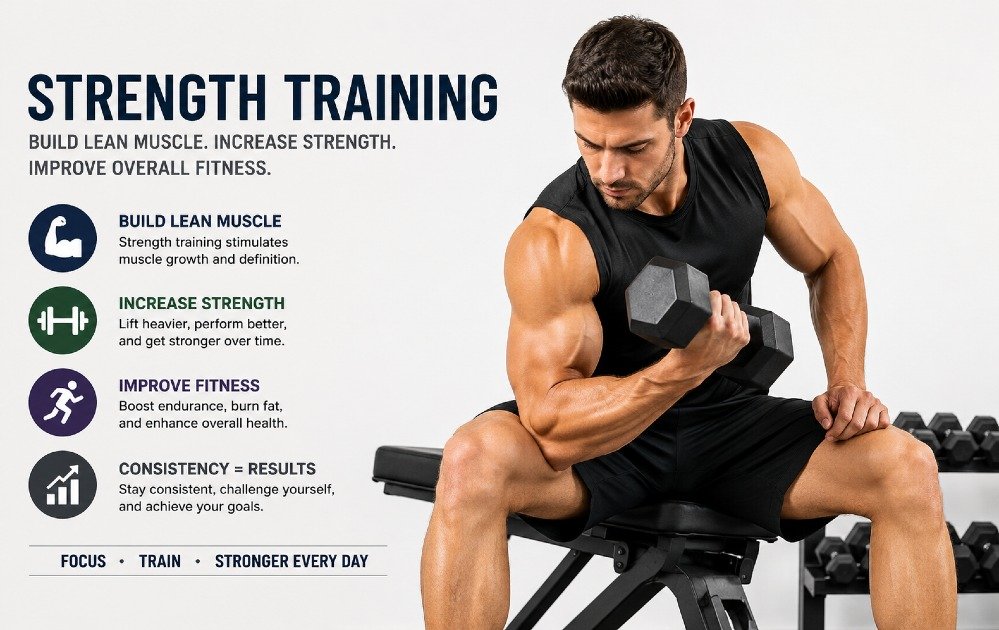
Many people train consistently but see little muscle growth because their workouts lack structure and progression. Repeating random exercises without increasing resistance limits results.
The most effective approach is to focus on compound movements and progressive overload. Exercises like squats, deadlifts, bench presses, and rows train multiple muscle groups at once, making workouts more efficient and effective.
Muscle-building strategies:
- Prioritize compound exercises
- Increase weight or reps gradually
- Train each muscle group at least twice weekly
- Maintain proper form before adding heavier loads
This approach helps build lean muscle, improve strength, and increase overall workout efficiency.
Strength Training Program for Women and Men
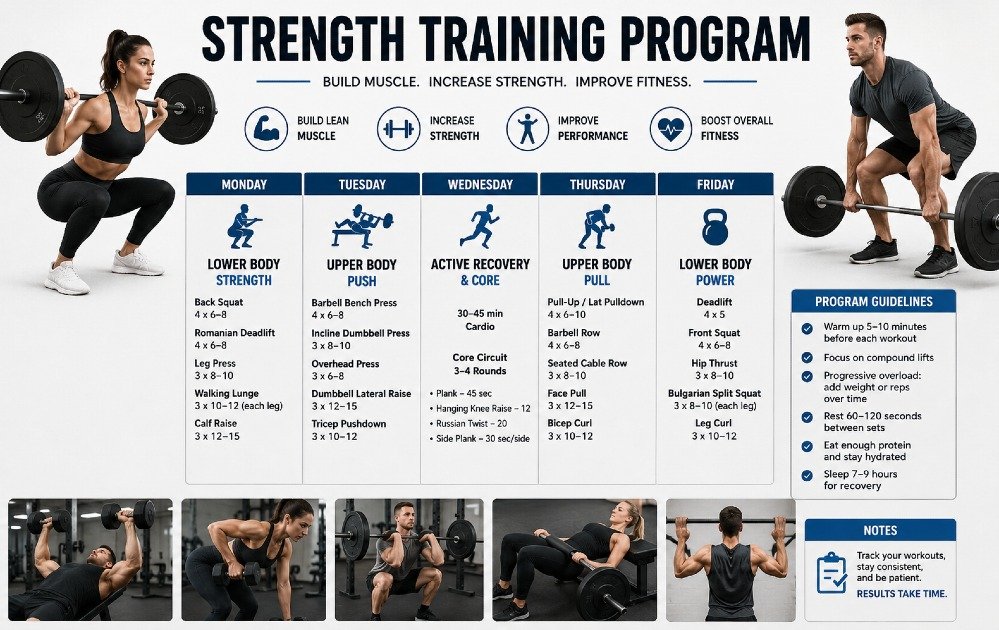
Many people follow routines that are either too advanced or poorly structured for their fitness level. This often leads to burnout, slow progress, or inconsistent training.
An effective strength training program should focus on balance, recovery, and consistency. Simple routines built around full-body movements usually produce the best long-term results.
Simple weekly structure:
- Train 3–4 days per week
- Focus on full-body or upper/lower split workouts
- Include push, pull, and leg exercises
- Schedule recovery days between hard sessions
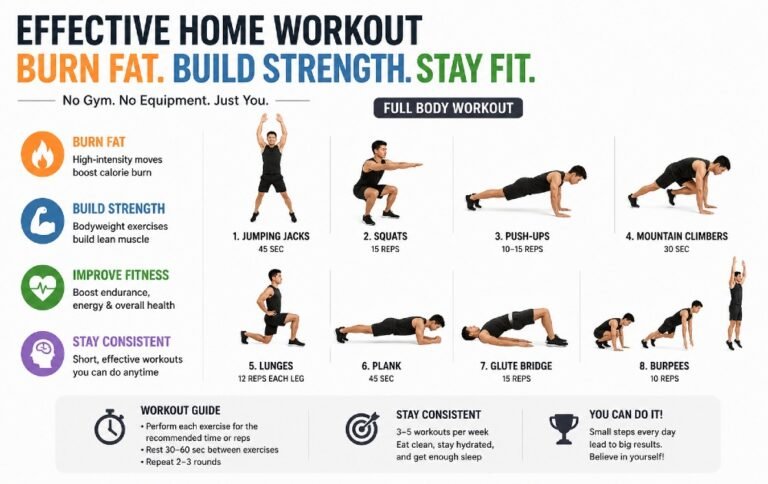
Sample routine:
- Day 1: Squats, push-ups, rows
- Day 2: Recovery or mobility work
- Day 3: Deadlifts, overhead press, lunges
- Day 4: Core work or active recovery
A balanced program improves strength, supports muscle growth, and reduces injury risk for both women and men.
How to Get Stronger with Strength Training
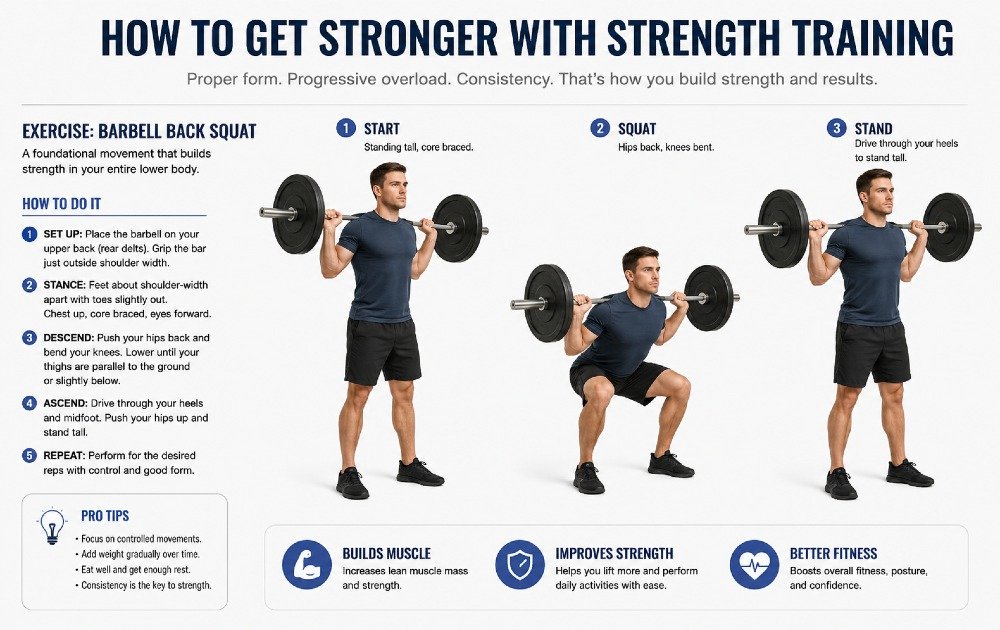
Many people stop getting stronger because they repeat the same weights and workout intensity for too long. Without progression, the body has no reason to adapt.
The key to getting stronger is progressive overload. Gradually increasing resistance, reps, or training volume forces muscles to grow stronger over time.
Ways to build strength:
- Increase weights gradually
- Add extra reps when possible
- Improve exercise form and control
- Track workouts consistently
- Prioritize recovery and sleep
If you can complete 10 reps comfortably, aim for 12 reps before increasing the weight.
Frequently Asked Questions
How many days a week should I do strength training
Most people see solid results with 3–4 strength training sessions per week. This gives your muscles enough stimulus to grow while allowing proper recovery between workouts.
Can strength training help with fat loss
Yes. Strength training builds lean muscle, which helps your body burn more calories throughout the day. It also supports long-term fat loss more effectively than cardio alone.
Is strength training safe for beginners
Yes, when done correctly. Beginners should start with lighter resistance, focus on proper form, and increase intensity gradually. Consistency matters more than lifting heavy too early.
What are the best strength training exercises for beginners
Compound exercises usually deliver the best results. Squats, push-ups, rows, lunges, and deadlifts train multiple muscle groups efficiently and help build a strong foundation.
How long does it take to see strength training results
Many people notice improvements in energy, endurance, and strength within a few weeks. Visible muscle definition and body composition changes typically come with consistent training over time.
Recap: Build Strength, Burn Fat, and Improve Overall Fitness
Strength training remains one of the most effective ways to build muscle, increase energy, and improve long-term health.
Focus on proven exercises, proper form, and a structured routine to develop greater strength, endurance, and confidence both inside and outside the gym.
Every workout is a step toward a stronger, leaner, healthier body. Start applying these foundational strength-training strategies today and see how quickly it can transform your fitness.
Ready to Stop Following Workout Plans That Lead Nowhere
You don’t need complicated routines or hours in the gym to get stronger.
This adjustable dumbbell set gives you the freedom to build muscle, burn more fat, and get stronger at home without wasting time, space, or money on a crowded gym.