

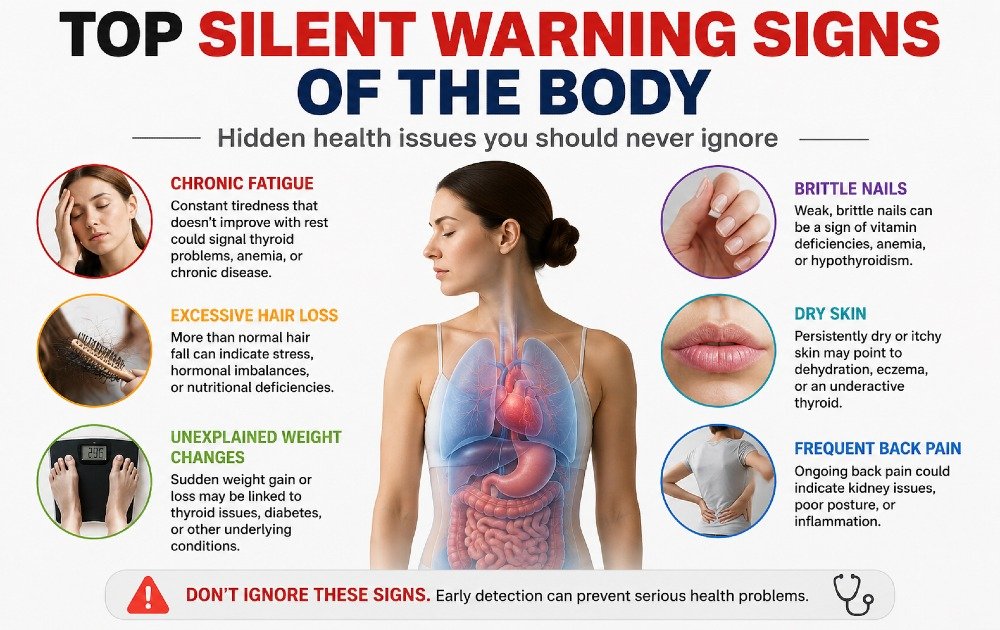
Still tired after a full night’s sleep or ignoring subtle body changes? They could be early warning signs you shouldn’t overlook.
Your body often signals health problems early—spotting subtle warning signs can help prevent more serious illness.
This guide explains the top silent ill signs of the body, what they usually mean, and what you should do early to protect your health.
Why Your Body Sends Silent Warning Signs
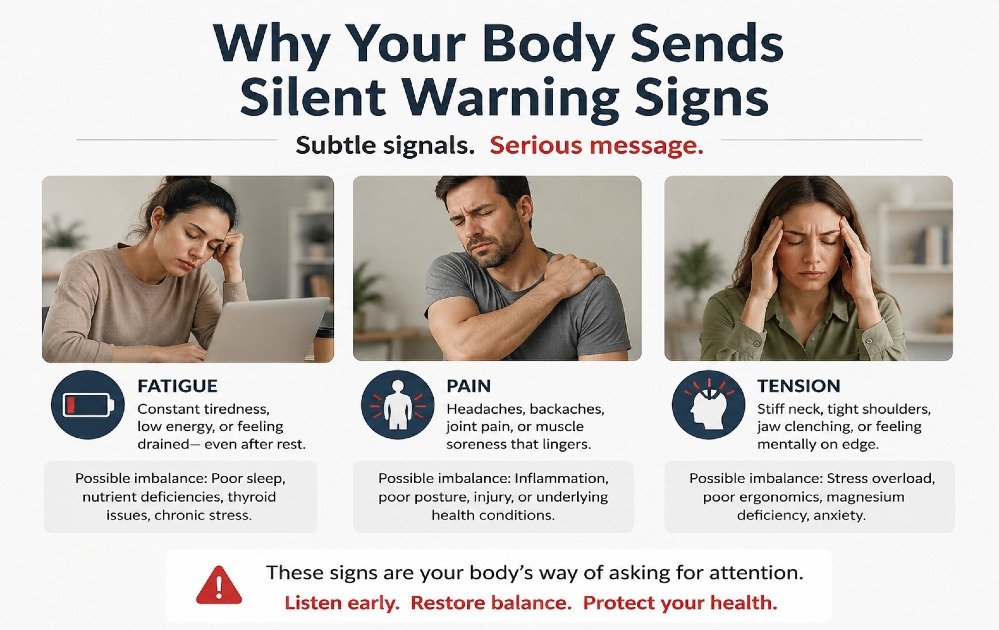
Your body often sends subtle warning signs when energy, hormones, immunity, or metabolism fall out of balance.
Most people misread these signals as:
- Stress or burnout
- Aging
- Poor sleep
- Busy lifestyle
Learning to recognize early symptoms helps you act before conditions worsen.
Core advantages:
- Faster diagnosis
- Easier treatment
- Better long-term health outcomes
TOP 11 Silent Ill Signs That May Indicate a Serious Health Condition
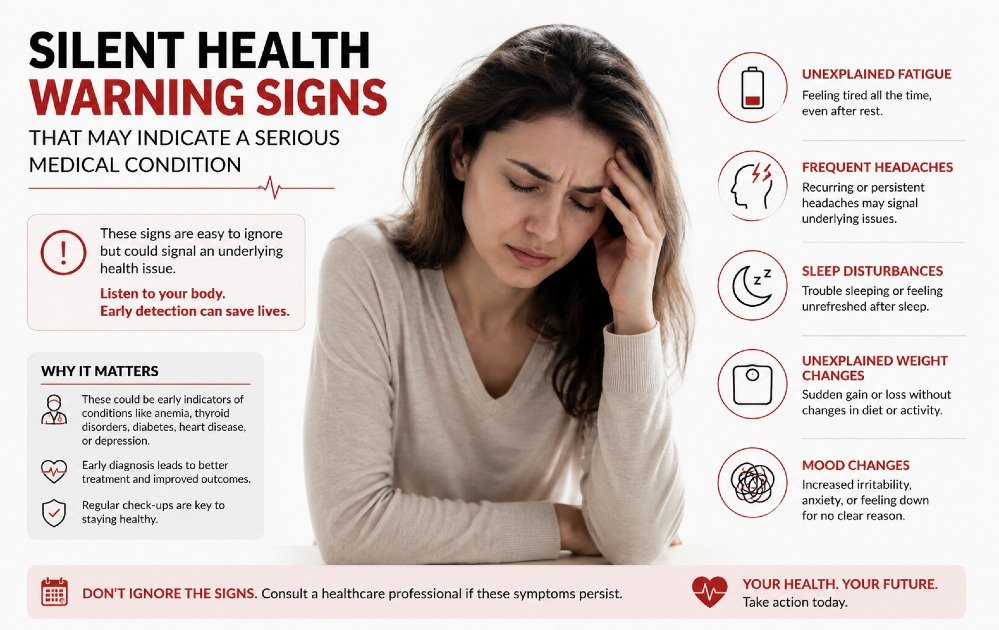
Always tired, dealing with frequent headaches, or noticing unusual body changes? These subtle symptoms may be early warning signs of a serious health condition.
Discover eleven subtle health signals that may reveal hidden medical conditions, what they could mean for your well-being, and the right time to consult a healthcare professional before complications arise.
1. Constant Fatigue That Doesn’t Improve With Rest

Tiring after a long day is normal; waking up exhausted after good sleep is a warning sign.
What it may indicate:
- Iron deficiency
- Thyroid imbalance
- Vitamin B12 deficiency
- Chronic stress overload
What you should do:
- Check basic blood work
- Improve sleep consistency
- Eat iron- and protein-rich meals
Core advantage:
Persistent fatigue is often one of the earliest signs your body is sick.
2. Sudden Weight Changes Without Lifestyle Changes

Unexplained weight loss or gain should never be ignored.
Possible causes:
- Hormonal imbalance
- Thyroid disorders
- Blood sugar issues
- Digestive dysfunction
What to do:
- Track weight weekly
- Monitor diet patterns
- Seek medical evaluation if changes continue
Core advantage:
Early detection of metabolic or hormonal problems.
3. Frequent or Persistent Headaches

Episodes of can be a sign of an underlying issue that may deserve closer attention.
Possible causes:
- Dehydration
- Vision strain
- High blood pressure
- Poor sleep quality
Action steps:
- Increase water intake
- Limit screen exposure
- Check blood pressure regularly
Core advantage:
Improved focus and reduced long-term discomfort.
4. Digestive Changes (Bloating, Constipation, or Irregularity)
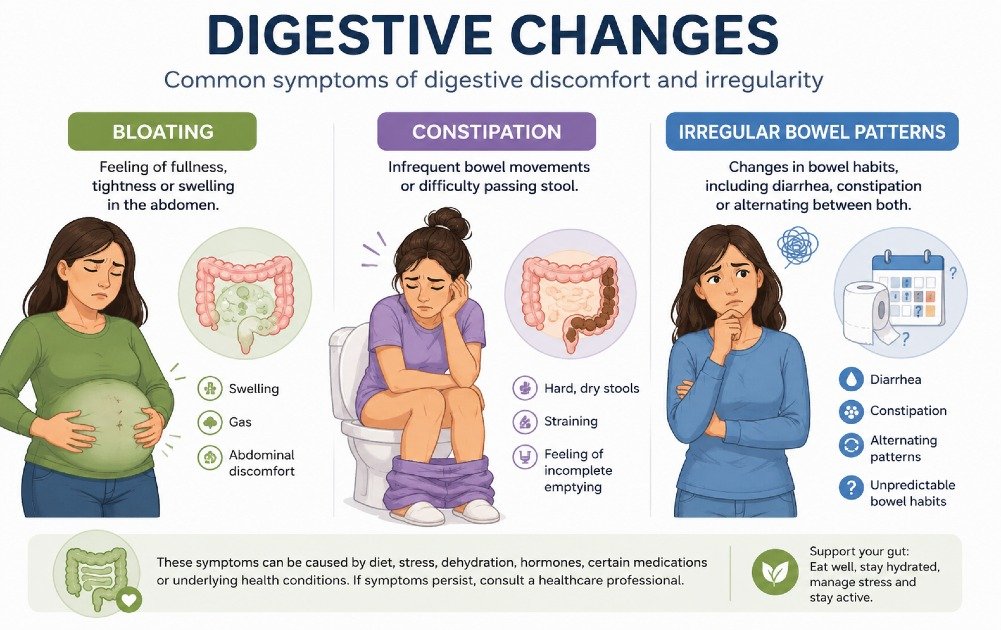
Your gut is one of the clearest indicators of internal health.
Possible causes:
- Poor gut bacteria balance
- Food intolerance
- Low fiber intake
- Stress-related digestion issues
What helps:
- Add fiber-rich foods
- Include probiotics (yogurt, fermented foods)
- Reduce processed foods
Core advantage:
Better digestion, stronger immunity, and improved energy.
5. Skin Changes That Appear Suddenly
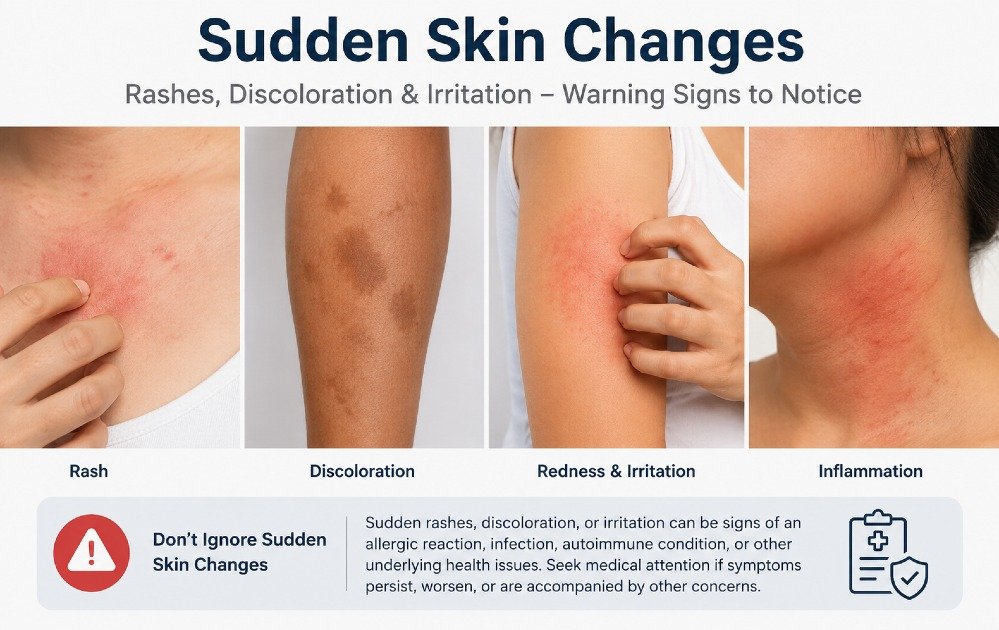
The condition of your skin often mirrors what is taking place within your body and overall health.
Watch for:
- Persistent acne
- Dry, flaky patches
- Sudden rashes
- Unusual skin tone changes
What it may mean:
- Hormonal imbalance
- Liver stress
- Nutritional deficiency
What to do:
- Improve hydration
- Clean up diet
- Seek medical advice if persistent
6. Shortness of Breath During Light Activity

Struggling to breathe during simple tasks is a warning sign.
Possible causes:
- Low iron levels
- Asthma
- Cardiovascular issues
- Anxiety-related breathing issues
Action steps:
- Start light daily movement
- Practice breathing exercises
- Get heart and lung evaluation if needed
Core advantage:
Improved stamina and respiratory health.
According to NCBI, shortness of breath is the root of other illnesses.
7. Mood Swings or Emotional Instability

Frequent emotional changes may have physical roots.
Possible causes:
- Hormonal imbalance
- Blood sugar fluctuations
- Nutrient deficiencies
- Chronic fatigue
What helps:
- Balanced meals
- Regular sleep schedule
- Daily physical activity
Core advantage:
More stable mood and improved mental clarity.
8. Getting Sick More Often Than Usual
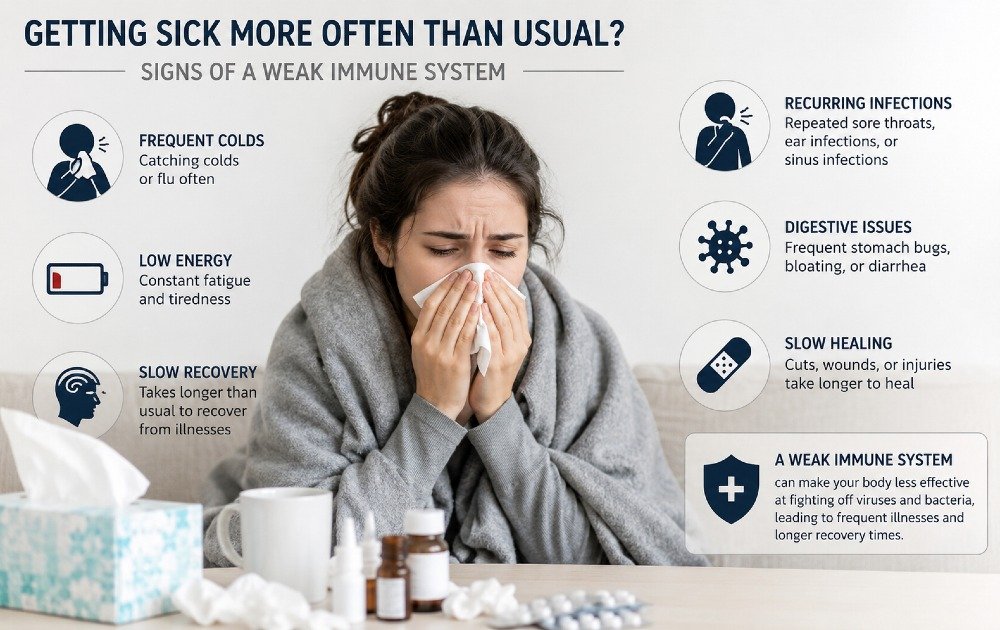
If infections are frequent, your immune system may be under strain.
Common causes:
- Poor sleep quality
- Nutrient deficiency
- High stress levels
What to do:
- Improve diet quality
- Reduce stress exposure
- Strengthen sleep routine
Core advantage:
Stronger immunity and fewer illnesses.
9. Brain Fog and Poor Concentration

If thinking feels slower than usual, it’s a signal worth noticing.
Possible causes:
- Sleep deprivation
- Dehydration
- Nutritional imbalance
- Stress overload
What helps:
- Drink enough water
- Improve sleep habits
- Eat brain-supporting foods like nuts and fish
Core advantage:
Sharper thinking and improved productivity.
10. Constant or Excessive Thirst
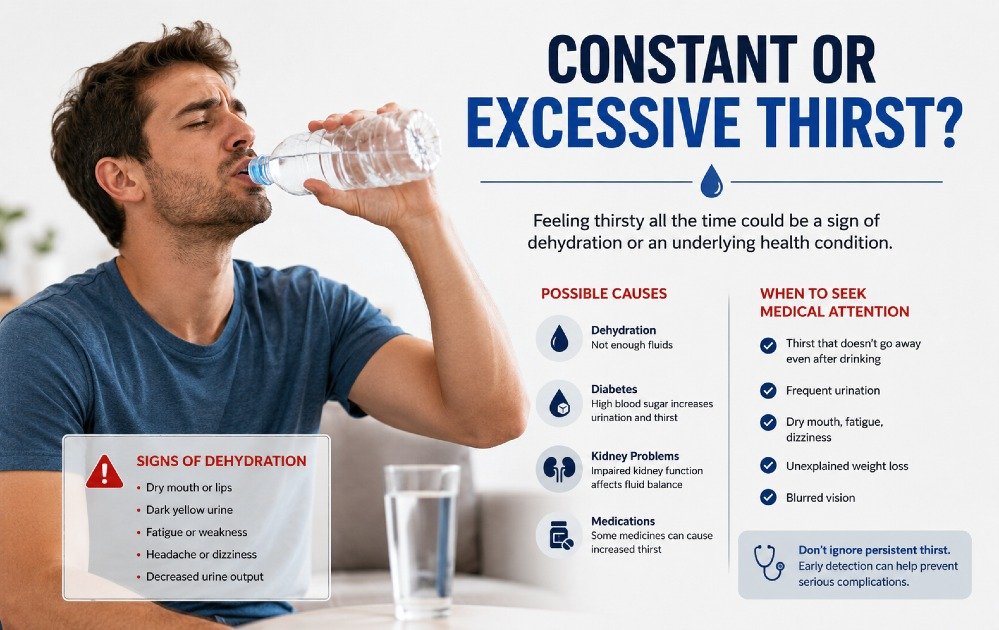
Needing to drink water constantly can sometimes point to a deeper health concern.
Possible causes:
- Blood sugar imbalance
- Dehydration
- Electrolyte loss
Action steps:
- Monitor hydration levels
- Reduce sugary drinks
- Consider blood sugar testing if persistent
Core advantage:
Better hydration balance and metabolic stability.
11. Ongoing or Unexplained Pain

When ongoing discomfort continues without relief, it’s important to investigate the cause.
Possible causes:
- Chronic inflammation
- Injury not fully healed
- Underlying disease process
What to do:
- Track pain patterns
- Avoid self-medication
- Seek medical evaluation early
Core advantage:
Prevents long-term complications and supports faster recovery.
What to Do When You Notice These Silent Signs
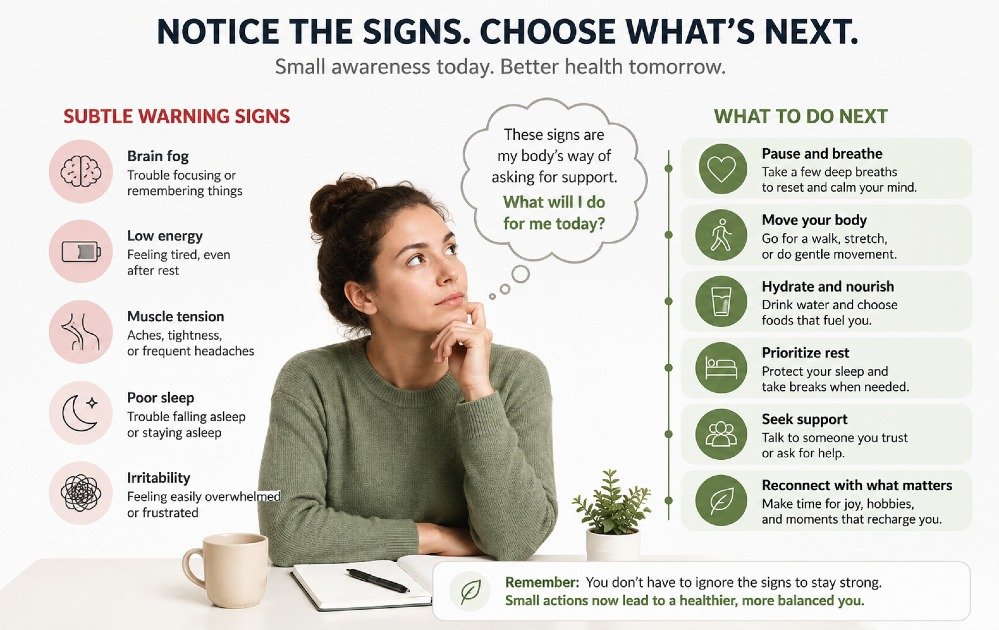
Many people dismiss persistent symptoms as stress, aging, or poor sleep, allowing serious health issues to go undetected until it’s harder to treat.
Common warning signs include:
- Ongoing fatigue
- Frequent headaches
- Digestive problems
- Unexplained weight changes
- Persistent pain or discomfort
Helpful steps include:
- Track symptoms and when they occur.
- Look for patterns related to food, stress, or activity.
- Schedule a medical evaluation if symptoms persist.
- Avoid self-diagnosing based on internet searches.
- Strengthen your well-being through consistent restful sleep, daily physical activity, and a well-balanced diet.
Core advantage:
Noticing minor symptoms at an early stage can result in quicker detection, more successful treatment, and improved long-term health results.
Early Disease Symptoms You Should Never Ignore

Don’t ignore subtle symptoms—spotting them early can help prevent serious health problems before they worsen.
Common early disease symptoms include:
- Unusual fatigue
- Recurring headaches
- Shortness of breath
- Ongoing digestive issues
- Unexplained weight loss or gain
- Excessive thirst
- Difficulty concentrating
To stay proactive:
- Monitor symptoms over time.
- Keep up with routine health screenings.
- Discuss ongoing concerns with your healthcare provider.
- Prioritize sleep, hydration, and proper nutrition.
- Don’t wait for symptoms to become severe.
Core advantage:
Spot health issues early to improve outcomes, prevent complications, and make treatment easier and more effective.
Unnoticed Health Problems That Often Go Undetected
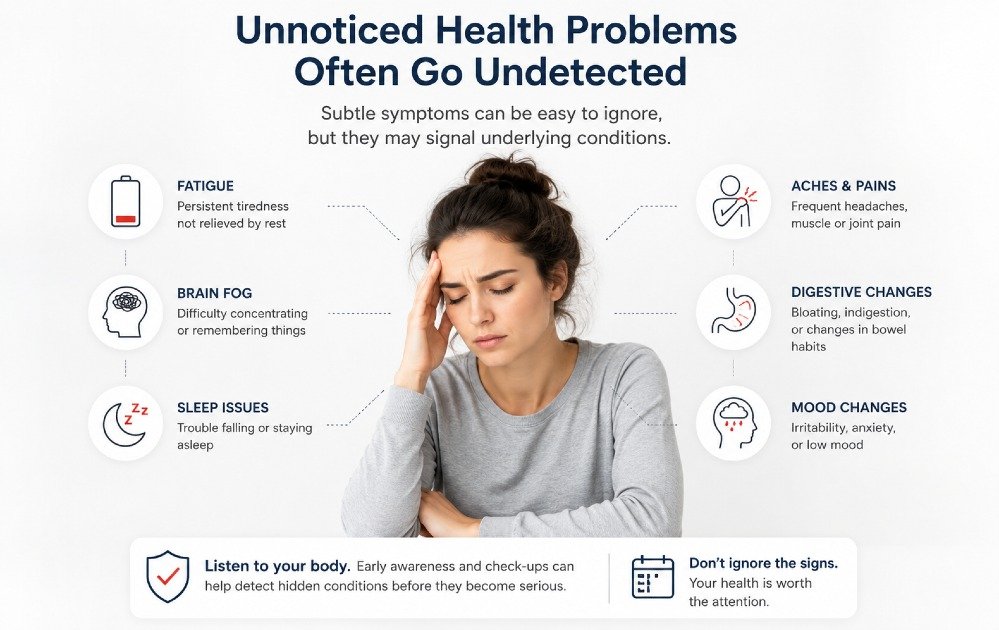
Some health conditions progress silently, causing subtle warning signs that are easy to miss until the problem becomes more serious.
Examples include:
- High blood pressure
- Prediabetes
- Nutrient deficiencies
- Thyroid disorders
- Sleep disorders
- Chronic inflammation
Healthy habits include:
- Scheduling routine checkups
- Monitoring blood pressure and blood sugar when appropriate
- Staying physically active
- Eating a nutrient-rich diet
- Prioritizing quality sleep
- Noticing shifts in your energy levels, emotional state, and physical performance.
Core advantage:
Catch health issues early with regular checkups—your body often sends warning signs before problems become serious, making treatment easier and protecting your long-term health.
Frequently Asked Questions
What are silent ill signs of the body?
Silent ill signs are subtle symptoms that may point to an underlying health issue before more noticeable symptoms appear.
Common examples include ongoing fatigue, unexplained weight changes, frequent headaches, digestive problems, and persistent pain.
When should I take a symptom seriously?
Pay attention to symptoms that persist, recur frequently, worsen over time, or affect your daily life.
Any symptom that remains unexplained or persists over time deserves evaluation by a qualified healthcare expert.
Can stress cause symptoms that resemble illness?
Yes. Chronic stress can contribute to fatigue, headaches, digestive issues, sleep disturbances, mood changes, and difficulty concentrating.
However, ongoing symptoms should not be assumed to be stress-related without proper evaluation.
Are silent symptoms always serious?
No. Many symptoms have simple explanations. Still, recurring or unexplained symptoms may be early warning signs of a condition that requires medical attention.
How can I identify health problems early?
Routine medical visits, preventive health tests, and staying alert to any shifts in your body are among the best ways to identify possible health concerns at an early stage.
Recap: Early Awareness Protects Your Health
Don’t ignore fatigue, digestive changes, recurring headaches, or unexplained discomfort—these subtle symptoms may signal a serious underlying health problem.
These subtle warning signals from the body are not there to create fear—they’re there to prompt early action so you can safeguard your health and well-being.
Listening to your body’s subtle signals helps you protect your health, take early action, and stay in control of your well-being.
Ready to Catch Health Problems Before They Become Bigger Issues
You don’t wait for subtle warning signs to become serious health problems before paying attention to them.
This smart tracker can spot changes early, make smarter health decisions, and stay one step ahead of potential issues.