
Chronic pain doesn’t arrive loudly—it settles in quietly.
One day it’s a stiff neck. Next, it’s back pain, headaches, or aching joints that never fully go away. Over time, even simple movement starts to feel like effort.
This guide explains how acupressure stands out as a practical, drug-free way to manage chronic pain naturally.
Why Acupressure Works for Chronic Pain
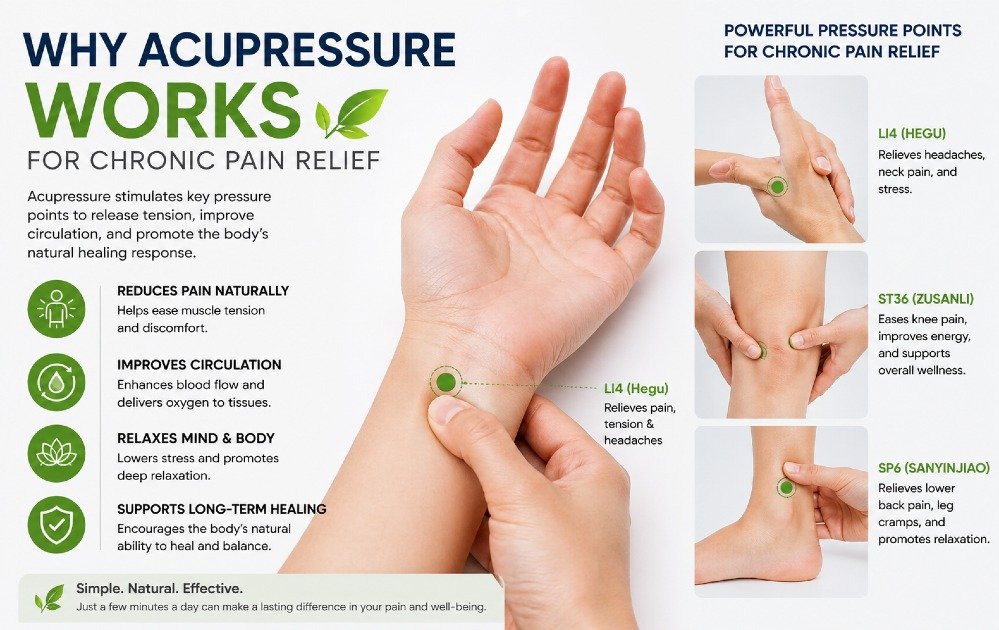
Chronic pain usually comes from a combination of:
- Muscle tension
- Poor circulation
- Stress overload
- Nerve sensitivity
How Acupressure Helps
Acupressure works by stimulating specific pressure points that influence pain pathways in the body.
This can:
- Improve blood flow
- Release tight muscles
- Trigger endorphins (natural pain relievers)
- Calm the nervous system
Acupressure targets the root of discomfort—not just the symptom.
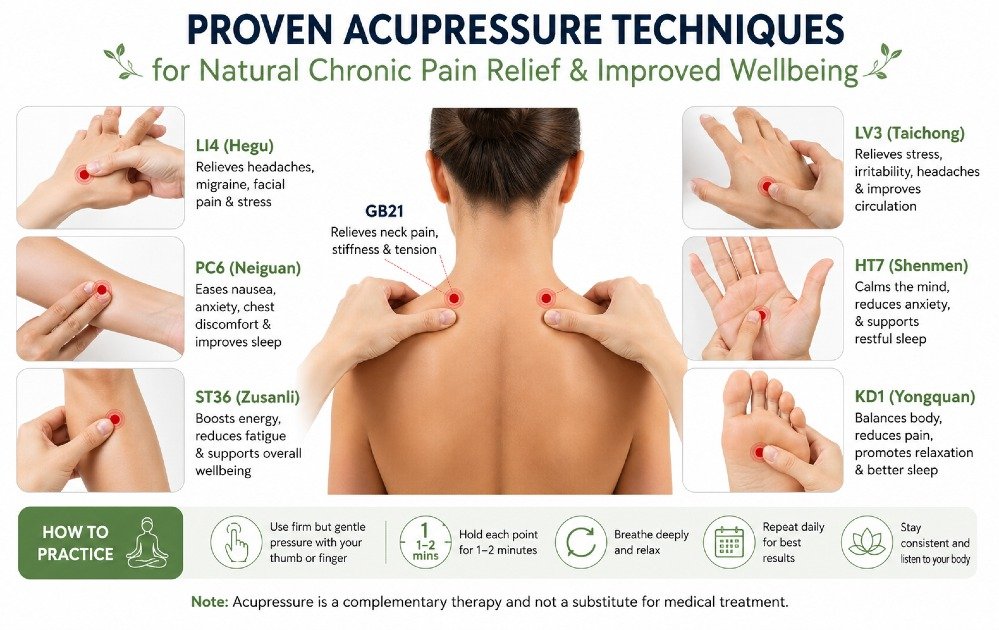
11 Proven Acupressure Techniques for Natural Chronic Pain Relief
Chronic pain stems from factors like muscle tightness, poor blood flow, stress, and an overactive nervous system. Targeted pressure point therapy may ease discomfort by boosting circulation and triggering the body’s natural relaxation response.
Many use acupressure incorrectly or expect quick, lasting relief from occasional use, while others rely only on medication and overlook simple methods that can strengthen pain management.
Discover eleven proven acupressure techniques that target pain naturally, teach proper pressure point use, and help you manage daily discomfort more effectively.
1. LI4 Point – Fast Relief for Head and Body Pain
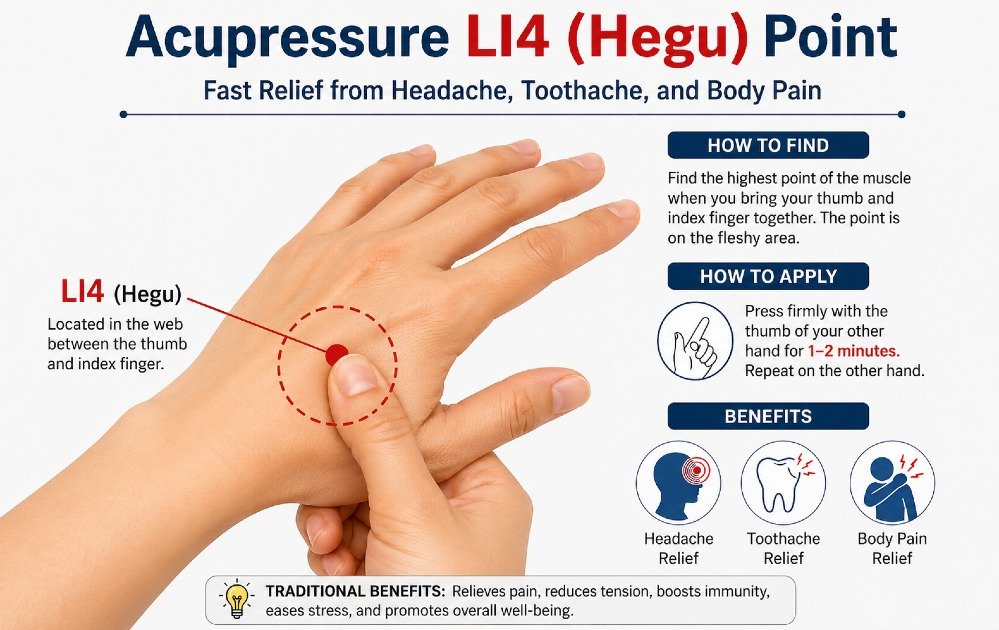
Headaches, facial tension, and general body pain can strike without warning.
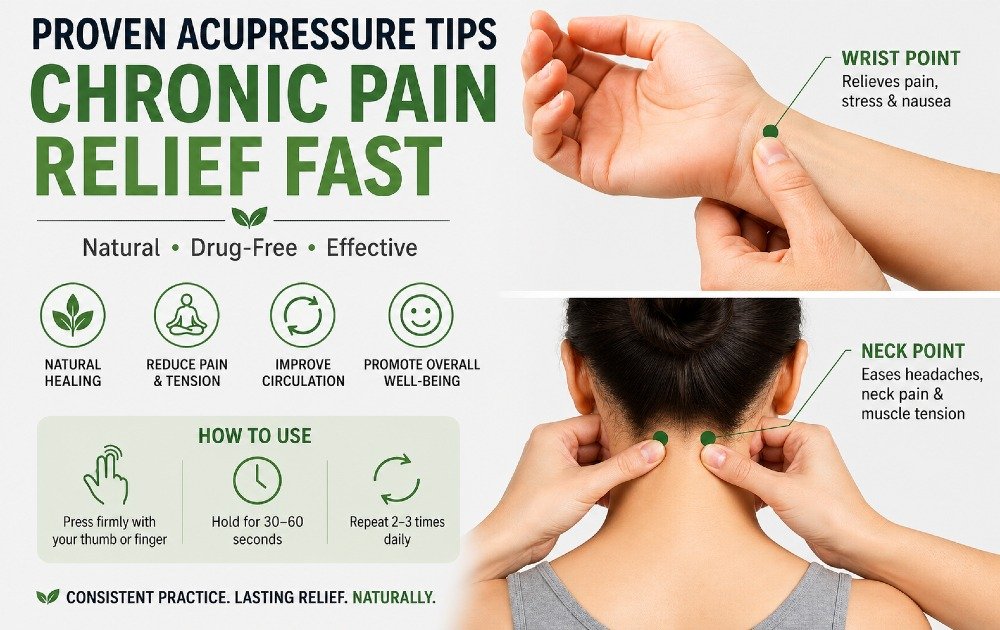
Press the LI4 point, located between your thumb and index finger.
How to use it:
- Pinch the area firmly
- Hold for 30–60 seconds
- Switch hands
Core advantage:
It provides fast, full-body pain relief by calming overactive pain signals.
2. GB20 Point – Release Neck and Shoulder Tightness
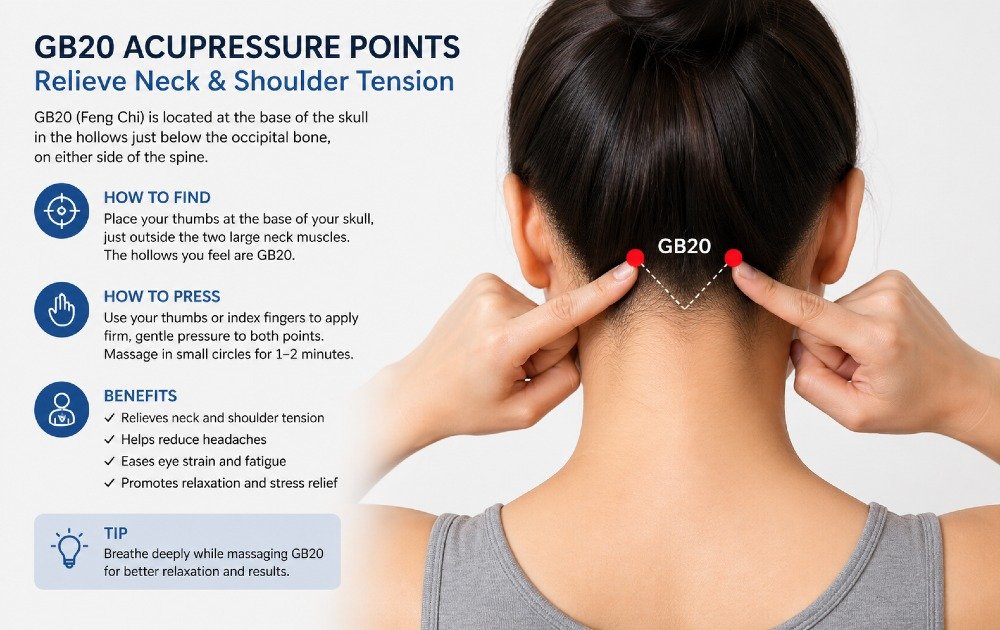
Long hours of sitting create stiffness in the neck and upper back.
Target the GB20 points at the base of the skull.
How to use it:
- Place thumbs under the skull
- Press upward and inward
- Hold for 1 minute
Core advantage:
Reduces neck tension and relieves tension headaches quickly.
3. B23 Points – Lower Back Pain Relief
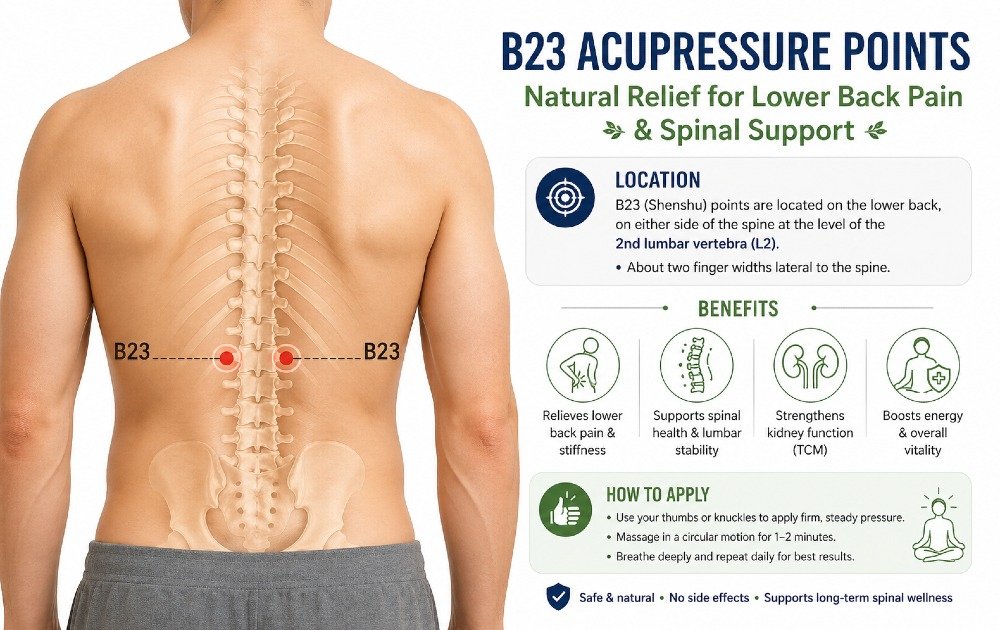
Lower back pain is one of the most common chronic issues affecting daily movement.
Stimulate the B23 points on both sides of the spine.
How to use it:
- Apply steady thumb pressure
- Massage in circular motion
- Repeat for 1–2 minutes
Core advantage:
It improves flexibility and reduces deep muscle tension in the lower back.
4. ST36 Point – Support Knee and Joint Health
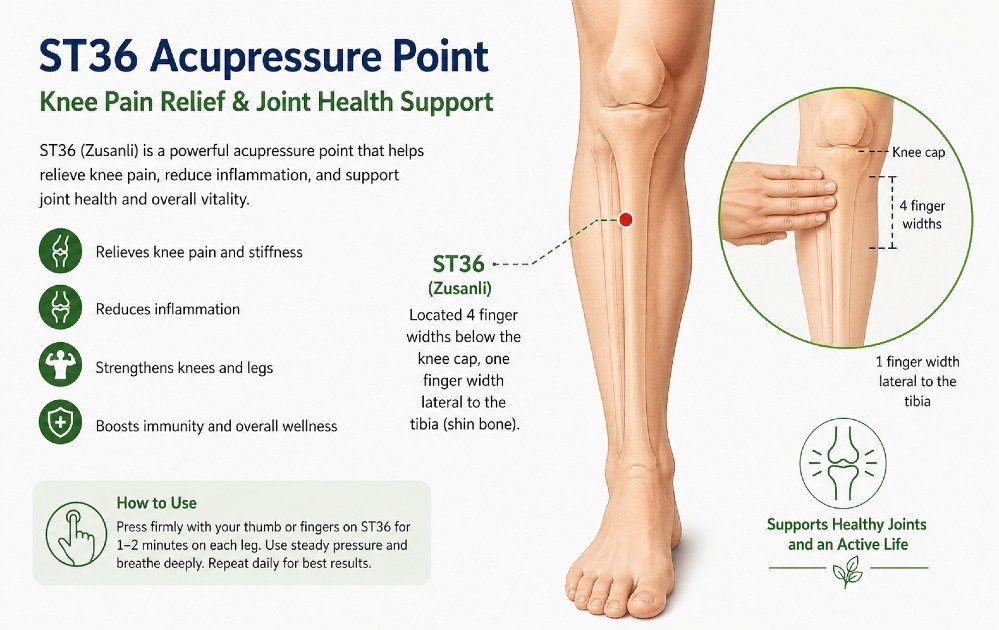
Knee pain limits mobility and worsens with age or activity.
Activate the ST36 point, located below the kneecap.
How to use it:
- Find four finger widths below the knee
- Press firmly for 60–90 seconds
Core advantage:
It helps reduce inflammation and strengthens joint function over time.
5. PC6 Point – Calm Nerve-Related Pain
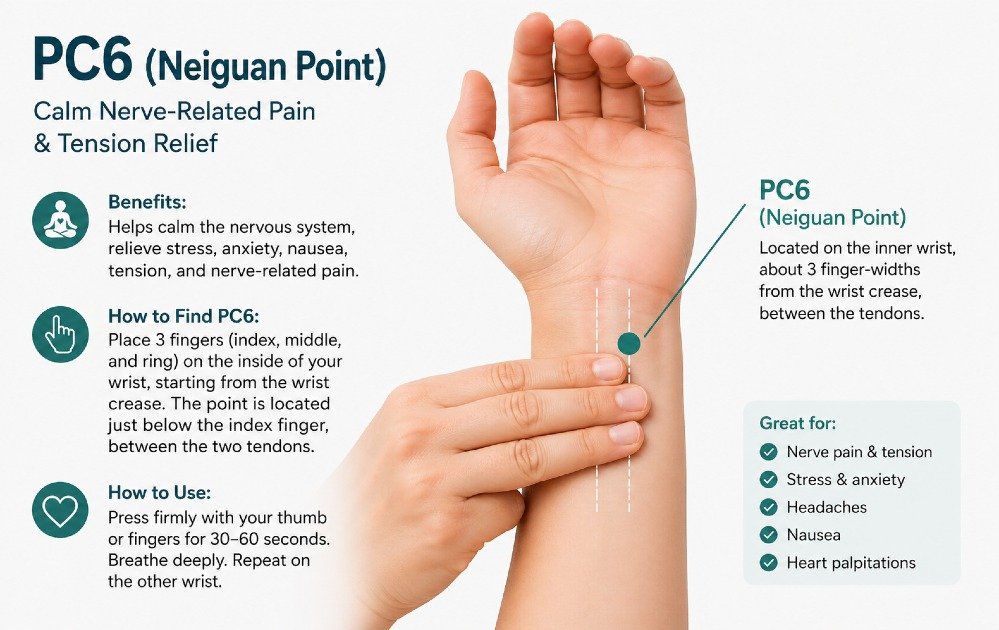
Nerve pain often feels sharp, unpredictable, and stressful.
Stimulate the PC6 point on the inner forearm.
How to use it:
- Measure three finger widths from wrist
- Press gently but firmly for 1 minute
Core advantage:
It soothes nerve discomfort and supports emotional calm.
6. Foot Reflex Points – Whole-Body Relief
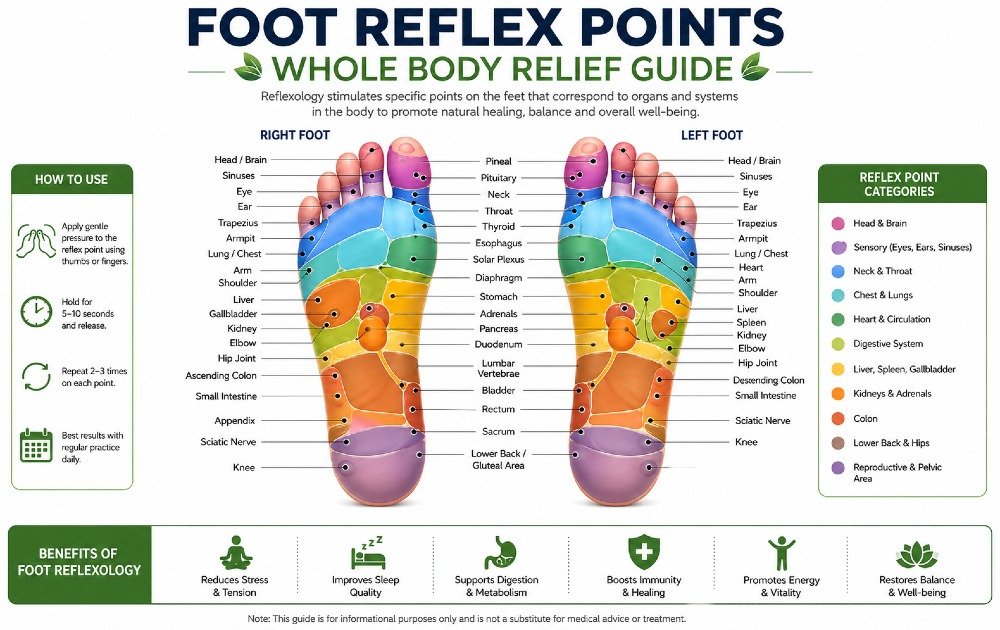
Pain often spreads across multiple areas instead of staying local.
Use reflexology points on the feet.
Key areas:
- Heel → lower back
- Arch → digestive system
- Toes → head and neck
Core advantage:
It encourages full-body relaxation and improves overall pain response.
7. Apply Heat Before Acupressure
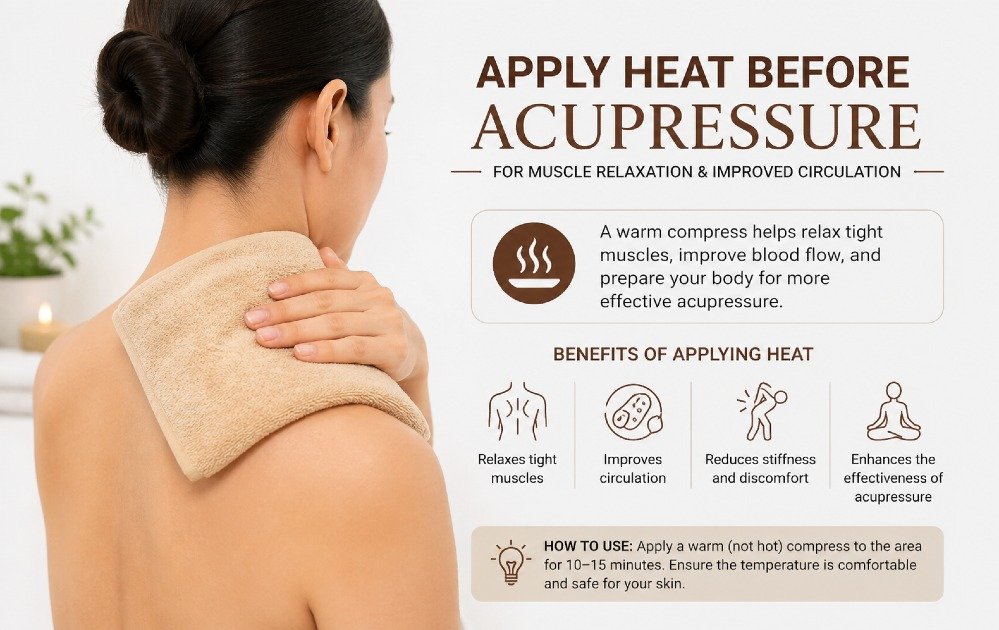
Tight muscles resist pressure and limit effectiveness.
Use heat before applying acupressure.
How to do it:
- Apply a warm towel or heating pad
- Wait 10 minutes before pressure
Core advantage:
It improves blood flow and makes pressure techniques more effective.
8. Combine Acupressure with Deep Breathing
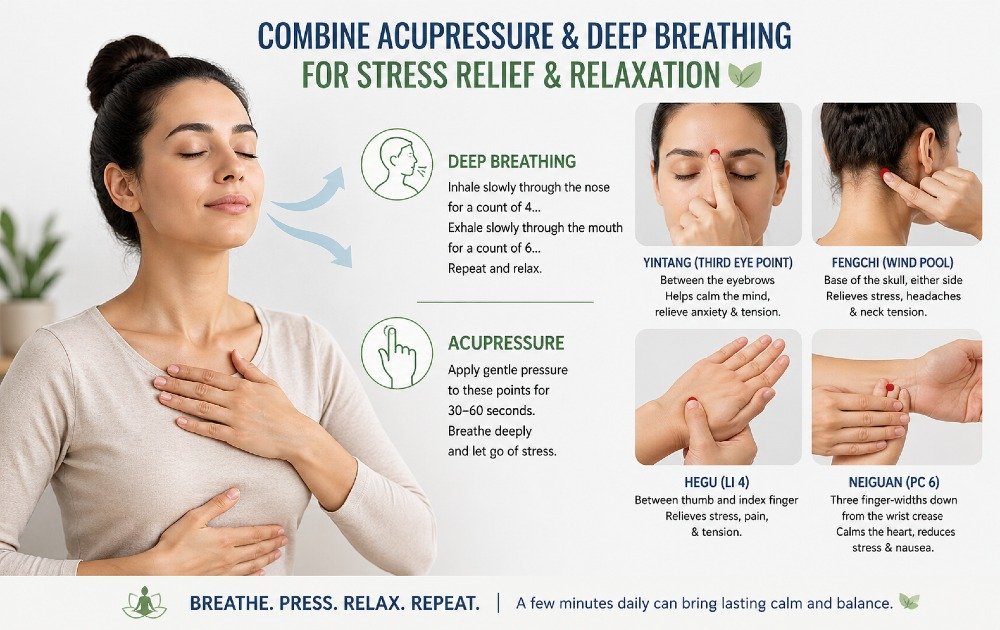
Stress intensifies pain perception.
Pair acupressure with controlled breathing.
Technique:
- Inhale for 4 seconds
- Exhale for 6 seconds
- Apply pressure during exhale
Core advantage:
It calms the nervous system and enhances pain relief naturally.
9. Build a Daily Routine
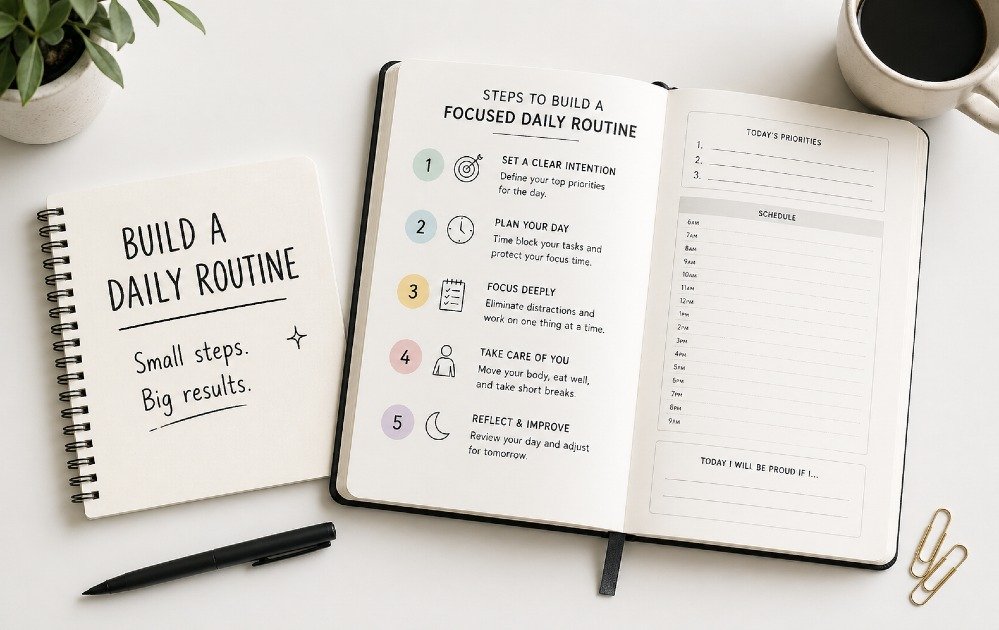
Occasional use provides only short-term relief.
Make acupressure part of your daily routine.
Simple routine:
- Morning: 5 minutes
- Afternoon: 3 minutes
- Evening: 5 minutes
Core advantage:
It creates long-term reduction in chronic pain intensity.
10. Use Simple Acupressure Tools
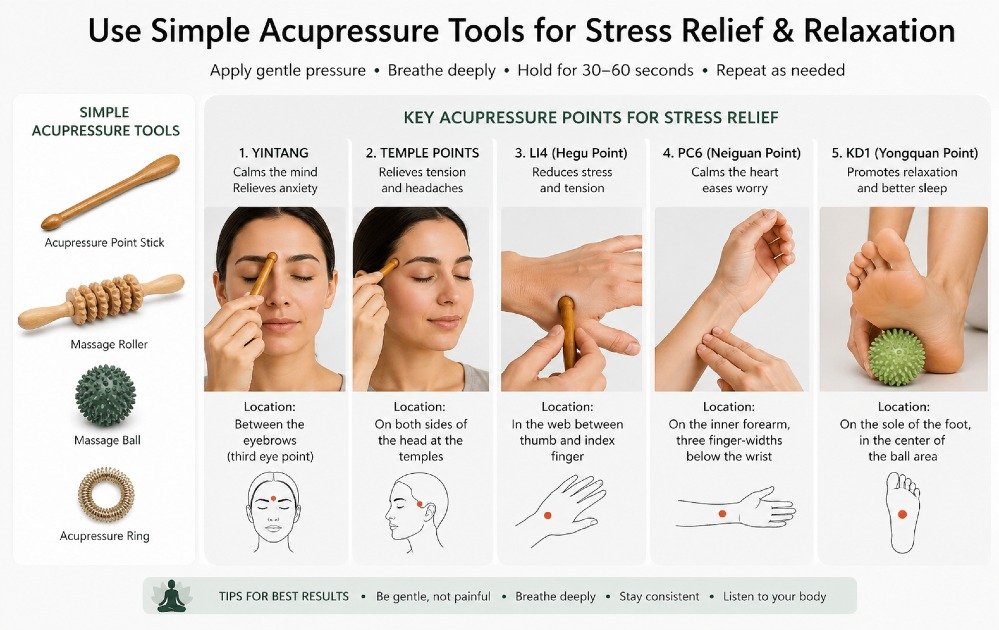
Fingers alone can limit pressure consistency.
Use supportive tools.
Options:
- Massage balls
- Acupressure mats
- Pressure rollers
I use this acupressure bundle for deeper relaxation and full-body relief that targets multiple pressure points at once.
Core advantage:
It enhances pressure consistency and makes daily practice easier.
11. Know Safety Limits
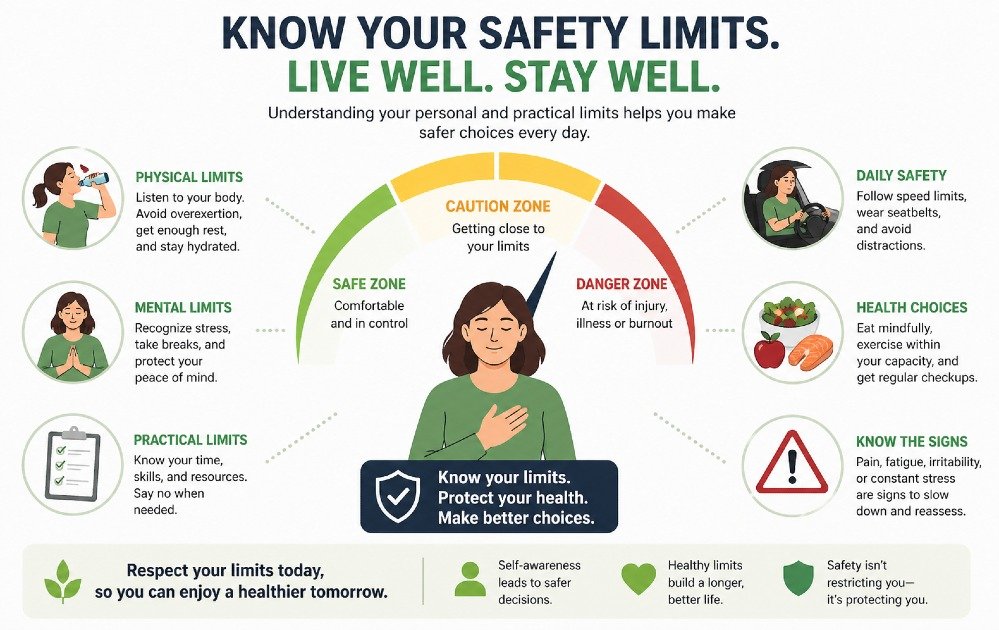
Not all pressure points are suitable for everyone.
When to be careful:
- Pregnancy
- Open wounds or injuries
- Severe or unexplained pain
Core advantage:
It ensures safe, effective, and responsible use of acupressure.
Natural Ways to Relieve Chronic Pain
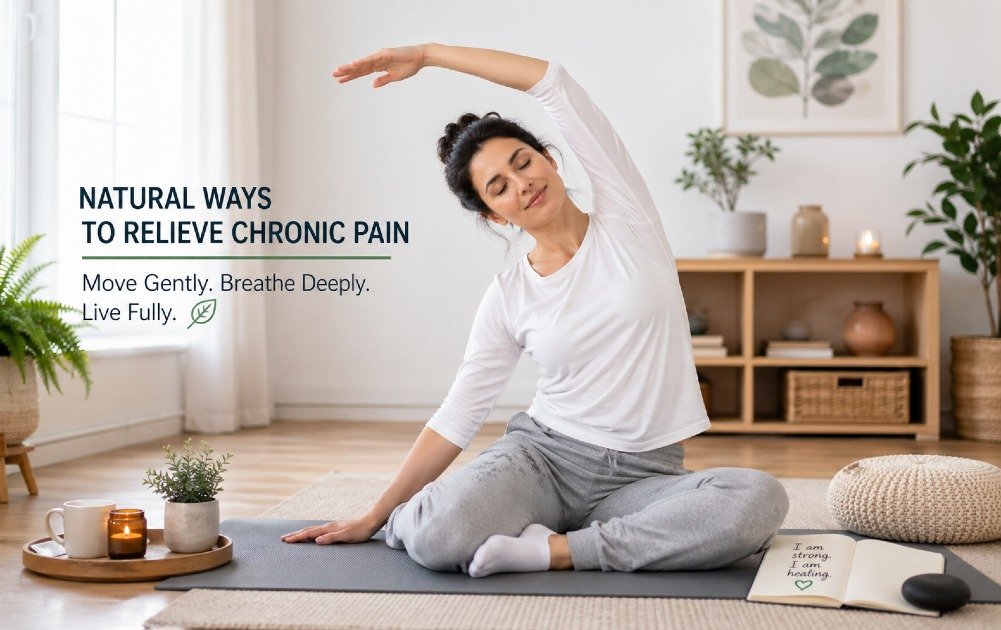
Chronic pain doesn’t just linger—it disrupts sleep, drains energy, and limits movement. Quick fixes may help briefly, but they rarely solve the underlying issue.
Natural pain relief focuses on restoring balance and supporting the body’s healing process.
Start with these proven methods:
- Move daily: Walking, stretching, or yoga improves circulation and reduces stiffness
- Use heat and cold: Heat relaxes muscles; cold reduces inflammation
- Eat anti-inflammatory foods: Leafy greens, berries, and omega-3s help calm pain triggers
- Stay hydrated: Proper hydration supports joint and tissue function
- Practice mind-body techniques: Deep breathing and meditation reduce pain sensitivity
Core advantage:
These strategies reduce pain over time, improve mobility, and support long-term health—without medication.
Drug-Free Pain Relief Options
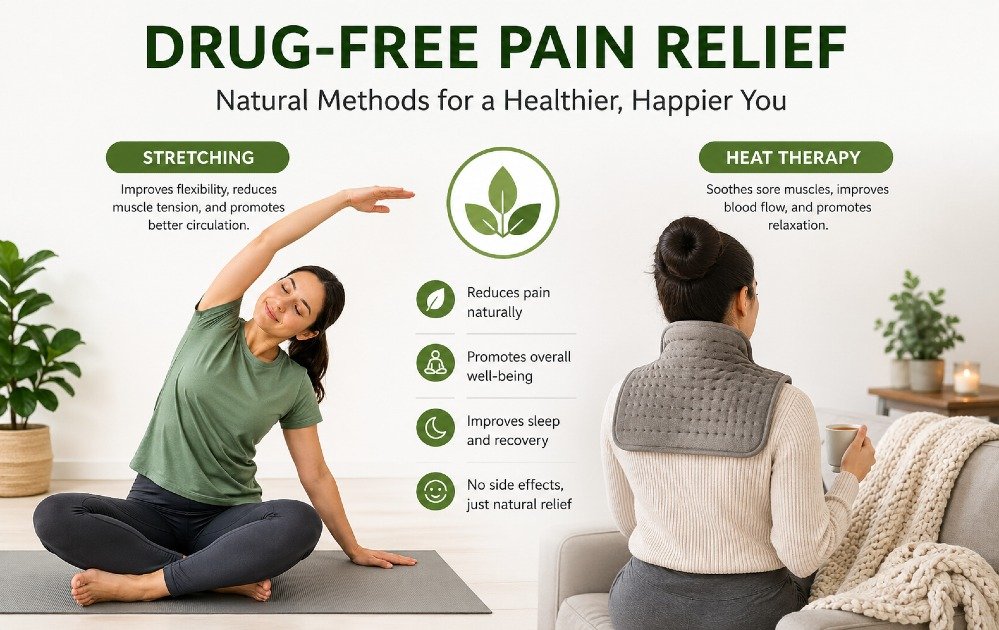
Pain medications can lose effectiveness and may cause side effects. Over time, they often manage symptoms without improving the condition.
Drug-free pain relief options provide safer, sustainable alternatives that work with your body.
Consider these options:
- Acupressure and massage: Release tension and improve blood flow
- Targeted exercises: Strengthen muscles and support joints
- Chiropractic care: Reduce pressure on nerves through alignment
- Natural topical treatments: Menthol or essential oil-based creams offer localized relief
- Improve sleep quality: Deep sleep supports recovery and reduces pain intensity
Core advantage:
You achieve steady pain relief while improving physical function—without relying on medication.
Holistic Pain Management Techniques
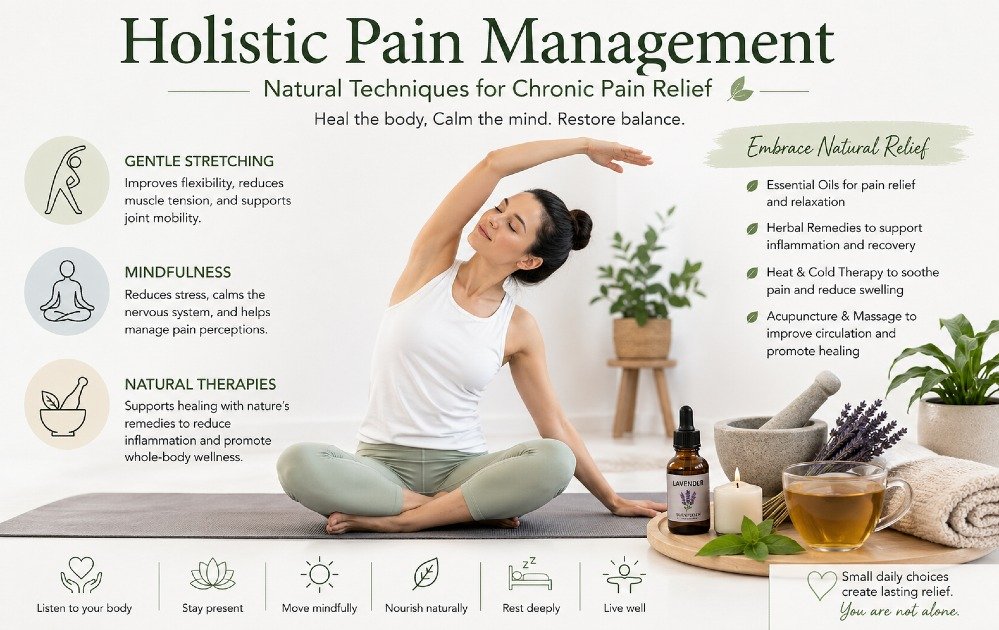
Chronic pain often involves more than physical strain. Stress, posture, and daily habits can all make it worse. Treating symptoms alone limits results.
Holistic pain management addresses the full picture—body, mind, and lifestyle.
Focus on these key areas:
- Reduce stress: Mindfulness and relaxation techniques lower pain response
- Correct posture: Proper alignment prevents ongoing strain
- Maintain routine: Consistent sleep, meals, and movement stabilize the body
- Use complementary therapies: Acupuncture, reflexology, or hydrotherapy support recovery
- Support mental health: Managing stress and anxiety helps reduce physical pain
NIH recognizes holistic techniques as an approach for effective chronic pain management.
Core advantage:
This approach targets root causes, leading to lasting relief, better energy, and improved overall well-being.
Frequently Asked Questions
How fast does acupressure relieve pain?
Some people feel relief in minutes, especially for tension-related pain. Chronic conditions improve with consistent practice.
Can I use acupressure daily?
Yes. Daily use is safe and often more effective for long-term results.
Is acupressure better than painkillers?
Acupressure offers natural, side-effect-free relief, while painkillers provide short-term suppression of symptoms.
How much pressure should I apply?
Use firm but comfortable pressure. It should feel effective, not painful.
Do I need training to do acupressure?
No. Basic techniques are simple and can be safely practiced at home.
Recap: A Simple Method to Regain Control Over Pain
Chronic pain doesn’t always require complex treatment.
With consistent acupressure practice, you can reduce discomfort, relax tense muscles, and support your body’s natural healing response—without relying heavily on medication.
Start with one or two pressure points today, build a routine, and see the real change.
Ready for Smart Natural Pain Relief
If you’re serious about reducing chronic pain naturally, start by upgrading your daily recovery routine.
Stop letting chronic pain control your day — this Acupressure Bundle helps you ease tension and reduce discomfort so that you can move, sleep, and feel better naturally starting today.