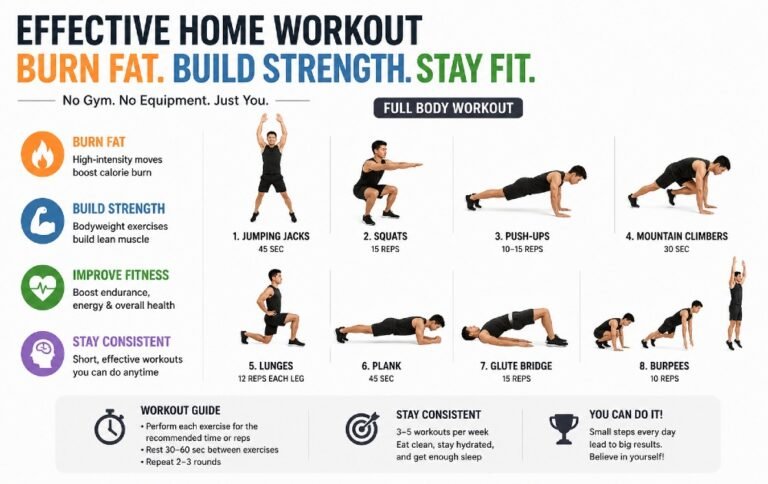


Holistic health is more than a trend — it’s a proven approach to living stronger, calmer, and more energized.
If you’ve tried diets, workouts, or stress hacks and still feel off, this post is for you.
This guide explains practical strategies to support your mind, body, and lifestyle — starting today.
What Are Holistic Health Practices?

Holistic health practices treat the body, mind, and lifestyle as an interconnected system rather than separate parts. Instead of just addressing symptoms, they focus on overall balance to support lasting well-being.
Common practices include:
- Eating whole, nutrient-rich foods
- Engaging in mindful movement like yoga or strength training
- Practicing meditation, deep breathing, or stress management techniques
- Prioritizing quality sleep and recovery
- Creating a clean, supportive living environment
The goal is simple: strengthen your whole system, not just patch isolated problems.
How Holistic Health Practices Can Transform Your Life

Applied consistently, holistic practices create measurable improvements in both body and mind. By addressing the root causes of fatigue, stress, and imbalance, you build lasting health rather than temporary fixes.
Key benefits include:
- Sustained energy — balanced nutrition, hydration, and movement reduce crashes and sluggishness
- Mental clarity — proper sleep and stress management improve focus and decision-making
- Stronger immunity — overall wellness supports natural defenses and recovery
- Emotional resilience — mindful routines help manage anxiety and improve mood
- Long-term vitality — consistent holistic habits reduce the risk of chronic disease
These practices connect lifestyle choices to overall health, creating a foundation for real, lasting wellness.
Why Holistic Health Matters

You might feel constantly tired, stressed, or overwhelmed despite your best efforts. Most traditional approaches treat symptoms, not the whole person.
Holistic health views your well-being as an interconnected system:
- Mind + emotions
- Nutrition + metabolism
- Movement + recovery
- Lifestyle + environment
By addressing all these areas, you don’t just reduce symptoms — you build resilience and vitality.
Benefits you’ll notice:
- Steadier energy
- Better sleep
- Reduced stress
- Improved focus and mood
- Stronger immunity
7 Core Principles of Holistic Health That Truly Work

Many people treat health as separate pieces, but the body works as one system where energy, mood, sleep, and physical health are deeply connected, and ignoring this limits real progress.
Discover seven proven wellness habits that boost energy, sharpen focus, and support lasting health.
1. Eat for Your Body, Not a Diet

Most diets are one-size-fits-all. They ignore inflammation, gut health, and nutrient needs, leaving you hungry, tired, or irritable.
Focus on nutrient-rich, anti-inflammatory foods:
- Prioritize whole foods: vegetables, fruits, lean proteins, healthy fats
- Balance macronutrients at every meal
- Support gut health with fermented foods like yogurt or kimchi
- Stay hydrated and limit sugary drinks
I swap a bagel for Greek yogurt with berries, chia seeds, and a drizzle of honey.
Core advantages:
- More stable blood sugar
- Reduced cravings
- Better digestion
- Sustained energy
2. Move to Strengthen and Restore Your Body

Exercise that feels like punishment can leave you exhausted rather than energized.
Focus on functional, enjoyable movement:
- Strength training for muscles and bones
- Yoga or stretching for flexibility and stress relief
- Mindful walking for both body and mind
- Low-impact cardio like swimming or cycling
Weekly Movement Plan:
| Day | Activity |
|---|---|
| Mon | Strength training (30 min) |
| Tue | Yoga (20 min) |
| Wed | Brisk walk (30 min) |
| Thu | Strength training (30 min) |
| Fri | Light movement |
| Sat | Outdoor activity |
| Sun | Rest + mobility |
Core advantages:
- Stronger muscles
- Improved posture
- Less tension
- More ease in daily activities
3. Prioritize Deep, Restorative Sleep

Sleep impacts mood, memory, metabolism, and immunity. Poor sleep sabotages all other health efforts.
What to do:
- Keep a consistent sleep schedule
- Create a wind-down routine: dim lights, no screens 60 minutes before bed
- Optimize your bedroom: cool, dark, and comfortable
- Avoid caffeine after mid-afternoon
Deep breathing or light reading can ease your mind before sleep.
Core advantages:
- Fall asleep faster
- Wake up refreshed
- Better focus and mood
4. Manage Stress With Intention

Chronic stress leads to inflammation, fatigue, and anxiety.
Daily routines that calm your nervous system:
- Deep breathing (5 min)
- Meditation or mindfulness (10 min)
- Time outdoors
- Journaling or creative hobbies
Why it works: Stress management lowers cortisol, improves resilience, enhances sleep, and boosts focus.
NIH highlights that meditation elevates awareness.
5. Detox Your Environment

Hidden toxins in air, water, and products disrupt hormones, immunity, and sleep.
What to do:
- Use natural cleaning products
- Add air-purifying plants
- Filter your water
- Choose non-toxic home cleaning personal care products
Core advantages:
- Fewer headaches
- Better breathing
- Less skin irritation
- Hormone support
6. Strengthen Your Mind

Mental stagnation lowers focus, memory, and cognitive agility.
What to do:
- Read or listen to educational content
- Take up a creative hobby
- Learn a new skill
- Engage socially
Core advantages:
- Sharper memory
- Better problem-solving
- Increased confidence
- More joy in daily life
7. Build Meaningful Connections

Loneliness negatively affects longevity, immunity, and mood.
What to do:
- Join wellness groups or classes
- Volunteer or mentor
- Reconnect with friends and family
Core advantages:
- Emotional support
- Reduced anxiety
- More laughter
- Stronger sense of purpose
Natural Energy Boosters That Actually Work

Relying on caffeine and sugar may get you through the day, but it creates a cycle of quick highs followed by crashes. Over time, this drains your energy, disrupts sleep, and reduces focus.
Instead of forcing energy, build it from the inside out:
- Eat balanced meals with protein, healthy fats, and complex carbs
- Hydrate consistently — fatigue often starts with dehydration
- Get morning sunlight to reset your internal clock
- Move daily — even short walks boost circulation and alertness
- Use adaptogens (like ashwagandha) to support stress resilience
- Prioritize key nutrients like iron and B vitamins
Simple shift: Replace your afternoon coffee with a walk and a protein-rich snack.
Core advantages:
- Fewer crashes
- Sharper focus
- More consistent productivity
- Less reliance on stimulants
Holistic Nutrition Guide for Real, Lasting Health
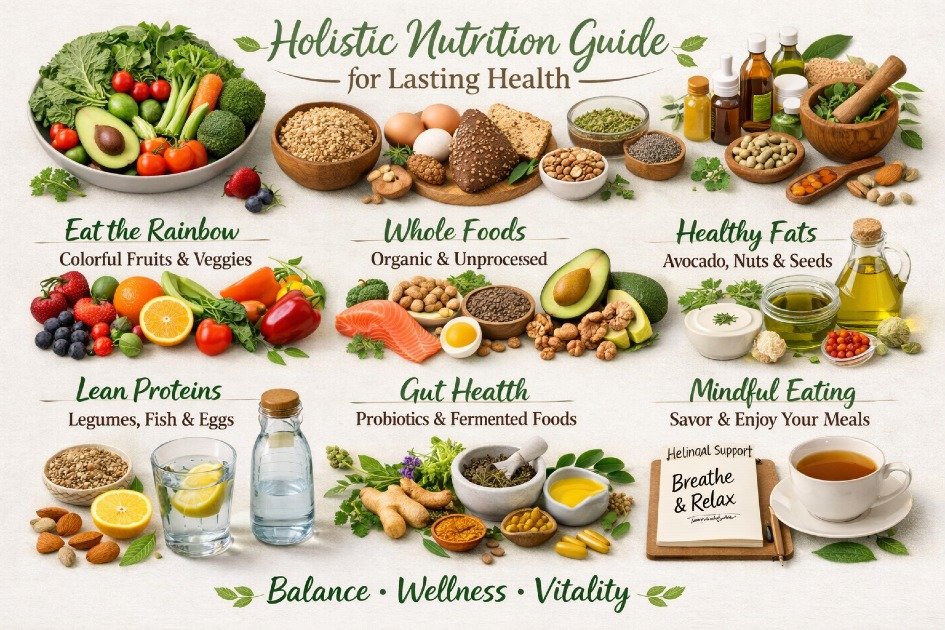
Most diets focus on cutting foods, not building health. This leads to nutrient gaps, cravings, and inconsistent energy.
A strong holistic nutrition guide keeps things simple and sustainable:
- Structure your meals:
- ½ vegetables
- ¼ protein
- ¼ complex carbs
- Choose whole foods over processed options
- Add healthy fats for satiety and hormone support
- Support gut health with fiber and fermented foods
- Eat mindfully — slow down and pay attention to hunger signals
I plan my meals in advance to avoid last-minute, low-quality choices.
Core advantages:
- Improved digestion
- Fewer cravings
- Stable blood sugar
- Consistent energy
Whole-Body Health Strategies That Sustain Results
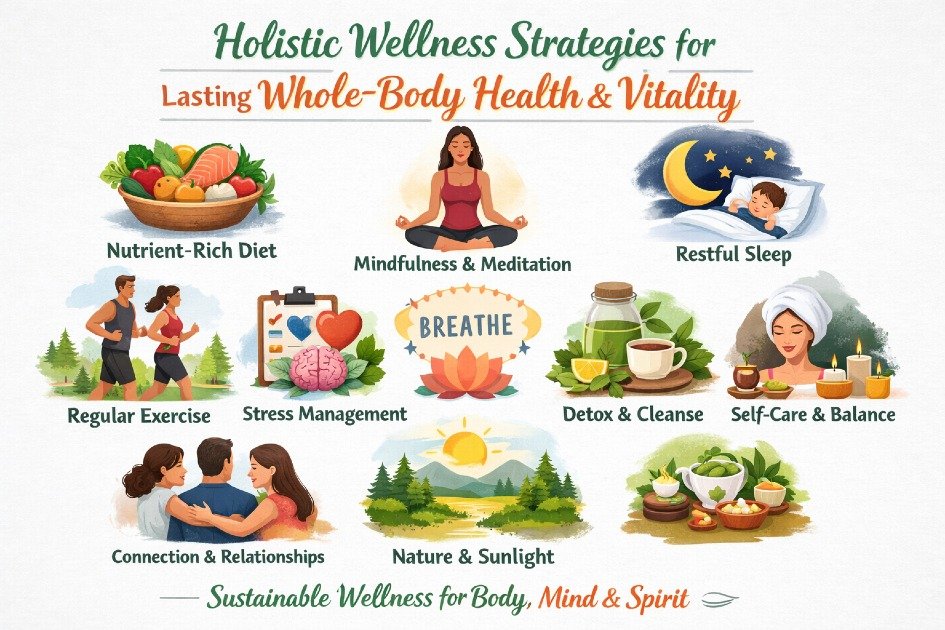
Focusing on just one area — like diet or exercise — limits progress. Health breaks down when sleep, stress, or mental well-being are ignored.
Effective whole-body health strategies align every part of your lifestyle:
- Sleep: Get 7–9 hours consistently
- Stress: Use breathing, mindfulness, or journaling
- Movement: Combine strength, cardio, and flexibility
- Mental input: Reduce negativity and build positive habits
- Environment: Limit toxins and create a calm space
- Connection: Stay engaged with supportive people
Consistent habits across multiple areas outperform extreme changes in one.
Core advantages:
- Better stress resilience
- Stronger physical and mental performance
- Greater emotional balance
- Long-lasting health results
Frequently Asked Questions
What does holistic health mean?
It’s treating the whole person — mind, body, emotions, and environment — rather than just symptoms.
How soon will I see results?
Many notice better sleep, energy, and mood within weeks when practicing holistic habits consistently.
Can holistic health replace traditional medicine?
No. It complements medical care, improving resilience, recovery, and overall well-being.
Is holistic health scientifically supported?
Yes. Research supports nutrition, sleep, stress management, and movement as effective health strategies.
How do I start with a busy schedule?
Begin small: choose 1–2 habits and commit for a week. Build consistency from there.
Recap: Build Lasting Health with Proven Holistic Practices
Lasting health comes from consistent habits that support your body and mind as a whole.
The holistic health practices you’ve learned work because they address how your body actually functions, not just symptoms.
You don’t need to change everything at once. Start with one area, stay focused to create real, lasting results.
Ready to Start Your Holistic Health Journey
Caught in unhealthy habits you can’t break—the right holistic health practices will help you stay committed and build a healthier future.
Start using this simple daily formula today to turn simple daily habits into steady energy, clearer thinking, and lasting health improvements without complicated routines.