
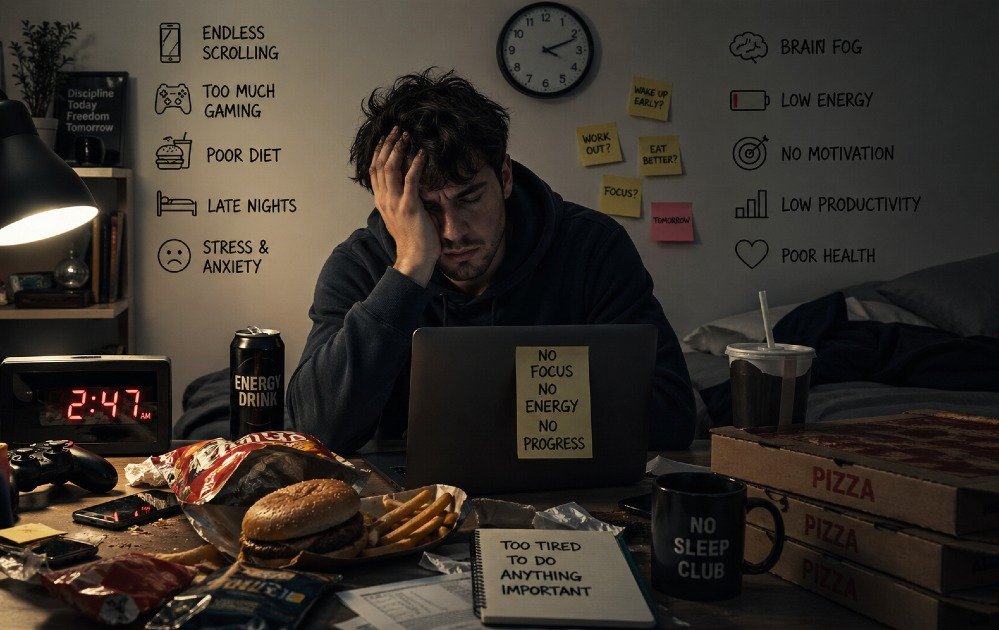
You wake up tired. You push through the day on low energy. By evening, you feel completely exhausted—even if you didn’t do much.
This isn’t just “normal tiredness.” In many cases, it comes from toxic daily habits that quietly drain your energy.
This guide identifies and fixes those toxic issues and behaviors so that your energy can improve quickly.
9 Toxic Behaviors that Slow Energy
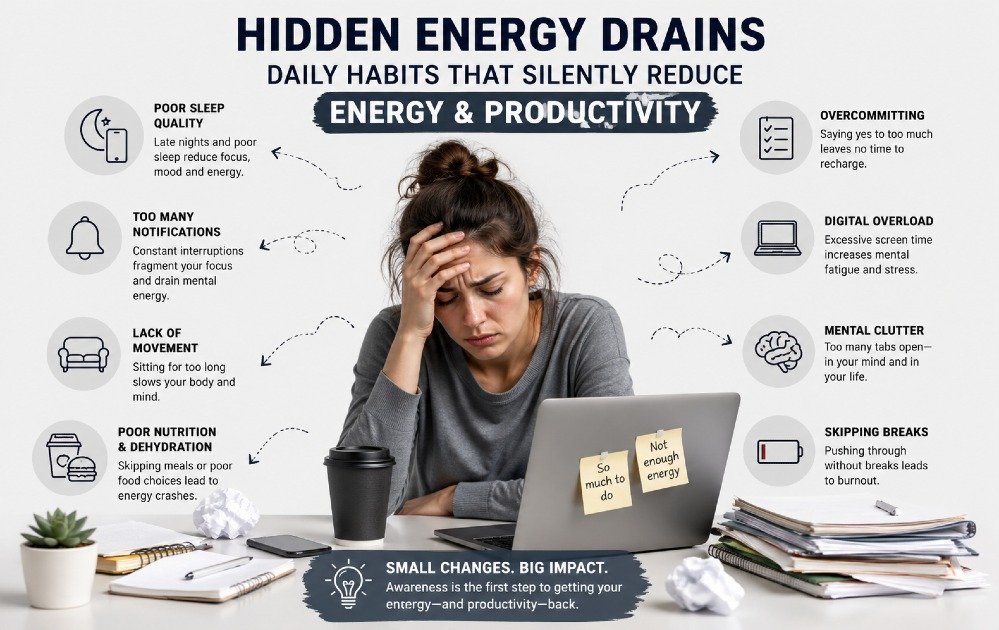
Low energy is often linked to poor sleep or long hours. Therefore, many people lean on quick fixes like caffeine, naps, or rest days.
Ongoing habits often drain mental capacity, disrupt recovery, and steadily lower performance over time.
Discover nine most common energy-draining habits—and how to correct them with practical, evidence-based changes.
1. Using Your Phone Immediately After Waking
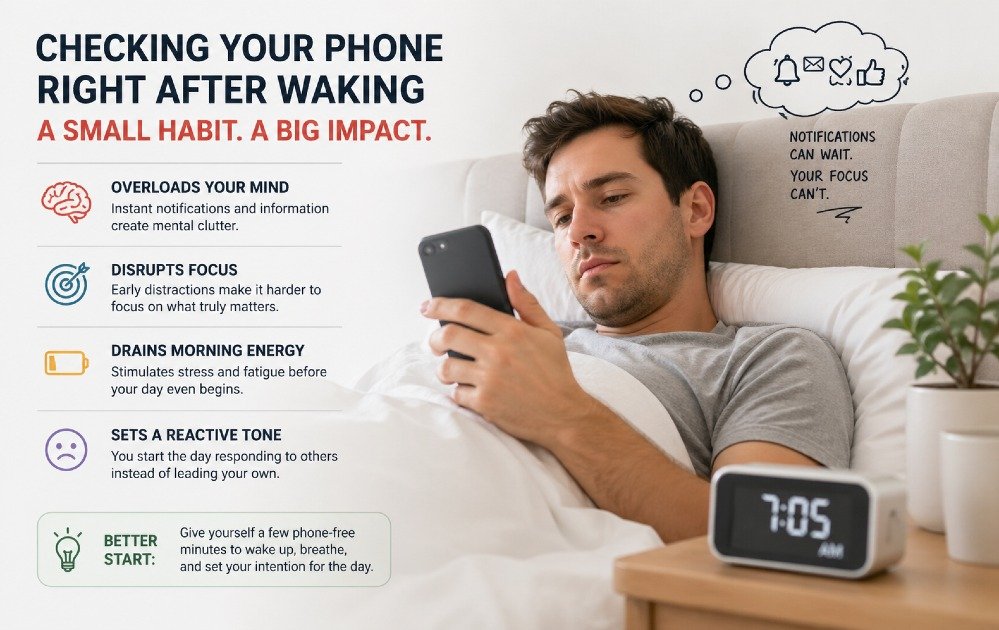
Checking your phone first thing exposes you to stress, notifications, and distractions before your mind is ready.
How to fix it:
Wait at least 30 minutes before using your phone.
Replace it with:
- Drinking water
- Light stretching or movement
- Planning your top priorities
Core advantage:
You start your day with focus instead of mental overload.
2. Eating Highly Processed Foods

Processed foods cause blood sugar spikes followed by crashes, leading to fatigue and brain fog.
How to fix it:
Eat balanced meals with:
- Protein (eggs, fish, beans)
- Healthy fats (nuts, olive oil, avocado)
- Complex carbs (oats, brown rice, vegetables)
Core advantage:
Steady energy levels throughout the day.
3. Staying Sedentary for Long Hours
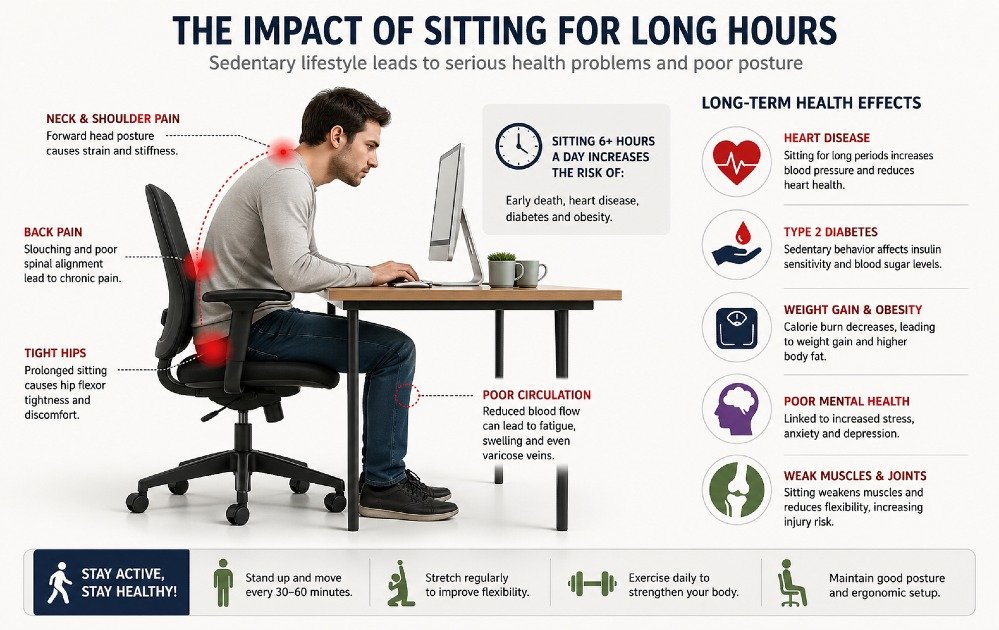
Prolonged sitting slows circulation and reduces oxygen flow, making you feel sluggish.
How to fix it:
Move regularly:
- Stand every 30–60 minutes
- Take short walks
- Stretch during breaks
Core advantage:
Better circulation and improved alertness.
4. Multitasking Too Much

Switching between tasks reduces focus and increases mental fatigue.
How to fix it:
Focus on one task at a time:
- Use time blocks
- Reduce distractions
- Complete tasks before starting new ones
Core advantage:
Higher productivity with less mental exhaustion.
5. Poor Sleep Quality

Even with enough hours, late-night screen use and inconsistent sleep schedules reduce sleep quality.
How to fix it:
Build a consistent routine:
- Avoid screens 1 hour before bed
- Sleep and wake at consistent times
- Keep your room dark and cool
Core advantage:
Deeper sleep and better morning energy.
6. Chronic Stress and Overthinking
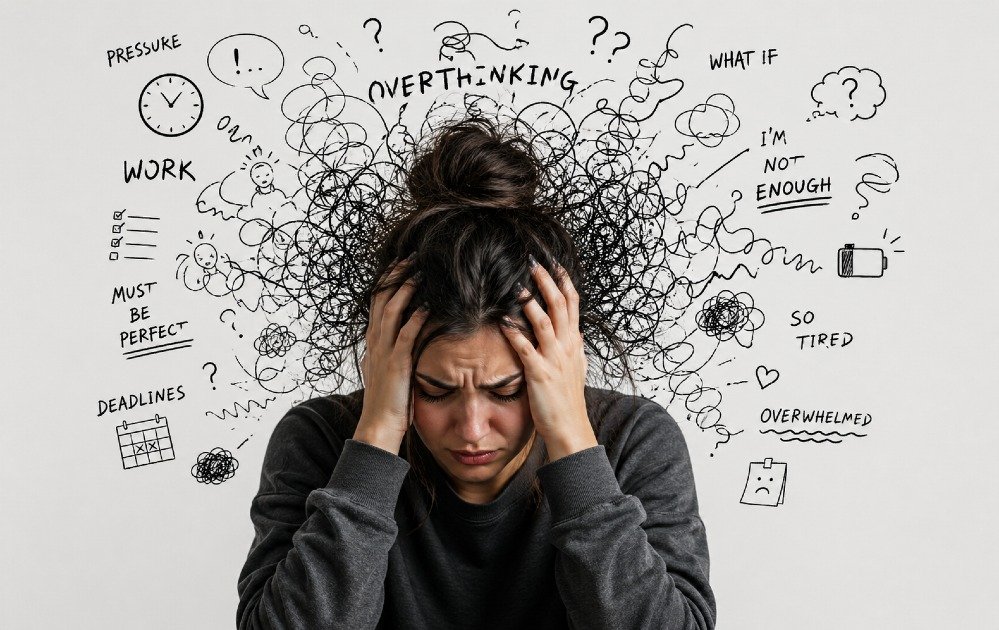
Stress keeps your body in a constant alert state, draining energy even when resting.
How to fix it:
Use simple daily resets:
- Deep breathing exercises
- Short walks
- Journaling thoughts
APA highlights how stress affects the entire body system.
Core advantage:
Calmer mind and improved energy stability.
7. Negative Self-Talk

Constant self-criticism drains emotional energy and increases mental fatigue.
How to fix it:
Replace negative thoughts with balanced ones:
- “I’m improving” instead of “I’m failing”
- “I’m learning” instead of “I can’t do this”
Core advantage:
Stronger mindset and reduced emotional exhaustion.
8. Not Drinking Enough Water

Even mild dehydration can reduce focus, mood, and physical energy.
How to fix it:
Stay consistently hydrated:
- Drink water throughout the day
- Keep a bottle nearby
- Add electrolytes if needed
Core advantage:
Improved focus and natural energy boost.
9. Working Without Real Breaks
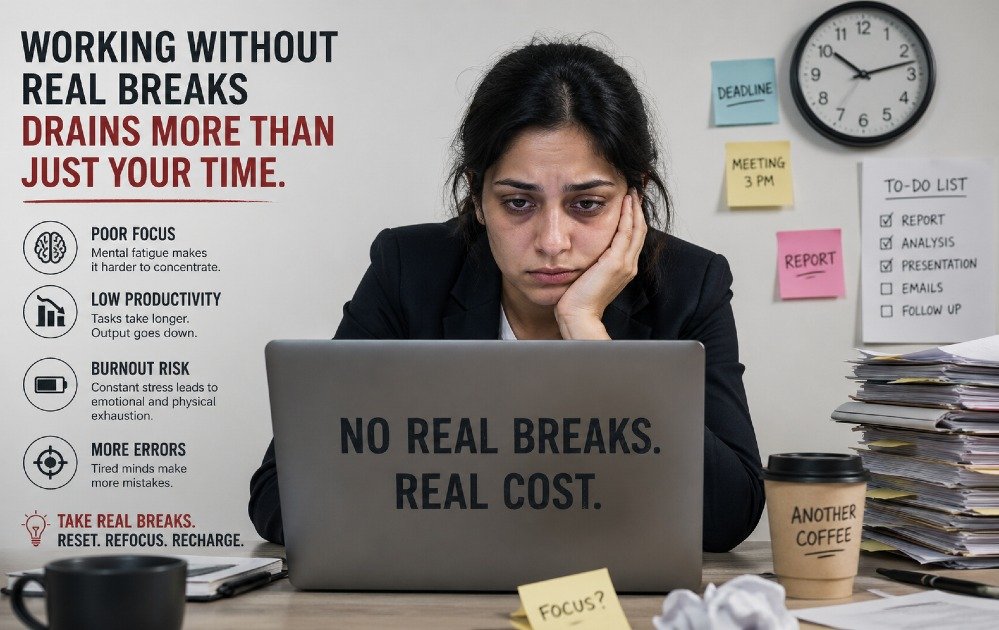
Working nonstop leads to burnout and reduced productivity.
How to fix it:
Take intentional breaks:
- Step away from screens
- Move or stretch
- Rest your mind briefly
Core advantage:
Better focus and sustained energy.
Mental Fatigue Causes You Should Address
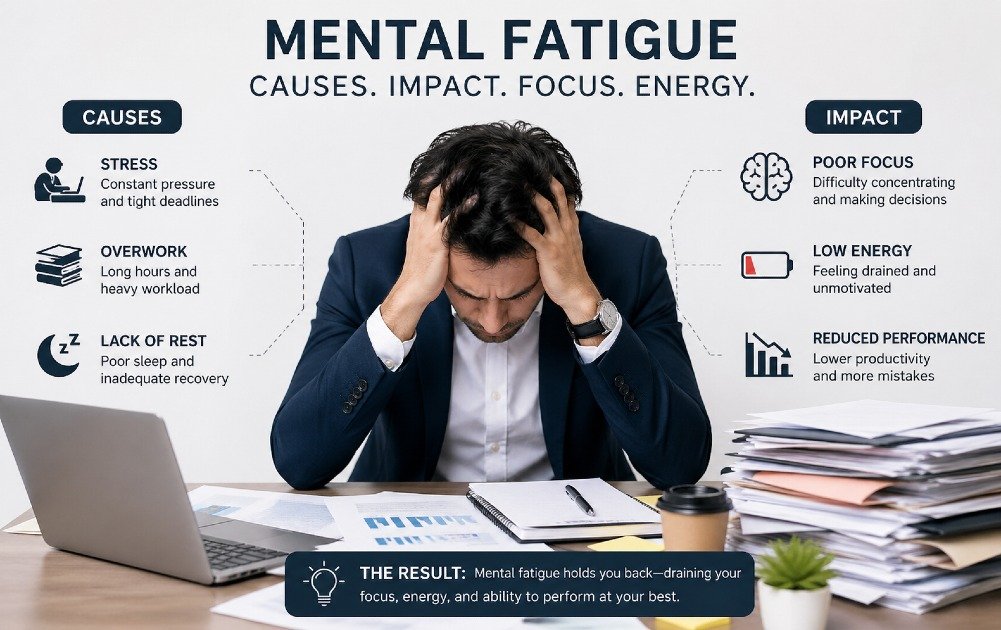
Mental fatigue comes from continuous cognitive overload, not just long hours.
You may feel busy all day but struggle to concentrate or make decisions.
Common causes include:
- Constant multitasking
- Too many decisions in a day
- Excessive screen time and notifications
- Poor sleep quality
- Ongoing stress
These lead to:
- Brain fog
- Slower thinking
- Irritability
- Reduced productivity
How to fix it:
Reduce mental load by simplifying your daily routine.
- Limit decisions: Plan key tasks, meals, and routines in advance
- Control inputs: Check emails and messages at set times
- Declutter your space: A clean environment supports focus
- Protect sleep: Prioritize consistent, high-quality rest
Core advantage:
You’ll think more clearly, make faster decisions, and feel less mentally drained.
Productivity Energy Hacks That Improve Output
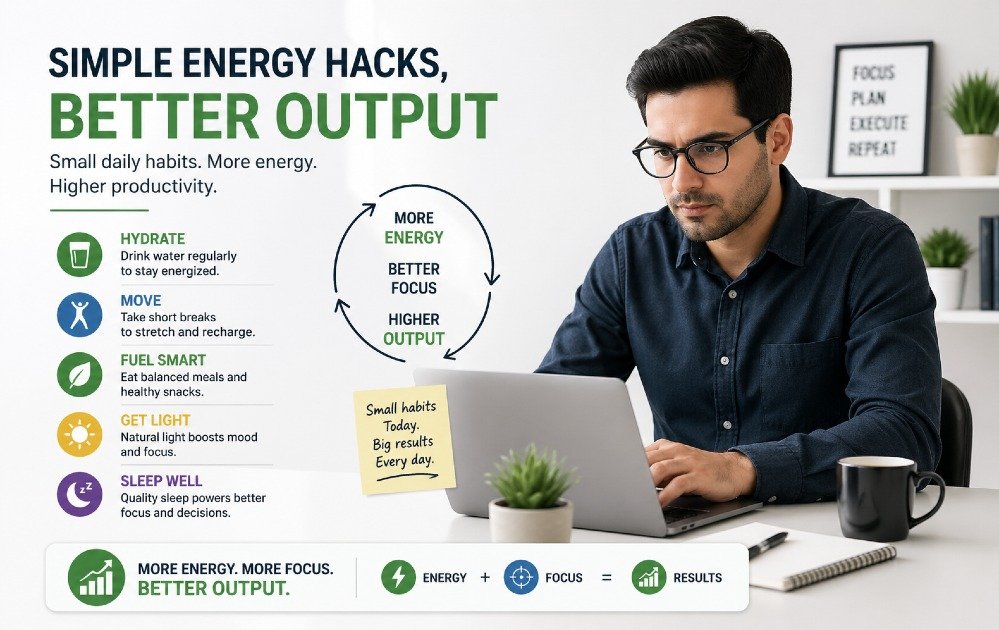
Working longer hours often lowers efficiency. As energy drops, so does the quality of your work.
How to fix it:
Manage your energy, not just your schedule.
Use these practical productivity energy hacks:
- Work in focused blocks: 25–50 minutes of deep work
- Align tasks with energy: Do demanding work when you’re most alert
- Take planned breaks: Step away before fatigue builds
- Batch similar tasks: Reduce context switching
- Set 3 daily priorities: Keep your focus narrow and clear
Core advantage:
You complete more work with better focus and less mental strain.
Burnout Prevention Tips for Sustainable Performance
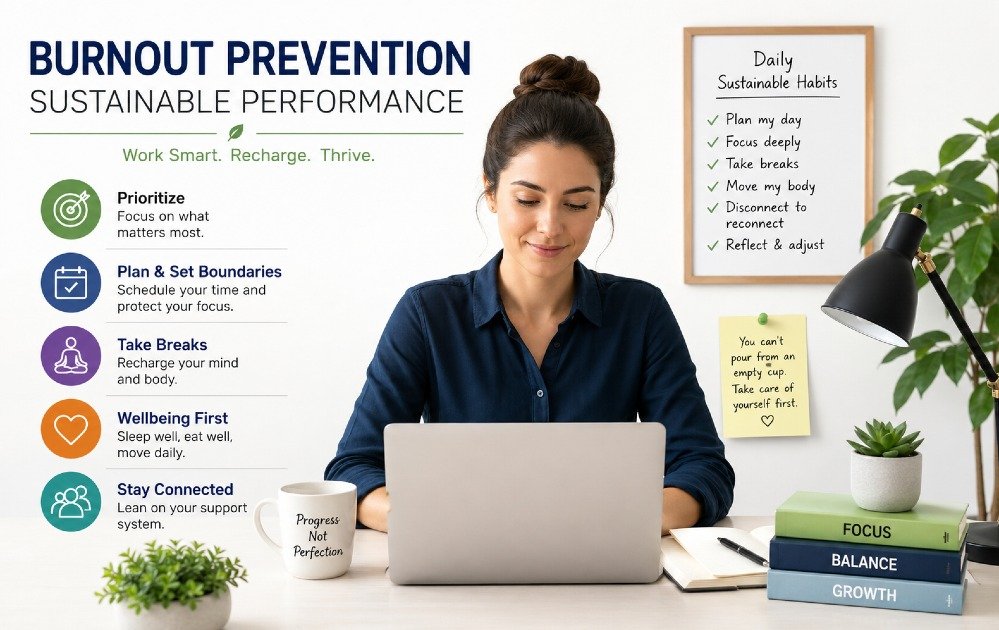
Burnout develops from prolonged stress and lack of recovery. It affects both performance and well-being.
How to fix it:
Protect your energy with consistent boundaries and recovery habits.
Apply these burnout prevention tips:
- Set clear work limits: Define when your workday starts and ends
- Schedule recovery time: Treat rest as essential, not optional
- Avoid overcommitment: Say no when needed
- Disconnect regularly: Spend time away from screens
- Monitor stress levels: Act early when you feel overwhelmed
Core advantage:
You maintain steady energy, better focus, and long-term productivity without burnout.
Frequently Asked Questions
What toxic habits drain energy the most?
Most energy loss comes from daily routines, not one major issue.
Common toxic habits include:
- Checking your phone immediately after waking
- Poor or irregular sleep patterns
- Eating processed, low-nutrient foods
- Sitting for long periods without movement
- Multitasking constantly
- Ongoing stress and overthinking
These habits gradually reduce focus, stamina, and mental clarity.
Why am I always tired even after sleeping enough?
Sleep hours don’t always equal sleep quality.
Common causes include:
- Late-night screen exposure
- Irregular sleep schedule
- Stress disrupting deep sleep
- Poor nighttime routine
Even with enough sleep, low-quality rest leads to daytime fatigue.
Does diet really affect energy levels?
Yes. Food has a direct impact on energy stability.
Processed foods often cause:
- Blood sugar spikes
- Energy crashes
- Brain fog
Balanced meals with protein, healthy fats, and complex carbs support steady, long-lasting energy.
How does stress reduce energy so quickly?
Persistent stress keeps the body on high alert. This uses energy even when you are resting.
It can lead to:
- Mental exhaustion
- Poor focus
- Emotional fatigue
Over time, even simple tasks feel more draining.
What is the fastest way to improve energy?
Small, consistent changes work best.
Start with:
- Drinking enough water
- Reducing morning phone use
- Taking short movement breaks
- Improving sleep consistency
These changes often improve energy within a few days.
How long does it take to fix energy-draining habits?
Results depend on consistency.
Typical timeline:
- 3–7 days: small improvements
- 2–3 weeks: noticeable changes in focus and energy
- Long-term: stable, sustained energy
Replacing habits is more important than quick fixes.
Does multitasking really drain energy?
Yes. Multitasking forces constant mental switching, which increases fatigue.
It often results in:
- Reduced focus
- Slower work output
- Higher mental exhaustion
Single-tasking is more efficient and less draining.
Can dehydration cause low energy?
Yes. Even mild dehydration affects energy and focus.
Common symptoms include:
- Fatigue
- Headaches
- Brain fog
Regular hydration supports both mental and physical performance.
Which habit should I fix first?
Start with your morning routine.
Avoid:
- Immediate phone use
- Skipping water
- Starting the day without structure
Instead, begin with hydration, light movement, and a simple plan for the day. This sets a stronger energy foundation.
Recap: Fix the Habits, Restore Your Energy
Low energy is rarely random. It’s usually the result of repeated toxic habits that slowly drain your focus, stamina, and motivation.
The solution isn’t extreme change. It’s consistent, targeted adjustments.
When you:
- Improve sleep quality
- Reduce mental overload
- Move regularly
- Eat balanced meals
- Protect your focus
…you address the root causes of fatigue, not just the symptoms.
Ready to Start With One Change
Avoid trying to fix everything at once. Keep building better energy and create momentum that drives results.
Break the cycle of screen fatigue and mental burnout with this blue-light blocking glasses that help reduce eye strain, sharpen focus, and restore steady energy throughout your day.