

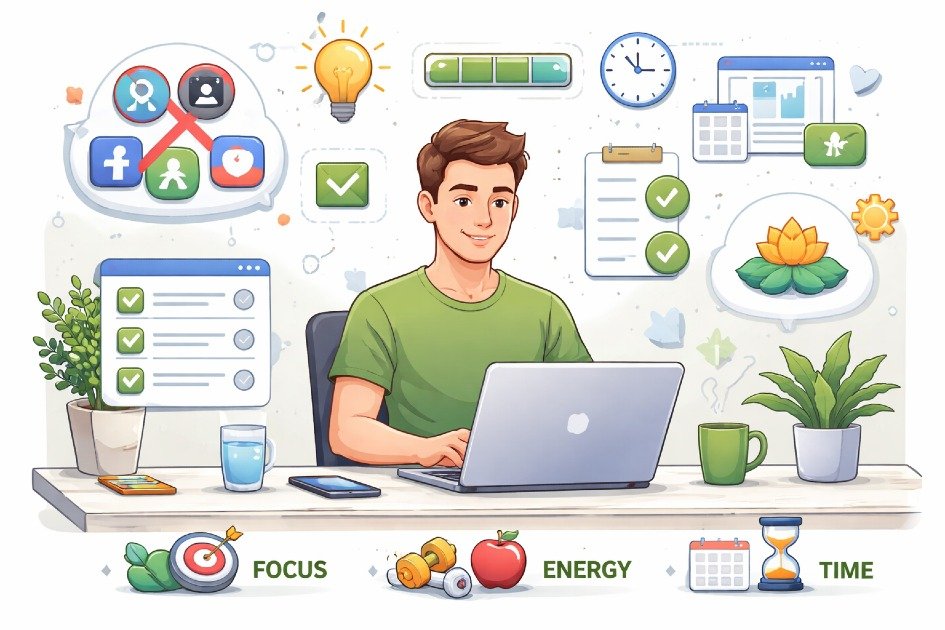
You pick up your phone for a quick check—and lose half an hour. By the end of the day, your focus feels scattered, your energy is low, and your to-do list is still staring at you.
This isn’t a motivation issue, it’s a digital habit problem. Your daily interactions with screens are shaping your attention, productivity, and mental clarity—often without you realizing it.
This guide explains the digital habits that will help you regain control, sharpen your focus, and create more space in your day.
What are Digital Habits and Why They Matter
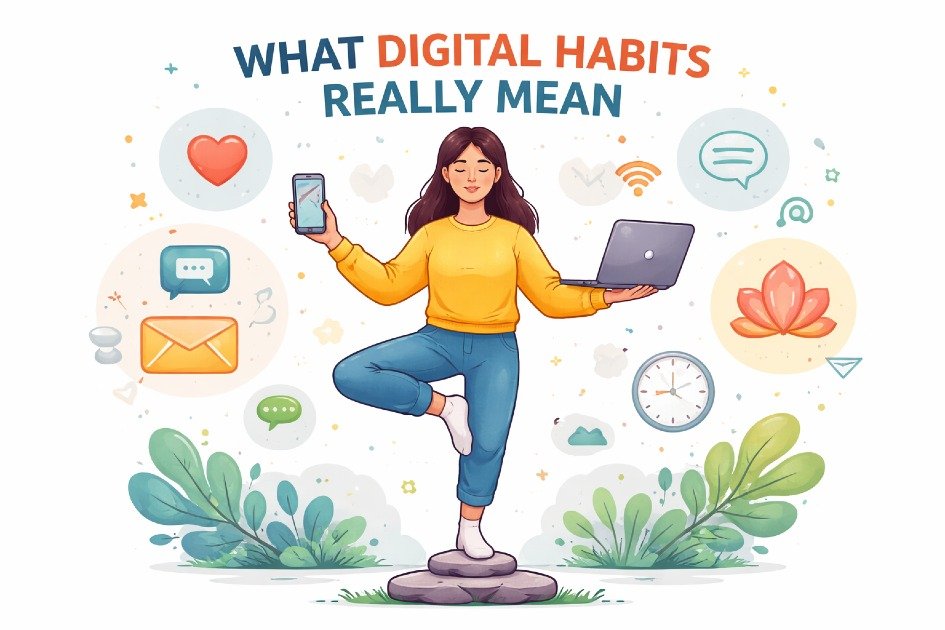
Digital habits are the patterns and routines that shape how we use technology—from emails and apps to streaming and research. Unmanaged habits can fragment attention, lower productivity, and even affect mental well-being.
A reliable approach to improvement is awareness. Ask yourself:
“When do I reach for my devices without purpose?”
“Which apps pull my attention away the most?”
Once you identify these patterns, you can replace them with intentional routines:
- Purposeful use: Only open apps or devices with a clear goal.
- Scheduled check-ins: Limit email and social media to defined times.
- Regular breaks: Step away from screens to restore focus and reduce fatigue.
- Declutter your digital space: Turn off unnecessary notifications and remove unused apps.
Core advantages:
- Preserves mental energy and reduces cognitive overload
- Enhances focus, clarity, and productivity
- Turns technology into a tool that supports your goals, not distracts from them
- Improves emotional balance by reducing stress linked to constant connectivity
Digital habits define how technology shapes your day, focus, and life. By cultivating healthy habits, you ensure that your devices serve you, instead of controlling your attention.
9 Proven Digital Habits That Boost Focus, Energy, and Productivity
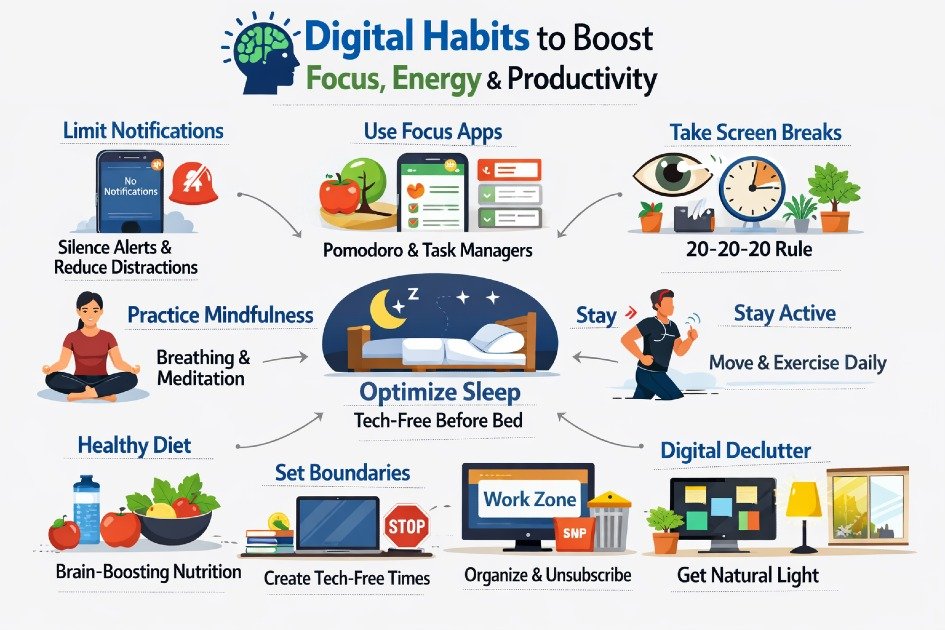
Daily digital habits shape your focus, energy, and performance. Constant alerts, multitasking, and scattered screen use break attention, drain mental energy, and reduce productivity.
Many think quitting tech entirely is the answer, but that approach rarely lasts. Focus on using it with clear structure and purpose so it supports how your brain concentrates and recharges.
Discover nine digital habits that reduce distractions, protect mental energy, and improve how you use technology.
1. Start Your Day Without Screens

Looking at your phone first thing shifts your brain into reactive mode. You start your day responding instead of leading.
How to improve:
Delay screen use for the first 30–60 minutes.
Focus on:
- Hydration
- Planning your day
- Light movement
- Quiet thinking
Optimizing these sets the tone for a focused, intentional day.
2. Set Clear Digital Boundaries

Without limits, work and distractions bleed into every part of your day.
How to improve:
Define strict usage windows:
- No emails after a set time
- Social media only in short blocks
- Work apps off after hours
Optimizing these reduces mental fatigue and regain control of your time.
3. Use Technology With Purpose

Most screen use is automatic. You open apps without thinking.
How to improve:
Before you unlock your phone, ask:
“What am I here to do?”
Complete that task—and exit.
Optimizing this turns technology into a tool, not a distraction.
4. Clean Up Your Digital Environment
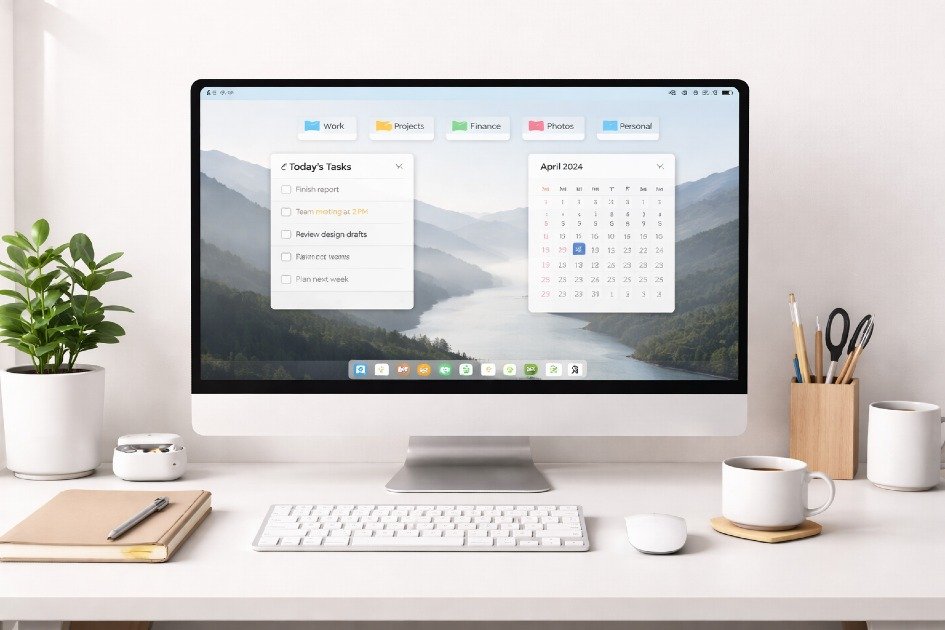
Cluttered screens create constant distractions.
How to improve:
Simplify your setup:
- Remove unused apps
- Disable non-essential notifications
- Keep only key tools on your home screen
- Use “Do Not Disturb” during focus time
Optimizing these creates a calm, distraction-free workspace.
5. Reduce Screen Fatigue With Simple Breaks

Long screen time strains your eyes and drains energy.
How to improve:
Follow the 20-20-20 rule:
- Every 20 minutes
- Look 20 feet away
- For 20 seconds
Optimizing these improves comfort, focus, and productivity.
American Optometric Association highlights computer vision syndrome due to extended engagement on computers.
6. Replace Passive Scrolling With Intentional Content

Scrolling feels relaxing—but often leaves you drained.
How to improve:
Swap it for:
- Educational videos
- Podcasts
- Articles or books
- Skill-based content
Optimizing these makes screen time productive and energizing.
7. Create No-Phone Zones

Constant access to your phone reduces presence and focus.
How to improve:
Set clear boundaries:
- No phones at the table
- No phones in bed
- No phones during deep work
Optimizing these improves relationships, sleep, and concentration.
8. Schedule Digital Detox Time

Being constantly connected prevents mental recovery.
How to improve:
Build in regular breaks:
- One hour screen-free before bed
- Offline mornings
- Occasional full-day detox
Optimizing these restore clarity, calm, and mental energy.
9. Track Your Digital Usage
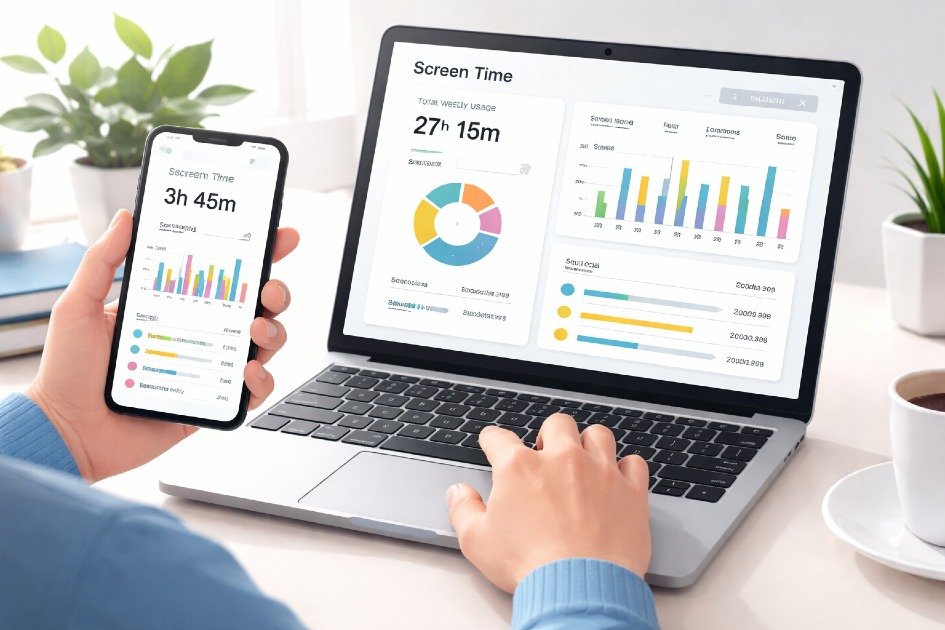
You underestimate how much time you spend on screens.
How to improve:
Use screen time tracking tools to monitor:
- Daily usage
- App-specific time
- Peak distraction periods
Optimizing these creates awareness that leads to better decisions and lasting change.
A Simple Digital Routine That Works

Keep it practical. Start small.
Daily structure:
- Morning: No screens for 30 minutes
- Work: Focus blocks with limited notifications
- Evening: Screen-free wind-down
- Weekly: One detox period
Consistency builds results.
Tools That Make Digital Habits Easier
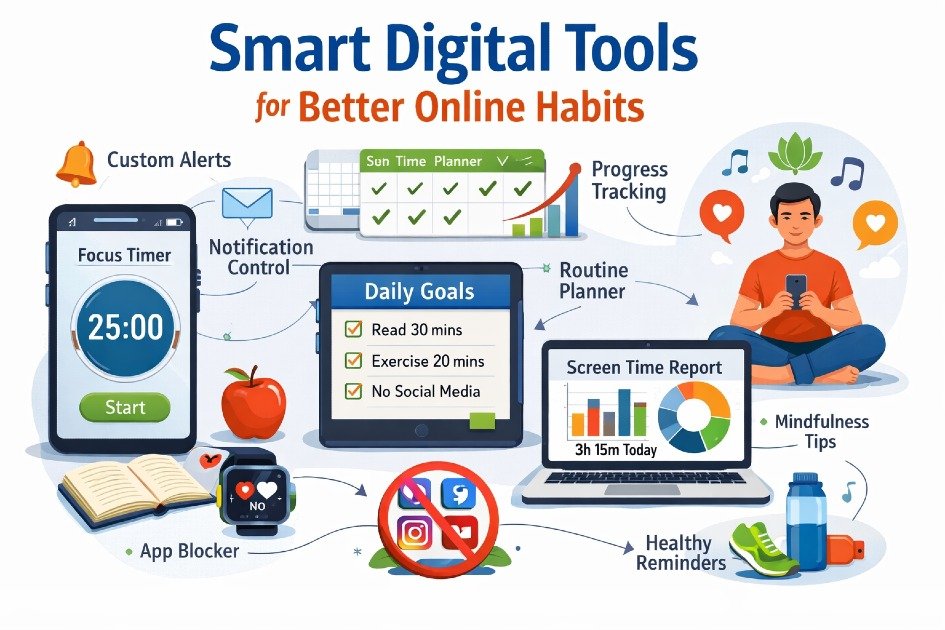
You don’t need tools—but they help.
Consider using:
- App blockers to reduce distractions
- Blue light glasses for eye comfort
- Screen time trackers for accountability
Digital Detox Strategies

Constant connectivity drains your focus, disrupts sleep, and leaves you mentally fatigued. Even brief, mindless scrolling can reduce energy and productivity.
How to improve:
Adopt simple, structured detox practices:
- Screen-free mornings: Start your day with 30–60 minutes away from devices.
- Scheduled breaks: Step away from screens for 5–10 minutes every hour.
- Offline blocks: Reserve one evening or morning per week as device-free time.
- Notification control: Disable non-essential alerts to prevent constant interruptions.
Optimizing these:
- Restores mental clarity and reduces eye strain
- Boosts focus and attention throughout the day
- Encourages mindful, intentional screen use
- Increases overall energy and emotional balance
Healthy Digital Habits
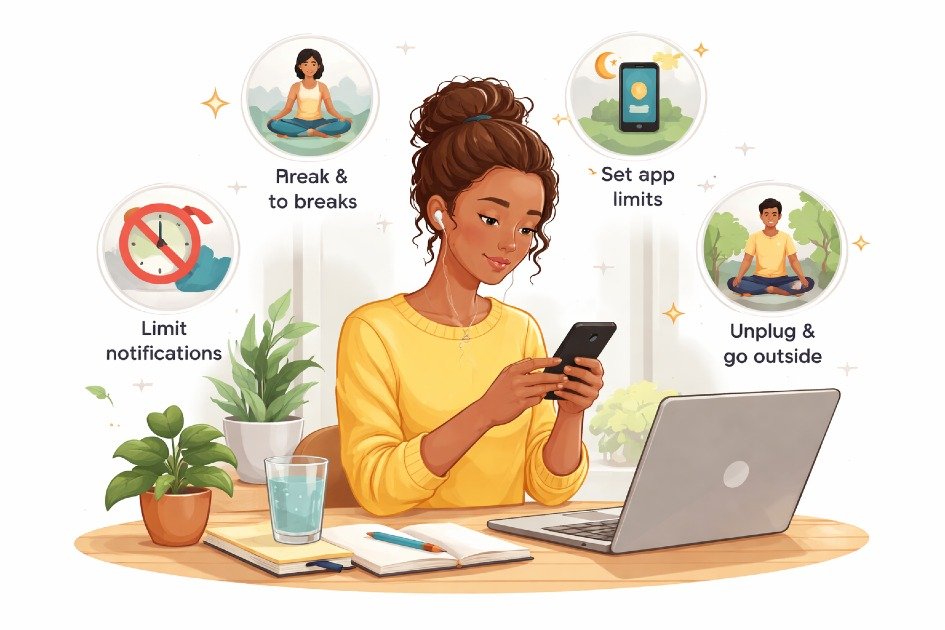
Unconscious device use—constantly checking apps or emails—fractures attention and elevates stress.
How to improve:
Build intentional, daily routines around your screen time:
- Start your morning device-free: Journal, stretch, or hydrate before opening your phone.
- Use apps with purpose: Ask, “Why am I opening this?” before engaging.
- Declutter devices: Delete unused apps and simplify your home screen.
- Set boundaries: Limit social media and work apps to defined time slots.
Optimizing these:
- Improves mental clarity and reduces decision fatigue
- Strengthens control over digital habits
- Enhances productivity by keeping focus on priorities
- Creates a calmer, more intentional digital environment
Productivity with Screens

Devices are meant to support work, yet unstructured usage often leads to distraction and wasted time.
How to improve:
Use technology strategically to boost output:
- Enable focus modes: Block notifications during deep work sessions.
- Task-specific use: Use apps only for their intended purpose—avoid multitasking.
- Track your time: Monitor app usage to spot inefficiencies.
- Prioritize learning: Replace passive scrolling with podcasts, articles, or tutorials that build skills.
Optimizing these:
- Maximizes productivity while minimizing wasted time
- Builds awareness of personal digital habits
- Supports skill growth and continuous learning
- Turns screens into tools for progress rather than distraction
Frequently Asked Questions
What are digital habits?
Digital habits are your repeated behaviors with devices—how often you check, scroll, or engage with screens.
They directly affect your focus, energy, and productivity.
How quickly can I improve my digital habits?
You can see changes within a week.
With consistent effort, lasting habits form in 30–60 days.
Do I need a full digital detox?
No. Small, consistent breaks are enough to reset your mind and reduce stress.
Can digital habits impact mental health?
Yes. Excessive screen use is linked to:
- Poor sleep
- Increased stress
- Reduced attention span
Better habits restore balance.
What’s the easiest habit to start with?
Start with one:
- No phone in the morning
- Turn off notifications
- Set a nightly cutoff
Simple changes create momentum.
Recap: Take Control of Your Digital Habits
Your digital habits shape your day more than you think.
Right now, they may be draining your time and focus. But with a few intentional adjustments, you can reverse that.
Start with one habit. Stay consistent. Build from there.
Over time, you’ll notice:
- Better focus
- More energy
- Greater control over your time
These actions create real, lasting impact when practiced consistently to improve your control over how you spend your day.
Ready to Start Improving Your Digital Habits Today
You don’t need to change everything at once. Choose one habit and apply it today.
Swap late-night screen strain for clearer focus and deeper rest with blue light blocking glasses.
Start wearing them during screen time today to reduce eye fatigue, protect your energy, and stay mentally sharp while you take back control of your time online.