
You’re eating clean, controlling portions, and staying active, yet progress still feels slow. Fat loss is not only what you eat—but also when you eat.
Intermittent fasting is an eating pattern that trains your body to burn fat more efficiently while supporting better energy, focus, and metabolic function.
This guide explains practical intermittent fasting strategies that are simple, sustainable, and backed by real metabolic science.
7 Proven Intermittent Fasting Strategies for Sustainable Fat Loss and Steady Energy
Intermittent fasting is a proven eating approach that supports insulin balance, metabolic health, and more efficient energy.
Discover seven practical fasting strategies built for smarter daily eating.
1. 16:8 Intermittent Fasting
Frequent meals keep insulin levels elevated, which makes it harder for your body to access stored fat.
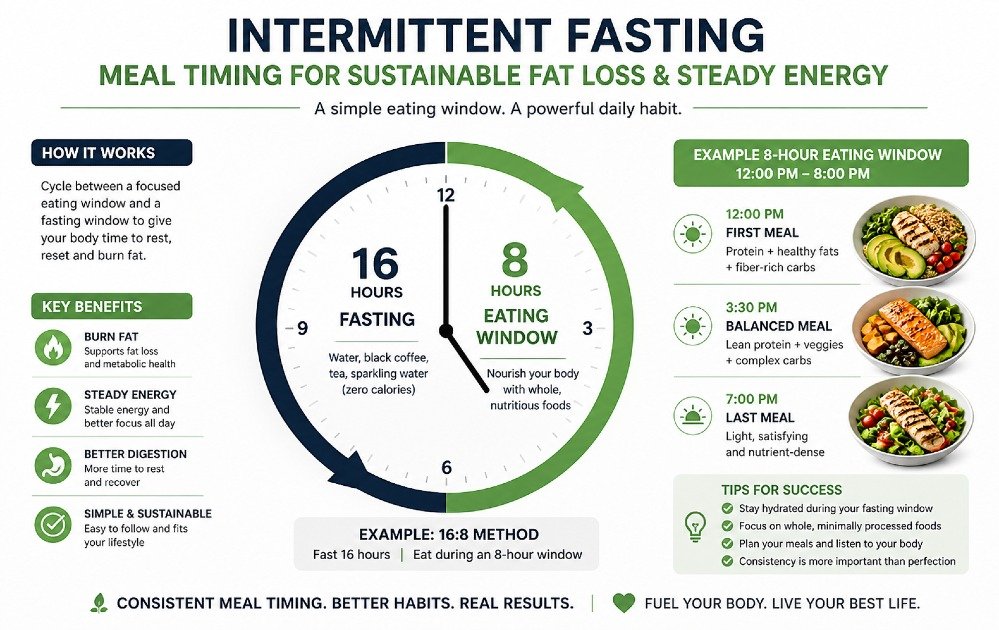
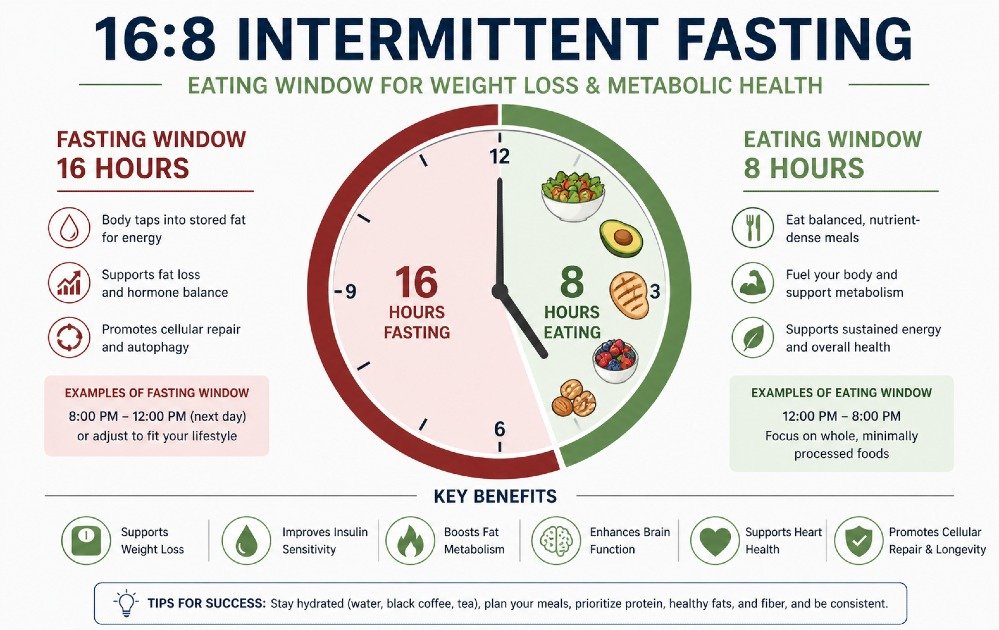
The 16:8 method means fasting for 16 hours and eating within 8 hours.
Example:
- Eat: 12 PM – 8 PM
- Fast: 8 PM – 12 PM
Steps:
- Start with 12:12 if you’re a beginner
- Drink water, black coffee, or unsweetened tea
- Avoid late-night eating
Core advantages:
- Improves fat oxidation
- Reduces unnecessary snacking
- Supports steady energy levels
2. Trigger Fat Burning Through Metabolic Switching
If you eat too often, your body never needs to tap into fat stores.
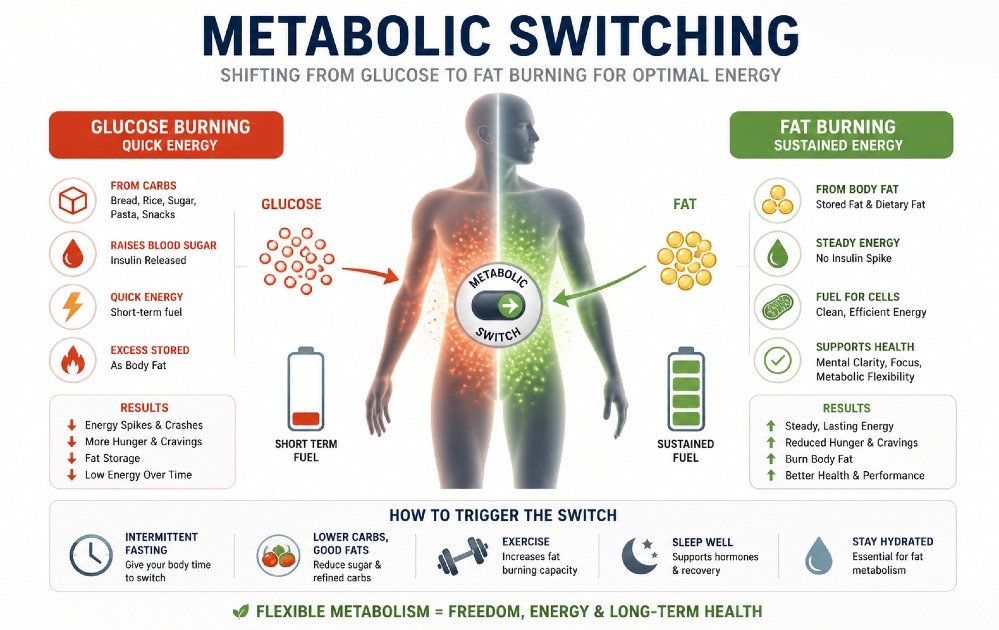
After several hours without food, your body shifts into fat-burning mode.
What happens during fasting:
- Glycogen stores are depleted
- Fat becomes the primary energy source
- Energy becomes more stable
Core advantages:
- Steady fat loss
- Improved energy consistency
- Better metabolic flexibility
I take a light walk or low-intensity movement during fasting to enhance fat utilization.
3. Support Cellular Repair Through Autophagy
Stress, poor diet, and aging all contribute to damaged cells in the body.
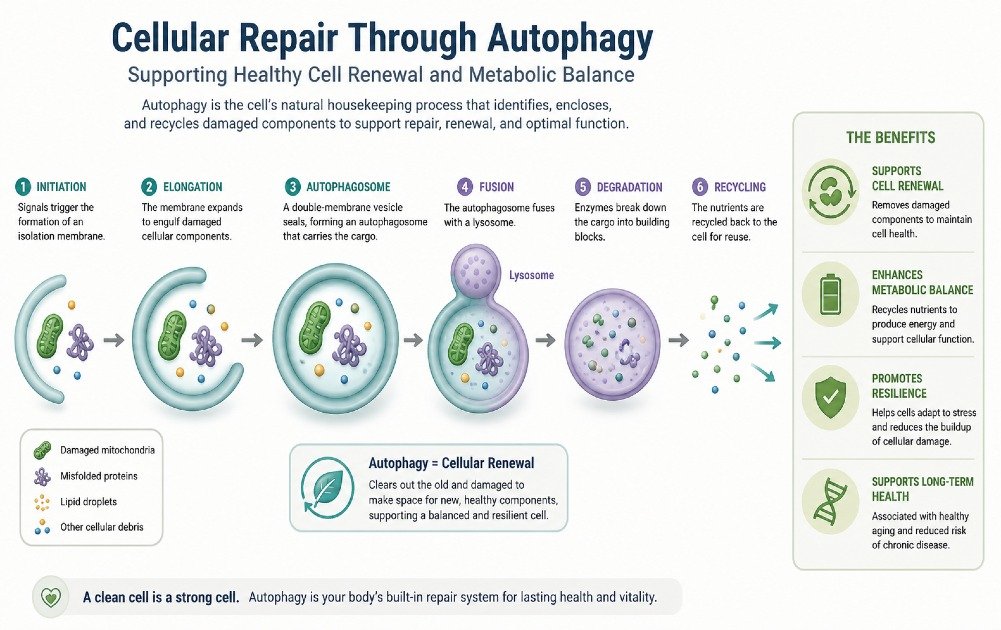
Autophagy is your body’s natural cleanup system—it removes damaged cells and recycles them.
How to support it:
- Fast consistently (16–24 hours occasionally)
- Avoid constant snacking
- Focus on nutrient-dense meals
Core advantages:
- Supports long-term health
- Improves immune function
- May slow aging processes
4. Control Hunger by Resetting Hormones
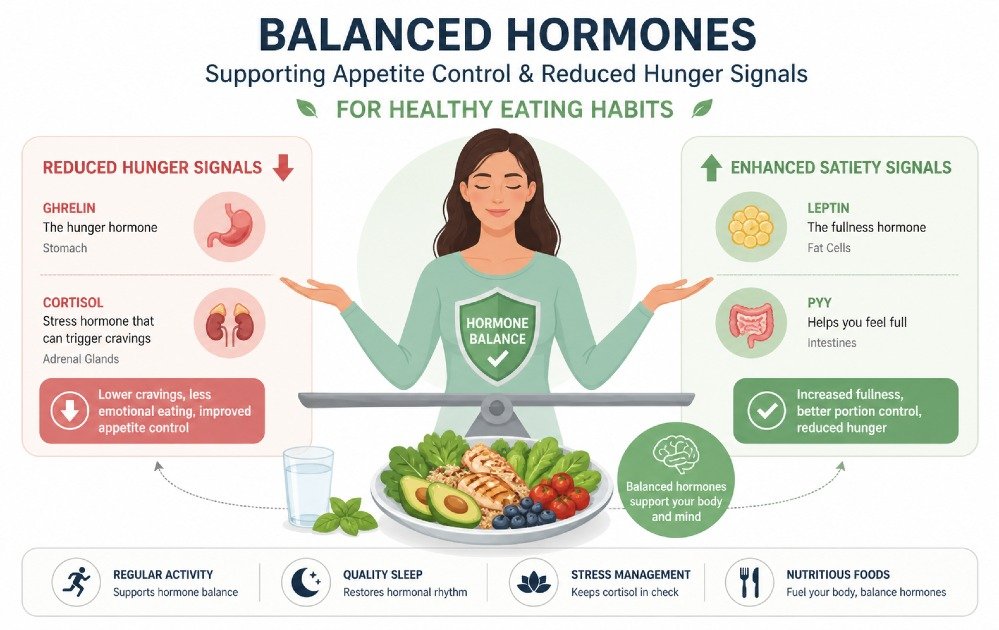
Constant food intake disrupts hunger hormones like ghrelin and leptin.
Intermittent fasting helps regulate appetite signals, making hunger easier to manage.
Simple strategy:
- Break your fast with protein and healthy fats
- Avoid sugar-heavy meals first thing
- Stay consistent with timing
Core advantages:
- Fewer cravings
- Better portion control
- Reduced emotional eating
5. Improve Focus and Mental Clarity

High-carb meals and frequent eating can lead to energy spikes and crashes.
During fasting, your body produces ketones, a clean and efficient fuel source for the brain.
Best practice:
- Schedule fasting during work hours
- Stay hydrated
- Avoid breaking your fast with sugar
Core advantages:
- Sharper focus
- Improved mental clarity
- More stable energy throughout the day
6. Choose a Fasting Style That Fits Your Lifestyle
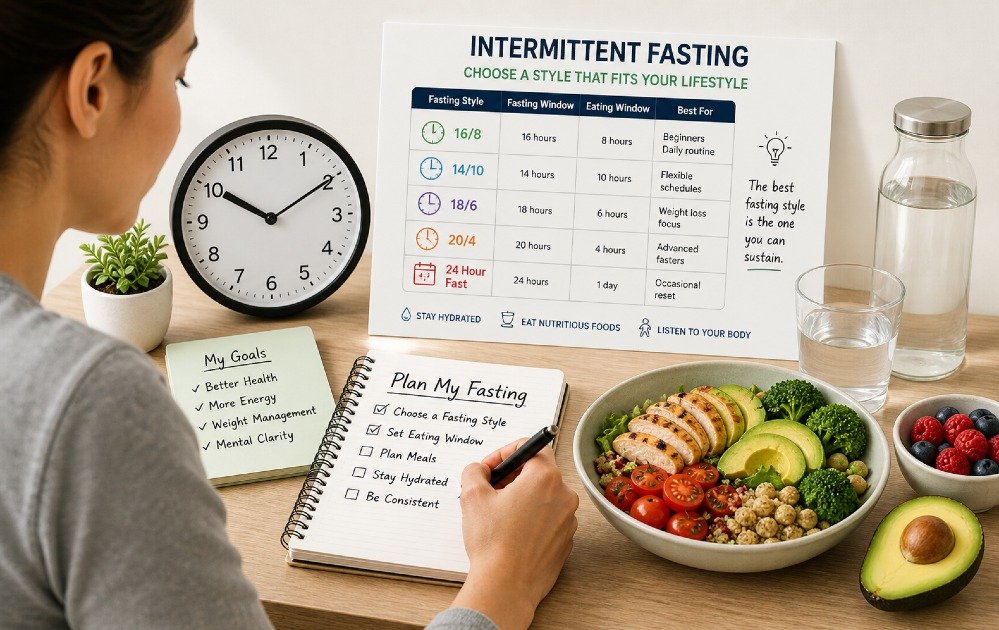
If a plan feels restrictive, it rarely lasts.
Pick a flexible fasting method
Options:
16:8 Method
- Best for beginners
- Easy to maintain daily
5:2 Method
- Normal eating 5 days
- Reduced calories 2 days
Alternate-Day Fasting
- Fast every other day
- More advanced approach
Core advantages:
- Sustainable long-term results
- Adaptable to your schedule
- Less diet fatigue
7. Eat Smart During Your Eating Window
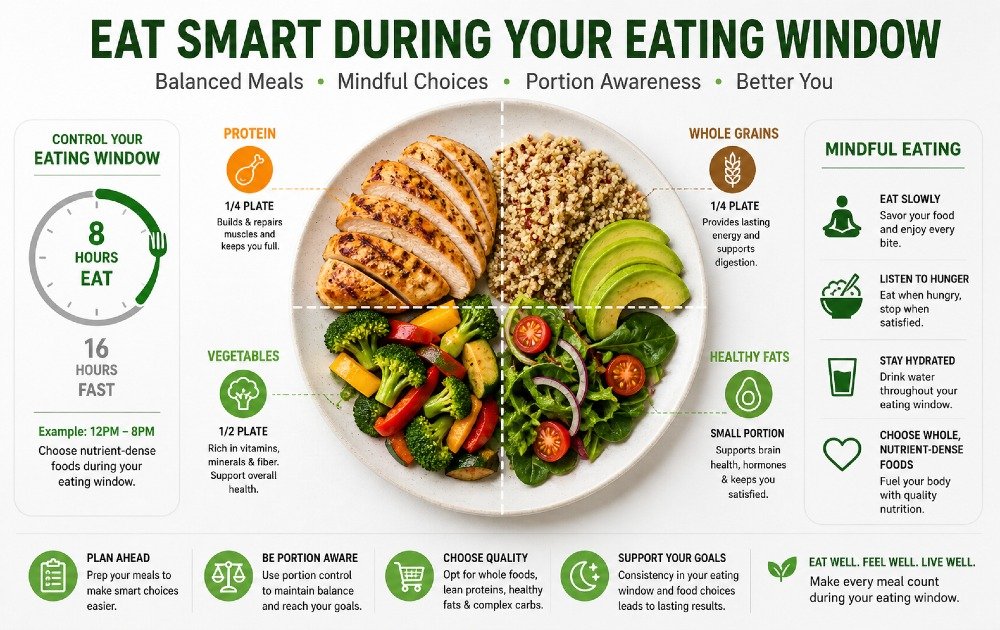
Fasting helps, but food quality still determines results.
Focus on nutrient-dense meals
Best choices:
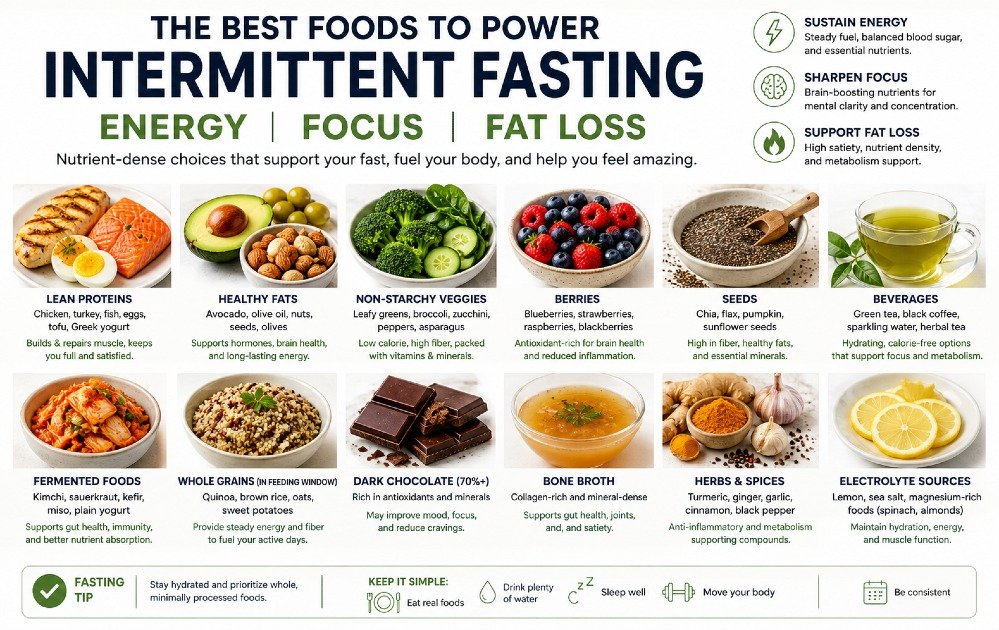
- Lean proteins (chicken, fish, eggs)
- Healthy fats (avocado, nuts, olive oil)
- Whole foods (vegetables, fruits, complex carbs)
Avoid:
- Processed foods
- Sugary drinks
- Refined carbs
Core advantages:
- Faster fat loss
- Better energy balance
- Improved overall health
Intermittent Fasting for Weight Loss
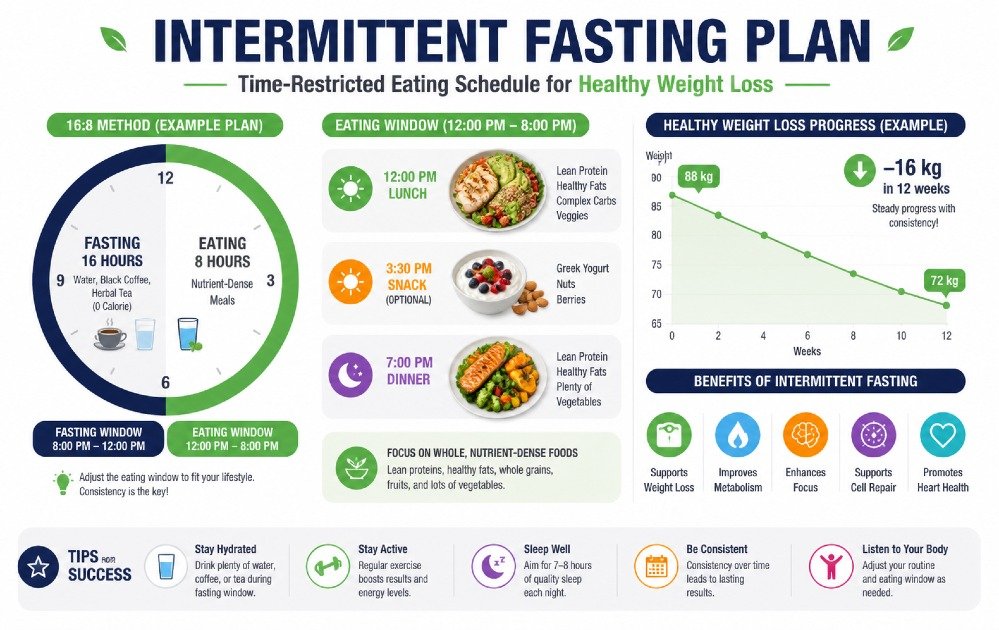
Eating too little can slow metabolism, while frequent snacking prevents the body from burning stored fat.
Intermittent fasting cycles eating and fasting, lowers insulin levels, and encourages the body to burn stored fat for energy.
A simple approach:
- Stick to a simple 16-hour fast with an 8-hour eating window.
- Eat 2–3 balanced meals, no constant snacking
- Prioritize whole, nutrient-dense foods
Core advantages:
- Better fat burning between meals
- Reduced calorie intake without strict dieting
- Fewer cravings and less mindless eating
- Steadier daily energy
This approach works with your biology, not against it.
I break my fast with protein and healthy fats to stay full and avoid overeating later.
Fasting and Metabolism Boost
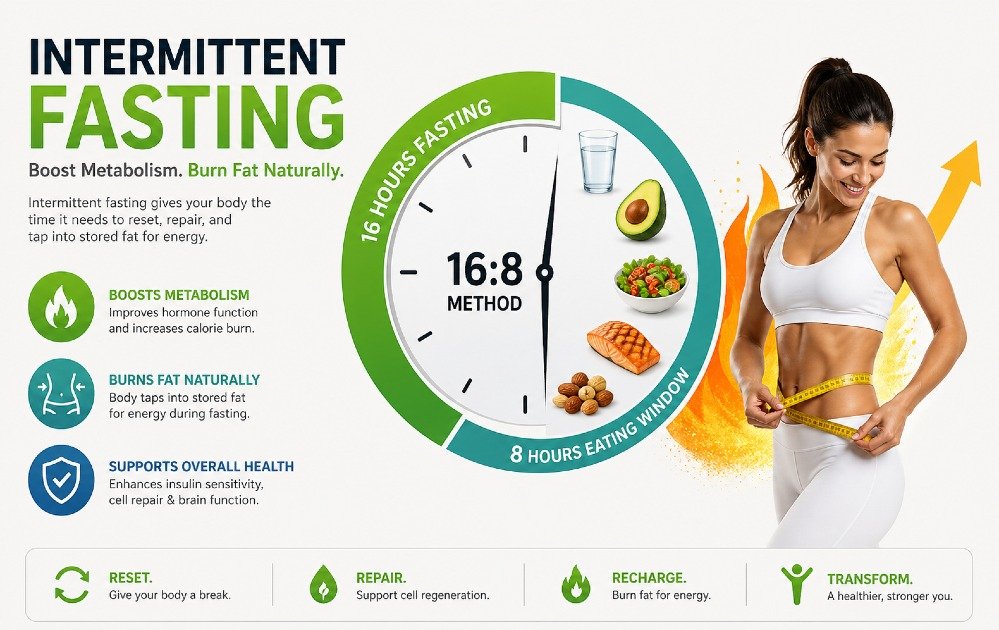
Frequent eating keeps your body burning food instead of stored fat, reducing metabolic flexibility.
Fasting helps your body switch from sugar to fat for energy.
NCBI highlights the effect of fasting that brings healing to the body.
During fasting:
- Insulin levels drop
- Fat stores become accessible
- Energy use becomes more stable
Core advantages:
- Consistent energy without spikes and crashes
- Improved fat-burning efficiency
- Less dependence on frequent meals
- Sharper mental focus
With consistency, your body becomes better at managing energy.
I stay hydrated and include light activity, like walking, to support metabolic function during fasting.
Intermittent Fasting Meal Plan
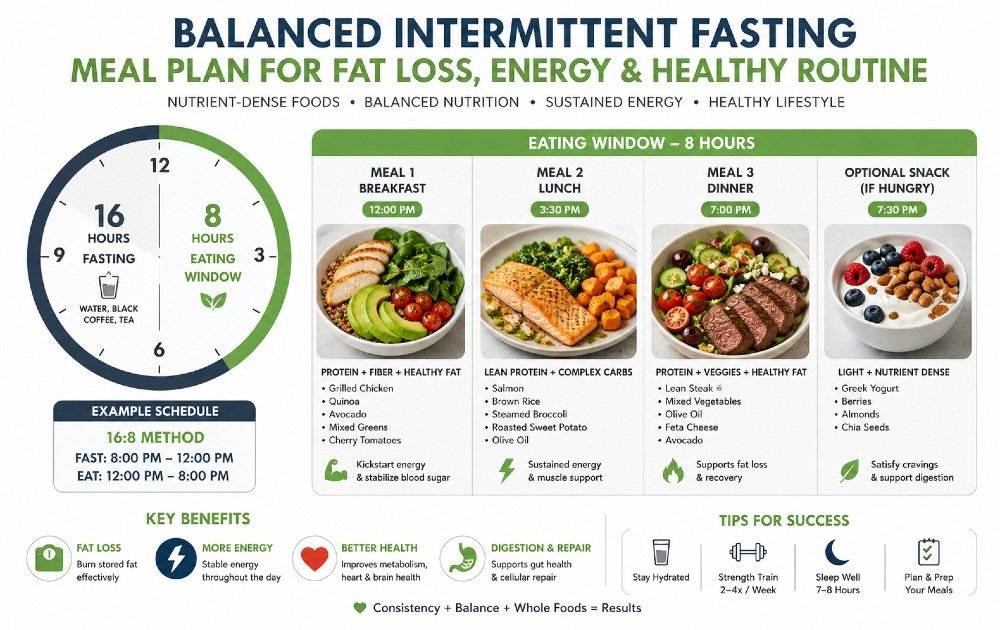
Poor meal choices during eating periods can undo fasting benefits.
An easy intermittent fasting plan simplifies healthy eating.
Example (16:8):
First meal (break fast)
- Protein: eggs, chicken, or fish
- Healthy fats: avocado, nuts, olive oil
- Vegetables for fiber
Second meal
- Lean protein
- Complex carbs: brown rice, quinoa, or sweet potatoes
- Mixed vegetables
Optional snack (if needed)
- Greek yogurt
- Fruit or a handful of nuts
Core advantages:
- Stable blood sugar levels
- Fewer cravings and better appetite control
- More consistent fat loss
- A routine you can maintain long term
A structured plan improves both results and adherence.
I avoid breaking my fast with sugary or processed foods—they trigger cravings and energy dips.
Frequently Asked Questions
Does intermittent fasting really help with weight loss?
Intermittent fasting can support fat loss by increasing fat burn, reducing insulin spikes, and limiting unnecessary eating.
It also simplifies calorie control without strict dieting. Consistency and balanced meals improve results.
What is the best intermittent fasting schedule for beginners?
The 16:8 method is a simple, sustainable choice for beginners.
This approach involves:
- Fasting for 16 hours
- Eating within an 8-hour window
For example eating from 12 PM to 8 PM and fasting overnight through the morning.
Can intermittent fasting improve energy levels?
Fasting supports steadier energy by preventing blood sugar spikes and dips from frequent meals.
As the body shifts to stored fuel, mental clarity and focus often become sharper.
What can you drink during a fast?
You can consume:
- Water
- Black coffee
- Unsweetened tea
- Sugar-free electrolyte drinks
Skip sugary drinks, creamers, and high-calorie beverages, as they can break a fast.
What foods should you eat while intermittent fasting?
Focus on whole, nutrient-dense foods that support satiety and stable energy:
- Lean proteins
- Vegetables and fruits
- Healthy fats
- Complex carbohydrates
Limit processed foods and sugary snacks when breaking your fast.
Recap: Simple Structure Make Intermittent Fasting Work Long-Term
Intermittent fasting structures eating times, allowing insulin to stabilize, improving fat use, and maintaining steady energy levels.
Keeping steady fasting windows, balanced meals, and controlled eating habits delivers better long-term results than extreme or short-term dieting.
When done correctly, intermittent fasting supports fat loss, improves energy balance, and promotes sustainable healthy eating habits.
Simplify eating by naturally reducing cravings and boosting energy and focus
Ready for a Simple and Sustainable Plan
You don’t need a complicated plan. Start with a 16:8 fasting schedule and eat whole, nutrient-rich foods during your eating window.
Stay energized, crush cravings, and make every fasting hour count with this smart water bottle that keeps your hydration on track and your results moving faster.
Let structure—not restriction—drive your transformation. Build momentum one day at a time.