
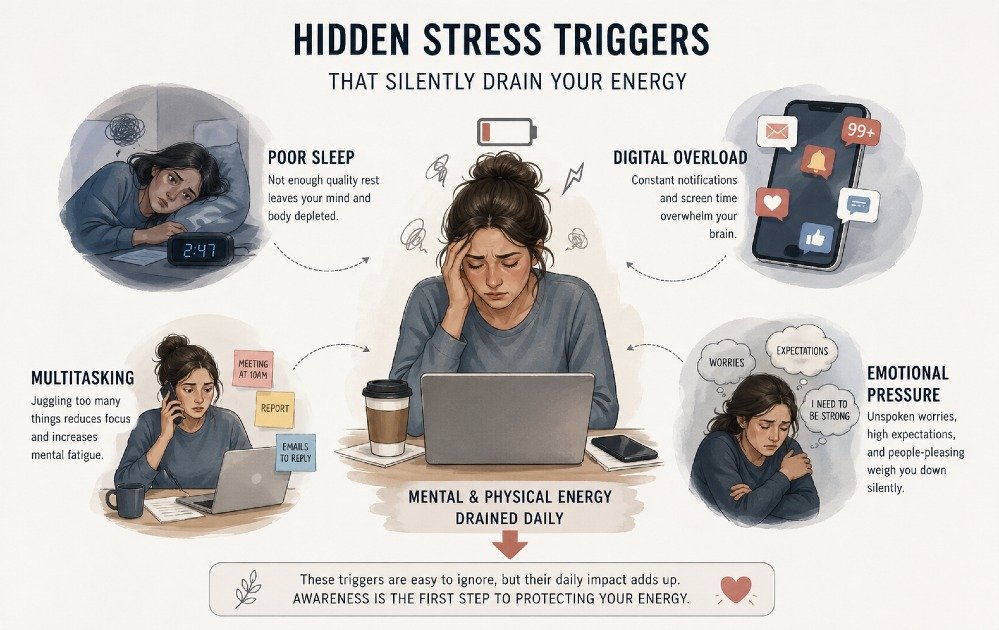
You can eat well, stay busy, and try to sleep right—and still feel drained.
Stress is often silent, building through unnoticed daily habits, where hidden triggers quietly work against you rather than lack of effort.
This guide explains the most overlooked sources and how to fix them in practical, realistic ways.
9 Hidden Stress Factors Behind Daily Energy Loss
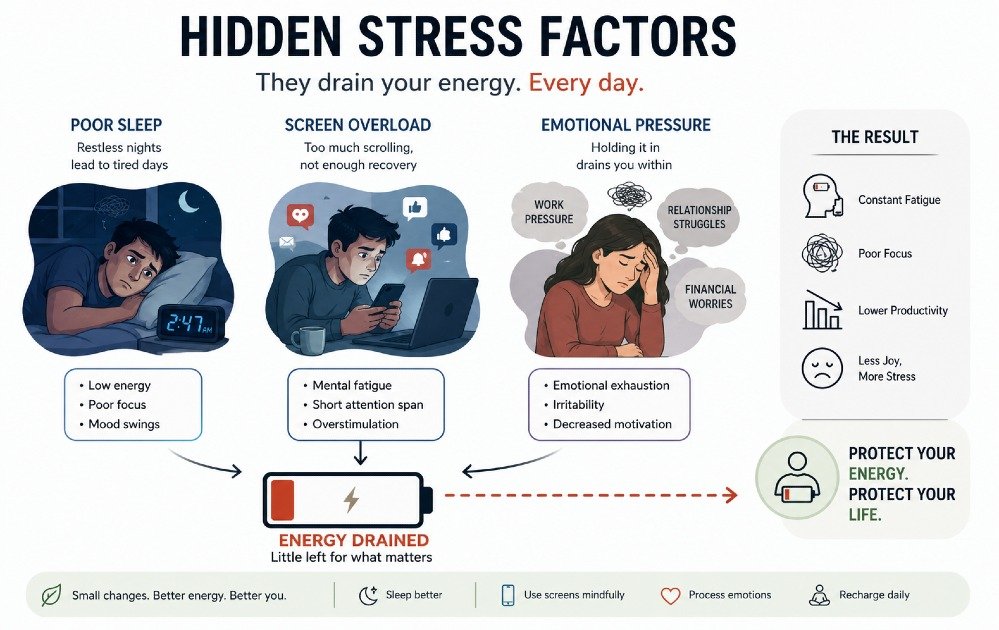
Stress isn’t just caused by major life events. Small daily habits can quietly accumulate over time, often impacting energy, focus, sleep, and emotional balance more than single stressful incidents.
Constant screen use, poor sleep, multitasking, and weak recovery keep the nervous system on alert, leaving people drained even after rest.
Discover nine hidden energy triggers and practical ways to restore balance and recover.
1. Constant Digital Overload
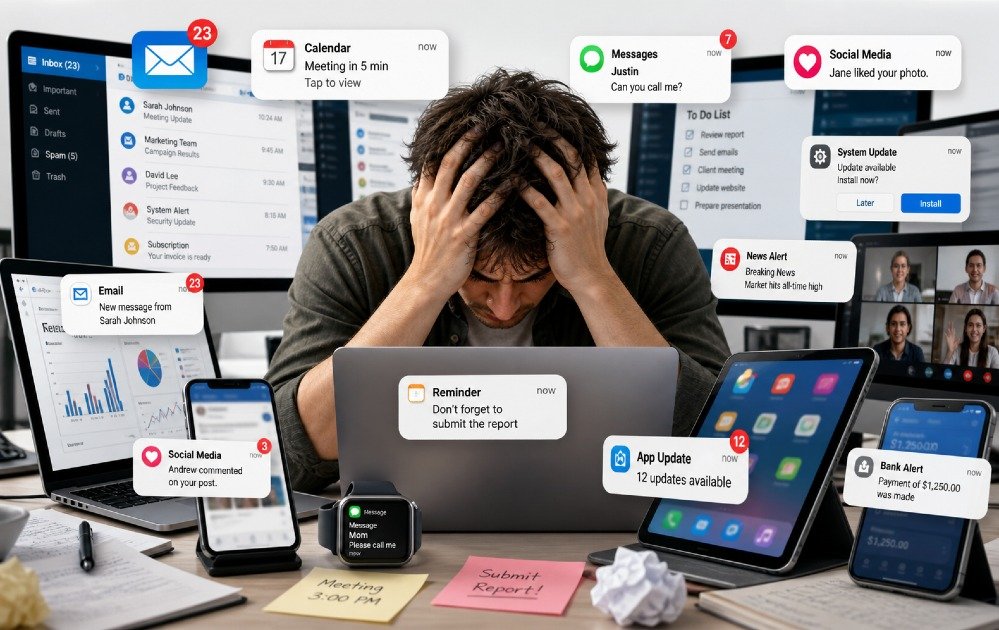
Your brain seldom fully powers down. Constant notifications, emails, and social media keep your nervous system lightly active all day, while even passive screen time adds steady mental load.
How to fix it:
- Turn off unnecessary notifications
- Set screen-free time blocks
- Avoid screens 1 hour before bed
- Use “Do Not Disturb” during focus time
Core advantages:
- Better focus
- Lower mental fatigue
- Improved emotional balance
Less input creates more mental clarity.
2. Poor Sleep Quality
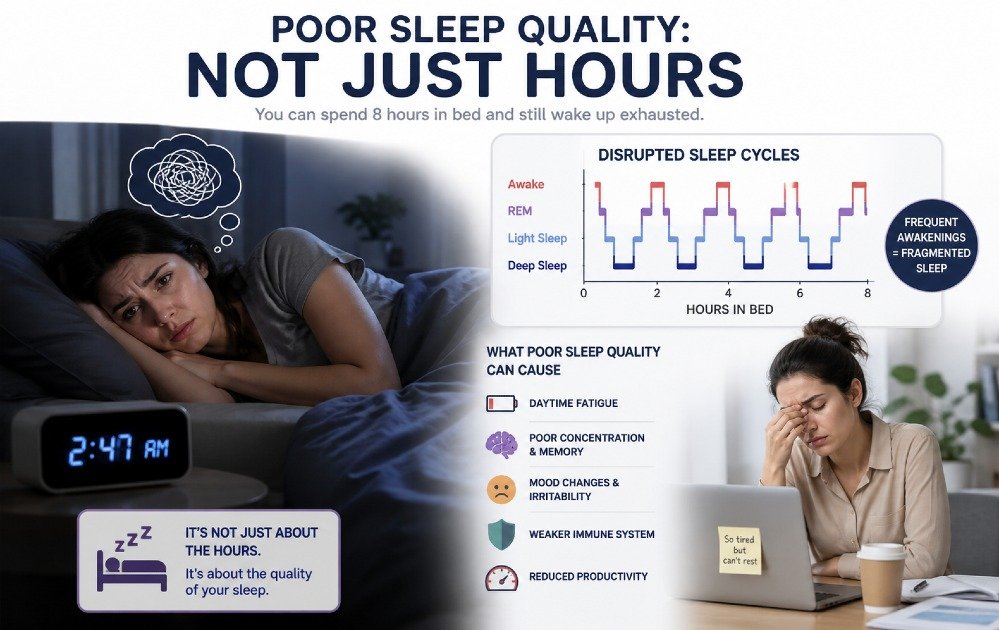
You may be getting enough sleep hours, but not enough quality sleep. Irregular schedules and late-night screen use disrupt recovery and raise stress levels.
How to fix it:
- Sleep and wake at consistent times
- Keep your room cool and dark
- Avoid caffeine late in the day
- Create a wind-down routine
Core advantages:
- Deeper recovery
- More stable mood
- Reduced stress hormone activity
NCBI highlights sleep quality as an individual’s self-satisfaction of the sleep experience.
3. Hidden Sugar and Energy Spikes

Sugar causes a quick spike followed by a crash that affects both body and mind, quietly increasing irritability and stress responses.
How to fix it:
- Reduce processed sugar intake
- Check hidden sugars in packaged foods
- Balance meals with protein and fiber
Core advantages:
- Stable energy
- Better mood control
- Fewer stress-driven cravings
4. Multitasking

Multitasking may feel efficient, but it actually lowers productivity. Each switch between tasks adds mental strain and quietly increases stress levels.
How to fix it:
- Focus on one task at a time
- Use time-blocking
- Prioritize deep work over busy work
Core advantages:
- Faster completion
- Better accuracy
- Less mental fatigue
5. Cluttered Environment

Visual clutter keeps your brain in a state of unfinished tasks, creating low-level tension even during rest.
How to fix it:
- Declutter one space at a time
- Keep your workspace minimal
- Organize frequently used items
Core advantages:
- Reduced mental load
- Improved focus
- Calmer thinking environment
6. Long Periods of Inactivity
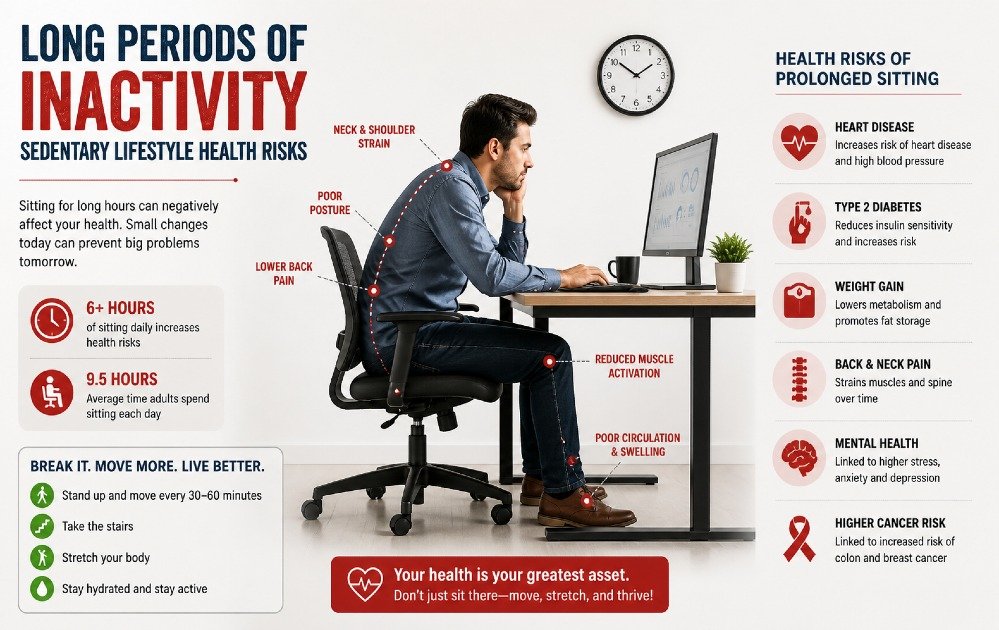
Long sitting reduces circulation and raises stress levels, and even regular exercise can’t fully offset extended inactivity.
How to fix it:
- Stand or move every 45–60 minutes
- Add short walks during the day
- Stretch between tasks
Core advantages:
- Better energy flow
- Reduced stiffness
- Lower stress buildup
7. Negative Self-Talk
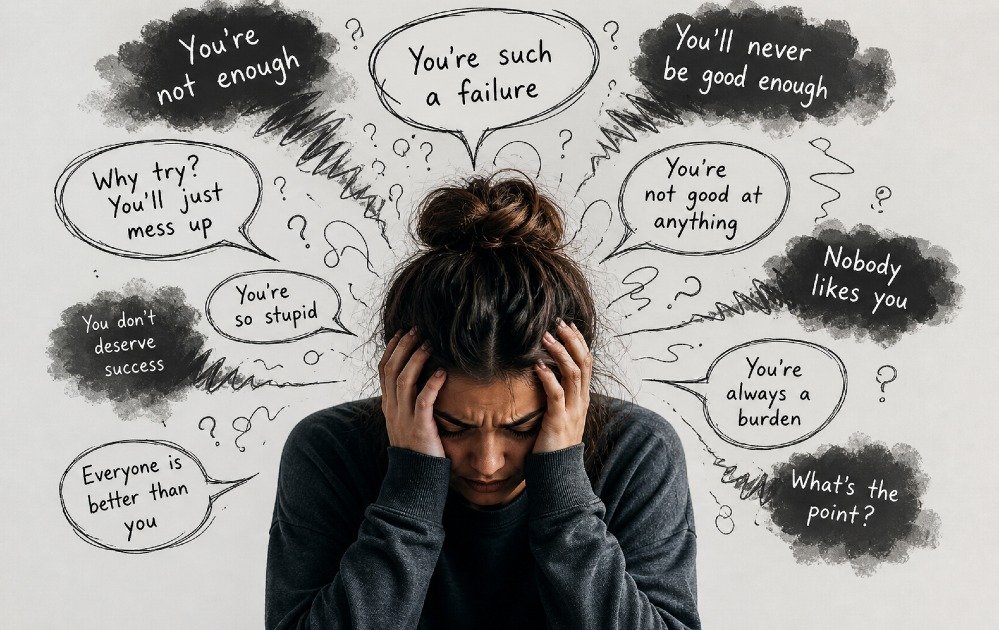
The way you speak to yourself shapes your stress levels, and ongoing self-criticism keeps your mind stuck in a defensive state.
How to fix it:
- Replace harsh thoughts with neutral ones
- Acknowledge progress, even small wins
- Practice simple daily affirmations
Core advantages:
- Improved confidence
- Less emotional stress
- Stronger resilience
8. Overcommitting Your Time
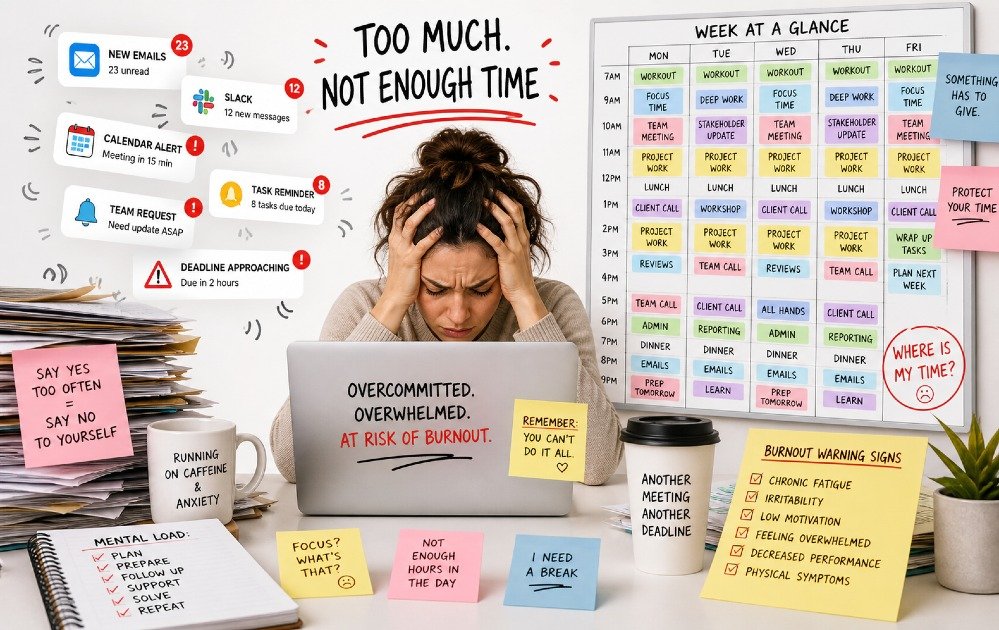
Saying yes too often causes burnout and turns your schedule into a constant source of pressure.
How to fix it:
- Set clear boundaries
- Learn to say “no” without guilt
- Protect downtime as non-negotiable
Core advantages:
- More control over your time
- Lower burnout risk
- Better life balance
9. Information Overload
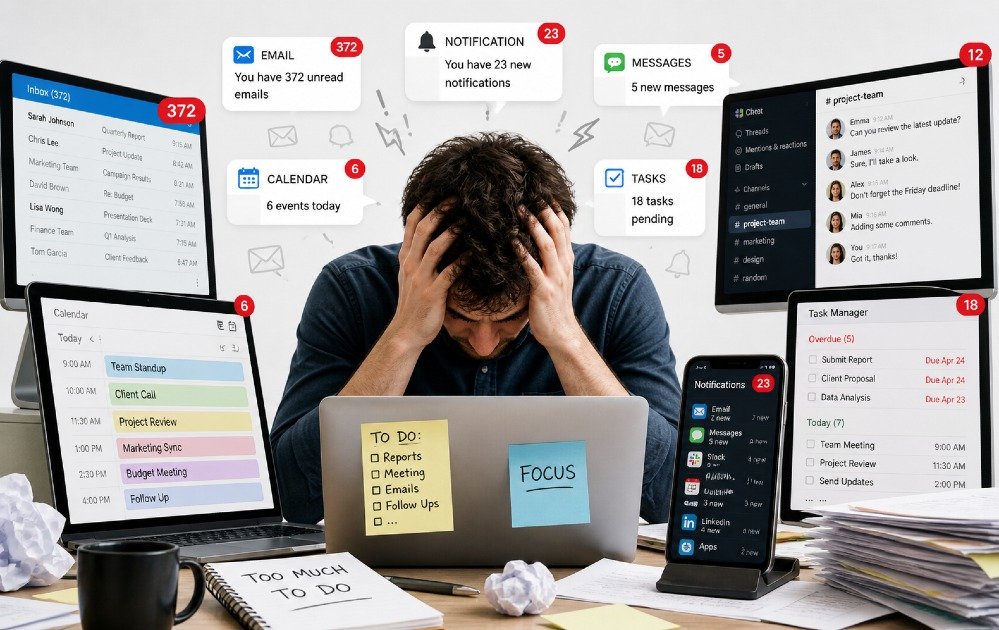
Excess information drains mental energy. Your mind gets overwhelmed by constant decisions, opinions, and updates.
How to fix it:
- Limit daily news intake
- Unfollow unnecessary content
- Stick to trusted sources
Core advantages:
- Clearer thinking
- Less anxiety
- Better decision-making
Signs of Chronic Stress
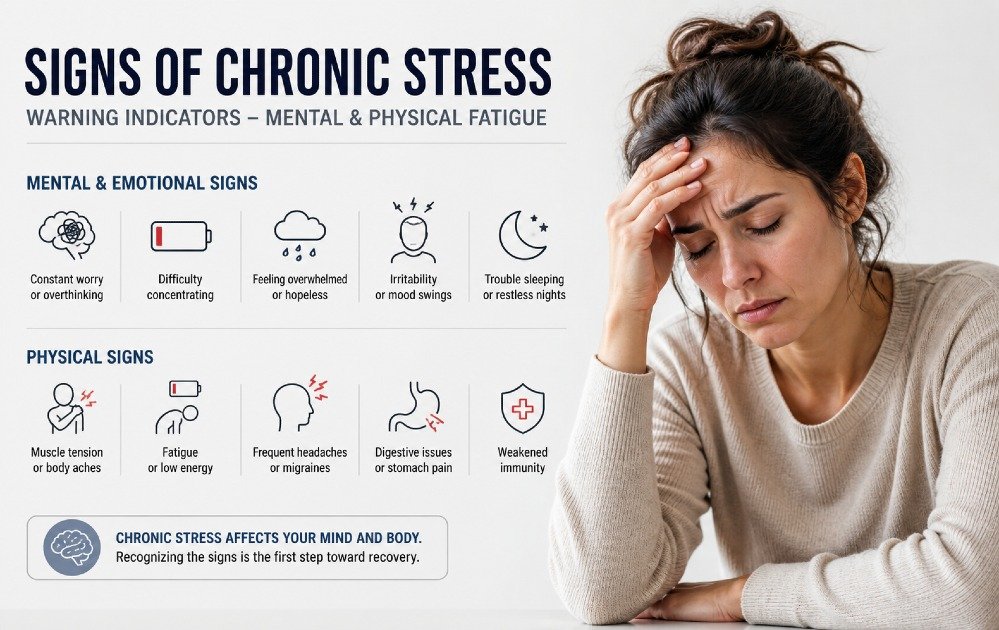
Chronic stress often hides in plain sight. You may keep up with daily tasks, but your system stays under constant strain.
Common signs include:
- Ongoing fatigue, even after rest
- Irritability or mood swings
- Difficulty concentrating or brain fog
- Frequent headaches or muscle tension
- Feeling overwhelmed by routine tasks
If left unchecked, this keeps your body in a prolonged response.
Break the cycle with simple, consistent actions:
- Take short breaks throughout the day
- Practice slow, deep breathing for a few minutes
- Reduce unnecessary screen exposure
- Maintain a consistent sleep schedule
These small resets calm your nervous system and reduce pressure buildup.
Core advantages:
As pressure levels drop, you’ll notice:
- Clearer thinking
- Better emotional control
- Less physical tension
- More stable energy
Consistency drives results.
Causes of Mental Fatigue
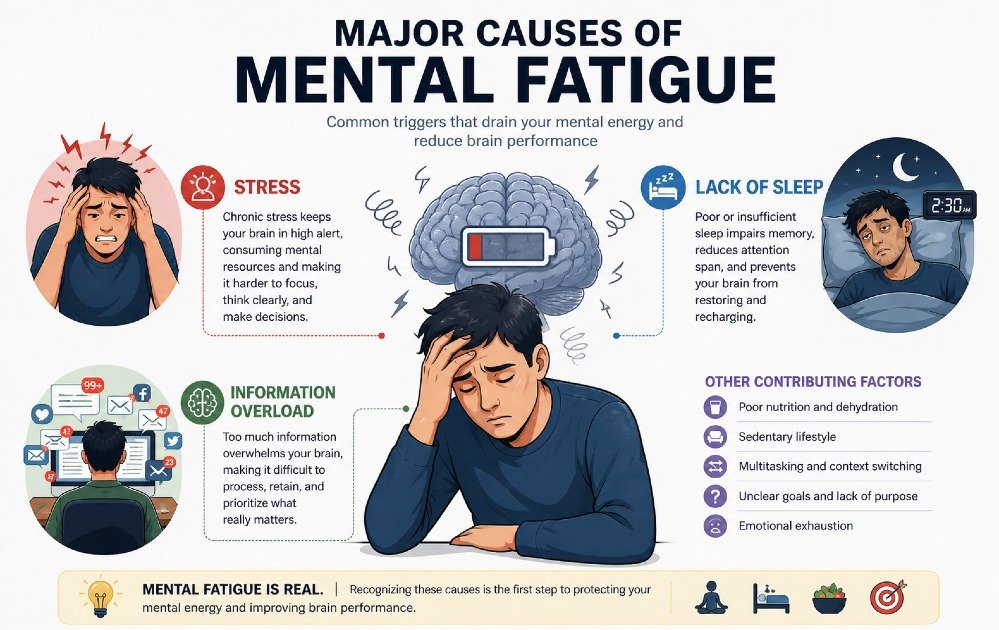
Mental fatigue comes from sustained cognitive overload. Your brain assimilates more than it can recuperate.
Common causes include:
- Multitasking and constant task switching
- Excessive screen time
- Continuous work without breaks
- Poor or inconsistent sleep
- Ongoing emotional pressure
This overload slows thinking and reduces efficiency.
Reduce the load and improve recovery:
- Focus on one task at a time
- Use structured work blocks with breaks
- Limit non-essential digital input
- Step away from screens regularly
Support recovery by:
- Spending time in quiet environments
- Taking short walks
- Using simple mindfulness or journaling
Core advantages:
When mental fatigue decreases, you gain:
- Faster, clearer thinking
- Stronger focus
- Less overwhelm
- Higher productivity with less effort
Your brain performs best when it has space to recover.
Burnout Symptoms and Solutions
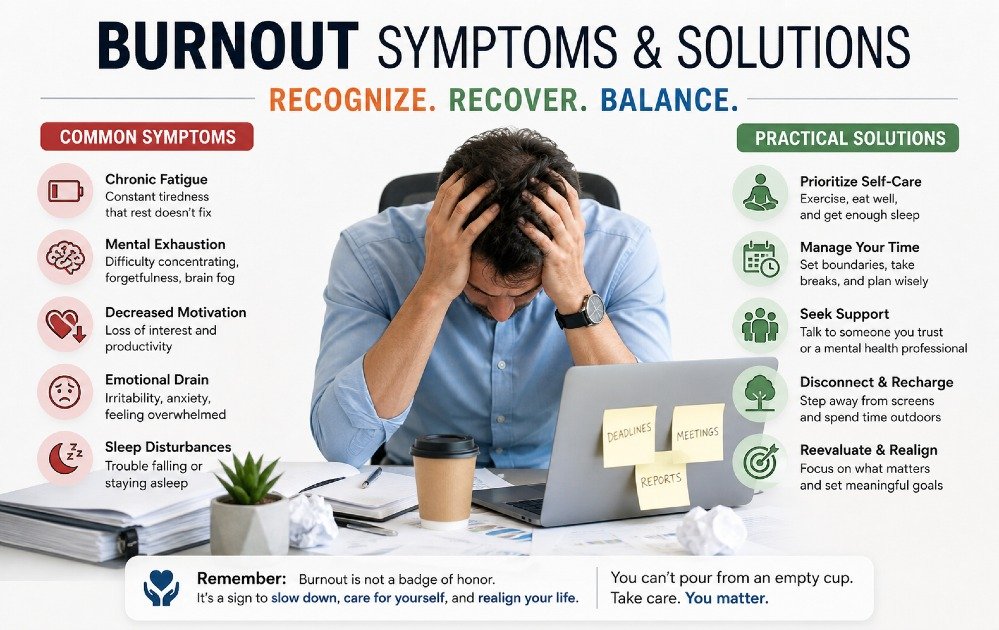
Burnout develops when tension continues without relief. It affects motivation, energy, and emotional stability.
Key symptoms include:
- Persistent exhaustion that rest doesn’t fix
- Loss of motivation
- Emotional detachment
- Declining performance
- Increased frustration or negativity
Burnout signals that your system is overloaded.
Recovery requires deliberate changes:
- Reduce workload where possible
- Set firm boundaries around your time
- Prioritize rest without guilt
- Reintroduce low-pressure, enjoyable activities
Support your recovery with:
- Consistent sleep
- Balanced nutrition
- Daily screen-free downtime
If symptoms persist, consider professional support.
Core advantages:
With consistent recovery, you can restore:
- Energy and physical balance
- Emotional stability
- Motivation and focus
- A sustainable work-life rhythm
Recovery takes time, but it is fully achievable.
Frequently Asked Questions
What are hidden stress triggers?
Hidden stress triggers are routine habits and situations that quietly build stress over time, often without people noticing.
Common examples include:
- Constant notifications and screen exposure
- Poor sleep habits
- Multitasking
- Information overload
- Lack of recovery time
Over time, these patterns place continuous pressure on the nervous system and slowly drain energy.
Why do I feel tired even after sleeping?
Sleeping longer does not guarantee proper recovery when stress, mental fatigue, and poor sleep quality disrupt the body’s ability to recharge overnight.
Common contributors include:
- Late-night screen use
- High daily stress levels
- Inconsistent sleep schedules
- Excess caffeine or sugar
- Ongoing mental fatigue
Many people rest physically while their mind remains overstimulated.
How does stress affect focus and productivity?
Chronic stress overloads the brain, reducing focus, memory, and clear decision-making.
Common effects include:
- Brain fog
- Poor concentration
- Slower thinking
- Reduced motivation
- More frequent mistakes
Managing stress effectively often improves productivity more than working longer hours.
Can small lifestyle changes really reduce stress?
Consistent small habits usually deliver better results than extreme routines that are hard to sustain.
Helpful changes include:
- Taking regular breaks during work
- Reducing unnecessary screen time
- Improving sleep consistency
- Moving more throughout the day
- Setting healthier boundaries around work and commitments
Consistent habits reduce stress before it develops into burnout.
What is the difference between stress and burnout?
Stress keeps you going under pressure while burnout leaves you mentally drained, unmotivated, and less productive.
Common signs of burnout include:
- Persistent fatigue
- Emotional detachment
- Loss of motivation
- Irritability
- Feeling mentally exhausted even after rest
Addressing stress early helps prevent long-term burnout.
Recap: Hidden Stress Slowly Reduces Energy and Focus
Long-term fatigue often builds from small daily habits that slowly strain the mind and body.
Hidden stressors like nonstop screen time, poor recovery, multitasking, and weak boundaries slowly drain your energy, focus, sleep, and emotional stability.
Consistent small changes can lower stress and rebuild energy over time through awareness.
Once you spot stress-driven habits, you can swap them for routines that improve recovery, sharpen thinking, and stabilize energy.
Ready to Take Control of Hidden Stress
You don’t need a perfect routine to feel better—create measurable improvements in stress levels and daily energy.
Start restoring balance and faster recovery by using this platform that helps release built-up tension, improve circulation, and bring your body back to a calmer, more energized state so that you can feel lighter, sharper, and more in control throughout the day.