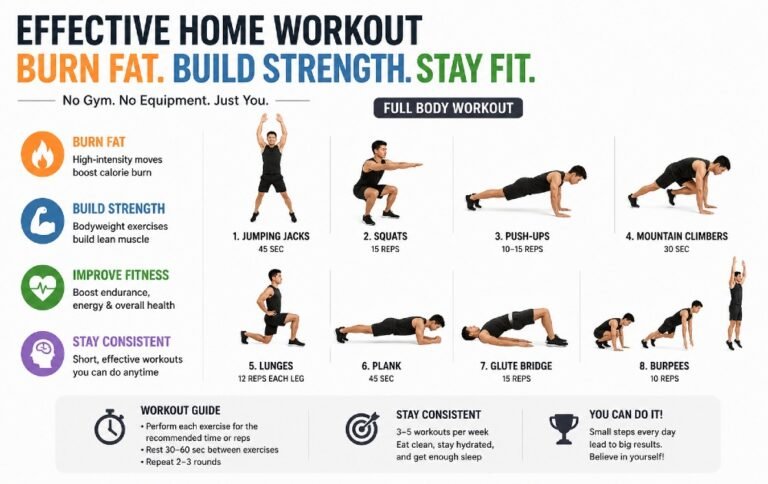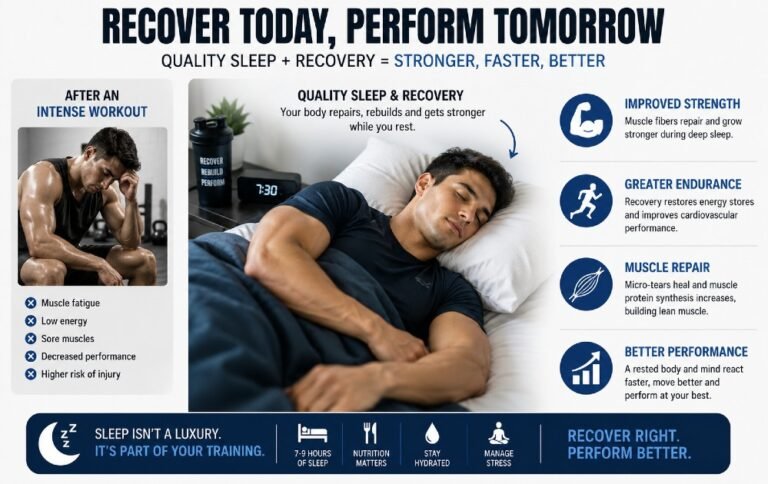

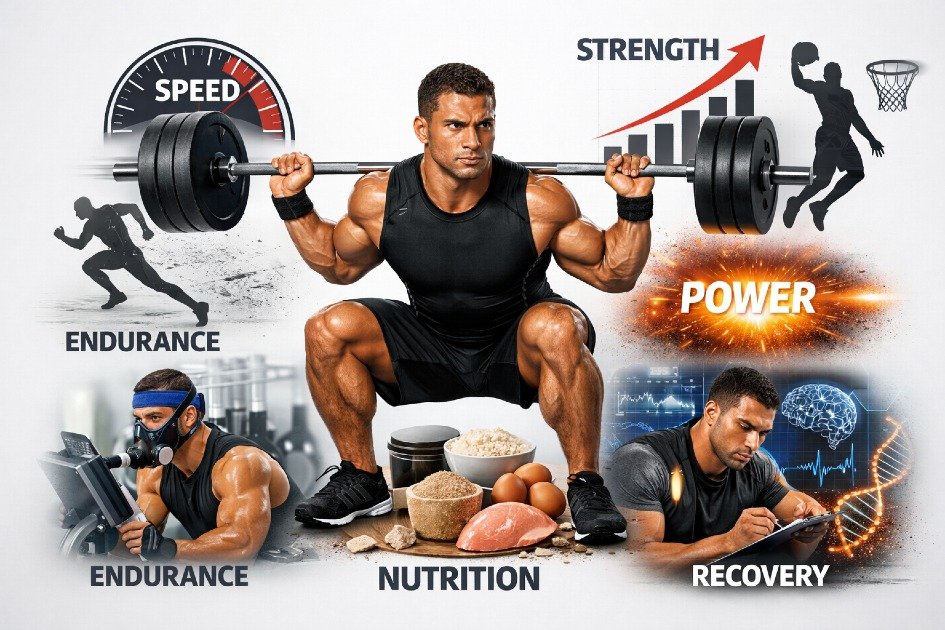
If you’re training consistently but your athletic progress has stalled, the issue isn’t effort — it’s strategy.
Most athletes focus only on workouts and ignore the other factors that drive real performance. That’s why results slow down, motivation drops, and injuries creep in.
This guide explains a clear, practical system for athletic growth — built on training, recovery, nutrition, and performance tracking.
What Athletic Growth Really Means

Athletic growth is full-body performance development, not just muscle gain.
It includes:
- Strength and power
- Endurance
- Speed and agility
- Recovery capacity
- Movement efficiency
When these improve together, your body performs better, adapts faster, and stays injury-resistant.
Why Athletes Struggle Without a Strategy

Many athletes train consistently but without a clear plan. As a result, progress slows or stops.
Common issues include:
- Repeating the same workouts with little improvement
- Fatigue from poor recovery
- Strength gains that stall
- Higher risk of injury
Without structure, the body adapts quickly — then plateaus.
Why Athletic Growth Strategies Are Necessary
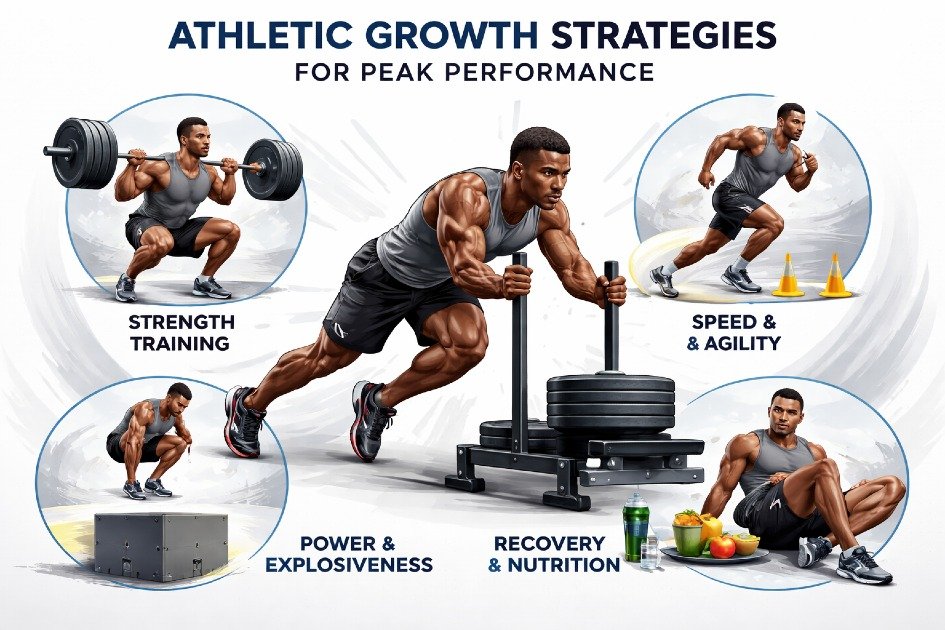
Follow a structured approach that guides how you train and recover.
This approach:
- Drives consistent progress by building on each session
- Prevents plateaus through planned variation
- Reduces injury risk with balanced training
- Improves efficiency so your effort produces better results
What an Effective Strategy Includes
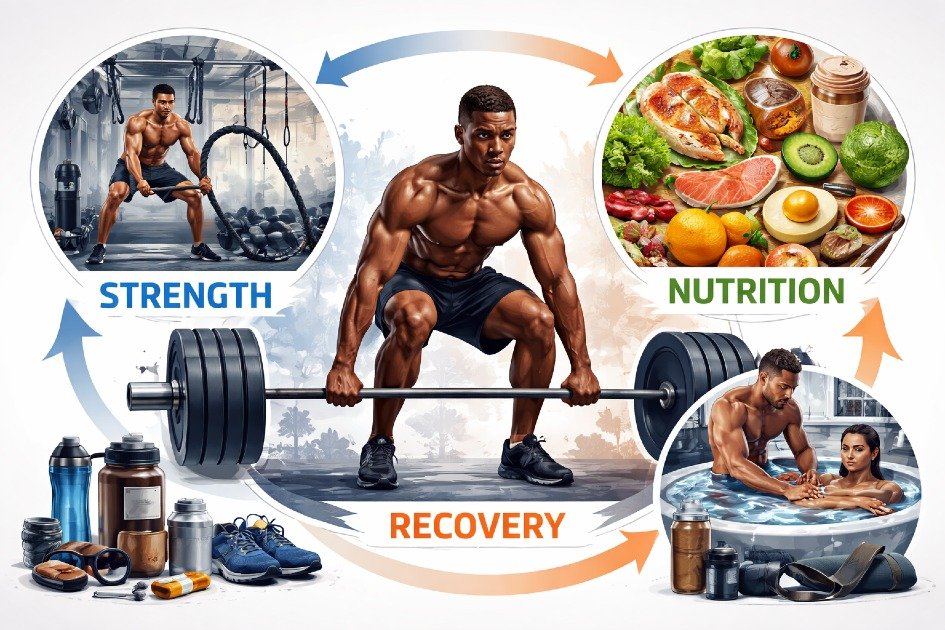
A complete athletic growth strategy covers every key area:
- Structured training: Strength, power, speed, and mobility programmed in cycles
- Recovery planning: Sleep, rest days, and active recovery
- Performance nutrition: Fuel that supports energy and muscle repair
- Progress tracking: Data to guide adjustments and improvement
Each part works together. Missing one limits results.
Consistent, Measurable Progress
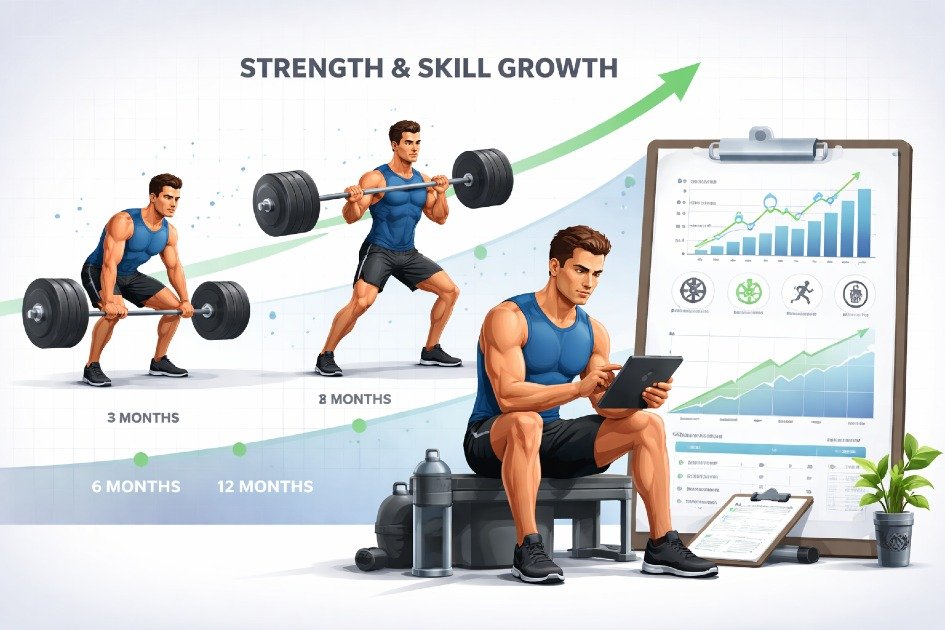
With the right strategy in place:
- Strength improves steadily
- Movement becomes more efficient
- Energy levels stay stable
- Overall performance increases
You stop guessing and start seeing real, trackable gains.
8 Proven Principles Behind Sustainable Athletic Growth
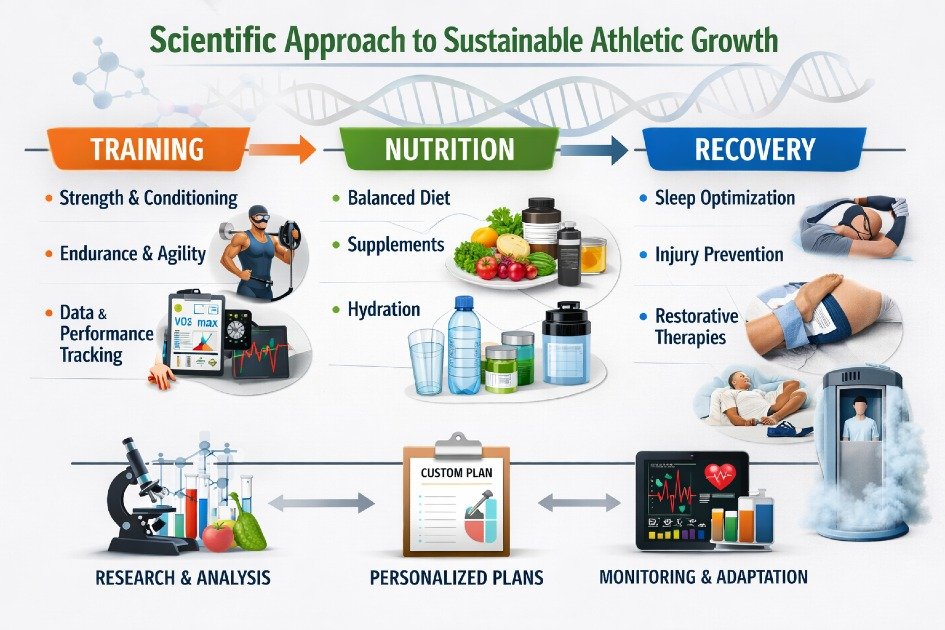
Most athletes train hard, but results vary. The difference lies in how they train, recover, and adapt over time. Athletic growth follows clear principles — progressive overload, structured programming, and proper recovery to avoid plateaus.
Many people focus only on workouts and overlook recovery, nutrition, and how they move. Sustainable results come from a balanced, structured approach—not from training alone.
Discover eight proven athletic growth strategies designed to improve strength, speed, endurance, and recovery for consistent, sustainable performance gains.
1. Why Athletic Progress Stalls
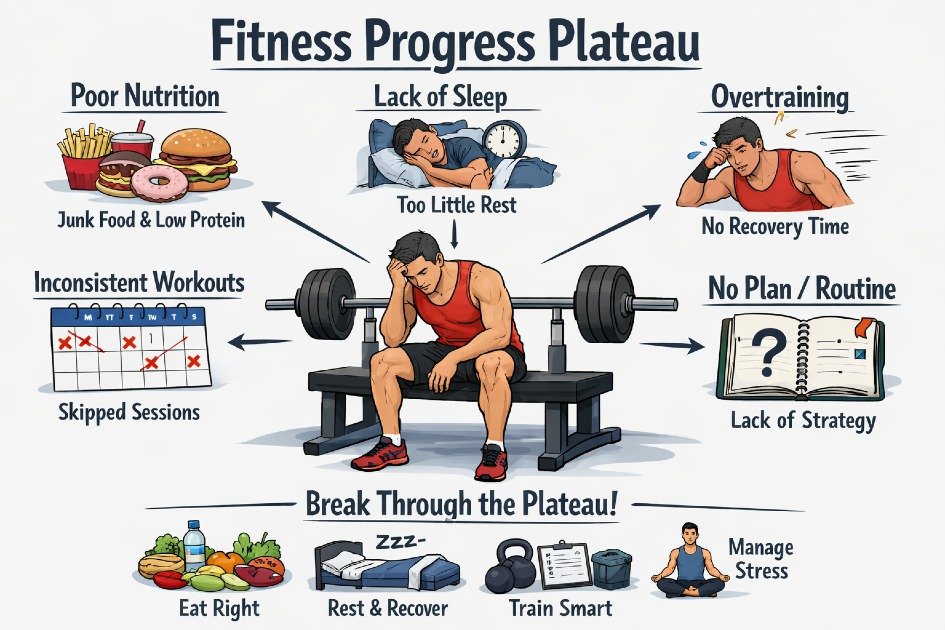
Most athletes
- Repeat the same workouts
- Train hard but recover poorly
- Don’t follow a structured plan
This leads to plateaus and fatigue.
Train With Structure
a. Use Periodization: Break training into phases
- Strength phase
- Power phase
- Speed phase
- Recovery phase
This keeps your body adapting instead of stagnating.
b. Apply Progressive Overload: Increase intensity gradually
- Add weight
- Increase reps
- Improve time or speed
Avoid sudden spikes that lead to injury.
c. Combine Variety With Specificity: Balance your training
- Strength days
- Explosive/power sessions
- Mobility and stability work
The Result
- Faster performance gains
- Better movement efficiency
- Lower injury risk
2. Recovery Drives Growth
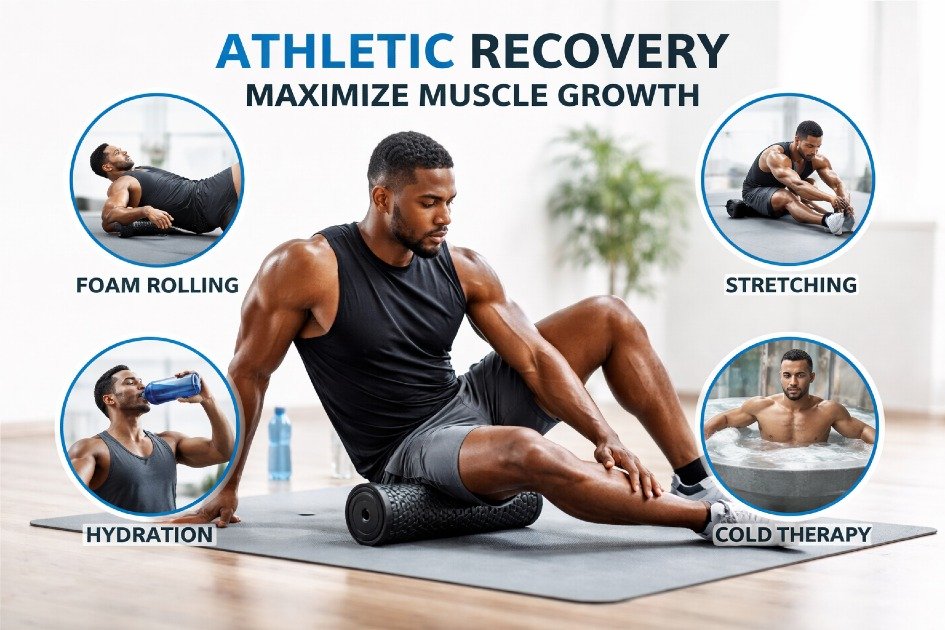
Training breaks your body down. Without recovery, you never rebuild stronger.
Prioritize Recovery
a. Non-Negotiables:
- 7–9 hours of sleep nightly
- Consistent sleep schedule
- Screen-free wind-down routine
b. Active Recovery:
- Light cycling
- Walking
- Mobility sessions
The Result
- Faster muscle repair
- Improved energy levels
- Better performance consistency
Recovery is not optional — it’s where growth happens.
3. Nutrition That Supports Athletic Performance

Many athletes eat enough calories but lack performance-focused nutrition.
Eat With Purpose
a. Core Nutrients:
- Protein → muscle repair and growth
- Carbohydrates → energy and recovery
- Healthy fats → hormone balance
- Electrolytes → hydration and performance
b. Simple Framework:
- Pre-workout: carbs + protein
- Post-workout: protein + complex carbs
The Result
- Better training output
- Faster recovery
- Improved body composition
4. Movement Quality Determines Longevity
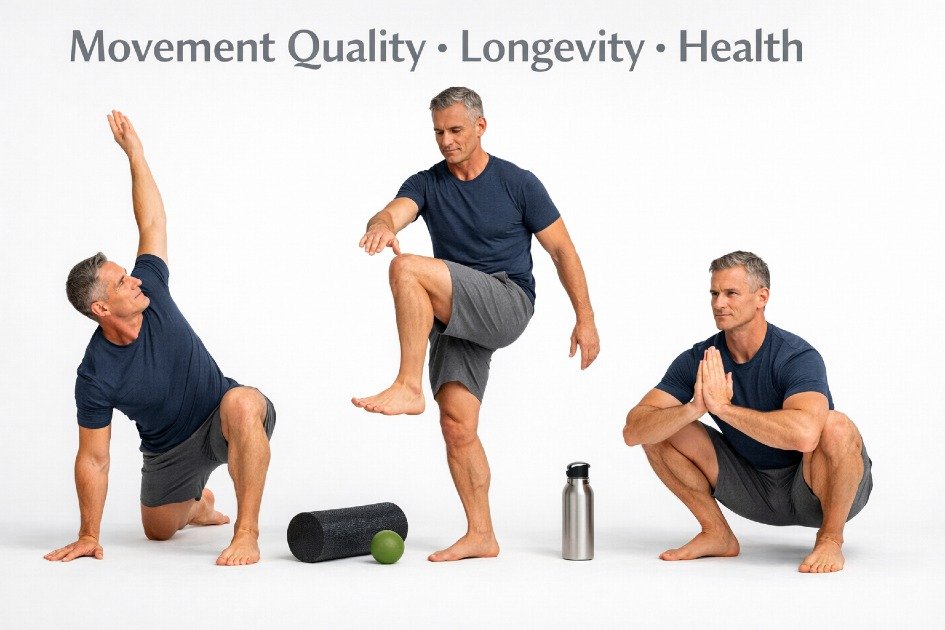
Poor movement patterns waste energy and increase injury risk.
Improve How You Move
a. Focus on:
- Mobility → increase joint range
- Stability → strengthen weak areas
- Technique → refine form
b. Quick Win:
Spend 10 minutes warming up with mobility before every session.
The Result
- More efficient movement
- Better performance
- Reduced injury risk
5. Strength Alone Isn’t Enough — Train Power

Strength without speed limits performance.
Build Explosiveness
Add:
- Plyometrics
- Sprint intervals
- Explosive lifts
The Result
- Faster acceleration
- Higher jumps
- Improved agility
6. Smart Supplement Support
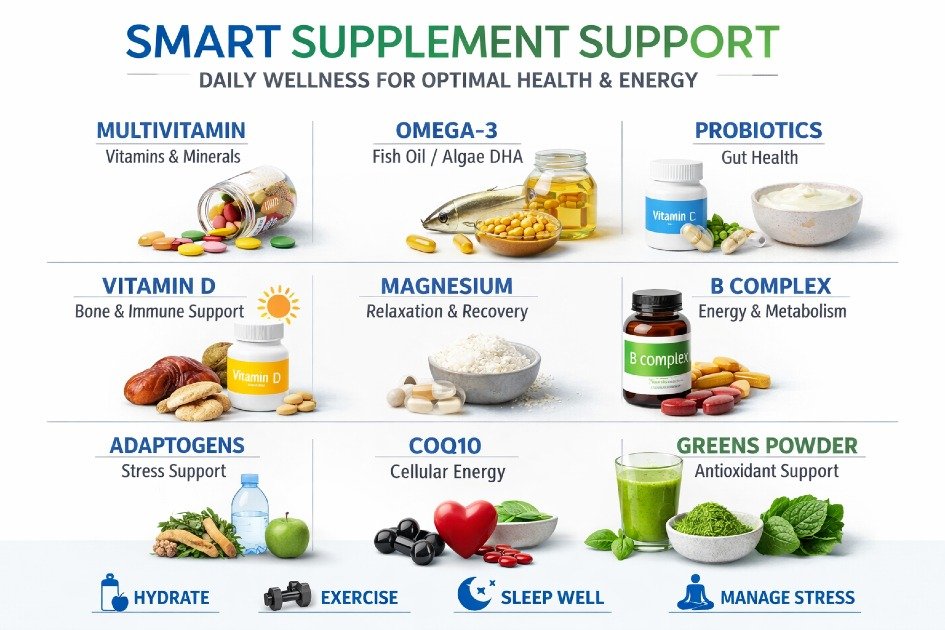
Supplements aren’t required — but they can support performance and recovery when your basics are solid.
A well-rounded formula designed to support:
- Energy production
- Muscle function
- Recovery
- Endurance
Use supplements to fill gaps — not replace proper training or nutrition.
7. Track What Matters

Without tracking, progress becomes guesswork.
Measure Key Metrics
Track:
- Training volume
- Sleep quality
- Recovery (soreness, heart rate)
- Performance outputs
The Result
- Clear insight into progress
- Smarter adjustments
- Faster improvements
8. Habits That Drive Athletic Growth
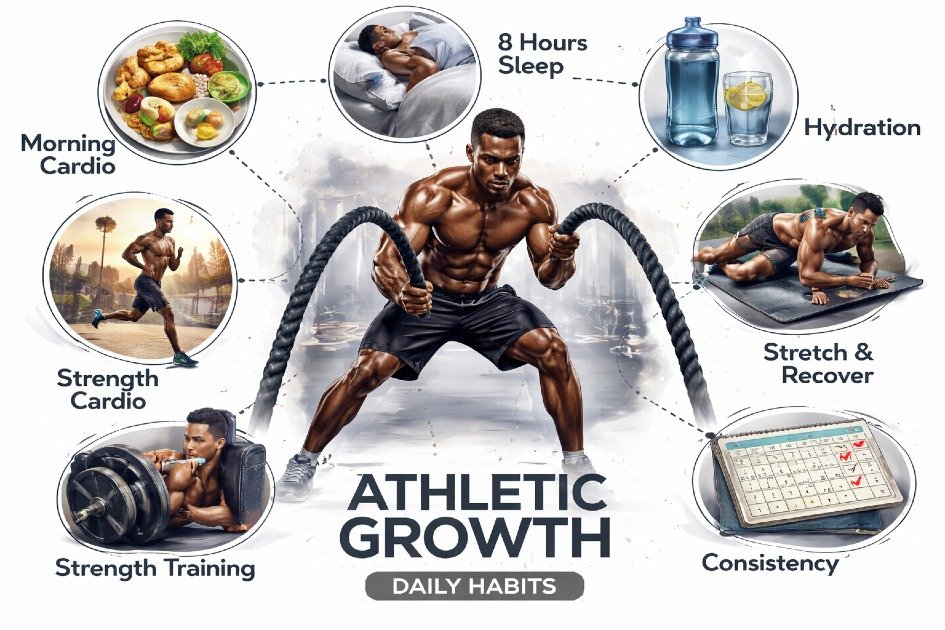
High-performing athletes stay consistent with:
- Structured training plans
- Weekly progress tracking
- Quality sleep
- Intentional nutrition
- Ongoing adjustments
Consistency beats intensity over time.
Build an Effective Athlete Growth Plan
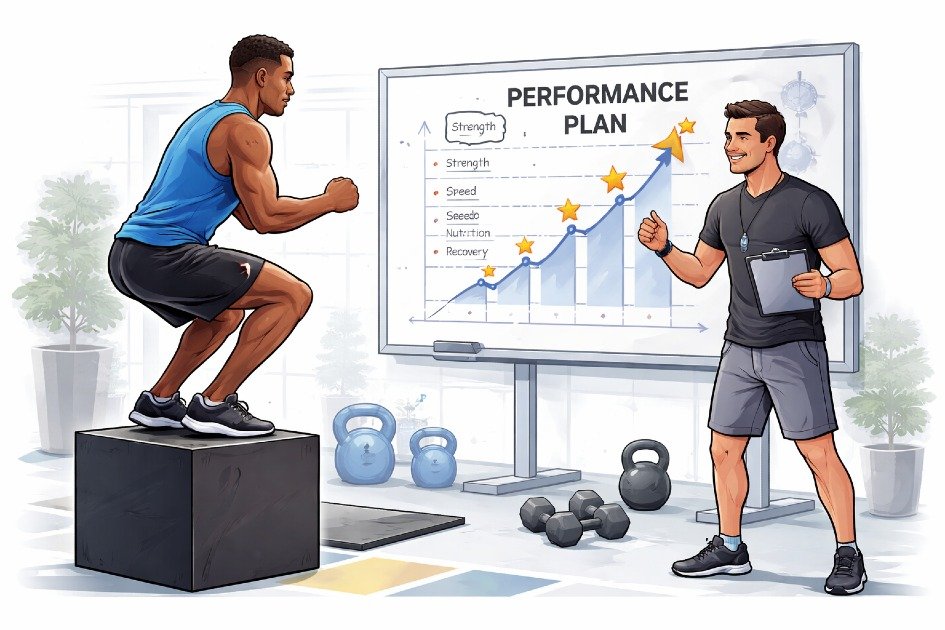
Develop a structured growth plan that balances training, recovery, and skill development.
Key Elements:
- Periodized Training: Cycle through phases — strength, power, speed, and recovery — to keep your body adapting.
- Goal-Oriented Workouts: Set clear targets, such as improving squat strength or sprint time.
- Progress Tracking: Record reps, weights, and times to monitor improvements and adjust as needed.
A clear plan ensures steady progress, reduces injury risk, and maintains motivation.
I replaced a generic weekly routine with a 12-week periodized plan: four weeks of heavy strength work, followed by explosive power and mobility sessions. As a result, I see measurable improvements in both strength and agility.
Athletic Performance Tips That Deliver Results

Hard work alone doesn’t guarantee better performance. Inconsistent habits, poor technique, and insufficient recovery often limit gains.
Focus on strategies that enhance performance:
- Warm-Up & Mobility: 10–15 minutes of dynamic stretches to prime joints and muscles.
- High-Intensity Intervals: Short bursts of intense effort improve speed, endurance, and cardiovascular efficiency.
- Technique First: Proper form maximizes output and prevents injury.
- Recovery Protocols: Sleep, active recovery, and hydration accelerate adaptation.
These habits improve strength, speed, and stamina while lowering injury risk, letting athletes reach their full potential.
Even adding one mobility or HIIT session per week can significantly boost performance.
Improve Athletic Strength Efficiently

Lifting heavy weights without a plan often leads to minimal strength gains. Overtraining, poor programming, and neglecting accessory muscles are common issues.
Train smarter with these strategies:
- Progressive Overload: Gradually increase weight, reps, or intensity to stimulate muscle growth.
- Compound Movements: Focus on squats, deadlifts, bench presses, and pull-ups — they target multiple muscles and build overall strength.
- Accessory Work: Strengthen weak points like glutes, core, and stabilizers to improve lifts and prevent imbalances.
- Recovery & Nutrition: Muscles grow outside the gym; ensure adequate protein and sleep.
This approach builds functional strength, enhances athletic power, and supports long-term performance.
I pair compound lifts with targeted accessory exercises and track weekly progress. Hence, I notice measurable strength improvements within 6–8 weeks.
Frequently Asked Questions
How long does athletic growth take?
You’ll notice early improvements in 4–6 weeks with consistent training and recovery.
Can I build strength and endurance together?
Yes — if your program balances intensity and recovery properly.
Do I need supplements?
No. They help, but training, nutrition, and recovery matter most.
What’s the best training schedule?
The best schedule is one you can follow consistently while recovering properly.
Recap: Build Real Athletic Growth
Athletic growth comes down to a simple system:
- Train with structure
- Recover with intention
- Fuel your body properly
- Track your progress
Do this consistently, and you’ll break past plateaus and perform at a higher level.
Ready to Upgrade Your Athletic Performance
You don’t need more random workouts — you need a clear system that works.
Unlock stronger performance by fueling your body with the right nutrients that support muscle growth, endurance, and faster recovery.
Start today and turn consistent nutrition into measurable athletic progress.