


Living with bipolar can feel like riding an emotional rollercoaster. One day you’re energized and unstoppable; the next, drained and overwhelmed.
Bipolar swings can strain relationships, affect work, and unsettle your identity, yet stability and a fulfilling life with bipolar are achievable.
This guide explains practical strategies, habits, and mindset shifts to help you regain control.
What is Bipolar?

Bipolar isn’t just “moodiness.” It’s a serious mental health condition marked by episodes of mania (or hypomania) and depression.
Misunderstanding bipolar leads to:
- Misdiagnosis or delayed treatment
- Shame and stigma
- Ineffective coping strategies
Recognizing your patterns and triggers gives you knowledge to take control.
Tip: When you understand bipolar, you stop battling yourself and start working with your brain.
Why Understanding Bipolar Is Important

Misconception of bipolar as “moodiness” or an emotional choice can delay treatment, increase stigma, and make it harder to adopt effective coping strategies.
Recognizing the realities of bipolar allows you to:
- Identify early warning signs before episodes escalate
- Respond proactively, rather than reactively, to mood shifts
- Build a framework for stability in your personal and professional life
Why Living Better and Staying Stable Matters

Living with bipolar doesn’t mean living with constant limitation. Stability isn’t about eliminating highs or lows entirely—it’s about regaining control over your life and creating a predictable, healthy daily rhythm.
Focusing on structure, routines, and self-care helps:
- Reduce the frequency and intensity of episodes
- Improve relationships and social interactions
- Support consistent energy, motivation, and productivity
- Enhance overall quality of life
Reclaiming Your Life After Bipolar

The goal is to move beyond survival and live well with bipolar by building self-awareness, steady routines, effective coping tools, and strong support so you can regain control and confidence.
You can live well and stay stable by not letting it define your decisions or happiness.
9 Proven Strategies to Manage Bipolar and Build Daily Stability
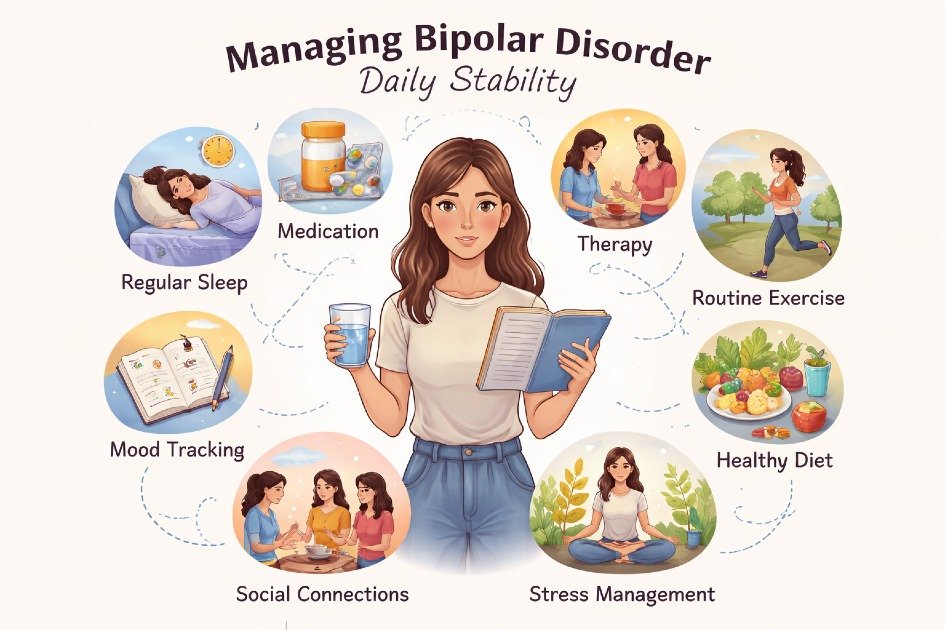
Many people try to manage their condition with willpower alone, reacting only after symptoms escalate.
A common mistake is thinking bipolar can be “fixed” quickly. Without a structured approach, it’s easy to fall into cycles of progress and relapse.
Discover nine practical bipolar truths that support emotional balance, daily control, and lasting stability.
1. Spot Early Warning Signs
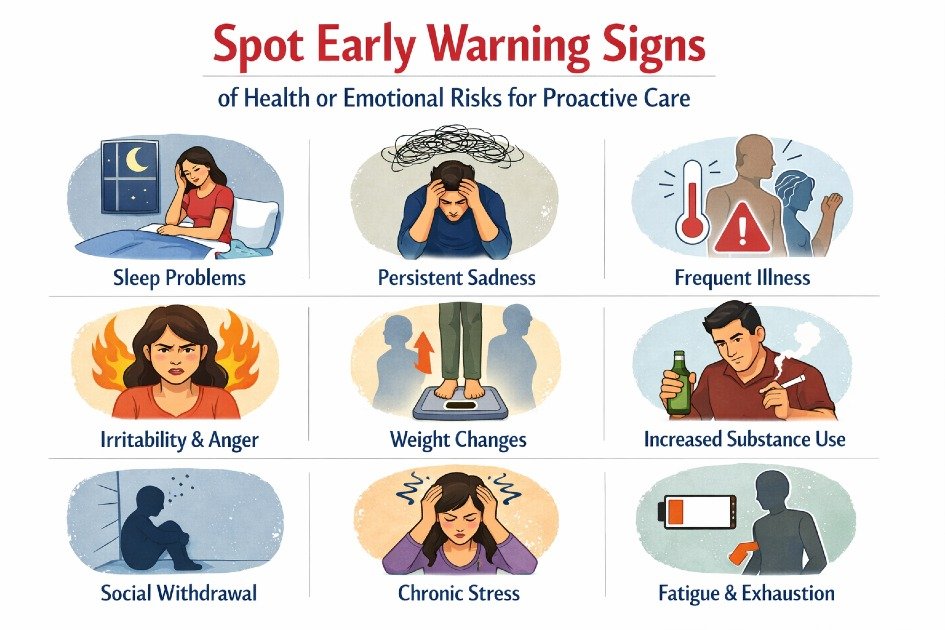
Episodes don’t appear suddenly. Most people overlook early warning signs until it’s too late, even though smarter action could prevent it.
Track moods and behaviors daily:
- Less need for sleep
- Racing thoughts
- Irritability or impulsiveness
- Withdrawal or loss of interest
Tip: Catching signs early allows you to prevent full episodes instead of just reacting.
2. Build a Daily Routine You Don’t Skip
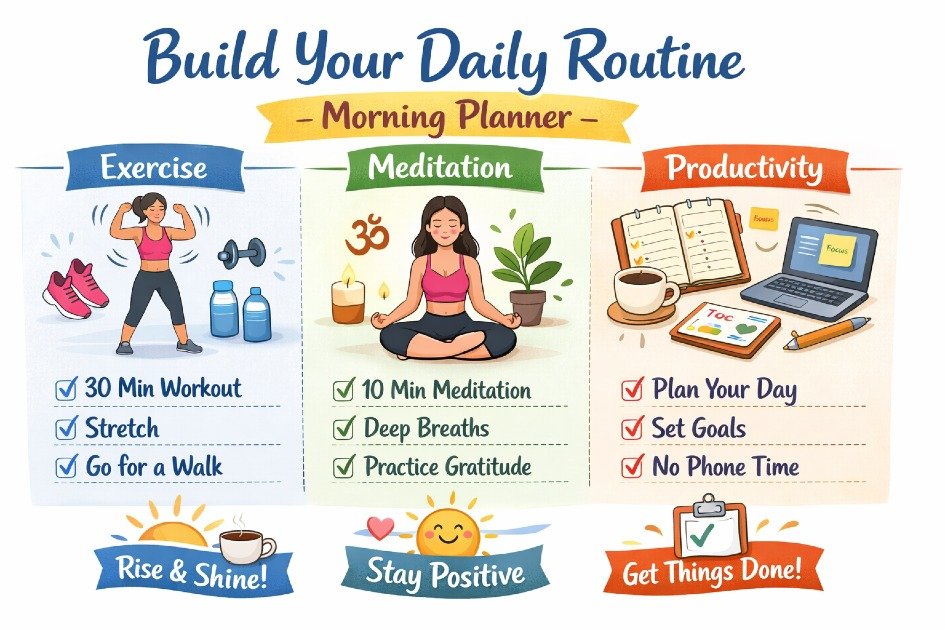
Irregular schedules can worsen symptoms.
Create a consistent daily rhythm:
- Fixed sleep and wake times
- Regular meals
- Daily movement
- Scheduled downtime
Tip: Routine stabilizes your internal clock, reducing mood swings.
3. Sleep Is Your Superpower

Even slight sleep disruption can trigger episodes.
Protect your sleep consistently:
- Avoid screens an hour before bed
- Keep your room cool and dark
- Stick to a set bedtime—even on weekends
Tip: Quality sleep leads to fewer mood spikes and better emotional balance.
4. Medication Is a Tool, Not a Weakness

Many avoid medication due to stigma or fear of side effects.
Partner with a professional to find what works for you:
- Stabilizes mood
- Reduces severity of episodes
- Improves daily functioning
Tip: A tailored treatment plan provides clarity and consistency, not dependence.
NIMH highlights bipolar disorder as a serious mental health issue of up and down episodes.
5. Manage Stress Before It Manages You

Stress triggers both manic and depressive episodes.
Develop proactive stress-management habits:
- Meditation or deep breathing
- Journaling
- Clear boundaries
- Limiting overstimulation
Tip: Lower stress equals fewer mood swings and greater emotional control.
6. Identify and Minimize Triggers

Triggers can be subtle. Small changes can destabilize your mood.
Track and limit your personal triggers:
- Sleep deprivation
- Alcohol or substance use
- Seasonal changes
- High-pressure situations
Tip: Controlling triggers reduces the frequency and intensity of episodes.
7. Build a Support System That Supports You

Isolation intensifies symptoms and relapse risk.
Surround yourself with people who understand or are willing to learn:
- Friends and family
- Therapists or coaches
- Support groups
Tip: A strong support system gives accountability, perspective, and encouragement.
8. Exercise for Emotional Stability

Sedentary habits can worsen depression and anxiety.
Incorporate regular physical activity:
- Walking outdoors
- Strength training
- Yoga or stretching
Tip: Exercise naturally regulates mood, improves sleep, and boosts energy.
9. Create Your Personal Stability Plan
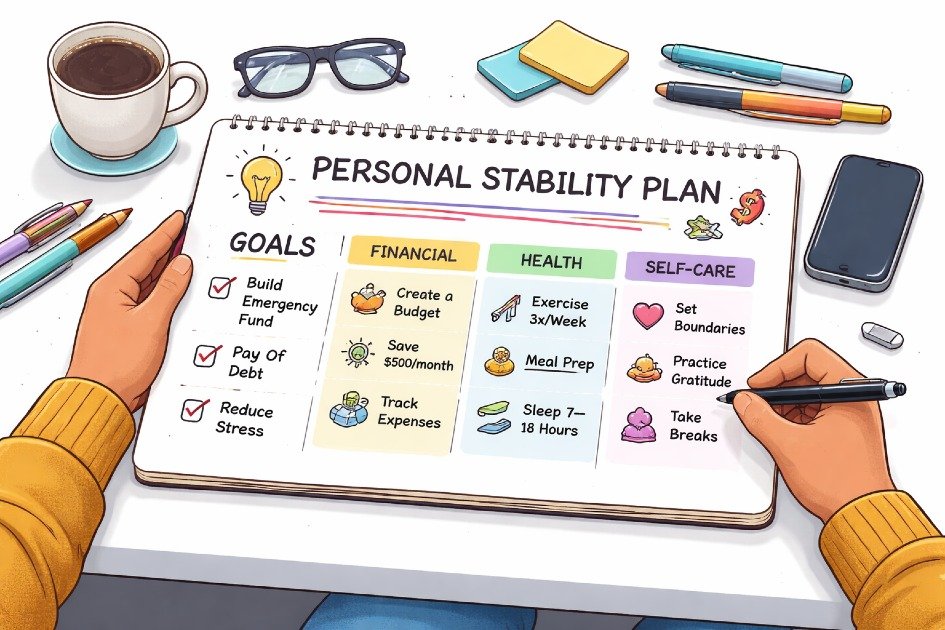
Without a plan, you’re always reacting instead of preventing.
Design a simple, personalized system:
- Early warning signs
- Top triggers
- Daily routine
- Emergency contacts
Tip: You stay proactive, prepared, and in control—even during difficult moments.
Tools That Make Stability Easier

The right tools help maintain consistency:
- Mood-tracking apps
- Journals for clarity
- Sleep aids like white noise machines
A guided mental wellness journal can help track moods and triggers consistently.
Living with Bipolar: Focus on Stability

Living with bipolar isn’t about eliminating every high or low. It’s about building consistent stability you can rely on.
Bipolar often feels unpredictable.
You may experience:
- Sudden shifts in mood and energy
- Difficulty staying consistent
- Feeling in control one day and overwhelmed the next
What it does: The cycle creates frustration and self-doubt.
What to do: Focus on awareness and steady management—not control.
Start here:
- Track your mood daily to spot patterns early
- Pause before reacting to emotional shifts
- Set clear boundaries around sleep, work, and social time
- Pause often and ask yourself what you truly need right now
Core advantages:
- Fewer emotional surprises
- Better decision-making during mood shifts
- A stronger sense of control over your life
Daily Routine for Bipolar: Build a Stable Foundation
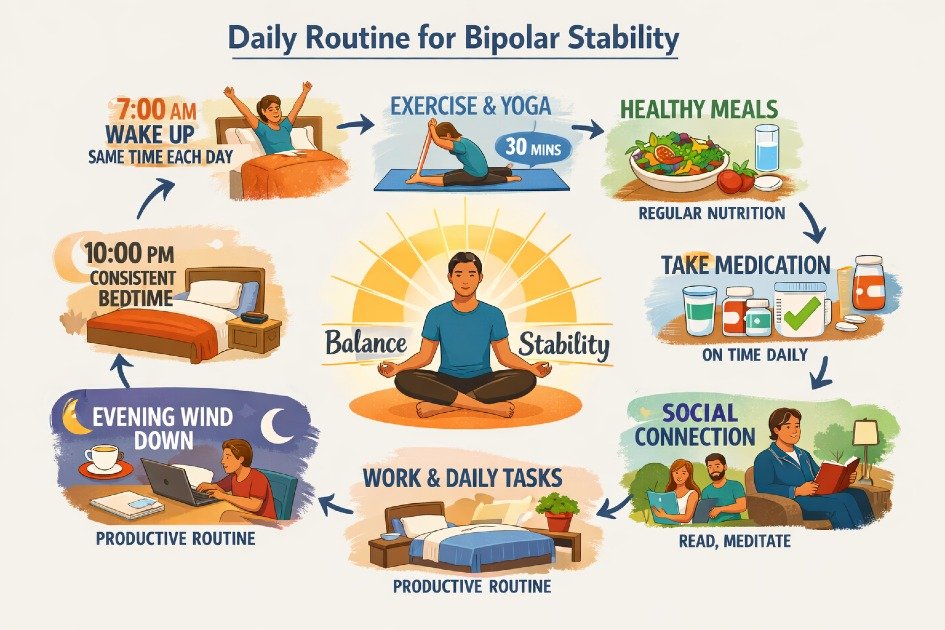
A consistent daily routine for bipolar is one of the most effective ways to stay balanced. Structure reduces chaos.
Irregular sleep, meals, and activity can trigger episodes. Even small disruptions add up quickly.
What to do: Create a simple routine you can follow every day.
Key elements:
- Consistent sleep schedule
- Sleep and wake at the same time daily
- Aim for 7–9 hours
- Structured mornings
- Start calm and predictable
- Avoid immediate stress or screen overload
- Regular meals
- Eat at consistent times
- Keep energy levels steady
- Daily movement
- Walk, stretch, or do light strength training
- Focus on consistency, not intensity
- Planned downtime
- Schedule rest before you feel burned out
- Evening wind-down
- Reduce stimulation before bed
- Use quiet activities like reading or journaling
Core advantages:
- More stable energy throughout the day
- Lower risk of mood episodes
- A routine that supports mental clarity
Bipolar Lifestyle Strategies: Habits That Keep You Grounded
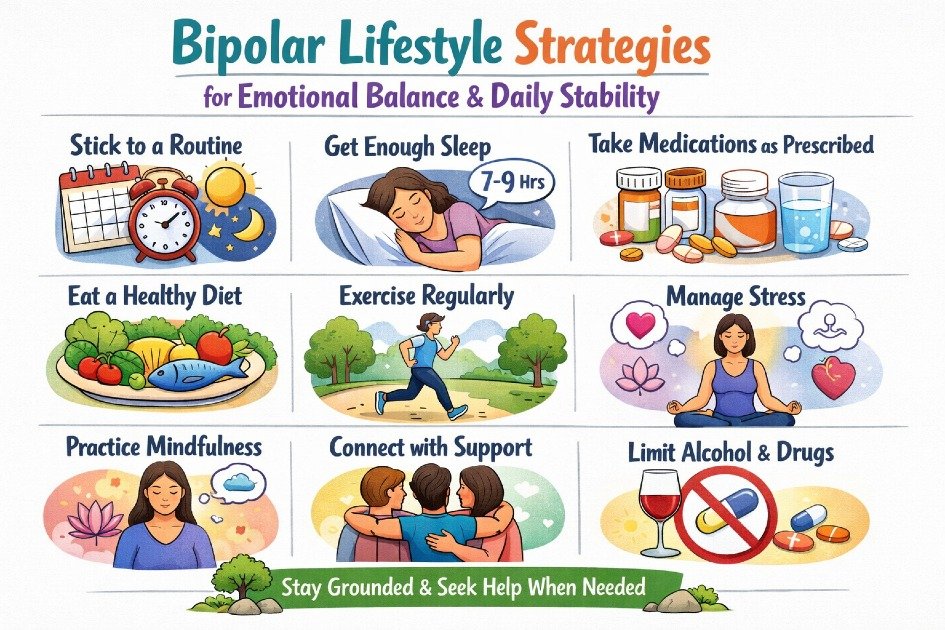
Long-term stability comes from daily habits. The right bipolar lifestyle strategies reduce triggers and protect your mental balance.
Without supportive habits, stress builds fast. Many people rely on willpower, which leads to inconsistency.
What to do: Use simple, repeatable systems that support stability.
Effective strategies:
- Protect your sleep
- Treat it as non-negotiable
- Avoid late nights—even when you feel energized
- Limit stimulants and alcohol
- They can destabilize mood
- Pay attention to how your body responds
- Manage stress early
- Use journaling or breathing exercises
- Don’t wait until you feel overwhelmed
- Set realistic limits
- Avoid overcommitting during high-energy periods
- Say no when needed
- Stay connected
- Maintain supportive relationships
- Avoid isolating during low moods
- Use tools for consistency
- Mood trackers or journals
- Simple habit tracking systems
- Create a calm environment
- Reduce clutter and noise
- Make your space predictable and relaxing
Core advantages:
- Better emotional balance
- Fewer triggers and setbacks
- A lifestyle that supports long-term stability
Frequently Asked Questions
Can I live a normal life with bipolar?
Yes. With the right treatment, routines, and support, many people live stable, successful, and fulfilling lives.
What triggers bipolar episodes most?
Common triggers include lack of sleep, stress, substance use, and major life changes. Managing these reduces episode frequency.
Is bipolar curable?
There’s no cure, but it’s highly manageable. Many experience long periods of stability with proper care.
How do I recognize a manic episode?
Watch for:
- Increased energy despite little sleep
- Racing thoughts
- Impulsive decisions
Early awareness allows intervention before escalation.
Do lifestyle changes really help?
Absolutely. Sleep regulation, routines, exercise, and stress management form the foundation of stability.
Recap: Build Stability and Take Back Control
Living with bipolar is challenging, but it doesn’t have to define your life. Stability comes from consistent habits, self-awareness, and deliberate choices.
When you understand your patterns, protect your routine, and manage stress early, you create a foundation you can rely on.
Simple actions—tracking your mood, improving sleep, and setting clear limits—build momentum. Over time, they reduce mood swings and improve focus and control.
You move from coping to confidently taking control, with fewer intense highs, fewer deep lows, and more stable, predictable days.
Ready for Life’s Stability
Tired of feeling unstable—with the right structure and habits, you can stay stable, think clearly, and move forward with confidence.
Take control of your mood, rebuild daily stability, and start feeling like yourself again with this guided meditation platform designed to help you stay grounded, focused, and emotionally balanced every day.
Start with one strategy from this guide—then build momentum.