


Have you ever wondered why, despite a full night’s sleep and a long weekend, you still feel mentally drained and physically tense? True recovery from fatigue comes from reclaiming energy through intentional practices and notably yoga.
This ancient discipline helps soothe both mind and body, activating the parasympathetic nervous system to reduce stress and replenish energy.
According to Harvard Health, yoga promotes relaxation through gentle movement, controlled breathing, and mindfulness, reducing stress reactivity and lowering burnout risk.
Incorporating mindfulness enhances emotional resilience, while brief yoga sequences can interrupt fatigue and sharpen focus. Strategies like mindful eating and digital detox combined with gentle stretches buffer against overstimulation.
This guide emphasizes how yoga-based practices help individuals regain control over their energy and inner calm, fostering a vibrant and balanced life.

How does burnout slowly drains your energy?
Burnout quietly drains your energy, focus, and drive until even simple tasks feel hard. Spotting it early helps you recover, and practicing yoga and mindfulness can restore balance and calm.
How stress and fatigue slowly drain your energy?
Burnout begins quietly with brain fog, mood swings, and feeling like nothing you do matters. People often think it is just stress, but over time it drains energy, dulls creativity, and makes sleep hard because it wears down the nervous system.
Taking short mindful breaks each day helps you notice small stress signs before they grow. Five to ten minutes of gentle yoga stretches can calm your nerves, and deep breathing exercises like alternate nostril or belly breaths lower stress and clear your mind.
I used to drag through mornings at work, jittery and unfocused even after plenty of sleep. Starting a 15-minute yoga routine changed everything. Moving through the poses and focusing on my breath helped me feel calm and clear.
Why do we brush off clues until it is serious?
Burnout hides behind drive, making people think nonstop work equals success. When early warning signs are ignored, it can lead to feeling emotionally flat or cause physical problems like headaches, stomach issues, and constant tiredness.
Tracking your energy and mood shows helpful patterns, and spending 20 minutes on evening yoga eases stress, boosts circulation, and lifts your emotions.
I used to shrug off feeling tired as just part of adult life. After a week of evening yoga, I noticed my tight shoulders were really my stress showing up in my body. Paying attention to these small signals let me act before I hit full burnout.
Can you stop burnout early before it takes over?
Healing from burnout takes small daily actions that care for your mind, body, and spirit. Short breaks alone offer only fleeting relief.
Start your day with gentle sun salutations to wake up your body, take a few minutes at midday for calming breaths to quiet your mind, and end with simple evening stretches to ease tension. Focusing on doing this daily, even for just ten minutes, brings real energy, clarity, and relaxation.
When I felt burnout taking over, I started daily yoga, short mindfulness breaks, and journaling. In a few weeks, my mind cleared, my energy came back, and I felt steady and calm. Yoga became my anchor, linking movement to focus and emotional strength.

Yoga is more than just physical exercise
Yoga goes beyond movement, it calms the mind, lowers daily stress, and helps you feel steady again. With regular practice, your nervous system learns to stay balanced, clear, and strong even during difficult moments.
Can yoga moves melt stress away?
Some people carry hidden tension such as shoulders tightness and neck stiffness without noticing. This strain also affects the mind and can lead to worry and burnout. Even after enough sleep, the body feels tired, focus drops, and a low sense of discomfort lingers throughout the day.
Gentle poses like Cat Cow, Child’s Pose, and a seated forward bend help the body slow down. These moves calm the nervous system, lower stress hormones, ease the mind, guide deeper breathing, and loosen tight muscles. Just 10 minutes can leave you feeling lighter, calmer, and more relaxed.
Each morning felt heavy and tense when I carried the stress of my entire day on my shoulders. Then I started a short yoga flow with easy twists and shoulder stretches. Within days, my mind felt clearer and my stress eased.
How does mindful breathing boost your focus?
When overwhelmed, focusing is challenging, so thoughts jump around and work slows down. Over time, this mental overload drains energy and keeps the body stuck in deep fatigue.
Five to ten minutes a day of mindful movement and breathing can clear mental noise, support better choices, and help the mind stay calm. Simple breathing practices like slow nose breathing and steady box-style breaths guide the body to relax, balance the nervous system, send more oxygen to the brain, and sharpen clear thinking.
During tough workweeks, I slow down and focus on deep breathing with yoga. It clears my mind fast and helps me feel calm again. I use a guided breathing that leads each session, so it fits easily into my busy day.
Why does yoga make stress less powerful?
Chronic stress keeps the body stuck in high alert. This can cause mood swings, poor sleep, and long-term health issues. Many solutions only calm stress for a brief time and fail to fix how the body reacts to it.
A steady yoga routine helps the body stay strong under stress. It teaches the nervous system to spot calm signals, so stress does not take over. This leads to a clear mind during busy moments and better control when facing daily challenges.
I started seeing yoga as a way of life, not just a workout because it helps me to manage stress better. When deadlines pile up or family issues arise, I stay calm and think clearly instead of panicking.

How mindfulness boosts your day
Mindfulness with yoga helps calm the mind during stressful times. It clears your thoughts and trains your body and brain to manage stress and tiredness in a healthier way.
Can mindfulness clear your mind amid chaos?
The constant distractions in today’s busy world pull our attention in many directions resulting in slow tasks and drain energy. These, then quietly lead to stress and burnout that many people fail to notice.
Simple mindfulness practices such as slow breathing, brief body checks, and quiet pauses help you stay present and focused. Gentle yoga stretches calm the mind, eases the body, and releases built-up stress.
I still remember my first week adding short mindfulness breaks after my morning yoga. Work that once stressed me out felt easier to manage, and I got more done each day. Engaging in meditation helped me stay on track with quick, guided sessions that fit my busy life because they keep me focused and steady.
How can mindfulness calm anxiety naturally?
Busy workers often experience mild anxiety. Their minds race, and their breathing becomes quick and shallow. When people ignore anxiety, it can slowly hurt both the mind and the body.
Mindfulness helps people notice their thoughts without judging them. This pause gives the mind time to choose a calm response. Simple practices like gentle yoga and steady breathing lower stress hormones and relax the body.
When life felt heavy, I started a simple night yoga routine. I followed an online course, reaching for poses that opened my chest and stretched my spine. Slowly, my body loosened, my mind grew calmer, and the stress that had weighed me down began to fade.
What makes mindfulness feel hard before it helps?
Mindfulness seems simple, but its power grows only with regular practice. Most people quit early because their minds wander or they do not see results right away. Staying consistent brings real calm and focus over time.
Begin with just five minutes of daily mindfulness and slowly extend the time. Pair it with yoga to stay consistent. Set up small reminders, like alarms or notes, to make it part of your day.
I used to give up on mindfulness after a few days, feeling it did not help. Then I added it to my yoga practice, and it felt easy and natural.

How to build energy for a strong morning
Starting the day tired is normal, but simple morning habits like yoga and mindful breathing can boost energy, improve focus, and help you feel calmer and more productive all day.
How does a quick yoga routine wake you up?
Drinking caffeine in the morning can give a quick lift, but it often leads to a mid-morning crash. This leaves you more tired and chasing another boost, trapping you in a cycle of ups and downs.
Gentle yoga moves like sun salutations, cat-cow, and forward bends wake up your body, boost circulation, energize muscles, and clear your mind, leaving you alert and refreshed naturally.
I began a 10-minute morning yoga routine and felt my energy change instantly. Even on busy days, I stayed calm and focused. A beginner-friendly yoga mat made each pose comfortable, and a guided yoga app kept me on track without stress. Now I skip my morning coffee and let yoga wake me up naturally.
How can morning mindfulness keep stress away?
Mornings can start with a flood of emails, reminders, and worries about the day, pushing your mind into stress and making you react instead of focus.
Starting your day with mindfulness clears your mind and steadies your emotions. Simple practices like deep breathing, noting what you are thankful for, or scanning how your body feels can ease stress and calm your mood. Just a few minutes can train your brain to focus on the present instead of worrying.
Starting my mornings with mindful journaling transformed my day. I settle into a comfortable yoga pose and jot down three clear intentions. Holding a mindfulness journal makes the process real and engaging, while a short guided meditation keeps me on track.
How do meals and fluids prevent burnout?
Starting the day without enough water or healthy food can leave you tired, even if you do yoga or mindfulness. Eating sugary snacks or skipping breakfast causes quick energy spikes that soon crash, making fatigue worse.
Begin your day with water and fresh, nutrient-packed drinks like lemon water or berry smoothies to boost energy, lift your mood, and sharpen your focus for yoga and mindfulness.
I start my mornings with yoga, a warm glass of lemon water, and a quick protein smoothie. After that, I enjoy a light, nutrient-rich breakfast. This routine keeps me energized, calm, and focused, even on the busiest days.

Easy breaths to ease stress
Stress can cause exhaustion and tension, even with methods like stretching or meditation. Breathing techniques from yoga can reset the nervous system, reduce anxiety, and offer clarity in chaos.
Can one breath reset your brain in seconds?
Racing thoughts make it hard to focus and stir up anxiety, causing your heart to race and breathing to become uneven, which strains your nervous system.
Box breathing is a simple exercise where you breathe in for four counts, hold for four, breathe out for four, and pause for four. Doing this for just five minutes calms your body, lowers stress hormones, and clears your mind.
I tried box breathing on a tough workday and added a simple yoga flow, the tightness in my shoulders eased instantly. Rolling out my yoga mat kept me steady and focused, letting me fully sink into the practice. Just a few minutes session of turned my chaotic afternoons into calm, clear moments.
Can simple breaths boost energy at noon?
Around 2 PM, many feel a slump with heavy eyes and foggy focus. This often happens when breathing is shallow and the mind slows down. Coffee can lift energy briefly, but it does not fix the root cause.
Alternate nostril breathing asks you to breathe in through one nostril while keeping the other closed, then switch as you breathe out. Doing this 5–10 times helps your body get steady oxygen, balances the two sides of your brain, and clears your mind. Sitting comfortably while practicing makes it even more relaxing.
I started doing alternate nostril breathing at my desk between back-to-back meetings. Sitting on a meditation cushion helped me sit taller, so my breaths felt fuller and calmer. The mental fog lifted, and I tackled tasks with clear focus without reaching for coffee.
How can breathing calm your nerves?
Facing important moments like interviews or presentations can make your heart race and palms sweat. Usual tricks to calm down often do not work. Anxiety takes over, making it hard to think clearly and act prepared.
Try the 4-7-8 breathing method by inhaling four counts, holding for seven, and exhaling for eight. Do this four times to soothe your mind and activate calm signals in your body. Add gentle yoga twists or sit comfortably to release tension and help your body relax deeply.
Before my presentation, I sat on a yoga block and practiced 4-7-8 breathing. Focusing on my breath and posture made me feel steady and confident. When I stepped into the room, I was calm, clear-headed, and fully in control—breathwork really changed the game for me.
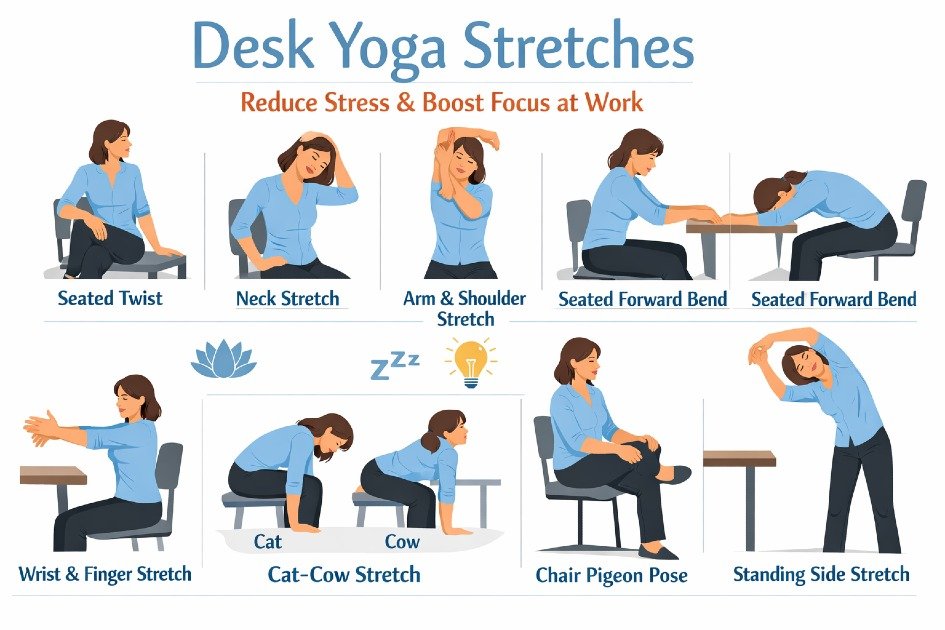
Stretch and calm while you sit
Desk-friendly yoga helps ease stress and tight muscles from long hours of sitting. You can stretch and move right in your chair without special gear, and in just a few minutes, you refresh your body, clear your mind, and feel better while you work.
Can yoga stretches stop neck and shoulder pain?
People working at the desk feel tight shoulders and sore necks after long hours of sitting. This pain can distract the mind and lower focus. When people ignore it, the strain can grow into frequent headaches or long-term pain.
Sit up straight, relax your body, gently lift your shoulders toward your ears as you breathe in, then roll them back as you breathe out. Next, tilt your head slowly from one side to the other and hold each side for about 10 to 15 seconds. This simple move boosts blood flow that helps your spine stay aligned and eases tight muscles so that your upper body feels lighter and looser.
By mid-morning, my neck always felt tight and sore. I found a quick routine that helps me relax in less than five minutes. Sitting in a supportive ergonomic chair lets me stretch safely and feel a deeper release.
Can simple yoga moves that ease eye strain?
Prolonged hours on devices strain the eyes and drain the mind. Many office workers feel tired, get headaches, and lose focus. Coffee and quick breaks may bring brief relief, but they only hide the real tension instead of fixing it.
Use eye palming and gentle forward bends while seated to warm the body, ease back tightness, and slow your breath. These simple moves help clear busy thoughts and calm your nerves.
I use this trick when my energy drops in the afternoon, especially on busy workdays. I pair a gentle yoga move with a small eye massager to ease eye strain fast. It helps me feel awake and calm without reaching for sugary snacks.
What motions keep your spine healthy all day?
Prolong hours of sitting often lead to lower back pain. This pain does more than hurt. It can reduce focus, affect mood, and make it harder to sleep well.
Seated twists and easy leg stretches loosen a stiff lower back, they also boosts blood flow and wakes up muscles that have been resting too long. Sit up straight and gently turn your body to the right as you breathe in and out, then switch to the left. Next, straighten one leg at a time and flex your ankle.
Adding yoga moves to my workday changed how my body feels. I use a lumbar pillow to keep my spine straight while I stretch at my desk. This easy habit helps stop back pain and keeps my energy steady until the day ends.

Mindful eating and its role in fighting burnout
Mindful eating helps reduce stress while boosting energy, focus, and mental clarity by slowing down and enjoying meals instead of rushing through processed foods.
Can mindful eating ease your daily stress?
Eating while distracted slows digestion and signals stress to the brain, which can drain energy, tire the adrenals, and raise the risk of burnout over time.
Spend a few minutes noticing the colors, smells, and textures of your food while chewing slowly to feel satisfied. Add gentle stretches and deep breaths before eating to calm your body and help digestion.
I like to start with a few gentle stretches and deep breaths before eating, especially after a busy day. Slowing down makes my meals feel more satisfying, and I often add organic snacks or supplements to keep my energy steady. Since I started this habit, I feel more focused, calmer, and energized for longer.
How can mindful eating boost energy?
Burnout shows up as constant tiredness that exercise alone cannot fix. Poor nutrition fuels the problem, and quick, impulsive meals spike blood sugar, crash energy, and push you toward more caffeine or sugar, making burnout worse.
Build your meals with whole grains, protein, and omega-3 foods to fuel your body and stay active. Help your digestion by eating slowly and doing gentle stretches after eating, like cat-cow or gentle twists. Drink warm water or herbal tea between bites to absorb nutrients better.
I felt a real change when I started pairing simple evening yoga with mindful meals. Choosing plant-based protein powders and meal kits helped me stay alert after lunch and full of energy for my practice. Paying attention to what I ate and how I moved brought back a balance I had forgotten.
Does paying attention to meals sharpen your brain?
Eating while distracted can leave your mind stuck on tasks, making it hard to focus afterward. Feeling worn out makes this worse, lowering energy and mood. Even small bites eaten without attention can spark cravings for unhealthy snacks.
Focusing fully on your meal without screens can boost brain flexibility, sharpen attention, and reduce stress. Taking a few deep yoga breaths or a moment of calm before and after eating clears your mind and refreshes your energy without extra workout time.
Starting my day with yoga and mindful eating changed how I focus at work. I drink nutrient-rich teas and adaptogenic supplements during meals for balance. This routine keeps my energy steady and my mind clear, helping me manage busy days without burnout or brain fog.

Digital detox clears your mind from screens
Yoga helps clear the mind and ease emotional exhaustion by encouraging gentle movement and focused rest from constant digital distractions. It lets people regain focus, calm their thoughts, and feel more balanced.
Can constant screens hurt your brain power?
Prolonging hours in front of screens raise stress, shrink attention, and make it harder to relax. Blue light from devices throws off sleep, leaving you less creative, less focused, and more emotionally drained.
Doing a few minutes of yoga, like downward dog or child’s pose, eases body tension and refreshes your mind after screen time. Adding five minutes of guided meditation each day can sharpen focus and calm stress.
I take ten minutes after lunch to step away from my laptop and phone for a quick digital detox. Sitting in Sukhasana and focusing on slow, steady breaths clears my mind and gives me a fresh burst of energy for the afternoon.
Will device-free evenings improve your sleep?
Scrolling on your phone before bed tricks your brain into staying awake. It cuts melatonin, the sleep hormone, and keeps your mind alert, making it hard to fall asleep, wake often, and feel tired the next day.
Evening yin yoga with gentle poses like supine spinal twist and legs-up-the-wall soothes the mind. Pairing it with slow breathing or body-scan meditation quiets racing thoughts and helps the body sink into deep, restorative sleep.
I started doing yoga at night without my phone and noticed my sleep improved in just two weeks.
How do quick yoga breaks stop mental burnout?
Sitting at a computer for hours strains your back, tightens muscles, and slows blood flow. By evening, your mind may feel tired, your focus blur, and your creativity low.
Taking short yoga breaks with moves like cat-cow, neck rolls, and seated spinal twists wakes up your nervous system in just a few minutes. Pairing them with slow, deep breaths sharpens focus, boosts oxygen to the brain, and eases tiredness from long hours at a screen.
I began taking a five-minute yoga break each hour. Gentle stretches and deep breaths quickly refreshed my mind and body. This handy yoga kit guided me with simple exercises that slipped easily into my busy day and helped ease screen strain.
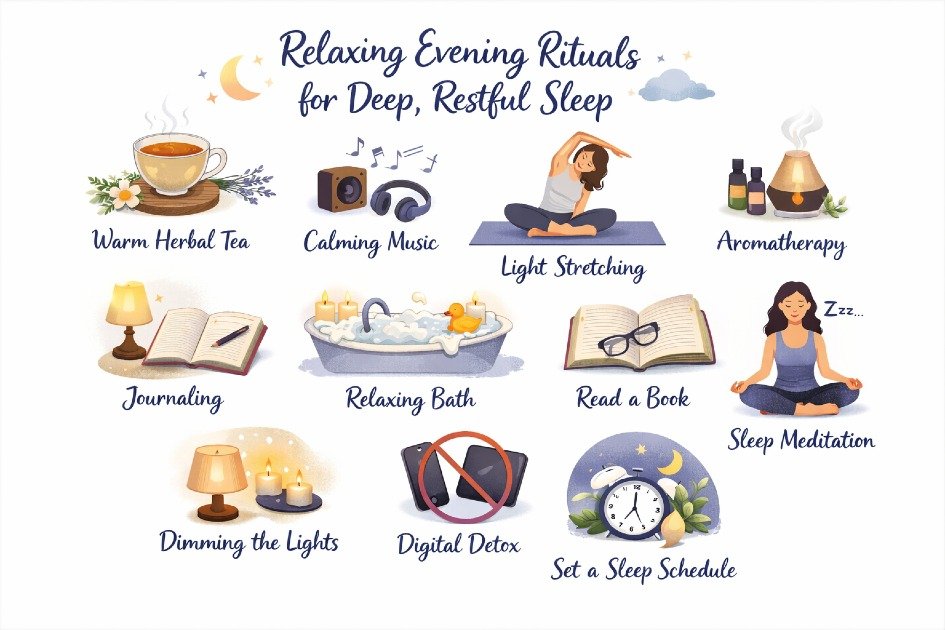
Evening habits for deep rest
Stress and a busy mind can make falling asleep hard. Practicing gentle yoga or mindfulness at night calms the body and helps you sleep deeply.
Why do my thoughts keep me awake at night?
Racing thoughts keep many people awake at night. This constant mental activity boosts stress hormones, keeping the body alert when it should be resting.
Spend 10–15 minutes before sleep in quiet meditation, focusing on slow breaths or gentle guided relaxation. Let deep breathing ease tension in your shoulders and jaw while calming your mind for better rest.
I spent months tossing and turning at night until I tried a 12-minute yoga nidra session. Within days, my thoughts slowed, my body felt lighter, and I started sleeping more steadily. Even my partner noticed that a few focused minutes on yoga nidra turned my restless evenings into a restful night.
How do gentle stretches ease tension for sleep?
Hidden tension builds up in your body during the day and can make nights uncomfortable. Tight hips and stiff shoulders can keep you tossing and turning, making it hard to sleep well and leaving you tired in the morning.
Evening yoga stretches such as supine twist, legs-up-the-wall, and reclined butterfly help your body unwind by easing tension. Moving slowly and breathing deeply signals your parasympathetic nervous system to relax, while holding each pose for a few minutes allows muscles to release and your body to rest more fully.
I began doing 15 minutes of yoga every night before bed. Soon, my tight back and shoulders started to loosen, and I felt calmer than I had in months. Yoga gentle stretches became part of my nightly routine, making me sleepy and relaxed like nothing else could. Yoga turned my evenings from stressful to peaceful.
Can mindful evening habits amplify sleep quality?
Even with yoga and meditation, daily habits can ruin sleep. Late-night scrolling, endless shows, or drinking caffeine too late keeps your brain alert and stops deep rest.
Wind down by lowering the lights, putting away screens, sipping warm herbal tea, writing your thoughts, and stretching gently with yoga to help your mind and body relax for restful sleep.
I started a simple nightly routine with chamomile tea, a few lines in my gratitude journal, and gentle yoga stretches. After just two weeks, I found my secret to a calmer night and more energy during the day.

Yoga and mindfulness for deep stress relief
Stress can leave you tired, tense, and restless even after a full night of sleep. Practicing yoga and mindfulness helps lift your energy and sharpen your mind.
Can moving and breathing together reduce stress?
Stress keeps your body and mind on edge, making you feel tense, cranky, and worn out. Simple stretches or short meditation sessions often cannot calm this constant strain.
Gentle yoga combined with mindful breathing helps your body relax and eases stress. Holding restful poses like child’s pose or legs-up-the-wall for a few minutes calms your mind. Focusing on deep breaths lowers stress hormones and strengthens your body’s relaxation response.
I started doing short yoga flows with guided meditation, my evening headaches faded, my focus improved, and I felt a steady calm throughout the day. It felt like my body and mind had been gently reset.
What yoga poses clear mental clutter?
Burnout clouds the mind, makes decisions hard, and sparks anxiety, turning meditation into a source of stress instead of calm.
Practicing grounding yoga poses like mountain pose and warrior II while slowly noticing your body helps you feel more aware and eases restless thoughts, giving your mind a calm break.
Using my mindful yoga mat keeps me steady during longer sessions. I notice my busy thoughts calm on their own, and it feels like my mind is taking a deep breath. Each session turns into a quiet space I can escape to in the middle of a busy day.
How can 20 minutes a day end your burnout?
When life piles up, people often feel they need long breaks or yoga to fight stress, but finding any time for self-care feels out of reach, and the pressure just keeps growing.
Try spending 20 minutes each day on gentle stretches and mindful breathing. Start with 10 minutes to loosen your muscles, then follow with 10 minutes of calm, focused breathing. Doing this regularly helps reduce tension and clear your mind.
I began a daily habit with a guided yoga and mindfulness program. After a few weeks, I noticed that I managed to get stressed better. Moving mindfully and focusing on my thoughts changed how I faced each day, making fatigue easier to manage, and challenges that once drained me felt lighter.
Recap: Keep a Routine to Beat Burnout
Burnout can be managed through a sustainable routine of yoga and mindfulness.
It is vital to start with small commitments, like five minutes of yoga in the morning and short mindful breaks throughout the day.
Simple poses like Child’s Pose, Cat-Cow, and Forward Fold help release tension and teach the body to manage stress effectively.
Regular practice leads to improved mood, sleep, mental clarity, and resilience against burnout.
Prioritizing self-care daily allows yoga to transform burnout into a manageable part of life.
Frequently Asked Questions
How soon can I feel the benefits of yoga and mindfulness for stress relief?
Yoga offers relief within days, with significant changes usually apparent after 3–4 weeks of regular practice. It adjusts the nervous system, and mindfulness aids in altering cognitive responses to stress.
Do I need to be flexible or experienced to start yoga for burnout?
Yoga emphasizes adaptability and energy flow, with gentle postures like Child’s Pose and Cat-Cow focusing on breath awareness. Beginners can find online tutorials to combat stress without injury.
Can mindfulness alone be enough, or do I need yoga too?
Mindfulness and yoga together improve mental clarity and mind-body synergy, lowering tension and strengthening cognitive resilience. This combination provides a holistic buffer against burnout that neither practice can achieve alone.
How can I stay consistent with daily practices when I feel exhausted?
Small practices like a 5-minute yoga sequence or a 2-minute breathing session can induce significant neurochemical changes. Utilizing habit-tracking apps or guided programs can enhance accountability and facilitate consistency.
Are there apps or online resources that make mindfulness and yoga easier?
Platforms that provide guided meditation and yoga flows are effective for simplifying routines in busy schedules, offering structured programs that integrate postures, breathing techniques, and mindfulness practices.
Can short breaks during work prevent burnout over time?
Micro-practices like standing stretches, shoulder rolls, and mindful breathing provide cumulative benefits. Adding yoga to these breaks helps regulate cortisol levels, maintaining balanced energy levels throughout the day.
How do I know which yoga poses are right for my stress level?
Choosing restorative yoga postures like Legs-Up-The-Wall or Seated Forward Fold can effectively decompress the nervous system.
Guided resources or certified instructors can customize yoga sequences based on individual stress levels for safe and effective relief.
Is it better to practice yoga in the morning or evening for burnout prevention?
Morning yoga enhances energy and sets a positive tone for the day, while evening sessions alleviate tension and improve sleep quality. It is beneficial to experiment both as to determine which suits your lifestyle better.
Can yoga improve mental focus as well as physical relaxation?
Yoga enhances attention and cognitive flexibility through stimulation of the prefrontal cortex. When paired with mindfulness, it fosters emotional intelligence, promoting proactive responses to stress.
How do I integrate yoga and mindfulness into a hectic schedule without feeling overwhelmed?
Incorporating short mindfulness practices, like 2 minutes of conscious breathing before meetings, 5-minute yoga stretches during breaks, or mindful eating at lunch, can effectively reduce burnout over time with minimal time investment.