
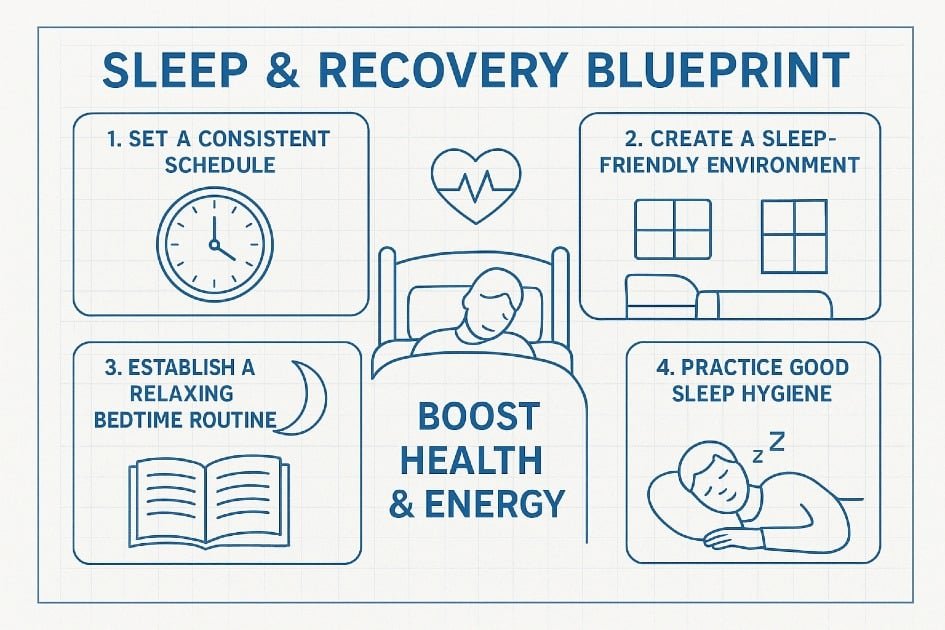

Have you ever wondered why some people wake up revitalized while others drag through the day, no matter how early they went to bed? The key lies in mastering sleep and recovery, a beneficial method that directly impacts your physical vitality, cognitive clarity, and emotional balance.
Sleep is essential for repair, as it enables our brains and bodies to recover, adapt, and maintain resilience, according to Harvard Health.
Understanding how to optimize nightly restoration cycles is key to achieving peak health. It covers synchronization of circadian rhythms, restorative micro-sleeps, and behavioral hacks to improve sleep quality and cognitive performance.
The blueprint provides actionable strategies to cardiovascular function, mental sharpness, and immune resilience, implementing sustainable habits for enhanced well-being and longevity.
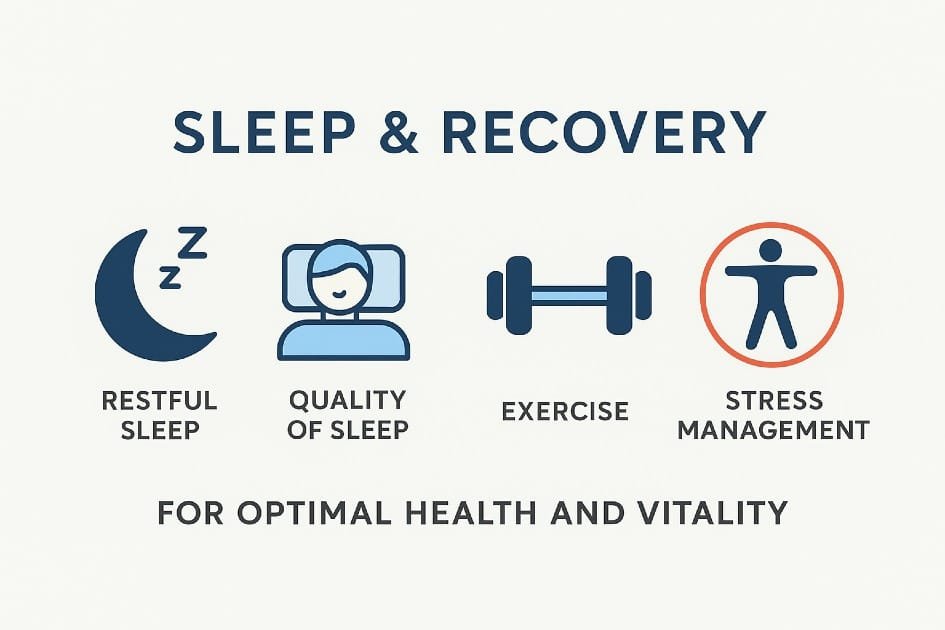
Understanding of sleep and recovery
Sleep and recovery are essential for optimal health, serving as vital components for bodily repair and performance. Research from the CDC indicates that one in three U.S. adults lack sufficient sleep, correlating this deprivation with chronic health issues such as heart disease, obesity, and compromised immunity.
Understanding the importance of sleep and recovery highlights that allowing the body downtime is essential, not optional.
Brain and body recharge during sleep
Why it matters:
Enhances memory and cognitive function, aids in muscle recovery post-exercise, regulates appetite hormones (ghrelin and leptin), and boosts the immune system.
How to do it:
- Keep the same sleep and wake time each day, no matter what day it is
- Limit screens use an hour before bed to reduce blue-light disruption
- Keep your bedroom cool and dark to sleep deeper and wake up refreshed.
- Use a supportive mattress or a sleep-enhancing pillow to keep your spine aligned and reduce nighttime discomfort.
When I started going to bed at the same time every night, everything changed. I woke up with a clear mind and no longer felt slow in the mornings.
Body rest matters for true recovery
Why it matters:
Muscle repair aids in injury prevention, reduces chronic stress and cortisol levels, enhances athletic performance and energy, and promotes emotional stability and resilience.
How to do it:
- Give your body one full day each week to recover from hard workouts.
- Try simple recovery techniques like light stretching, easy yoga, or gentle foam rolling to relax your muscles and help your body bounce back faster.
- Take small micro-breaks during your day to refresh your mind and sharpen your focus.
- Try guided meditation from sites like Mindful.org to calm your mind before bed.
I once pushed through every workout and never took a break. When I finally added active recovery days, I felt stronger and saw better results.
Rest shapes lifelong health
Why it matters:
Protects heart health and reduces stroke risk, maintains healthy blood sugar levels, enhances emotional well-being while lowering depression risk, and extends lifespan by safeguarding cellular health.
How to do it:
- Expose yourself to natural sunlight during the day helps your body know when to be awake and when to rest.
- Avoid heavy meals or alcohol too close to bedtime makes it easier for your body to relax.
- Choose simple, nutrient-based recovery supplements that help your body relax and improve your sleep.
I used to think late-night caffeine did not bother me, but I was wrong. When I stopped drinking it after 2 p.m., I fell asleep faster and woke up feeling better.
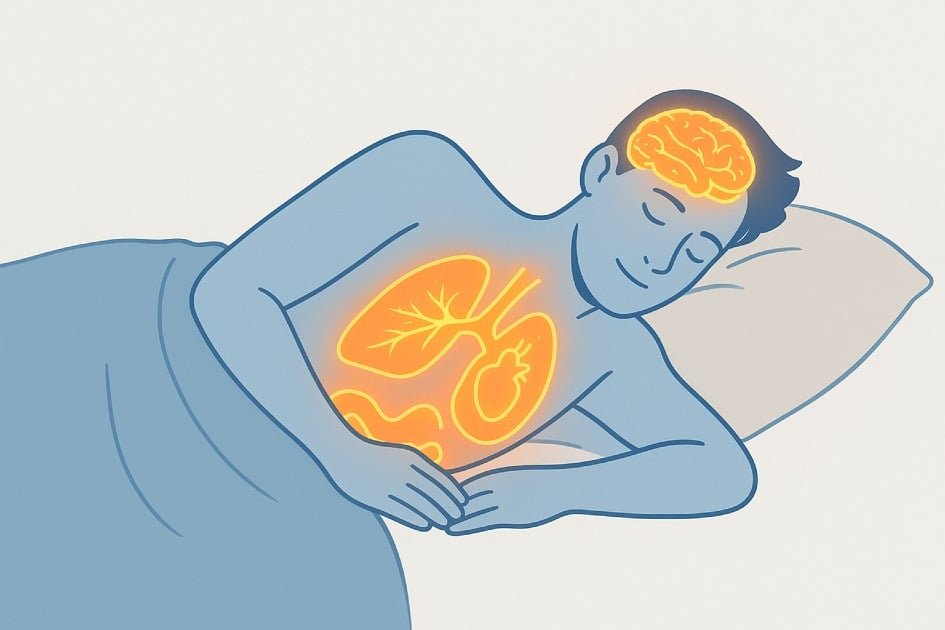
Sleep powers your body and mind
Sleep is a vital process for resetting the body and mind, serving as the foundation for good health and optimal functioning.
Cellular repair and growth during deep sleep
Why it matters:
This stage repairs muscle fibers after workouts, promotes new cell growth for healthier skin, hair, and organs, and releases growth hormones to aid in faster recovery.
How to do it:
- Sticking to a regular bedtime even on weekends helps your body stay balanced.
- Avoid eating big meals or drinking alcohol before bed.
- Try gentle evening stretches or a warm shower to help your body unwind and get ready for rest.
I traded my late-night snacks for a warm cup of herbal tea, and I woke up feeling lighter, more alert, and ready to crush my workouts.
Hormonal balance and immune defense
Why it matters:
Balanced hormones are crucial for regulating appetite, mood, and stress. Adequate sleep enhances immune defense, reducing susceptibility to colds, while insufficient sleep increases cortisol levels, complicating recovery.
How to do it:
- Keep your room dark and cool so your body can balance its sleep hormones and help you rest better.
- Turn off screens at least an hour before bed to protect your sleep and help your body rest deeply.
- Eat magnesium-rich foods such as almonds and spinach to help relax your body and mind.
I discovered that when I slept less than six hours a night, I got sick more often than when I slept seven hours or more. Getting enough rest truly boosts my health and helps me perform better in workouts.
The link between sleep and mental clarity
Why it matters:
Sleep is essential for clearing brain toxins accumulated during the day, enhancing memory and problem-solving abilities. Inadequate sleep can lead to increased irritability and decreased focus.
How to do it:
- Write tomorrow’s tasks before bed to calm your mind and stop overthinking.
- Wake up at the same time every day because your brain works best with a steady rhythm.
- Focus on your breath for five minutes to calm your mind and clear distracting thoughts.
I used to stay up late finishing projects, only to see errors the next day. Once I prioritized sleep, I got more done in less time.
Recharge faster with rest and recovery
Why it matters:
Better sleep at night helps recharge energy reserves, leading to fewer afternoon energy crashes and preventing overexertion by the body.
How to do it:
- Get 7 to 9 hours of sleep each night to match your body’s needs.
- Drink water when you wake up to boost blood flow and wake up your body.
- Get outside and soak up natural sunlight every morning to reset your body clock.
I used to stay up until 2 a.m., but when I started going to bed by 11 p.m., I noticed I did not need that third cup of coffee in the morning. Changing my sleep a little gave me a lot more energy.
Sleep as the foundation of longevity
Why it matters:
Long-term sleep debt increases the risk of heart disease and diabetes, while sufficient rest helps control inflammation and slows down cellular aging.
How to do it:
- Rest matters as much as exercise and healthy eating.
- Make your bedroom sleep-friendly by using blackout curtains, noise machines, or a weighted blanket to improve rest.
- Stop drinking coffee too late—late caffeine can slow your recovery and steal hours of rest.
I know sleep fuels my body, restores my cells, balances my hormones, and clears my mind. By creating simple bedtime rituals like dimming lights or journaling, I recover faster and feel better every day.
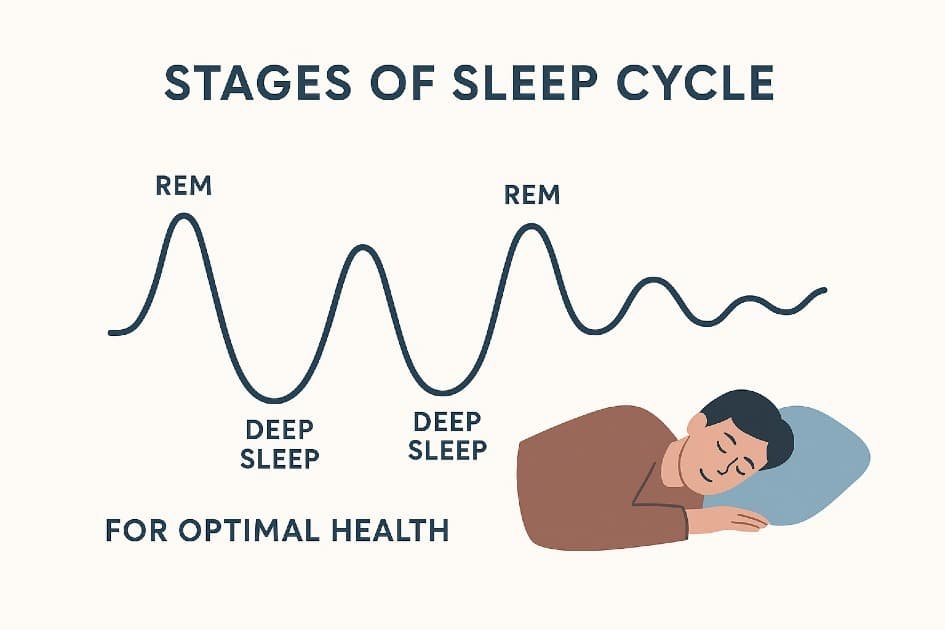
The stages of sleep explained
Sleep involves distinct stages, each playing a crucial role in restoring the mind and body. Understanding these stages can lead to practical improvements in both the quantity and quality of sleep.
Light sleep prepares your body for rest
Why it matters:
Light sleep is essential for the nervous system to transition from alertness to calm; insufficient light sleep disrupts deeper sleep stages, leading to grogginess and disorientation upon waking.
How to do it:
- Keep your room dark and cool to help your body feel naturally sleepy.
- Skip screens at night to help your body make melatonin naturally.
- Unwind with herbal teas or a good book to tell your body it is time to relax.
I noticed that when I used my phone before bed, I always had trouble falling asleep. When I switched to reading a simple paperback instead, my light sleep became steadier, and I woke up feeling clearer and more refreshed.
Deep sleep fuels your body’s repair
Why it matters:
Growth hormones peak during deep sleep, enhancing cell repair and muscle recovery. Athletes achieving more deep sleep experience quicker healing and better performance, while insufficient deep sleep can weaken the immune system and slow recovery from stress or workouts.
How to do it:
- Exercise helps you sleep better when you do it earlier in the day.
- Keep alcohol exceptionally low because even insignificant amounts cut into your deep sleep.
- Choose mattresses and pillows that keep your spine in a natural position.
I learned that deep sleep matters just as much as my training. When I started exercising earlier in the day, I gained an extra hour of deep sleep every night.
REM sleep boosts memory and learning
Why it matters:
Emotional balance is linked to healthy REM sleep cycles, with students and professionals performing better on tests and creative tasks when they prioritize REM sleep. Insufficient REM sleep can result in irritability, mood swings, and memory gaps.
How to do it:
- Stick to the same sleep and wake time every day, even on weekends.
- Limit caffeine after midday to keep your natural sleep rhythm steady.
- Try blue light blocking glasses when you need to use screens at night.
I used to stay up late cramming before big tests, and I failed more than once. When I finally started going to bed on time, everything changed. My mind felt sharper, my grades went up, and my confidence grew.
Unlocking the power of life’s stages
Why it matters:
Disrupted cycles result in chronic fatigue, brain fog, and slowed healing, whereas healthy cycles stabilize energy levels and reduce the risk of chronic conditions such as heart disease over time.
How to do it:
- Go to bed and wake up at the same time daily to train your body’s circadian rhythm.
- Limit heavy meals close to bedtime—they can delay cycling into deep sleep.
- Use a sleep tracker to learn your patterns, not to chase perfect numbers.
I used to hit a hard crash every afternoon, and I could not figure out why. Then I realized my long weekend sleep-ins were throwing off my whole rhythm. When I started waking up at the same time every day, my energy came back.
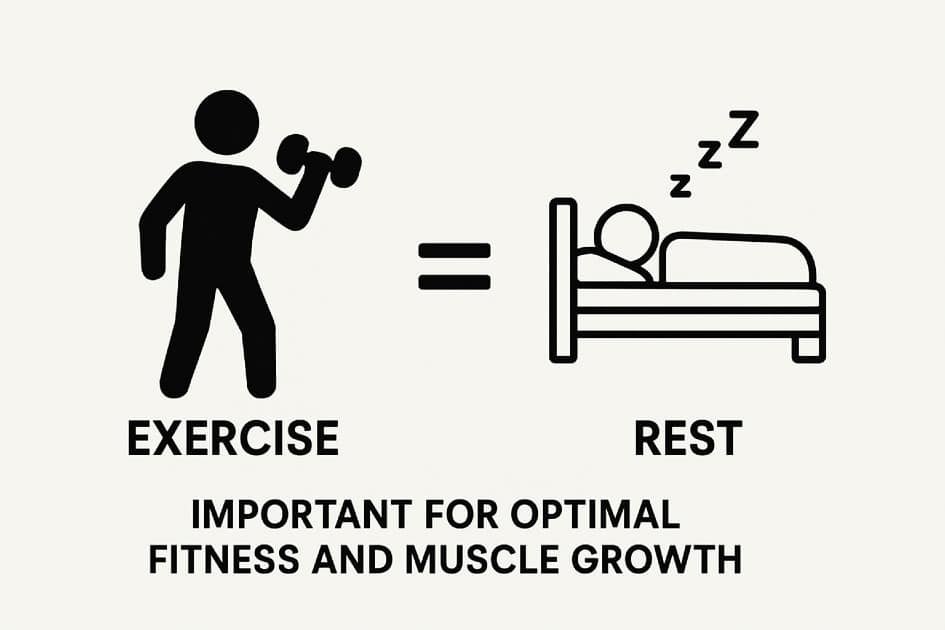
Rest powers the gains your training creates
Exercise is often highlighted for its role in health, strength, and vitality; however, effective recovery is crucial for maximizing workout benefits. Recovery is the period when muscle rebuilding, nervous system resetting, and energy replenishment occur, leading to real transformation.
Muscle repair leads to real strength gains
Why it matters:
Weightlifting and running cause micro-tears in muscle fibers, which are necessary for growth. However, without proper recovery, these tears do not heal adequately, potentially resulting in stalled progress, ongoing soreness, or injury.
How to do it:
- Prioritize protein intake by choosing lean meats, plant-based powders, or trusted blue-protein supplements.
- Take one or two days off each week so your muscles can repair and grow stronger.
- Try gentle movements to help your body recover.
I learned from a study on marathon runners that adding yoga on my rest days can help me recover faster and avoid more injuries than training nonstop. It showed me that slowing down sometimes makes me stronger.
Preventing burnout and fatigue
Why it matters:
Constant training without rest can lead to burnout, resulting in fatigue, mood changes, and a lack of motivation to exercise. Sleep and recovery are essential in combating this cycle, helping maintain energy and consistency.
How to do it:
- Pay attention to your body. If you feel sore, tired, or cranky for a long time, slow down and rest.
- Recharge your mind with meditation, journaling, or walks in nature to boost mental energy.
- Aim for achievable training goals and grow step by step.
I once learned from a personal trainer that reducing his workout load by 20 percent made him stronger and he enjoys exercising more. Doing less actually gave him more results.
Recovery boosts longevity
Why it matters:
Sleep and recovery are essential not only for short-term performance but also for long-term health. Chronic sleep deprivation is associated with increased risks of heart disease, obesity, and weakened immunity. Adequate rest promotes a healthier future.
How to do it:
- Get 7 to 9 hours of solid sleep every night and improve rest with blackout curtains or a weighted blanket.
- Drink enough water to speed recovery and prevent lasting tiredness.
I sleep well and recover fully so my mind stays sharp. Rest clears my thoughts, boosts my focus, and helps me solve problems faster. Every good night’s sleep gives my brain the energy it needs to learn, remember, and think clearly.
Sleep and recovery sharpen your mind
Why it matters:
Physical training involves both physical and mental aspects. Recovery is crucial as it improves focus, memory, and emotional stability. Insufficient downtime can lead to difficulties in decision-making and motivation, making workout seem more challenging when fatigued.
How to do it:
- Wind down each night by reading, dimming the lights, or drinking caffeine-free tea to help your brain relax and prepare for sleep.
- Reduce screen time at night because blue light fools your brain into staying awake, making it harder to fall asleep.
- Try short naps of 20–30 minutes to boost your energy and sharpen your focus without feeling groggy.
I take a 30-minute nap before evening games and notice my energy and accuracy on the court improve.
Building recovery into your fitness plan
Why it matters:
Recovery should be intentionally planned, like workout sessions, to prevent performance plateaus and reduce injury risks. An effective recovery strategy enhances the benefits of training.
How to do it:
- Alternate your workouts with hard and easy days to boost fitness and prevent burnout.
- Monitor your sleep and recovery with fitness trackers or sleep monitors to spot patterns and improve your rest.
- Take a break from heavy workouts every 6 to 8 weeks to let your body recover fully and come back stronger.
I keep a journal to track my workouts and recovery. It helps me see when my body needs rest before I hit a wall.
Mistakes that ruin your sleep and recovery
Proper sleep and recovery require more than just eight hours in bed; many people hinder their rest through everyday habits that can impede deep sleep and energy restoration. Understanding these pitfalls allows for simple, practical adjustments to improve quality of rest.
Believing you can catch up on sleep
Why it matters:
Irregular sleep schedules disrupt the body’s circadian rhythm, resulting in lower sleep quality despite longer time in bed. Accumulated sleep debt over time increases risks of fatigue, stress, and inadequate recovery.
How to do it:
- Keep a steady bedtime and wake-up time each day, including weekends.
- Set a nightly reminder to relax so your body can prepare for restful sleep.
- Focus on getting good sleep and resting every night instead of trying to catch up on weekends.
I used to pull all-nighters for exams and sleep in on Sundays, but my energy always crashed. When I started going to bed at the same time each night, my focus improved, and I stopped needing afternoon naps.
Over-reliance on caffeine and stimulants
Why it matters:
Caffeine can disrupt deep sleep and mask fatigue without restoring energy, leading to fragmented sleep and reduced recovery over time.
How to do it:
- Limit caffeine after midday so it will not disrupt your sleep at night.
- Replace energy drinks with herbal teas to soothe your nerves and boost calm focus.
- Increase your energy naturally by stretching, drinking water, and taking quick walks.
I swapped my late-afternoon coffee for green tea and within two weeks I started falling asleep faster and waking up refreshed.
Ignoring the body’s fatigue signals
Why it matters:
Ignoring fatigue can delay melatonin release, your body’s natural sleep hormone. Skipping rest increases stress hormones, hindering deep recovery, and chronic neglect of tiredness may result in burnout.
How to do it:
- Watch for early signs such as yawning, droopy eyes, or feeling cranky.
- Build a simple wind-down routine by lowering your lights and choosing a calm activity, like light reading.
- Let yourself pause early so tiredness never wins.
I used to ignore how tired I felt, and it always turned into late-night worry. When I finally started listening to my body and resting when I needed it, everything changed. I woke up calmer, clearer, and ready to get more done each day.
Sleeping in a poor environment
Why it matters:
Environmental stressors such as bright light, noise, or heat can prevent the body from resting effectively, while an uncomfortable mattress or pillow disrupts recovery sleep cycles, leading to restless nights.
How to do it:
- A darker room helps your brain relax faster.
- Lower your bedroom temperature to help your body relax and stay asleep.
- Clear away clutter and distractions to create a calm space that helps your mind rest and recharge.
I used to wake up tired and achy, and I could not figure out why. Once I cleared out the extra stuff and kept the space simple, everything changed. I started sleeping deeper, waking up with more energy, and feeling less stiff in the morning.
More workouts do not always mean better sleep
Why it matters:
Intense late-night workouts can elevate body temperature, hindering sleep onset. Inadequate recovery from overtraining causes muscle fatigue and insomnia, which in turn hampers recovery, creating a detrimental cycle.
How to do it:
- Schedule your workouts earlier in the day for better recovery.
- Try adding gentle recovery moves such as walking, yoga, or foam rolling.
- Rest when your body feels sore or drained. Pushing every day only slows your progress.
I trained every day for my marathon and felt tired all the time. I finally gave myself two recovery days each week and started running in the morning. Soon my sleep got better, my energy came back, and my race times got faster by a few minutes.
Skipping stress management before bed
Why it matters:
Stress hormones maintain the nervous system in an “alert” state, which leads to anxious thoughts that diminish deep and REM sleep, critical for recovery. This lack of mental rest negatively affects the following day, reducing both productivity and mood.
How to do it:
- Write in a journal for five minutes before bed to clear your mind.
- Try a guided-breathing platform like Pause to help your body relax.
- Swap screen time for calming rituals such as stretching or listening to soft music to relax your mind and body.
I began meditating for five minutes before bed and noticed a substantial change. I no longer wake up at 3 a.m., and I feel fully rested for my early morning classes.

Lifestyle sleep quality strategies
A good night’s sleep is a result of intentional daily choices that promote sleep and recovery, allowing the body to repair and recharge through healthy routines.
Creating a consistent sleep schedule
Why it matters:
Your body has a circadian rhythm that functions as an internal clock. Maintaining consistent sleep patterns helps it release hormones for proper sleep and recovery, whereas irregular sleep disrupts this process, leading to grogginess.
How to do it:
- Set a consistent bedtime and wake-up time every day, even on weekends, to help your body rest better and boost energy.
- Skip the long sleep-ins because they can disrupt your natural sleep rhythm.
- Move your bedtime in 15-minute steps until you reach your target.
I make my body follow a schedule like office hours. When I train it right, sleep comes easily and on time every night.
Build a calming pre-bedtime ritual
Why it matters:
Your brain requires cues to signal that it is time to power down; without these, it remains in “go mode,” hindering the transition into deep sleep and recovery. Establishing a ritual provides signals of safety, comfort, and predictability.
How to do it:
- Turn down lights an hour before sleep to copy the sunset and help your body relax.
- Pick up a real book and read instead of scrolling on your phone.
- Try gentle yoga stretches or simple breath exercises to relax your body and calm your mind.
- Try filling your space with lavender scents using a diffuser to relax your mind and body.
I used to stay up late watching TV, but when I swapped it for a warm shower and journaling, I started falling asleep twice as fast within just two weeks.
Optimize your sleep environment
Why it matters:
Your bedroom serves as a recovery chamber, where factors like light, noise, and temperature significantly impact sleep onset and depth.
How to do it:
- Keep your room between 60- and 67-degrees Fahrenheit for better sleep and overall comfort.
- Try white noise machines or apps to cover up distracting sounds and help you sleep better.
I recently switched to blackout curtains and finally stopped waking up at sunrise. Now I feel truly rested and energized each morning.
Choose foods and drinks that support rest
Why it matters:
Diet affects hormones like melatonin and cortisol, with heavy meals, caffeine, and alcohol negatively impacting sleep and recovery. Conversely, the right foods can aid in relaxation.
How to do it:
- Avoid caffeine after 2 p.m. so your body can relax and sleep easily at night.
- Skip alcohol before bed. It might make you sleepy, but it breaks up deep sleep and leaves you tired.
- Boost muscle relaxation by eating magnesium-rich foods like almonds, spinach, and bananas.
- Drink herbal teas such as chamomile or valerian root every night to help your body relax and improve sleep quality.
I swap my nightly glass of wine for chamomile tea and wake up feeling more rested with fewer interruptions in my sleep.
Manage stress before bedtime
Why it matters:
Stress triggers cortisol release, hindering restorative sleep and recovery due to elevated levels at night.
How to do it:
- Write in a bedside journal each night to clear your mind before sleep.
- Try mindfulness or use guided meditation to relax your mind and reduce stress.
- Tense and relax each muscle one at a time to ease stress and feel calm.
- Set aside a small time earlier in the evening to focus on worries and find solutions.
I was a college student with nonstop thoughts at night. I started using a five-minute meditation app before bed, and within a month, my sleep felt deeper and more restful.
Reduce evening screen time
Why it matters:
Blue light emitted by screens can inhibit melatonin production, disrupt sleepiness and induce wakefulness even with brief exposure.
How to do it:
- Turn off all screens at least an hour before bed to help your mind and body relax for deeper, more restful sleep.
- Wear blue-light blocking glasses when using screens at night to protect your sleep and reduce eye strain.
- Swap endless scrolling with calming offline activities like journaling, doing puzzles, or stretching.
I used to stay up late checking work emails, but I switched to a 10-minute meditation each night. Now I wake up feeling refreshed and calmer, and my anxiety has dropped.
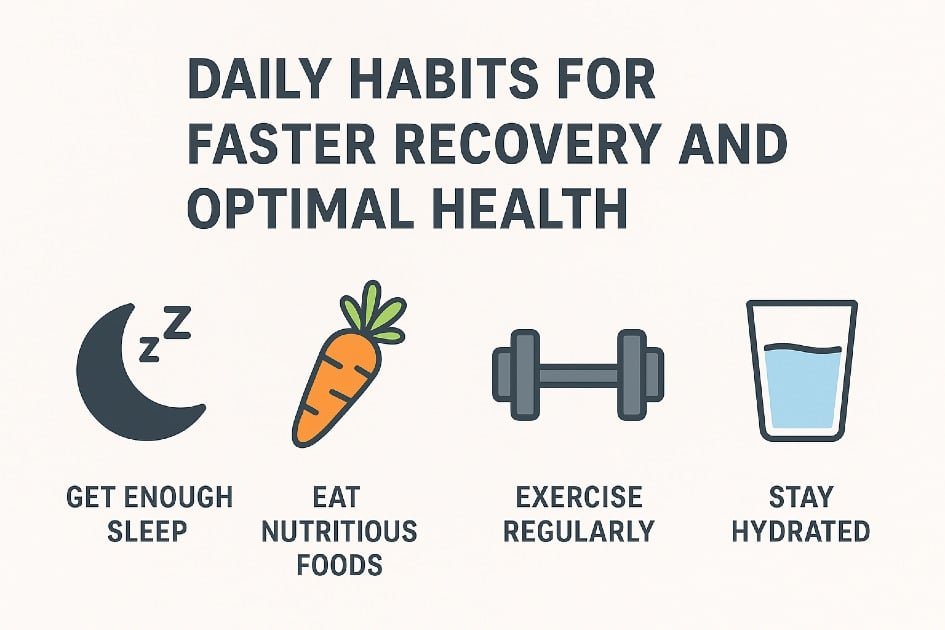
Daily habits that supercharge recovery
Strong sleep and recovery routines significantly contribute to a healthier body, requiring only minor adjustments in daily habits to enhance rest effectiveness.
Hydration powers your body’s nightly healing
Why it matters:
Water is essential for circulation, joint lubrication, and nutrient transport, all vital for sleep and recovery. Dehydration can cause restless nights, cramps, and fatigue in the morning.
How to do it:
- Drink water steadily all day instead of chugging it right before bed.
- Drink electrolytes when you sweat a lot during exercise or in hot weather to stay hydrated and keep your body working at its best.
- Add lemon, cucumber, or berries to your water to make it tasty and refreshing.
- Skip too much caffeine or alcohol since they dry you out and mess with your sleep.
I noticed that when I drank more water, my sleep improved and my muscles recovered faster, proving that slight changes can make a significant difference.
Eat smart to refuel faster
Why it matters:
Your body heals during sleep, and appropriate nutrients can enhance this natural process of recovery.
How to do it:
- Eat a mix of protein and complex carbs at dinner to keep your blood sugar steady.
- Have a small bedtime snack such as Greek yogurt with berries or whole grain toast with almond butter.
- Avoid eating heavy or greasy foods at night because they can disturb your deep sleep.
- Eat magnesium-rich foods such as spinach, pumpkin seeds, and bananas to help your muscles relax.
I used to grab late-night pizza, but I switched to a small protein snack. Within a week, I woke up feeling more refreshed and recovered faster after workouts.
Gentle movement and stretching
Why it matters:
Recovery involves active engagement; gentle activity enhances circulation, alleviates muscle tightness, and improves nervous system function for improved sleep and recovery.
How to do it:
- Spend 5–10-minutes stretching before sleep, paying attention to your hips, shoulders, and lower back.
- Rest your body with restorative yoga by lying down and lifting your legs against a wall.
- Take a 10–15-minute walk after dinner to help your digestion and reduce stress.
- Roll your muscles with a foam roller gently in the evening to help them relax and recover.
I started a simple stretch routine at night when life felt stressful. Soon, I slept better and stopped waking up with the tight, sore feeling I used to have every morning.
Stress management techniques
Why it matters:
Stress increases cortisol levels, which disrupts deep sleep and hinders recovery. Managing your nervous system can improve sleep quality.
How to do it:
- Try a simple deep-breathing reset. Slow your mind by breathing in for four seconds and letting the air out for six seconds.
- Write down three things you feel grateful for before you sleep.
- Use guided meditation to helps you calm your mind when stress feels heavy.
- Reduce screen use at night because blue light lowers your body’s melatonin and makes it harder to fall asleep.
I followed a study where people used simple breathing exercises every night and improved their sleep by 20 percent. It showed me that small habits can make my sleep a lot better too.
Power naps done right
Why it matters:
Naps can improve alertness and decrease sleep debt, contributing to better overall sleep and recovery, with length and timing being crucial factors.
How to do it:
- Keep your nap between 20 and 30 minutes so you wake up feeling fresh, not tired.
- Take a short nap between 1 and 3 p.m. when your body naturally feels low on energy.
- Make your room calm and low light so your body knows it is time to relax.
- Avoid napping late in the day because it can make it harder to fall asleep at night.
I once collaborated with a client who took on long shifts. I encouraged him to try a 25-minute nap each day. He soon felt steady energy and even slept better at night with fewer wakeups.
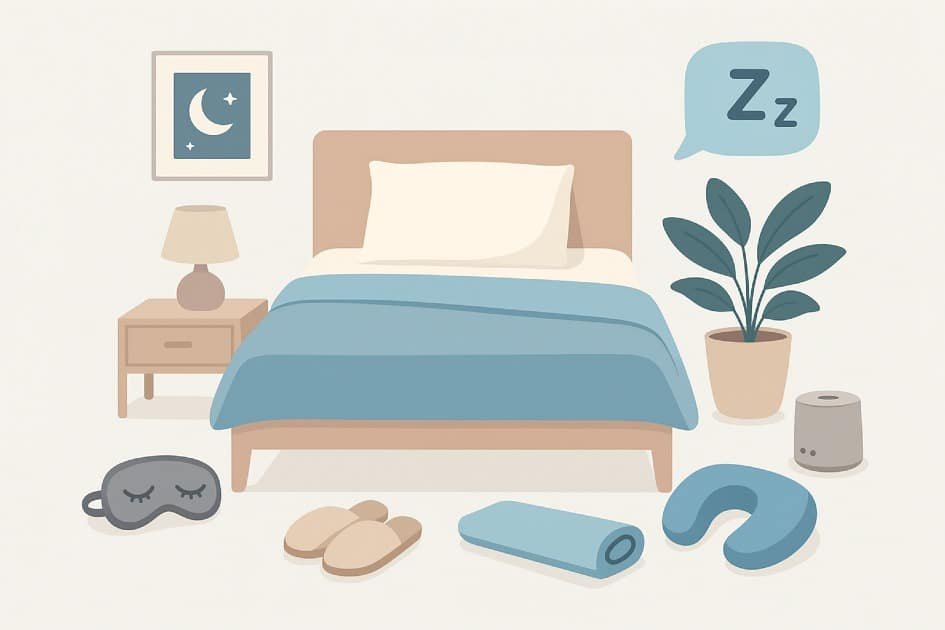
Smart ways to boost sleep and recovery
Sleep and recovery involve more than simply resting; they require optimizing one’s environment, habits, and tools to enhance the body’s healing and performance capabilities.
Track your sleep patterns smarter
Why it matters:
Understanding sleep patterns is essential for enhancing sleep quality and recovery. Although many believe they sleep soundly, data tracking frequently uncovers issues like interruptions, lack of deep sleep, or irregular sleep cycles.
How to do it:
- Use a wearable tracker such as a Fitbit or Oura Ring to check your sleep stages, total sleep time, and heart rate changes.
- Write down when you go to bed, when you wake up, and what you do before sleep so you can spot what helps or hurts your rest.
- Review your weekly sleep notes to spot patterns and catch habits that may be hurting your rest.
- Start small and change your routine slowly by going to bed just 15 minutes earlier each week.
Since I work in marketing, I tracked my sleep and saw that late-night emails were stealing almost 40 minutes of deep sleep. Setting a 9 PM tech curfew helped me sleep longer and feel much more rested.
Optimize your sleep environment
Why it matters:
Your bedroom environment significantly impacts sleep and recovery, as external factors such as light, noise, and temperature can disrupt deep sleep, thus affecting muscle recovery, cognitive function, and hormone regulation.
How to do it:
- Keep your bedroom around 65°F (18°C) to help your body sleep deeply and wake up refreshed.
- Use a white noise machine or app to cover outside sounds and help you focus or sleep better.
- Keep electronic devices out of the bedroom or set them to “Do Not Disturb” to protect your sleep.
I used to feel drained every morning even after a full night’s sleep. Once I put up blackout curtains and started using a white noise machine, I began waking up fully refreshed and noticed my muscles recovered faster after workouts.
Weighted blankets calm your body for deeper sleep
Why it matters:
Weighted blankets apply gentle pressure to decrease cortisol levels and increase serotonin and melatonin, promoting better sleep and recovery, particularly for individuals with anxiety or restless sleep.
How to do it:
- Pick a blanket that weighs about ten percent of your body weight for the best comfort.
- Use it for 30–60 minutes before bed or let it run while you sleep.
- You can pair this habit with slow, deep breaths to help your body relax even more.
I work long nights as a nurse. When I switched to a 15-pound weighted blanket, I started falling asleep faster. I woke up feeling more rested and ready for my next shift.
Natural supplements that boost better sleep
Why it matters:
Certain nutrients help maintain circadian rhythm and enhance deep restorative sleep, which is vital for effective recovery.
How to do it:
- Melatonin can help reset your sleep when stress, travel, or schedule changes throw you off.
- Magnesium helps your muscles relax and makes it easier to fall asleep.
- Herbal teas such as chamomile or valerian root help your mind relax in a natural, gentle way.
I work long hours as a software engineer, and my sleep used to break all night. I started drinking chamomile tea before bed and added magnesium to my routine. Now I wake up refreshed, and even my post-workout soreness feels lighter.
Clock smart lighting syncs your body clock
Why it matters:
Exposure to inappropriate lighting at night hinders melatonin production, leading to delayed sleep onset and compromised recovery quality, while adequate daylight exposure aligns the circadian rhythm.
How to do it:
- Dim the lights or switch to soft amber bulbs about one to two hours before bed.
- Use blue-light blocking glasses when you work on screens at night to protect your eyes and help your body wind down for better sleep.
- Get 20 to 30 minutes of morning sunlight to help your body stay on a steady daily rhythm.
- Skip your phone or laptop in bed and read a real book to help your mind relax and sleep better.
I started sleeping deeper after I added smart bulbs to my room. They slowly dim each night, and that soft light helps my body relax. Ever since then, I wake up feeling stronger and recover faster after my workouts.
Breathwork and relaxation devices
Why it matters:
High stress increases cortisol levels, which negatively affects sleep quality and recovery. Utilizing breathwork devices or guided meditation apps can help alleviate tension, decrease heart rate, and prepare the body for better restorative sleep.
How to do it:
- Try a short 5–10 minute guided meditation before bedtime to calm your mind and relax your body.
- Try box breathing by inhaling for four seconds, holding for four, exhaling for four, and holding again for four to relax your nervous system.
- Combine it with gentle stretching or foam rolling to ease muscle tension.
After tough training, I often could not sleep. Adding 10 minutes of guided breathwork each night helped me fall asleep faster and recover my muscles better.
Building a daily routine with simple tools
Why it matters:
Consistency is essential for optimizing sleep and recovery, with the effectiveness of individual tools being enhanced when integrated into a personalized nightly ritual.
How to do it:
- Schedule the same bedtime and wake-up time every day for a regular sleep-cycle routine.
- Set the lights low and take a few slow, deep breaths to relax your mind and body.
- Use your weighted blanket and enjoy a warm cup of herbal tea to relax and calm your mind.
- Use a sleep tracker to see your patterns and adjust habits for better rest.
I started using several tools together and within two weeks I slept more deeply, recovered faster from workouts, and felt mentally sharper.
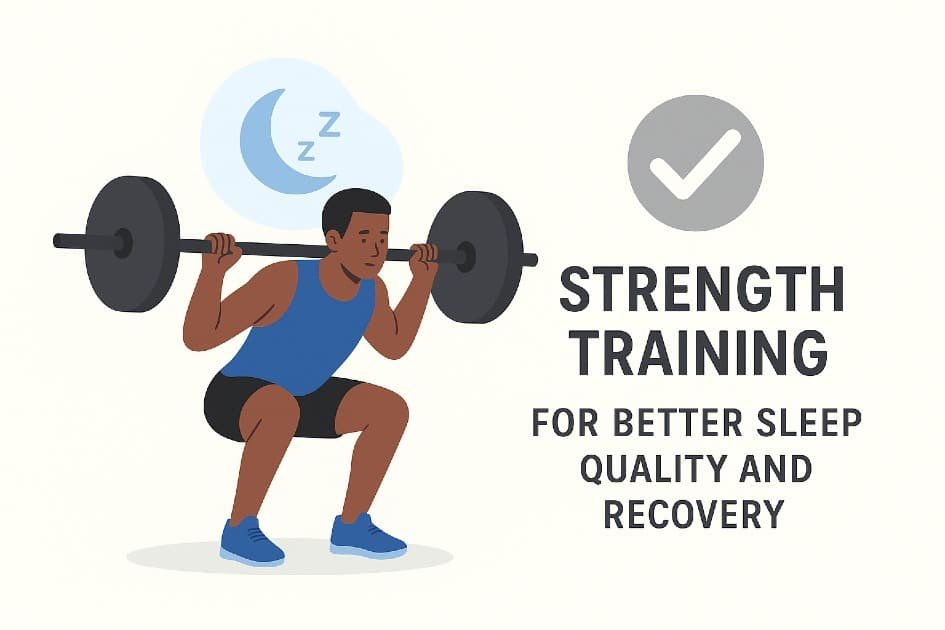
Deep sleep powers strength and recovery
Strength and fitness significantly impact sleep and recovery, going beyond physical appearance to enhance energy levels, mental clarity, and overall health.
Exercise boosts deep rest naturally
Why it matters:
Improves sleep duration and depth, particularly during deep sleep, while reducing insomnia symptoms by lowering cortisol levels and enhancing circadian rhythm alignment for more natural sleep patterns.
How to do it:
- Exercise for at least 30 minutes most days with moderate effort to boost your health and energy.
- Build both muscle and stamina by doing strength and cardio workouts together for overall health.
- Monitor your sleep using apps or wearable devices to see your progress.
- Do not do hard workouts within 60–90 minutes before bed because they can keep you awake.
I started lifting weights and taking brisk evening walks, and I noticed I fall asleep faster and wake up less at night.
Exercise that keeps sleep on track
Why it matters:
Overtraining elevates cortisol and adrenaline levels, which disrupts sleep. Engaging in intense late-night exercise raises body temperature and postpones the onset of rest.
How to do it:
- Take one or two days each week to rest or do light activity.
- Watch for overtraining by noticing if you feel irritable, sore all the time, or have trouble sleeping.
- Match your workout to your sleep. On busy or stressful days, choose lighter exercise to keep your body strong and balanced.
I used to struggle with insomnia even though I ran a lot. When I switched to lighter evening workouts and added recovery days, I started sleeping deeply and my running performance got much better.
Optimal workout hours for faster recovery
Why it matters:
Morning workouts enhance circadian rhythms and daytime alertness. Afternoon or evening exercise helps reduce stress and prepares the body for sleep, while late-night workouts can delay melatonin production, hindering sleep onset.
How to do it:
- Try working out in the morning and then in the afternoon to find which time feels best for your body.
- Do your intense workouts at least three hours before bedtime to help your body relax and sleep better.
- Try gentle stretches or a short meditation in the evening to relax your body and calm your mind.
- Monitor your sleep and exercise habits to discover what works best.
I moved my intense workouts to the early afternoon and added a short yoga session before bed. I fall asleep faster now and wake up feeling refreshed.
Recovery power through strength training
Why it matters:
Promotes growth hormone release for tissue repair, supports metabolic balance influencing energy levels and sleep patterns, and strengthens muscles to reduce injury risk, facilitating recovery.
How to do it:
- Use full-body exercises like squats, deadlifts, and push-ups to build strength efficiently.
- Work each muscle group 2–3 times a week to grow stronger and recover better.
- Eat protein-rich meals after workouts to help your muscles repair and grow.
- Get enough sleep so your muscles fully recover and grow.
I started a regular strength program and felt fewer aches, slept better, and recovered faster after workouts.
Boost recovery with fitness and sleep
Why it matters:
Supports mental health by minimizing anxiety and stress, enhances immune function to reduce illness-related sleep disruptions, and establishes a predictable routine that cues the body for rest.
How to do it:
- Exercise regularly and stick to a steady sleep routine.
- Try gentle evening stretches or a short meditation to help your body relax and signal it is time to sleep.
- Monitor your recovery using sleep journals, fitness trackers, or apps and support it with gentle evening stretching or meditation to relax and recharge.
- Boost sleep naturally by eating magnesium-rich foods or taking gentle sleep-supporting supplements.
I started taking daily walks, using resistance bands, and doing a nightly relaxation routine. After a few weeks, my sleep improved, and I felt more energized every day.
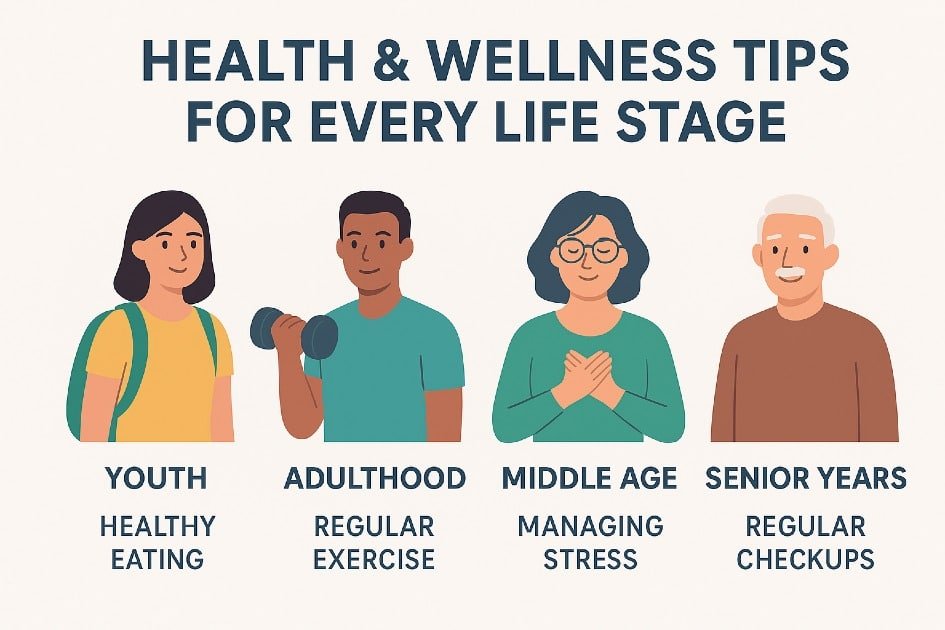
Life stage health tips
Sleep and recovery needs change as we move through various stages of life. Understanding these shifts can help you optimize rest, prevent chronic fatigue, and maintain peak health.
Young adults growing strong for life
Why it matters:
During your twenties and early thirties, establishing healthy habits is crucial, as poor sleep can lead to chronic stress, hormonal imbalances, and weakened immunity later. Prioritizing quality sleep and recovery enhances focus, learning, and physical performance.
How to do it:
- Create a constant routine sleep time when you go to bed and wake up, even on weekends.
- Use blue-light-blocking glasses to protect your sleep and help your body wind down naturally.
- Keep the same sleep and wake time every day so your body clock stays balanced, and you fall asleep more easily.
- Pay attention to what you eat. Foods with magnesium or tryptophan—like nuts and turkey—help your body relax and support deeper, more restful sleep.
- A short 20-minute nap gives your brain a quick boost without harming your sleep at night.
I decided to stick to a 10 PM bedtime and add a quick 10-minute meditation each night. After two weeks, I felt more focused during the day and much less tired in the evenings.
Midlife balance for stress, hormones, and sleep
Why it matters:
During the 40s and 50s, factors such as stress, hormonal changes, and lifestyle pressures can impair sleep, leading to insufficient recovery and heightened risks for weight gain, cardiovascular problems, and cognitive decline.
How to do it:
- Make time to relax before bed by keeping lights low, avoiding caffeine after mid-afternoon, and using simple calming habits like slow breathing or short sleep meditations.
- Plan your workout wisely by doing tough exercises earlier in the day so your body can relax at night and fall asleep faster.
- Monitor hormone changes because they can disrupt sleep.
- Keep your bedroom cool, dark, and quiet to sleep better.
- Stress reduction rituals like evening journaling or a slow mindful walk help your body relax and shift into recovery mode.
Stress used to keep me up at night, then I started going to the gym in the morning and added a simple breathing routine before bed. These helped me sleep longer, feel calmer, and wake up with more energy.
Recap: Recovery Steps Build Lasting Health
Prioritizing sleep and recovery are essential for optimal health and vitality. Small actions, such as dimming lights, drinking herbal tea, and performing gentle stretching, contribute significantly to overall well-being.
Recovery is an ongoing process consisting of daily efforts aimed at achieving sustainable health, as stated by Harvard Health Publishing.
Deep, restorative sleep supports cellular repair, hormone balance, and mental clarity, while recovery days help rebuild muscles and recharge energy systems.
Quality and rhythm of sleep matter more than duration alone; cultivating a mindful nighttime routine can enhance rest.
Simple adjustments, like bedroom temperature and using sleep trackers, can yield significant health benefits over time.
Embracing sleep and recovery as vital components of your lifestyle leads to better mood, productivity, and overall vitality.
Frequently Asked Questions
How much sleep should an adult get each night to stay healthy?
The general recommendation for adults is to sleep 7–9 hours per night, although some may need up to 10 hours depending on individual factors and stress levels.
Adequate sleep is essential for completing restorative cycles, including deep sleep and REM phases, vital for cognitive function, hormonal balance, and tissue repair.
Can naps replace a full night’s sleep?
Naps can be beneficial for alertness, mood, and performance, especially short 20-30-minute ones. However, they should not replace regular nighttime sleep, as longer naps may cause grogginess.
Combining strategic naps with consistent nocturnal sleep can improve overall recovery. Sleep support supplements may aid those struggling with daytime fatigue.
What is sleep debt, and can you ever repay it?
Sleep debt arises from regularly not securing enough rest, leading to negative effects on immune function, hormonal balance, and cognitive acuity.
Recovery sleep can aid temporarily, but chronic deprivation cannot be fully compensated with occasional long sleep. Consistent sleep scheduling is the most effective strategy.
Does exercise before bed hurt sleep quality?
Exercise influences sleep based on timing and intensity. High-intensity workouts in the evening can raise cortisol levels and body temperature, delaying sleep.
In contrast, moderate exercise during the day or light evening activities like yoga can improve sleep quality by lowering stress hormones and enhancing relaxation.
Are supplements safe and effective for sleep?
Natural supplements such as melatonin, magnesium, and herbal blends like valerian roots or chamomile can aid sleep and recovery.
How can I reset my sleep cycle after poor habits?
Resetting your circadian rhythm takes simple lifestyle and environmental changes:
- Get sunlight during the day to help your body stay awake and keep your sleep cycle strong.
- Stay away from phone and TV screens at night to protect your sleep and health.
- Keep a steady routine by going to bed and waking up at the same time every day, even on weekends.
- Try simple bedtime habits like writing in a journal or meditating to calm your mind and sleep better.
These strategies boost sleep and help your body recover for full strength and energy.
What is the difference between rest days and active recovery days?
Rest days provide total physical and mental rest for tissue and nervous system recovery, while active recovery days incorporate low-intensity activities that enhance circulation and speed up tissue repair without stress. Both are crucial for optimal health and performance recovery.
Why does my body still feel worn out after a full night of rest?
Persistent fatigue despite adequate sleep can indicate:
Feeling tired even after a full night’s sleep may signal deeper issues like:
- Poor sleep quality (fragmented or insufficient deep sleep)
- Nutrient deficiencies or dehydration
- Chronic stress or high cortisol levels
- Underlying medical conditions like sleep apnea or thyroid imbalance
Using a sleep tracker helps you spot sleep patterns and improve how well you rest and recover each night.