
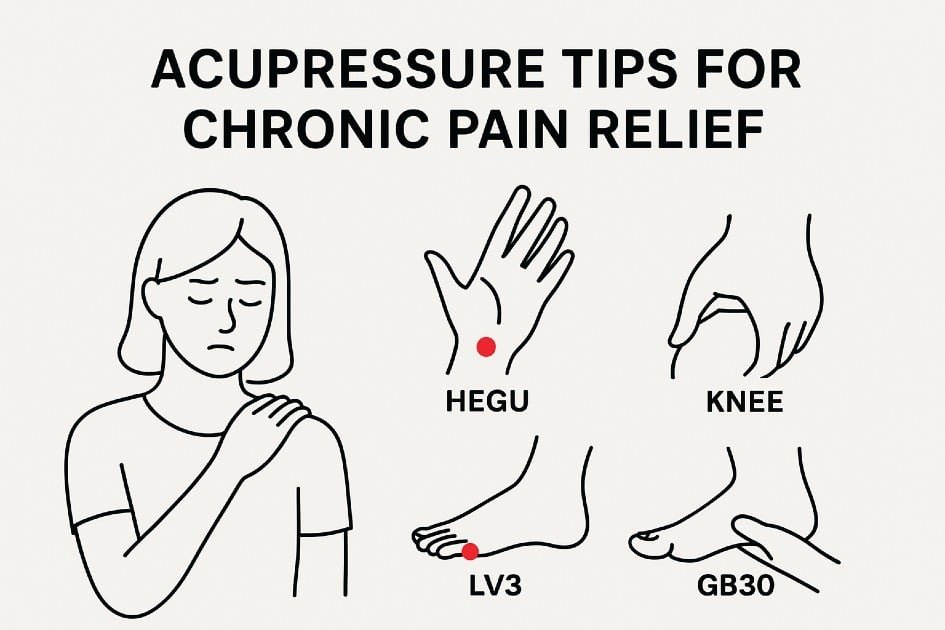

Have you ever wondered if there is a safe, natural way to ease chronic pain without relying on endless medications or invasive treatments?
Acupressure is a holistic, noninvasive technique that harnesses the body’s energy pathways to relieve discomfort, improve circulation, and restore balance at home.
Acupressure, as noted by Harvard Health, involves applying deep pressure with fingers or thumbs at specific points to promote the release of natural painkillers like endorphins, providing a lower-risk alternative for individuals with chronic pain.
Unlike temporary painkillers, acupressure addresses the root causes of discomfort, alleviating issues like back tension and joint stiffness while releasing endorphins for calmness.
This guide emphasizes regular practice of simple techniques, with or without acupressure devices, which can enhance benefits such as better circulation, restful sleep, and improved mental clarity.
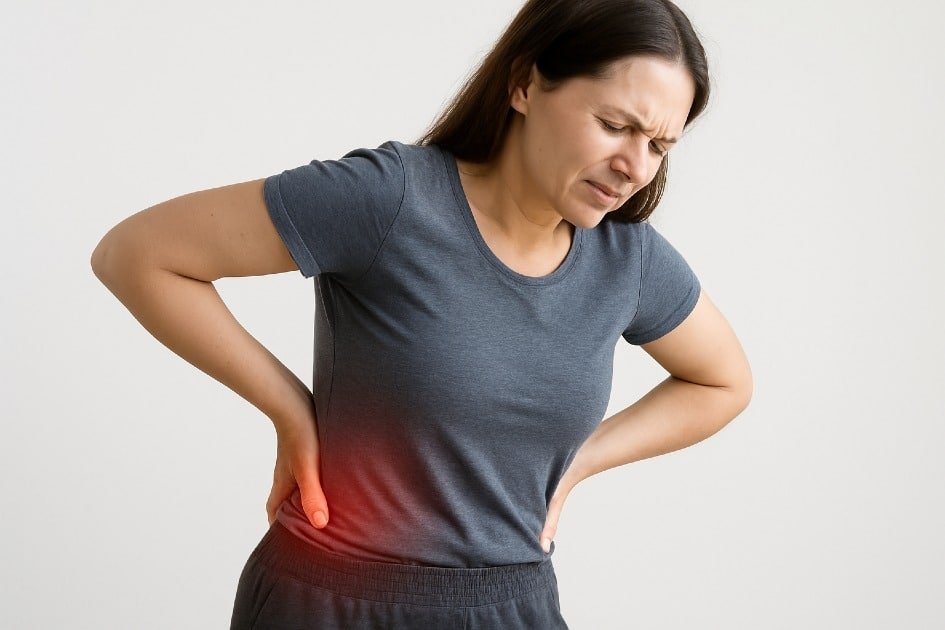
How Chronic Pain Affects Daily Life
Chronic pain is a persistent and often invisible condition that significantly impacts an individual’s mental and physical well-being, affecting mood, energy, and relationships.
What Exactly is Chronic Pain?
Chronic pain is a complex issue that affects physical, emotional, and psychological health, often resulting in anxiety, depression, and sleep disturbances.
It differs from ordinary pain as it lasts for extended periods, potentially weeks to years, and can vary in sensation from dull throbs to sharp stabbing.
Common causes include arthritis, fibromyalgia, nerve damage, and tension disorders. Its unpredictability can disrupt daily activities and concentration.
How Chronic Pain Impacts Daily Life
Chronic pain results in significant fatigue, emotional distress, and lifestyle limitations. Minor movements may feel exhausting, while persistent discomfort can lead to irritability and mood swings.
Additionally, cognitive functions like concentration and memory may suffer due to the pain, contributing to overall stress and emotional strain.
Why Traditional Solutions Often Fall Short
Over the counter and prescription painkillers provide temporary relief but often fail to address the root causes of chronic pain, leading to potential dependency and side effects.
Physical therapy can be beneficial, it necessitates consistent effort and may not offer immediate results, leaving many individuals in a cycle of short-term solutions rather than seeking long-term remedies.
How Acupressure Offers a Transformative Approach
This is where acupressure serves as an effective alternative by applying gentle pressure to specific body points, stimulating the nervous system, and enhancing blood flow, promoting the release of endorphins.
I have found that adding a few minutes of acupressure to my day calms my pain, loosens my tight spots, and boosts my mood.
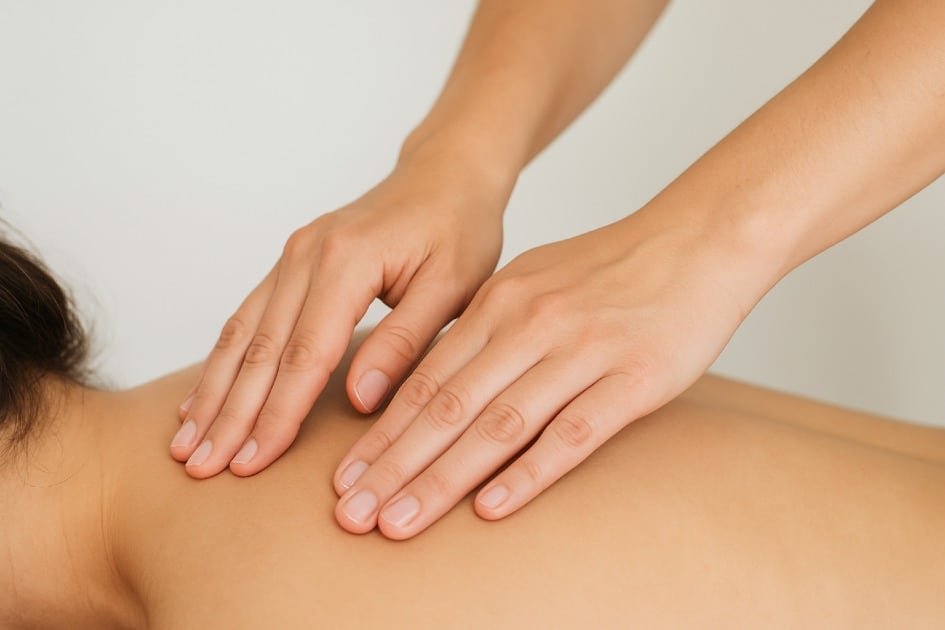
How Acupressure Uses Touch to Heal Pain
Acupressure, an ancient healing practice from Traditional Chinese Medicine, involves applying pressure to specific points on the body to alleviate issues such as headaches and tension.
This technique relies on the body’s innate ability to provide relief when the correct points are stimulated.
Acupressure Boosts Energy Flow
Acupressure targets meridians, which are invisible channels in the body that facilitate the flow of life energy, or “qi.” Blockages in these channels can result in pain and illness.
By applying pressure to specific points, acupressure stimulates these pathways, aiding in the restoration of natural balance and alleviating discomfort caused by energy stagnation.
I often feel my headache or tight neck fade within minutes when I use acupressure. It works fast and gives me quick relief.
Nerve Stimulation and Pain Modulation
Modern science validates Traditional Chinese Medicine’s (TCM) understanding that acupressure activates the nervous system.
It sends pressure signals through nerves to the brain, leading to the release of natural pain relievers such as endorphins and serotonin.
I ease headaches fast when I press high-impact points like LI4 between my thumb and index finger or GB20 at the base of my skull. These spots release tension quickly and help me feel steady again.
Boosting Circulation and Oxygen Flow
Poor circulation can increase pain and slow recovery. Acupressure improves blood and lymphatic flow, providing muscles and tissues with essential oxygen and nutrients.
I notice my joints feel warmer and move easier when I keep up with the practice, especially in my lower back and knees.
Hormonal Balance and Stress Relief
Chronic stress increases cortisol levels, leading to heightened pain, sensitivity and inflammation.
Acupressure can positively affect the endocrine system by regulating hormones, reducing stress levels, and calming the mind.
Focused acupressure sessions, especially on points like HT7 (inner wrist) or PC6 (forearm) can soothe nerves and restore equilibrium.
I use a high-quality acupressure mat or pillow to keep my pain relief routine simple and steady. It helps me relax fast and stay consistent with my home therapy.
Why Acupressure Works for Everyone
Acupressure promotes holistic healing rather than targeting specific symptoms, allowing the body to self-heal. Its versatility makes it suitable for various individuals, including athletes and office workers.
I add acupressure to my day because it helps me rely less on pain medicine and feel healthier over time.
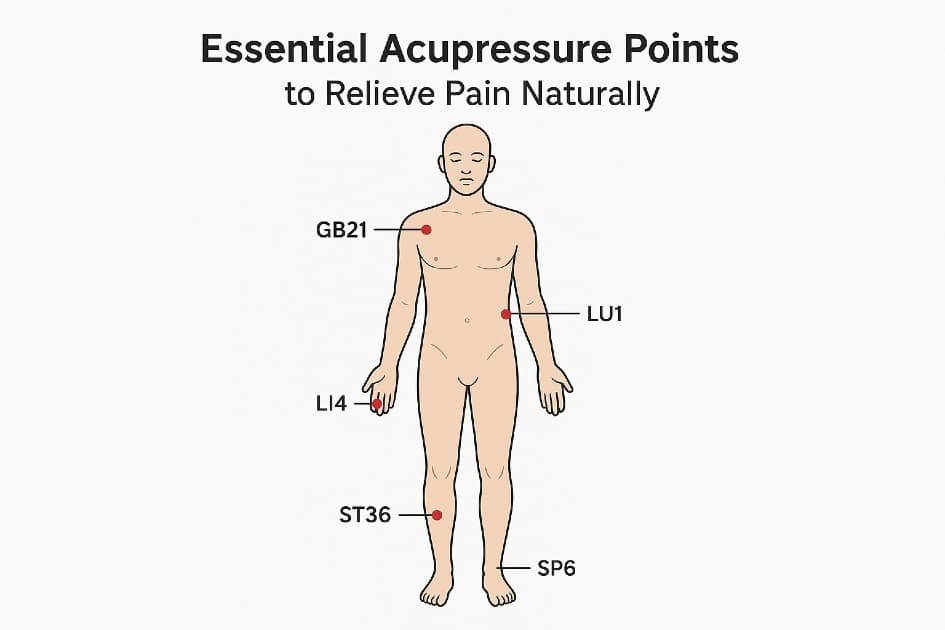
Essential Acupressure Points for Pain Relief
Acupressure is an effective method for naturally managing pain by targeting specific body points, which helps reduce tension and improve circulation, providing relief without depending solely on medications.
Relieve Headaches with LI4 Hegu
Why it matters:
The LI4 point, situated between the thumb and index finger, is effective for alleviating headaches, migraines, and facial tension. Additionally, consistent acupressure at this point can mitigate stress and anxiety, often contributing factors to tension headaches.
How to do it:
- Find the soft, raised spot between your thumb and index finger.
- Press down firmly and evenly with your other thumb.
- Gently rub the spot in tiny circles for one to two minutes to boost quick relief.
- Switch sides and repeat the move.
- Use it 2–3 times a day, especially when a headache begins.
I feel better when I use this point because it boosts blood flow and relaxes the tight muscles in my neck and scalp. When I add gentle neck stretches or a quick breathing exercise while using a massage ball, I notice even more relief.
Relieve Neck and Shoulder Stress with GB21
Why it matters:
GB21, located between the neck and shoulder muscle, is crucial for alleviating stiffness. Chronic tension in this area can result in migraines, poor posture, and sleep disruptions. Avoid this point if you are pregnant, as it can stimulate uterine activity.
How to do it:
- Find the highest point of your shoulder muscle close to your neck.
- Press your thumb down with steady, gentle pressure to help the spot relax.
- Keep the pressure for 30–60 seconds and let go slowly.
- Try the motion again on your other hand.
- Pair it with gentle shoulder rolls to boost the relief.
I press this point to ease stress tightness and help my body drain lymph better.
Relieve Lower Back Pain with BL23 Shenshu
Why it matters:
BL23, situated on either side of the lower spine, is vital for relieving chronic lumbar pain. It stimulates kidney energy, enhancing core strength and promoting back health.
How to do it:
- Lie on your stomach or lean forward a little and feel for the spot on each side of your spine at your waist.
- Press down with your thumbs using steady, gentle pressure that still feels firm and helpful.
- Gently rub the spot in slow circles for 2 to 3 minutes to help your body relax and ease discomfort.
- Use this once or twice a day to keep the relief steady.
I press this point to boost my blood flow and ease stiffness and soreness. When I add simple core exercises or use a warm pad with my back-relief acupressure mat, I feel even better.
ST36 Zusanli for Knee and Joint Relief
Why it matters:
ST36, located below the knee, is known for boosting energy, reducing inflammation, and alleviating joint discomfort. Stimulating this point can assist with conditions like arthritis, knee stiffness, and fatigue due to chronic pain, while enhancing circulation to the lower limbs to support mobility and flexibility.
How to do it:
- Sit in a chair with your knee bent at a right angle.
- Place your fingers about four widths below your kneecap, a little toward the outside of your shin.
- Press your thumb firmly and move it in gentle circles.
- Press each leg for 1 to 2 minutes.
- Use gentle pressure once or twice a day, adjusting to feel comfortable.
I add gentle leg stretches or a short walk to keep my joints moving and feeling their best.
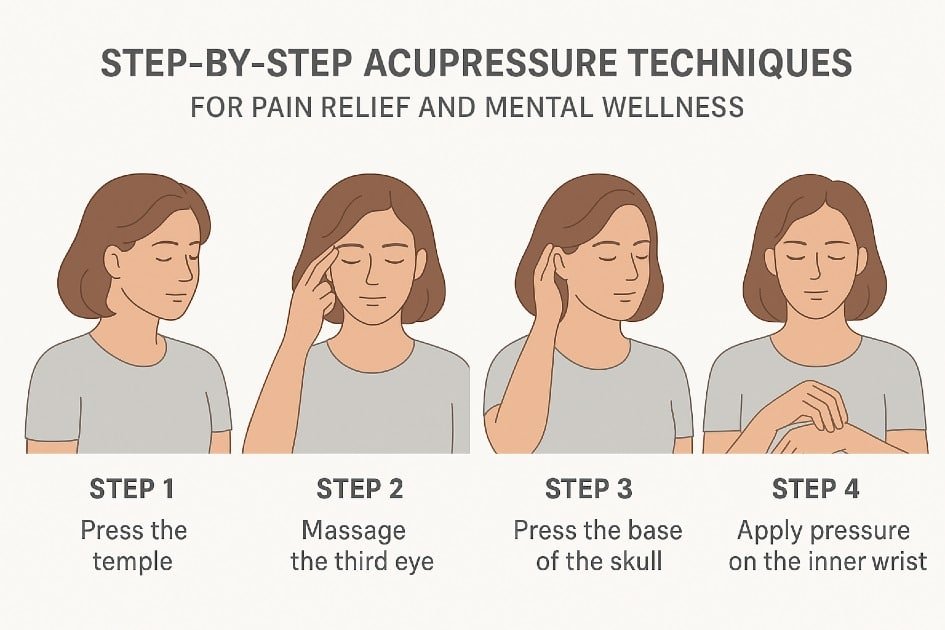
Step-by-Step Acupressure Techniques
Acupressure is an effective natural technique for relieving chronic pain, enhancing circulation, and balancing the body’s energy. Mastering its methods and the rationale behind them significantly impacts its effectiveness.
Locating Pressure Points Accurately
Why it matters:
Identifying pressure points accurately is essential for effective pain relief, as misplaced pressure can lead to discomfort and discourage practice.
How to do it:
- Start by checking a clear acupressure chart to find the right points.
- Press gently with your fingers, knuckles, or thumbs to find spots that feel tight or sore.
- Gently press and circle the spot in small motions to feel if it brings mild relief or relaxation.
- Place a small sticker or mark with a pen on key points at home to easily remember them during daily practice.
- Always work on both sides of the body since many acupressure points appear in pairs.
Applying Proper Hand Positioning and Pressure
Why it matters:
Correct hand positioning is crucial for preventing strain and maintaining effective pressure. Improper technique can lead to soreness and hinder energy flow, reducing pain relief.
How to do it:
- Place your thumb, finger, or knuckle firmly on the pressure point without moving it across the skin.
- Apply moderate pressure, firm enough to feel it but not pain, and slowly increase as you can manage.
- Press and hold for 30 to 60 seconds while breathing deeply to boost circulation and calm your body.
- Let your body adjust by releasing gently instead of all at once.
- Rub each point 2–3 times while doing gentle stretches to ease tension.
- Use acupressure tools or massage balls to press hard-to-reach spots without tiring your hands.
When I press the LI4 point on my hand during a headache, the pain usually eases within minutes. When I add slow, mindful breathing, the relief feels even stronger and I feel more in control of my body.
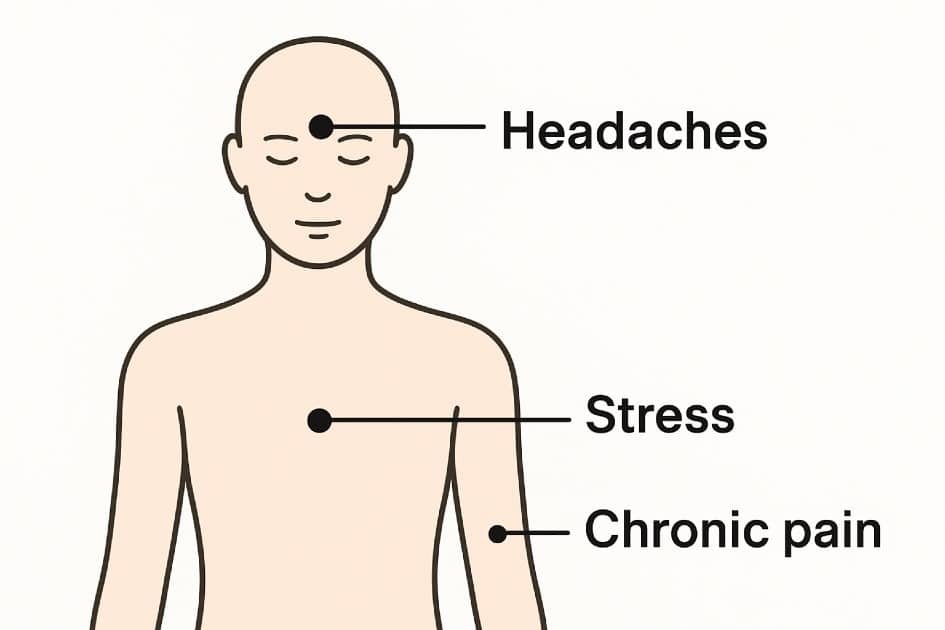
Acupressure for Specific Conditions
Acupressure is not just a relaxation method; it specifically addresses chronic pain by activating the body’s natural pain-relief systems through stimulation of key points.
Chronic Back Pain
Why it matters:
Back pain significantly impacts mobility and quality of life, often due to muscle tension, nerve compression, and poor posture.
How to do it:
- Find the B38 point on your lower back close to the spine.
- Press firmly with your thumb and hold for 30 to 60 seconds.
- Try gentle stretches to loosen tight muscles.
- Try doing these 2 to 3 times daily, especially after sitting for a long time.
- Apply a handheld acupressure tool to reach deeper pressure points and boost relief.
I use acupressure to ease pain because it boosts my blood flow, calms inflammation, and helps my body release natural feel-good endorphins.
Arthritis and Joint Discomfort
Why it matters:
Arthritis causes joint inflammation, restricting movement and resulting in chronic pain. While conventional medication may alleviate symptoms, prolonged use poses potential side effects.
How to do it:
- Press and massage the LI4 point located between your thumb and index finger for quick relief and better circulation.
- Rub each hand in gentle circles for one to two minutes.
- Press the ST36 point just below your knee to improve leg circulation.
- Start your day by moving your joints daily to keep them active and flexible.
- Try low-impact exercises such as swimming or yoga to strengthen your results.
I use acupressure to keep my joints moving smoothly. It helps ease stiffness and lets me rely less on pain medicine. I start with light pressure and press a little more as my body adjusts.
Fibromyalgia and Widespread Muscle Pain
Why it matters:
Fibromyalgia is characterized by widespread muscle pain and fatigue, which renders daily activities tiring. This condition is linked to amplified pain signals due to an overactive nervous system. Acupressure may help alleviate nerve hypersensitivity and relieve tension in various muscle groups.
How to do it:
- Press the GV20 point at the top of your head to calm your central nervous system and ease tension naturally.
- Press gently on SP6 on the inner lower leg to ease general body pain.
- Breathe slowly and deeply at each point for two to three minutes.
- Combine mindful breathing with daily routines to deepen relaxation.
I have learned that gentle pressure works better than pushing hard. It helps me feel calm, loose, and ready for relief.
Tension Headaches and Migraines
Why it matters:
Headaches commonly result from muscle tension in the neck and shoulders or from stress. Acupressure is a useful method for alleviating tension, increasing endorphin levels, and enhancing blood circulation.
How to do it:
- Press your thumbs firmly on the GB20 points at the base of your skull, just below the occipital bone, to relieve tension and boost relaxation.
- Massage in small circles for one to two minutes.
- Press firmly on the LI4 point between your thumb and index finger for one minute.
- Use this as soon as you feel a headache starting to stop it fast.
- Pair daily hydration with simple stress-busting habits for better health.
I notice that pain makes it hard for me to focus, stay productive, and feel calm. I keep checking my posture during the day because acupressure helps me more when my muscles stay relaxed.
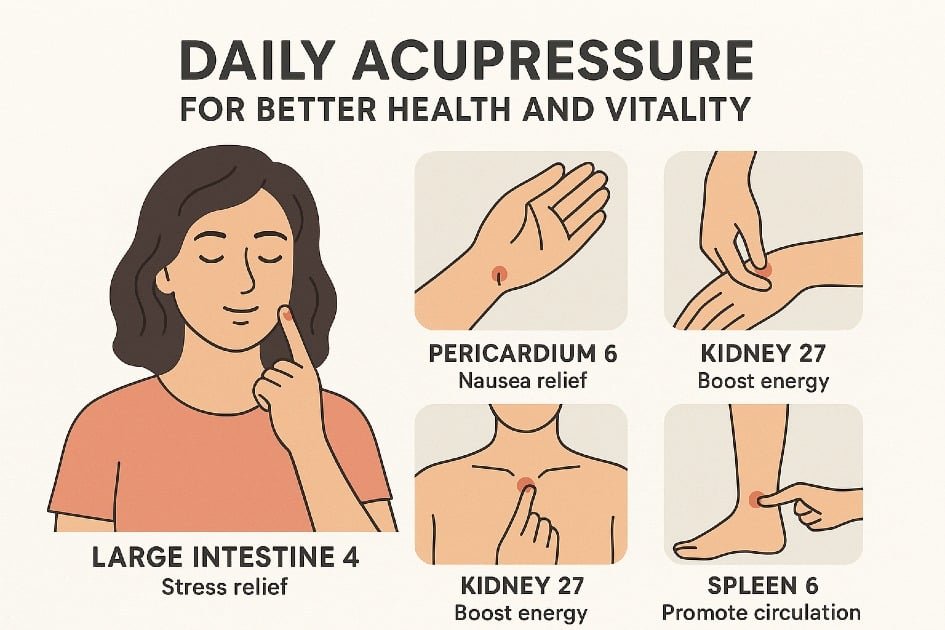
Boost Health with Acupressure Daily
Chronic pain can be unyielding, but acupressure, when paired with small lifestyle changes, can enhance relief and improve sustainability and enjoyment in management.
Gentle Stretches to Complement Acupressure
Why it matters:
Stretching enhances blood flow, enabling more effective activation of acupressure points. It also alleviates muscle tightness, prolonging pain relief after acupressure sessions, and reduces stiffness, thereby preventing injuries that may worsen chronic pain.
How to do it:
- Start your day with 5-minute stretch targeting tense areas like your neck, shoulders, and lower back.
- Stretch while taking deep breaths to ease tension and boost blood flow.
- Warm up first with gentle moves like arm swings and torso twists before acupressure.
- Hold gentle stretches for 20–30 seconds after acupressure, focusing on positions that naturally ease tension.
- Pay attention to your body and stop any movement that causes sharp pain.
I pair my stretches with acupressure to help my lymph flow better and give me a gentle energy boost that lasts through the day.
Relaxation Techniques and Mindful Breathing
Why it matters:
Chronic pain activates stress responses, increasing tension and discomfort. Mindful breathing reduces cortisol and enhances acupressure’s pain relief. Relaxation prepares the body to better respond to complementary practices such as nutrition and hydration.
How to do it:
- After acupressure, sit or lie down and take slow, deep breaths for 5 to 10 minutes to help your body relax and restore energy.
- Breathe in for four counts, hold for four, breathe out for four, and hold for four. Repeat this cycle five to six times to calm your mind and body.
- Try tensing each muscle for 5 seconds, then slowly relaxing, starting at your toes and moving up to your head.
- Take at least 10 minutes each day to relax so it becomes a regular habit instead of something you do only when you remember.
- Breathe slowly while listening to soft music or calming sounds to relax your body and mind.
I notice that even a few minutes of mindful breathing after acupressure helps me loosen up, clear my mind, and manage daily pain more easily.
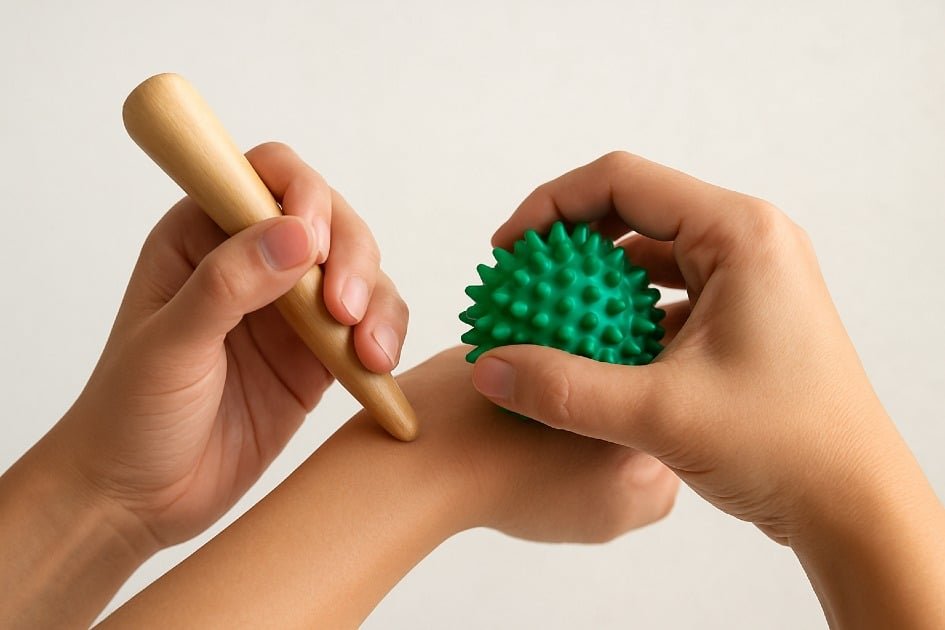
Boost Pain Relief with Acupressure Tools
Acupressure is an effective natural method for relieving chronic pain and tension. Utilizing specialized tools and accessories alongside hand pressure can enhance relief and facilitate self-care.
Handheld Acupressure Tools Reach Deep Points
Why it matters:
Handheld tools facilitate the application of pressure on hard-to-reach points, minimizing strain on hands and wrists. These tools stimulate specific meridians, aiding in faster pain relief and enhancing acupressure intensity, particularly for stubborn areas such as the lower back or shoulders.
How to do it:
- Pick a tool that feels comfortable in your hand, like a small wooden stick or a silicone probe.
- Gently press the spot with your finger to find the pressure point.
- Press the tool firmly on the exact spot and hold it for 30 to 60 seconds.
- Gently rotate or rock the tool to wake up nearby tissues.
- Use gentle pressure 2–3 times daily for chronic pain, adjusting to what feels comfortable.
When my hands start to tire, I switch to a simple acupressure tool kit so I can keep my sessions steady and effective.
Soothe Your Body with Acupressure Tools
Why it matters:
Acupressure mats provide tension relief by evenly distributing pressure across multiple points, making them beneficial post-work or workouts. Massage balls effectively target specific muscle knots, aiding in chronic pain relief.
How to do it:
- For mats:
- Rest calmly on a flat surface with the mat supporting your back, shoulders, or neck.
- Begin with 5 to 10 minutes and slowly work up to twenty as your body adjusts.
- Target tight spots and gently shift your weight to boost stimulation.
- For balls:
- Press a massage ball against a wall or floor and roll it to ease tension and boost blood flow.
- Gently roll over tight areas and press steadily for 20 to 30 seconds.
- Let go, take a deep breath, and do this 2–3 times on each area.
I pair my mat routine with simple acupressure so I can target the right points safely and get better relief.
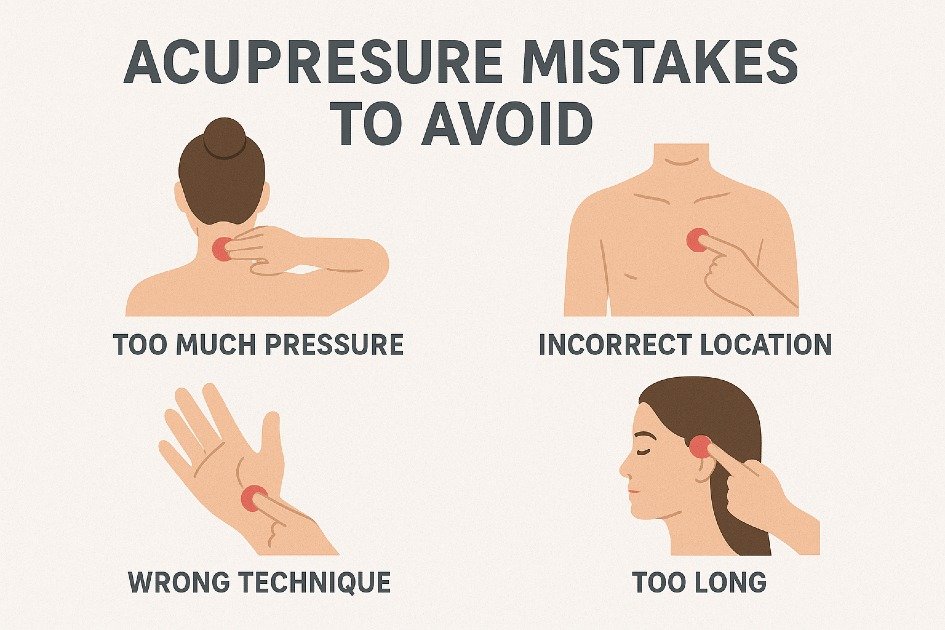
Acupressure Mistakes to Avoid
Acupressure is a powerful tool to relieve chronic pain, reduce stress, and improve overall wellness. However, even minor mistakes can limit their effectiveness or cause discomfort.
Applying Too Much Pressure
Why it matters:
Excessive pressure in accordance with acupressure can lead to bruising, muscle soreness, and increased pain, hindering relaxation. It may also discourage beginners, resulting in inconsistent practice.
How to do it:
- Use steady, gentle pressure instead of pushing too hard.
- Start with gentle pressure and increase it slowly only if it feels okay.
- Use gentle, slow circles instead of hard pokes to get better relief.
- Pay attention to how your body feels. If you notice sharp pain or numbness, ease the pressure right away.
- Try handheld acupressure tools to keep steady pressure and stay safe.
I listen to my body, so acupressure stays safe and heals. When I make small, mindful changes, I get better results without causing pain.
Ignoring Correct Pressure Point Location
Why it matters:
Acupressure involves stimulating specific points related to nerves, muscles, or energy channels. Incorrect application can diminish effectiveness and potentially create tension in other areas, leading to frustration and a belief that acupressure is ineffective.
How to do it:
- Try well-known spots like LI4 between your thumb and index finger to ease headaches and GB20 at the base of your skull to calm neck tension.
- Lightly mark your skin with a washable marker if it helps, then gently press and stimulate each point.
- Hold each point gently and stay on it for at least 30 seconds so your body gets the full benefit.
- Combine acupressure with slow, mindful breathing to calm your mind and help your body respond faster.
Accurate targeting makes each acupressure session work faster and feels more rewarding. It boosts pain relief and helps me avoid extra strain.
When to Seek Professional Help
Acupressure is effective for natural chronic pain relief, but there are times when professional guidance is crucial to ensure safety, maintain long-term relief, and prevent deterioration of the condition.
Recognizing Serious Symptoms
Why it matters:
Some pain signals may indicate serious underlying conditions that need immediate care. Ignoring these signals can deteriorate health and reduce the effectiveness of acupressure, thus recognizing these red flags is crucial for prompt action and optimal safety.
How to do it:
- If your pain lasts for weeks or gets stronger even with daily acupressure, it shows something is wrong.
- Watch for odd feelings such as numbness, tingling, or sharp spreading pain. These signs may point to a nerve problem that acupressure alone cannot fix.
- Look for swelling or redness because these changes can warn you of an infection or an autoimmune problem.
- Write down what you feel each day in a simple pain diary. Track how often the pain happens, how strong it is, and what triggers it.
- Share your acupressure routine with a doctor so that they can guide you safely and support whole-body care.
I take these steps to stop small problems from turning into long-term pain and to make acupressure work better with my professional care.
Integrating Acupressure with Medical Treatments
Why It Matters:
Acupressure is most effective when used alongside professional medical advice, promoting holistic pain relief and avoiding conflicts with medical guidance.
How to do it:
- Tell your healthcare provider about the acupressure and show them your tools or techniques.
- Stick to your prescribed treatments and safely add acupressure to support your healing.
- Follow medical guidance and adjust acupressure pressure, frequency, or duration to stay safe and avoid problems.
- Keep track of your progress and note any changes.
I mix my own self-care with expert support to manage pain the smart way. Acupressure helps me feel better, but I do not use it to replace real care. This balance keeps my progress clear, steady, and safe.
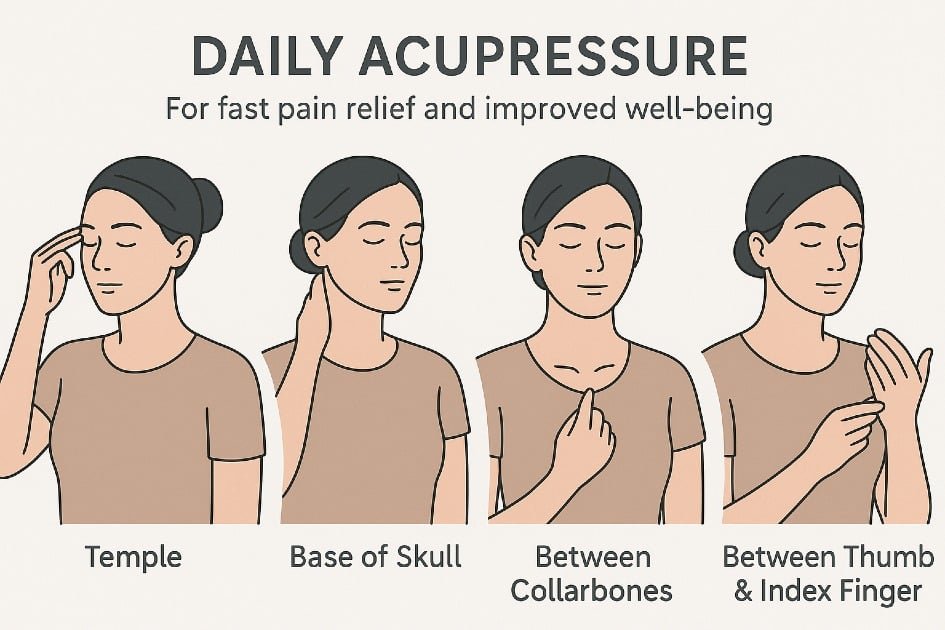
Daily Acupressure Routine for Quick Relief
Chronic pain can hinder daily activities, but a daily acupressure routine offers quick, natural relief and enhances overall well-being. This gentle and non-invasive method can be practiced anywhere, whether at home or in the office.
Boost Energy with Morning Acupressure
Why it matters:
Morning tension in the neck, shoulders, and head can impact focus and mood. Acupressure points can be stimulated to improve blood circulation, release endorphins, and ready the body for the day.
How to do it:
- Neck & Shoulder Release:
- Press your fingertips gently along the base of your skull and the tops of your shoulders.
- Press each point gently for 10 to 15 seconds and breathe slowly and deeply.
- Perform it two or three times.
- Hand and Wrist Activation:
- Press the LI4 spot between your thumb and index finger to ease headaches or tension.
- Rub each hand in a firm circle for 10 seconds.
- Energy Points:
- Press the ST36 point below your knee to boost leg energy and support healthy digestion.
- Rub each leg in small circles with firm pressure for 15 seconds.
I spend just 5–7 minutes on my morning acupressure routine, and it boosts my circulation and cuts down the pain that usually follows me through the day.
Midday Acupressure to Ease Tension
Why it matters:
Midday fatigue and stress worsen chronic pain in areas like the lower back, neck, and shoulders. Taking acupressure breaks can reset the nervous system, lower inflammation, and improve focus, while short routines help prevent tension from escalating into severe discomfort.
How to do it:
- Lower Back Relief:
- Find the B23 points just above your lower back near the spine.
- Press firmly with your thumbs or a massage tool for 15 to 20 seconds.
- Breathe deeply, release, and repeat two more times for full effect.
- Headache and Eye Strain Relief:
- Apply gentle pressure to the GB20 points at the base of your skull to ease headaches and relieve sinus pressure.
- Press each side for 10 seconds and massage gently in small circles.
- Stress Release:
- Press the PC6 points on the inner forearm, two inches from the wrist, to soothe nerves and reduce stress naturally.
- Press each arm firmly for 15 seconds.
I sit at my desk and do small, focused movements that stop the afternoon slump, ease tension headaches, and straighten my posture fast.
Evening Acupressure for Better Sleep
Why it matters:
Pain and stress negatively impact sleep quality, exacerbating chronic pain. Evening acupressure helps relax the body, lowers cortisol levels, and enhances melatonin production. Establishing a calming routine aids recovery, mitigates stiffness, and boosts flexibility for the following day.
How to do it:
- Spine & Shoulder Relaxation:
- Lie on your back and softly press along the spine at BL23 and BL25 points.
- Press each point for 10 to 15 seconds and let go slowly.
- Foot Reflex Points:
- Rub the KD1 points on your feet to release tension and balance your energy.
- Rub your feet in small circles with your thumbs for 20 seconds each.
- Hand and Face Release:
- Gently press the LI4 points on your hands to ease stubborn headaches.
- Rub the Yintang point between your eyebrows to ease stress and calm your mind.
I follow this 7–10-minute routine to sleep deeply, wake refreshed and face the day with less pain and more energy.
Recap: Take Control of Your Pain Naturally
Embracing acupressure offers a natural alternative to managing chronic pain, allowing individuals to reclaim control over their bodies without relying on prescriptions.
Pain can often be managed naturally through mind-body techniques, movement, and basic home care, without the need for medications, as noted by Harvard Health.
Pairing acupressure with mindful breathing or gentle stretching enhances its effects. This accessible technique requires no special equipment and encourages personal engagement with one’s body.
Commitment to acupressure can lead to lasting relief and a more vibrant life, transforming the approach to health and wellness.
Frequently Asked Questions
Is acupressure safe for everyone?
Acupressure is a safe and non-invasive technique that employs finger pressure on specific meridians to promote natural healing. However, those with pregnancy complications, severe osteoporosis, or open wounds should seek professional advice before use.
How long does it take to feel relief from acupressure?
Some individuals may see improvements after one or two sessions, particularly for tension headaches or minor joint pain.
For chronic conditions, 2-4 weeks of daily practice may be necessary for sustained relief, and utilizing ergonomic supports can enhance outcomes.
Can acupressure replace medication entirely?
Acupressure can effectively decrease reliance on pain medication, though it should not serve as a substitute for prescribed treatments in severe or chronic cases. It is often used alongside medical plans to naturally alleviate inflammation, muscle tension, and stress.
How often is it safe to practice acupressure at home?
Most experts suggest 10-20 minutes per session, 1-2 times daily. Frequent, shorter sessions are more effective than longer, infrequent ones.
Acupressure can be easily integrated into daily routines using tools like acupressure balls or mats at home or work.
Are there side effects to acupressure?
Side effects are mild and temporary, often manifesting as slight soreness, redness, or tingling at pressure points, which typically resolve within hours.
Ongoing pain or discomfort may suggest improper technique or an underlying medical condition requiring attention.
Which spots on the body ease long-term back pain?
Key points include the B23 (Kidney Shu) and B47 (Bladder Shu) meridians along the lower back.
Applying gentle pressure while practicing mindful breathing can alleviate stiffness, enhance blood flow, and relax spinal muscles.
Can acupressure help with stress-induced body aches?
Acupressure stimulates the parasympathetic nervous system, lowering cortisol levels and promoting relaxation.
Effective points include LI4 (Hegu) on the hand and PC6 (Neiguan) on the wrist for tension-related discomfort. Incorporating meditation and acupressure kits can enhance relaxation practices.
Is acupressure effective for arthritis or joint pain?
Acupressure enhances joint flexibility, circulation, and pain management by applying pressure to specific points around affected joints, alleviating stiffness and discomfort. For optimal results, it is advisable to use ergonomic joint supports as suggested by physiotherapists.
Can self-acupressure work or is a trained expert better?
Acupressure techniques can be self-administered with guidance, but for chronic or severe pain, seeking a certified acupressurist is recommended for effective meridian targeting and pressure application. Beginner-friendly tools, such as acupressure mats and rollers, facilitate safe home practice.
Can acupressure improve mood while relieving pain?
Stimulating specific points can reduce anxiety, encourage relaxation, and enhance sleep, positively impacting overall health. Regular acupressure can support mindfulness practices, and employing relaxation aids can improve emotional well-being.
How can I make acupressure part of my daily routine?
Integrate acupressure into your daily routine by energizing muscles with morning pressure routines, relieving tension during short midday sessions, and improving sleep quality with pressure points before bed.